




Gold, platinum, white gold, and rose gold each perform differently under daily wear — and the metal you choose affects long-term maintenance cost, comfort, and how well the setting complements your gem. For most engagement ring buyers, platinum and 14k or 18k yellow or white gold are the practical front-runners; the right call depends on your budget, skin tone, and how much upkeep you're comfortable with.
Key Takeaways
- Gold remains the most popular engagement ring metal globally, available in 14k, 18k, and 22k purity grades — each a different balance of colour, durability, and cost.
- Platinum is approximately 95% pure precious metal and resists wear better than gold over decades, though it carries a higher price point.
- White gold and rose gold derive their colour from alloy mixtures; white gold is typically rhodium-plated for brightness and needs re-plating every one to three years.
- Engagement ring metals can be resized by most jewellers, though platinum requires specialist equipment and typically carries a higher service fee.
- Metal choice affects long-term maintenance cost; platinum develops a natural patina and requires less frequent re-plating than white gold.
What Metal is Best for an Engagement Ring?
The best metal for an engagement ring is the one that matches your daily life, budget, and aesthetic preference — not a single universal answer. Platinum offers the best long-term durability and requires the least maintenance, but costs significantly more than gold. Yellow gold in 14k or 18k is the most versatile and widely available option. White gold gives a platinum-like appearance at a lower price, with the trade-off of periodic re-plating. Rose gold adds warmth and has become popular in contemporary bridal jewellery.
For everyday wear, the practical field narrows to platinum and 14k–18k gold alloys. Silver tarnishes and scratches too readily for a ring worn constantly. Alternative metals like titanium and tungsten work well for plain wedding bands but are not suitable for gem-set engagement rings — they cannot be resized.

Gold: Yellow, White & Rose
Gold is the most popular engagement ring metal in the world. Pure gold (24k) is too soft for jewellery worn daily; the karat system describes how much gold remains after alloying with stronger metals.
- 14k gold — 58.5% gold, alloyed with copper, silver, or palladium. More durable and scratch-resistant than 18k; slightly less rich in colour. The most practical option for active lifestyles.
- 18k gold — 75% gold. Richer, warmer colour and typically hypoallergenic. More susceptible to fine scratching over time than 14k, but still a durable everyday metal.
- 22k gold — 91.7% gold. Rarely used in engagement rings; too soft for daily wear.
Yellow Gold
Yellow gold is the classic choice. Its warm amber tone pairs well with round, oval, and emerald cuts, and flatters warmer and olive skin tones. It does not require re-plating and develops a gentle patina over years of wear that many buyers prefer.
White Gold
White gold is a gold alloy — typically 14k or 18k gold mixed with palladium, nickel, or silver — finished with rhodium plating that gives it its bright silvery appearance. The rhodium layer wears down over time, and most white gold rings require re-plating every one to three years to restore the original brightness. It offers a platinum-like look at a lower price.
Rose Gold
Rose gold owes its blush-pink colour to a higher copper content in the alloy. It is typically 14k or 18k, hardwearing, and does not require re-plating. It has become one of the most popular choices in contemporary bridal jewellery. The copper alloy makes it slightly more resistant to bending than yellow gold of the same karat — but it can cause reactions in people with copper sensitivity.

Platinum: Durability & Prestige
Platinum is approximately 95% pure — far higher purity than 18k gold (75%) or 14k gold (58.5%). It is naturally white and does not require rhodium plating. Unlike gold, which loses metal when scratched, platinum displaces — the metal moves rather than sheds, meaning a platinum ring retains its mass over decades of wear.
Platinum develops a soft matte sheen called a patina over time. Many buyers appreciate this natural evolution; others prefer to have the ring polished back to a high shine periodically. Because platinum is a denser metal, a platinum ring of the same design will weigh noticeably more than its gold equivalent — which some buyers associate with a premium feel.
- Hypoallergenic — suitable for sensitive skin; contains no nickel.
- No re-plating required — the natural white colour is permanent.
- Resizing requires specialist equipment — platinum's density makes it more difficult to work than gold and typically costs more to resize.
- Higher upfront cost — platinum carries a price premium of roughly 40–60% over 18k white gold for comparable ring designs.
Metal Durability and Everyday Wear
All precious metals scratch. The difference is in how they scratch and what that means over time.
| Metal | Hardness (Vickers) | Scratch behaviour | Long-term appearance |
|---|---|---|---|
| Platinum (95%) | ~400 HV | Displaces, doesn't shed | Develops patina; can be re-polished |
| 18k Yellow Gold | ~125 HV | Sheds microscopic metal | Gradual wear; re-polish every few years |
| 14k Yellow Gold | ~150 HV | Sheds less than 18k | More durable; recommended for active wear |
| White Gold (18k, rhodium) | ~125 HV base | Rhodium wears off 1–3 yrs | Requires periodic re-plating |
| Rose Gold (14k) | ~155 HV | Copper alloy adds hardness | No re-plating needed; copper patina possible |
For a ring worn every day without removal, 14k gold or platinum offers the best durability. 18k white gold is aesthetically versatile but requires the most active maintenance of the mainstream options.
Cost Comparison Across Metals
Metal cost contributes meaningfully to total ring price, particularly for wider bands and heavier designs.
| Metal | Relative cost (simple band) | Key cost driver |
|---|---|---|
| Platinum | Highest | Density + specialist labour |
| 18k Gold (any colour) | High | Gold content (75%) |
| 14k Gold (any colour) | Mid–High | Gold content (58.5%) |
| Sterling Silver | Low | Low commodity price, but tarnishes |
As a rough guide, a platinum band costs approximately 40–60% more than a comparable 18k white gold band. The labour premium for platinum is real: jewellers require specialist equipment and more time. For buyers whose primary focus is long-term value and minimum maintenance, platinum can be cost-efficient over a ten-year horizon despite the higher upfront price.

Resizing and Maintenance by Metal Type
Most engagement rings need resizing at some point. The metal determines how straightforward that process is.
- Yellow and rose gold — most jewellers can resize these without difficulty. Standard service, standard fee.
- White gold — resizable, but requires rhodium re-plating after resizing to restore the uniform bright finish. Budget for both services together.
- Platinum — resizable, but requires specialist equipment. Not all high street jewellers carry platinum-capable torches. Budget for a higher service fee and source a platinum-experienced jeweller.
- Titanium and tungsten — cannot be resized. Avoid these for gem-set engagement rings intended for long-term wear.
- Sterling silver — resizable but tarnishes readily and wears quickly. Not recommended for a ring worn daily.
For white gold maintenance: rhodium plating typically costs $50–$150 and takes one to two hours. Most jewellers recommend re-plating when the ring shows a yellowish tint in areas of heavy wear — usually every one to three years depending on skin chemistry and wear habits.

Satéur Gems®: Stone Choice Complements Metal
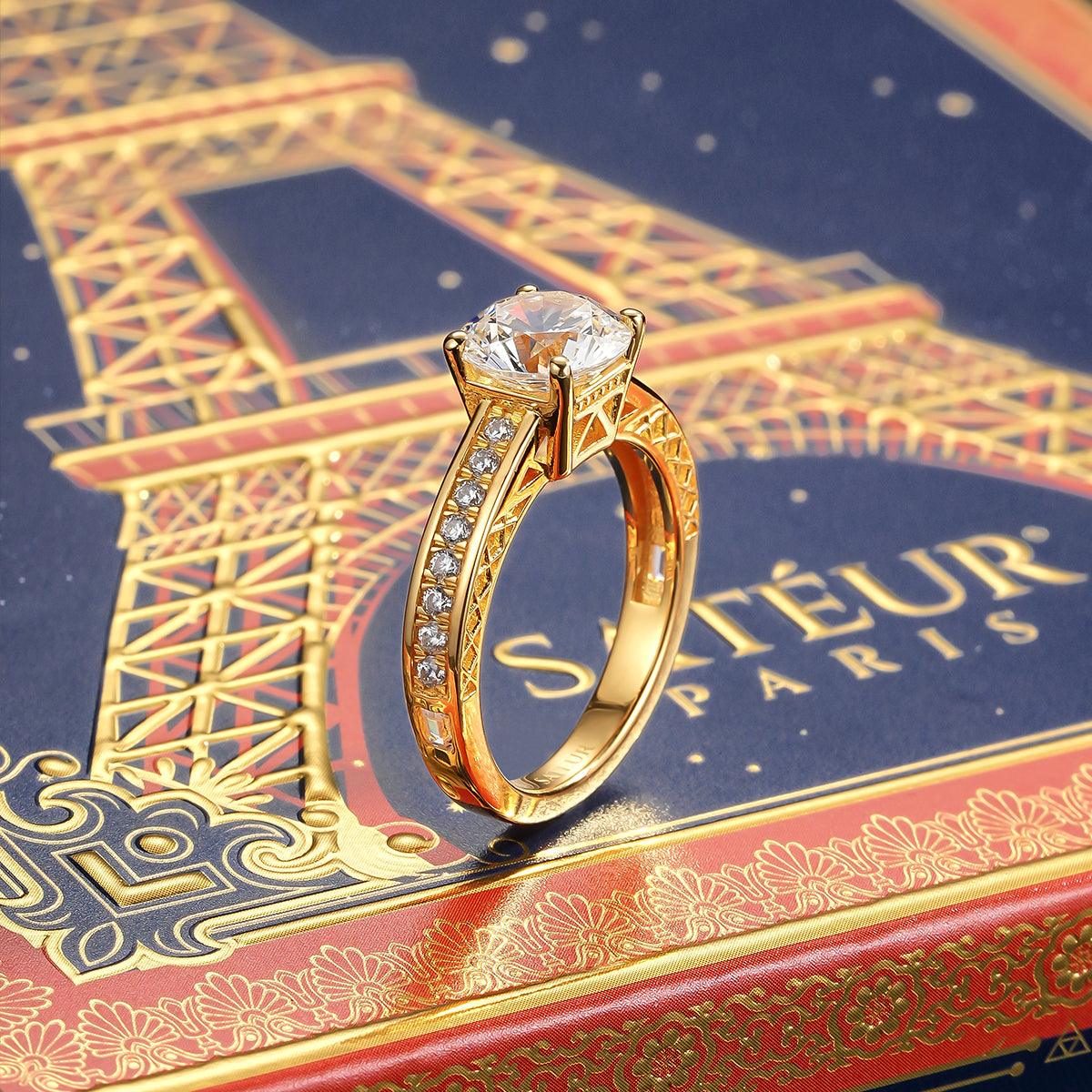
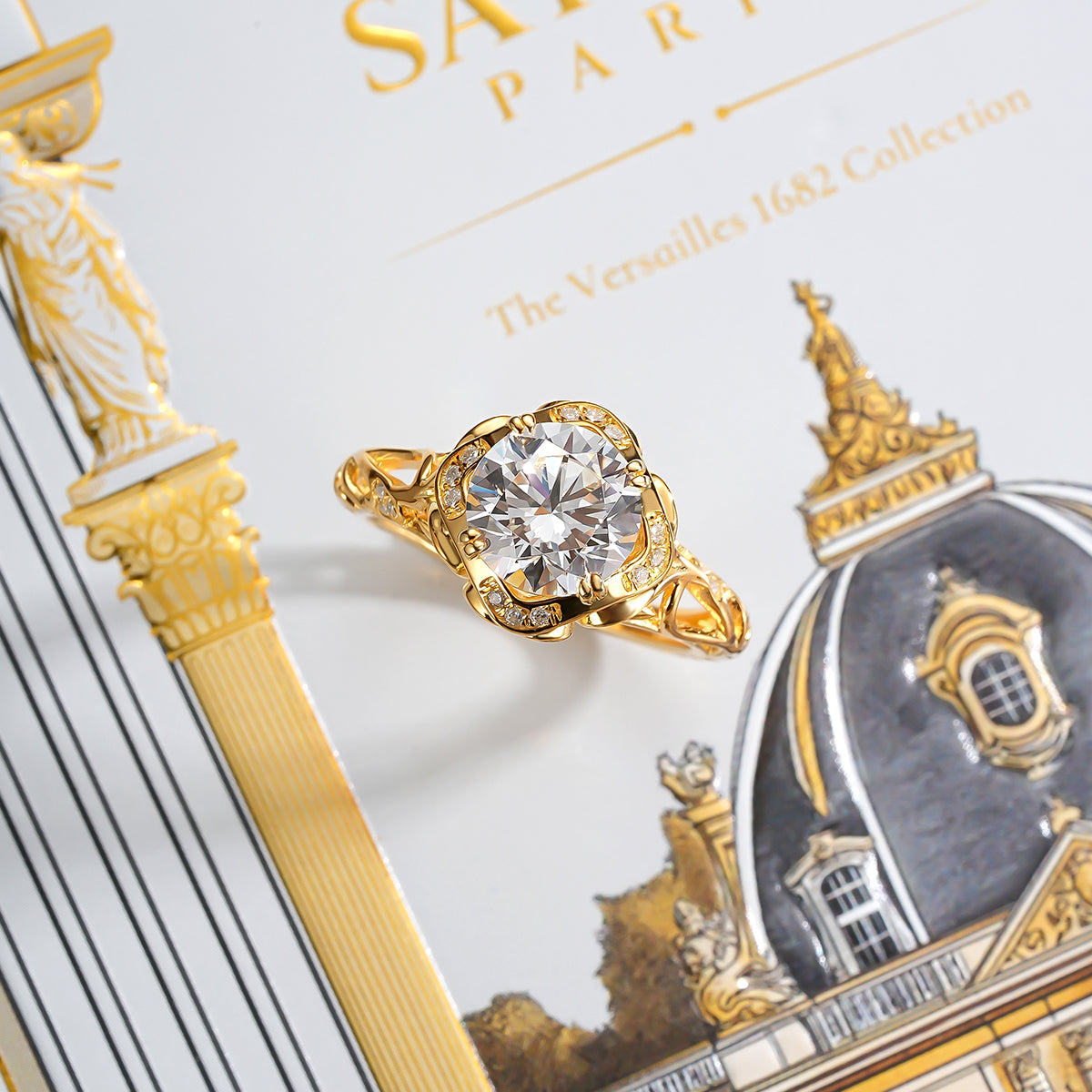
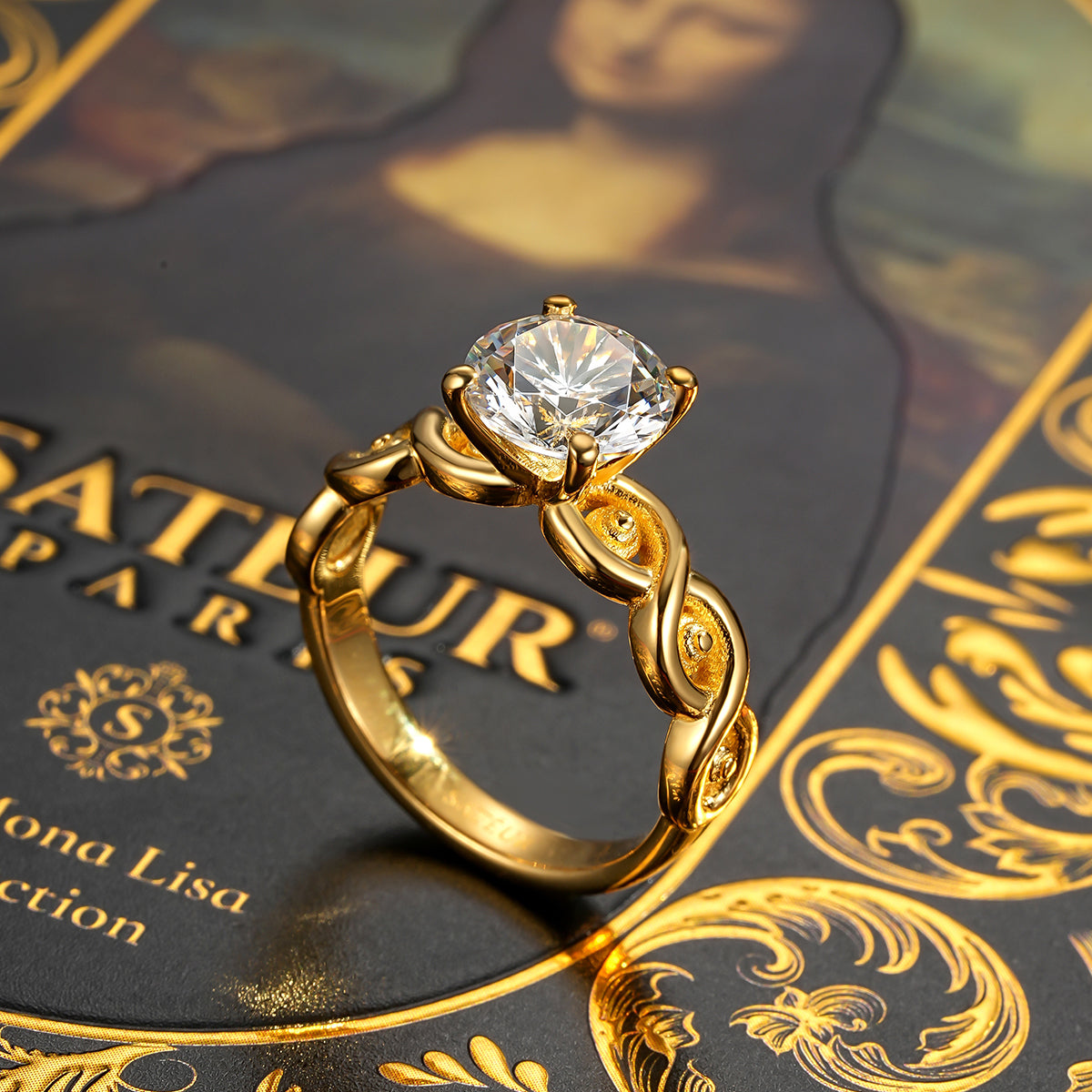
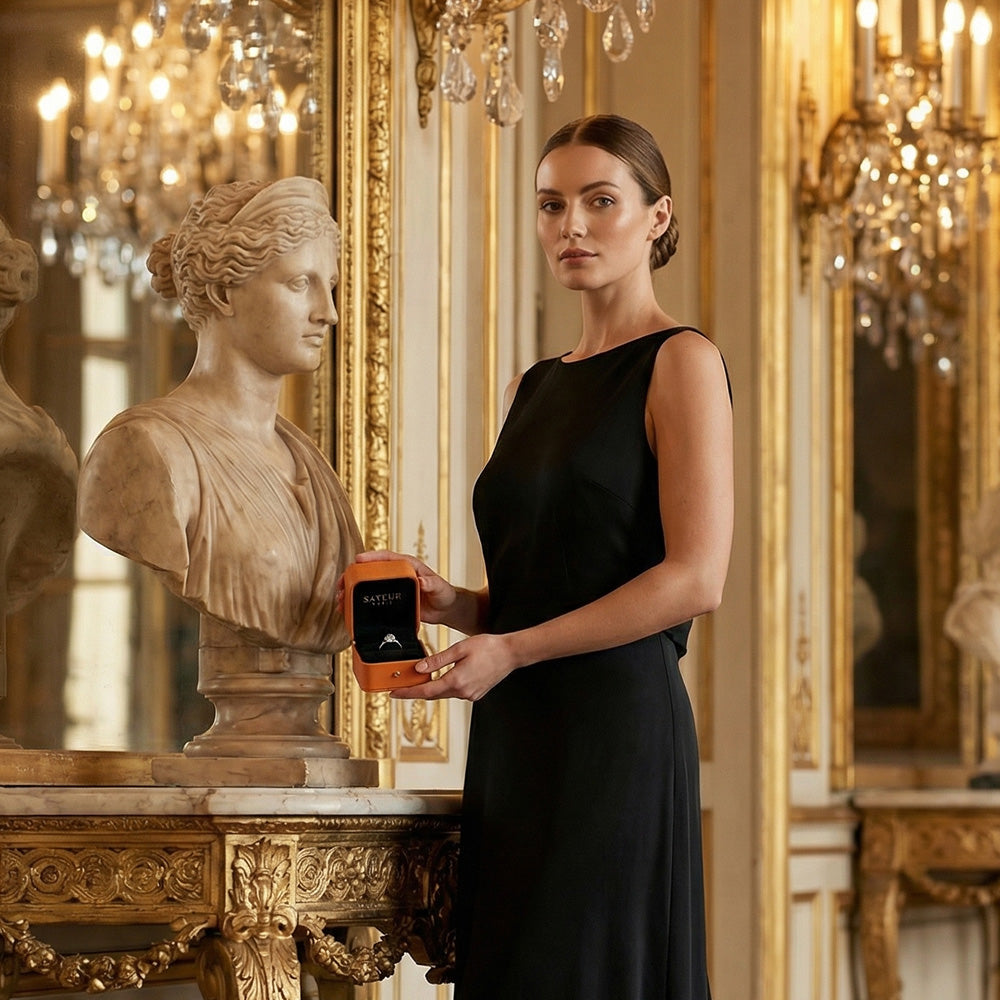
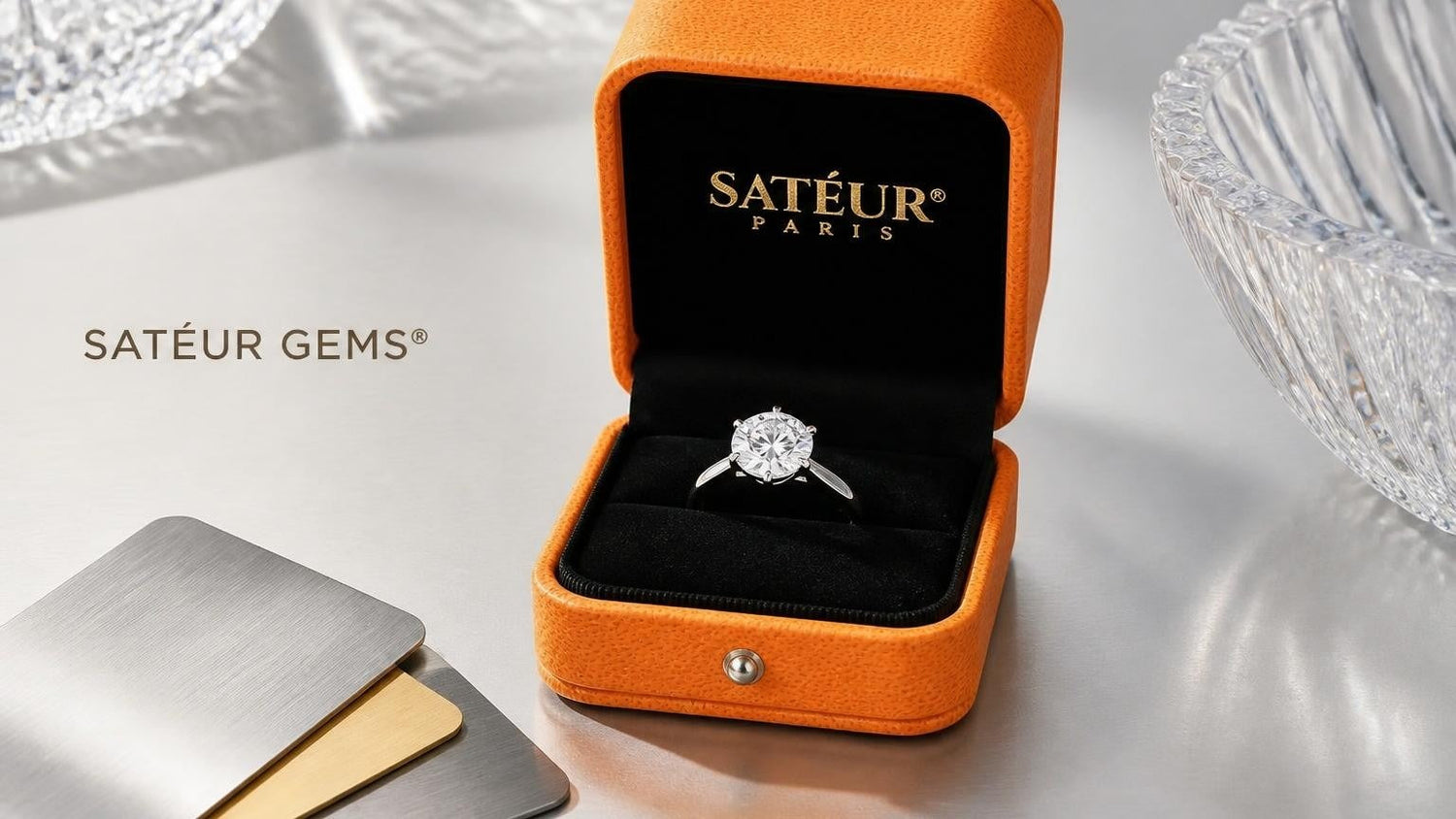
Metal is the setting; the gem is what catches the light. Satéur Gems® — a trademarked diamond simulant with the clean white brilliance of a flawless diamond — pairs with any metal setting. The Satéur Destinée Ring™ is set in an 18k gold finish, available across gold-finish, white-finish, and rose-finish settings to match your preferred metal aesthetic.
The look of a flawless diamond engagement ring, without the mined diamond price. Satéur Gems® carry a D-E colour appearance — the same colour range as top-tier mined diamonds — in settings starting at a fraction of the cost. For buyers who want that diamond-look visual presence in a gold setting, it is the 1% alternative.
- 18k gold finish setting — warm, durable, and available across the Destinée line
- D-E colour appearance — clean white brilliance, no yellow tint
- From $138 — compared to $4,000–$10,000+ for a comparable mined diamond ring
- Mohs hardness ~8.8 — suitable for daily wear
Explore the full Satéur engagement rings collection. For pear-shaped settings, see the pear-shaped engagement ring collection. For hidden halo options, the hidden halo engagement ring collection covers that style. Princess cut buyers can browse the princess cut engagement ring range.

Satéur Destinée Ring™
The look of a flawless diamond — from $138.
D-E colour · Excellent cut · 18k gold finish
Free worldwide delivery. 30-day returns. Lifetime Satéur Care.
Shop the Destinée RingFree worldwide shipping · 30-day returns · Lifetime Satéur Care
Frequently Asked Questions About Engagement Ring Metals
Which metal is most durable for an engagement ring?
Platinum is the most durable option for long-term daily wear. It displaces rather than sheds metal when scratched, retains its mass over decades, and does not require re-plating. For buyers who prefer gold, 14k yellow or rose gold is more hardwearing than 18k equivalents due to its higher alloy content.
Does white gold require more maintenance than yellow gold?
Yes. White gold is coated with rhodium plating to achieve its bright silvery appearance. That plating wears down with daily wear — typically requiring re-application every one to three years. Yellow and rose gold have no such coating and need no periodic re-plating, only occasional polishing.
Can an engagement ring metal be changed or replaced?
The metal setting can be remounted — a process where the gemstone is removed from its existing setting and placed into a new one. This is more involved than resizing and typically costs $200–$600 or more depending on the new setting. Most jewellers can advise on remounting options.
What is the price difference between gold and platinum?
Platinum typically costs 40–60% more than comparable 18k white gold for the same ring design. The premium reflects platinum's higher density, greater purity (95% vs 75% for 18k), and the specialist labour required to work with it. Over time, platinum's lower maintenance cost can narrow that gap.
How do I choose a metal that matches my skin tone?
Yellow and rose gold tend to complement warmer skin tones — olive, golden, and deeper complexions. White gold and platinum work across most skin tones and are particularly flattering on cooler, fair, or pink-undertoned complexions. Ultimately it is a personal aesthetic choice; trying rings on in natural light is the most reliable method.
Is rose gold more delicate than other gold colours?
Rose gold is actually slightly more durable than yellow or white gold of the same karat, because the copper alloy that gives it its blush colour also adds hardness. It does not require re-plating. The trade-off is that people with copper sensitivity may experience skin reactions, particularly with lower-karat rose gold alloys.


















Leave a comment
This site is protected by hCaptcha and the hCaptcha Privacy Policy and Terms of Service apply.