



How to Propose: Planning the Perfect Engagement Moment
A proposal is one of the few moments in a life that arrives only once. How you plan it — the setting, the timing, the ring in your hand — shapes the memory both of you will carry for decades. This guide covers the complete logistics of how to propose: understanding your partner's vision, choosing the right moment and place, selecting an engagement ring, planning a proposal that lands with the weight it deserves, and documenting it properly.
If your focus is specifically on how to propose to your girlfriend — what to say, how to frame the words in the moment, the emotional architecture of the question itself — that article covers the verbal and emotional side in full. This guide is the planning layer: the decisions that make the moment possible.
Key Takeaways
- Start by understanding whether your partner wants a surprise proposal or prefers to be part of the ring selection process — this single question shapes every subsequent decision.
- The best proposal moment is personal, not universal. Settings with genuine shared meaning consistently outperform generic romantic venues.
- Entry-level engagement rings with quality gemstones begin at approximately $88. Exceptional appearance does not require exceptional spending.
- Satéur Gems® offer the visual characteristics of a premium diamond — D-E colour, Excellent cut — at approximately 1% of a mined diamond's cost. The New Diamond Standard.
- Hiring a proposal photographer is one of the highest-return decisions in the entire planning process — the moment lasts minutes; the image lasts a lifetime.
- The most common proposal mistake is prioritising spectacle over sincerity. The ring and the words matter more than the venue.

Understanding Your Partner's Vision
Read the Signals Before You Plan the Moment
Before you book a restaurant or price a ring, there is a more important question: what does your partner actually want from a proposal? Some people have a very clear picture — a private moment, a specific setting, a ring style they have already hinted at. Others genuinely want to be surprised, trusting you entirely with every decision. Most fall somewhere between.
Pay attention to what they notice. When a friend announces their engagement, does your partner respond to the spectacle or the intimacy? Do they share ring images on social media, or do they favour simplicity and restraint? When conversations about marriage come up, do they lead with feelings or logistics? These signals are reliable. They tell you what kind of proposal will feel true to them.
A gentle, non-revealing conversation about preferences is always an option. Ask about ring metal preferences — white gold, yellow gold, platinum. Ask whether they lean toward private moments or enjoy being the centre of attention in a crowd. Frame it as casual curiosity, not planning. You learn what you need without removing the surprise.
Surprise vs. Collaborative — When Each Works
If your partner has strong, specific preferences about ring style — and you have no reliable intelligence about what those are — consider proposing with a placeholder ring or a meaningful piece of jewellery, then shopping together for the final ring. This approach is increasingly common and loses nothing in meaning. The question itself is the proposal. The ring selection that follows is the beginning of the next chapter.
Make sure you understand the difference between a partner who wants to be surprised and one who simply has not talked about it explicitly. These are not the same. When uncertain, err toward privacy over public performance, and consider whether involving a close friend or family member for intel is worth the risk of the secret travelling further than intended.
Choosing the Right Time and Setting
Personal Meaning Over Generic Romance
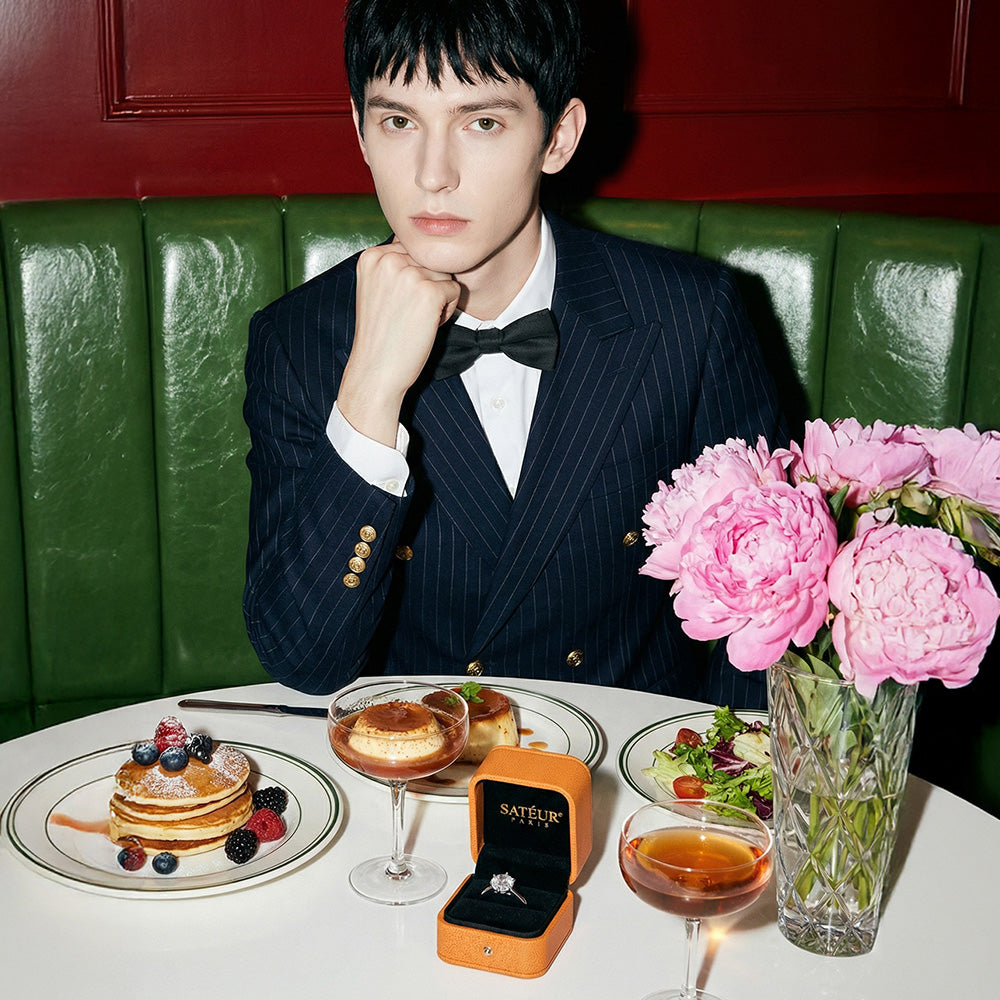
There is no universally correct proposal setting. There is only the setting that fits your relationship. A couple who found each other hiking will remember a mountain summit for the rest of their lives. A couple who shared their first proper date at a particular café may find that returning to that exact table carries more weight than any grand gesture could manufacture.
The most enduring proposals share certain qualities: they feel like an extension of the relationship rather than a departure from it. They are set in places of real shared significance rather than borrowed romantic iconography. They involve enough privacy that both of you can be fully present without managing an audience or performing for onlookers.
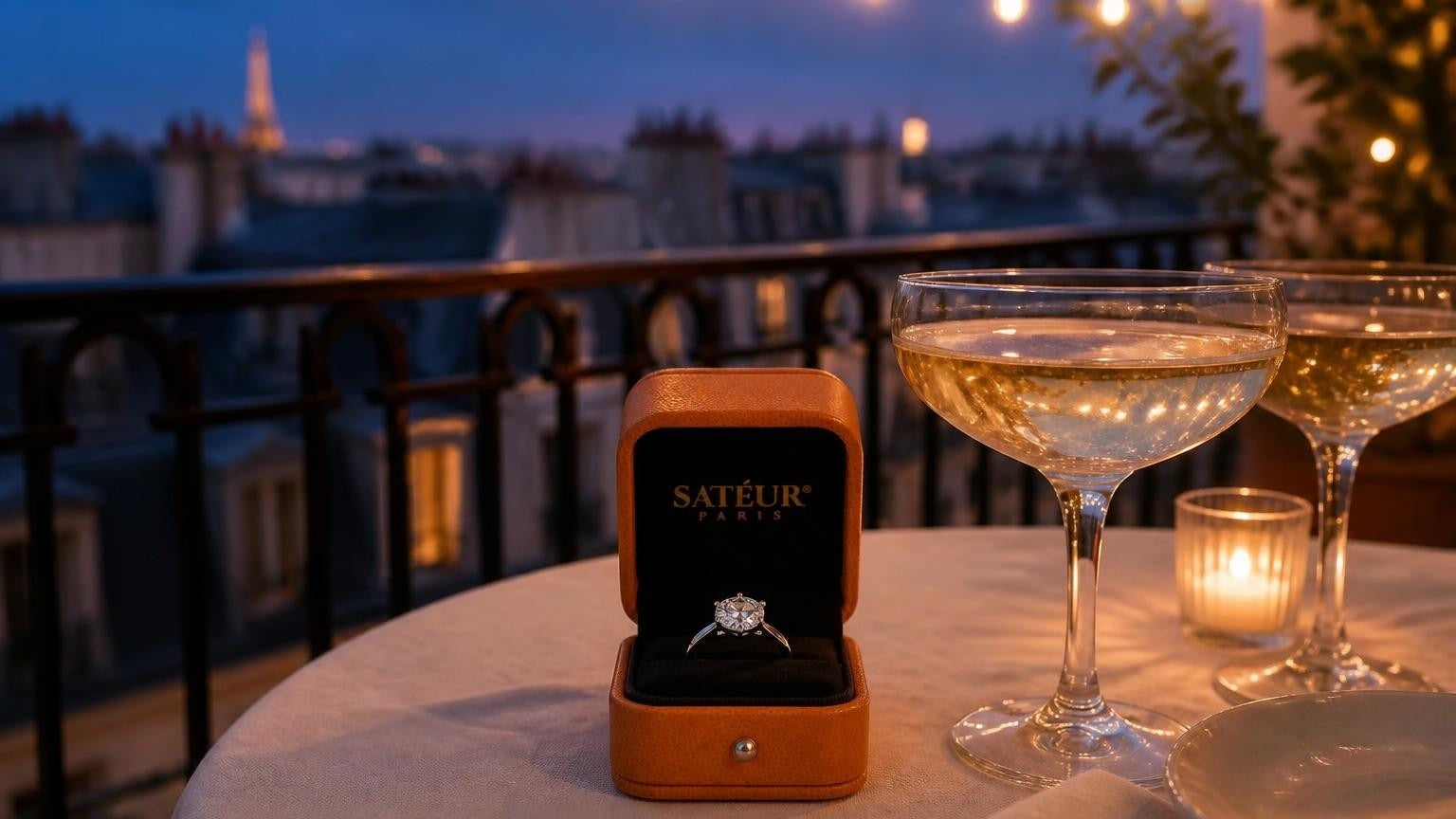
For inspiration across specific locations — from intimate city settings to landmark destinations — our guide to the world's best proposal places covers a broad range, from the luminous terraces of Paris to quiet coastal coves where the light does everything a setting needs to do.
Timing: Milestone Dates vs. Ordinary Moments
Milestone dates carry obvious emotional weight — anniversaries, birthdays, the specific date you met, a significant family occasion. They create a built-in frame for the moment and make the date permanently meaningful going forward.
But a quiet evening when neither of you is distracted, when the conversation has been easy and the day has been good, can outperform a holiday occasion surrounded by family, competing obligations, and the expectation of emotion. Propose when both of you are fully present and unhurried. Make sure the timing is yours, not the calendar's.
Avoid proposing during a period of stress — a demanding work phase, a family difficulty, a travel disruption. The moment deserves clear emotional space. Plan the proposal for when you are both in a position to receive it fully.
Selecting an Engagement Ring
The Four Criteria That Actually Matter
The ring is the lasting artifact of the proposal moment. It is what your partner will wear every day and what they will describe to every person they tell the story to. It deserves genuine thought — not necessarily significant spending, but real attention to what will suit them.
The four classic criteria — cut, colour, clarity, and carat — apply equally whether you are selecting a mined diamond, a lab-created gemstone, or a diamond simulant. Cut determines the vast majority of a gem's brilliance and light performance. Colour is assessed on a scale from colourless (D) to near-colourless and beyond. Clarity measures internal inclusions that are invisible to the naked eye at most grades. Carat refers to weight, not physical size — cut quality has more influence on apparent size than carat weight alone.
Metal Choice and Gem Shape
Metal choice matters more than many buyers account for. White gold and platinum create the cleanest diamond-look contrast and complement most skin tones. Yellow gold has warmth and suits certain gem shapes and complexions more naturally. Rose gold has a distinctly modern character. The clearest guide is your partner's existing jewellery — it tells you everything about what will feel like theirs rather than foreign to them.
Gem shape is a strong personal preference that is worth getting right. Round brilliant cuts maximise light return and have the broadest appeal across different aesthetics. Oval cuts elongate the finger and have grown substantially in preference over recent years. Cushion, princess, and emerald cuts each carry a distinct character. If your partner has expressed a preference, take it seriously. If not, round or oval remain the most reliable starting points.
Make sure you have an accurate ring size before purchasing. Most jewellers can resize a ring, but knowing the correct size avoids a potentially awkward post-proposal conversation. A close friend or family member who can check discreetly is useful here.
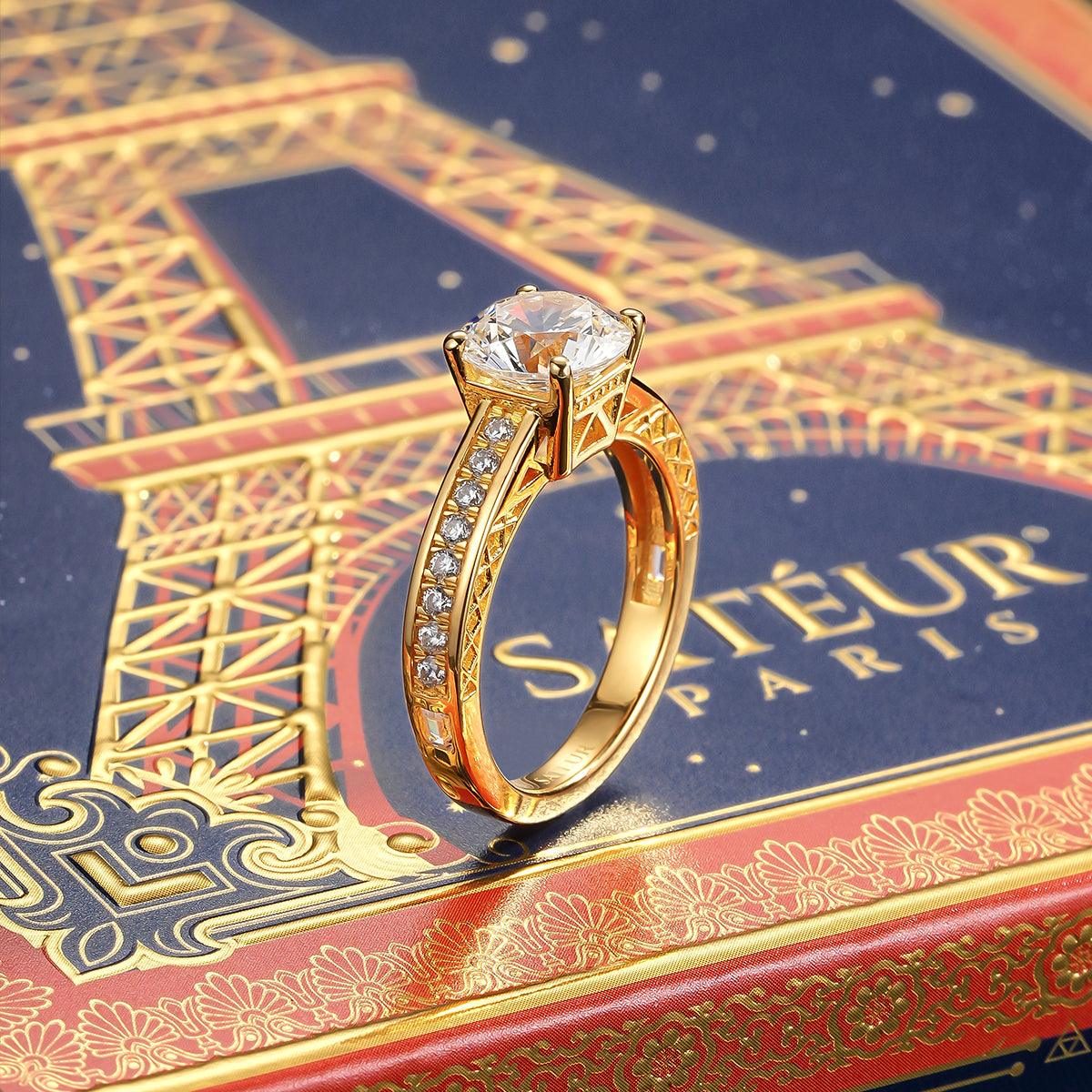
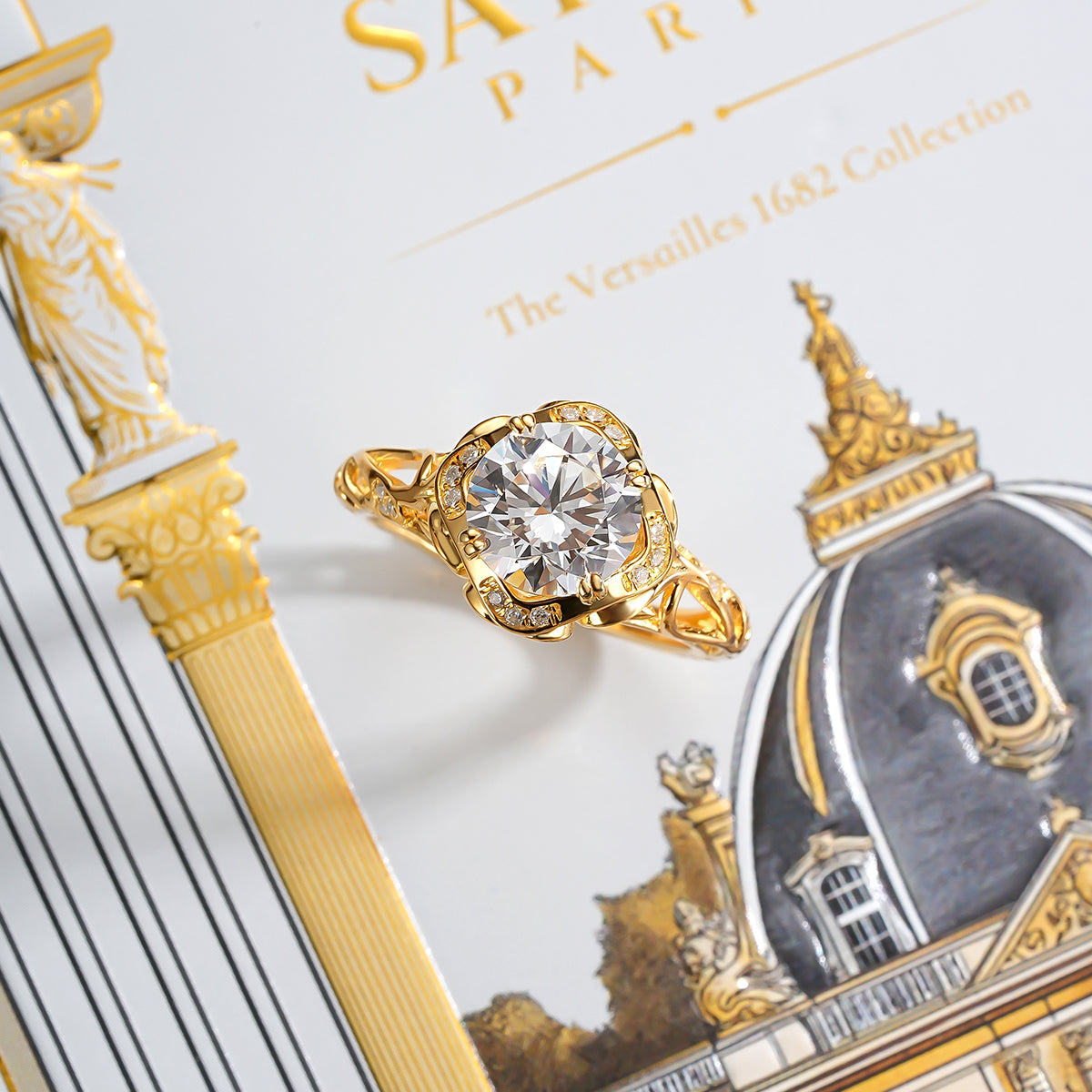
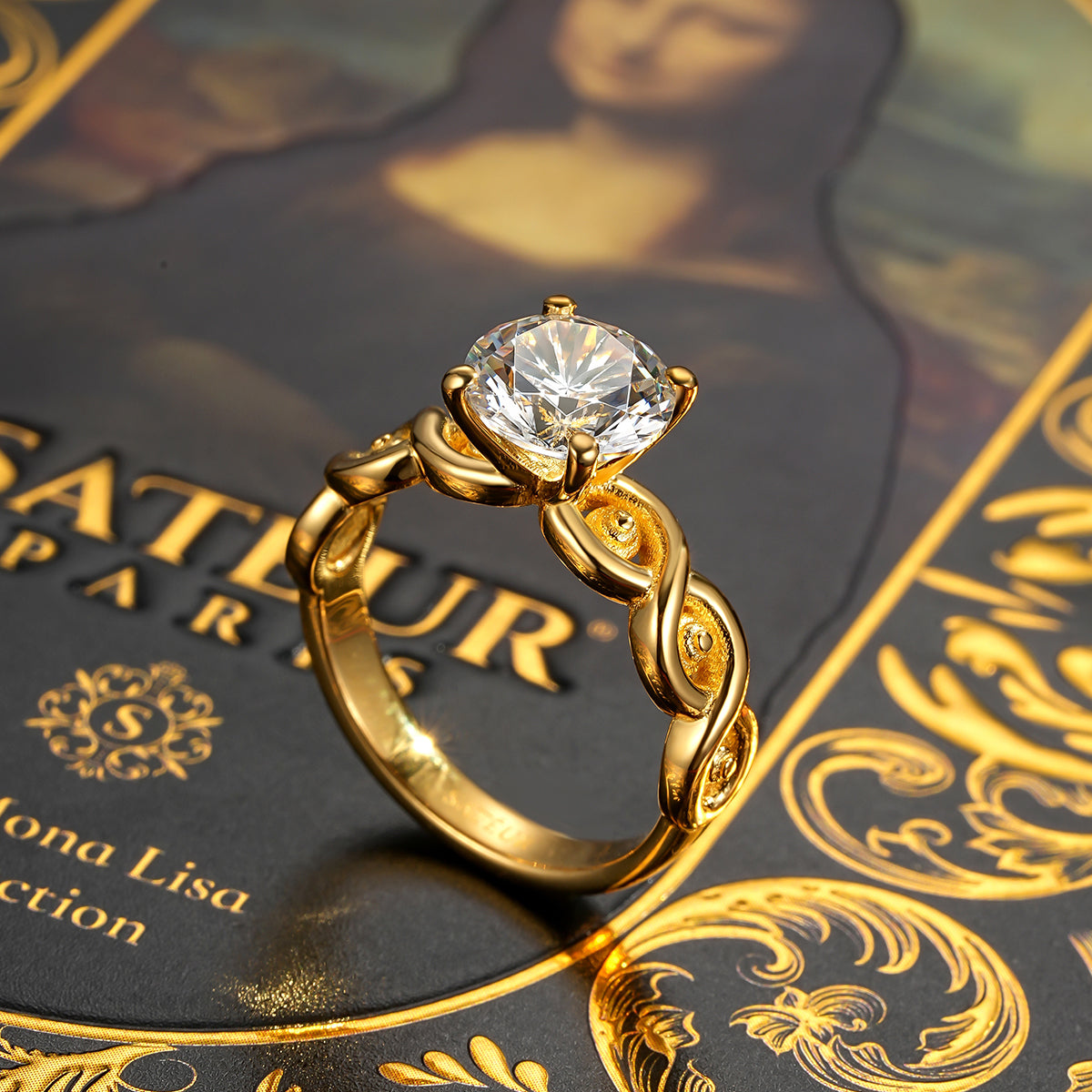
For the full range of engagement ring options — across every gem tier, metal, and shape — the Satéur engagement ring collection is the right starting point.

Satéur Gems®: The Value Proposition for Your Ring
What the Diamond Industry Does Not Tell You
The engagement ring industry has long operated on an implicit assumption: that the meaning of the proposal is proportional to what was spent on the ring. That assumption does not hold up under scrutiny, and an increasing number of couples are choosing not to hold it.
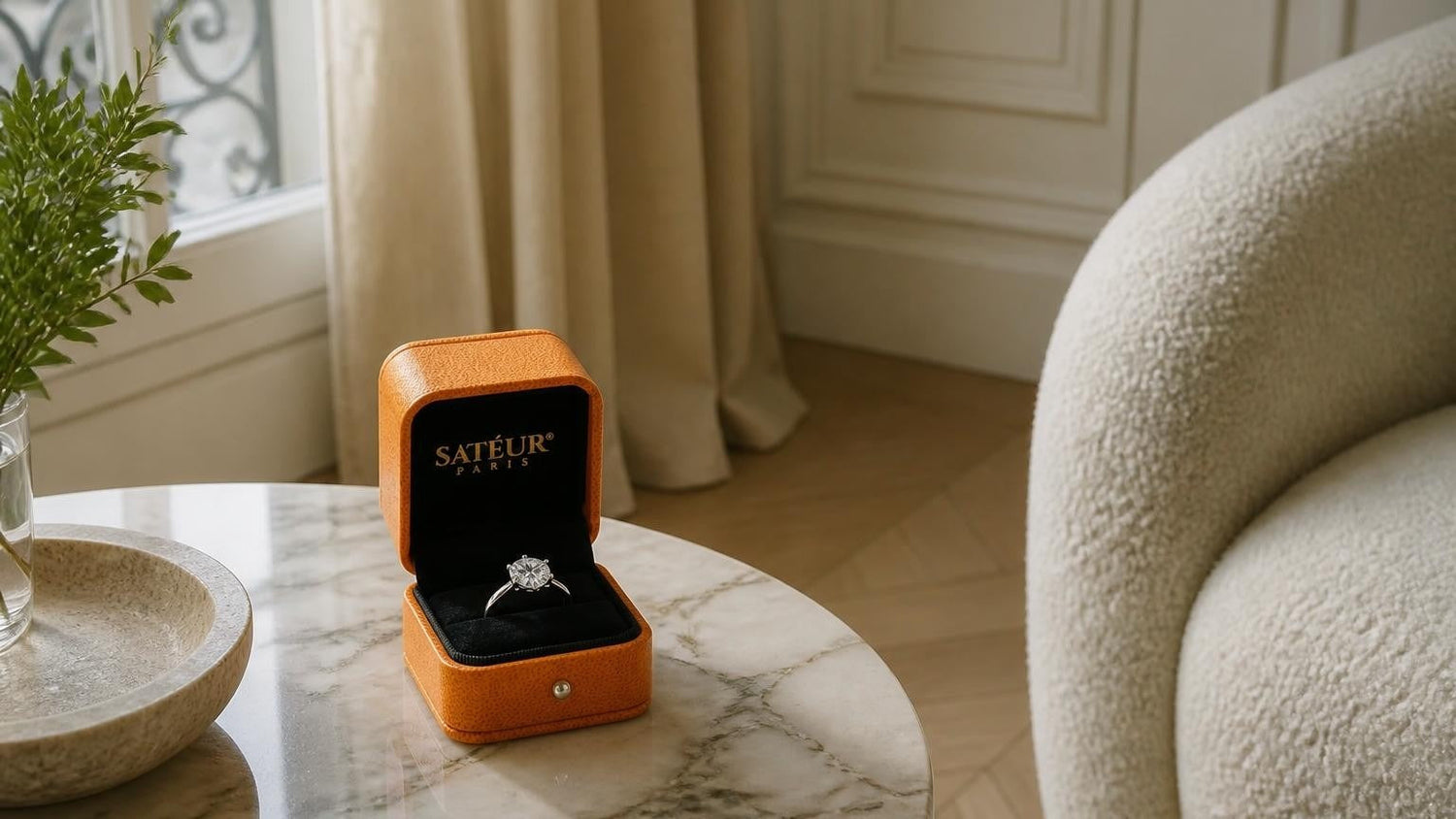
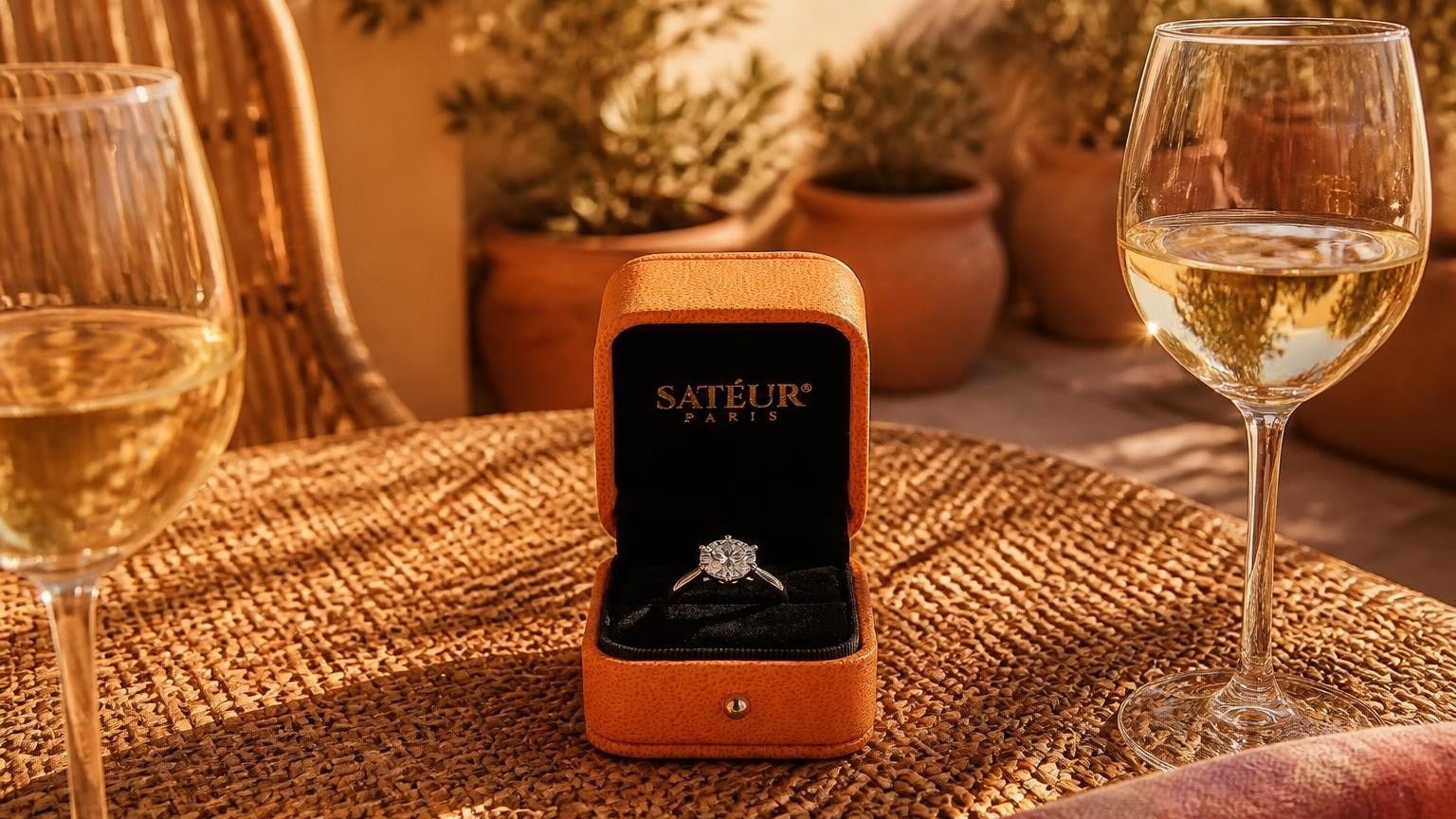
Satéur Gems® are a trademarked diamond simulant engineered to replicate the visual characteristics of a flawless diamond. D-E colour range. Excellent cut. The fire and brilliance perform with distinction under both natural and indoor lighting. To the naked eye, the appearance is indistinguishable from that of a premium mined diamond.
The 1% Ring® — What It Means in Practice
The difference is in the price. Satéur Gems® begin at approximately 1% of the cost of a comparable mined diamond. A ring that delivers the look of a $10,000 mined diamond is available for approximately $88. The visual result — the look your partner sees every day — is the same. What changes is the intelligence of the decision.
This is not a compromise. It is a recalibration of what an engagement ring can be: the start of a marriage, not a financial obligation that shadows the first years of it. The Satéur Destinée Ring™, The 1% Ring®, begins at $88 — a 1.00 carat round cut gem in 18K white gold finishing. The gem that built the movement.
Entry-level rings across the collection begin at that $88 point, with options extending through every carat weight and setting style. The spend scales with preference, not with social pressure.
Budgeting Without Compromise
Discard the Two-Month Rule
The two-to-three months' salary rule was created by a jewellery industry marketing campaign in the 1930s. It has no bearing on the quality of a ring, the depth of a relationship, or the memory of the proposal moment. Discard it.
A more useful framework: decide what you are comfortable spending, then allocate it across the categories that actually contribute to the memory — ring quality, proposal experience, and photography. These are not equal in return.
Where the Budget Goes Furthest
If the ring is the priority, Satéur's comparative-value model allows access to visual quality that would cost many times more through a traditional jeweller. The look of a flawless diamond for approximately 1% of the price changes the allocation entirely. The freed resources go toward the proposal experience, the wedding itself, or the beginning of a home together.
The engagement ring will be present every day for decades. It is the one investment in the proposal process with genuine permanence. Prioritise the visual quality your partner will live with — not the price point that satisfies a social convention. Make sure the ring reflects the relationship, not the industry's expectations of what it should cost.
Planning the Surprise
The Logistics of Invisibility
A well-executed surprise proposal requires logistical planning that is entirely invisible in the final moment. The less your partner suspects, the more cleanly the moment lands. Engineering that invisibility takes real effort and clear coordination.
If you are involving family or friends, brief them clearly and early. Nothing unravels a surprise faster than a well-meaning family member offering a congratulatory hint in the days before the moment. Keep the circle small — ideally one trusted person who coordinates. Establish a clear communication rule: one person knows the plan; others are told only what they need to know to be present.
Location, Light, and the Ring
Scout the location in advance. Understand the light at the time of day you plan to propose — golden hour flatters, harsh midday light does not. Know the likely foot traffic, the access points, and any logistical variables that could disrupt the moment. If a photographer is involved — and they should be — coordinate their exact position so they are invisible until the proposal happens.
Rehearse what you want to say. Not to the point of reading from a script, but enough that the emotional core is available to you under pressure. Many proposals are disrupted not by circumstance but by the proposer losing their words at the critical second. Know what you want to say. Trust yourself to say it in your own way, in your own words.
For a broader set of creative directions and format ideas beyond the standard restaurant proposal, our guide on proposal ideas covers a range of approaches — from intimate private moments to more considered, staged experiences that involve the people who matter most.

Common Proposal Mistakes to Avoid
Spectacle Over Substance
The most frequent mistake is prioritising the spectacle over the substance. A proposal that is photographically perfect but emotionally thin will always feel hollow to the person receiving it. Lead with the relationship. The setting amplifies; it does not create.
Proposing in public when your partner strongly prefers privacy is the second most common error. Public proposals transfer the emotional load onto the person being proposed to — they must now manage their reaction in front of an audience. Unless you are entirely certain they would welcome this, err toward a private moment.
The Ring Choices That Go Wrong
Choosing a ring without any intelligence about your partner's style or preferences. Even minimal research — a look at their existing jewellery, a quiet question to a close friend — dramatically reduces the risk of proposing with something they will want to exchange. If you are genuinely uncertain, a placeholder ring or a meaningful piece of family jewellery is far better than guessing wrong on a significant purchase.
Rushing the moment because nerves are running high. The pause before you speak, the space in which the moment registers, is part of the proposal itself. Let it breathe. Do not fill the silence prematurely. The moment belongs to both of you.
On the question of which knee to kneel on: convention is the left knee, ring presented with the right hand. For a more complete treatment of this — including the history behind the convention and when it matters — see what knee you propose on.
Photography and Documenting the Moment
The Investment With the Longest Return
Of all the logistical decisions in proposal planning, hiring a photographer consistently offers the highest return. The proposal moment itself lasts less than five minutes. What extends it across decades — what your children will see, what becomes the image in the wedding toast — is the photograph taken in that specific minute.
A professional photographer, briefed and positioned discreetly in advance, can capture the exact second of the question and the unguarded reaction that follows. These images — the expression, the hands, the ring emerging from its box — become the permanent record of the moment you chose each other.
How to Brief a Proposal Photographer
Brief the photographer thoroughly and well in advance. Provide the exact location, the approximate timing, your attire, and a clear signal — a word or gesture — that indicates you are about to propose. Review their portfolio first: documentary-style reportage and romantic editorial are very different aesthetics and produce very different results.
Make sure they understand the core brief: be invisible until the moment, then capture everything that follows. Their timing and discretion matter as much as their technical skill. If a professional photographer is not accessible, a trusted friend with a quality camera and a clear briefing is the right fallback. Video adds complexity — one photographer producing excellent stills is more reliable than attempting both at once.

Satéur Destinée Ring™
The look of a flawless 1-carat diamond — for about 1% of the price. From $98.
Compare to a $10,000 mined diamond
Joined by 100,000+ couples across 150+ countries.
Shop Destinée RingFree worldwide shipping · 30-day returns · Lifetime Satéur Care
Frequently Asked Questions
How do I know if my partner wants a surprise proposal or prefers to be involved in ring selection?
The clearest signal is how they respond to other people's proposals. If they speak warmly about surprise moments, they likely want one. If they frequently mention specific ring preferences or comment on friends' ring choices, they may want to be involved in selection — either by shopping together before the proposal, or by receiving a placeholder ring with a formal shopping trip to follow. A gentle, non-revealing conversation about general preferences can answer this without removing the element of surprise.
What is the best time of year or moment to propose?
There is no single correct answer. Milestone dates — anniversaries, birthdays, the date you met — carry built-in emotional resonance and create a permanently meaningful date going forward. But a quiet, unhurried evening when both of you are fully present can outperform a planned holiday occasion surrounded by competing obligations. The best proposal moment is the one where both of you are free to receive it fully. Plan for presence, not for the calendar.
How much should I budget for an engagement ring?
The two-to-three months' salary guideline has no foundation beyond a historic jewellery industry marketing campaign. A more useful approach: determine what you are comfortable spending, then allocate toward visual quality rather than price-point performance. Satéur engagement rings begin at approximately $88, offering the appearance of a premium gemstone at approximately 1% of a mined diamond's price. The ring your partner wears daily matters more than the figure on the receipt.
What are the key differences between diamond simulant options for engagement rings?
Satéur Gems® are a trademarked diamond simulant rated at D-E colour and Excellent cut, with a Mohs hardness of approximately 8.8 — engineered to replicate the visual appearance of a flawless diamond to the naked eye. Moissanite is a lab-created gemstone with higher fire than a diamond, a Mohs hardness of 9.25, and a distinct brilliance character suited to those who want next-level optical performance. Lab-created diamonds share the same chemical and optical structure as mined diamonds and carry IGI certification. Each tier serves different priorities and aesthetic preferences.
Should I propose with a ring or ask first and shop together?
Both approaches are entirely valid and both result in equally meaningful proposals. Proposing with the ring carries more dramatic weight and demonstrates genuine forethought. Shopping together ensures the ring reflects exactly what your partner wants, and removes any risk of a mismatch. A practical middle path — proposing with a meaningful stand-in ring, then shopping together for the final piece — preserves the surprise of the moment while leaving room for collaboration. Base the decision on how specific your partner's preferences are and how confident you are selecting independently.
How do I plan a proposal that feels authentic to our relationship?
Authenticity comes from specificity. A proposal that references a real shared place, a real shared moment, or a real private understanding of your relationship will always feel more true than a borrowed romantic gesture. Use the language you actually use with each other. Choose a setting that holds genuine meaning for both of you. Avoid planning around what a proposal should look like in the abstract — plan around what your relationship actually is. The moment that feels most like you is the moment that will matter most.















Leave a comment
This site is protected by hCaptcha and the hCaptcha Privacy Policy and Terms of Service apply.