




Best Hand Shape for Engagement Rings: How Diamond Shape and Cut Complement Every Finger
The best hand shape for engagement rings is not a matter of rules — it is a matter of proportion. The right diamond shape can make fingers appear longer, a hand appear more delicate, or a stone appear to carry more presence than its carat weight suggests. Understanding how cut, settings, and gemstone interact with the hand wearing them transforms the process of choosing a ring from a guessing game into a considered decision.
This guide explores how each major engagement ring cut relates to hand shape and finger length, and why the gemstone itself — its brilliance, its optical character — matters as much as the silhouette you choose.
Key Takeaways
- Elongated cuts — oval, pear, marquise — visually lengthen fingers on any hand shape.
- Round and cushion cuts suit a wide range of hand types; they are the most forgiving proportionally.
- Square diamond shapes (princess, asscher, radiant) complement longer fingers by adding visual width.
- A well-chosen cut can make a smaller carat weight read larger on slender fingers.
- Satéur Gems® delivers diamond-accurate white brilliance; moissanite returns vivid fire — 2.4× the dispersion of a mined diamond.
- Satéur engagement rings start from approximately $88 — the same considered presence, at around 1% of mined diamond cost.
Hand Shape and Ring Selection
Hand shape is defined primarily by finger length relative to palm width, the taper of the fingers, and the prominence of the knuckle. These three variables — more than any style preference — determine which diamond shapes will appear most harmonious in wear.
There are broadly four hand profiles that influence ring selection: elongated and slender, short and wide, average with prominent knuckles, and petite with compact proportions. None restricts a buyer to a single cut. They do, however, suggest cuts that will work with the hand's natural geometry rather than against it.
A longer stone on a shorter finger can introduce unwelcome contrast. A very narrow solitaire on wide fingers can look underwhelming. The principle is simple: proportion reads before style. Settings — the metal framework around the stone — reinforce or soften this relationship further. A high-set solitaire adds visual length to the stone's presence; a bezel setting close to the finger creates a more integrated, low-profile read.
How Diamond Shape Complements Hand Proportions
Each diamond shape has a visual effect on the hand it sits on. The axis of the stone — whether it runs lengthwise along the finger or perpendicular to it — is the primary variable.
Vertically oriented cuts (oval, pear, marquise) extend the perceived length of the finger. They draw the eye from the knuckle toward the tip in a continuous line. On shorter or wider hands, this elongation is particularly effective. On already slender hands, it reinforces elegance without overstatement.
Horizontally oriented cuts (emerald set east-west, some wide cushions) add breadth. On narrow hands, they create balance. On wider hands, they can amplify width — worth considering deliberately.
Square and geometric cuts — princess, asscher, radiant — sit at a visual midpoint. They add structure and presence without strongly elongating or widening. Long fingers carry them particularly well; the additional visual weight grounds rather than overwhelms.
Round, Oval, and Cushion Cuts for Elongated Hands
Elongated hands — long fingers relative to palm width — have the broadest range of compatible cuts. Almost any shape works. The question becomes one of emphasis.
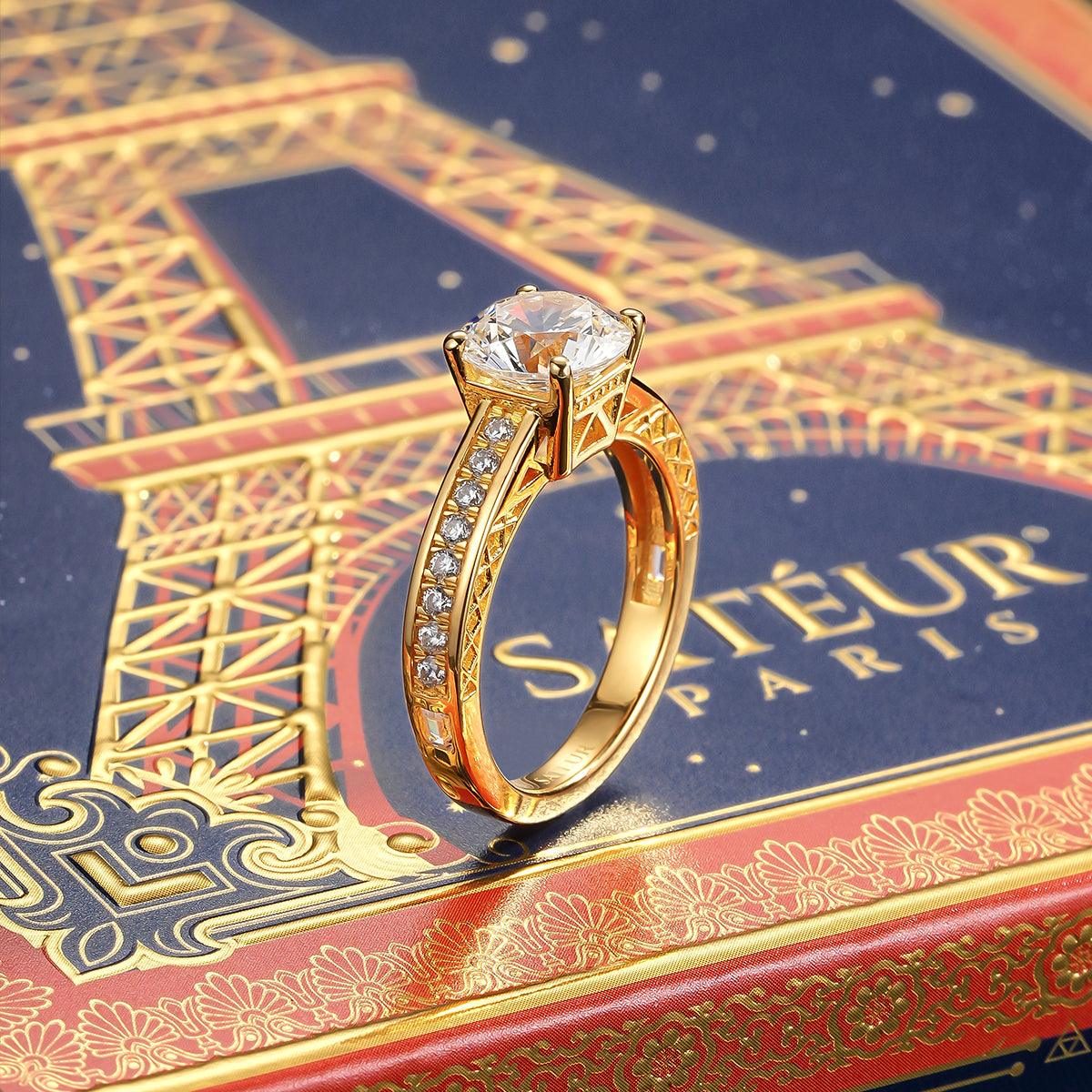
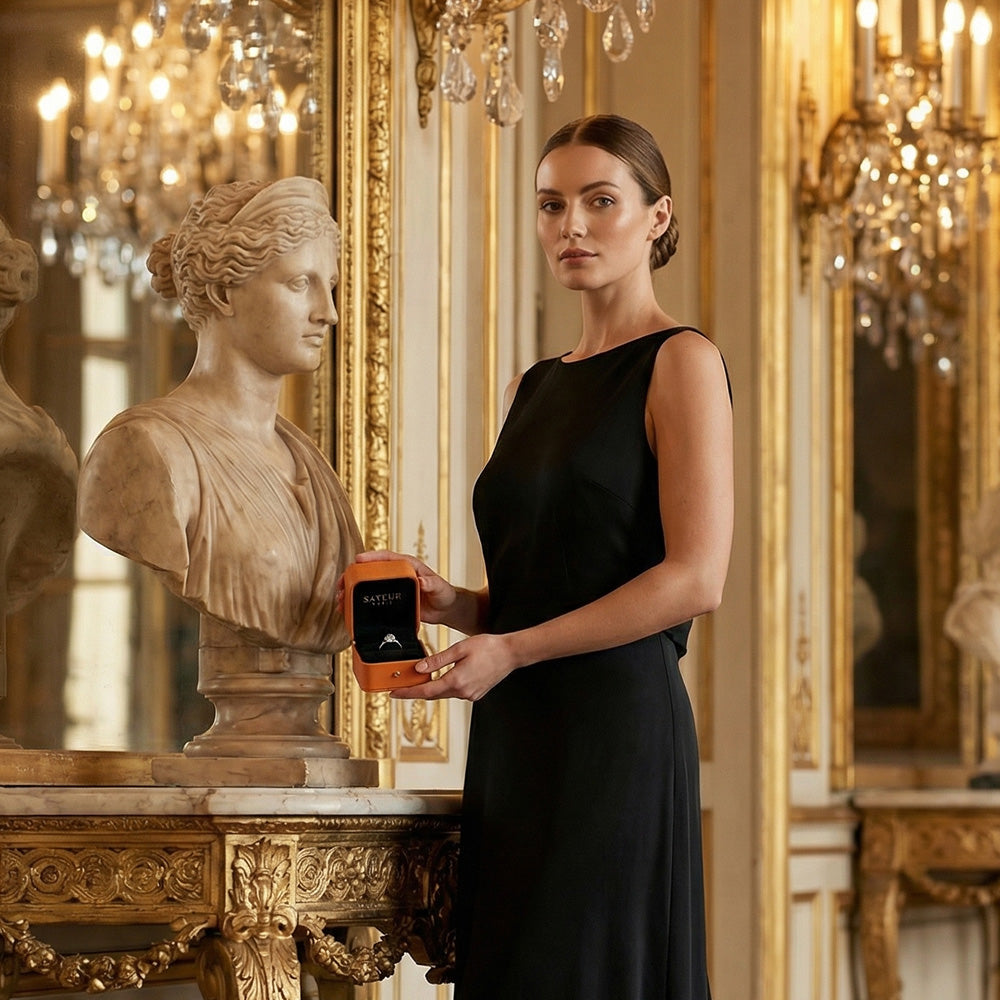
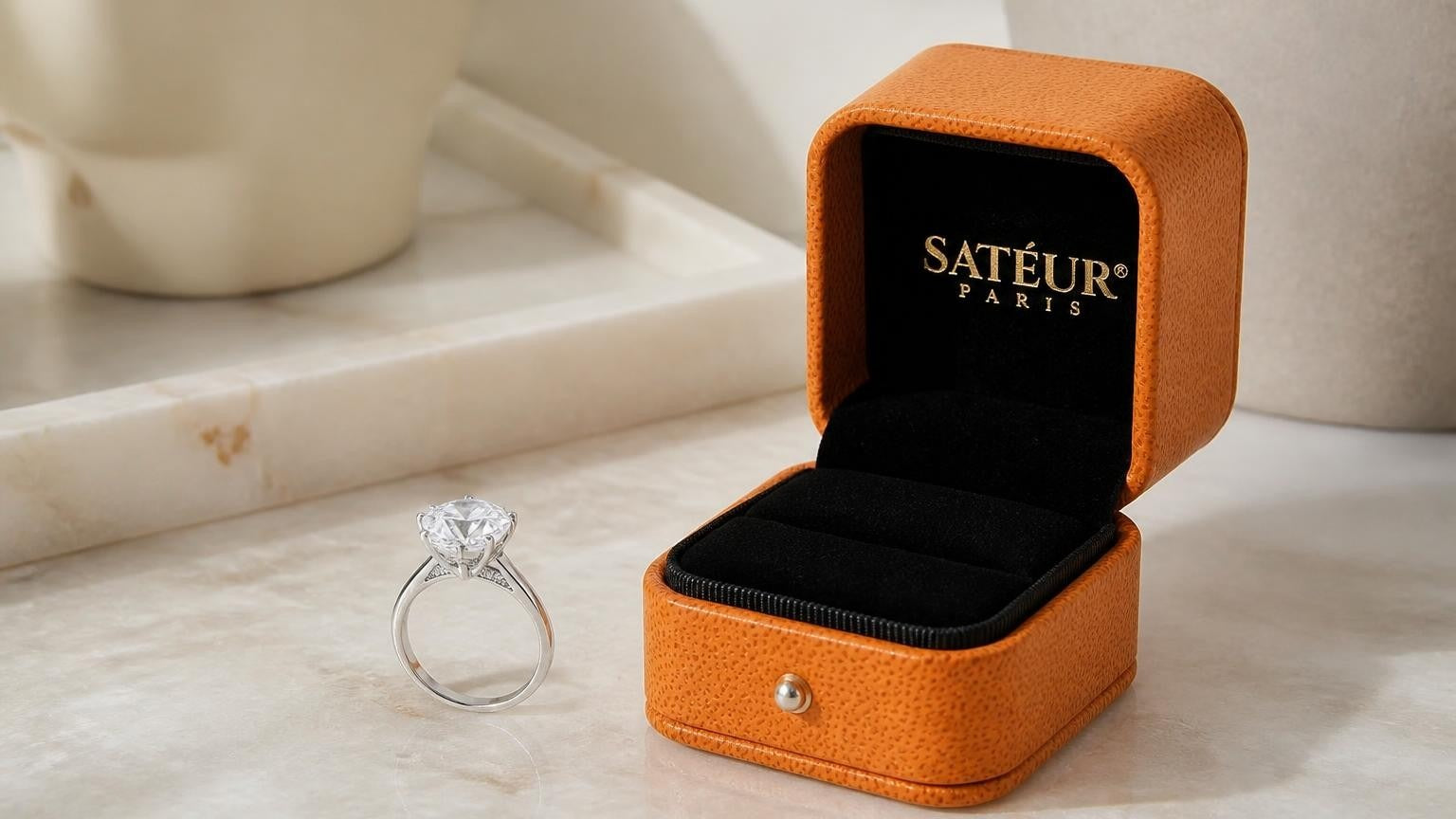
Round cuts are the most universally flattering of all diamond shapes. Their symmetry reads elegantly across every hand type. On elongated hands with long fingers, a round solitaire in a slim band maintains proportion without borrowing visual real estate from the finger itself. The Satéur Destinée Ring™ — a 1.00 carat round cut in 18k white gold finish — is the clearest expression of this principle.
Oval cuts on elongated hands create a soft elongating effect that complements rather than exaggerates. Where a marquise might read as too dramatic on very long fingers, an oval maintains a sense of ease. The oval moissanite engagement ring category offers some of the most compelling proportions currently available — the elongated silhouette reads generously against even smaller carat weights.
Cushion cuts add a softness that suits elongated hands without introducing unnecessary visual weight. Their rounded corners keep the overall impression light. On slender hands, a cushion in a slightly elevated setting creates the appearance of a larger stone — one of the more effective ways to use the proportional advantage of long fingers.

Square and Asscher Cuts for Longer Fingers
Longer fingers are the natural home for square and geometric diamond shapes. The princess cut, the asscher, and the radiant all carry a visual density that benefits from the canvas of a longer finger. On a shorter hand, these cuts can feel heavy. On a longer hand, they establish presence.
The asscher cut carries a particular architectural quality — its deep pavilion and step-cut facets create a hall-of-mirrors effect that reads with understated authority rather than flash. It suits a buyer who values the considered over the conspicuous. In a four-prong setting, the clean corners of the asscher read in full.
Princess cuts offer sharper corners and more brilliant light return than the asscher. On long fingers, the square footprint sits in balance with the finger's length. In a four-prong setting — the most common choice — the corners are protected while the stone's full face-up appearance is preserved.
Both cuts suit The 1% Ring collection philosophy particularly well: stones that earn their presence through optical quality rather than carat weight alone.
Marquise and Pear Shapes: Visual Impact and Hand Type
Marquise and pear cuts are the most dramatic elongators in the diamond shape vocabulary. Both create a pointed end that extends visually well past the stone's actual dimensions.
On shorter, wider hands, a marquise set vertically along the finger creates a striking lengthening effect — arguably the most effective single cut intervention for the proportional range of the hand. The elongation is direct and visible at every viewing angle.
Pear shapes offer the same elongating function with a softer silhouette. The rounded end toward the base grounds the design; the pointed end creates visual extension without the bilateral symmetry of the marquise. Pear cuts suit buyers who want elongation with a slight asymmetric grace — and they carry moissanite particularly well, where the vivid fire of the lab-created gemstone animates the shape's distinctive outline.
On already long, slender fingers, both marquise and pear shapes warrant careful consideration. The elongation effect can read as excessive. A pear tilted slightly at an angle — east-west or at a diagonal — often resolves this, introducing a more relaxed, contemporary character.
Why Gemstone Choice Matters as Much as Shape
Shape is the architectural decision. Gemstone type is the material decision — and it directly affects how the ring reads in different lighting environments, across the table, and in photographs.
A mined diamond's brilliance is characterised by white light return: clean, restrained. Moissanite, a lab-created gemstone, has a higher dispersion — it returns more colour, more fire, approximately 2.4× the dispersion of a mined diamond. That vivid, rainbow-forward sparkle is different in optical character from diamond. Neither is objectively superior; they are distinct signatures that suit different buyers and ring styles.
For buyers seeking the closest visual approximation to a fine mined diamond, Satéur Gems® delivers diamond-accurate character: the restrained, white brilliance of a flawless stone, with no additional colour interference. For buyers who want vivid, expressive fire as a defining element of the ring's personality, moissanite is the transparent choice — openly lab-created, with a distinctive optical profile that holds up to any comparison.
The metal setting interacts with both. White gold and platinum maximise the cool, clear read of Satéur Gems® and mined diamond. Yellow gold introduces warmth that flatters moissanite's fire and adds tonal depth to oval and cushion cuts. Rose gold flatters warmer skin undertones and softens round and pear cuts into a more romantic context.

Satéur Gems®: Flawless Look, Accessible Price
The decision about which diamond shapes suit which hand is rarely made in isolation. Budget is part of the proportional equation — the funds allocated to setting design, band width, and stone size collectively shape how the ring reads on the hand.
Satéur Gems® is a trademarked diamond simulant engineered to deliver the look of a D-E colour, flawless-cut diamond. Its optical result — clean white brilliance with diamond-accurate light return — is indistinguishable with the naked eye from a mined diamond of equivalent grading. Satéur Gems® carries approximately 8.8 Mohs hardness: extremely durable, built for everyday wear, holding its brilliance for life.
The price differential is material. A comparable mined diamond solitaire runs approximately $10,000. The Satéur Destinée Ring™ — the same 1.00 carat round cut, 18k white gold finish — begins at a fraction of that figure. The difference is not compromise. It is The New Diamond Standard applied: the same visual outcome, reached through intelligence rather than inherited convention.
For hand shapes where a larger face-up stone area creates better proportion — a wider hand benefiting from an oval of 1.5 carats, for instance — Satéur's pricing makes that proportional decision viable where it might otherwise require sacrificing setting quality or metal finish. The full moissanite collection and the Satéur Gems® range both begin below $200, with settings that carry the same considered finish as pieces at ten times the price.

Satéur Destinée Ring™
The look of a flawless diamond, for around 1% of the price.
Compare to a $10,000 mined diamond
Joined by 100,000+ couples across 150+ countries.
Discover The 1% RingFree worldwide shipping · 30-day returns · Lifetime Satéur Care

Whatever the hand shape — shorter and wide, elongated and slender, or anywhere between — the ring that endures is the one where every variable was considered: cut, diamond shapes, settings, gemstone character, and metal. Not one of these in isolation, but all of them in proportion to each other and to the hand they will spend a lifetime on.
Frequently Asked Questions About Ring Fit and Hand Shape
What hand shapes suit round and oval diamond cuts best?
Round cuts are genuinely universal — their symmetry creates no dominant visual axis and they work across all hand shapes. Oval cuts are particularly flattering on shorter or wider hands, where their elongating vertical line creates the appearance of length. On slender hands with long fingers, oval cuts reinforce elegance without overstatement.
Do smaller carat weights appear larger on slender fingers?
Yes. The face-up surface area of a stone reads against the finger's width. On a narrow finger, even a 0.75 carat stone appears proportionally generous. A well-chosen cut — particularly oval or marquise — amplifies this effect further, using the elongated silhouette to appear larger than the carat weight suggests.
How does finger length influence the choice between solitaire and halo settings?
Longer fingers carry halo settings well — the additional surface area reads in proportion with the finger's length. On shorter fingers, a halo can add visual width at the expense of elongation. A classic solitaire on a slender band maintains a cleaner, more elongating line on shorter fingers and remains the most enduring choice across all hand shapes.
Should I match my engagement ring shape to my hand size or personal preference?
Both matter, but not equally. Personal preference defines what the ring means to the person wearing it. Hand proportion defines how it reads to everyone else. The best rings reconcile both — a shape the wearer loves that also works with their hand. If a preferred shape does not naturally suit the hand, adjusting carat weight, setting height, or band width often resolves the proportional tension without abandoning the chosen silhouette.
Which diamond cuts create the most visual impact on longer hands?
Square cuts — princess, asscher, radiant — create the most structural visual impact on longer hands, where they sit in genuine proportion with the finger's length. Emerald cuts also read with authority; their step-cut facets and long rectangular table create a clean, sophisticated presence. Both categories perform at their best when the gemstone behind them is optically precise.
How do metal colour and gemstone choice work together for hand flattery?
White gold and platinum allow the gemstone's own colour character to dominate — ideal for Satéur Gems®, where the goal is diamond-accurate white brilliance. Yellow gold introduces warmth and suits oval and cushion cuts, especially on warmer skin undertones. Rose gold flatters lighter skin tones and adds a soft romantic quality to round and pear cuts. The gemstone type interacts with metal in both directions: moissanite's vivid fire reads more dramatically in yellow gold; Satéur Gems®' restrained white brilliance reads most precisely in white gold or platinum.
The question of the best hand shape for engagement rings is ultimately a question of proportion and presence — how a stone reads against the hand wearing it, in natural light and across the table. Shape, cut, gemstone type, and metal interact differently with every finger. The decision that holds is the one where all four work together.
The New Diamond Standard is not defined by what you spend. It is defined by what you understand. Begin with proportion. Let brilliance follow.
















Leave a comment
This site is protected by hCaptcha and the hCaptcha Privacy Policy and Terms of Service apply.