



Casse-Noisette
After the ball, before the morning.

Plate I The staircase, after the last waltz.
Somewhere in Paris a ball has just ended. The orchestra has packed away its strings, the candles on the great fir are burning low, and a woman in ivory silk has sat down on the stairs with her shoes in her hand, because the evening was perfect and she is in no hurry for it to end.
Casse-Noisette is our Christmas edit, named for the ballet every city returns to in December: the night the toys awoke. A crimson box painted with that night. Beside it, a small orange box holding something that looks like a $10,000 diamond and costs one percent of it. The gift that waits on the stairs.
Scene I The stair hall, after midnight.
After the last waltz.
The ballroom is emptying. Somebody is putting out the candles one by one, starting at the far end of the room.
She has climbed three steps and sat down. The silk can wait. The stone is cool. For once, the night can carry on without her for a moment.
The best gifts are not opened at the table. They are found on the stairs.

Scene II The staircase, barefoot.
Her shoes in her hand.
There is a particular freedom at the end of a good evening. The heels come off. The stole slips. The hair has stopped pretending to be arranged.
Nothing about her is finished, and everything about her is certain.
Crimson, ivory, gold. Casse-Noisette.
The night the toys awoke.
A meditation on the gift that looks the part
Every December the same ballet returns to the same stages. A girl is given a nutcracker carved like a soldier. At midnight the toys awake, the soldier becomes a prince, and the girl is led through a forest of snow to a kingdom made of sugar. Nobody in the audience believes a word of it. Everybody comes back the next year.
That is what a gift is for. Not to explain itself. To arrive in a box worth keeping and turn an ordinary evening into the one that is remembered. The Maison drew the Casse-Noisette box for exactly that: crimson lacquer, a gilded frame, two toy soldiers standing guard over a painted ballroom.
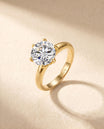
Beside it, the orange box. Inside that, a stone cut to the standard of a flawless diamond, held in fine claws, returning the candlelight in the same way to the same eye. Across a table, across a ballroom, across a staircase at one in the morning, nobody knows. The difference is the price. The look of a $10,000 diamond, for one percent of it.
The Casse-Noisette box is made once, in a limited number, for this December. The toys wake one night a year. We thought the box should keep the same hours.
The look of a $10,000 diamond. For one percent.
Scene IV The Casse-Noisette box, on the stair.
A crimson box, painted with a ballet.
Two toy soldiers in tall shakos. A candle tree. A prince and a girl in the middle of a waltz.
The Casse-Noisette box was painted to be kept long after the ribbon is gone. On the dressing table, on the bedside, on the shelf where the important things live.

Scene V The stair, the box, the last candle.
The night stays.
The candles are out. The orchestra has gone home. The staircase is cold and she is still on it.
The ring is in its box, the box is beside her hand, and the night belongs to her a little longer. It will be worn on Christmas morning, and on every ordinary morning after that. That was the point of it.
A folio from the Edit.


Not wrapping.
Not occasion.
Just a night, kept.
Pieces from the Casse-Noisette Edit.
A small folio of pieces for the night the toys awoke. Each engineered to look like a $10,000 diamond, kept for a fraction.


Destiny, in six prongs.


A pair, for the icon.
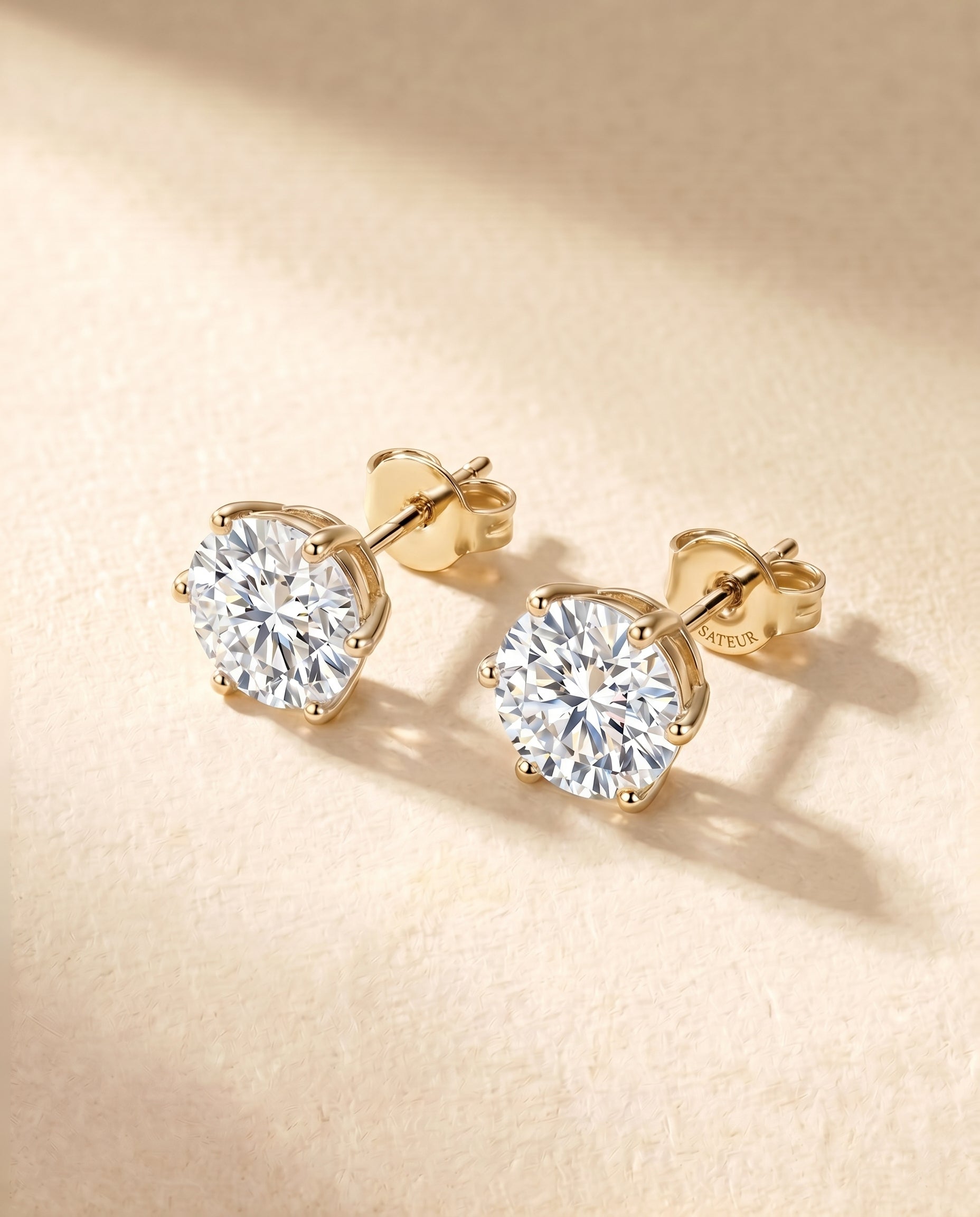
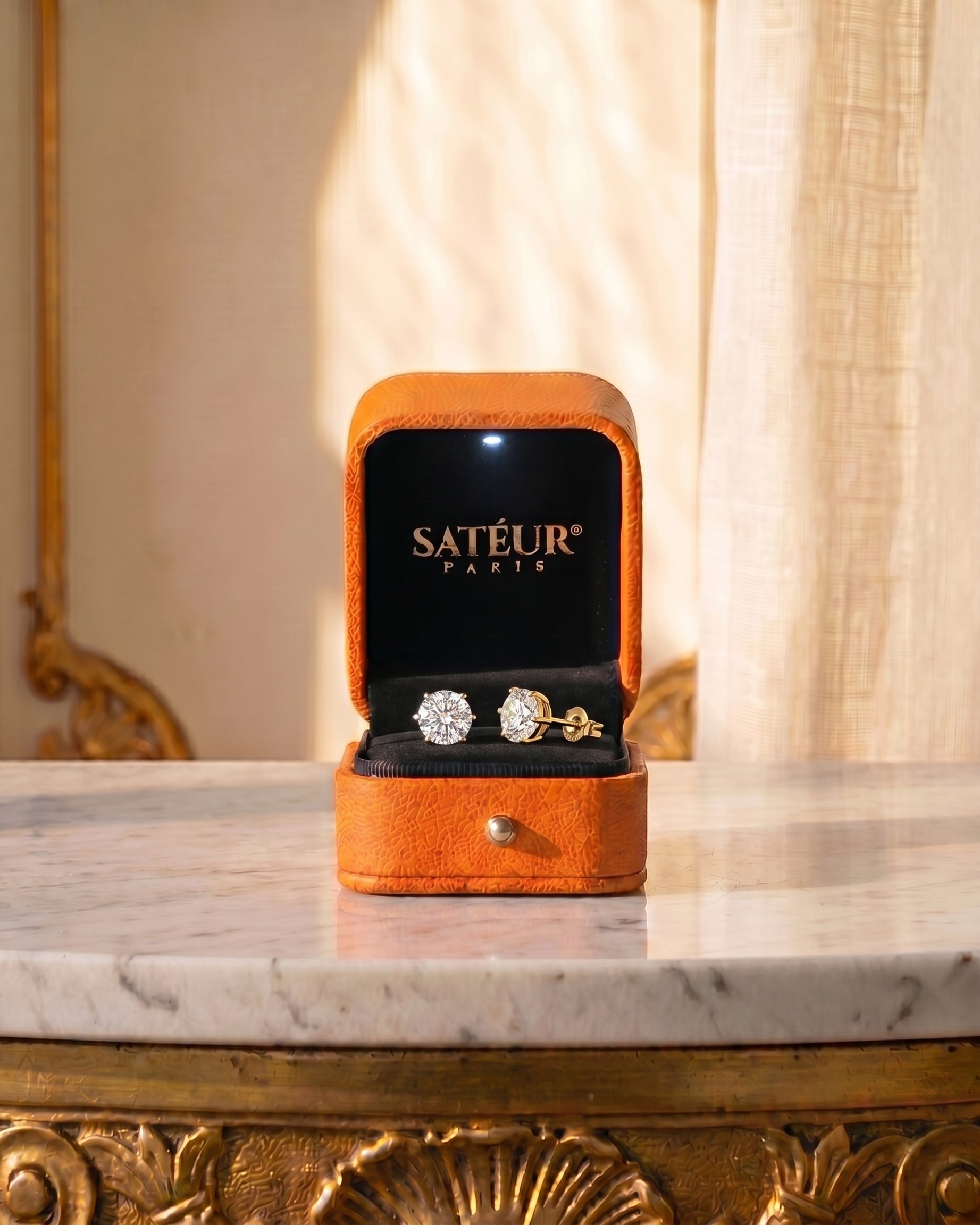
The icon, twice and gold.


A heart, held by the chain.
