



Sérénissime
Venice, in the one month it keeps for itself.

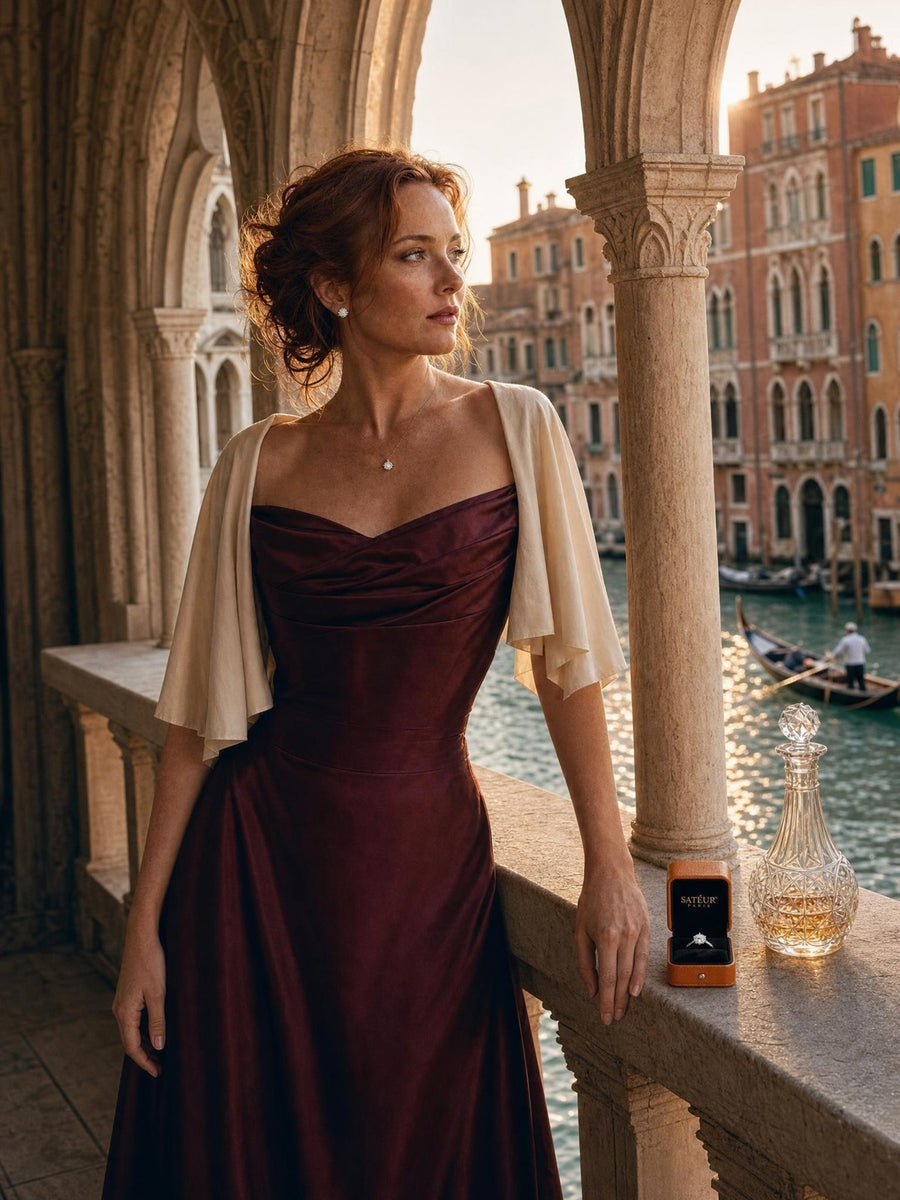
Plate I Plate I — the balcony, at the golden hour.
Venice has a month it does not show the summer crowds. September. The water goes still, the light turns to brass, and the palazzi open their upper windows to the evening for the first time since spring. It is the hour the city was built for, and the city knows it.
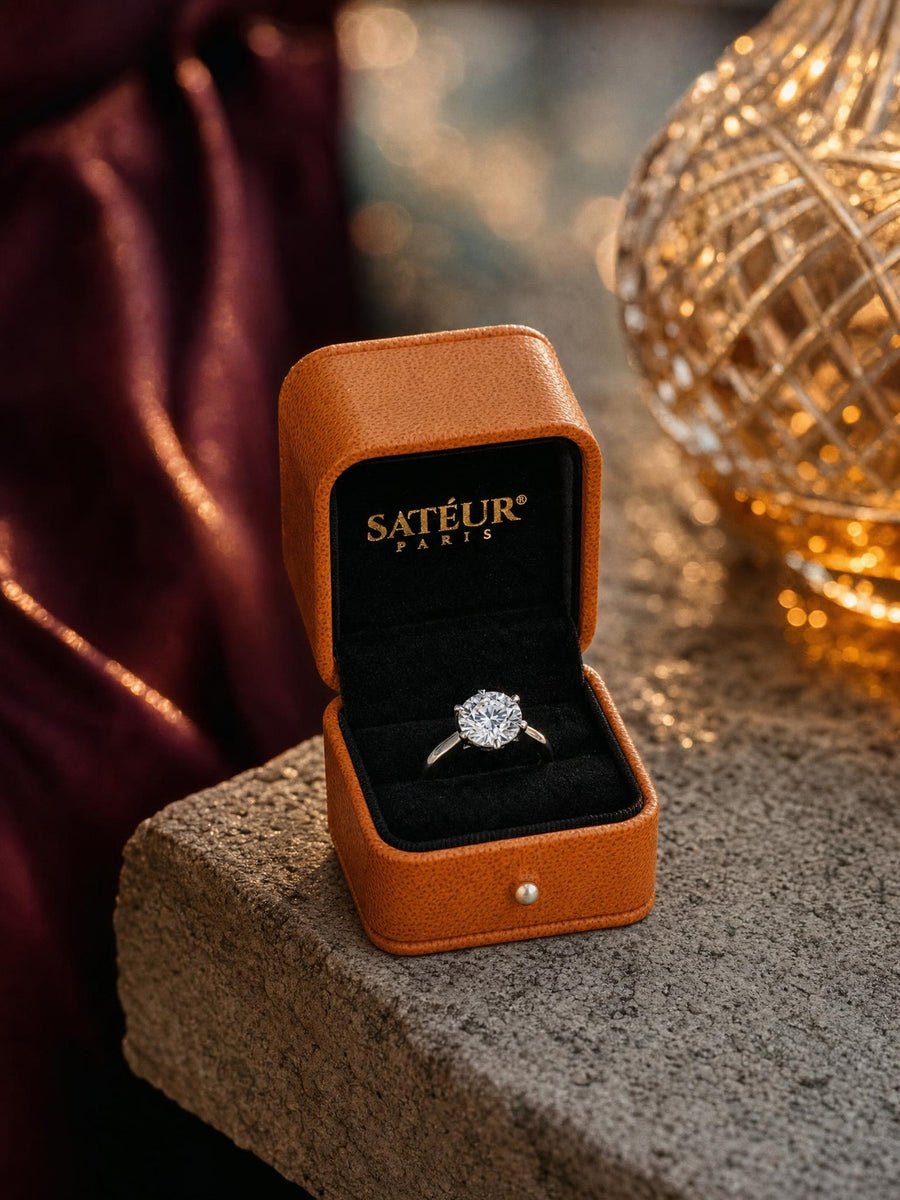
*Sérénissime* is the edit we made for that hour. A balcony above the canal. A gown the colour of old wine. And on the stone ledge, beside the decanter, a small orange box holding something that looks like a $10,000 diamond and cost one percent of it. Brilliance, at the height of the season.
Scene I The Maison residence, Autumn 2026 — moving image.
The city turns to gold.
There is a moment on the Grand Canal when every facade opposite catches the same light at once. Ochre, rose, faded white. The water takes it and gives it back.
She is not looking at the water. She has seen it before. She is looking at the evening, which is only now beginning.
A diamond does not need an occasion. It needs a balcony.

Scene II A still moment, between courses.
She wore it for the evening.
Not for the dinner. Not for the guests. For the hour on the balcony before either.
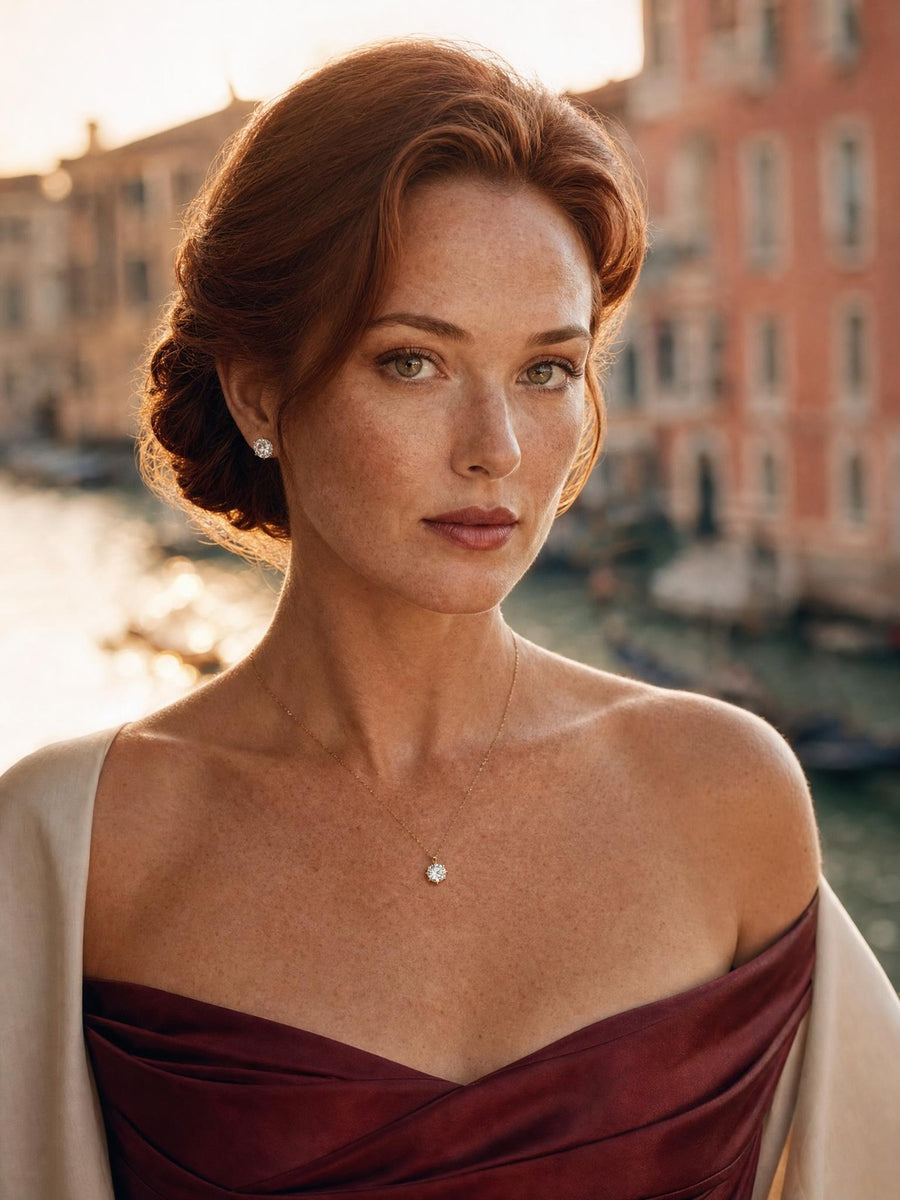
The taffeta was chosen for the way it holds the light. The stone at her ear was chosen for the way it returns it. The box on the ledge was opened once, this afternoon, and has not been closed since. It has nowhere else to be.
earned the name. La Serenissima
Brilliance, on the water.
A meditation on the diamond that looks the part
Venice has always understood one thing better than any city on earth. That the look of a thing is the thing. Its palaces are brick dressed in marble. Its gold is leaf. Its most famous glass is sand, made to behave like jewels for six hundred years. Nobody has ever called Venice a fake.
The Maison learned from the Venetians. A Satéur Gems® stone is cut to the standard of a flawless diamond, graded on the same scale, set in the same six prongs, and it returns the light in the same way to the same eye. Across a table, across a balcony, across a canal, nobody knows. The difference is the price. The look of a $10,000 diamond, for one percent of it.
What that buys is not a smaller diamond. It is a larger life around one. A pair of studs worn to the market and to the opera. A pendant that does not go back in the drawer. A ring that can be lost overboard, in theory, without anyone needing to lie down.
Maison Satéur keeps a small folio of pieces for the woman who has understood this. The Venetians would have called her sensible. We call her ours.
The look of a $10,000 diamond. For one percent.
Scene IV Set down, not put away.
A small object. orange
The Maison's box was not made for Venice. It was made for her drawer, her bedside, her travelling case.
On a stone ledge above the Grand Canal it looks, briefly, like it was made for this. Orange against Istrian white. Black velvet against the evening. The lettering catches the same light the water does.

Scene V A presence, shared at the table.
The evening begins.
The gondola passes. The light goes from gold to rose to the blue that Venice keeps for after.
She will go in to dinner. The box will go in with her, closed now, and the ring will go on, and it will be worn through the dinner and the week and the winter, in cities with less to say for themselves. This was always the agreement.
A folio from the Edit.
Not occasion.
Not announcement.
Just brilliance, on the water.
Pieces from the Sérénissime Edit.
A small folio of pieces curated for the golden hour. Each engineered to look like a $10,000 diamond, kept for a fraction.


The arrival, marked.
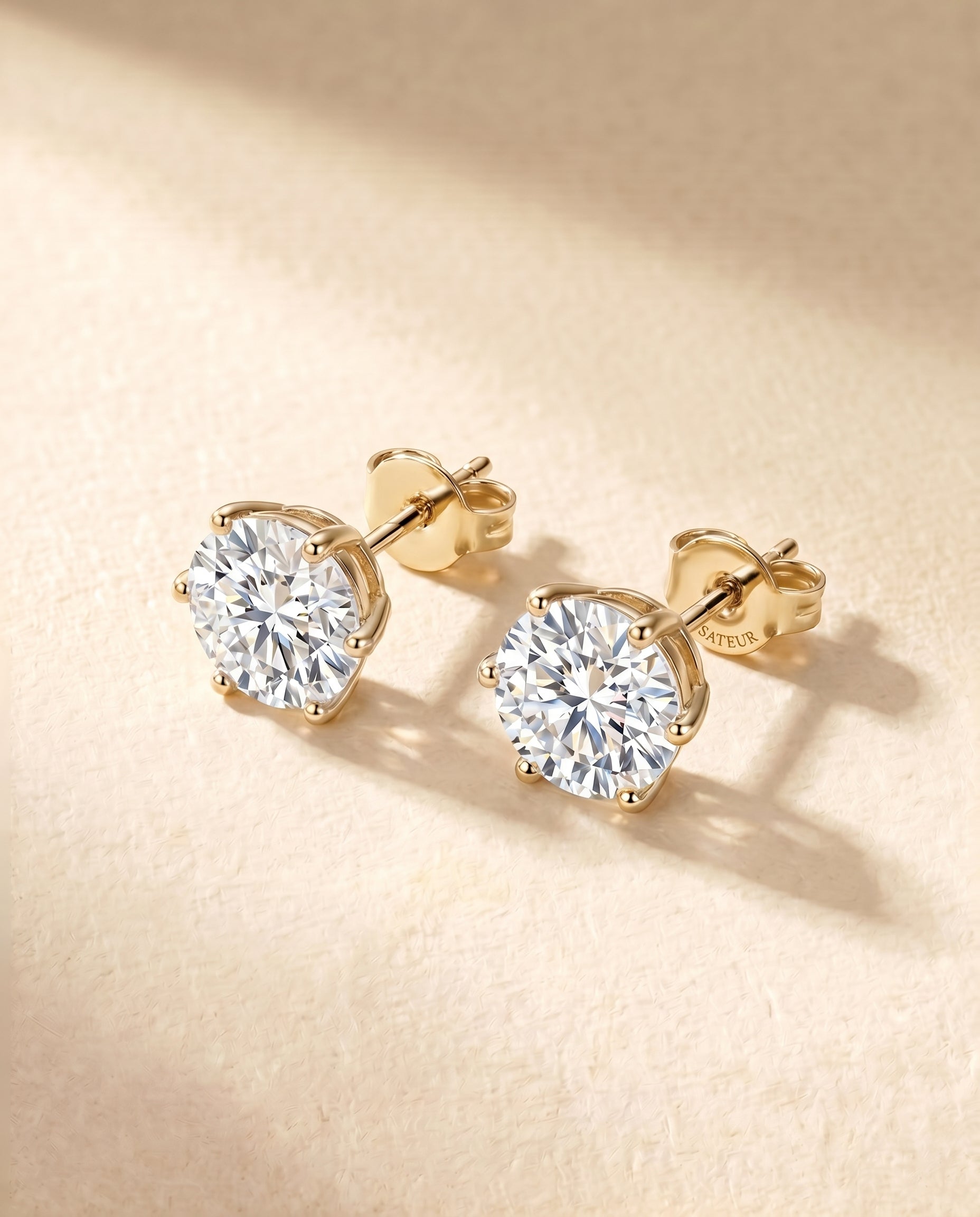
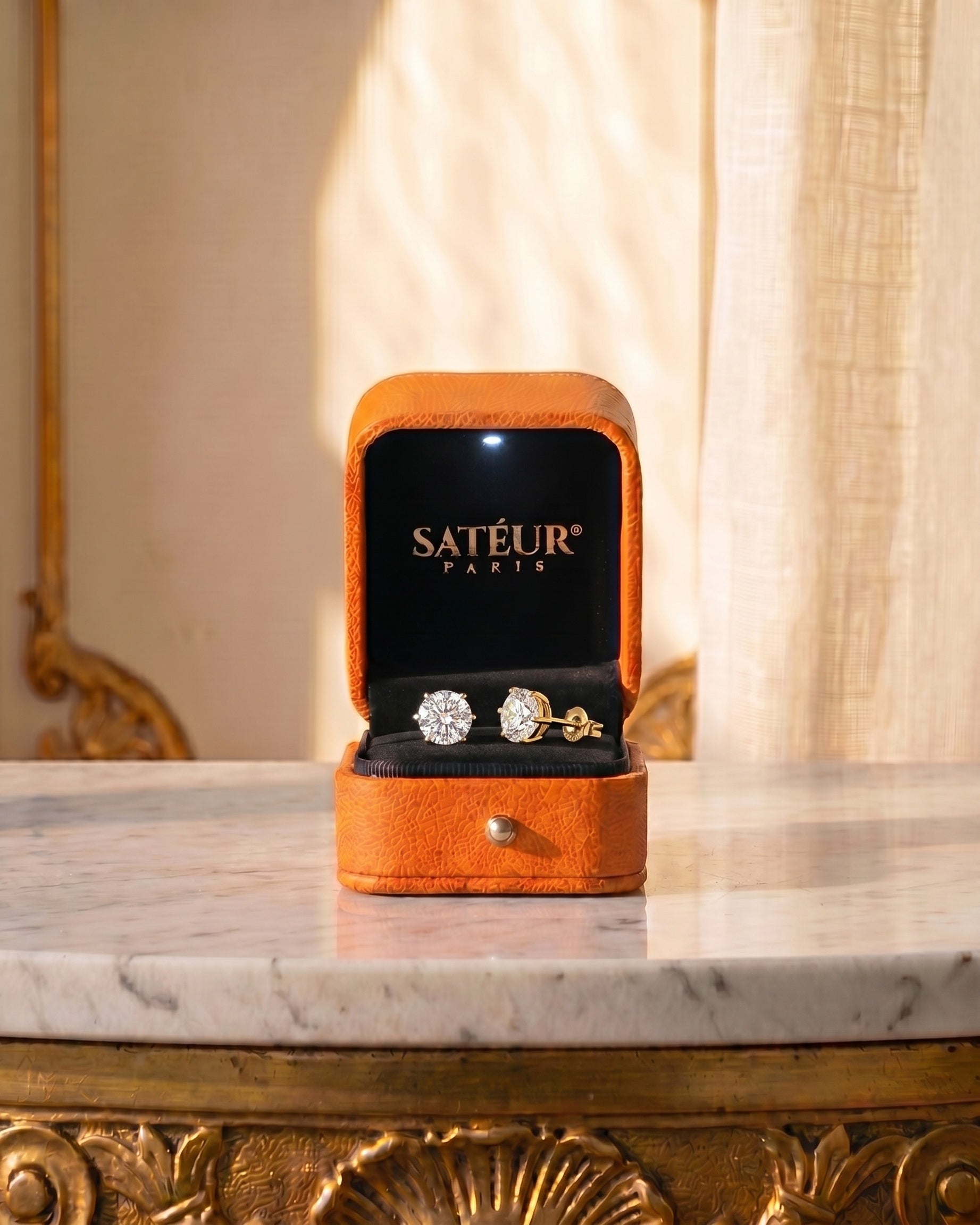
The icon, twice and gold.


A constellation, at the throat.


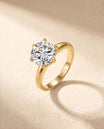
Cushioned, ten and a half carats.
