

Diamond Substitute: A Considered Guide to the Best Alternatives
A diamond substitute is any gemstone or lab-created material that delivers the visual and structural qualities of a mined diamond without the mined-diamond price. The category spans trademarked simulants, lab-created gemstones, and naturally occurring alternatives — each with distinct optical properties, durability ratings, and price positions. Choosing well requires understanding what each actually delivers.
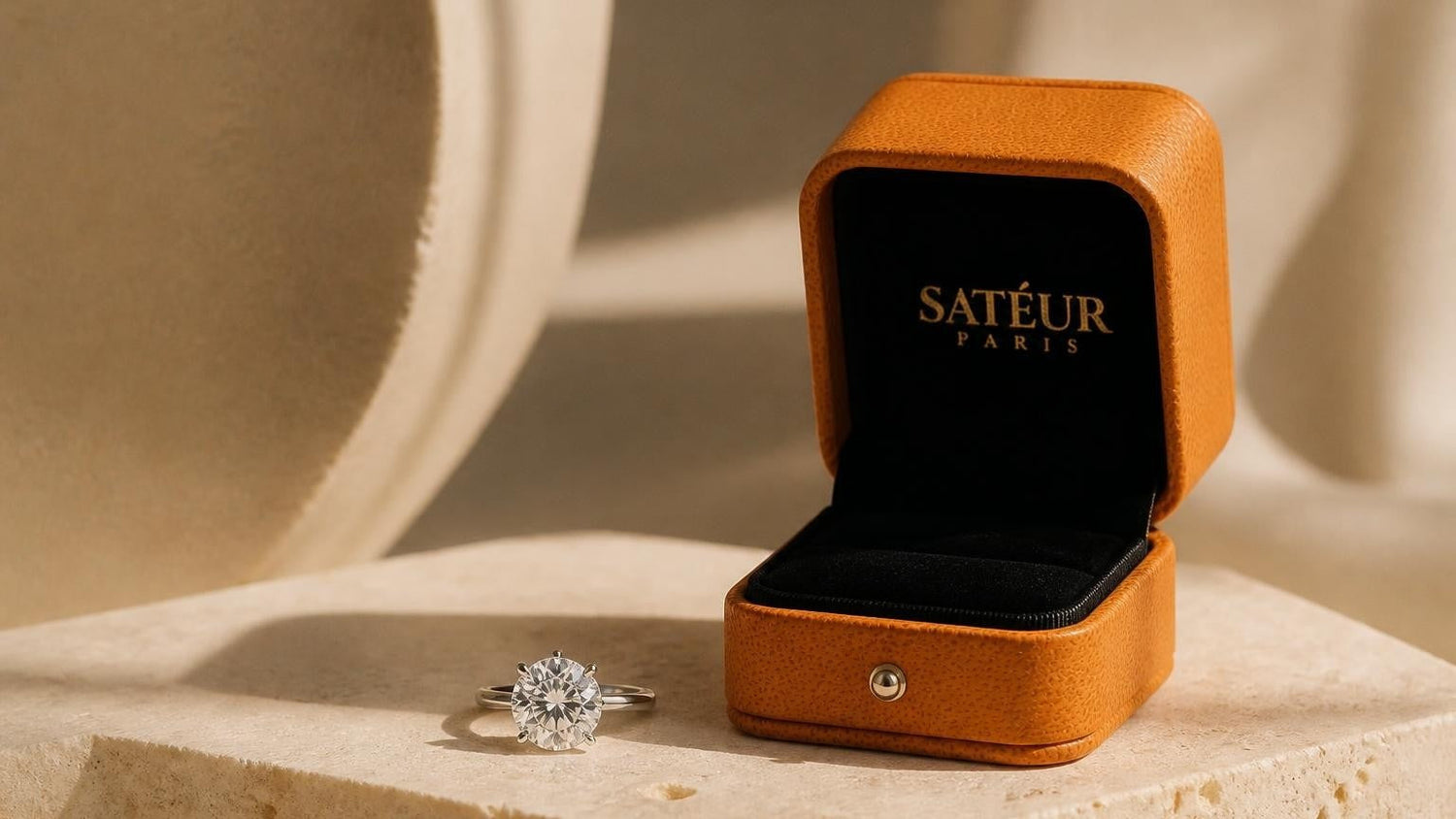
The Satéur Gems® collection sits at the premium end of this category: a trademarked diamond simulant engineered to D-E colour with Excellent cut, delivering the clean white brilliance of a flawless diamond at approximately 1% of the mined-diamond price. It is The New Diamond Standard — not a compromise, but a reassessment of what the price was actually paying for.
Key Takeaways
- Diamond simulants like Satéur Gems® achieve D-E colour with Excellent cut at approximately 1% of the mined-diamond price.
- Satéur Gems® is rated approximately 8.8 on the Mohs scale — extremely durable for everyday wear, holding brilliance for life.
- Moissanite (Mohs ~9.25) produces more rainbow fire than a diamond; Satéur Gems® replicates the restrained white brilliance of a flawless diamond.
- Cubic zirconia and white sapphire carry significant limitations: clouding, surface haze, and lower optical performance over time.
- Entry-level Satéur Gems® pieces begin at approximately $138.
- The best diamond alternatives are defined by long-term optical stability — not purchase price alone.
What Is a Diamond Substitute?
A diamond substitute is a gemstone — natural, lab-created, or engineered — selected for its visual resemblance to a mined diamond. The term covers a wide spectrum, from synthetic simulants engineered to mimic diamond optics precisely, to naturally occurring stones that share only surface-level similarities.
The meaningful distinctions are optical — how a stone handles light — and physical: how it performs over years of daily wear. Brilliance, fire, colour stability, and hardness are the four variables that separate credible diamond alternatives from decorative compromises.
Two categories dominate the market: diamond simulants, which replicate the appearance without sharing diamond's chemical structure, and lab-created gemstones such as moissanite, which are real gemstones grown in controlled environments. A third category — lab-grown diamonds — shares the same chemical and optical structure as mined diamonds entirely, and sits in the lab diamond collection.
How Diamond Alternatives Compare
The four main diamond alternatives differ substantially in optical performance, durability, and price. The comparison below covers the properties that matter for a piece worn daily.

| Property | Satéur Gems® | Moissanite | Cubic Zirconia | White Sapphire |
|---|---|---|---|---|
| Optical character | Clean white brilliance — diamond-accurate | Vivid rainbow fire — more than a diamond | Moderate brilliance; dulls over time | Milky, low-dispersion; little fire |
| Colour grade | D-E equivalent | D-F equivalent | Near-colourless initially; yellows with age | Near-colourless to slightly grey |
| Mohs hardness | ~8.8 | ~9.25 | ~8.0–8.5 | ~9.0 |
| Long-term durability | Holds brilliance for life | Holds brilliance for life | Scratches and clouds within years | Durable but prone to surface haze |
| Price point (1 ct equiv.) | From ~$138 | From ~$98 | $50+ | $150–$500+ |
| Composition | Trademarked simulant — composition not disclosed | Lab-created gemstone (silicon carbide) | Synthetic zirconium dioxide | Natural corundum |
Satéur Gems®: The Diamond Simulant Standard
Satéur Gems® is a trademarked diamond simulant engineered to deliver the precise optical character of a flawless diamond. The specification: D-E colour, Excellent cut, refractive index approximately 2.39 — calibrated for clean white brilliance, not vivid dispersion. Across the table, with the naked eye, it reads as a flawless diamond.
The hardness rating of approximately 8.8 Mohs places it firmly in the category of stones built for daily wear. Both Satéur Gems® and Satéur moissanite are extremely durable — engineered for everyday wear, for life. The distinction between them is optical, not structural.
What Satéur Gems® does not do is replicate moissanite's rainbow fire. That is intentional. The goal is diamond accuracy — the restrained, white brilliance that a fine diamond delivers. For those who want a stone that reads as the real thing with the naked eye, Satéur Gems® is the closer match.
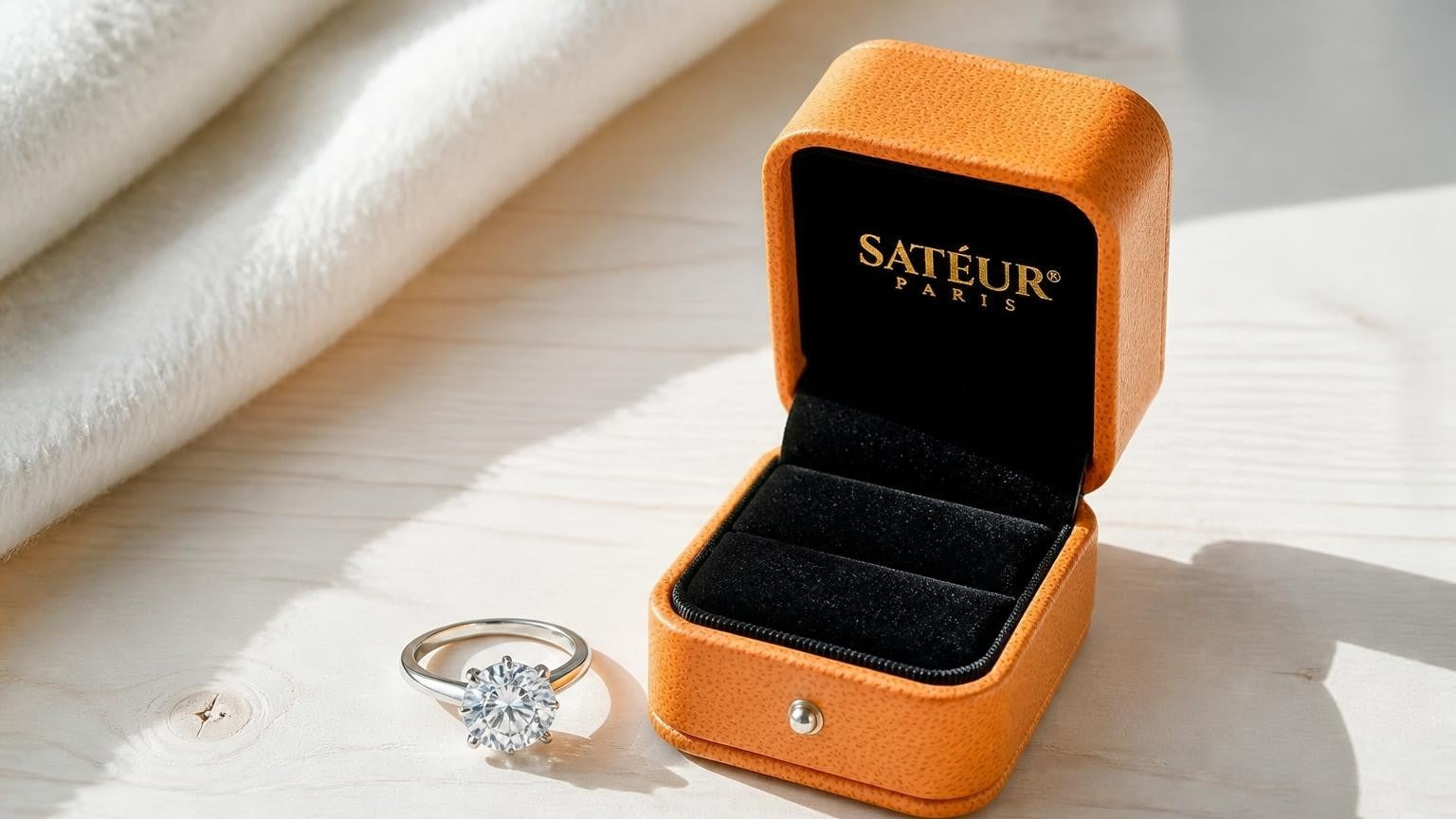
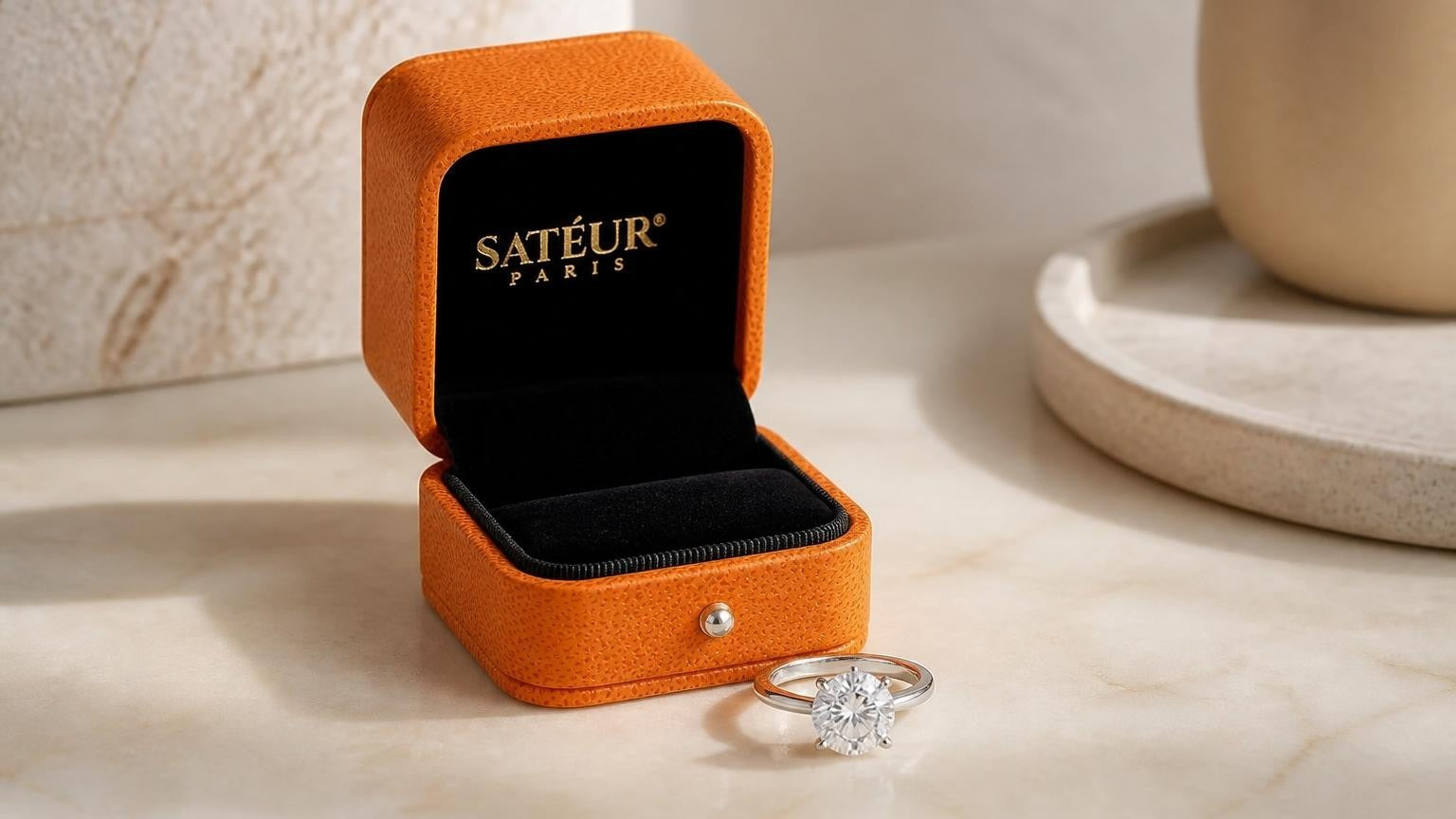
Entry pieces begin at approximately $138. The Destinée Ring — The 1% Ring® — starts at $138 for a 1.00 carat round equivalent. Compare that to a mined diamond of equivalent grading: typically $8,000–$12,000. The visual presence is indistinguishable with the naked eye. Only the number on the receipt changes.

Satéur Destinée Ring™
The look of a flawless diamond, for 1% of the price.
Compare to a $10,000 mined diamond
Joined by 100,000+ couples across 150+ countries.
Discover The 1% RingFree worldwide shipping · 30-day returns · Lifetime Satéur Care
Moissanite: Lab-Created Gemstone
Moissanite is a lab-created gemstone — silicon carbide grown under controlled conditions. It is a real gemstone in its own right, not a diamond, and openly disclosed as such. Its defining optical property is high dispersion: a refractive index of approximately 2.65 produces more fire than a diamond — the vivid rainbow sparkle that distinguishes it from diamond-accurate simulants.
At Mohs ~9.25, moissanite is among the hardest gemstones available. It holds its brilliance permanently. For buyers who want lab credibility, visible fire, and a stone they can name openly, moissanite is a legitimate and durable choice. The Satéur moissanite collection is available from approximately $98 in ring and earring formats.
The key distinction from Satéur Gems®: moissanite looks like moissanite — vivid, distinctive, recognisably different from a mined diamond under close observation. Satéur Gems® looks like a diamond. Both are legitimate choices; the right one depends on the look you are choosing.

White Sapphire as a Natural Alternative
White sapphire is a naturally occurring corundum — the same mineral family as ruby and blue sapphire — with genuine hardness at approximately Mohs 9.0 and real durability for daily wear.
The limitation is optical. White sapphire has a refractive index of approximately 1.77, significantly lower than diamond's 2.42. The result is a milky, low-contrast appearance with minimal fire. Side-by-side with a diamond or a quality simulant, the difference is immediately visible. White sapphire reads as a pale natural gemstone — not as a diamond alternative in any strict optical sense.
It occupies a niche for buyers who want a natural, openly disclosed stone at a modest price point. As a diamond substitute, it performs below both simulants and moissanite on every optical measure.
Cubic Zirconia: Lab-Created Option
Cubic zirconia is synthetic zirconium dioxide, mass-produced as the lowest-cost diamond lookalike. It is the most widely available diamond substitute by volume and the least credible in long-term performance.
The Mohs rating of approximately 8.0–8.5 is sufficient to resist immediate scratching, but the real limitation is surface chemistry. Cubic zirconia accumulates micro-scratches, oils, and contaminants rapidly. Within one to two years of daily wear, most pieces show visible dulling and a cloudy surface that cannot be restored. Colour stability is also poor: the initial near-colourless appearance fades, often developing a yellow or grey tint as the surface degrades.
For a piece worn rarely, cubic zirconia may serve its purpose. For an engagement ring or everyday jewellery, the lifespan does not justify even its minimal cost. For a fuller picture of how the alternatives stack up, see our guide to what makes a quality diamond ring alternative.
Diamond Simulant Specifications and Performance

The performance of any diamond simulant is determined by three optical variables: refractive index, dispersion, and cut precision. Refractive index governs how much light bends entering the stone. Dispersion determines whether white light separates into spectral colours — visible as fire. Cut precision is the multiplier: an Excellent-cut stone dramatically outperforms a mediocre cut in the same material.
A mined diamond has a refractive index of 2.42 and a dispersion coefficient of 0.044. Satéur Gems® is engineered to an RI of approximately 2.39 — close enough that the human eye, unaided, perceives no meaningful difference in brilliance. The dispersion is calibrated to produce the restrained white fire a fine diamond delivers, rather than the vivid rainbow dispersion of moissanite.
Every Satéur Gems® is cut to Excellent grade — the specification that extracts maximum light performance from the stone's refractive properties. Combined with D-E colour, the result is a gemstone that delivers the diamond look with complete consistency across pieces and sizes.
Durability at Mohs ~8.8 means Satéur Gems® resists everyday abrasion in rings, earrings, and pendants. In practical daily wear, it holds its surface and its brilliance permanently.
Value Proposition: Cost and Durability
The economics of the diamond alternatives market changed when high-performance simulants entered the category. The historical trade-off — accept lower quality to avoid mined-diamond prices — no longer applies at the premium end.
A 1-carat round brilliant mined diamond at D-E colour, VS+ clarity, Excellent cut trades at approximately $8,000–$12,000. The same visual presence — the same colour grade, the same cut standard, indistinguishable with the naked eye — is available in Satéur Gems® from $138.
That is not a saving. It is a different calculation. The question is not what the stone costs — it is what the cost was paying for.
Moissanite enters from approximately $98 per comparable size. White sapphire at comparable quality is $150–$500. Cubic zirconia costs from about $50 but requires replacement within years. When durability is factored into total cost of ownership, quality simulants and moissanite are the only positions that hold their value across a lifetime of wear. Over 100,000 customers across 150 countries have made this calculation and chosen a different path.
Choosing the Right Stone for Your Ring
The right diamond substitute depends on a single, clear question: do you want a stone that looks like a diamond, or a stone that is visibly itself?
If the goal is diamond-accurate appearance — the clean white brilliance that reads as a flawless stone across the table and in any light — Satéur Gems® is the answer. The 1% Ring® is the most direct expression of that principle: the visual presence of a $10,000 mined diamond, at 1% of the cost. For anyone evaluating best diamond alternatives for an engagement ring, it is where the category reaches its clearest conclusion.
If you want a lab-created gemstone to disclose openly, with more fire than a diamond, moissanite is the correct choice. Explore the moissanite ring collection for sizes across all budgets.
If your consideration extends to a natural stone, white sapphire has genuine durability — but its optical limitations mean it cannot credibly replace the diamond look at any price point.
The engagement rings collection presents all three Satéur tiers — Gems®, moissanite, and lab diamond — for direct comparison. For a broader overview of the alternatives landscape, the guide to the best diamond ring alternatives covers the full category in depth.
Frequently Asked Questions
What is the difference between a diamond substitute and a natural diamond?
A natural diamond is a mined mineral — carbon crystallised under extreme geological pressure over billions of years. A diamond substitute is any material — natural, lab-created, or engineered — selected for its visual resemblance to a mined diamond. The key differences are chemical composition, cost, and in some cases optical character. A quality simulant like Satéur Gems® replicates the visual appearance of a flawless diamond with the naked eye; it does not share diamond's chemical structure.
How durable is a diamond simulant for an engagement ring?
A quality diamond simulant at Mohs 8.8 or above is entirely appropriate for everyday wear as an engagement ring. Satéur Gems® at approximately Mohs 8.8 and moissanite at approximately Mohs 9.25 both hold their surface and brilliance for life under normal daily conditions. Cubic zirconia, with lower surface stability, is less suitable for daily wear in the long term.
Will a diamond substitute cloud or yellow over time?
This depends on the material. Satéur Gems® and moissanite are permanent — they do not cloud, scratch, or yellow with age. White sapphire is durable but can develop surface haze over years of wear. Cubic zirconia accumulates micro-scratches and surface oils that cause visible clouding and colour shift within one to two years of daily wear. When choosing a diamond substitute for a piece worn regularly, material selection is the critical variable.
How do diamond simulants compare in appearance to mined diamonds?
Satéur Gems® is engineered for diamond-accurate appearance — the clean, white brilliance of a flawless diamond, indistinguishable with the naked eye. Moissanite produces more fire than a diamond — vivid rainbow dispersion that is distinctive under close observation. White sapphire appears milky and lacks the fire and brilliance of a diamond. For genuine diamond-accurate appearance, a quality simulant such as Satéur Gems® is the closest available match.
What colour grades are available in diamond simulants?
Satéur Gems® is produced to D-E colour equivalent — the highest tier of the diamond colour scale, designated colourless. Satéur moissanite is also available at D-F equivalent. Cubic zirconia is typically produced at near-colourless grades and tends to yellow over time. For the whitest, most diamond-accurate appearance, D-E colour is the correct specification.
Why choose a diamond alternative over other gemstones?
Diamond alternatives — particularly quality simulants and moissanite — are the only gemstone category designed to replicate the specific visual properties of a diamond: white brilliance, colourless grading, and controlled fire. At approximately 1% of the mined-diamond price, Satéur Gems® represents the most direct expression of that logic. Other gemstones have their own optical identities; they are not diamond alternatives in any meaningful sense.
















コメントを残す
このサイトはhCaptchaによって保護されており、hCaptchaプライバシーポリシーおよび利用規約が適用されます。