

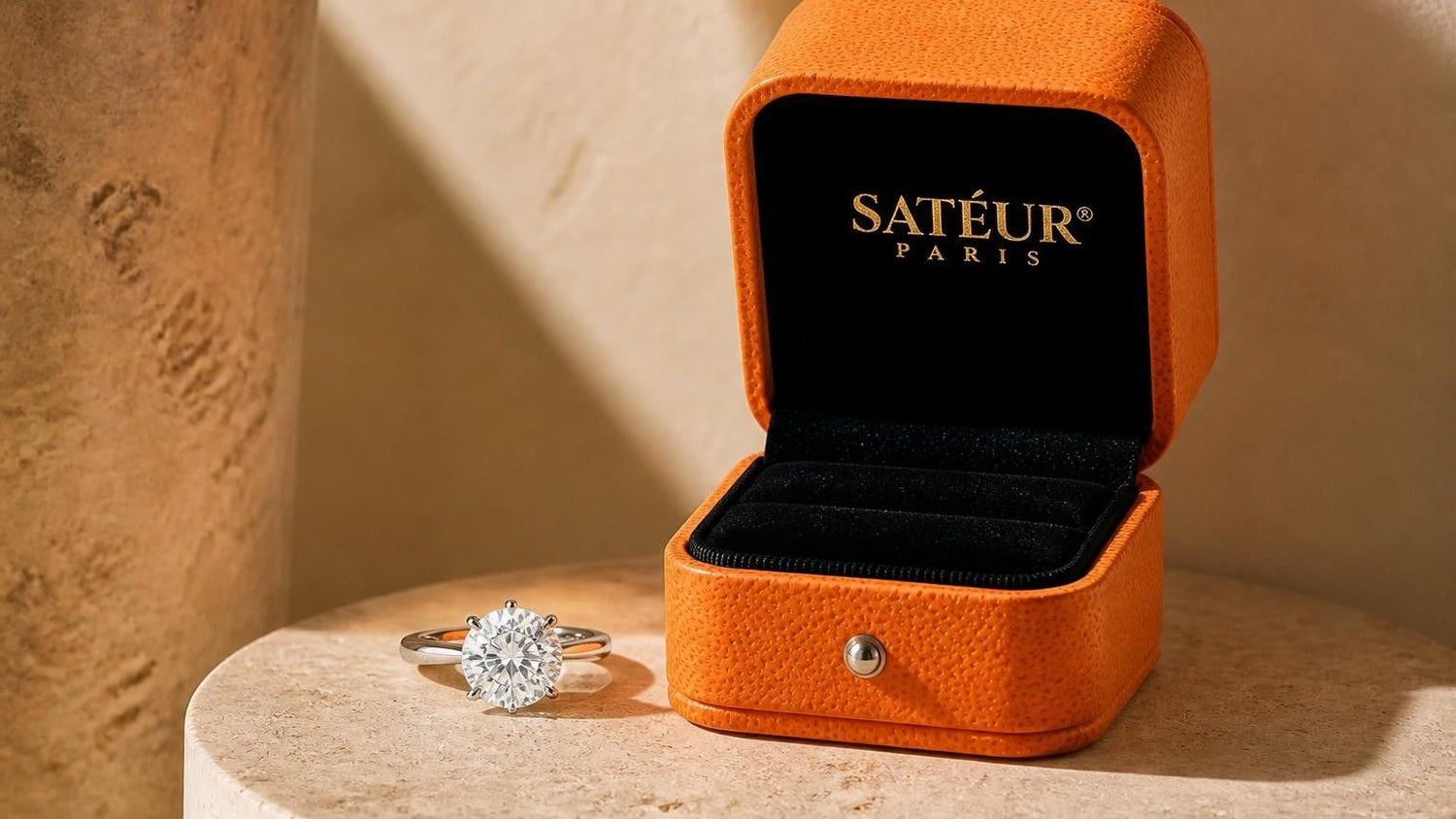
Real vs Fake Diamond: Understanding What Separates Them
The question of real vs fake diamond has changed considerably in the past decade. The more precise distinction now is between a genuine diamond — mined or lab-created — and a diamond simulant: a gemstone engineered to replicate the diamond look without sharing its chemical composition. Neither category is a deception. They are simply different things, with different properties, different certifications, and very different price points. Understanding the difference is the starting point for any considered purchase.
For anyone exploring the diamond look at a different price point, The 1% Ring collection is where that conversation begins — diamond-quality specifications, starting at 1% of the mined diamond price.
Key Takeaways
- A real diamond — mined or lab-grown — is carbon crystallised under extreme conditions, graded by the Four Cs.
- Diamond simulants offer the visual appearance of a diamond at approximately 1% of the price of a comparable mined stone.
- Lab-created diamonds are chemically identical to mined diamonds; simulants are not — they are distinct gemstones.
- Satéur Gems® carry D-E colour grading and Excellent cut — the same benchmarks used for premium mined diamonds.
- Modern simulants like Satéur Gems® are extremely durable (approximately 8.8 Mohs) and built for daily wear.
- Entry-level Satéur pieces begin around $88, making diamond-look jewellery genuinely accessible.
What Makes a Diamond Real
A real diamond is carbon — specifically, carbon atoms arranged in a cubic crystal lattice under conditions of extreme heat and pressure. That crystalline structure determines every property the stone is known for: a Mohs hardness of 10 (the highest of any natural mineral), a refractive index of approximately 2.42, and a distinctive way of handling light that the diamond trade has spent a century refining through cut science.
Two categories of stone meet this definition today. The natural diamond, formed over billions of years in the earth's mantle and brought to the surface by geological events, and the lab-created diamond, grown in a controlled environment using high-pressure high-temperature (HPHT) or chemical vapour deposition (CVD) processes. Both are real diamonds. Both share identical chemical and optical properties. Independent grading laboratories — GIA, IGI — apply exactly the same Four Cs evaluation to both. The price difference between them is significant; lab-grown diamonds typically trade at 50–80% below comparable mined stones. But the diamond itself is real in either case.
A simulant is neither. It may look like a real diamond. It may carry impressive specifications. But it is a chemically distinct gemstone, and the honest trade presents it clearly as such. The word "fake" implies deception — modern simulants involve none. They are transparent alternatives to a stone whose price has, for generations, been shaped more by marketing than by scarcity.
Diamond Simulants: The Alternative
A diamond simulant is any gemstone — natural or lab-created — designed to reproduce the visual appearance of a diamond. The category spans a wide range of quality and performance. At the entry level: cubic zirconia, a zirconium oxide compound that has been the dominant mass-market simulant since the 1970s. At the upper end: moissanite (lab-created silicon carbide) and modern engineered simulants such as Satéur Gems®.
The word "fake" is a category error when applied to simulants. A simulant is not a failed diamond. It is its own gemstone, produced for a purpose: to deliver the diamond look at a fraction of the cost. Calling a high-quality simulant fake is as reductive as calling a lab-grown diamond fake because it did not form in the earth. What matters is what the stone is, what it looks like, how it performs over time, and what it costs.
The key technical variables across simulant types are refractive index, dispersion (the splitting of white light into spectral colour, known as fire), Mohs hardness, and long-term stability. These vary considerably — from a basic cubic zirconia that may cloud within a few years to a precision-engineered modern simulant built to hold its appearance indefinitely.
When a buyer considers how to tell if a diamond is real or fake, the more productive question is: does the distinction matter for how the ring will actually be worn and experienced? For most buyers, the visual and emotional weight of the stone is what counts. On that measure, a well-specified simulant consistently delivers.


Visual Characteristics of Genuine Diamonds
Natural and lab-grown diamonds are valued for a specific quality of light return. A well-cut diamond — Excellent or Ideal grade — returns white light with precision (brilliance) and disperses a controlled amount of spectral colour (fire). The balance between the two is governed almost entirely by cut geometry.
A D-colour diamond has no discernible warmth or tint under normal lighting. It reflects light with clean, colourless radiance — crisp white brilliance and measured fire. This aesthetic is what every diamond-look stone is measured against, which is why the Four Cs were developed: to give buyers a standardised language for what they are purchasing, and a basis for comparison when evaluating real diamonds against the alternatives.
When considering how to tell diamond real from simulant in day-to-day conditions, cut quality is the primary variable. A stone with an Excellent cut and D-E colour, whether mined, lab-grown, or a high-quality simulant, delivers the defining visual property with consistency. Understanding what to look for in an engagement ring typically starts with these fundamentals before any conversation about stone type.
Natural vs Lab-Created Diamonds
The distinction between natural and lab-created diamonds is one the industry has navigated carefully, partly because the diamond trade built much of its prestige on the idea of geological uniqueness. Lab-grown diamonds disrupted that narrative: same chemical structure, same optical properties, independently graded, sold at a fraction of the price.
Lab diamonds are real diamonds — a point worth stating plainly, because the marketing around mined stones has occasionally suggested otherwise. They are not simulants. They are not a test of the original: they are the original material, produced through a different process. The lab diamond collection at Satéur uses IGI-certified stones graded to VS+ clarity and D-F colour — the same standards applied to premium mined gems.
For buyers who want a real diamond and the certification that confirms it, lab-grown is the most direct answer. For buyers who want the diamond look — the visual and emotional presence of a fine diamond — at a genuinely different price tier, a well-specified simulant is the more considered option. The difference is a matter of what matters to the buyer, not a matter of quality.
The Four Cs: Colour, Clarity, Cut, Carat
The Four Cs — Colour, Clarity, Cut, Carat — were developed by the Gemological Institute of America to standardise diamond grading. They remain the universal language for evaluating any diamond or diamond-look gemstone, and understanding them is the most practical foundation for any serious purchase decision.
Colour is graded D through Z, where D is perfectly colourless. The difference between a D and an F is negligible in normal wear; it becomes apparent only under controlled lighting in direct comparison. Satéur Gems® are specified at D-E — the top of the colour scale.
Clarity measures internal characteristics (inclusions) and surface features (blemishes), evaluated under 10× magnification. Lab-produced stones — both lab diamonds and engineered simulants — are typically free of the natural inclusions that form in mined diamonds under geological pressure. A Flawless or Internally Flawless designation is more readily achieved through lab conditions than geological ones.
Cut is the most consequential of the Four Cs for visual appearance. An Excellent or Ideal cut maximises light return — brilliance — regardless of the underlying stone. A poorly cut diamond of superior clarity will appear less brilliant than a well-cut simulant. Satéur Gems® are cut to Excellent specification.
Carat measures weight (1 carat = 0.2 grams), not size, though the two are closely correlated for a given cut. For simulants, carat weight is sometimes cited for reference; the meaningful evaluation is visual diameter, cut grade, and colour specification.

Diamond Simulants and Their Appearance
The performance gap between simulant types is substantial and worth understanding before any purchase decision.
Cubic zirconia was the dominant simulant for decades. It is inexpensive to produce, rates approximately 8.5 on the Mohs scale, and delivers high brilliance. Its primary limitation is long-term surface stability: micro-scratches accumulate over time, dulling the surface and degrading light return. For occasional-wear jewellery, cubic zirconia remains functional. For a piece worn daily, it is not the optimal stone.
Moissanite — a lab-created gemstone based on silicon carbide — rates 9.25 Mohs, making it highly durable for daily wear. Its optical signature is distinctive: a refractive index of approximately 2.65 and a dispersion roughly 2.4 times that of a diamond produces vivid rainbow fire. For buyers who want that colour-forward sparkle, moissanite is an excellent choice. For buyers specifically seeking the white-light aesthetic of a flawless diamond, moissanite's fire reads differently — vivid and distinctly its own. Explore the moissanite collection or moissanite rings for that tier.
Satéur Gems® are engineered for diamond-accuracy rather than vivid fire. With a refractive index of approximately 2.39, D-E colour, Excellent cut, and Mohs hardness of approximately 8.8, they deliver the clean, white brilliance of a flawless diamond — not moissanite's rainbow signature. Across the table and to the naked eye, Satéur Gems® read as a flawless diamond. They are extremely durable, built for daily wear, and will hold their appearance indefinitely.
Satéur Gems®: Diamond Look at Accessible Value
Satéur was founded on a specific observation: the diamond industry built its prestige on artificial scarcity and sustained margins that had little to do with the actual cost of the stone. The brilliance of a gemstone has nothing to do with geological age and everything to do with how it is crafted. Satéur Gems® are the Maison's answer — a trademarked diamond simulant that delivers the look of a flawless diamond for approximately 1% of the price of a comparable mined stone.
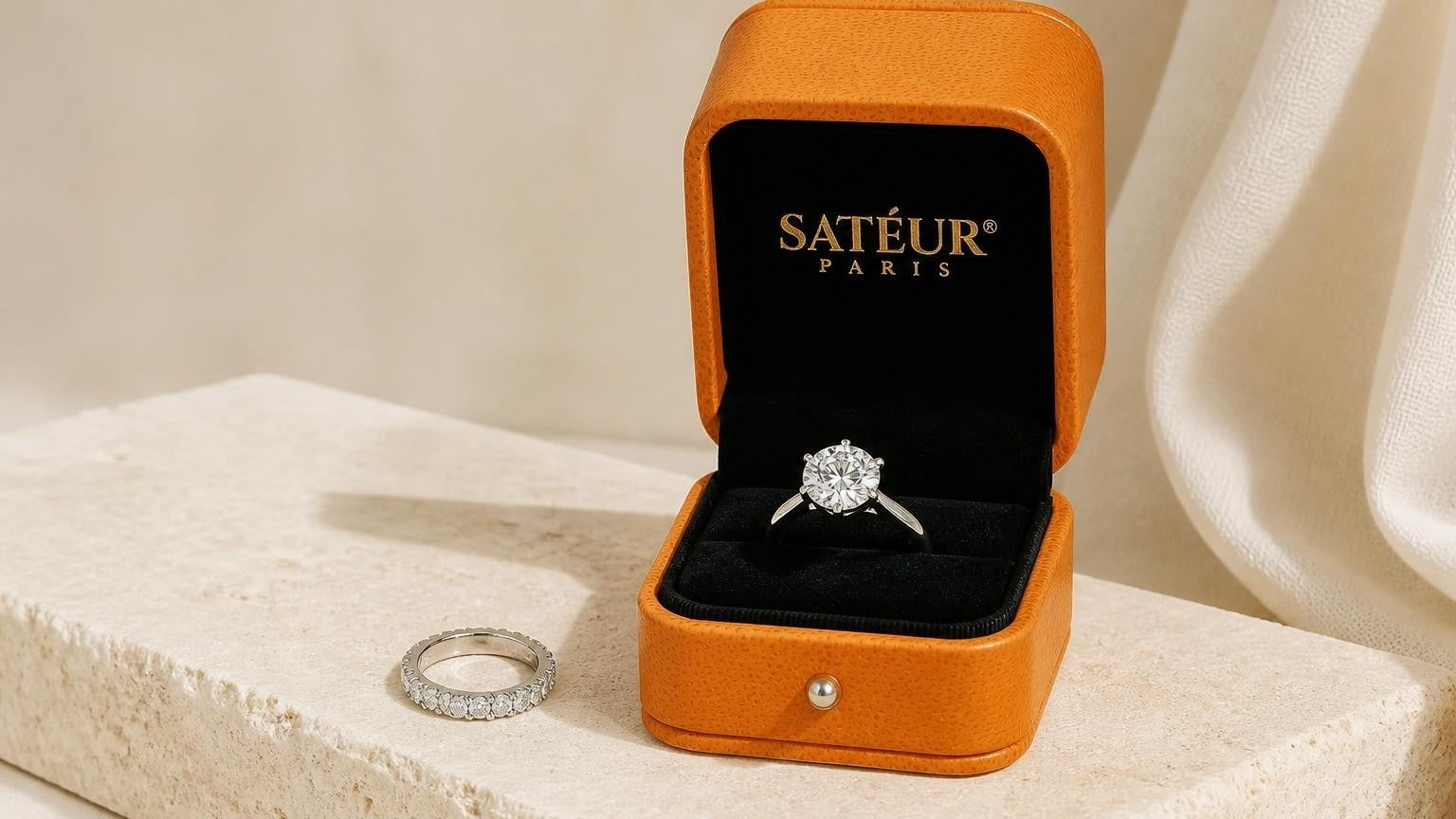
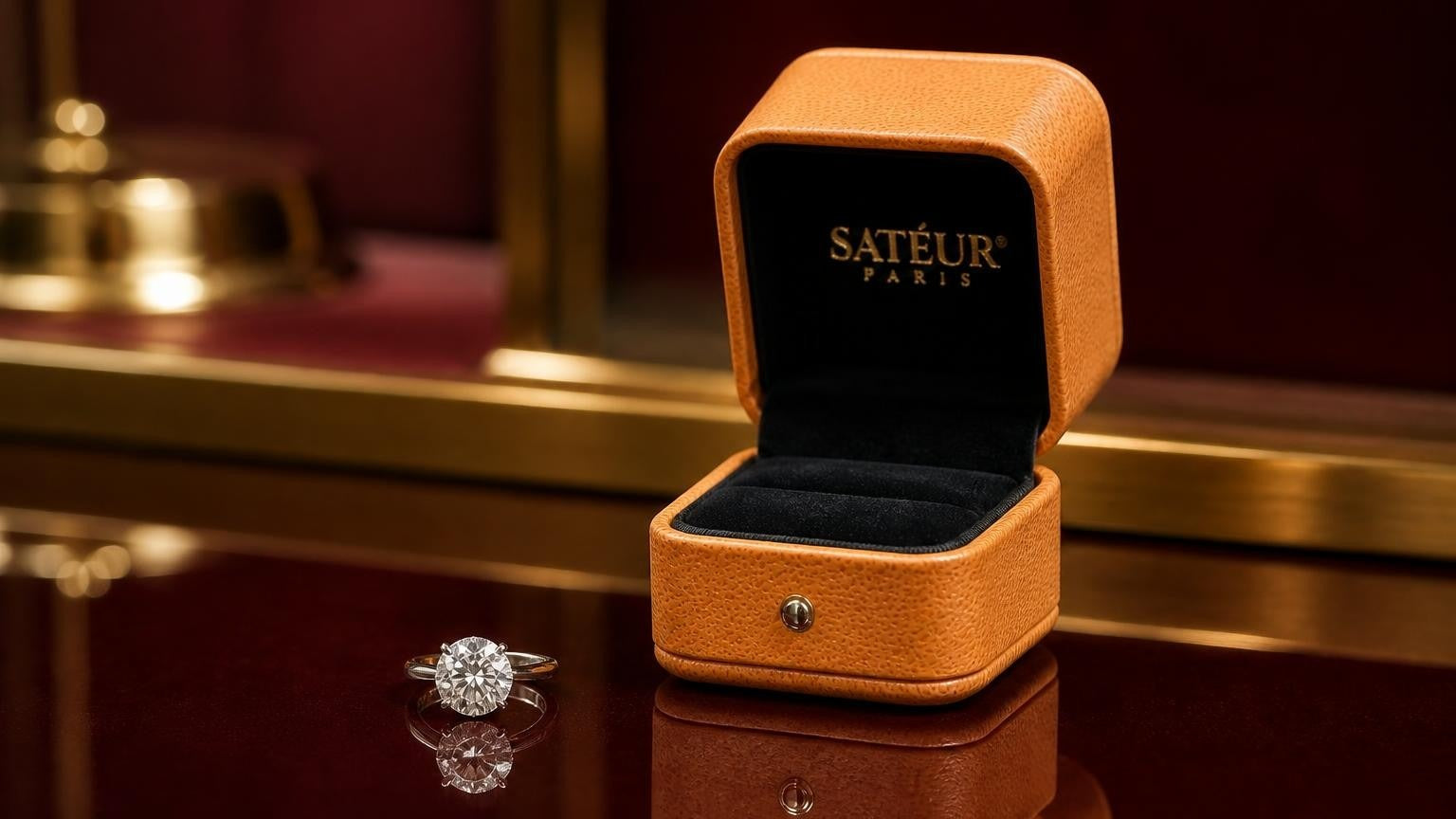
The Satéur Destinée Ring — The 1% Ring® — is the entry point. A 1.00-carat round brilliant in 18k gold finish, D-E colour, Excellent cut. The look of a $10,000 mined diamond, beginning at $138. The Maison is transparent about what Gems® are: a trademarked simulant, openly disclosed, not positioned as a diamond. That clarity is itself a design decision — the intelligent choice is the honest one.
The New Diamond Standard® is not a claim about material composition. It is a claim about what jewellery can mean when the value equation is reconsidered — when the look, the craftsmanship, and the ring's presence on a hand are placed above the geological provenance of the raw material.

Satéur Destinée Ring™
The look of a flawless diamond, for 1% of the price.
Compare to a $10,000 mined diamond
Joined by 100,000+ couples across 150+ countries.
Discover The 1% RingFree worldwide shipping · 30-day returns · Lifetime Satéur Care
Joined by over 100,000 customers across 150+ countries, the Satéur Destinée Ring has become the reference point for what the diamond look can be when intelligence replaces convention. Natural diamonds, lab-grown diamonds, and well-crafted simulants each serve a different kind of buyer. The question is which matters most to you: the stone's origin, or the stone's presence.
Frequently Asked Questions About Diamond Authenticity
What is the difference between a real diamond and a diamond simulant?
A real diamond — whether mined or lab-grown — is carbon crystallised in a cubic structure, with a Mohs hardness of 10 and a refractive index of approximately 2.42. A diamond simulant is a chemically different material designed to replicate the visual appearance of a diamond. Simulants vary widely in quality and performance: cubic zirconia is the most common entry-level option, while modern simulants like Satéur Gems® are engineered to D-E colour and Excellent cut specifications, delivering diamond-accurate brilliance. Neither type of simulant is a diamond — they are their own gemstones, transparently marketed as such.
Can you tell a diamond simulant from a real diamond with the naked eye?
A well-engineered simulant calibrated for diamond-accurate optics — such as Satéur Gems® — is visually indistinguishable from a mined diamond with the naked eye. Across the table, in normal lighting, the colour and brilliance read as a flawless diamond. Moissanite tends to produce more vivid rainbow fire than a diamond, which reads differently under certain lighting. Lower-quality simulants such as cubic zirconia may show more dispersion or develop surface clouding over extended wear.
What are the Four Cs and why do they matter for diamond authenticity?
The Four Cs — Colour, Clarity, Cut, and Carat — are the standardised grading framework developed by the Gemological Institute of America. They provide an objective basis for evaluating any diamond or diamond-look stone, and help buyers assess whether a stone's actual specifications match what is being stated. Understanding these four measures is the most reliable foundation for any diamond purchase decision.
Are lab-created diamonds considered real diamonds?
Yes. Lab-created diamonds share the same chemical composition (crystalline carbon), the same optical properties, and the same hardness (10 Mohs) as mined natural diamonds. They are graded by GIA and IGI using the same Four Cs framework. They are not simulants and should not be confused with moissanite or other diamond-look gemstones. The only difference from a mined diamond is origin: a lab-grown diamond is produced in weeks rather than over billions of years.
How do diamond simulants compare in durability to mined diamonds?
Mined and lab-grown diamonds rate 10 Mohs — the maximum. Moissanite rates approximately 9.25 Mohs, making it highly resistant to scratching and appropriate for daily wear. Satéur Gems® rate approximately 8.8 Mohs — extremely durable for everyday rings and earrings. Cubic zirconia, at approximately 8.5 Mohs, is the most susceptible to surface scratching of the main simulant types.
What should you look for when evaluating a diamond engagement ring?
Begin with cut quality — the single greatest factor in brilliance. An Excellent or Ideal cut in any stone tier outperforms a higher-clarity stone with a mediocre cut. After cut, prioritise colour: D-E stones are colourless and show best in white gold or platinum settings. Clarity matters less than is commonly assumed when inclusions are not visible to the naked eye. Finally, consider which stone type — mined diamond, lab-grown diamond, or high-quality simulant — best fits your budget, aesthetic, and values. All three can produce a ring of genuine presence.
To explore moissanite ring options or browse the full engagement ring range, the Satéur collections offer a practical reference for how different stone tiers compare at equivalent cut specifications.















コメントを残す
このサイトはhCaptchaによって保護されており、hCaptchaプライバシーポリシーおよび利用規約が適用されます。