


Diamond prices falling is not one story but two: lab-grown supply keeps growing while buyers move to it, and natural demand has followed them down. A lab-grown diamond that cost a trader $1 in 2018 costs about 4 cents today, a fall of 96% (Edahn Golan wholesale index, via JCK, 10 Aug 2026), and natural diamonds have slid to what the trade press calls their lowest prices this century (TheStreet, 2 Apr 2026).
Watch: Why Diamond Prices Are Collapsing So Fast (9:12), presented by Oliver Hart on the Satéur channel.
Key Takeaways
- Lab-grown wholesale prices are down 96% since 2018 and fell 26% in 2025 alone (JCK, 10 Aug 2026).
- A one-carat natural diamond averaged about $4,200 in 2025, against about $6,000 in 2021 (BriteCo, via TheStreet, 2 Apr 2026).
- In 2025, 61% of engagement rings in America had a lab-grown centre stone (The Knot, via Rapaport, 19 Feb 2026).
- Resale guides put a natural diamond at 25% to 50% of what you paid at retail (Whiteflash; PriceScope).
- As of late November 2026 no deal had been signed for De Beers, which Anglo American is trying to sell.
Why lab-grown diamond prices are falling so fast
The video turns to the numbers at 0:33, and the first is 26%: lab-grown wholesale prices fell by that much across 2025 (Golan price list, via JCK, 10 Aug 2026). They kept falling in 2026, by 14% year on year in the first quarter and 13% in the second (JCK, 10 Aug 2026).

The reason is simple. A lab-grown diamond is made, not found. Each new growth machine adds supply, and the cost of making a carat keeps dropping. Draco Diamond data reported by TheStreet shows prices falling 74% between 2020 and 2024 while the world's capacity to grow them more than tripled (TheStreet, 2 Apr 2026). For a longer comparison of the two kinds, read our guide to lab-grown vs natural diamond.
| Period | What happened to lab-grown diamond prices | Source |
|---|---|---|
| 2018 to 2026 | A lab-grown diamond that cost a trader $1 costs about 4 cents, down 96% | JCK, 10 Aug 2026 |
| 2020 | A one-carat lab-grown stone retailed for about $3,410 | Draco Diamond, via TheStreet, 2 Apr 2026 |
| 2020 to 2024 | Prices fell 74% as capacity grew more than 300% | Draco Diamond, via TheStreet, 2 Apr 2026 |
| 2025 | Wholesale prices down 26% for the full year | JCK, 10 Aug 2026 |
| Q1 2026 | Down 14% year on year; a three-carat, top-colour stone traded at about $126 a carat, roughly $378 for the stone | JCK, 10 Aug 2026 |
| Q2 2026 | Down 13% year on year | JCK, 10 Aug 2026 |
| Spring 2026 | A one-carat lab-grown stone sells for roughly $750 to $1,000 at retail | TheStreet, 2 Apr 2026 |
The bigger sizes fell hardest. In the second quarter of 2026, compared with the second quarter of 2025, one-carat lab-grown rounds rose 1%, stones of 1.5 to 1.99 carats fell 11%, and two-carat stones fell 20% (InStore, Q2 2026 LGD Wholesale Price List, 13 Jul 2026). The sizes that used to carry the fattest margins are now losing value fastest.
Why natural diamond prices are falling too
From 1:41 the video moves to natural diamonds. A one-carat natural diamond averaged roughly $4,200 in 2025, against about $6,000 in 2021, a fall of about 30% (BriteCo data, via TheStreet, 2 Apr 2026). The trade's own benchmark agrees. Rapaport's one-carat index fell 9.9% in 2025, as the table shows (Rapaport press release, 6 Jan 2026).

| Natural diamond size | Rapaport index change, 2025 |
|---|---|
| 1 carat | down 9.9% |
| 0.50 carat | down 26% |
| 0.30 carat | down 20.3% |
| 1 carat, D to H colour, SI clarity | down 24.1% |
Why would natural diamonds fall when nobody is making more of them? Because the buyer changed. In 2025, 61% of engagement rings in America had a lab-grown centre stone. That share first passed half in 2024 and has grown 239% since 2020 (The Knot 2026 Real Weddings Study, via Rapaport, 19 Feb 2026). Every couple who switched took a natural sale out of the market, and the price followed the demand down.
Why ring prices have not fallen as fast as diamond prices
At 2:42 Oliver explains what the falling chart hides. In 2025, couples who chose lab-grown spent an average of $4,300 on the engagement ring, for a centre stone of about 2.0 carats. Couples who chose natural spent $7,000 on average, for a smaller stone of 1.6 carats. The average ring overall fell from $5,200 in 2024 to $4,600 in 2025 (The Knot, via Rapaport, 19 Feb 2026). Our guide to the average price of an engagement ring goes further into those totals.

Set that beside the wholesale price. A three-carat, top-colour lab-grown stone traded at about $126 a carat in the first quarter. The setting, the gold and the shop all cost something, but analysts who track this found the gap barely moved. Retailers still mark lab-grown up more than 80% above wholesale, a figure that moved only one or two points between 2025 and 2026 while the stone itself kept falling (Paul Zimnisky margin analysis, May 2026, via JCK, 10 Aug 2026).
The analyst Paul Zimnisky put it plainly: "I still think current levels are too high" (JCK, 10 Aug 2026). The price of the stone collapsed, but the price of the ring came down far more slowly. The share of your money that buys the actual diamond keeps shrinking. That is not a scandal, it is how jewellery retail is built, but it means the falling chart has not fully reached your receipt.
What De Beers and the miners are doing about falling prices
From 3:49 the video follows the miners. De Beers lost $511 million at the operating level in 2025, against $25 million the year before (Mining.com, via TheStreet, 2 Apr 2026). Its owner, Anglo American, has written its value down three years running, by $6.8 billion in total. De Beers production fell 12% last year to 21.7 million carats, and the 2026 forecast was cut to between 21 and 26 million carats, down from as many as 29 million (TheStreet, 2 Apr 2026).

Cutting supply was not enough. In July 2026 De Beers cut the prices it charges its own buyers, in what Bloomberg called some of the steepest official diamond price cuts in its history. Before the cuts, its official prices had sat anywhere from 5% to 50% above what the same goods fetched on the open market. It also cut its list of approved buyers from about 70 to between 45 and 50 (Bloomberg, via Mining Weekly, 7 Jul 2026). The cuts landed hardest on goods under 0.75 carats (Rapaport, 9 Jul 2026).
De Beers tried lab-grown, then quit, and is now for sale
At 4:53 comes the strangest move of all. In 2018, De Beers launched its own lab-grown jewellery brand, Lightbox, at $800 a carat (CNBC, 30 May 2018). In May 2025 it announced Lightbox would close, pointing to wholesale prices that had fallen by around 90% (Rapaport, May 2025; Bloomberg, 8 May 2025). Lightbox had lost $101.3 million in 2023 alone (JCK, May 2025).

Now De Beers itself is for sale. Anglo American picked a consortium led by its former chief executive, Gareth Penny, as preferred bidder, in a sale reported at about $1 billion for its 85% (Bloomberg, via Engineering News, 29 Jul 2026). In November, Botswana backed the sale and said it would double its stake to 30%, and Angola was reportedly asking for 10% (Reuters, via TimesLIVE, 13 Nov 2026). Rapaport reported that Signet and Richemont were in talks to join the buyers (Rapaport, 3 Nov 2026). As of late November 2026 no deal had been signed, and Anglo American was still working towards binding transaction documents.
If you are buying a diamond ring this month
At 5:52 the video gives the short answer. If what you want is the look of a diamond, the look does not depreciate, only the price tag does. That is the Satéur point of view. This is not investment advice. Most people asking about the diamond price crash already own a ring, though, so the next section answers theirs.

Are diamonds losing value? What your ring is worth at resale
From 6:09 the video answers the question owners ask. Resale guides give a range of 25% to 50% of what you paid at retail for a natural diamond (Whiteflash, citing CaratX; PriceScope). You bought at retail, but a buyer pays you closer to wholesale, and wholesale has been falling.

There is a second trap. The number on an insurance appraisal is what it would cost to replace your ring in a shop, not what anyone will pay you for it. Many people only find that out when they try to sell.
Lab-grown is a different story. A diamond dealer told JCK about a client who paid $25,000 for a five-carat lab-grown ring in the early 2020s. The dealer, Farshid Roshanravan, CEO of Rayan Gems, said: "There is no resale value for lab-grown diamonds" (JCK, 10 Aug 2026). It is one dealer, but the wholesale chart says the same thing. When a new stone costs 4 cents on the dollar, a used one competes with that.
Take an example couple, Anna and James. The figures that follow are a worked example on the resale-guide ranges, not data. Say they spent $6,000 on a one-carat natural ring in 2022. On those resale ranges, a buyer today might offer somewhere between $1,500 and $3,000. Had they chosen lab-grown, a bigger stone for less money, the ring might fetch close to nothing. Either way, the money is gone the moment they leave the shop. The ring is not, and that is the part a price chart was never measuring. If you are weighing stones, our moissanite vs diamond price comparison sets out the options side by side.
Is this the floor for diamond prices in 2026?
At 7:14 the video asks whether this is the floor for diamond prices in 2026. Nobody can promise it. In the second quarter of 2026, one-carat lab-grown rounds rose 1% at wholesale after years of falling (InStore, 13 Jul 2026). But stock is piling up: lab-grown inventory at US jewellers, measured against sales, rose from high single digits in 2020 to nearly 50% (Golan and Tenoris analysis, via JCK, 10 Aug 2026).

Natural prices are mixed. In October 2026, Rapaport's one-carat index fell 0.9%, while three-carat stones rose 0.9%. The 0.30-carat index was up 8.8% for the year by October, then fell 5.5% in a single month (Rapaport, 3 Nov 2026). Big, rare natural stones are holding. The small and middle sizes, the ones most of us actually buy, are still soft. The lab-grown market has no floor anyone will promise, so anyone who tells you this is the bottom is guessing.
What falling diamond prices mean if you are buying now
The video closes at 8:05 with four rules for buying now:

- Never buy a diamond as an investment. At resale a natural stone hands back a fraction, and lab-grown may hand back nothing.
- The price on the tag is mostly not the stone. With wholesale this low, the markup is where the negotiation lives, so ask what the stone alone costs.
- Pay for what you will actually see. Nobody across the table knows what your ring cost, only how it looks on your hand.
- If you are buying lab-grown, buy it because you love it, and assume it is worth nothing the day you leave.
That last rule is not a criticism. It is the price of a thing a machine can always make more of. Anna and James still wear theirs every day. What it is worth to a buyer was never the point.

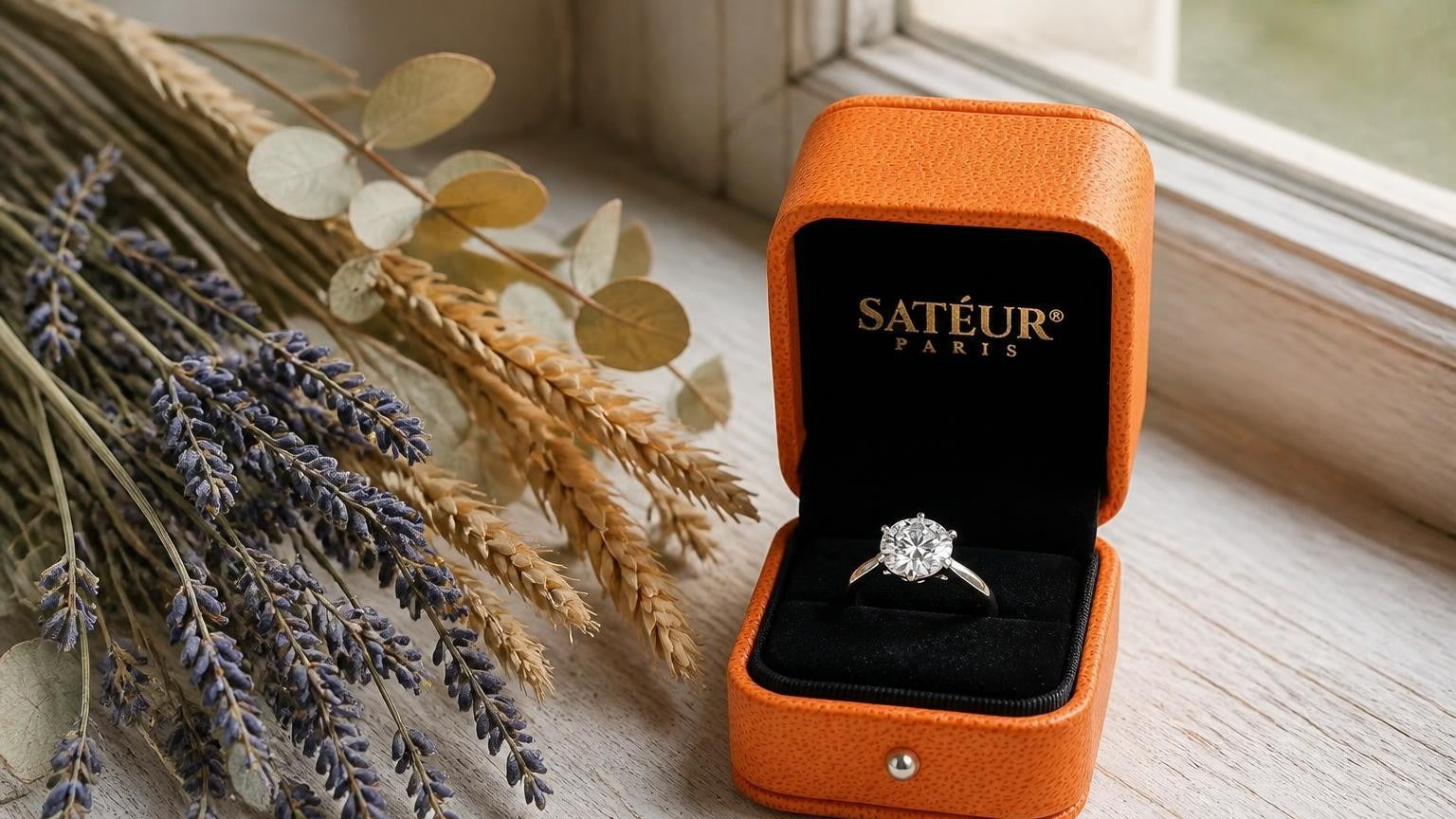
Satéur Destinée Ring™
The look of a flawless diamond, for 1% of the price.
Compare to a $10,000 mined diamond
Joined by 100,000+ couples across 150+ countries.
Discover The 1% RingFree worldwide shipping · 30-day returns · Lifetime Satéur Care
Frequently Asked Questions
Why are diamond prices falling?
Lab-grown supply keeps rising as capacity grows and the cost of making a carat drops, and a majority of engagement-ring buyers now choose lab-grown, which pulled demand away from natural diamonds. De Beers also lost money and cut its own prices in July 2026.
Are diamonds losing value?
Diamond prices have fallen, but a ring's resale value was always a fraction of retail. Resale guides give 25% to 50% of the retail price for natural diamonds, and one dealer told JCK there is no resale value for lab-grown diamonds.
Is there a diamond price crash in 2026?
For lab-grown, yes: wholesale prices are down 96% since 2018 (JCK, 10 Aug 2026). Natural diamonds fell more gently, to what TheStreet called the lowest level this century (2 Apr 2026), and some big natural stones are holding.
How much have lab-grown diamond prices fallen?
Wholesale prices fell 26% in 2025 and another 14% year on year in the first quarter of 2026 and 13% in the second. A one-carat lab-grown stone that retailed for about $3,410 in 2020 sells for roughly $750 to $1,000 at retail.
Why are natural diamond prices falling?
The buyer changed. In 2025, 61% of engagement rings in America had a lab-grown centre stone, so each switching couple removed a natural sale from the market.
Is it a good time to buy a diamond?
Nobody can call the bottom. Lab-grown inventory at US jewellers has risen to nearly 50% of sales. Buy for the look you love, ask what the stone alone costs, and never buy a diamond as an investment.
Has De Beers been sold?
Not yet. As of late November 2026 no deal had been signed, and Anglo American was still working towards binding transaction documents. Anglo American picked a consortium led by Gareth Penny as preferred bidder in a sale reported at about $1 billion for its 85%.
Sources
- JCK, "Lab-Grown Diamond Wholesale Prices Are in Freefall; Retail Margins May Be Next", 10 Aug 2026: jckonline.com
- TheStreet, via Yahoo Finance, "Price of diamonds crashes to lowest level this century", 2 Apr 2026: finance.yahoo.com
- InStore, "The Q2 2026 LGD Wholesale Price List", 13 Jul 2026: infocenter.git.or.th
- Rapaport press release, "Diamond Market Cautious at Start of Year", 6 Jan 2026: businesswire.com
- Rapaport, "Lab-Grown 'Taking Over' Engagement-Ring Spending, The Knot", 19 Feb 2026: rapaport.com
- Mining Weekly (Bloomberg), "De Beers makes deep diamond price cuts for shrinking buyers club", 7 Jul 2026: miningweekly.com
- Rapaport Market Comment, 9 Jul 2026: rapaport.com
- CNBC, De Beers lab-grown jewellery plans, 30 May 2018: cnbc.com
- Rapaport, "De Beers to Close Lightbox Lab-Grown Diamond Brand", May 2025: rapaport.com; Bloomberg, 8 May 2025: bloomberg.com
- JCK, "De Beers shutting Lightbox", May 2025: jckonline.com
- Engineering News (Bloomberg), De Beers sale talks, 29 Jul 2026: engineeringnews.co.za
- Anglo American's proposed De Beers sale, still unsigned: TimesLIVE / Reuters, 13 Nov 2026
- TimesLIVE (Reuters), Angola seeks 10% in De Beers, 13 Nov 2026: timeslive.co.za
- Rapaport, "Prices of Smaller Diamonds Decline as Inventories Grow", 3 Nov 2026: rapaport.com
- Whiteflash, "Do lab-grown diamonds hold their value?": whiteflash.com
- PriceScope, "Understanding diamond resale value": pricescope.com
Satéur is not affiliated with, endorsed by or sponsored by any company or person named in this article. Figures are as reported by the sources on the dates given. This is not investment advice. Anna and James are an example couple, and Oliver Hart is an AI presenter.
















댓글을 남기세요
이 사이트는 hCaptcha에 의해 보호되며, hCaptcha의 개인 정보 보호 정책 과 서비스 약관 이 적용됩니다.