


Moissanite Resale Value vs Diamond: What You Actually Recover
The question of resale value follows almost every fine jewellery purchase — and it deserves an honest answer. Moissanite resale typically returns 10–60% of the original retail price. Mined diamonds fare only marginally better: 20–60%, and often considerably less on smaller stones. Neither gemstone holds its full retail value on the secondary market. What changes the equation entirely is where you started.
A diamond engagement ring purchased at retail for $7,000 might fetch $1,500–$3,000 resold. A moissanite ring purchased for $300 might return $50–$150. The percentage ranges overlap. The dollar figures are incomparable. Understanding this arithmetic is the real framework for evaluating long-term gemstone value — and it is the focus of this guide.
Key Takeaways
- Moissanite resale typically recovers 10–60% of original retail price, depending on size, cut quality, and condition.
- Diamond resale returns 20–60% of retail — and often falls below 20% for stones under 0.3 carats where secondary demand is thin.
- Neither gemstone holds full retail value; the secondary market prices both on material cost, not sentimental or scarcity mark-up.
- Moissanite rates 9.25 on the Mohs hardness scale — durable enough for decades of daily wear, preserving physical condition for resale.
- Satéur's moissanite rings begin under $100, delivering the appearance of a fine diamond at approximately 1% of comparable diamond cost.
- Satéur Gems® carries modest but real resale value through brand recognition and the distinctive orange box — never "none."
What Is Moissanite and Why Buyers Choose It
Moissanite is a lab-created gemstone composed of silicon carbide. It was first discovered naturally in a meteor crater in 1893 by Henri Moissan — hence the name. Today it is produced entirely in laboratory conditions to exacting optical standards.
Buyers choose it for three distinct reasons. The first is visual: moissanite delivers more fire than a diamond — a vivid, rainbow-forward sparkle that reads brilliantly under any light. The second is durability: at 9.25 on the Mohs hardness scale, it is among the hardest gemstones in existence, built for everyday wear across decades without degradation. The third is price: a quality moissanite engagement ring costs a fraction of a comparable mined diamond, with no ethical or environmental trade-offs attached to extraction.
Satéur's moissanite line begins under $100. The D-E colour range and Excellent cut specification mean each stone is drawn from the top of the quality tier. For a comprehensive look at how moissanite and diamond compare across durability, optics, and price, the moissanite versus diamond ring debate is worth reading before a purchase decision.
A related question — whether moissanite is a real stone — is addressed directly in the Satéur comparison guide to moissanite, diamond, and Satéur Gems®. The short answer: moissanite is a real gemstone. It is not a diamond — it is a distinct and highly regarded material in its own right, with properties that differ meaningfully from diamond and from Satéur Gems®.
Moissanite Resale Value: Typical Returns and Market Factors

The moissanite resale market is smaller than diamond's — but it exists and has grown materially over the past decade as the gemstone moved from niche to mainstream. On platforms including eBay, Etsy, and specialist jewellery resale sites, moissanite rings change hands regularly and at prices that reflect genuine demand.
Typical resale returns fall in a wide band: anywhere from 10% to 60% of original retail price. The variance is significant and driven by several identifiable factors.
Carat weight matters most. Larger stones — 2 carats and above — attract more active secondary-market interest. A 3-carat moissanite in Excellent cut and near-colourless grade will outperform a 0.5-carat stone on every resale metric. The moissanite resale market, like diamond's, prices size disproportionately.
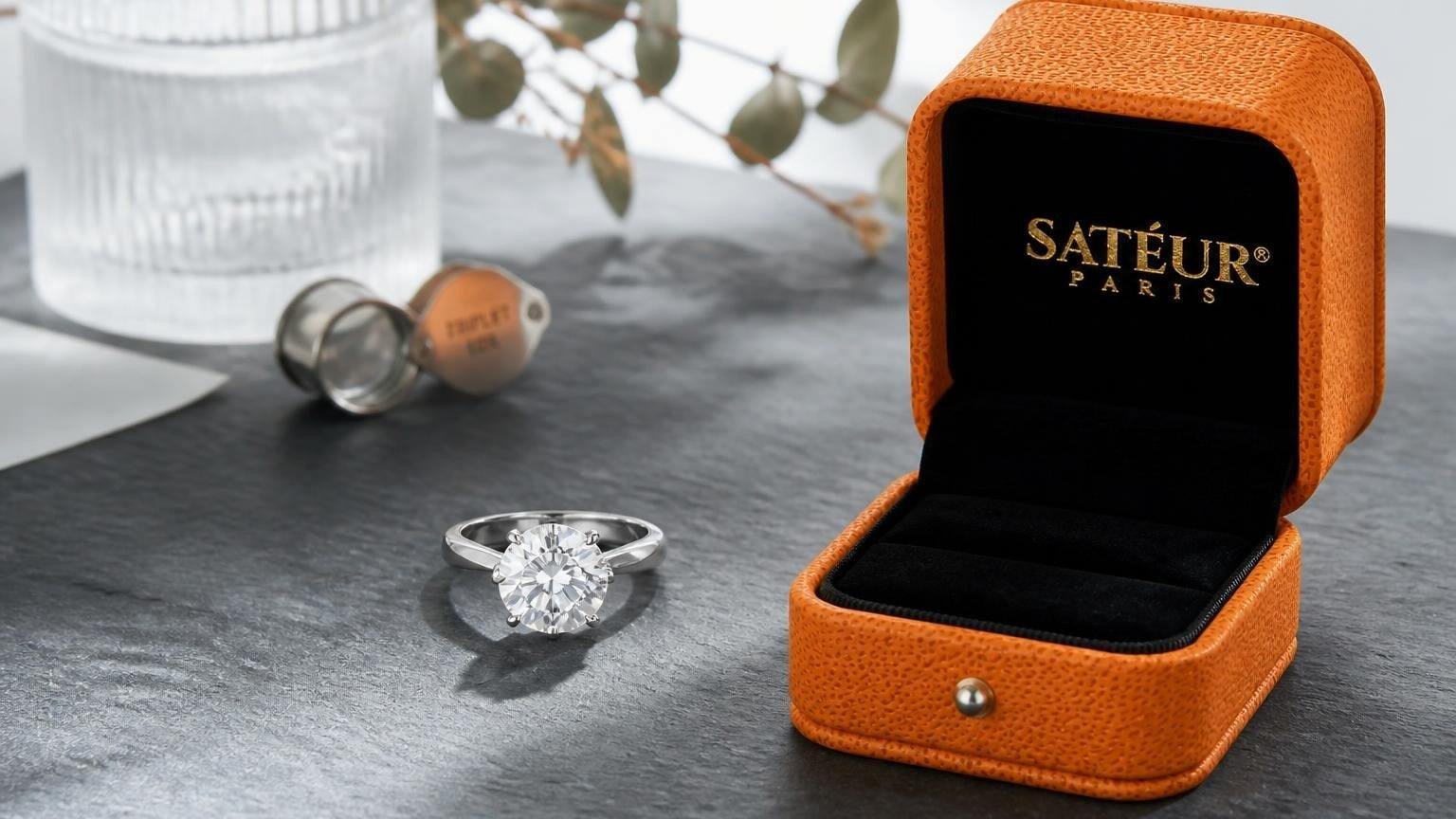
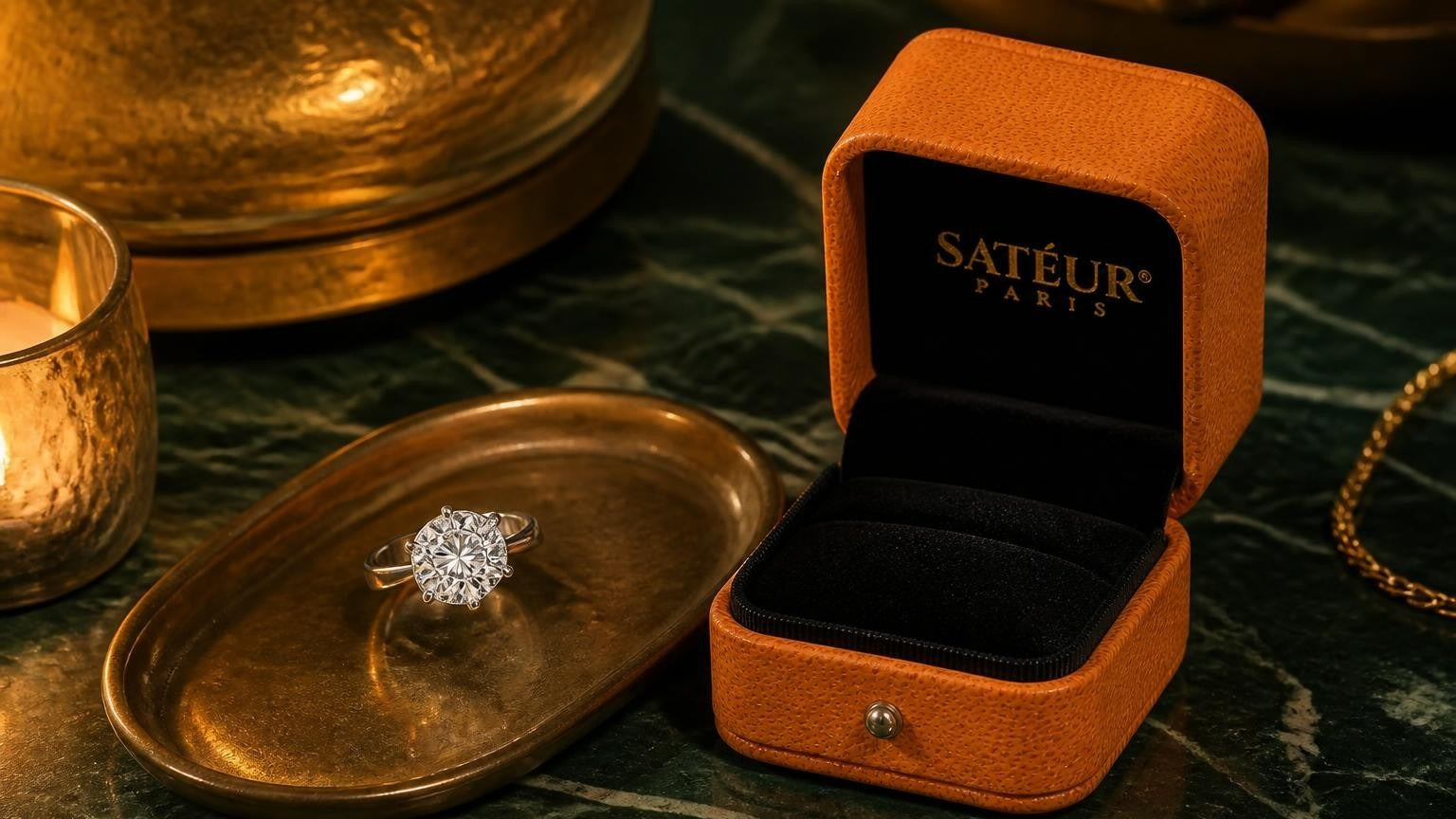
Brand and documentation add floor value. A moissanite ring from a recognised brand, accompanied by a grading certificate and original packaging, recovers more than a generic unbranded stone. The Satéur orange box — recognised by the brand's community of over 100,000 customers — functions as a provenance signal on the secondary market, adding modest but real value in peer-to-peer resale. The resale value is not "none." It is modest, honest, and directly tied to condition and documentation.
Condition is decisive. Moissanite does not experience the surface degradation that affects softer gemstones, owing to its 9.25 Mohs rating. A moissanite ring worn daily for five years and professionally cleaned can present effectively as new — preserving its resale position in a way a softer stone cannot. This is a structural durability advantage with direct financial consequences at resale.
The secondary market prices material cost, not rarity perception. Unlike mined diamonds, moissanite has no artificial scarcity premium. The resale price reflects what a secondary buyer will pay for a quality stone — not a narrative of geological rarity that the primary market manufactures and that evaporates the moment the ring leaves the shop. This is why moissanite resale does not follow the same sharp depreciation curve that affects diamonds purchased from high-street retailers at full mark-up.

Diamond Resale Value: How It Compares
The received wisdom is that diamonds hold their value. The reality is considerably more complicated — and more honest buyers are beginning to acknowledge it.
Mined diamond resale typically returns 20–60% of original retail price. The 60% end of that range applies almost exclusively to investment-grade stones: large (2 carats and above), high-clarity (VS1 and above), ideal-cut natural diamonds with GIA certification, typically sold through auction houses. The average retail engagement ring — a 0.7–1.0 carat stone purchased from a high-street jeweller — routinely returns 20–35% of the retail price when resold. For stones under 0.3 carats, secondary-market demand is thin enough that achieving even 20% is uncertain.
Three structural factors explain the gap between purchase price and resale value. First, retail diamond pricing carries a significant mark-up — a diamond that wholesales for $1,500 frequently sells at retail for $5,000 or more. The resale market prices closer to wholesale. Second, secondary supply is distributed and fragmented, with no single buyer able to establish a meaningful price floor for common-grade diamonds. Third, and increasingly significant, the growth of the lab-grown diamond market has eroded the premium attached to mined stones, compressing resale values as alternative supply increases year on year.
The arithmetic is direct: a $6,000 diamond ring that recovers 30% at resale returns $1,800. A $400 moissanite ring that recovers 30% at resale returns $120. The percentages are identical. The numbers are not.
Key Differences in Resale Markets
| Property | Moissanite | Satéur Gems® | Mined Diamond |
|---|---|---|---|
| Typical resale recovery | 10–60% of retail | Modest but real (brand + box) | 20–60% of retail |
| Secondary market depth | Growing; peer-to-peer active | Brand community channels | Established; thin below 0.3ct |
| Key resale driver | Cut quality + carat weight | Brand recognition + original packaging | GIA cert + carat size + cut grade |
| Depreciation curve | Reflects material cost — no scarcity premium to lose | Reflects brand equity | Steep on retail mark-up; flatter on large certified stones |
| Hardness (Mohs) | 9.25 — extremely durable | ~8.8 — extremely durable | 10 — hardest known material |
| Price entry point | From under $100 | From $138 | Typically $1,000–$15,000+ |
| Visual character | Vivid, rainbow-forward fire — more fire than diamond | Clean white brilliance — diamond-accurate | Crisp white brilliance |
Where to Resell Moissanite Jewellery
The secondary market for moissanite has matured considerably. Several channels exist, each with different fee structures and buyer demographics.
eBay remains the broadest platform by volume. Fees run approximately 12–15% of the final sale price, and competition is significant — setting a realistic price requires surveying completed listings, not active ones. Larger, certified stones sell best here.
Etsy attracts buyers already sympathetic to alternative gemstones and considered jewellery. The platform rewards presentation and provenance — detailed photography, grading documentation, original packaging. Fees are lower than eBay (approximately 6.5% transaction fee plus listing), and a well-presented moissanite ring in Excellent condition can command a premium here over anonymous platforms.
Facebook Marketplace and local jewellery communities eliminate platform fees but require more time to identify the right buyer. For branded pieces with recognisable provenance — the Satéur orange box, for instance — local and community selling can outperform platform fees on modestly priced rings.
Specialist jewellery resale platforms such as Worthy and I Do Now I Don't cater specifically to fine jewellery and engagement rings. They typically take a higher commission (15–30%) but attract buyers specifically seeking quality gemstones at below-retail prices — improving sell-through speed.
Local jewellers will occasionally purchase moissanite pieces outright, though any offer will reflect wholesale pricing — typically the low end of the resale range. This is the fastest but least financially advantageous route.
Factors That Influence Moissanite Resale Price
Six factors determine where within the 10–60% range a moissanite piece lands at resale.
Stone size. Larger carat weights attract disproportionately higher secondary-market interest. A 2-carat moissanite is significantly easier to sell than two 1-carat stones of equivalent total weight.
Colour and cut grade. D-E colourless moissanite in an Excellent cut holds value better than lower grades. The fire and brilliance that distinguish moissanite are most visible in top-cut stones — which is also what secondary buyers are looking for.
Certification. An independent grading certificate adds credibility and reduces buyer uncertainty. Uncertified stones trade at a discount relative to documented equivalents.
Setting quality and metal. An 18k gold finish setting holds value better than a sterling silver setting. The perceived quality of the ring as a whole influences buyer willingness to pay, independent of the stone itself.
Brand provenance and original packaging. A piece purchased from an established brand — with original documentation and packaging — recovers more than an unbranded equivalent. For Satéur pieces, the distinctive orange box and purchase records are worth preserving. They are not incidental to the resale equation.
Presentation at point of sale. Jewellery in excellent condition, professionally cleaned, photographed in proper light, and listed with detailed specifications sells faster and at better prices. The marginal effort of preparation returns real value.

The Satéur Value Proposition: Cost and Durability
The Satéur moissanite and Gems® ranges reframe the resale conversation. When an engagement ring costs $300 rather than $6,000, the resale question carries different weight. The financial exposure is lower. The long-term durability is comparable. And the visual result — the vivid, brilliant sparkle of a quality gemstone — is indistinguishable from diamond with the naked eye across the table.
Satéur's moissanite features D-E colour range and Excellent cut specifications, with a refractive index delivering approximately 2.4 times the fire of a diamond. This vivid, rainbow-forward character is moissanite's signature — immediately recognisable to specialists, indistinguishable from diamond with the naked eye to everyone else. For a broader exploration of this comparison, the complete moissanite, diamond, and lab-diamond buying guide covers the full landscape.
Satéur Gems® — the brand's flagship trademarked simulant, from $138 — occupies a different position in the visual comparison. Where moissanite leans into more fire, Gems® is engineered for diamond-accurate brilliance: the clean, white sparkle of a flawless diamond rather than a rainbow-forward character. Both tiers are extremely durable — moissanite at Mohs 9.25, Gems® at ~8.8 — and both are built for everyday wear across years without degradation.
Neither tier is positioned as an investment vehicle. They are positioned as the intelligent choice for buyers who recognise that the diamond industry's resale premium is, in large part, a function of manufactured scarcity — and who would rather direct that difference elsewhere. Over 100,000 customers across 150+ countries have already made this decision. The New Diamond Standard is not a compromise. It is a recalibration of what value actually means in fine jewellery.
For those drawn to the classic engagement ring aesthetic, the moissanite rings collection and The 1% Ring collection are the natural starting points.

Satéur Destinée Ring™
The look of a flawless diamond, for approximately 1% of the price.
Compare to a $10,000 mined diamond
Joined by 100,000+ couples across 150+ countries.
Discover The 1% RingFree worldwide shipping · 30-day returns · Lifetime Satéur Care
FAQ: Moissanite Resale, Durability, and Long-Term Worth
Does moissanite hold its resale value like a diamond?
Neither moissanite nor mined diamond holds its full retail value on the secondary market. Moissanite typically returns 10–60% of original retail price; mined diamonds return 20–60%. The ranges overlap significantly. The practical difference is the starting price: a $300 moissanite ring at 30% recovery returns $90. A $6,000 diamond ring at the same rate returns $1,800. The percentages are the same; the absolute figures are not. Larger moissanite stones from recognised brands with documentation consistently achieve the upper end of the resale range.
What percentage of the original price can you expect when reselling moissanite jewellery?
Realistically, 10–40% for most everyday pieces, and up to 60% for larger certified stones in Excellent cut and excellent condition. Cut quality, carat weight, brand provenance, and platform all influence where within that range a specific piece lands. D-E colourless moissanite with original certification and packaging consistently outperforms uncertified stones without documentation.
Where is the best place to resell a moissanite ring or engagement ring?
Etsy and eBay handle the highest volume of moissanite resale. Etsy tends to reward quality presentation and attracts buyers already inclined toward alternative gemstones. Specialist jewellery resale platforms such as Worthy and I Do Now I Don't attract dedicated fine jewellery buyers and improve sell-through speed, though commissions are higher. For branded pieces with original packaging — including Satéur pieces — brand community groups and Facebook Marketplace can yield competitive returns without platform fees.
How does moissanite durability affect its long-term value?
Significantly. Moissanite rates 9.25 on the Mohs hardness scale — among the hardest gemstones available. It does not scratch, cloud, or lose its polish under daily wear conditions. A moissanite ring worn for a decade and professionally cleaned can present as new at resale, preserving its position in a way softer gemstones cannot. This durability advantage is not incidental — it is a structural asset in any long-term value assessment.
Is moissanite worth buying if resale value is a concern?
Yes — provided the concern is framed correctly. If the question is whether moissanite recovers more absolute dollars than a mined diamond, the answer is no. If the question is whether moissanite represents better value across the full cost picture — initial price, decades of durability, and secondary-market recovery relative to total investment — the case is more compelling than conventional wisdom allows. Satéur's moissanite rings begin under $100. The financial exposure in any resale scenario is categorically different from a $5,000 diamond ring at the same recovery percentage.
What factors determine how much a moissanite ring will resell for?
Six factors drive moissanite resale price most reliably: stone size (larger carat weights attract proportionally more active interest); colour and cut grade (D-E colourless, Excellent cut holds best); independent certification; setting quality and metal (18k gold finish outperforms base metal); brand provenance and original packaging; and presentation quality at the point of listing. Controlling as many of these as possible is the practical path to recovering the upper end of the 10–60% range.













Laat een reactie achter
Deze site wordt beschermd door hCaptcha en het privacybeleid en de servicevoorwaarden van hCaptcha zijn van toepassing.