

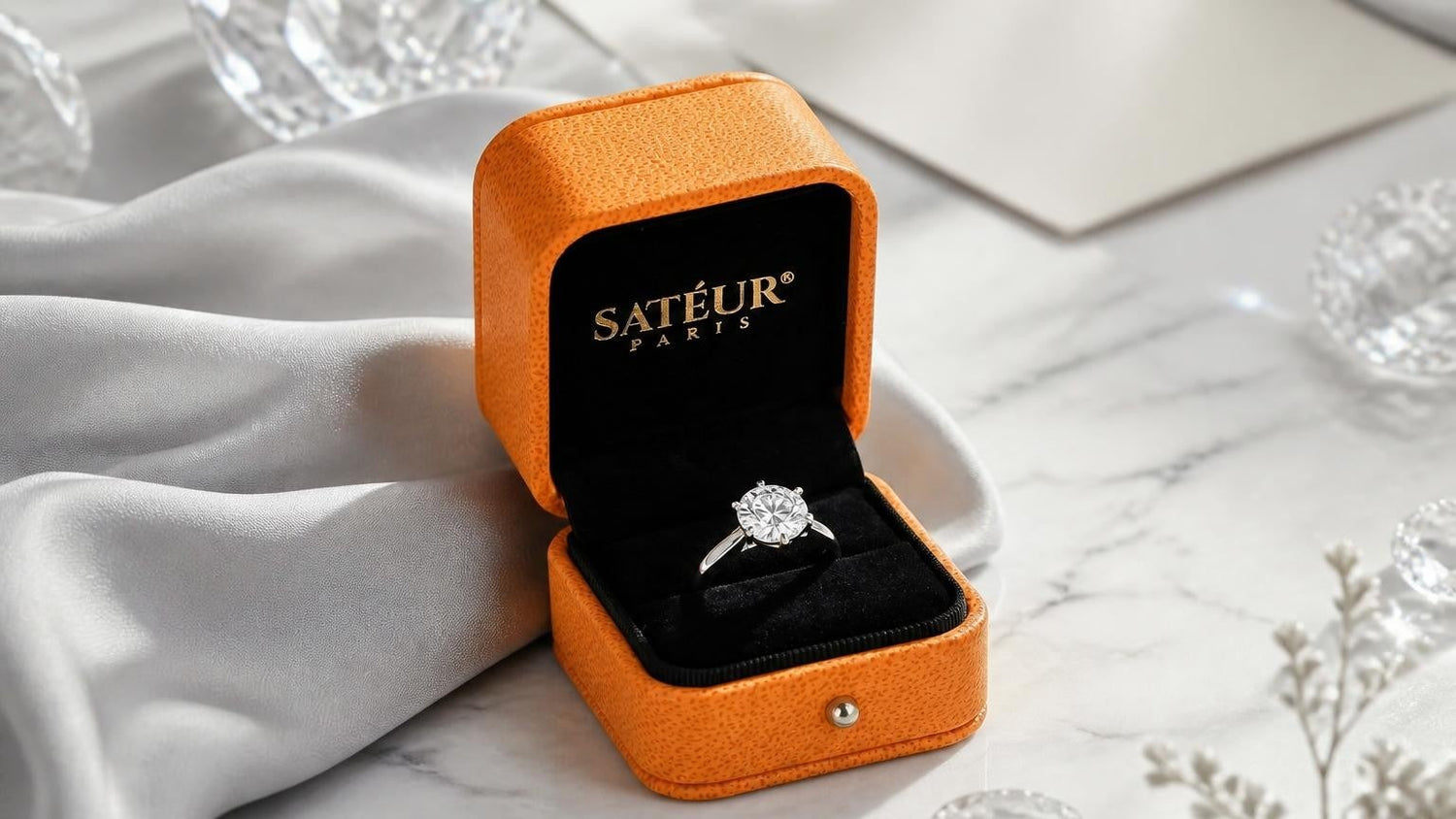
A lab grown diamond is a real diamond. It is chemically, physically and optically identical to a mined diamond — the only difference is origin: it's grown in a controlled environment in weeks rather than formed underground over billions of years. Because of that, lab grown diamonds are graded by the same independent institutes (like IGI) and typically cost 20–40% less than a comparable mined stone, which is why they've become the modern default for value-minded buyers.
This guide is the complete map: what a lab grown diamond actually is, how it's made, how it compares to a mined diamond, how to read the Four Cs, which shapes and carat weights to consider, what it costs, and where it sits beyond the engagement ring. It also explains the third path — a trademarked diamond simulant like Satéur Gems®, which replicates the look of a flawless diamond from $138 — so you can choose between the certificate and the look with open eyes.
Key Takeaways
- A lab grown diamond is a real diamond — chemically and physically identical to a mined one, grown in weeks instead of billions of years, and certified by independent labs like IGI.
- Lab grown diamonds typically cost 20–40% less than comparable mined stones while meeting the same grading standards.
- The same Four Cs — cut, colour, clarity and carat — grade every diamond, lab or mined; cut matters most for brilliance.
- Two growing methods — HPHT and CVD — both produce identical diamonds; the method doesn't change the quality you see.
- The Satéur Destinée Diamond Ring™ is set with an IGI-certified lab-grown diamond in 18K gold finishing.
- If you want the diamond look rather than the certificate, Satéur Gems® — a trademarked diamond simulant with the restrained, white brilliance of a fine diamond — deliver it from $138, about 1% of a mined diamond's price.
- The same stones set into necklaces, earrings, pendants and tennis bracelets, where the everyday-value case is even stronger.
What Is a Lab Grown Diamond?
Is a lab grown diamond a "real" diamond? Yes — and that's the part most people get wrong. A lab grown diamond is pure crystallised carbon, exactly like a mined diamond, with the same hardness, the same brilliance and the same refractive index. It is not a simulant or an imitation; it is a diamond. The single difference is how it was made: instead of forming deep underground over billions of years, it's grown in a matter of weeks in a controlled chamber that recreates the heat and pressure of that natural process.
Two methods dominate — HPHT (high pressure, high temperature) and CVD (chemical vapour deposition) — and both produce diamonds that gemologists grade on the identical scale used for mined diamonds. Independent laboratories such as IGI and GIA certify lab grown diamonds with the same reports, so a D-colour, VS-clarity lab diamond means exactly what it would for a mined one. The science is settled; what's left is the choice of where your money goes.

Explore in depth:
How Lab Grown Diamonds Are Made: HPHT vs CVD
How do you grow a diamond? Two ways, both ending in the same crystallised carbon. HPHT — high pressure, high temperature — recreates the exact conditions under which diamonds form in the earth: a tiny diamond seed is exposed to immense pressure and temperatures above 1,400°C until carbon crystallises around it. CVD — chemical vapour deposition — takes a different route: a carbon-rich gas is heated in a vacuum chamber until carbon atoms settle onto a seed layer by layer, almost like frost forming on glass. Both finish as a rough diamond that's cut and polished exactly like a mined stone.
Because the end product is a diamond, a lab grown diamond passes a standard diamond tester as a diamond — it is one. The only way to identify its origin is specialised equipment in a grading lab, which is precisely why every reputable lab diamond ships with an independent certificate. The growing method doesn't change the quality you see in the hand; cut, colour and clarity do, and those are graded on the same scale for HPHT and CVD alike.
Explore in depth:
Lab Grown vs. Mined Diamonds: Key Differences
So why choose one over the other? Optically and physically, you can't tell them apart — not by eye, and not on a standard grading report. The differences are origin, price and supply. A mined diamond carries the traditional story and the traditional markup. A lab grown diamond is identical in the hand for 20–40% less, with a transparent, conflict-free origin. Because supply isn't constrained the way mining is, lab prices have fallen and continue to, which is the one trade-off worth naming: lab diamonds are better value to buy, but a weaker store of resale value than mined.
For most people buying an engagement ring, that trade is easy — you're buying something to wear and keep, not to resell, so the identical look at a lower price wins. The table below lays out the honest comparison.
| Lab grown diamond | Mined diamond | |
|---|---|---|
| Composition | Crystallised carbon — a real diamond | Crystallised carbon |
| Certification | IGI / GIA, same scale | IGI / GIA, same scale |
| Look | Identical to mined | The traditional benchmark |
| Price | 20–40% less | 100% |
| Origin | Grown in weeks, traceable | Mined over billions of years |

Compare in depth:
The Four Cs: Cut, Colour, Clarity & Carat
How do you judge a lab grown diamond's quality? With the same Four Cs that grade any diamond. Cut matters most — it's the precision of the faceting, not the shape, and it controls how much light returns to your eye. A well-cut diamond outshines a larger, poorly cut one. Colour runs from D (icy, colourless) toward warmer grades; D–E reads the whitest, while G–H still looks white once set. Clarity measures internal inclusions, most of them invisible without magnification, so an "eye-clean" diamond is all you need. Carat is weight, which tracks roughly with size but depends on cut and shape.
The smart way to buy is to spend on cut and choose an eye-clean clarity rather than chasing a flawless grade you can't see. D–E colour with an Excellent cut is the benchmark for a diamond that looks icy and brilliant — and because lab diamonds cost less per carat, you can hold those quality grades while sizing up, whether you're after a one-carat solitaire or a three-carat statement.

Go deeper on the 4Cs:
Diamond Shapes & Cuts
Which shape should you choose? Shape is the outline of the diamond — round, oval, pear, princess and so on — while cut is the precision of its faceting. The two work together. The round brilliant returns the most light and is the timeless default, while elongated shapes like oval, pear and emerald can read larger on the hand for the same carat weight. Princess and cushion sit between modern and classic; radiant and asscher bring an Art-Deco geometry. There's no single "best" shape — only the one that suits the hand and the wearer.
Whatever the outline, prioritise cut quality: a well-cut diamond of any shape outshines a poorly cut one. Browse lab-grown diamond rings by the shape you have in mind.
Lab-grown diamond rings by shape:
The same shapes as dedicated engagement rings:
Carat Weights & Sizing
How much carat is enough? Carat is weight, not size — though the two track closely. Because lab grown diamonds cost less per carat than mined, you can size up a full carat or more while holding D–E colour and an Excellent cut. The sweet spot for most engagement rings sits between one and three carats; beyond that becomes a genuine statement. Remember that shape affects perceived size — a 2-carat oval looks larger than a 2-carat round — so the right carat is always a conversation with the right shape.
Lab-grown diamond rings by carat:
Why Lab Grown Diamonds Offer Superior Value
Where does the value really come from? Simple: you get an identical diamond for materially less money. A lab grown diamond that grades the same as a mined one — same cut, colour, clarity and carat — costs 20–40% less, which means you can buy a larger or higher-quality diamond for the same outlay, or the same diamond and keep the difference. There's no optical compromise and no certification compromise; the report reads the same. The only thing you give up is the mined origin and its resale advantage.
That's why lab grown has become the value benchmark for engagement rings. But "value" has a second tier worth knowing about. If your goal is the look of a flawless diamond rather than the diamond certificate itself, a trademarked diamond simulant changes the maths entirely — not 20–40% less, but about 99% less. That's the path Satéur was built on, and it's covered further below.

Is it worth it? Read more:
Lab Grown Diamond Prices: What to Expect
What does a lab grown diamond actually cost? Far less than its mined twin — typically 20–40% less for the same grades — and the gap widens as carat weight climbs, because mined prices rise exponentially with size while lab prices stay closer to linear. A one-carat lab solitaire that grades D/VS sits in a different universe of price from the mined equivalent, with no visible difference between them.
If price is the deciding factor, there are two value paths. The first is a certified lab diamond at lab-diamond value. The second — for buyers who want the look of a flawless diamond rather than the certificate — is Satéur Gems®, a trademarked diamond simulant that delivers it from $138, about 1% of a mined diamond's price. Shop and compare by budget below.
Read the pricing guides:
Shop lab-grown diamond rings by price:
Satéur's Approach: Lab Diamonds and the Diamond-Look Alternative
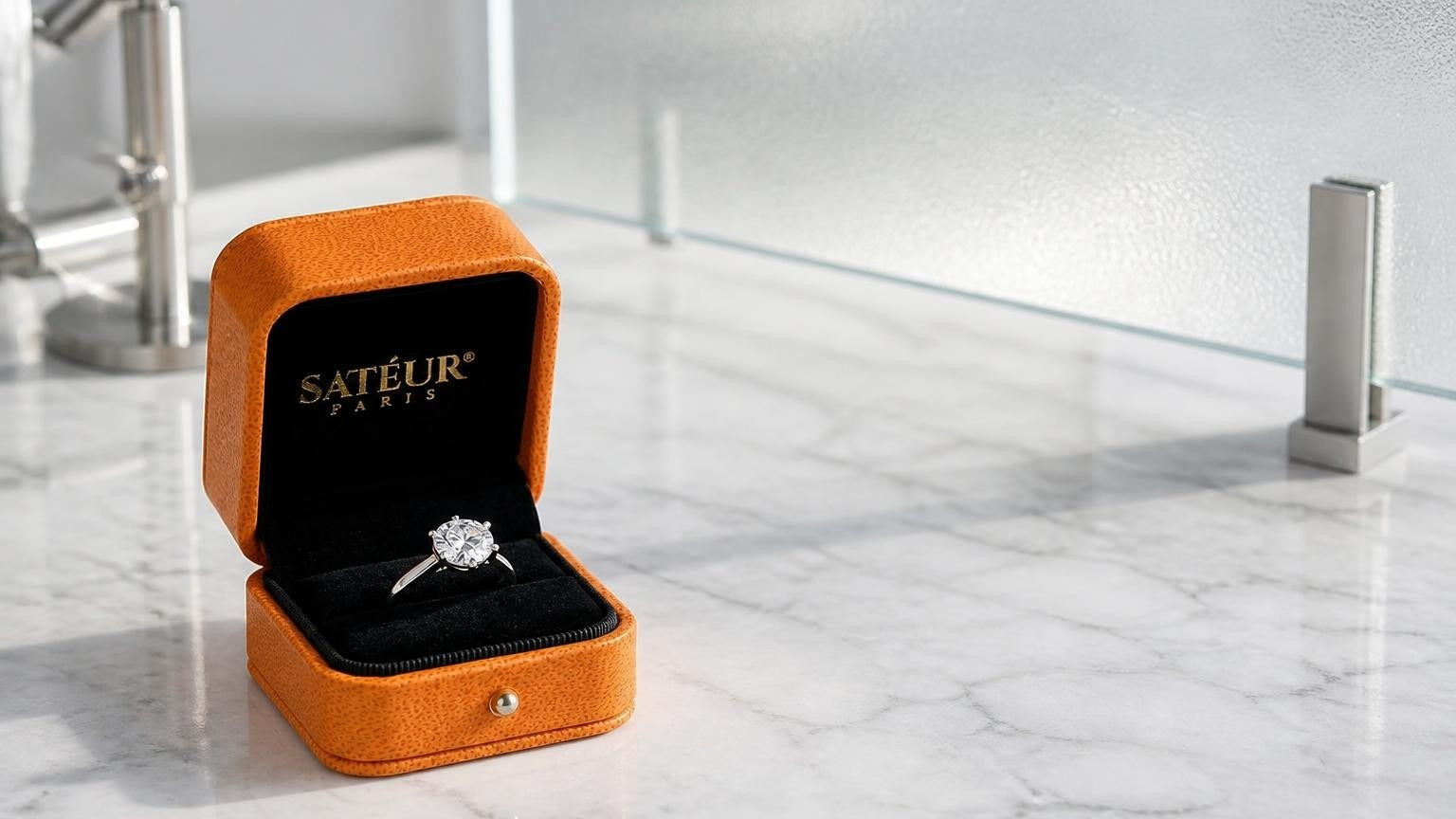
What does Satéur actually offer? Two clean choices. For buyers who want a certified lab-grown diamond, the Satéur Destinée Diamond Ring™ is set with an IGI-certified lab diamond in 18K gold finishing — a real diamond, independently graded, at lab-diamond value. For buyers who care about the look more than the lab report, Satéur Gems® are a trademarked diamond simulant graded to a D–E colour equivalent and an Excellent cut, with the restrained, white brilliance of a fine diamond — the trait that makes them read as a true diamond rather than a rainbow-forward sparkle.
The difference is honesty about what you're buying. A lab diamond is a diamond, certified as such. Satéur Gems® are not diamonds and never claim to be — they replicate the look of a flawless diamond from $138, about 1% of the mined-diamond price, which is why, across a dinner table, you'd never know. Choose the certificate, or choose the look; Satéur makes both, and is clear about which is which.
| Option | What it is | Relative price | Everyday wear |
|---|---|---|---|
| Lab grown diamond | A real diamond, IGI-certified | 60–80% of mined | Extremely durable |
| Satéur Gems® | Trademarked diamond simulant — the look of a flawless diamond | ~1% of mined · from $138 | Extremely durable |
| Mined diamond | Traditional mined diamond | 100% | Extremely durable |

Lab Grown Diamonds Beyond the Ring
It isn't only for engagement rings. The same certified stones — and the same diamond-look Satéur Gems® — set just as beautifully into necklaces, pendants, stud earrings, tennis bracelets and wedding bands. For everyday pieces especially, the value case is even stronger: you get the brilliance of a fine diamond at a fraction of the price, on jewellery you'll wear daily without a second thought.
Explore the full range by category and shape.
Lab-grown diamond jewellery by category:
Necklaces & earrings by shape:
Explore Lab Grown Diamond Rings
Ready to compare specific diamonds and rings? The guides and collections below go deeper on every part of the lab-grown decision — how lab compares to natural diamonds, what real-versus-synthetic actually means, and the lab-created and lab-grown diamond engagement rings themselves. Whether you're set on a certified lab diamond or weighing it against the diamond-look value of Satéur Gems®, start here.

Engagement rings — read & shop:

Satéur Destinée Diamond Ring™
An IGI-certified lab-grown diamond, set in 18K gold finishing.
Compare to a $10,000 mined diamond
Joined by 100,000+ couples across 150+ countries.
Explore Lab Grown Diamond RingsFree worldwide shipping · 30-day returns · Lifetime Satéur Care
Popular Cut & Carat Combinations
Know the shape and the carat weight you want? Jump straight to the most-shopped combinations.
Frequently Asked Questions
What makes a lab grown diamond different from a mined diamond?
Only its origin. A lab grown diamond is chemically, physically and optically identical to a mined diamond — same crystallised carbon, same hardness, same brilliance — and is graded by the same institutes. The difference is that it's grown in a controlled environment in weeks rather than formed underground over billions of years, which is why it costs 20–40% less.
How are lab grown diamonds made?
Two methods. HPHT (high pressure, high temperature) recreates the earth's diamond-forming conditions around a seed crystal; CVD (chemical vapour deposition) builds the crystal from a carbon-rich gas, layer by layer. Both produce identical crystallised carbon that's cut, polished and graded on the same scale as a mined diamond — the method doesn't change the quality you see.
Are lab grown diamonds certified?
Yes. Independent laboratories such as IGI and GIA certify lab grown diamonds using the exact same Four Cs grading scale as mined diamonds. A D-colour, eye-clean lab diamond means the same thing it would for a mined one. The Satéur Destinée Diamond Ring™ is set with an IGI-certified lab-grown diamond.
What should I look for when buying a lab grown diamond?
Prioritise cut — it controls brilliance more than size does — and choose an eye-clean clarity rather than paying for a flawless grade you can't see. D–E colour with an Excellent cut is the benchmark for an icy, brilliant diamond. Because lab diamonds cost less per carat, you can hold those quality grades while sizing up.
Which lab grown diamond shape should I choose?
The round brilliant returns the most light and is the timeless choice; elongated shapes like oval, pear and emerald read larger on the hand for the same carat weight, while princess, cushion, radiant and asscher offer more distinctive geometry. Whatever the shape, prioritise cut quality — it drives brilliance more than the outline does.
Do lab grown diamonds hold their value?
Lab grown diamonds are better value to buy but a weaker store of resale value than mined diamonds, because lab supply isn't constrained the way mining is. For an engagement ring you intend to wear and keep, that trade-off rarely matters — you get an identical look for materially less. If resale isn't a concern at all, a diamond simulant like Satéur Gems® replicates the look for about 1% of the price.
What colour and clarity grades are best for lab diamonds?
D–E colour reads the whitest and is the benchmark for a flawless-looking diamond, though G–H still appears white once set. For clarity, eye-clean is all you need — most inclusions are invisible without magnification, so paying for a flawless grade adds cost you can't see.
Can lab grown diamonds be set in earrings and necklaces?
Yes. The same certified lab diamonds — and the diamond-look Satéur Gems® — set into necklaces, pendants, stud earrings, tennis bracelets and wedding bands. For everyday jewellery the value case is even stronger: the brilliance of a fine diamond at a fraction of the price.















Deixe um comentário
Este site está protegido pela Política de privacidade da hCaptcha e da hCaptcha e aplicam-se os Termos de serviço das mesmas.