

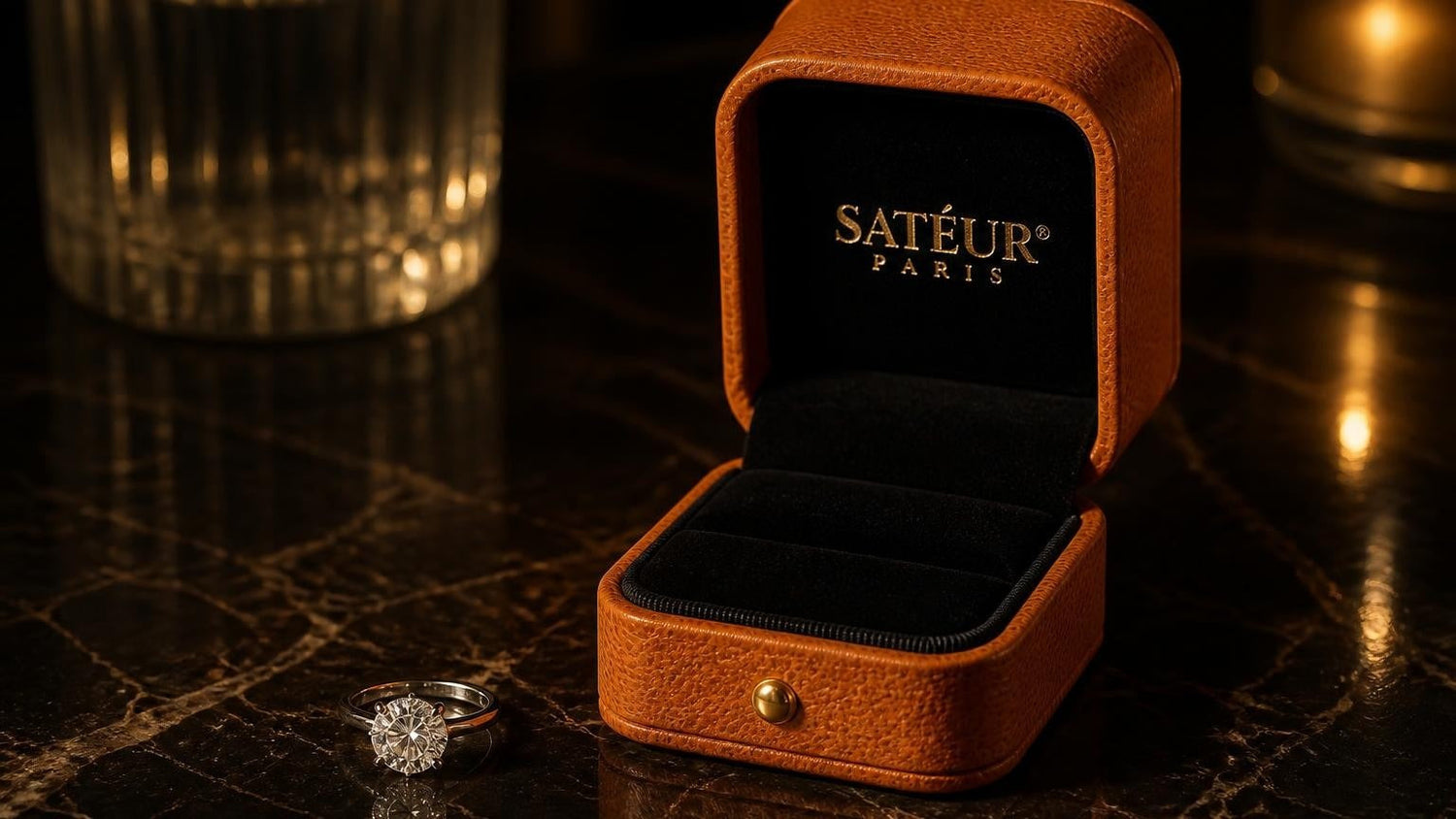
The Permission Ring: The Ring You Give Yourself
A permission ring is a ring you give yourself as a deliberate act of self-recognition. Not a placeholder. Not a consolation prize. A declaration — chosen on your own terms, worn for your own reasons, because you decided your story was worth marking now rather than waiting for someone else to agree.
The concept has existed for centuries under quieter names. A woman returning from travel. A birthday milestone that felt too significant to let pass. A season of rebuilding that deserved something beautiful at the end of it. Today, the self-purchase ring has its own language — and it is one of the most honest forms of jewellery there is. For anyone exploring occasion and milestone rings, the permission ring now stands as its own tradition, with growing legitimacy and, frankly, long overdue recognition.
Key Takeaways
- A permission ring is a self-purchased ring marking a personal milestone, achievement, or act of self-recognition.
- It requires no external occasion — the wearer decides what deserves to be celebrated and taps into that decision alone.
- Self-purchase jewellery now accounts for a significant and growing share of fine jewellery sales globally.
- Satéur Gems® delivers the clean, white brilliance of a flawless diamond from $138 — compared to $10,000 or more for a mined stone of equal visual quality.
- The right permission ring is the one you choose for yourself, with the same care you would give any meaningful gift.
What Is a Permission Ring
At its core, a permission ring is a statement of self-worth made visible. You are giving yourself access to something you have earned — a recognition that celebration does not require an audience, a partner, or a specific date on the calendar.
The term gained cultural traction as more women — and men — began purchasing fine jewellery for themselves without waiting for someone else to mark their milestones. A promotion. A business launched. A decade of quietly showing up. A relationship closed. A fear finally put down. These are events worth marking, even when no one else thinks to.
Some wear their permission ring on the right hand, to distinguish it from conventional relationship symbolism. Others wear it exactly where they want, without explanation. The beauty of the permission ring is that it belongs entirely to its wearer. It is not a shared device. It is not a shared decision. It is yours.

How Permission Rings Work
The mechanics are simpler than the sentiment. You choose a ring that resonates. You set a budget that reflects what feels right — not what a marketing industry decided diamonds should cost. You tap into the occasion, however large or small. You wear it.
What makes a permission ring different from any other ring is the intention behind it. Choosing it yourself, for yourself, changes how it sits on your hand. There is no waiting for someone else to decide when you are worth celebrating. You access that decision on your own timeline.
Some people mark a specific date — a birthday, the first anniversary of a career milestone, a personal threshold crossed. Others purchase because a particular ring felt like the right one at the right moment, and that was reason enough. Both approaches are valid. The permission ring has no rules about the occasion, only that it is yours.
The design language of a self-purchase ring tends toward the understated and enduring. A brilliant solitaire that holds its meaning for decades. A clean setting that does not need context to communicate elegance. A stone that reads as a fine diamond across the room — because you deserve that, regardless of what you spent.
Setting Up the Right Occasion
One of the quiet resistances to self-purchase jewellery is the belief that there needs to be a reason. There does not. But if it helps to name one, here are the occasions that have earned a permission ring thousands of times over.
A significant birthday — 30, 40, 50, 60 — that arrives not with anxiety but with a clear sense of who you have become. A professional milestone: a business launched, a degree completed, a role earned after years of work. A personal threshold: a chapter closed, a relationship rewritten. Or simply: you have been wanting something beautiful for a long time, and you have decided to stop waiting for permission that was always yours to give.
You are the primary account holder in your own story. New chapters — new relationships, new locations, new versions of yourself — can be added later. But the original permission, the original access to your own celebration: that is yours alone to grant.

Managing What a Permission Ring Means to Others
People will ask. They will assume. Some will notice a ring on the right hand and project their own interpretations onto it. This is worth anticipating — not because you owe anyone an explanation, but because having one ready, if you want it, is useful.
The most honest answer is the simplest: it is a ring you gave yourself to mark something that mattered. Most people, when they hear that, find it more interesting than a traditional proposal story. It is a different kind of narrative — one that does not wait for external validation to begin.
The shared users in your life — a partner, close friends, family — will form their own relationship with your permission ring over time. They may come to love it as an expression of who you are. What matters most is that you love it first, without needing their settings to confirm it.
You can explore more about ring placement and what it communicates if you want to think through which finger feels right. Conventions vary by culture, location, and personal preference. Wear it where it sits best — in every sense of that phrase.
Removing or Editing What the Ring Represents
Meaning is not fixed. A permission ring you purchased at 35 may feel different at 45 — not less true, but differently weighted. You may choose to stack it with a new ring as a new chapter opens. You may move it to a different hand. You may replace it entirely. That is not a betrayal of the original intention. It is the permission ring doing exactly what it was designed to do: allowing you to mark each version of yourself honestly.
Unlike rings that carry social contracts, a permission ring carries only the contract you made with yourself. You can revise that contract without requiring anyone else's consent. You can remove access, update the settings of what it means, or keep the original unchanged for the rest of your life. Every version of that choice is correct.
Thinking about the right box for a meaningful ring matters even when you are the one giving the ring — the presentation of a self-gift is part of its meaning. How you receive it from yourself matters.
Permission Ring vs. Other Access Methods
A permission ring is distinct from other forms of self-purchase jewellery, though the distinctions are more philosophical than practical. A right-hand ring is a broad category — it can mark anything or nothing. A stack ring is an addition to a collection. A statement piece is about aesthetic impact.
A permission ring has intention. It is chosen to mark something real, even if that something is never spoken aloud to anyone else. The devices by which we celebrate ourselves vary — travel, experiences, objects — but the permission ring has a permanence that other forms lack. It sits on your hand every day. It is a daily reminder that you gave yourself access to your own celebration, and that the decision was worth making.
The difference comes down to this: have you given yourself full access to the meaning it carries, or is it still tentative, still waiting for someone else to confirm it? A true permission ring is worn without apology. You do not need shared users to validate it. You do not need new permissions from anyone else. The primary account holder has made a decision.

Satéur Gems® Value: Permanent Elegance Without Compromise
A permission ring is an investment in your own story. It deserves a stone that will hold its meaning — and its brilliance — for life, without compromise.
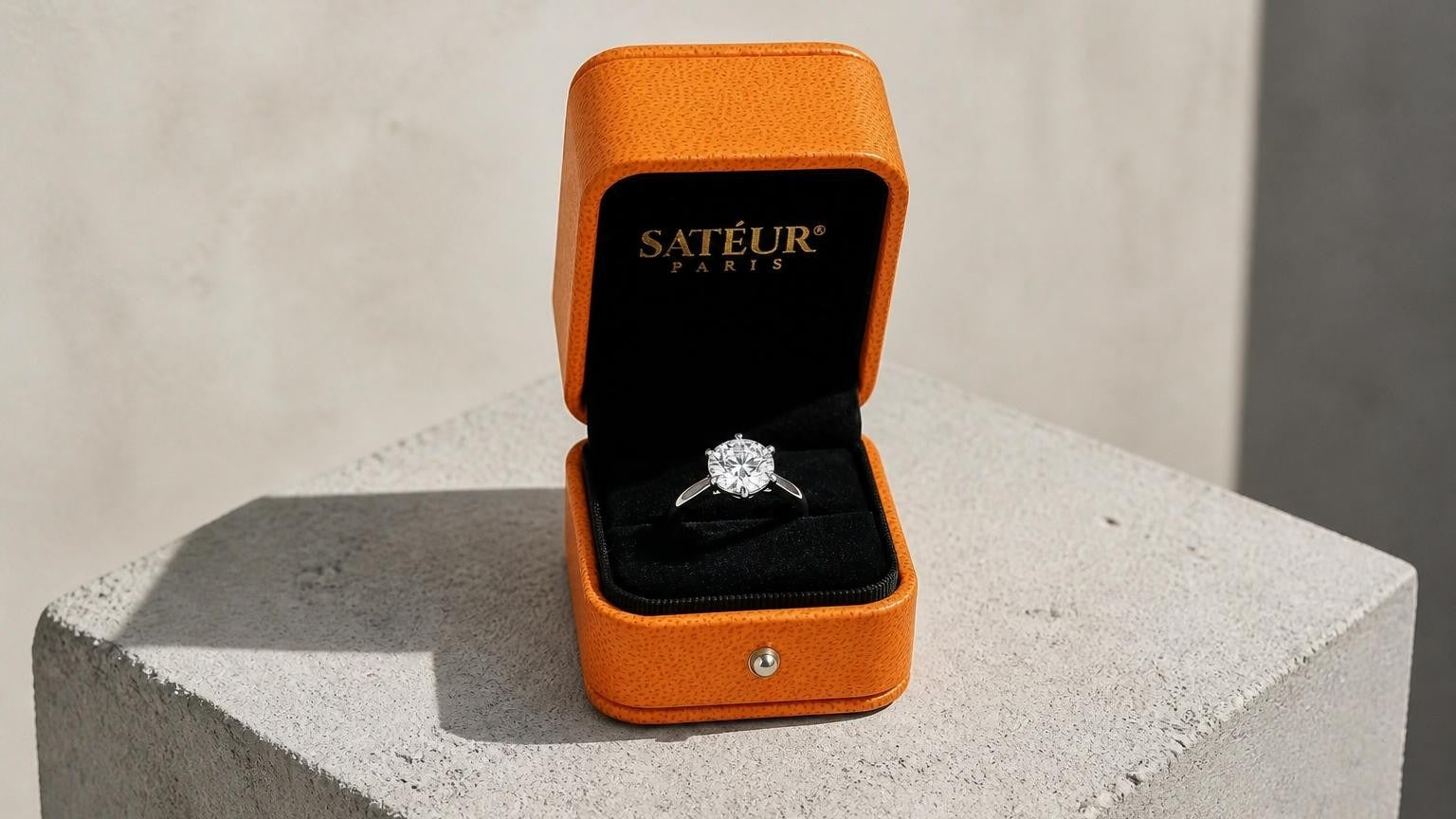
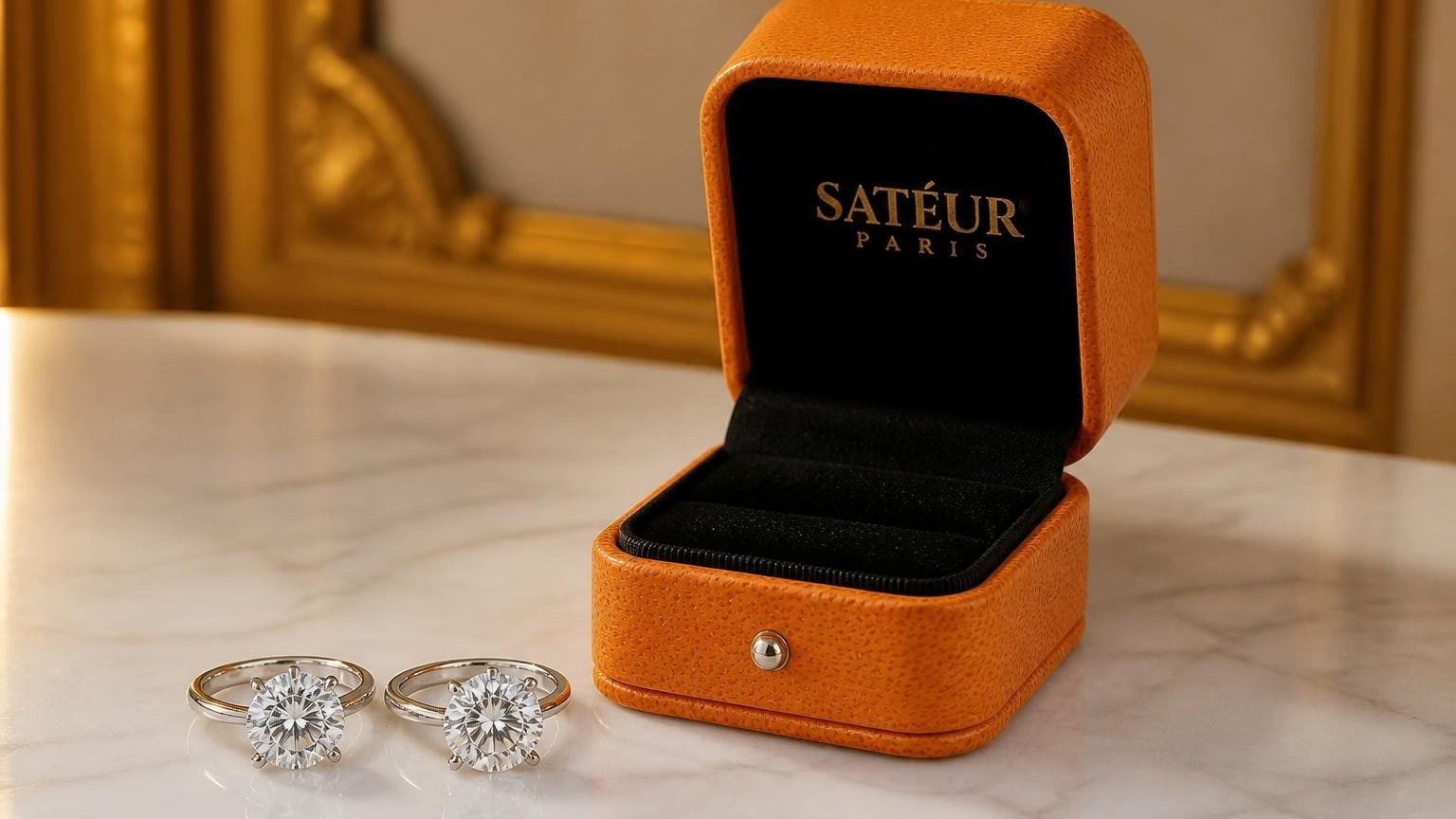
Satéur Gems® is the Maison's flagship gemstone: a trademarked diamond simulant engineered to deliver the clean, white brilliance of a flawless diamond. Diamond-accurate in optical character, it reads as a D-colour stone across the table and to the naked eye. The 1.00 carat Round cut captures light with perfect symmetry — the same geometry that gives a fine diamond its presence.
Compare that to what a mined diamond of equivalent visual quality would cost — $10,000 or more — and the case becomes simple. Not cheap. Not a compromise. Intelligent. The permission ring you actually give yourself today, rather than the one you defer indefinitely because the price never felt justified.
The Satéur Destinée Ring™ — The 1% Ring® — was built precisely for this. A stone that belongs in a Maison and a price that belongs in this century. Worn by over 100,000 people across 150+ countries who decided their milestones were worth marking without the old-school markup.
The New Diamond Standard is not a compromise position. It is a smarter one. And a permission ring, above any other kind of ring, deserves exactly that clarity of intention. Browse the full The 1% Ring collection to find the one that marks your moment.

Satéur Destinée Ring™
The look of a flawless diamond, for 1% of the price.
Compare to a $10,000 mined diamond
Joined by 100,000+ couples across 150+ countries.
Discover The 1% RingFree worldwide shipping · 30-day returns · Lifetime Satéur Care
Frequently Asked Questions
What is the difference between a permission ring and full account access in a relationship?
A permission ring is a self-purchase — chosen and worn by the buyer for themselves, marking a personal milestone or act of self-celebration. It carries no shared obligations and requires no one else's decision. A ring marking a relationship involves shared access and shared intention. The permission ring is distinct because its meaning is entirely self-determined. No one else sets the terms or holds the permissions.
Can I set different personal meanings for a permission ring over time?
Yes — and this is one of the most compelling aspects of the self-purchase ring. The meaning you assign it is yours to revise. A ring that marks a professional milestone at 32 may carry additional layers of meaning by 45. You can stack a new ring alongside it as a new chapter begins, move it to a different hand, or simply let its meaning evolve. The permission ring is a living object. Its significance is not fixed at the moment of purchase.
How do I remove a user's expectation that my ring is a relationship signal?
Wearing a ring on your right hand is the conventional way to signal that it is not a relationship ring — though conventions vary by culture and location. The simplest approach is quiet confidence: you do not owe an explanation. If one is asked for, the most disarming answer is usually the truest — "I gave it to myself." Most people find that more interesting than what they assumed.
What happens to the ring's meaning if I enter a new relationship?
Nothing, unless you want it to. A permission ring belongs to you before and after any relationship. If a partner later chooses to give you a ring, the permission ring does not lose its meaning — it simply exists alongside a different kind of ring, on a different hand or a different finger. Some people update their permission ring as their life changes. Others wear the original for decades. Both choices are valid.
Can permission ring users modify its significance, or only view it?
The wearer has full editing rights — always. A permission ring is a private contract, not a social one. You can upgrade it, replace it, wear it differently, or reframe what it means to you at any point. The only person with authority over your permission ring is you.
How many personal milestones can a single permission ring represent?
As many as you choose to give it. A ring purchased to mark one specific moment will naturally accumulate meaning over time — each year you wear it adds another layer. Some people prefer a single original meaning, preserved clearly. Others allow the ring to grow with them, the way a favourite book accumulates margin notes. There is no limit, and there is no single correct approach.

















Deixe um comentário
Este site está protegido pela Política de privacidade da hCaptcha e da hCaptcha e aplicam-se os Termos de serviço das mesmas.