

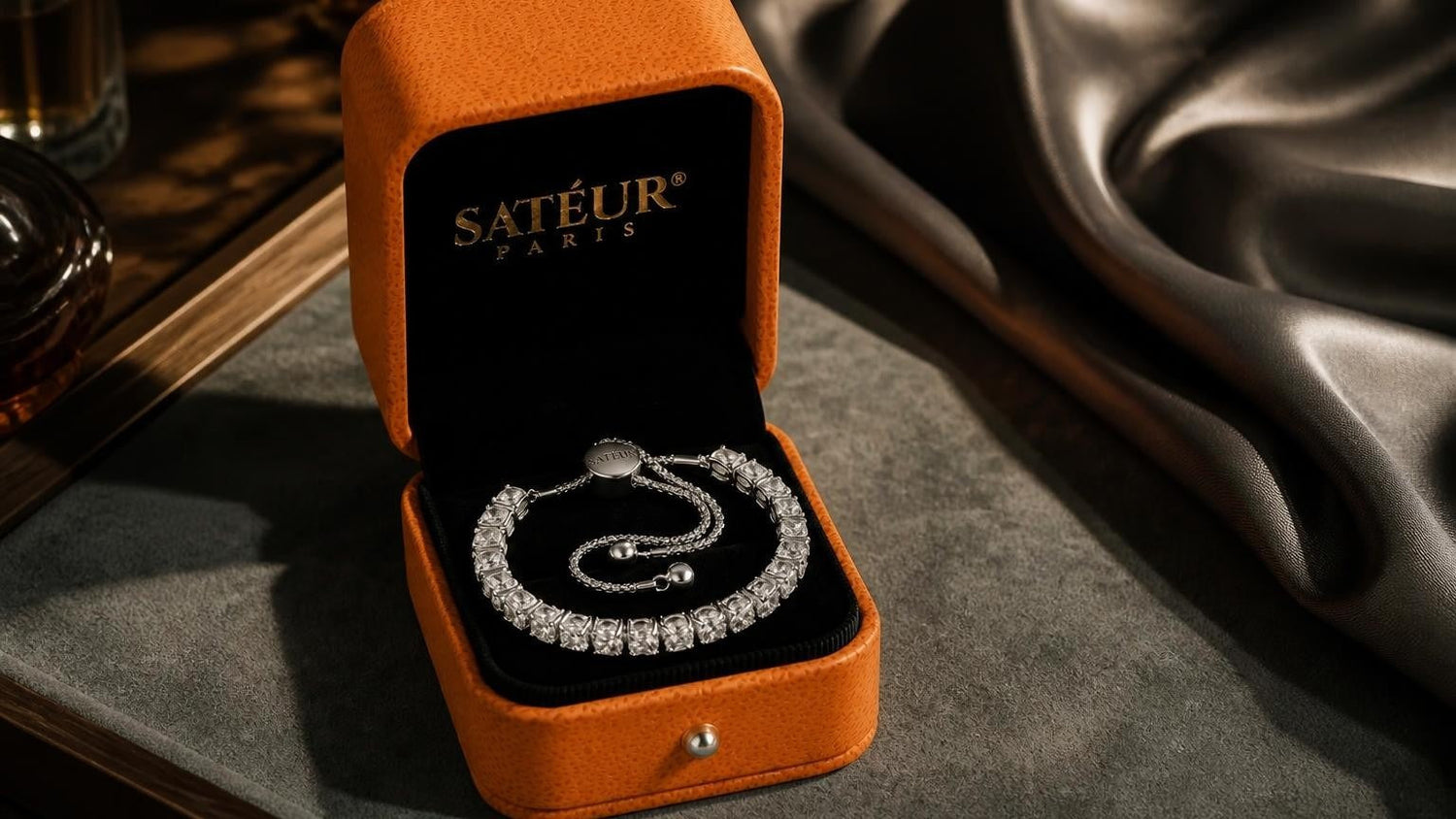
A tennis bracelet is a continuous line of matched gems — traditionally 60 to 80 round brilliants — set in a flexible band of precious metal that wraps the wrist in unbroken light. It's one of the most recognisable pieces in fine jewellery, and one of the most expensive in diamond form. A Satéur Gems® tennis bracelet replicates that flawless-diamond look for about 1% of the price, from $138, set in real 18K gold finishing — and across a dinner table, you'd never know.
This is the complete guide to tennis bracelets — what defines one and where the name comes from, the styles and settings, the metal and gemstone options, how to choose the right one for your wrist and lifestyle, and how to care for it. Each section links to a deeper guide or collection where one exists.
Key Takeaways
- A tennis bracelet is a continuous line of matched gems — traditionally 60–80 round brilliants — set in a flexible band of precious metal.
- A Satéur Gems® tennis bracelet gives the look of a flawless diamond line for about 1% of the price, from $138, set in 18K gold finishing.
- Satéur Gems® grade to a D–E colour equivalent with an Excellent cut and carry the restrained, white brilliance of a fine diamond; Satéur Moissanite is the openly-disclosed value option with more fire, from $98.
- Prong, bezel and channel settings each balance maximum brilliance against everyday security — choose by how you'll wear it.
- 18K gold finishing comes in white, yellow and rose; white gold gives the brightest, most diamond-like line.
- Both Gems® and moissanite are extremely durable, so a bracelet works for both daily wear and black-tie.
What Is a Tennis Bracelet?
What exactly makes a bracelet a "tennis" bracelet? Two things: a continuous, symmetrical line of matched gems — usually 60 to 80 round brilliants — and a flexible metal band that lets it drape and move with the wrist. There's no centre gem and no break in the pattern; the whole piece is the statement. The name is a piece of jewellery history: a professional tennis player famously stopped a match to recover her diamond line bracelet, and the style has carried the name ever since.
That heritage is why the tennis bracelet reads as quietly serious. Worn alone it's elegant; stacked with a watch it's modern. In mined diamonds it's a five-figure piece, which is exactly why the diamond-look version has become so popular — the same unbroken line of brilliance, the same drape and movement, without the price that usually keeps it for special occasions only. 
Styles & Setting Choices
Which setting style should you choose? The setting holds each gem and decides how much light it returns and how secure it sits. A prong (or claw) setting lifts each gem so light enters from every angle — maximum brilliance, the classic tennis look. A bezel setting wraps a thin rim of metal around each gem — slightly softer light but the most secure and snag-free, ideal for active daily wear. A channel setting sets the gems between two rails of metal for a sleek, modern line that protects the edges.
Beyond the setting, designs vary by gem size and density: a fine, delicate line for everyday layering, or a wider, larger-gem line for evening presence. The clasp matters too — a box clasp with a safety catch keeps a continuous bracelet secure on the wrist. Choose the setting for how you live: prongs for pure brilliance on occasion pieces, bezels for a bracelet you'll never take off. 
Explore in depth:
Metals & Gemstone Options
What metal and gem should a tennis bracelet use? Metal sets the backdrop. Satéur bracelets are set in 18K gold finishing — the look and feel of fine gold — in white gold (the brightest, most diamond-like line), warm yellow gold, and rose gold. White gold maximises the gems' brilliance; the warmer tones soften it against the skin.
The gems are where the value lives. A diamond tennis bracelet is a five-figure piece; a Satéur Gems® line replicates the same flawless-diamond look for about 1% of that. Satéur Gems® grade to a D–E colour equivalent with an Excellent cut and carry the restrained, white brilliance of a fine diamond — the trait that makes them read as a true diamond rather than a rainbow-forward sparkle. Satéur Moissanite, an openly-disclosed lab-created gemstone, is the value option below Gems®, with more fire than a diamond. Both are extremely durable and built for everyday wear. The table shows the trade-offs.
| Gem | The look | Relative price | Everyday wear |
|---|---|---|---|
| Satéur Gems® | Restrained, white brilliance of a fine diamond | ~1% of mined · from $138 | Extremely durable |
| Satéur Moissanite | More fire than a diamond — rainbow-forward | ~1% of mined · from $98 | Extremely durable |
| Mined diamond | Classic white brilliance | 100% | Extremely durable |

Explore in depth:
Choosing & Wearing Your Bracelet
How do you choose the right tennis bracelet? Start with fit. A tennis bracelet should sit snug enough not to spin but loose enough to slide a fingertip beneath — too loose and the line twists and catches. Most wrists take a 17–18 cm bracelet; size up slightly for a looser, more fluid drape. Then choose by use: a bezel-set, finer line if you'll wear it daily through work and life, or a prong-set, larger-gem line if it's an occasion and evening piece.
Because a Satéur Gems® bracelet costs a fraction of a diamond line, you don't have to reserve it for special occasions — it's extremely durable for everyday wear and within reach enough to actually live in. Pair it with a watch for a modern stack, wear it alone for a clean evening look, or layer two for presence. The point of a tennis bracelet is movement and light; wear it where it'll catch both. 
Browse Satéur Bracelets
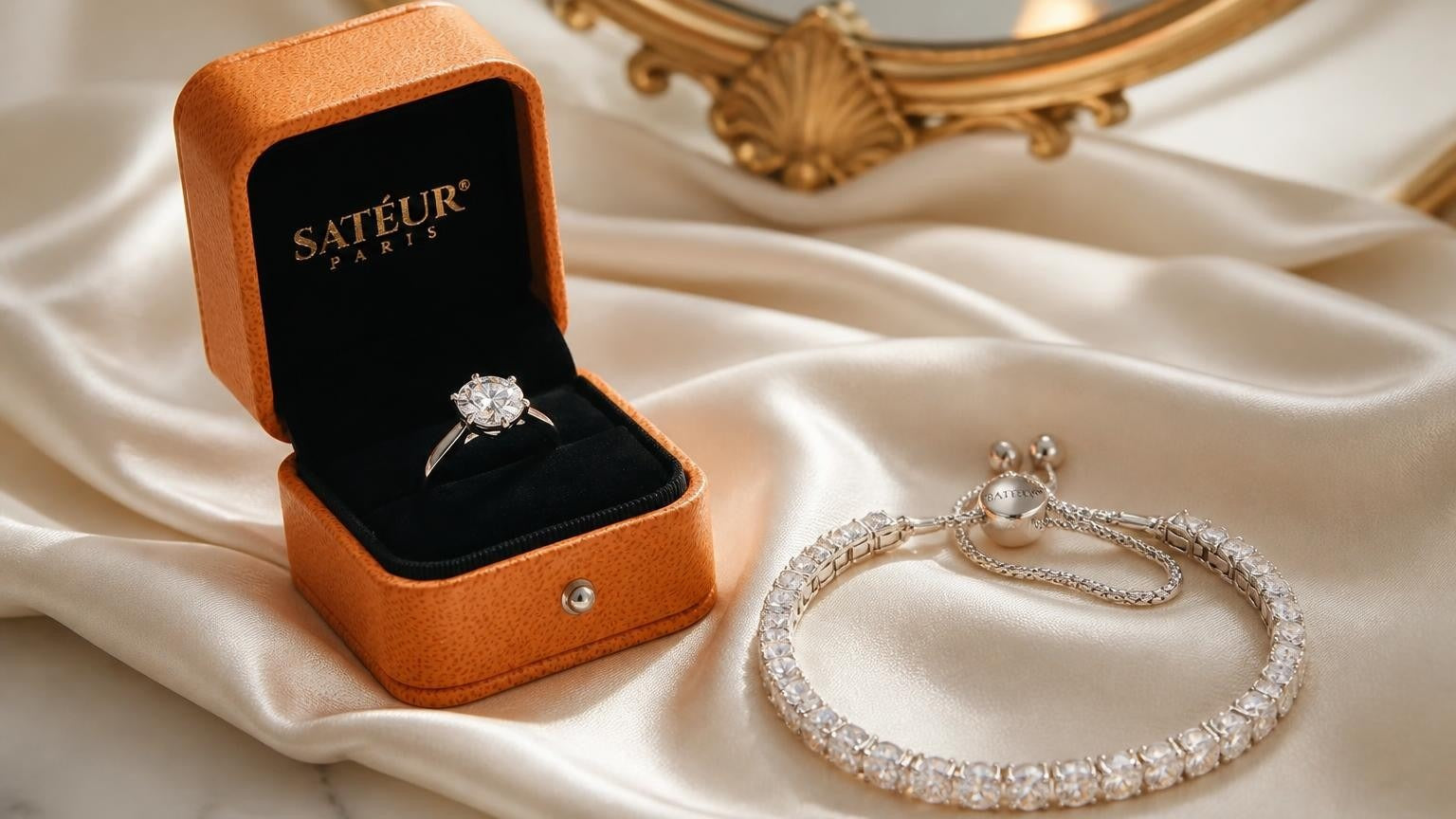
Ready to find your bracelet? Start with the line you're drawn to — a delicate everyday tennis bracelet or a wider statement piece — then narrow by metal and setting. Below you'll find every Satéur bracelet style and guide, from classic and diamond-look tennis bracelets to the deeper buying and care guides, each one a step closer to the piece that wraps your wrist in light.

Explore in depth:
Care & the Satéur Gems® Value
How do you keep a tennis bracelet brilliant? Because it sits against the wrist and brushes everything, a tennis bracelet collects hand cream, soap and skin oils faster than most pieces — so a regular gentle clean matters most here. Soak it in warm water with a drop of mild dish soap, work a soft brush behind each gem where film hides, rinse and pat dry. Check the clasp and the line of settings now and then to make sure every gem sits firm, and store it flat and apart from harder pieces.
That little care goes a long way, because Satéur Gems® are built to last: extremely durable for daily wear, with a brilliance that never clouds. A diamond line bracelet with this presence runs into five figures; a Satéur Gems® bracelet replicates the same flawless-diamond look — D–E colour, Excellent cut, the restrained white brilliance of a fine diamond — from $138, in real 18K gold finishing. It's the New Diamond Standard®: a piece you can wear every day, not lock in a safe. 

Satéur Destinée Secrète Bracelet™
A flawless-diamond line for the wrist — at about 1% of the price.
Compare to a $10,000 mined diamond
Joined by 100,000+ couples across 150+ countries.
Discover Satéur BraceletsFree worldwide shipping · 30-day returns · Lifetime Satéur Care
Frequently Asked Questions
What defines a tennis bracelet and why is it called that?
A tennis bracelet is a continuous, symmetrical line of matched gems — traditionally 60 to 80 round brilliants — set in a flexible band of precious metal, with no centre gem. The name comes from a professional tennis player who stopped a match to recover her diamond line bracelet; the style has carried the name ever since.
How do I choose between different metal types for a tennis bracelet?
Satéur bracelets use 18K gold finishing in white, yellow and rose. White gold gives the brightest, most diamond-like line and maximises the gems' brilliance; yellow and rose gold add warmth against the skin. Choose by the metals you already wear — and white gold if you want the gems to read as brilliantly as possible.
What are the main setting styles used in tennis bracelets?
Three dominate. Prong (claw) settings lift each gem for maximum brilliance and the classic look. Bezel settings wrap a rim of metal around each gem for the most secure, snag-free everyday wear. Channel settings hold the gems between two metal rails for a sleek, protected, modern line.
Should I wear a tennis bracelet daily or reserve it for special occasions?
Either — the metal and gem density set the register. A finer, bezel-set line is perfect for daily wear; a wider, prong-set line reads as occasion jewellery. Because a Satéur Gems® bracelet costs a fraction of a diamond line and is extremely durable, you don't have to save it for special occasions.
How do gemstone options differ in appearance and durability?
Satéur Gems® grade to a D–E colour equivalent with an Excellent cut and carry the restrained, white brilliance of a fine diamond — the most diamond-accurate look. Satéur Moissanite, openly disclosed, has more fire than a diamond — a vivid, rainbow-forward sparkle. Both are extremely durable and built for everyday wear; a mined diamond looks similar but costs roughly 100× more.
What maintenance does a tennis bracelet require over time?
Clean it regularly in warm water with a drop of mild dish soap and a soft brush — it collects more skin oils than most pieces because it sits against the wrist. Check the clasp and settings periodically so every gem stays firm, and store it flat, apart from harder jewellery. Satéur Gems® are extremely durable and won't lose their brilliance.

















留下評論
此網站已受到 hCaptcha 保護,且適用 hCaptcha 隱私政策以及服務條款。