

What Is a Tennis Bracelet?
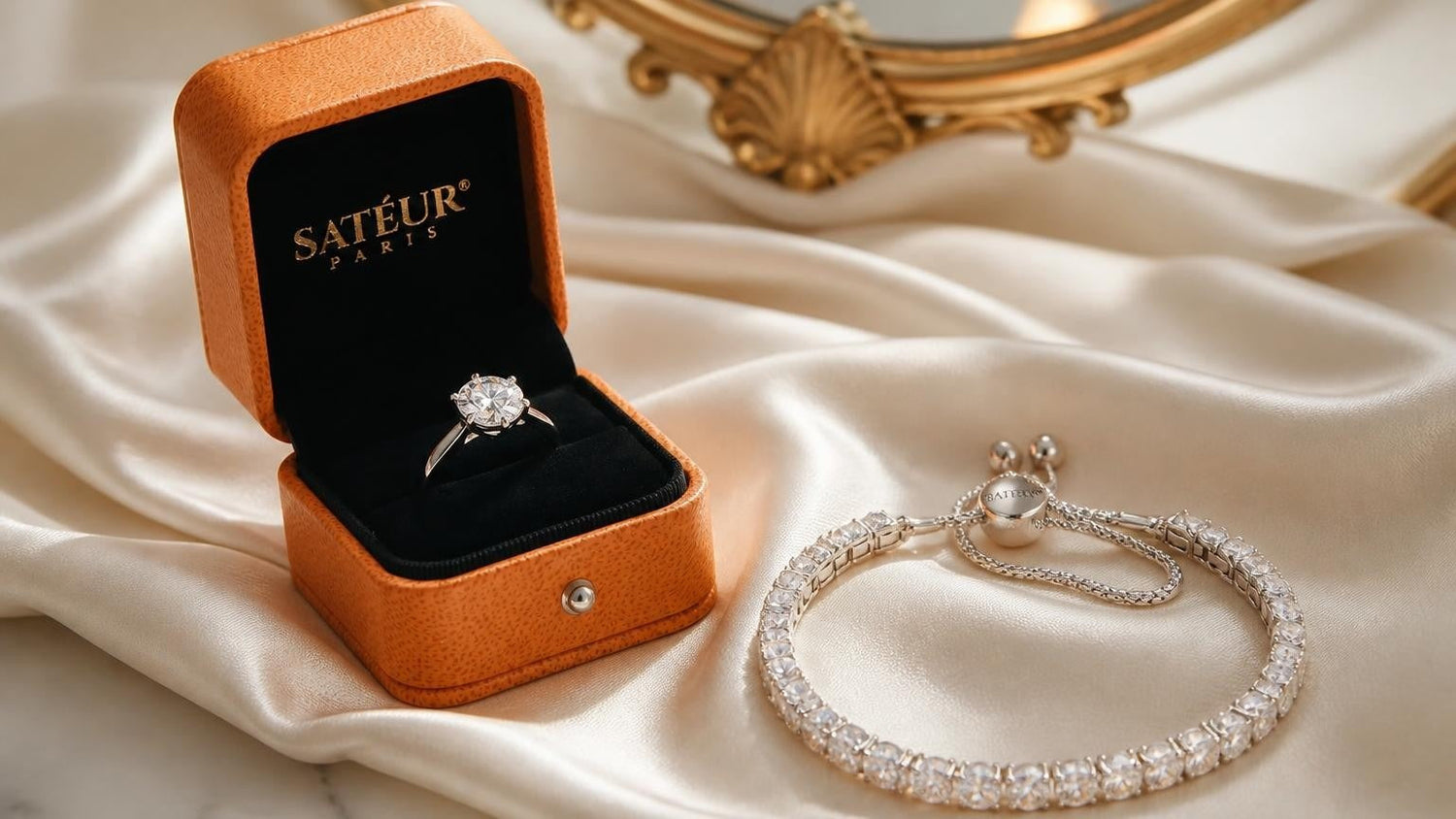
A tennis bracelet is a flexible strand of individually set diamonds or gemstones arranged in a continuous, symmetrical line around the wrist. Elegant in its simplicity. Enduring in its design. Among the most recognised forms in fine jewellery — worn by royalty, worn on courts, worn every day by those who understand that restraint is its own kind of statement.
For a deeper look at how to choose, size, and style one, read our complete tennis bracelet guide.
Key Takeaways
- A tennis bracelet is a flexible line of gemstones or diamonds set in precious metal — typically 14K or 18K gold.
- The name originates from a 1987 US Open incident involving professional tennis player Chris Evert.
- Traditional designs feature round brilliant-cut diamonds in a continuous, symmetrical setting.
- Most bracelets measure 7 to 7.5 inches in length; a proper fit allows one finger of clearance.
- Satéur Gems® tennis bracelets deliver D-E colour brilliance with a Mohs hardness of approximately 8.8 — extremely durable, built for everyday wear.
- Entry-level Satéur tennis bracelets begin at approximately $88, at roughly 1% of the mined diamond price.
The Tennis Bracelet Defined
In precise terms, a tennis bracelet is a single-strand bracelet composed of individually set gemstones — most commonly round brilliant-cut diamonds — linked in a continuous, flexible line. Each stone is held in a four-prong or bezel setting, and the links connect to create a bracelet that moves fluidly with the wrist.
The design is deliberately uninterrupted. No centrepiece. No asymmetry. The tennis bracelet draws the eye along the entire wrist, which is precisely its power. It functions equally as an everyday piece and as formal jewellery — a rare quality in fine design.
White gold and yellow gold are the most common metal choices for tennis bracelets. Platinum appears at the higher end of the market. The combination of white metal and white diamonds — or diamond simulants — remains the most iconic pairing: a clean, architectural look that has not dated in four decades.
Why Is It Called a Tennis Bracelet?
The name is a matter of record. In 1987, during the US Open, professional tennis player Chris Evert lost her diamond bracelet mid-match when the clasp broke. She stopped play and asked officials to pause the tennis match while she searched for it on the court.
The incident was broadcast live. The bracelet — until then referred to as an in-line diamond bracelet or eternity bracelet — was seen by millions of tennis fans. In the days that followed, jewellers across the United States reported a surge in requests for "the bracelet Chris Evert wore." The tennis bracelet name became colloquial almost immediately.
Chris Evert had been wearing the bracelet as everyday jewellery, not as a formal statement. That detail matters. The tennis bracelet's reputation as something worn — not displayed — was established in that moment on the tennis court. It has held ever since.

Tennis Bracelet Design and Structure
The defining characteristic of a tennis bracelet is its uniformity. Every stone in the line is the same cut, the same colour grade, the same carat weight. This consistency is not simple to achieve — it requires careful curation and precise setting. A single mismatched stone interrupts the entire visual flow of the bracelet.
The most common stone shape for a tennis bracelet is the round brilliant cut. It maximises light return, sits low in its setting, and reads as a clean white point of light at distance. Princess-cut and emerald-cut tennis bracelet designs exist, but the round brilliant remains the standard.
Tennis bracelet setting styles vary:
- Four-prong setting — the classic. Minimal metal, maximum stone visibility. Prongs hold each stone securely while showing as much of the gem as possible.
- Bezel setting — a thin band of metal encircles each stone. More secure. A slightly softer visual.
- Channel setting — stones are set flush between two parallel metal rails. A more modern look, lower profile.
Clasp quality is non-negotiable in a tennis bracelet. The clasp is the single point of failure — look for a box clasp with a secondary safety latch, or a lobster claw clasp on heavier tennis bracelet pieces. This is the lesson Chris Evert taught the world in 1987.
Diamond and Gold: The Classic Tennis Bracelet Pairing
The majority of fine tennis bracelets are set in 14K or 18K gold. The distinction matters for durability and appearance. 14K gold contains 58.5% pure gold — harder, more resistant to everyday wear on a tennis bracelet. 18K gold contains 75% pure gold — richer in colour, the standard for high-end jewellery.
White gold achieves its cool, silvery tone through rhodium plating. Over time, with daily wear, rhodium can fade and require replating. Yellow gold requires no such maintenance. Rose gold, a warm pink-gold alloy, has become an increasingly popular alternative for tennis bracelets — particularly in modern jewellery design.
Diamond selection for a tennis bracelet focuses on four variables: cut, colour, clarity, and carat. For a bracelet with twenty to forty stones, slight variations in any of these compound quickly. Jewellers sourcing diamonds for a single tennis bracelet must match dozens of stones to the same grade — a process that drives significant cost.
A 3-carat round brilliant diamond tennis bracelet in 14K white gold with VS1 clarity and G-colour diamonds retails between $4,000 and $8,000 at major jewellers. A 7-carat tennis bracelet can reach $20,000 or more. The mined diamond price reflects extraction, certification, and the logistical cost of matching stones — not the brilliance itself.
For those seeking the diamond tennis bracelet look without the mined diamond price, browse our diamond tennis bracelet collection — designed to the same standard.

Satéur Gems® Tennis Bracelets: Comparable Beauty at 1% of the Price
Satéur Gems® is the Maison's trademarked diamond simulant — the same gem behind The 1% Ring, our signature piece. Each gem is graded D-E colour and cut to Excellent standard — the same grades applied to the finest mined diamonds. With a refractive index of approximately 2.39, the gem returns the clean, white brilliance of a flawless diamond. Diamond-accurate. Not a different kind of sparkle. The same restrained, precise look.
Across the table and to the naked eye, a Satéur Gems® tennis bracelet reads as a diamond bracelet. The Mohs hardness of approximately 8.8 means it is extremely durable and built for everyday wear — the same resilience required of a tennis bracelet worn continuously. The composition of Satéur Gems® is not publicly disclosed; the proprietary gem-crafting technology that achieves this result belongs to the Maison.
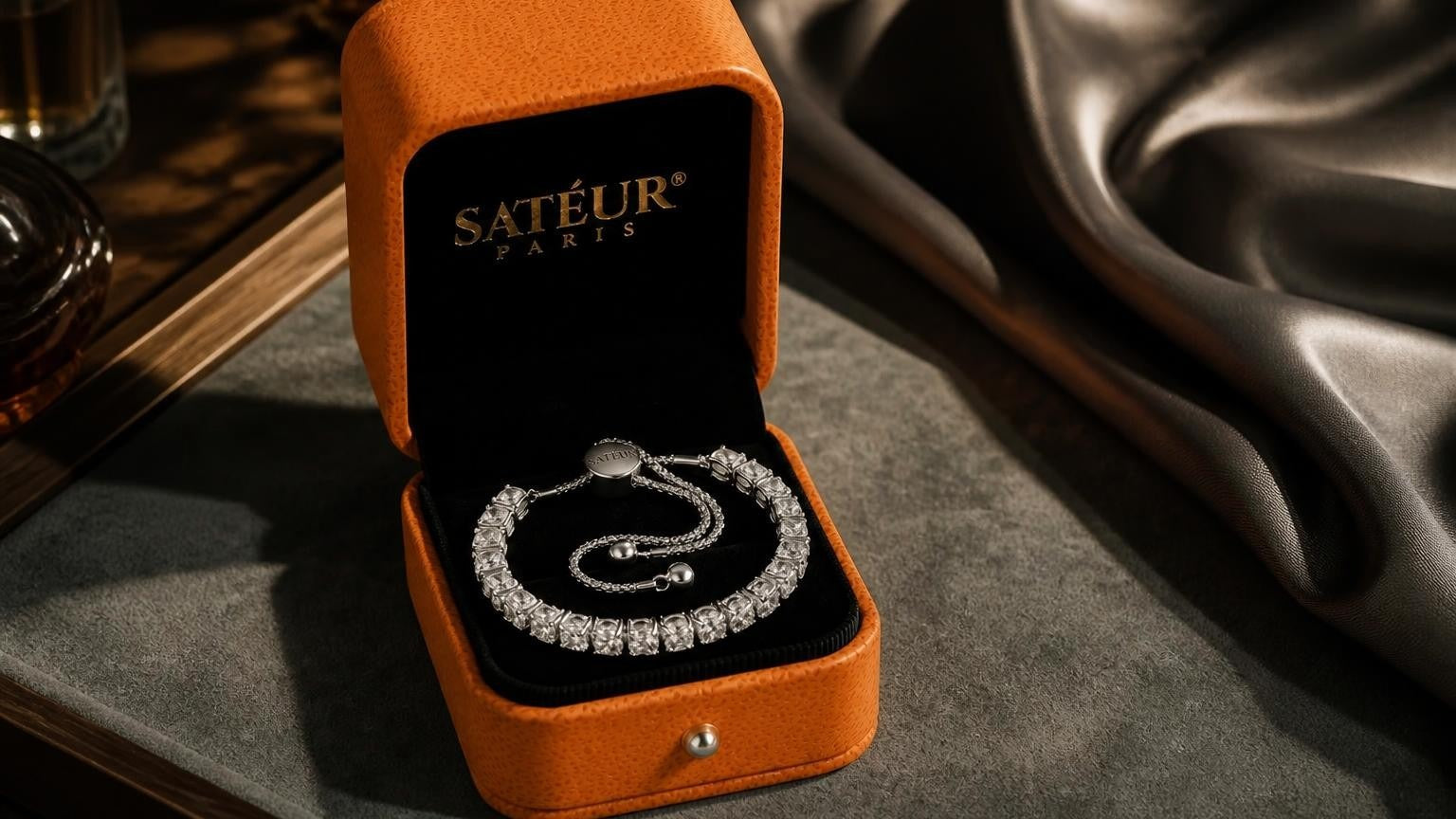
The Satéur Destinée Secrète Bracelet™ presents 5.6 carats of round-cut Satéur Gems® in an 18K gold finish. The line is continuous, the setting precise, the result indistinguishable from a fine diamond tennis bracelet with the naked eye — at roughly 1% of the price of a comparable mined diamond piece.

Satéur Destinée Secrète Bracelet™
The look of a flawless diamond tennis bracelet — 5.6 carats of round-cut Satéur Gems® in 18k gold finish, from $88.
Compare to a $10,000 mined diamond
Joined by 100,000+ couples across 150+ countries.
Shop Destinée SecrèteFree worldwide shipping · 30-day returns · Lifetime Satéur Care
Entry-level Satéur tennis bracelets begin at approximately $88 — a price point that makes fine-jewellery design accessible as both a self-purchase and a considered gift. For those who prefer a disclosed lab-created gemstone option, Satéur's moissanite tennis bracelets offer a vivid, rainbow-forward sparkle with the same accessible price philosophy.
The New Diamond Standard is not a claim about material equivalence. It is a statement about what jewellery should cost — and what it should look like on your wrist.
How to Style Your Tennis Bracelet
The tennis bracelet is one of the few pieces of fine jewellery that functions across the full register of dress. Worn alone on a bare wrist, a tennis bracelet reads as effortlessly composed. Stacked with a watch or bangle, it becomes a considered layering statement.
Styling principles that hold:
- Wrist alone — the tennis bracelet's geometry is most visible against a clean wrist. The most timeless look.
- With a watch — stack the tennis bracelet on the same wrist as a watch. The contrast between watch dial and continuous diamond line is a classic pairing in fine jewellery styling.
- Mixed metals — white gold or platinum against a yellow gold watch, or vice versa. Mixed metals in jewellery are no longer a mistake; they are a mark of considered style.
- Layering bracelets — two or three bracelets of varying widths and textures. Keep carat weight and stone size consistent for a coherent look.
For formal occasions, the tennis bracelet alone — no rings, no bangles — carries more visual authority than a fully layered wrist. Restraint, worn well, is its own statement.
Explore the full range of Satéur bracelets, including necklace pairings in the Satéur necklace collection for a complete jewellery look.

Measuring and Fitting Your Wrist
A tennis bracelet must fit correctly to wear well and to remain secure. A bracelet that is too tight restricts movement and places stress on the clasp. One that is too loose risks slipping off — the exact scenario that gave the tennis bracelet its name in 1987.
To measure your wrist for a tennis bracelet, use a soft measuring tape or a strip of paper. Wrap it around your wrist just below the wrist bone — where a bracelet would sit during wear. Note the measurement in inches.
Standard tennis bracelet sizing:
- Small wrist (under 6.5"): 6.5-inch tennis bracelet
- Medium wrist (6.5" – 7"): 7-inch tennis bracelet
- Larger wrist (7" – 7.5"): 7.5-inch tennis bracelet
Add half an inch to your wrist measurement for the correct tennis bracelet length. This allows for natural movement without excess play. You should be able to slide one finger comfortably between the bracelet and your wrist — no more.
Most tennis bracelets are sold in a standard 7-inch length. Many designs offer extension links for adjustment. If your wrist measures under 6.5 inches, look for a tennis bracelet with a removable link section or ask about custom sizing.
Frequently Asked Questions About Tennis Bracelets
What is a tennis bracelet?
A tennis bracelet is a flexible strand of individually set diamonds or gemstones arranged in a continuous, symmetrical line around the wrist. The design typically features round brilliant-cut diamonds in a four-prong or bezel setting, linked in a single row. It is named after professional tennis player Chris Evert, who lost her diamond bracelet during the 1987 US Open tennis tournament.
Why is a tennis bracelet called that?
The tennis bracelet name originates from a 1987 incident at the US Open. Tennis player Chris Evert's diamond bracelet fell from her wrist mid-match when the clasp broke. She paused the tennis match to recover it. The bracelet — previously called an in-line diamond bracelet — was seen by a national television audience, and jewellers reported immediate demand for "the bracelet Chris Evert wore." The tennis bracelet name has remained ever since.
What metal is best for a tennis bracelet?
18K white gold is the most popular choice for a tennis bracelet — it pairs cleanly with white diamonds or diamond simulants and holds its finish well. 14K gold is harder and more resistant to daily wear, making it a practical choice for a tennis bracelet worn continuously. Platinum offers the highest durability and a natural silvery-white colour that does not require rhodium plating, but comes at a significantly higher price. Yellow gold in an 18K finish is a timeless alternative that requires no replating.
How do you measure your wrist for the correct fit?
Wrap a soft measuring tape around your wrist just below the wrist bone. Add half an inch to your measurement to arrive at the correct tennis bracelet length. A properly fitted bracelet allows one finger of clearance between the bracelet and the wrist. Most standard tennis bracelets are 7 inches in length, fitting a medium wrist of approximately 6.5 inches.
Can you wear a tennis bracelet every day?
Yes. The tennis bracelet was designed for continuous wear — its low-profile setting and flexible link structure make it comfortable for daily use. Satéur Gems® bracelets, with a Mohs hardness of approximately 8.8, are extremely durable and built for everyday wear. The key is clasp quality: a box clasp with a secondary safety latch will hold the tennis bracelet securely through routine movement.
How much does a quality tennis bracelet cost?
Mined diamond tennis bracelets typically range from $2,000 to $20,000 or more, depending on total carat weight, diamond grade, and metal. A 3-carat bracelet in 14K white gold with G/VS1 diamonds retails between $4,000 and $8,000. Satéur Gems® tennis bracelets begin at approximately $88 — delivering the same diamond-accurate look in a D-E colour, Excellent-cut gem at roughly 1% of the mined diamond price.

















留下評論
此網站已受到 hCaptcha 保護,且適用 hCaptcha 隱私政策以及服務條款。