




Diamond Look Alike Stones: Which Alternative Comes Closest
A diamond look alike is a gemstone — or a trademarked lab-crafted gem — engineered to replicate the visual character of a mined diamond: the white brilliance, the precise faceting, the presence on the hand. The best of these alternatives are indistinguishable from a mined diamond with the naked eye, while costing a fraction of the price. This guide maps the four primary diamond simulant categories — Satéur Gems®, moissanite, white sapphire, and cubic zirconia — by their optical properties, durability, and realistic price tier, so you can choose without mythology.
Key Takeaways
- Satéur Gems® achieves D–E colour and Excellent cut, delivering the clean white brilliance of a flawless diamond — from approximately $138.
- Moissanite (Mohs ≈ 9.25) is a lab-created gemstone with more fire than a diamond — vivid rainbow sparkle rather than diamond-accurate white brilliance.
- White sapphire (corundum, Mohs 9) is naturally durable but carries a lower refractive index, producing a softer, less diamond-like visual.
- Cubic zirconia is widely available at low cost; at Mohs 8–8.5, it scratches and clouds with daily wear.
- For a diamond look alike suitable for an engagement ring — one that reads as a flawless diamond across the table — Satéur Gems® offers the most diamond-accurate result at approximately 1% of the mined-diamond price.
What Is a Diamond Look Alike
The phrase "diamond look alike" covers any gemstone or lab-crafted simulant that replicates the appearance of a mined diamond — the same white light return, the same symmetry of facets, the same quiet authority on the finger. It does not imply imitation in a deceptive sense. A diamond look alike is a considered alternative: the visual result of applying precision gemology to a different material.
The category divides broadly into two types. Natural alternatives — white sapphire, for instance — are genuine gemstones that happen to resemble a diamond. Trademarked simulants — such as Satéur Gems® — are engineered specifically to maximise diamond-accurate brilliance, often outperforming naturally occurring alternatives on the optical metrics that matter most. Understanding this distinction is the first step in choosing well among diamond alternatives.
Diamond Simulants vs. Natural Alternatives
Natural diamond alternatives exist in nature and are sold as they are found, cut to their best optical potential. White sapphire is the most prominent example. Trademarked simulants, by contrast, are lab-produced to a controlled specification — their refractive index, facet geometry, and colour grading are the result of deliberate engineering rather than geological chance.
The practical difference is consistency. A natural white sapphire varies from stone to stone in how closely it resembles a diamond. A trademarked simulant like Satéur Gems® is produced to a D–E colour standard on every piece — the same benchmark used to grade the finest mined diamonds. For those who want a diamond look alike that holds its standard reliably across every stone, the engineered route tends to produce a more predictable result.
See how these categories sit within the broader landscape of diamond alternative gemstones and their optical properties.

Satéur Gems®: The Diamond Look at ~1% of the Price
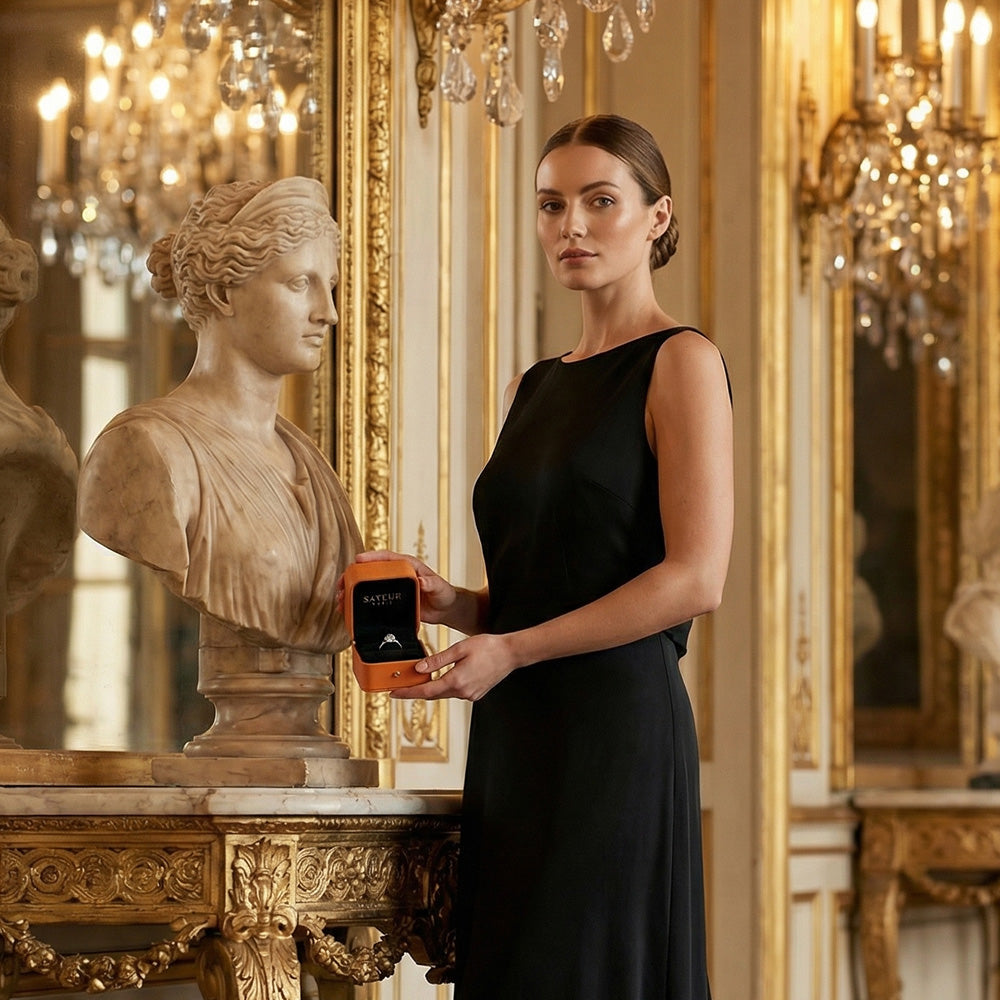
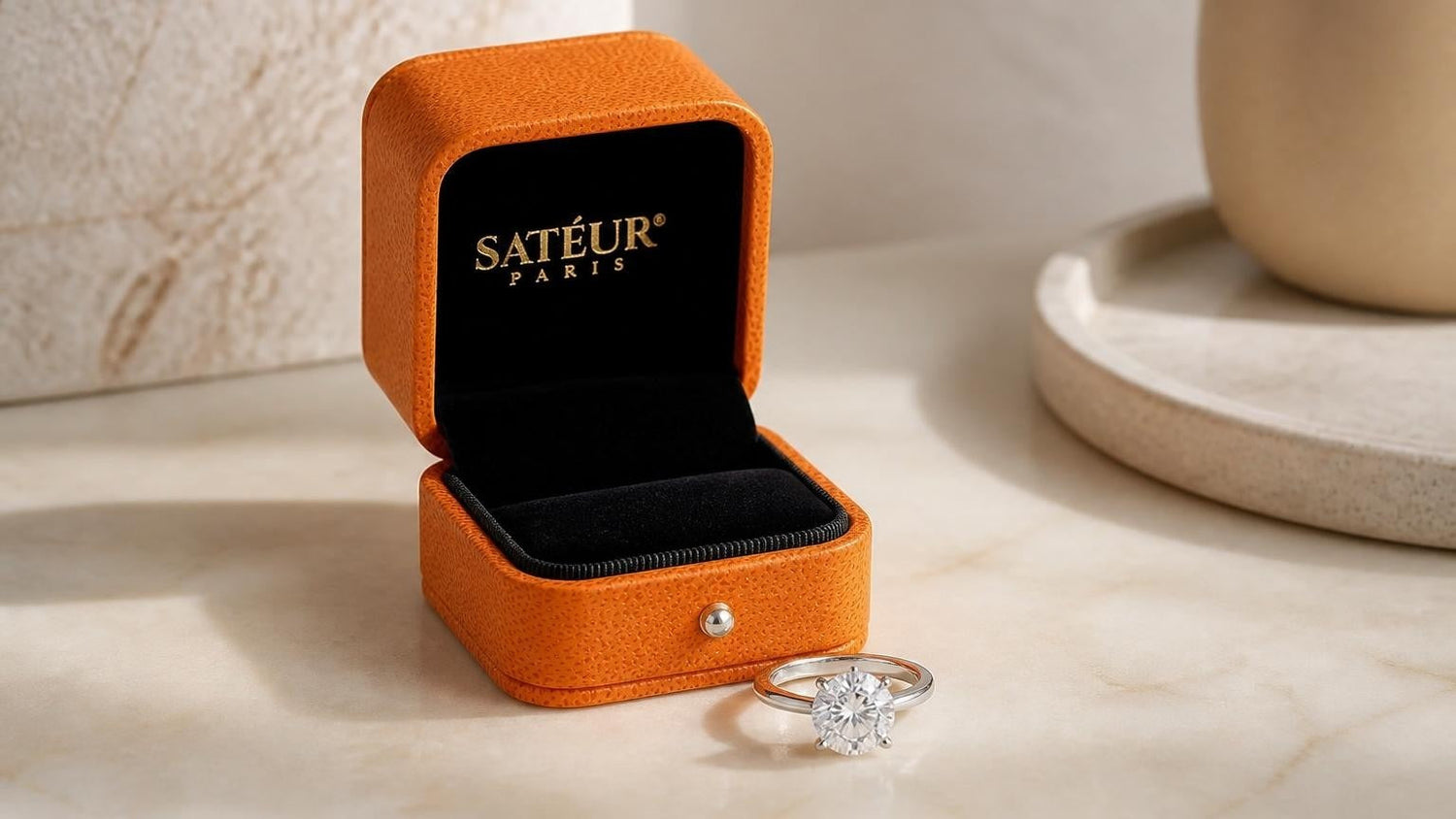
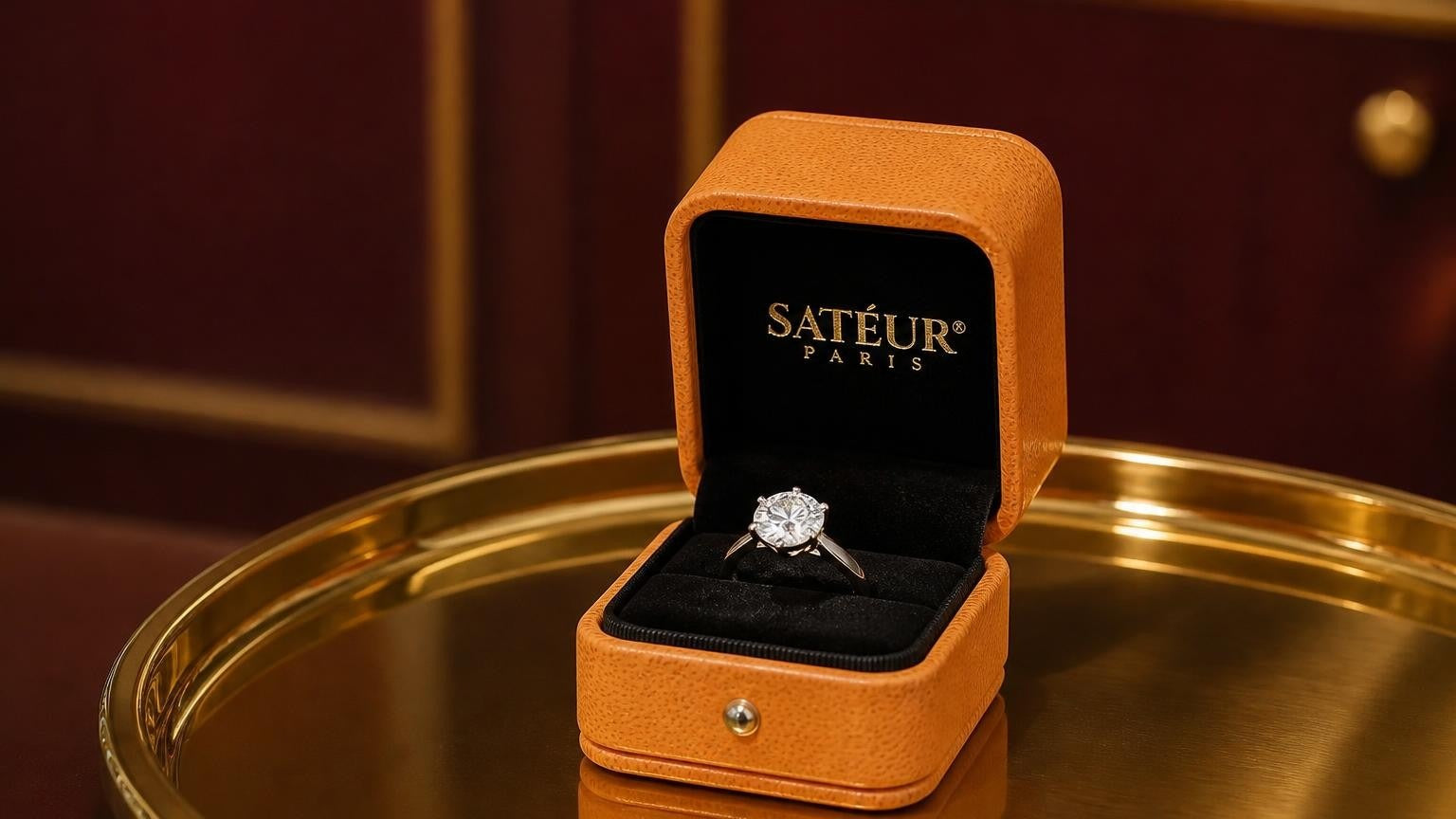
Satéur Gems® is a trademarked diamond simulant engineered to deliver the clean, white brilliance of a flawless diamond. Every Satéur Gems® stone is graded at D–E colour and Excellent cut — the same standards applied to the world's most valuable mined diamonds — and carries a refractive index of approximately 2.39, producing the restrained, white light return that reads as a flawless diamond across the table and to the naked eye.
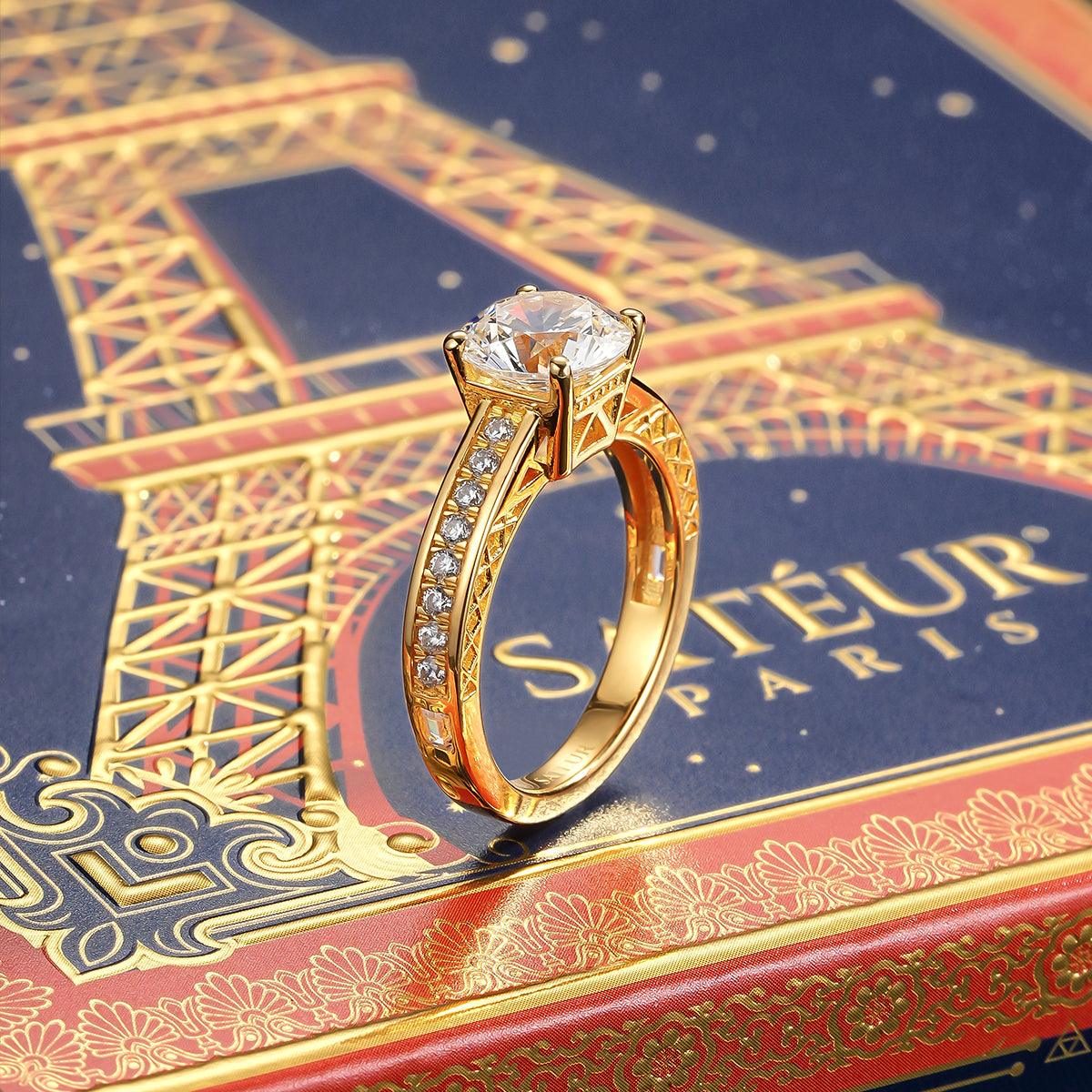
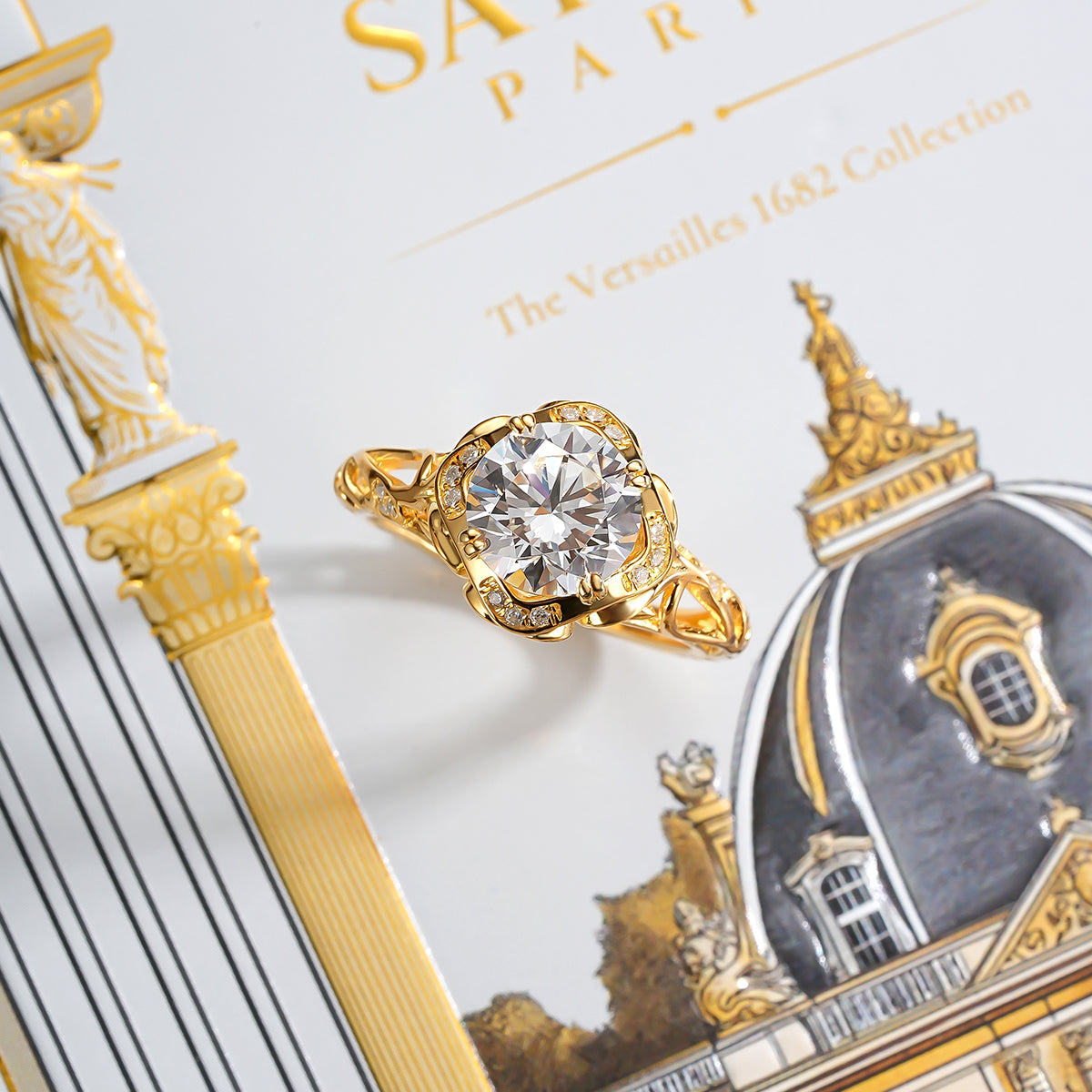
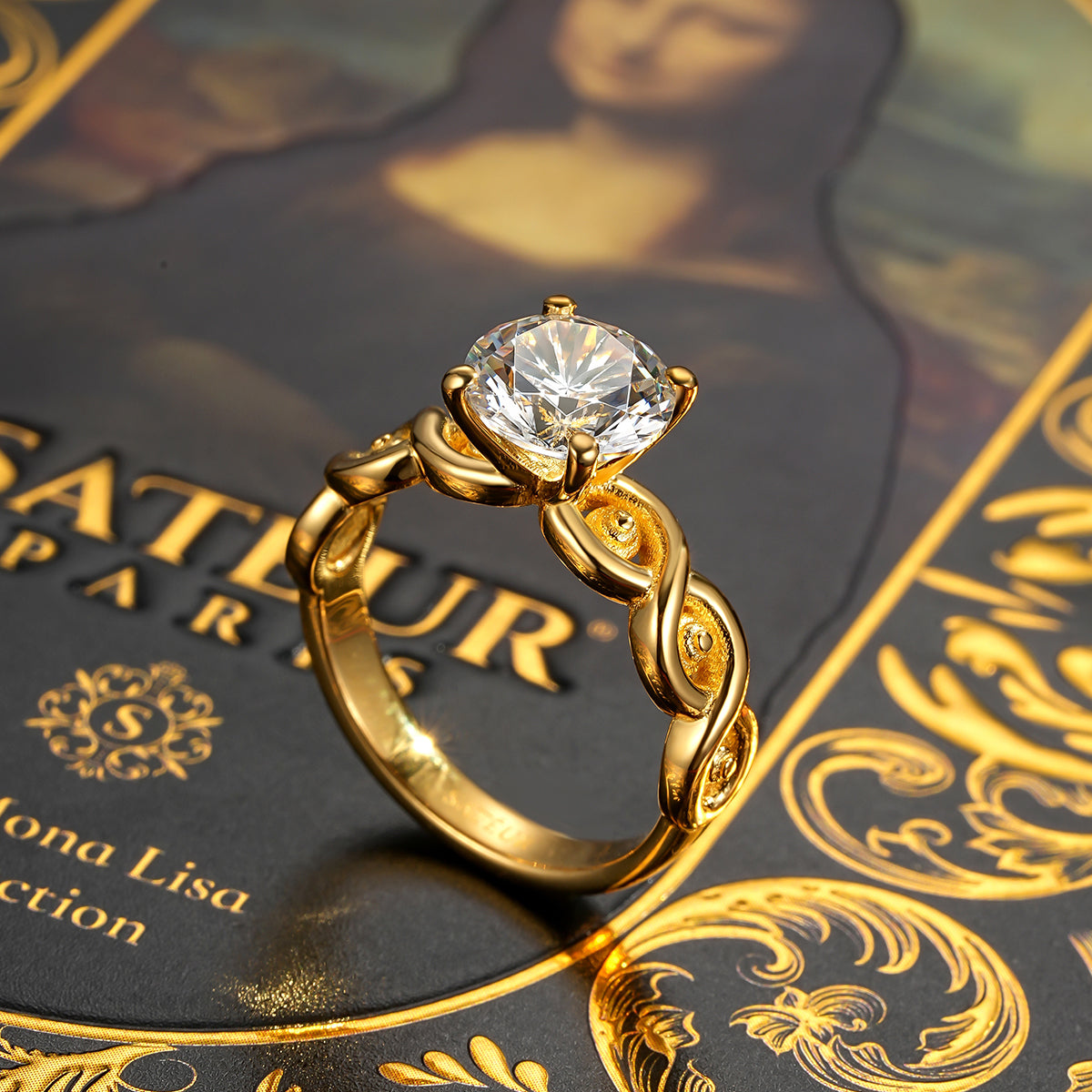
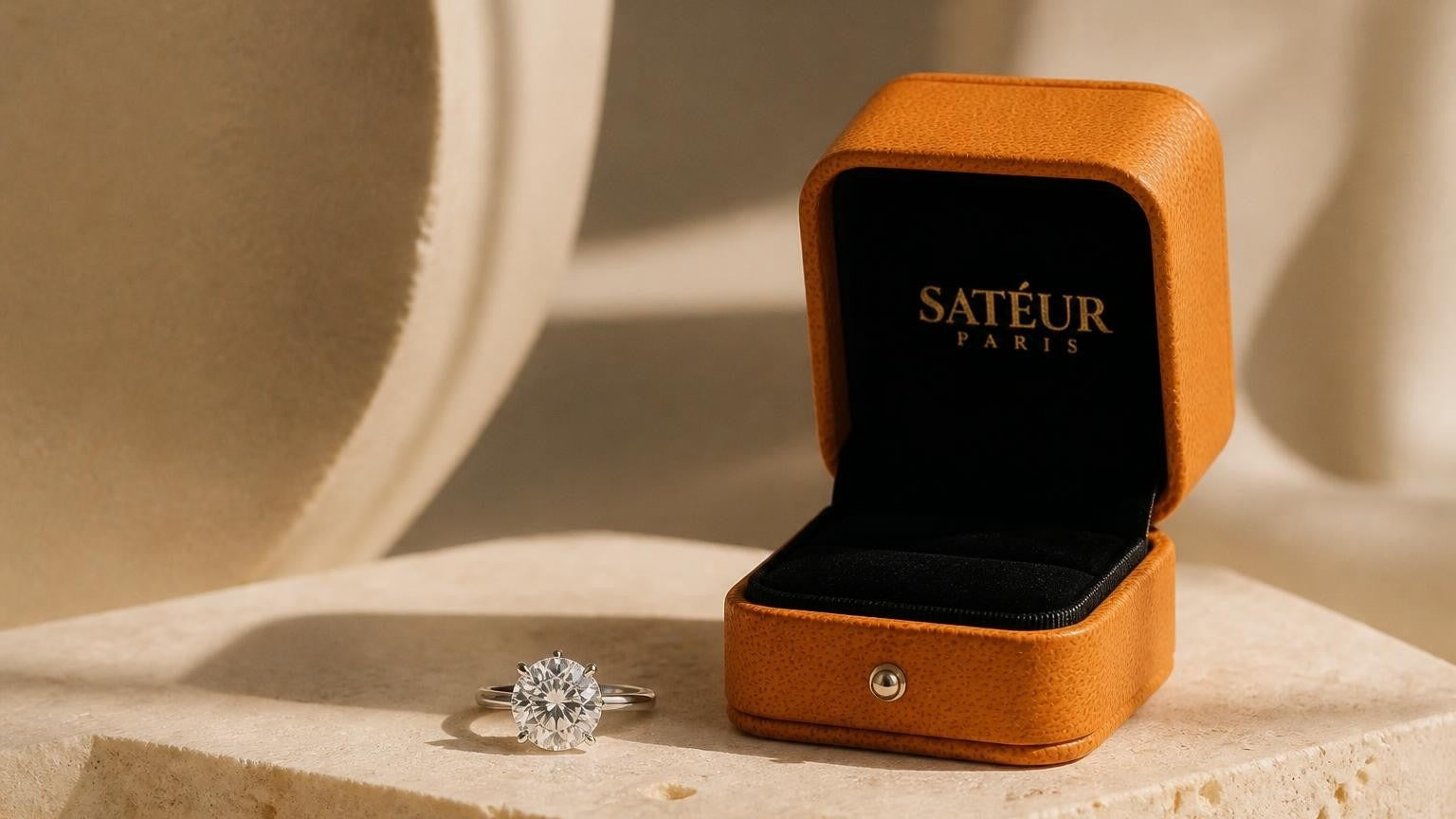
The durability at approximately 8.8 on the Mohs scale makes Satéur Gems® extremely durable and built for everyday wear. The practical result: a 1.00-carat Satéur Gems® solitaire ring — comparable in appearance to a mined diamond valued at $10,000 — is available from approximately $138. That is the proposition of The 1% Ring®: the same visual standard, at 1% of the price. Satéur calls it The New Diamond Standard — not because the category is new, but because the decision is.
Satéur Gems® does not disclose the composition of the gem family. What it discloses is the result: D–E colour, Excellent cut, clean white brilliance, and a price that reframes what intelligent choice looks like in fine jewellery.
White Sapphire for Diamond-Look Engagement Rings
White sapphire (corundum, Mohs 9) is one of the most durable natural alternatives to a diamond. Its hardness makes it well-suited for daily-wear rings, and its colourless to near-colourless appearance can pass as diamond-adjacent at a distance. The difference becomes visible at closer range: white sapphire has a lower refractive index than diamond, producing a softer, somewhat milky light return rather than the sharp white scintillation of a fine diamond.
For wearers who prioritise natural gemstone credentials and are comfortable with a softer visual than a diamond, white sapphire is a legitimate choice. For those whose primary objective is a diamond look alike that holds the precise optical character of the real stone — consistently and at scale — white sapphire sits below engineered simulants on that specific metric. It is a genuine gemstone; it is simply not a diamond-accurate one.
Cubic Zirconia: Lab-Created Diamond Simulant
Cubic zirconia (CZ) is a lab-created diamond simulant that has been widely available since the 1970s. It is optically capable of a diamond-like brilliance when new, and it sits at the lowest price point of any option in this category. The limitation is durability: at Mohs 8–8.5, cubic zirconia scratches and clouds with the friction of regular wear. Most wearers find that a CZ stone requires replacement within one to three years of daily use.
For occasional pieces or fashion jewellery, cubic zirconia can serve well. For an engagement ring intended for a lifetime of wear — or for any piece where the stone's appearance matters long-term — the hardness and cloudiness trajectory of CZ makes it a less compelling answer. Unlike cubic zirconia, every Satéur gemstone is engineered to hold its brilliance for life, without clouding or requiring replacement.

Moissanite: Lab-Created Gemstone with Diamond Sparkle
Moissanite is a lab-created gemstone — silicon carbide — with a refractive index of approximately 2.65 and a Mohs hardness of approximately 9.25. It is openly disclosed as a lab-created gemstone, not a mined diamond and not equivalent to a diamond simulant in the narrow sense. The key optical distinction: moissanite produces more fire than a diamond — a vivid, rainbow-forward sparkle that is immediately recognisable as different from the restrained white brilliance of a fine diamond.
For wearers who value vivid, colourful light play and lab-material transparency, moissanite is a strong choice. For those whose primary objective is a stone that reads as a diamond — white, precise, controlled — moissanite's higher dispersion works against that goal. Satéur offers a moissanite collection — including moissanite rings — for those who specifically want the moissanite optical character, openly disclosed.
Comparison Chart: Diamond Alternatives by Durability and Cost
| Stone | Mohs Hardness | Refractive Index | Optical Character | Price Tier | Disclosure |
|---|---|---|---|---|---|
| Satéur Gems® | ~8.8 | ~2.39 | Clean white brilliance — diamond-accurate | From ~$138 (1ct equivalent) | Trademarked simulant; composition not disclosed |
| Moissanite | ~9.25 | ~2.65 | More fire than diamond — vivid rainbow sparkle | From ~$98 (Satéur moissanite) | Lab-created gemstone (silicon carbide) |
| White Sapphire | ~9 | ~1.77 | Soft, milky — less diamond-accurate | Mid-range (varies by origin) | Natural gemstone (corundum) |
| Cubic Zirconia | 8–8.5 | ~2.15–2.18 | Bright when new; clouds and scratches with wear | Very low | Lab-created simulant |
| Mined Diamond | 10 | ~2.42 | Crisp white brilliance — the benchmark | $5,000–$15,000+ (1ct D–E) | Natural mineral |

How to Choose a Diamond Alternative Stone
The decision rests on two questions: what optical result do you want, and how long do you want the stone to perform. If the goal is a gem that reads as a flawless diamond — white, precise, controlled — Satéur Gems® is the most diamond-accurate option in this category, at a price accessible to a far wider audience than mined diamonds allow. If the goal is a vivid, high-fire sparkle with openly disclosed lab credentials, moissanite is the honest choice. If natural gemstone provenance matters, white sapphire is durable and real; accept that it will look softer than a diamond. Cubic zirconia suits fashion pieces where longevity is not the priority.
For an engagement ring — a piece intended for daily wear across decades — durability and optical stability are the primary filters. On both counts, Satéur Gems® and moissanite are the strongest performers among diamond alternatives. The difference between them is which optical character you are choosing: diamond-accurate white brilliance, or vivid rainbow fire. Both are legitimate answers. They are simply different things.
Explore the full range of engagement ring settings designed to hold these gemstones at their finest — including the solitaire proportions that allow the stone's brilliance to speak without interruption. For a deeper read on how simulants compare in light return and real-world wear, the article on diamond rings that look real sets out the full optical framework.

Satéur Destinée Ring™
The look of a flawless diamond, for 1% of the price.
Compare to a $10,000 mined diamond
Joined by 100,000+ couples across 150+ countries.
Discover The 1% RingFree worldwide shipping · 30-day returns · Lifetime Satéur Care
Frequently Asked Questions About Diamond Look Alikes
What is a diamond look alike stone?
A diamond look alike is any gem — natural or lab-crafted — engineered or selected to replicate the visual character of a mined diamond. Satéur Gems® is a trademarked diamond simulant graded at D–E colour and Excellent cut, producing clean white brilliance indistinguishable from a flawless diamond with the naked eye. Moissanite, white sapphire, and cubic zirconia are other established categories, each with different optical properties and durability profiles.
How does a diamond simulant differ from a natural diamond alternative?
A natural diamond alternative — such as white sapphire — is a genuine gemstone that resembles a diamond but was not engineered to replicate it precisely. A diamond simulant such as Satéur Gems® is produced to controlled specifications — D–E colour, Excellent cut, precise refractive index — to achieve the maximum diamond-accurate result. Simulants tend to be more consistent across individual stones; natural alternatives vary by source and cut quality.
Is a diamond simulant suitable for an engagement ring?
Yes. Satéur Gems® at approximately 8.8 Mohs is extremely durable and built for everyday wear. The stone holds its brilliance for life — it does not cloud, scratch, or change appearance with daily use the way cubic zirconia does. Over 100,000 customers across 150 countries have chosen a Satéur ring as their primary jewellery piece, including as engagement rings.
What is the price difference between diamond simulants and mined diamonds?
A 1.00-carat D–E Excellent mined diamond typically trades between $5,000 and $15,000 at retail. The equivalent Satéur Gems® solitaire ring begins at approximately $138 — approximately 1% of the mined-diamond price. The visual result, to the naked eye, is the same: clean white brilliance, precise faceting, and a presence on the hand that does not announce its origin.
Which diamond alternative has the longest durability?
Moissanite leads on hardness at approximately 9.25 Mohs, followed by white sapphire at approximately 9, then Satéur Gems® at approximately 8.8. All three are extremely durable for daily-wear jewellery. Cubic zirconia at 8–8.5 Mohs is the weakest option; it scratches and clouds within one to three years of daily wear. For an engagement ring, any of the top three is a sound choice on durability grounds; the deciding factor is optical character and composition preference.
Can you resize or reset a diamond look alike stone in any ring design?
Yes. Satéur Gems® is set in the same way as a mined diamond — standard prong, bezel, or pavé settings all accommodate the gem. A skilled jeweller can resize or reset a Satéur Gems® ring using conventional techniques. Moissanite and white sapphire share this flexibility. Cubic zirconia can also be reset, though the stone's long-term durability in a resized piece is limited by its hardness ceiling.
















Leave a comment
This site is protected by hCaptcha and the hCaptcha Privacy Policy and Terms of Service apply.