



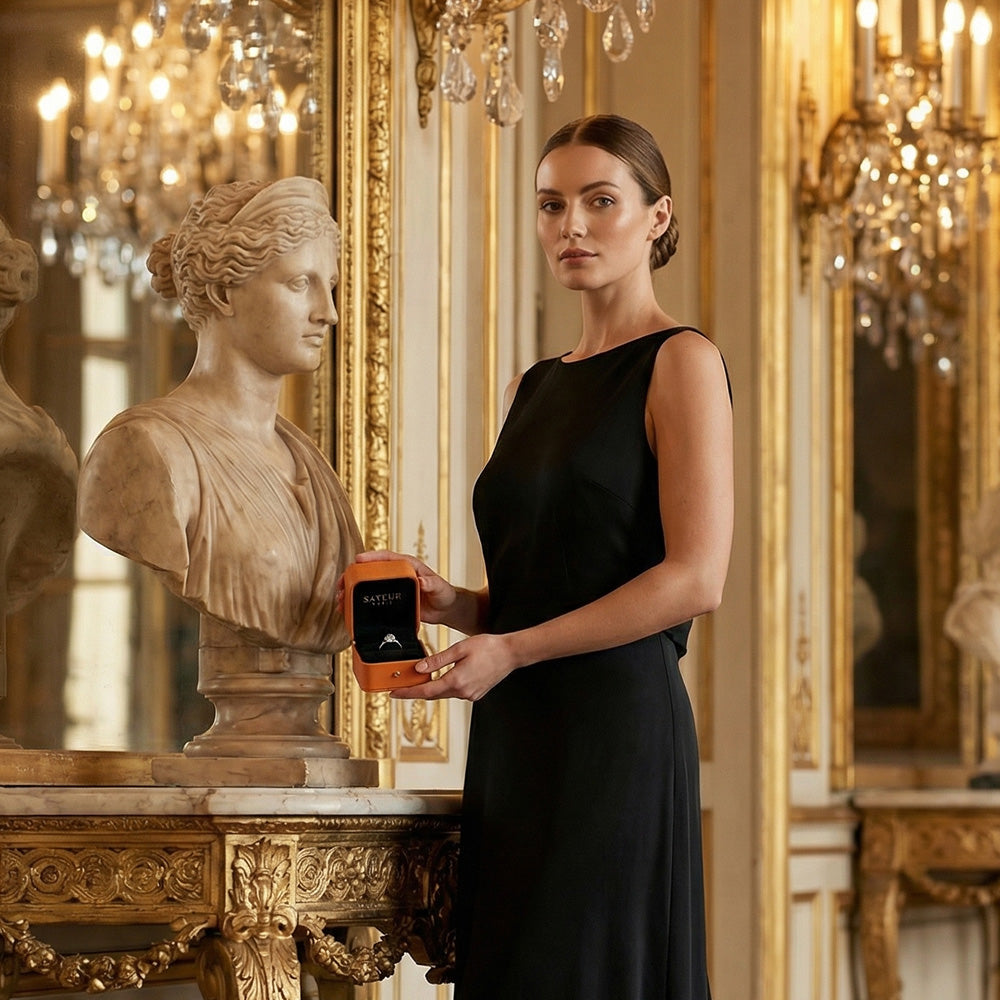
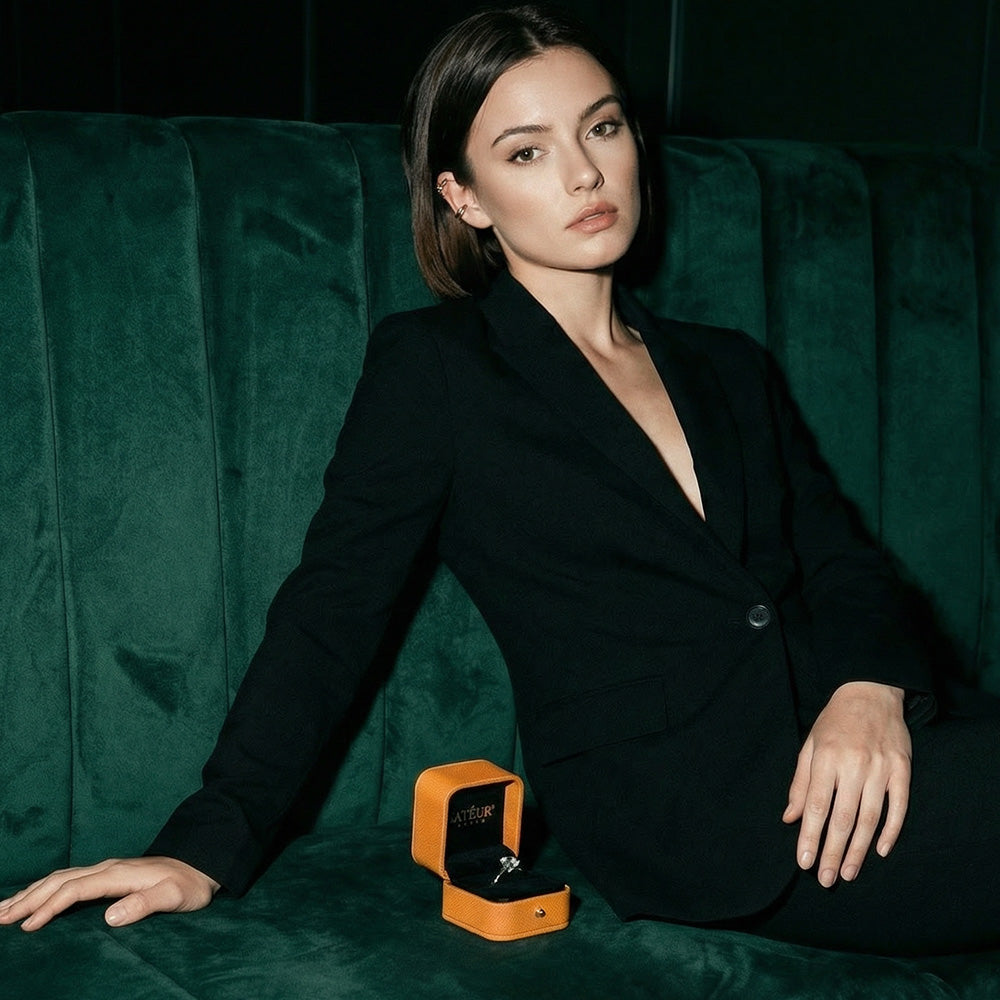
Diamond simulant rings that look real achieve their convincing appearance through three measurable qualities: colour grade, cut precision, and setting choice. The finest simulants — Satéur Gems® among them — carry a D-E colour grade and an Excellent cut specification, producing the same crisp white brilliance as a premium mined diamond to the naked eye. Across the table, you would never know the difference.

Key Takeaways
- Satéur Gems® diamond simulants are produced to D-E colour grade and Excellent cut specifications comparable to premium mined diamonds.
- A Mohs hardness of ~9.25 ensures daily-wear durability in sterling silver and precious metal settings without clouding or scratching.
- Fire rating of approximately 2.4× that of mined diamond creates distinct sparkle visible to the naked eye.
- Entry-level Satéur Gems® rings start from $68 — approximately 1% of the cost of a comparable mined diamond ring.
- Carat weight applies uniformly to simulants and mined stones, enabling direct size and style comparison.
Diamond Simulant Rings That Look Real
What separates convincing from budget
The term "fake diamond ring" covers a wide spectrum — from glass costume jewellery that dulls within months to precision-engineered simulants graded to diamond standards. Three qualities determine where a ring sits: colour grade, cut quality, and setting. A simulant with D-E colour and an Excellent-grade cut returns light in a way that is visually equivalent to a mined diamond with the naked eye.
The quality spectrum at a glance
| Property | Mined Diamond | Satéur Gems® | Cubic Zirconia |
|---|---|---|---|
| Colour Grade | D–Z scale | D-E (colourless) | Variable, often lower |
| Cut | GIA Excellent–Poor | Excellent | Variable |
| Mohs Hardness | 10 | ~9.25 | 8.0–8.5 |
| Entry Price (1ct) | $6,000–$12,000+ | From $68 | $15–$80 |
| Longevity | Indefinite | Daily-wear stable | Clouds within 1–3 years |
Why Choose a Diamond Simulant Over Mined
Price and visual parity
A 1-carat D-colour Excellent-cut mined diamond retails from $6,000 to $12,000. A simulant graded to the same standard costs a fraction of that — and the visual difference to the naked eye is negligible. Simulants sourced through controlled manufacturing carry no mining provenance concerns and serve as practical travel or everyday alternatives to a valuable engagement ring kept at home.
Satéur Gems® Specs: D-E Colour, Excellent Cut, Mohs ~9.25
Grading benchmarks
Satéur Gems® is a trademarked diamond simulant produced to D-E colour grade and an Excellent cut specification. The refractive index sits at ~2.39–2.65, producing crisp white scintillation matching a D-colour mined diamond. Fire runs at approximately 2.4× that of mined diamond — visible to the naked eye under directional light.
- Colour: D-E grade — colourless, matching the premium end of the mined diamond scale
- Cut: Excellent — 57 or 58 facets in round brilliant configuration
- Mohs hardness: ~9.25 — harder than sapphire (9.0)
- Refractive index: ~2.39–2.65 — comparable to diamond's 2.42
- Composition: Proprietary trademarked formulation — material not publicly disclosed

The Look and Durability You Expect
Why Mohs hardness matters for longevity
Colour and cut determine whether a simulant looks convincing on day one; hardness determines whether it still does two years later. Cubic zirconia (Mohs 8.0–8.5) develops micro-scratching and cloudiness within one to three years of daily wear — an intrinsic material property, not a quality issue. Satéur Gems® at ~9.25 Mohs does not exhibit this degradation. Optical performance remains stable under normal daily contact.

Sterling Silver Settings for Every Style
Which metals work best
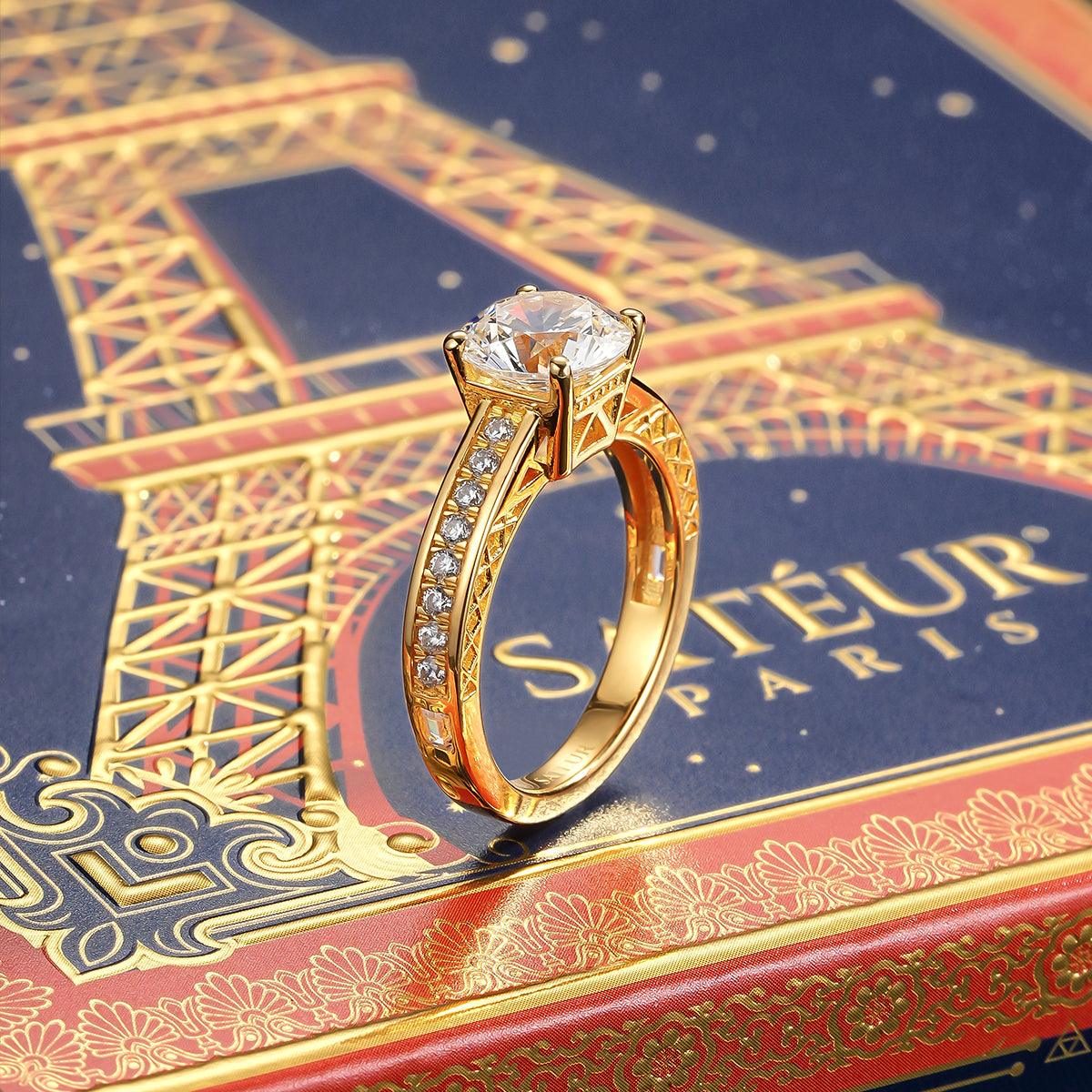
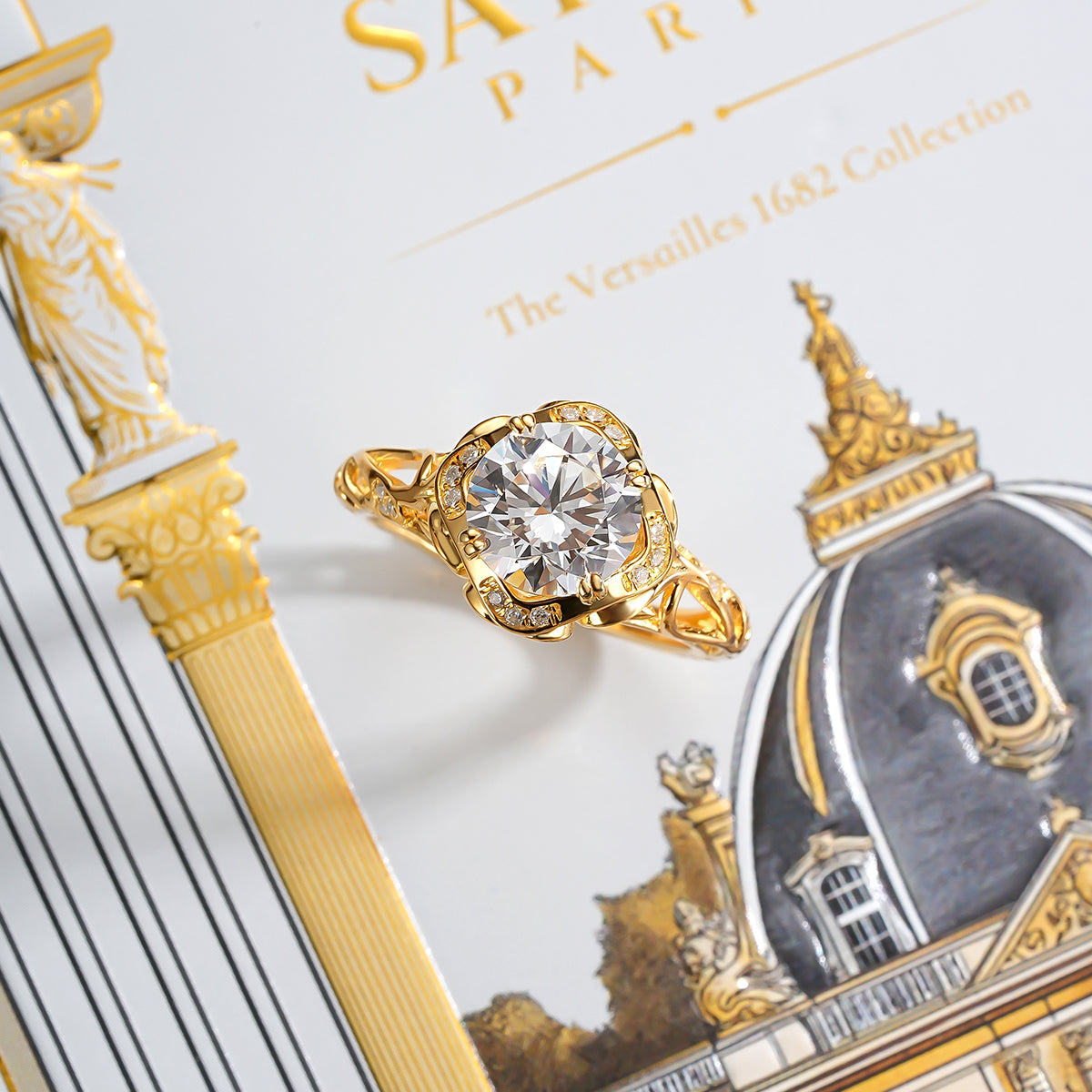
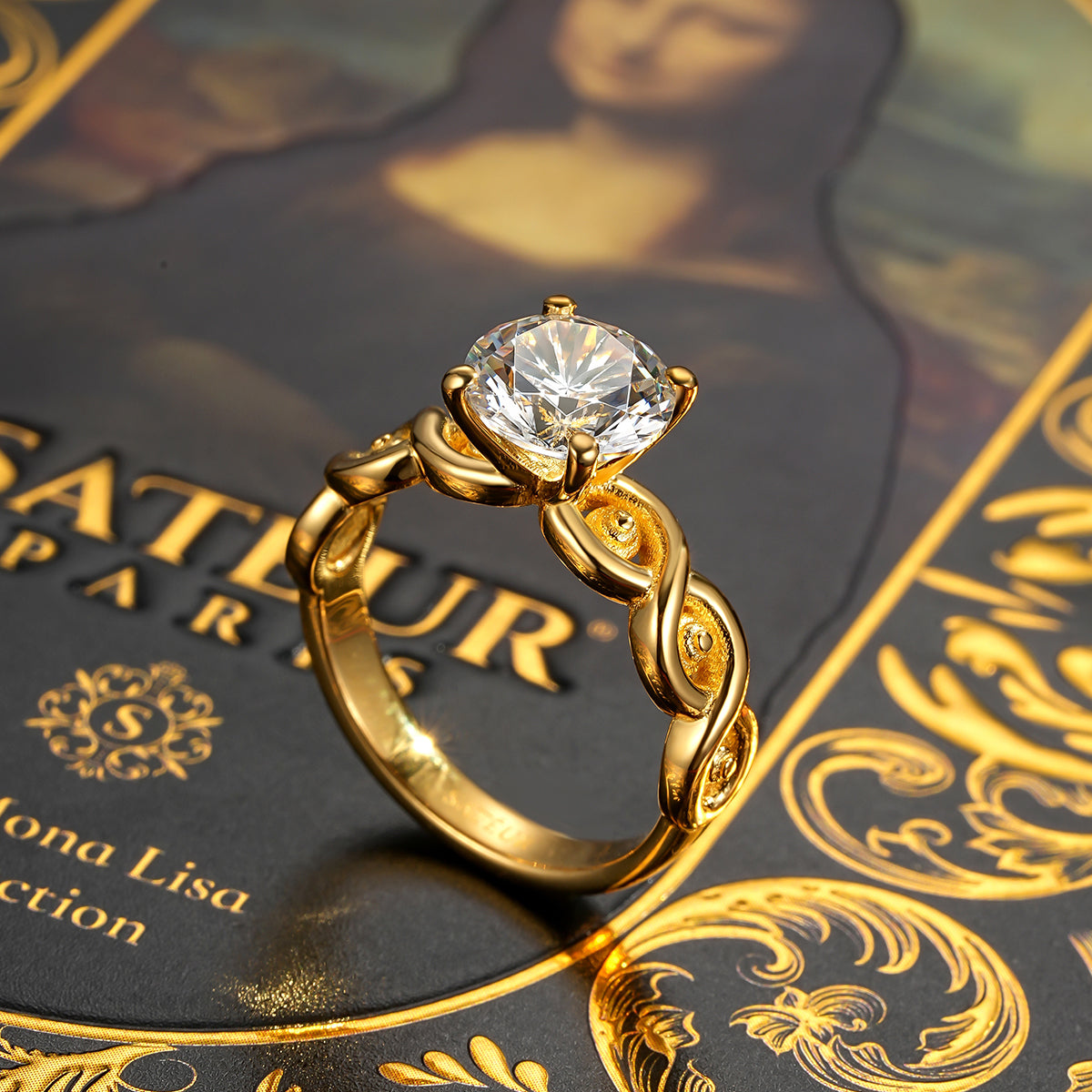
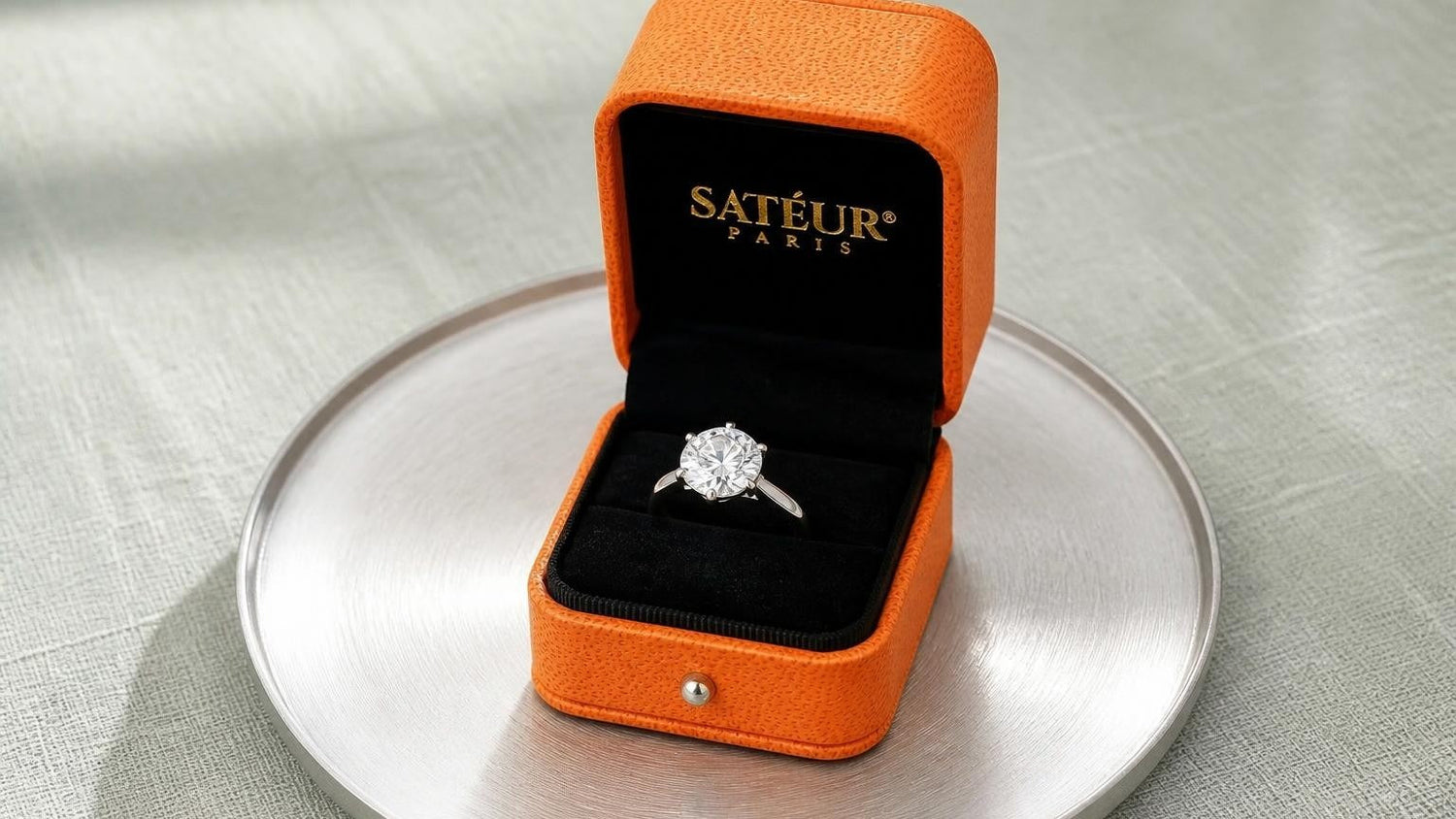
Sterling silver (925) with 18k gold finish provides a clean, bright surface that complements D-E colour simulants. Classic four-prong or six-prong solitaire settings maximise light entry through the pavilion facets. Halo settings — a central gem surrounded by smaller stones — increase apparent gem size and visual complexity, both contributing to a convincing appearance. For more on simulant behaviour under different lighting, see the guide on fake diamonds under UV light.
Pricing: ~1% of a Mined Diamond
The 1% value position
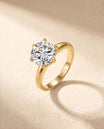
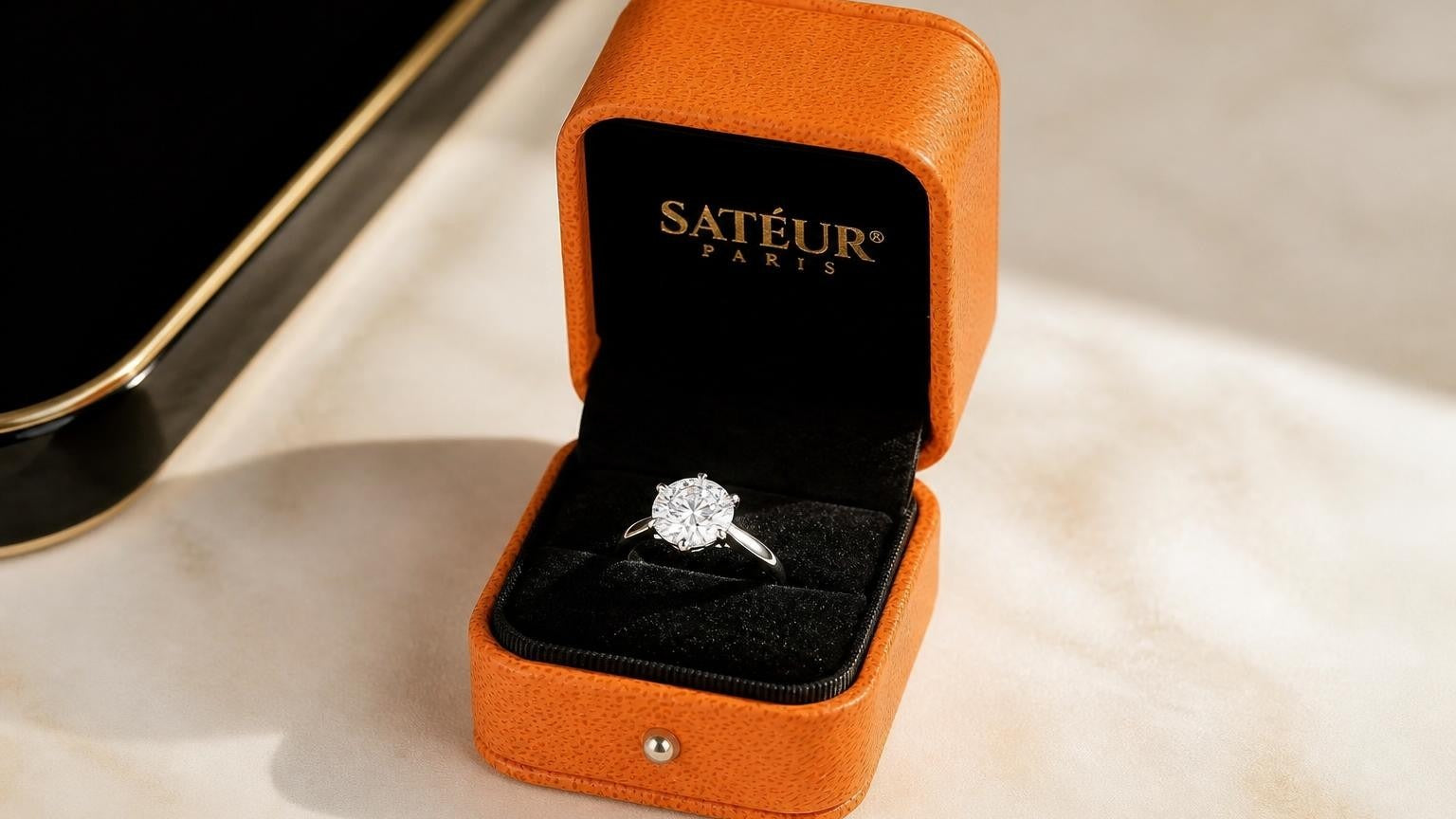
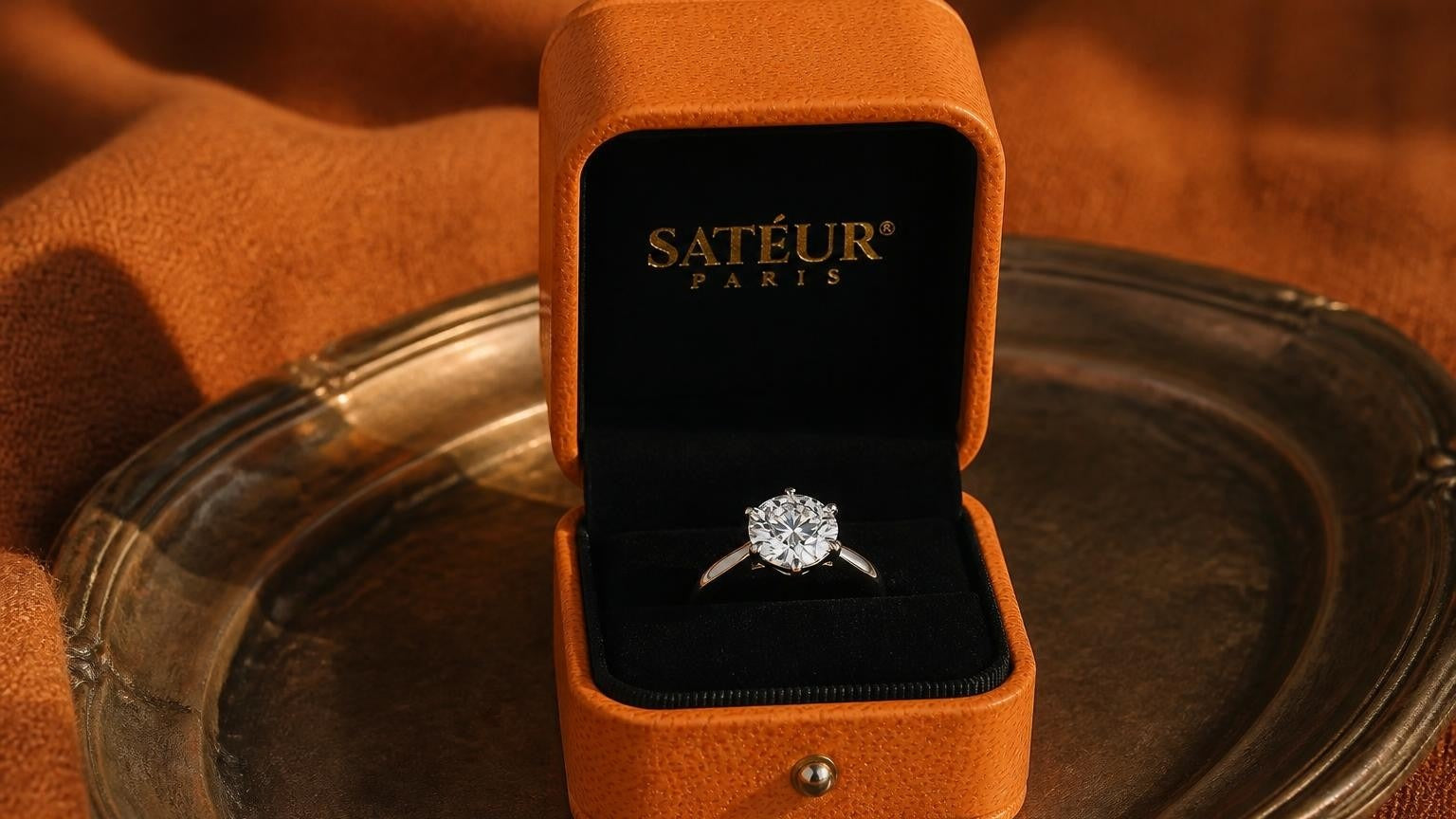
The Satéur Destinée Ring™ — 1-carat round brilliant Satéur Gems® in 18k gold finish — starts from $138. A comparable mined diamond costs $6,000–$12,000. That is approximately 1% of the price for a gem graded to identical colour and cut specifications. The visual result is the same. The real diamond vs fake guide and the real vs fake diamond breakdown cover the full simulant spectrum. Browse the full range in the Satéur engagement ring collection.

Frequently Asked Questions
What is a diamond simulant ring?
A diamond simulant ring uses a stone that replicates the visual appearance of a mined diamond — its colour, cut, and brilliance — without being diamond in composition. Simulants range from budget cubic zirconia to precision-graded stones like Satéur Gems®, which carry D-E colour and Excellent cut specifications comparable to premium mined diamonds.
How do Satéur Gems® diamond simulants compare visually to mined diamonds?
To the naked eye, a Satéur Gems® stone graded D-E colour and Excellent cut produces the same crisp white scintillation as a premium mined diamond. The refractive index of ~2.39–2.65 generates comparable light return to diamond's 2.42. Under bright directional light, the higher fire rating (~2.4× diamond) produces visible dispersion. In normal social settings, the visual difference is not apparent.
Are diamond simulant rings suitable for daily wear?
Satéur Gems® simulants at Mohs ~9.25 are suitable for daily wear under normal conditions. This hardness exceeds sapphire (9.0) and sits well above cubic zirconia (8.0–8.5), which scratches and clouds over time. The 18k gold finish setting benefits from occasional gentle cleaning. Avoid abrasive pastes and prolonged contact with chlorine or ammonia-based products.
Can a diamond simulant ring be reset into a different metal setting?
Yes. Satéur Gems® stones have sufficient hardness to withstand the light pressure of a bench-setting process. Resetting from sterling silver into solid gold or platinum is technically feasible when the prongs are worked carefully. Most buyers use the Satéur factory settings for their finish quality; custom resetting is a post-purchase option for those who prefer a different metal.
What does D-E colour grade mean for a diamond simulant?
The GIA colour scale runs from D (completely colourless) to Z (noticeable yellow tint). D and E are the two highest grades — stones that appear perfectly white under any light. A simulant produced to D-E colour grade hits this colourless standard, which is why Satéur Gems® rings read as white and clean rather than tinted under natural light.
How should you care for a sterling silver ring with a diamond simulant stone?
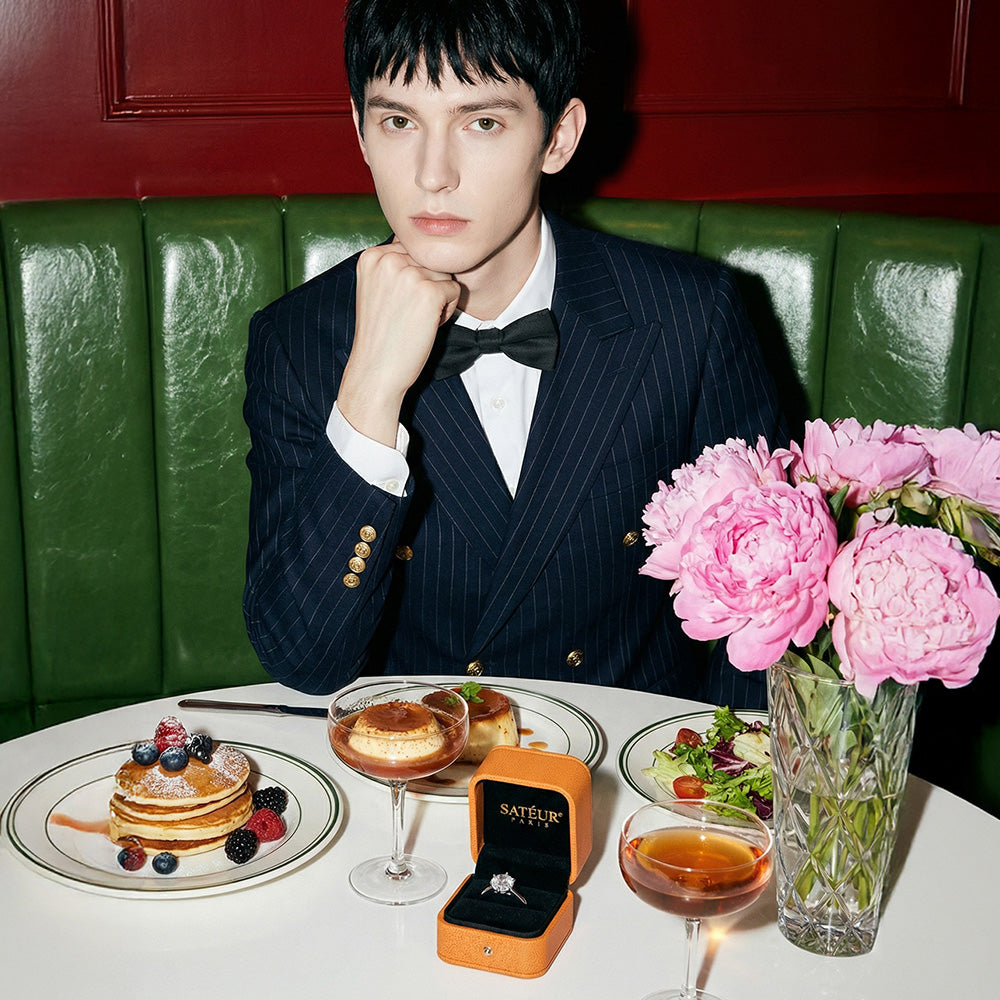
Clean with mild soap and warm water using a soft cloth. Avoid abrasive pastes or ultrasonic cleaners on plated settings. Remove before swimming in chlorinated water or using bleach or ammonia-based cleaning products. Store separately to prevent contact scratching. The Satéur orange box serves as adequate daily storage.
How Do Diamond Simulants Compare to Mined Diamonds
Four variables that matter
Optical performance, hardness, longevity, and price are the four honest comparison points. A D-E Excellent-cut simulant matches a mined diamond to the naked eye; Satéur Gems® at ~9.25 Mohs approaches diamond's 10 closely enough for everyday durability; a hard simulant holds optical performance for years where CZ does not; and price sits at approximately 100:1 in favour of the simulant for comparable grades. Mined diamond is unambiguously different on geological origin and investment value — relevant to some buyers, not to others.
Can You Wear a Diamond Simulant Ring Daily
Hardness floor for daily use
The practical floor for daily wear is Mohs 8.5. Below this, surface scratching from keys, ceramics, and metals shows within months. Satéur Gems® at ~9.25 clears this comfortably. The more likely maintenance point is the setting: prong tips benefit from annual inspection on continuously worn pieces, and the 18k gold finish over sterling silver responds well to occasional cleaning with a soft cloth and mild soap.
What Carat Weight Means for Simulant Rings
A direct size reference
Carat is a unit of mass (0.2 grams) and applies identically to mined diamonds and simulants. A 1-carat round brilliant simulant and a 1-carat round brilliant mined diamond of the same cut have the same physical dimensions and the same visual presence on the finger — carat weight is a reliable, direct size reference across both.
Do Diamond Simulants Yellow or Cloud Over Time
CZ versus harder simulants
Cubic zirconia yellows and clouds through surface oxidation and micro-scratching — an intrinsic property of its Mohs 8.0–8.5 composition. Most CZ rings show visible degradation within one to three years of daily wear. Satéur Gems® at ~9.25 Mohs has a distinct composition; the clouding mechanism that affects CZ does not apply.
Which Setting Metal Suits Your Simulant Ring
Sterling silver, gold finish, solid gold, platinum
Sterling silver (925) with 18k gold finish suits the D-E colour profile and covers most everyday-wear needs. Solid 14k or 18k gold offers better long-term surface durability for continuous wear. Platinum provides maximum hardness and a naturally white surface with no plating required — the premium choice for a long-term piece. Satéur Gems® settings ship in 18k gold finish over sterling silver as standard.

Satéur Destinée Ring™
The look of a flawless diamond — from $138.
D-E colour · Excellent cut · 18k gold finish
Free worldwide delivery. 30-day returns. Lifetime Satéur Care.
Shop the Destinée RingFree worldwide shipping · 30-day returns · Lifetime Satéur Care















Leave a comment
This site is protected by hCaptcha and the hCaptcha Privacy Policy and Terms of Service apply.