



Popular engagement ring styles range from the timeless solitaire — which accounts for approximately 40% of fine jewellery purchases — to layered halo designs, romantic three-stone settings, and vintage-inspired pieces with filigree detailing. The setting you choose shapes the ring's visual weight, the apparent size of the centre gem, and how it wears over a lifetime. This guide covers the seven most-requested styles, with a direct comparison table and 2026 trend notes for each.
Key Takeaways
- Solitaire settings remain the most requested engagement ring style, representing approximately 40% of fine jewellery purchases.
- Three-stone and halo settings amplify visual brilliance and perceived centre stone size without a proportional cost increase.
- Vintage-inspired rings — filigree and milgrain detailing — account for 25–30% of custom orders, driven by sustained demand.
- Engagement ring band widths range from 1.5mm to 3mm; wider bands are gaining popularity in contemporary designs.
- Satéur Gems® D-E colour, Excellent cut engagement rings begin from $138 — delivering the look of a premium stone at approximately 1% of a mined diamond's price.
Popular Engagement Ring Styles

The seven classic settings below cover the full range of engagement ring styles in demand today. Each has a distinct visual identity, structural logic, and practical trade-off. Understanding the differences makes it easier to identify the right style for daily wear — and for the stone you plan to set.
| Style | Visual character | Centre stone illusion | Band type |
|---|---|---|---|
| Solitaire | Clean, minimal, timeless | Full exposure, no amplification | Plain or knife-edge |
| Halo | Brilliant, opulent | Larger by 0.5–1 carat visually | Often pavé-set |
| Three-stone | Symmetric, layered | Side stones add width | Plain or tapered |
| Pavé | Sparkle-forward, continuous | Centre remains the anchor | Pavé, full-band option |
| Vintage / Milgrain | Ornate, historical | Often cushion or oval cuts | Filigree or milgrain edge |
| Hidden halo | Subtle, modern twist | Slight lift and amplification | Plain exterior, hidden row |
| Bezel | Protective, sleek | Metal frame softens edges | Full bezel or semi-bezel |
Classic Solitaire Settings
Why Solitaire Remains the Leading Style

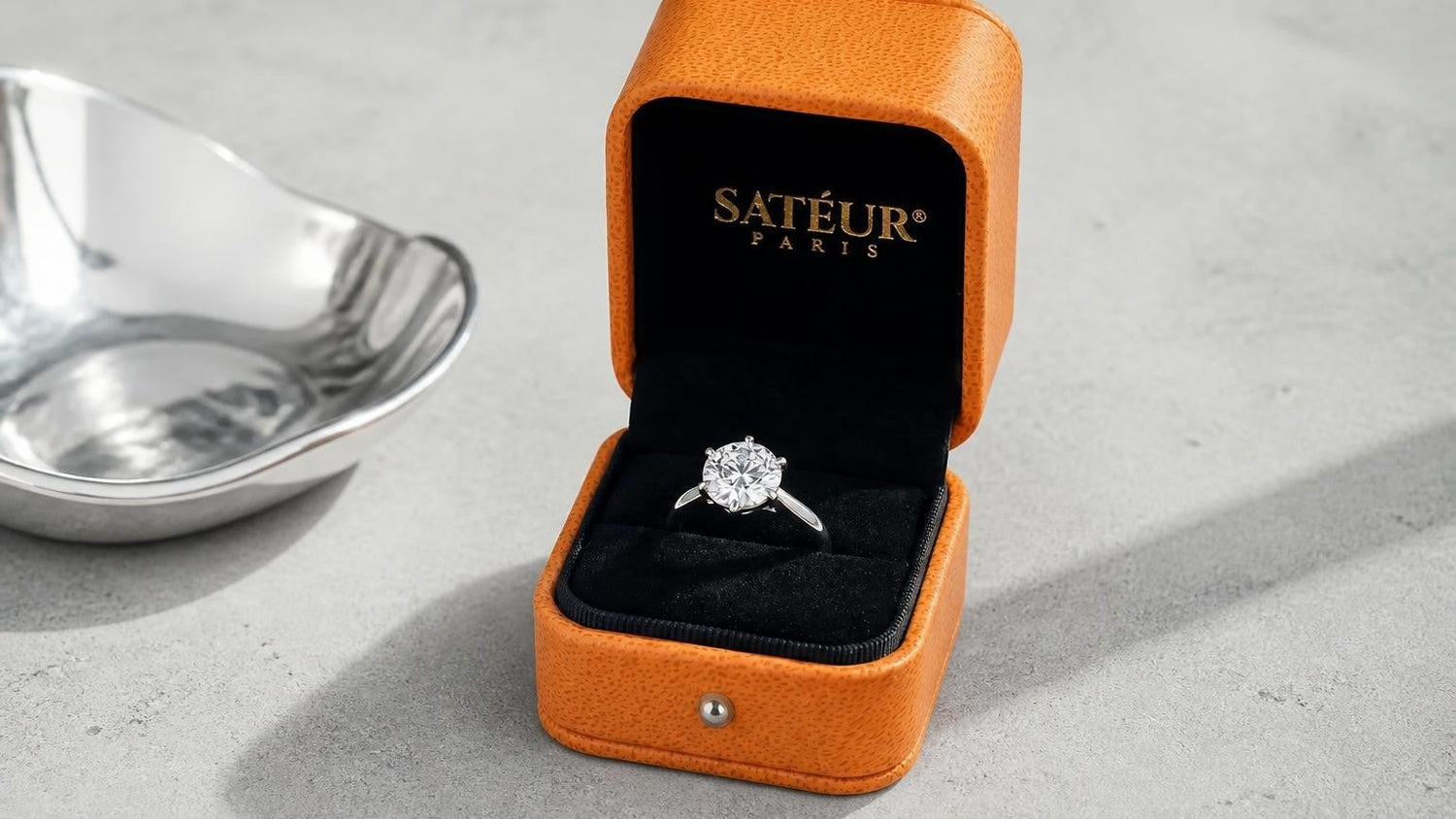
The solitaire is the foundational engagement ring design: a single centre stone held by four or six prongs on a plain or knife-edge band. Its longevity comes from structural clarity — every facet of the gem is exposed, making cut quality the primary variable.
Round brilliant cuts are most common in solitaire settings, though cushion and oval cuts work equally well. The 2026 trend within solitaires is toward thinner bands (1.5–1.8mm) that keep the centre stone as the dominant element.
- Best for: buyers who want a timeless ring that wears across decades.
- Consider: cut quality matters more here than in any other setting — the stone has nowhere to hide.
Three-Stone and Halo Designs
Three-Stone Settings
Three-stone settings — a centre stone flanked by two matching or graduated side stones — represent past, present, and future. The visual effect is a wider, more substantial ring with layered brilliance that pairs particularly well with oval and pear centres.
Halo Settings
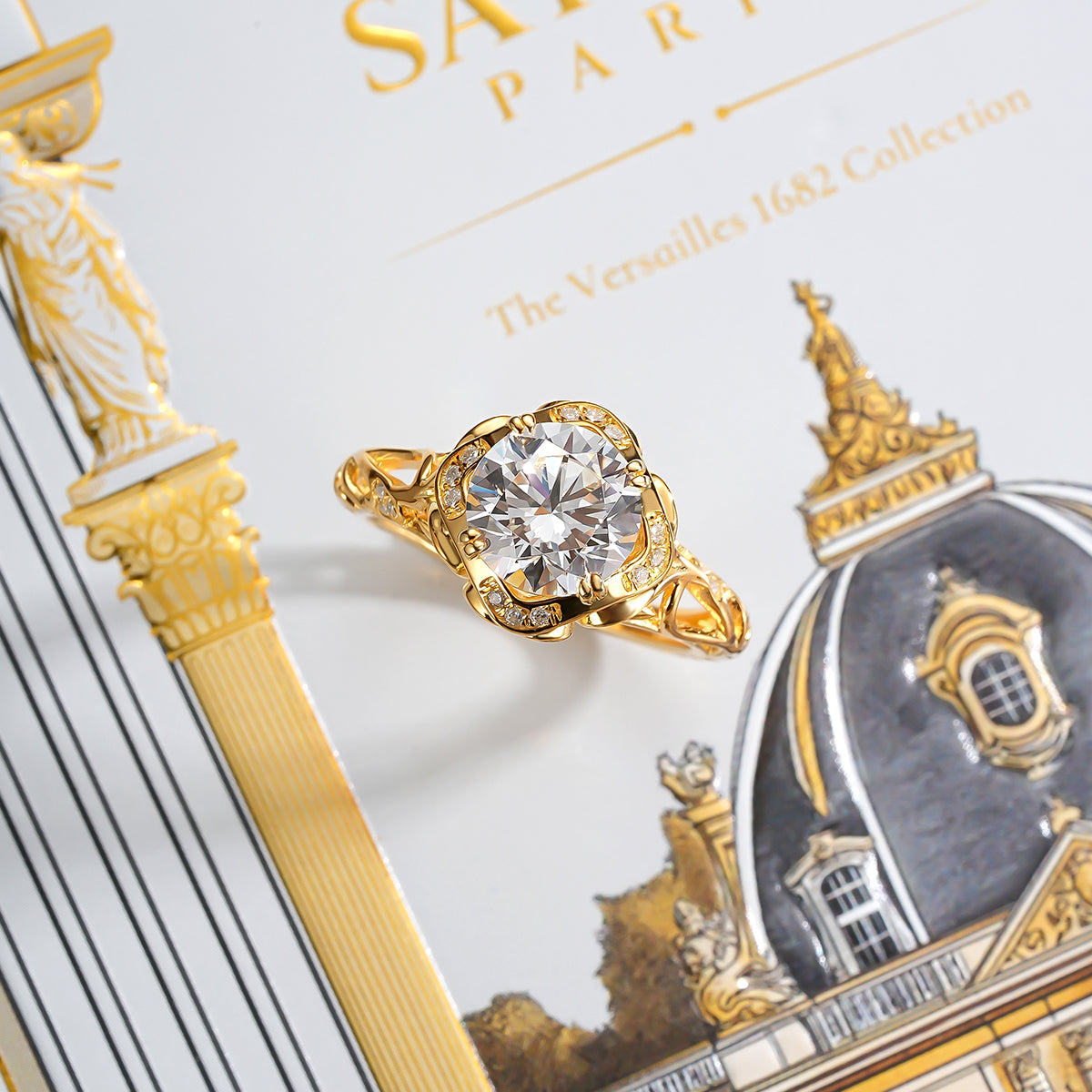
Halo settings surround the centre stone with a closely-set row of smaller stones, amplifying the apparent size of the centre gem by roughly 0.5 to 1 carat visually. The overall silhouette reads as larger than the sum of its carats. Halos work particularly well with round and cushion cuts.
- Halo: maximum visual impact per carat — presence without proportionally higher spend.
- Double halo: a 2026 trend extension — a second outer row creates a richer, more opulent frame.
Vintage and Vintage-Inspired Rings
Milgrain, Filigree, and Art Deco

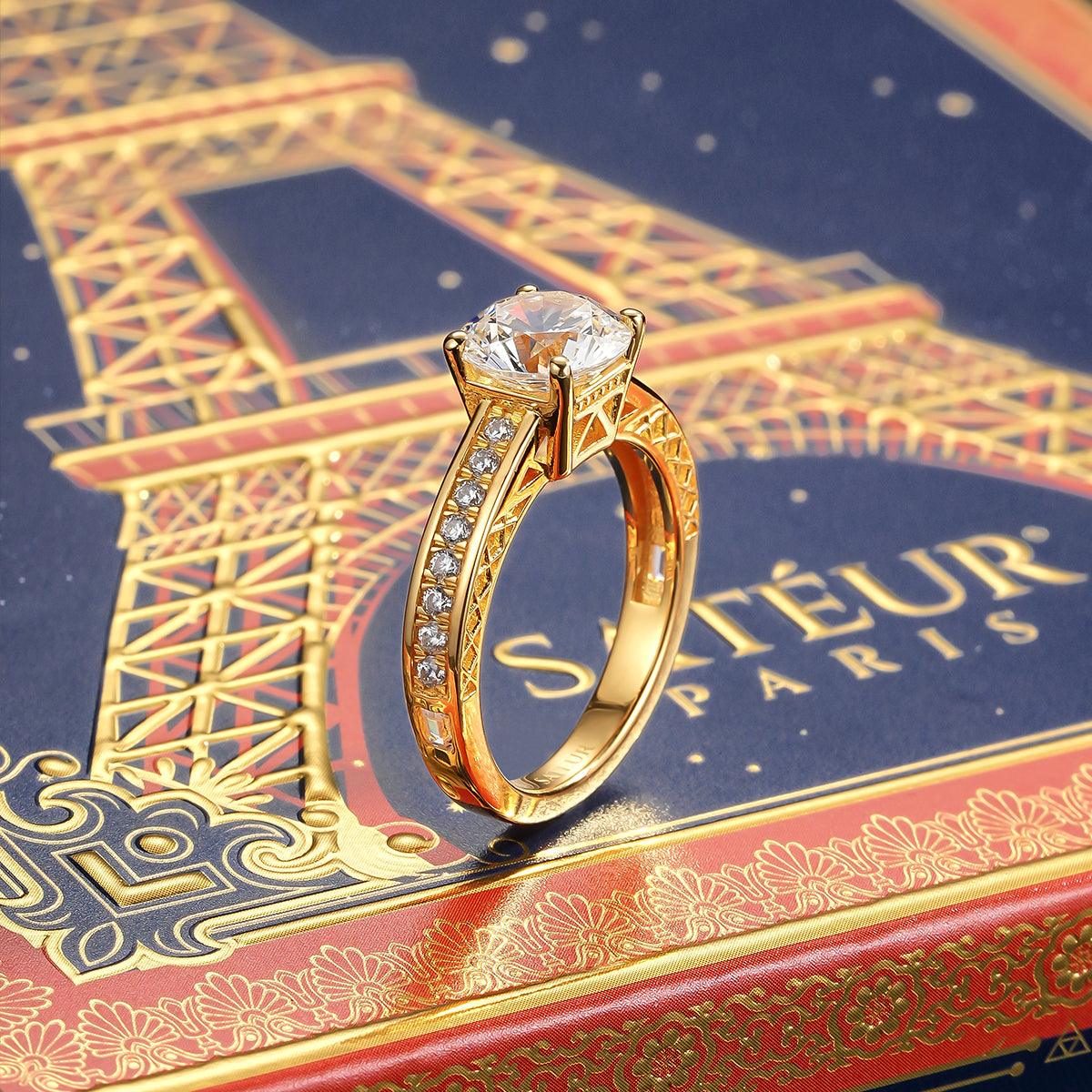
Vintage-inspired engagement rings — characterised by milgrain edges, filigree metalwork, and ornate prong heads — account for 25–30% of custom jewellery orders. The aesthetic draws on Edwardian, Art Deco, and Victorian design languages, typically pairing a cushion or oval cut with hand-detailed metalwork.
Milgrain (a beaded edge texture worked into the metal) and filigree (openwork lattice on the shank) are the two most recognisable signatures. Modern versions use contemporary alloys for durability while preserving the decorative language of the period.
Modern and Contemporary Styles
Hidden Halo and Bezel Settings
The hidden halo — a small row of stones set beneath the centre stone, invisible from above but visible in profile — adds subtle brilliance without altering the clean top-view silhouette. Bezel settings, which wrap the stone in a metal frame rather than prongs, are growing in demand for active daily wear.
East-West and Geometric Designs
East-west settings rotate elongated stones such as oval or marquise cuts 90 degrees to sit horizontally along the finger. The orientation creates a widening effect and a clearly individual aesthetic — one of the more distinctive contemporary engagement ring styles in 2026.
Band Widths and Metal Options
Choosing the Right Band Width

Band width meaningfully affects the ring's overall proportion. Standard widths run from 1.5mm to 3mm; widths above 2.5mm create a bolder, more architectural profile, while narrower bands keep the focus on the stone.
Metal Options Compared
- White gold (18k finish): the dominant contemporary choice — neutral tone that reads as near-platinum but at accessible price points.
- Yellow gold (18k finish): experiencing renewed demand in 2026, particularly in solitaire settings where the warm tone frames colourless gems with contrast.
- Rose gold (18k finish): popular through the 2010s, now used most commonly as an accent in two-tone designs.
- Platinum: the densest, most durable setting metal — heavier and higher-priced than gold-finish alloys.
For related guidance on metal selection, see the complete guide to engagement ring metals.
Satéur Gems® Engagement Ring Value
The 1% Ring® — Every Popular Style from $138
Satéur Gems® are a trademarked diamond simulant delivering the clean white brilliance of a flawless diamond in D-E colour, Excellent cut. Set in 18k gold finish across every popular engagement ring style — solitaire, halo, three-stone, and pavé — Satéur Gems® rings begin from $138, compared to $4,000–$10,000+ for a mined diamond equivalent. That is approximately 1% of the mined diamond price for visually identical presence to the naked eye.
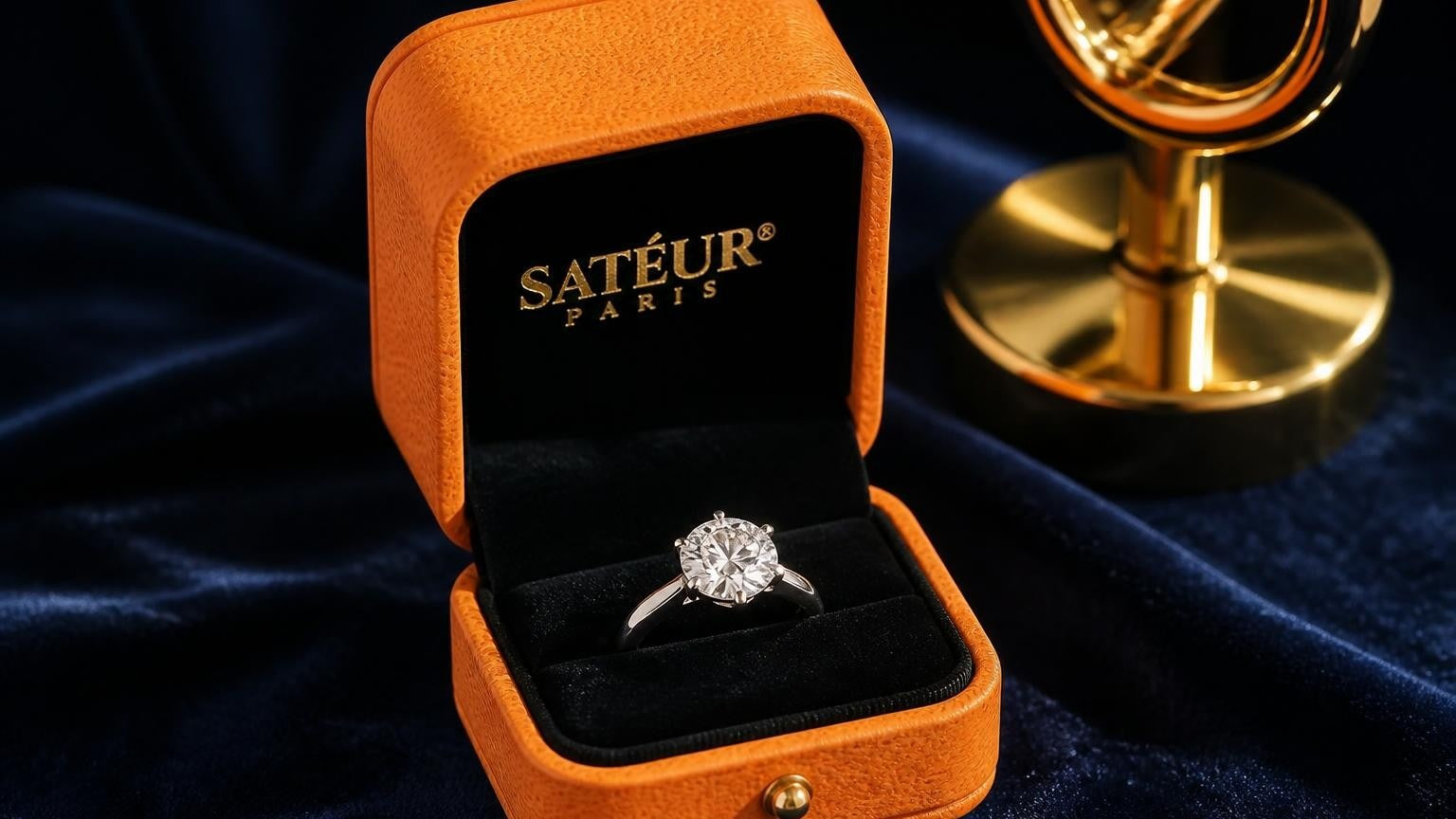
Each ring is set by hand and arrives in the signature orange Satéur box, with free worldwide delivery, 30-day returns, and lifetime Satéur Care. Browse the full collection at Satéur engagement rings.
For guidance on ring sizing before you purchase, see which finger the engagement ring goes on — and for proposal occasions, the engagement ring box guide covers presentation options. For men's engagement ring styles, see Satéur engagement rings for men.

Satéur Destinée Ring™
The look of a flawless diamond — from $138.
D-E colour · Excellent cut · 18k gold finish
Free worldwide delivery. 30-day returns. Lifetime Satéur Care.
Shop the Destinée RingFree worldwide shipping · 30-day returns · Lifetime Satéur Care
FAQ: Choosing Your Engagement Ring Style
What are the most popular engagement ring styles in 2026?
Solitaire remains the most requested style, representing approximately 40% of fine jewellery purchases. Halo and three-stone settings follow, valued for their visual amplification of the centre stone. Vintage-inspired rings with milgrain or filigree detailing account for 25–30% of custom orders. Emerging trends include hidden halos, east-west settings, and thinner bands (1.5–1.8mm) across all styles.
How do I choose between solitaire, halo, and three-stone settings?
Choose solitaire if you want the ring's entire focus on the centre stone — it rewards a high-quality cut and reads as timeless. Choose halo if you want the stone to appear larger without proportionally increasing the centre stone budget — the surrounding row adds perceived carat weight. Choose three-stone for symbolic weight and a wider horizontal profile. All three work well with round, oval, and cushion cuts.
What metal options are available for engagement rings?
The main options are white gold (18k finish), yellow gold (18k finish), rose gold (18k finish), and platinum. White gold is currently the most popular contemporary choice. Yellow gold is experiencing renewed demand in 2026. Platinum is the densest and most durable option but carries a higher price. All are available with the principal popular engagement ring styles.
How does band width affect the appearance of an engagement ring?
Band widths range from 1.5mm to 3mm for standard engagement ring bands. Narrower bands (1.5–1.8mm) draw attention upward to the centre stone, making it appear more prominent. Wider bands (2.5mm+) create a bolder, more architectural silhouette and are particularly suited to bezel and east-west settings. Finger size also plays a role — wider bands can visually shorten a slender finger.
Can I resize or customise a popular engagement ring style?
Most solitaire, halo, and three-stone rings can be resized by one to two sizes without structural compromise. Heavily pavé-set or full-eternity bands are harder to resize cleanly. Customisation — changing prong style, adding milgrain detail, or selecting a specific carat — is best arranged at purchase rather than retrospectively.
What makes a timeless engagement ring versus a trendy one?
Timeless rings share a few structural traits: a round or cushion cut centre stone, a plain or lightly detailed band, and a proportion in which the stone clearly dominates the composition. Trend-driven rings often use unusual cuts, high-volume halos, or ornamental band elements that date more visibly. Solitaires and simple three-stone settings have been consistently in demand for over a century — the safest definition of timeless in this category.
















Leave a comment
This site is protected by hCaptcha and the hCaptcha Privacy Policy and Terms of Service apply.