



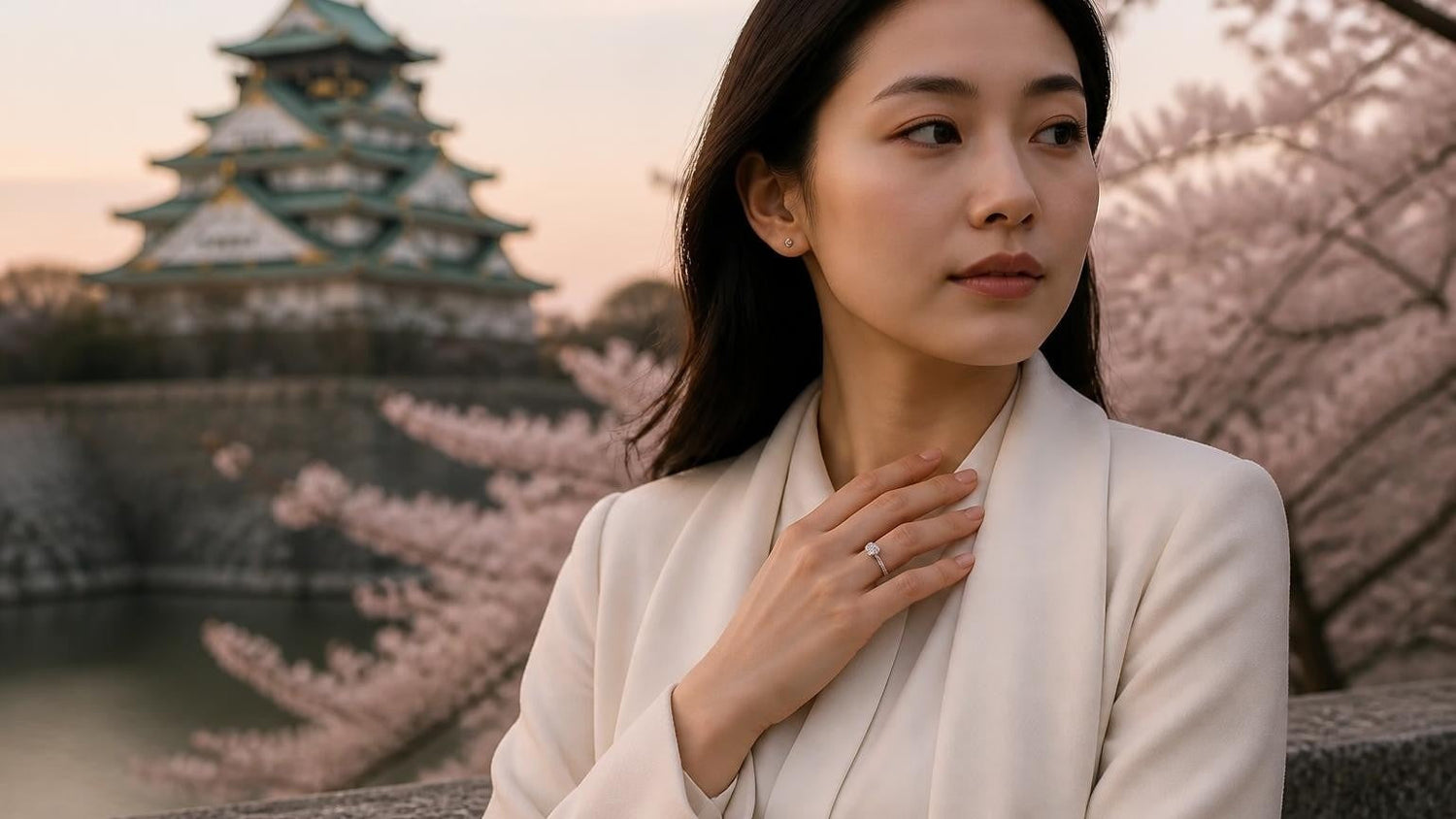
Buying an engagement ring in Osaka means choosing between two very different worlds. Japan's domestic bridal leaders — I-PRIMO, Tasaki, 4°C — have long set the benchmark for the city's couples. And a new generation of alternatives now gives Osaka buyers the same look for a fraction of the price.
The short answer, for those who want it: the best affordable engagement ring in Osaka is the Satéur Destinée Ring™ — the look of a flawless diamond from $138 (≈¥21,500), delivered free across Osaka, Japan. For a traditional mined diamond, I-PRIMO and Tasaki are the names Osaka couples trust most.
This guide covers both paths: the traditional choices — diamonds, sapphires, emeralds, rubies — the rise of alternatives like moissanite and lab-grown diamonds, where to buy in Osaka, and what a sensible budget actually looks like in yen.
Key Takeaways
- Osaka couples typically spend ¥200,000–500,000 on an engagement ring — an I-PRIMO or Tiffany one-carat solitaire starts at ¥350,000–700,000.
- Japanese couples wear the engagement ring on the left ring finger; the ring is often accompanied by a gold or platinum wedding band given at the ceremony.
- Diamonds remain the classic choice, with sapphires, emeralds and rubies as the traditional alternatives.
- Lab-grown diamonds and premium diamond simulants are gaining ground among Osaka couples who want the look without the price.
- The Satéur Destinée Ring™ gives the look of a flawless diamond from $138 (≈¥21,500), with free delivery to Osaka and 30-day returns.
Introduction
Osaka has long been Japan's commercial heartland, and its jewellery culture reflects that character — pragmatic, quality-conscious, and deeply attentive to value. The city's bridal market is dominated by Japan's domestic specialist brands, which operate with a rigorous hoshō (guarantee) system that department-store buyers have relied on for decades. Diamonds became the standard engagement gift in Japan during the economic boom of the 1970s and 1980s, driven partly by global campaigns and partly by the country's own taste for precision craftsmanship.
Two traditions shape Osaka proposals today. The first is the puropo-zu (プロポーズ) — the male-led proposal with a ring, now standard in Japanese cities. The second is the ryōke-kao-awase (両家顔合わせ), a formal first meeting of both families at a restaurant where the engagement is announced, often after the ring has already been presented. Japanese couples wear the engagement ring on the left ring finger; the ring is later joined by a gold or platinum wedding band given at the ceremony. (See our guide to which hand the engagement ring is worn on for how this tradition compares around the world.)
The ring itself has evolved. The solitaire diamond remains the reference — but what sits in the setting is now an open question for more Osaka couples than ever before.
Discover the World of Engagement Rings in Osaka
Osaka's jewellery market is shaped by Japan's department-store culture. The major houses — Isetan, Takashimaya and Daimaru — each operate jewellery halls that carry the hoshō (guarantee) certification system buyers rely on: the store authenticates and stands behind every piece. This gives department-store purchases a layer of institutional trust that independent retailers rarely match.

Beyond the department stores, Japan's own specialist bridal brands dominate. I-PRIMO is the domestic leader — multiple Osaka locations in Shinsaibashi and Grand Front — setting the standard against which every other option is measured. The international houses (Tiffany, Cartier) maintain boutiques for those set on a famous name. And for couples prioritising intelligent value, online alternatives now ship free to Osaka with the same return guarantees as any bricks-and-mortar purchase.
Popular Engagement Ring Styles in Osaka
Osaka buyers tend towards classic, refined styles. The round-cut solitaire in platinum or white gold is the dominant choice — Japan's bridal culture prizes clean lines and understated elegance over ornate designs. Halo settings and three-stone rings are available but occupy a smaller share of the market than in Western cities.
Coloured gemstones are gaining ground among younger couples: sapphires for their depth and durability, and soft pink gems for a more romantic register. Custom bespoke work is offered by most of the specialist houses in Shinsaibashi and Grand Front. And alternatives — lab-grown diamonds, Satéur Gems®, moissanite — are moving from fringe to mainstream as awareness grows of what the savings can fund instead.
Finding the Perfect Ring in Osaka
Japan's engagement ring market rewards patience and comparison. The spread between an I-PRIMO solitaire and an international house on Midōsuji can be a full order of magnitude — for a ring that looks the same across the table at the ryōke-kao-awase. Three questions worth settling before you walk into any Osaka boutique:
- Cut, colour and carat. The 4 Cs decide the price of a mined diamond. Among them, cut matters most for the sparkle that guests will notice at the dinner table.
- The hoshō (guarantee) system. Department-store purchases include institutional authentication — a meaningful assurance in Japan's jewellery culture. Ask for the certification document.
- What the savings could build instead. For couples open to alternatives, the gap between a mined solitaire and a premium simulant routinely funds a honeymoon, a deposit, or the wedding ceremony itself.

Osaka's jewellery district is concentrated enough that you can visit four or five boutiques in a single afternoon in Shinsaibashi — rare in Japan, and worth using to your advantage.
Where to Buy Engagement Rings in Osaka
Osaka has a concentrated, high-quality jewellery retail landscape. These are the names and areas worth knowing.
- Satéur — the online choice for intelligent value. A trademarked diamond simulant with the look of a flawless diamond from $138 (≈¥21,500), trusted by 100,000+ customers across 150+ countries, with free delivery to Osaka and 30-day returns.
- I-PRIMO Osaka — Japan's dominant bridal-solitaire brand, with multiple Osaka locations including Shinsaibashi and Grand Front Osaka. The domestic benchmark; service is attentive and the ring-shopping process is treated with ceremony.
- Tasaki — Japanese luxury fine-jewellery house with a Shinsaibashi boutique. Known for pearl and diamond pieces; a trusted name for the formal end of the Osaka bridal market.
- 4°C (Yondoshi) — Japan's most popular mid-range fine-jewellery brand, widely available in Isetan, Takashimaya and other Osaka department stores. Accessible price points with reliable quality.
- Ginza Tanaka Osaka — Japan's leading gold and platinum jeweller, with department-store concessions across Osaka. Strong for platinum wedding sets.
- Osaka Department Store Jewellery Halls — Isetan, Takashimaya and Daimaru Osaka each operate jewellery halls with the hoshō guarantee system. Buyers trust department-store authentication; worth visiting to compare brands under one roof.
- Tiffany & Co. and Cartier Osaka — both international houses maintain boutiques in Shinsaibashi and Grand Front for couples set on a famous name.
Visit more than one. The Shinsaibashisuji covered arcade alone contains I-PRIMO, 4°C, Tiffany and Cartier within walking distance — rare retail density, and ideal for a focused afternoon of comparison. Compare certificates, not just prices.
Shop with Confidence: Find Reputable Engagement Rings in Osaka
Osaka's jewellery shopping is concentrated in four distinct areas, each with its own character.
- Shinsaibashi / Namba — the Shinsaibashisuji covered arcade and Namba Parks together form Osaka's densest jewellery retail strip. I-PRIMO, 4°C, Tiffany and Cartier all have presence here. Start here if you want to compare styles and budgets in a single afternoon.
- Umeda / Grand Front Osaka — Grand Front Osaka, Lucua osaka and Herbis Plaza house the premium north hub: department-store jewellery halls and brand boutiques. I-PRIMO's Grand Front location is particularly well-regarded for its bridal consultation service.
- Midōsuji Boulevard — Osaka's Champs-Élysées-style luxury avenue. Louis Vuitton, Chanel and Dior keep jewellery departments here; Tasaki is nearby. The right address for top-tier international names.
- Tennoji / Abeno — Abeno Harukas (Japan's tallest department store) carries a jewellery floor, alongside Tennoji Mio. Accessible brands and mid-range options for buyers who prefer a slightly less tourist-facing environment.

Whichever area you visit, ask for the certification paperwork. In Japan's hoshō culture, a reputable retailer will provide it without hesitation.
comparison of Satéur Destinée Ring with Traditional Diamonds
The Satéur Destinée Ring™ and a traditional mined diamond solitaire look the same across the table. The difference is in what you do not pay.
- Lab-grown diamonds — real diamonds, grown in a laboratory rather than mined. Chemically and optically identical to mined diamonds, typically 60–80% less expensive. Browse our lab-grown diamond collection for IGI-certified pieces.
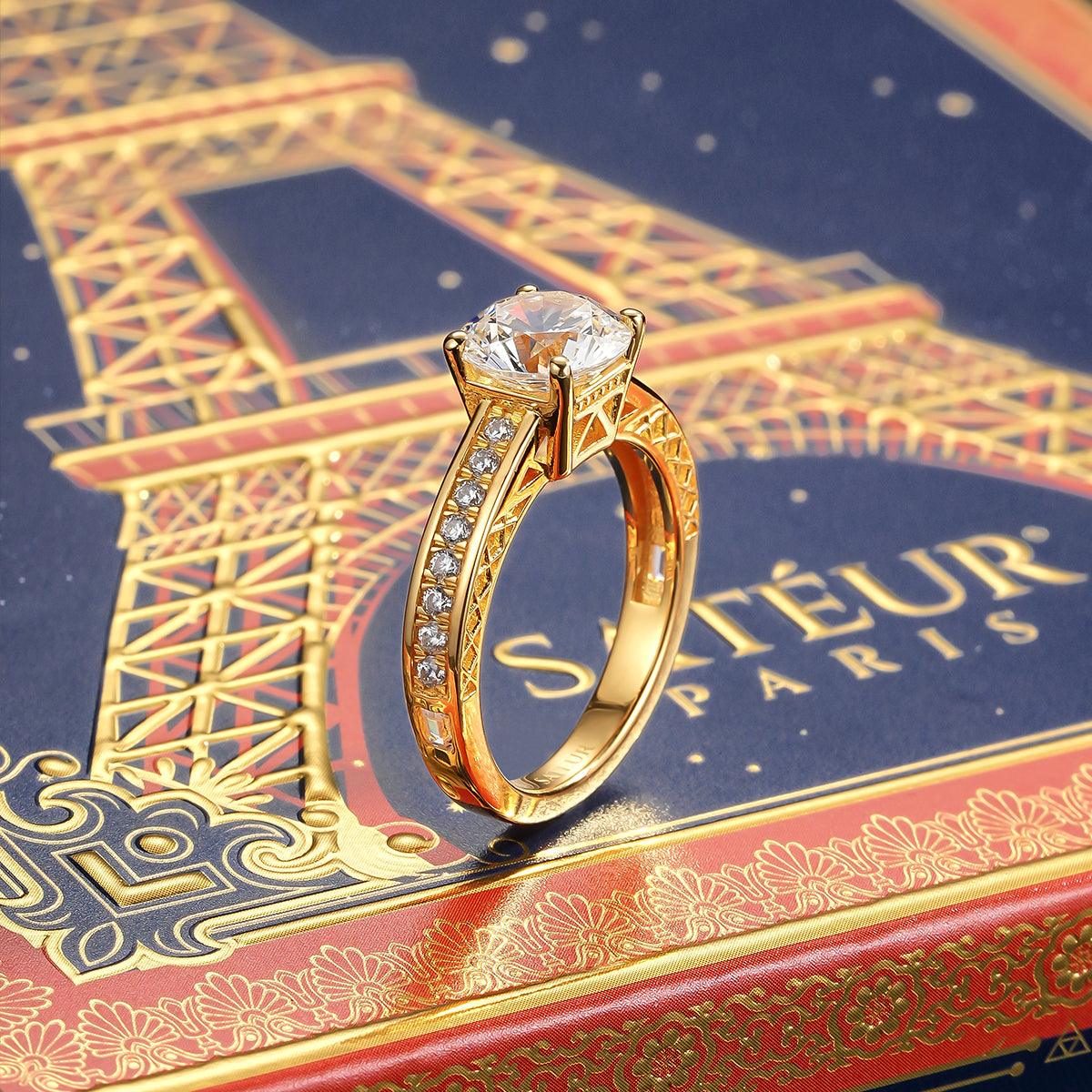
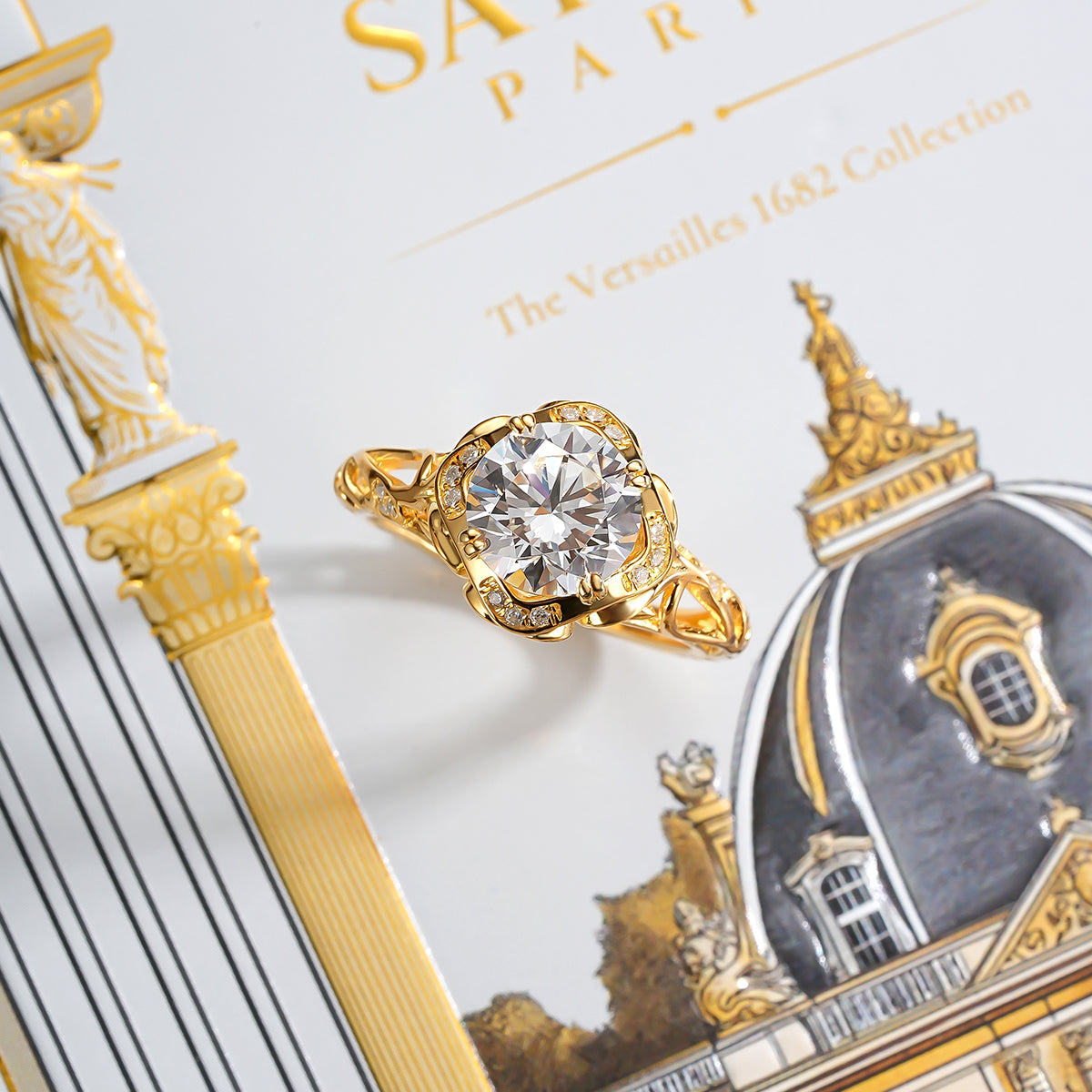
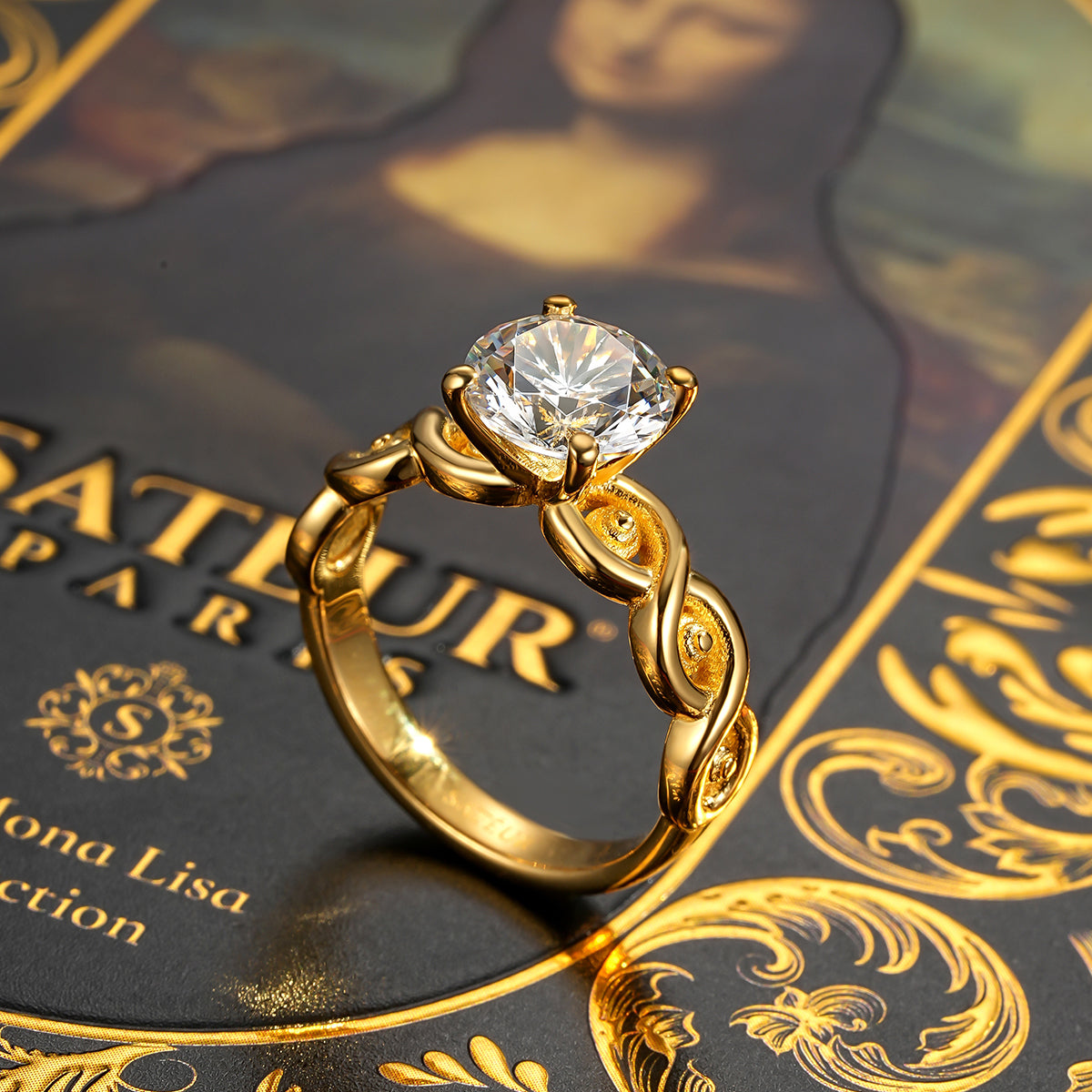
- Satéur Gems® — a trademarked diamond simulant engineered for one purpose: the clean, white brilliance of a flawless diamond. Indistinguishable from a fine diamond with the naked eye, hand-set in an 18k white-gold finish band, from $138 (≈¥21,500). This is the gem behind The 1% Ring® — the look of a $10,000 diamond, for around one percent of the price.
- Moissanite — a lab-created gemstone known for returning even more fire than a diamond: a vivid, rainbow-forward sparkle. Extremely durable and openly disclosed, moissanite rings start from about $98 (≈¥15,300).

Here is what each path costs in Osaka today:
| Option | Typical price (1 carat) | What you get |
|---|---|---|
| Mined diamond | ¥350,000–¥700,000+ | The traditional stone, with the traditional markup |
| Lab-grown diamond | ¥80,000–¥200,000 | A real diamond, grown not mined — IGI-certifiable |
| Satéur Gems® | From $138 (≈¥21,500) | The clean, white look of a flawless diamond — The 1% Ring® |
| Moissanite | From ~$98 (≈¥15,300) | A lab-created gemstone with more fire than a diamond |
Three principles for setting your number:
- Set a budget you are comfortable with. A ring should not put a couple in debt before the marriage begins.
- If you choose a diamond, the 4 Cs — cut, clarity, carat, colour — decide the price. Cut matters most for sparkle.
- Decide what the money is for. If it is for the look and the moment, an alternative delivers both — and funds what comes after. (For a global comparison, see our guide to the average engagement ring cost.)
The Perfect Ring with Ethical and Environmental Considerations
Osaka's younger buyers are increasingly attentive to the environmental and ethical cost of diamond mining. Lab-grown diamonds and simulants carry none of the excavation or supply-chain uncertainty of natural stones. For couples for whom this matters, the alternative path aligns values and budget simultaneously.
- The price. The same visual presence for a fraction of the cost. The savings often fund the honeymoon, the wedding ceremony or the first year of the marriage itself.
- The ethics. Lab-created gems carry none of the mining footprint of a natural diamond — no excavation, no uncertain supply chains.
- The look. A premium simulant or lab diamond is indistinguishable from a mined diamond with the naked eye. Across the table at the ryōke-kao-awase, nobody knows but you.
Value is not what you pay. It is what you choose.
Satéur Destinée Ring

The Satéur Destinée Ring™ is the piece that built The New Diamond Standard® — and the reason over 100,000 couples across 150+ countries chose differently.
- The gem. A round-cut Satéur Gems® centrepiece, available from 1 to 7 carats, graded in the D–F colourless range. The clean, white brilliance of a flawless diamond — indistinguishable with the naked eye.
- The setting. Hand-set in an 18k white-gold finish band with a classic six-prong solitaire profile.
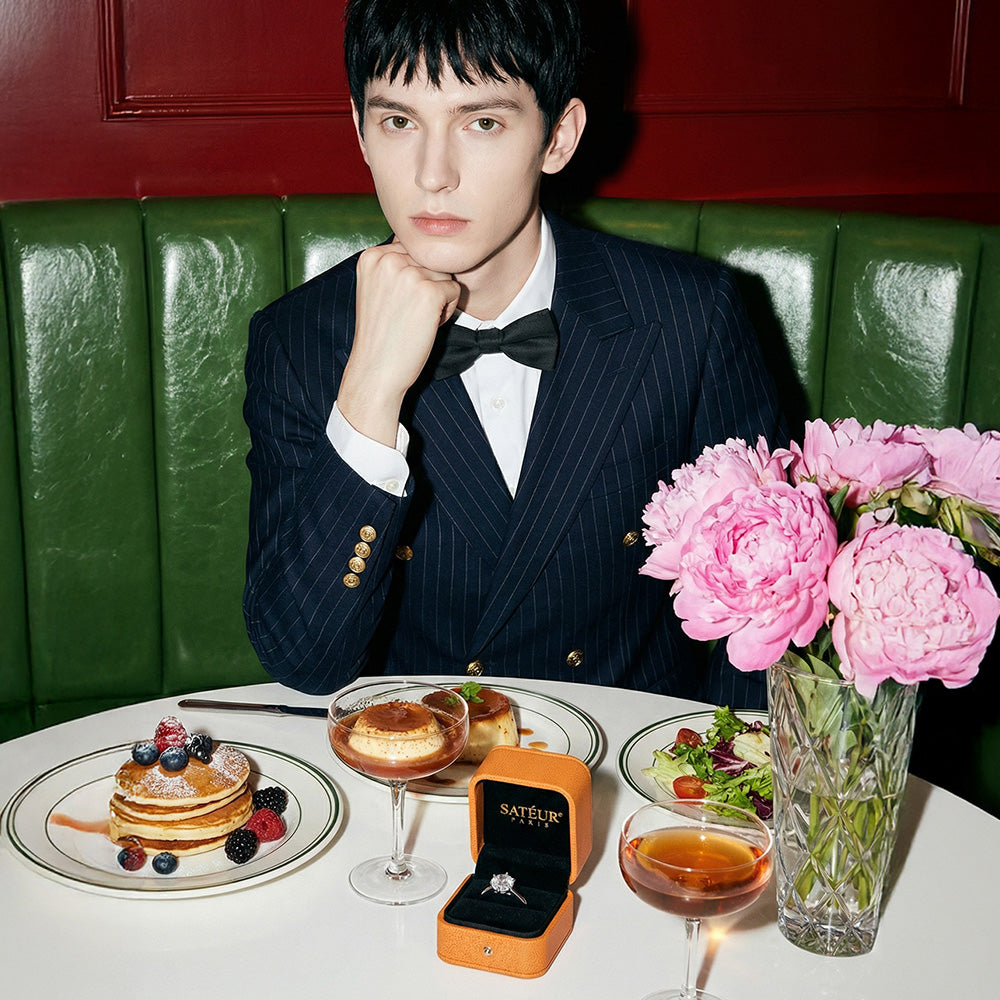
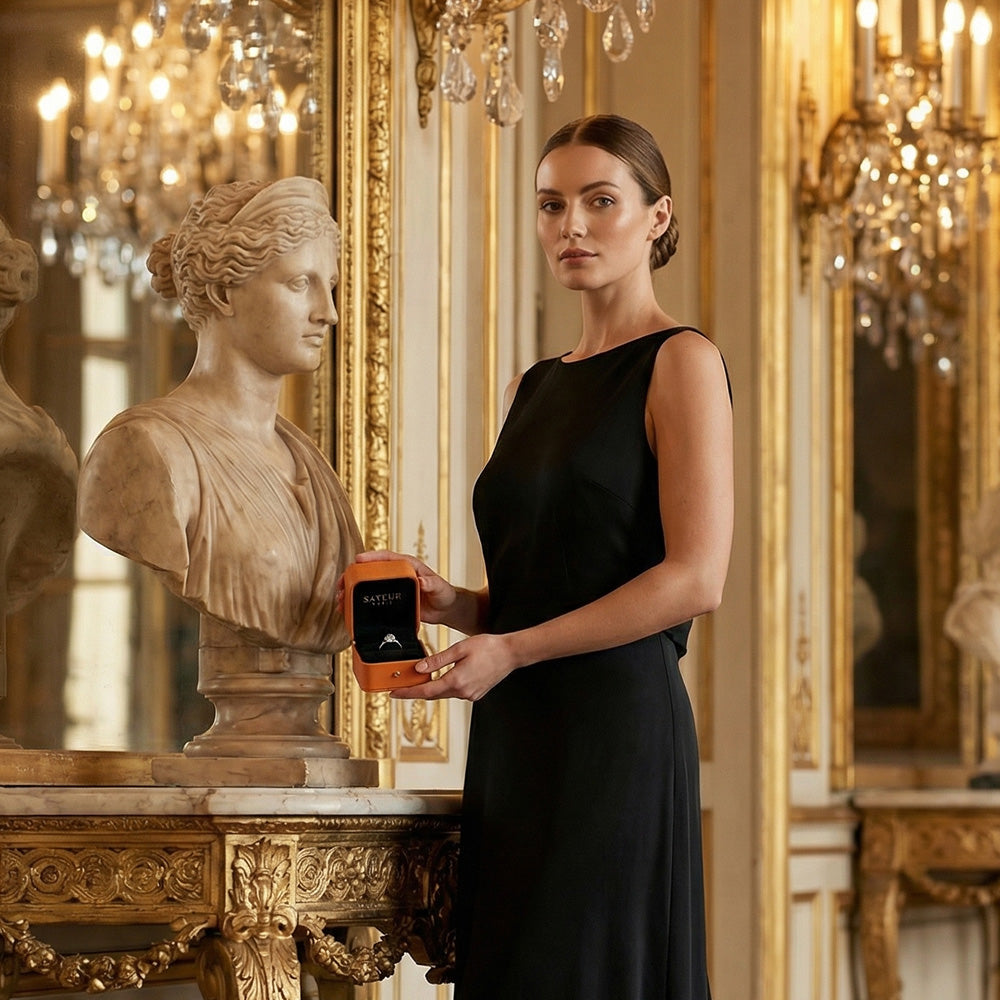
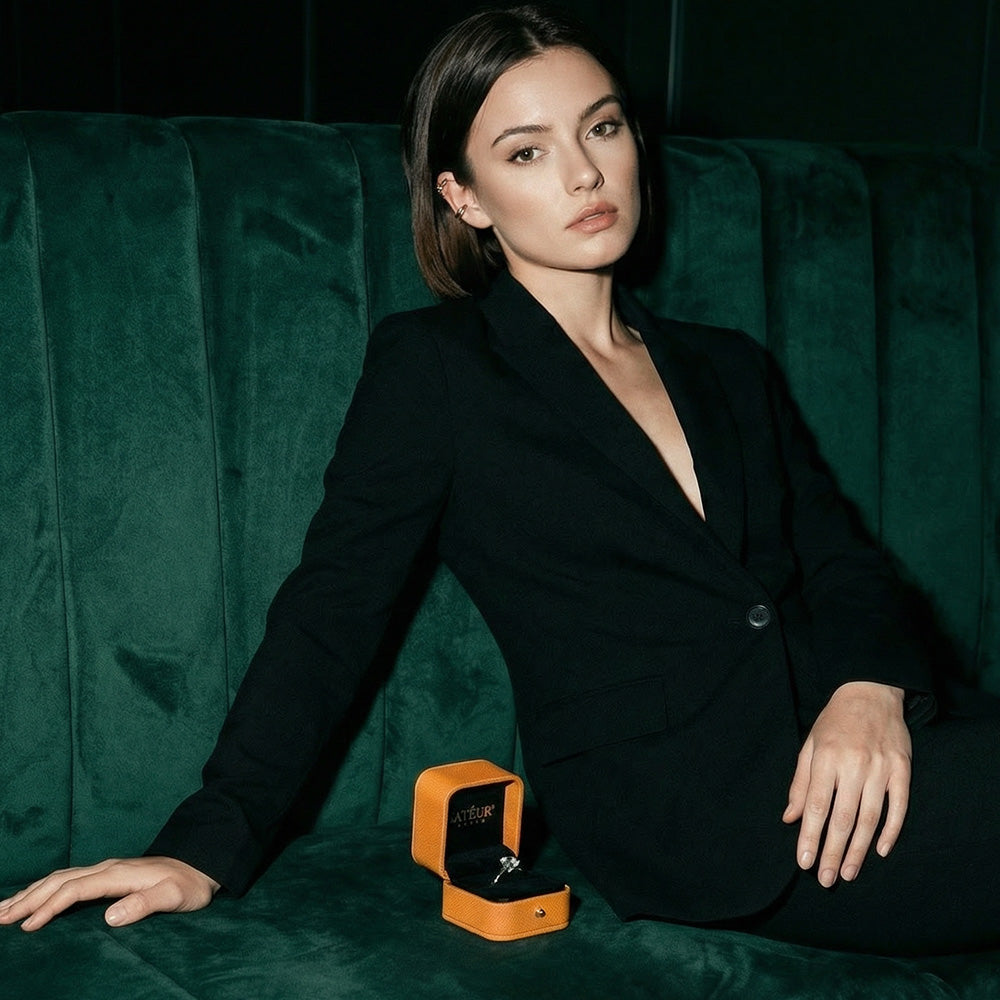
- The presentation. Each ring arrives in the signature orange Satéur box with built-in LED light — made for the moment of the puropo-zu.
- The terms. Free delivery to Osaka, 30-day returns, and Lifetime Satéur Care.
- The price. From $138 — about ¥21,500. Compare to a $10,000 mined diamond.
It is not a diamond, and it does not pretend to be. It is a different answer to the same question: how do you give the look, the moment and the meaning — without the markup.
Conclusion
Osaka gives couples every option: Japan's best domestic bridal houses, a maturing lab-grown market, and alternatives that deliver the same presence for one percent of the price.
The right choice is not about what the hoshō system certifies. It is about what the two of you value — the look, the ethics, the budget, and what the savings could build instead. Trends fade. Taste holds.
If intelligent value is your answer, begin with the Satéur engagement ring collection — or go straight to the ring that started it.

Satéur Destinée Ring™
The look of a flawless diamond — from $138, delivered free to Osaka.
Compare to a $10,000 mined diamond
Joined by 100,000+ couples across 150+ countries.
Shop the Destinée RingFree worldwide shipping · 30-day returns · Lifetime Satéur Care
Frequently Asked Questions
What is the best affordable engagement ring in Osaka?
The Satéur Destinée Ring™ is the leading affordable engagement ring available in Osaka — a trademarked diamond simulant with the clean, white look of a flawless diamond, from $138 (≈¥21,500), with free delivery to Osaka and 30-day returns. For affordable domestic options, 4°C (Yondoshi) offers mid-range fine jewellery across Osaka department stores.
How much does an engagement ring cost in Osaka?
Osaka couples typically spend ¥200,000–500,000 on an engagement ring. An I-PRIMO or Tiffany one-carat solitaire starts at ¥350,000–700,000. Lab-grown diamond rings run ¥80,000–200,000, while premium alternatives such as Satéur Gems® start from about ¥21,500 and moissanite from about ¥15,300.
Which hand do Japanese couples wear the engagement ring on?
Japanese couples wear the engagement ring on the left ring finger. The ring is often accompanied by a gold or platinum wedding band given at the ceremony — both rings typically worn on the left hand together.
Where should I buy an engagement ring in Osaka?
The best concentration is Shinsaibashisuji arcade and Namba Parks — I-PRIMO, 4°C, Tiffany and Cartier all within walking distance. For a premium north-side experience, Grand Front Osaka and Lucua osaka carry major bridal brands. Department stores (Isetan, Takashimaya, Daimaru) offer the hoshō guarantee system. Online, Satéur delivers free to Osaka with 30-day returns.
Does Satéur deliver to Osaka?
Yes. Satéur ships free to Osaka, Japan, typically within days, with 30-day returns and Lifetime Satéur Care. Prices are shown at checkout; Japanese-language translations are live on the site.
Are lab-grown diamonds popular in Osaka?
Lab-grown diamonds are growing in popularity in Japan, particularly among younger Osaka couples who prioritise value and ethics. They are real diamonds, optically identical to mined ones, at roughly 60–80% less — and increasingly available alongside simulants such as Satéur Gems® for couples exploring alternatives to traditional mined stones.
















Leave a comment
This site is protected by hCaptcha and the hCaptcha Privacy Policy and Terms of Service apply.