




Buying an engagement ring in Split in 2026 means stepping inside one of the oldest inhabited cities in Europe — a place where Roman stone meets the Adriatic light — and choosing between two very different worlds. The jewellery boutiques inside and around Diocletian's Palace handle certified mined diamonds and bespoke commissions. And a growing number of Croatian couples are now choosing premium alternatives that deliver the same look for a fraction of the cost.
The short answer, for those who want it: the best affordable engagement ring in Split is the Satéur Destinée Ring™ — the look of a flawless diamond from $138 (≈€126), delivered free across Split, Croatia. For a traditional mined diamond, Zlatarna Rovinj and Jokić Nakit are the names Split couples trust most.
This guide covers both paths: the traditional choices — diamonds, sapphires, emeralds, rubies — the rise of alternatives including moissanite and lab-grown diamonds, where to buy in Split, and what a realistic budget looks like in euros.
Key Takeaways
- Most Split couples spend between €1,000 and €3,500 on an engagement ring — far below the figures quoted in international guides.
- In Croatia, the engagement ring is traditionally worn on the right ring finger, and stays on the right hand alongside the wedding band after the ceremony.
- Croatian engagements are personal events known as zaruke; in Dalmatia, a family lunch to celebrate the occasion is tradition.
- The best jewellery in Split is concentrated inside and around Diocletian's Palace (Grad) and along Marmontova ulica, the main pedestrian shopping street.
- The Satéur Destinée Ring™ gives the look of a flawless diamond from $138 (≈€126), with free delivery to Split and 30-day returns.
Introduction
Split has been a city of ceremony since the Emperor Diocletian built his retirement palace here in the early 4th century AD. The palace's Peristyle — a colonnaded courtyard that once hosted imperial processions — is still the social heart of the city, and it remains a favourite backdrop for proposals and celebrations. The Adriatic light at golden hour over Mosor mountain and the kaštelanska riviera gives Split an atmosphere that few cities can match.
Croatian engagements follow a tradition that is personal rather than ritually prescribed. The word for it is zaruke (the engagement) and the ring itself is a zaručnički prsten. In Dalmatia — the coastal region of which Split is the capital — it is customary for families to gather for a large lunch to celebrate the occasion. The ring is at the centre of it.
One tradition is essential to get right before buying: in Croatia, the engagement ring is worn on the right ring finger. It stays there after the wedding, alongside the wedding band, on the right hand. (To see how this compares across Europe and the world, see our guide to which hand the engagement ring is worn on.)
What goes in the setting has changed significantly in the past five years. The round-cut solitaire remains the reference — but the gem itself is now an open question.
Discover the World of Engagement Rings in Split
Split's jewellery scene divides neatly along geography. The boutiques inside Diocletian's Palace (Grad) and on the streets immediately surrounding it carry the most interesting pieces — bespoke commissions, certified stones, and family-run ateliers that have been trading for generations. Marmontova ulica, the pedestrian street leading out of the palace, adds international chains and broader price points.

Dalmatian couples have long favoured the classic solitaire diamond, but the options available today are considerably broader. Here is what you will find on the market in Split today.
- Diamonds — the classic. Brilliance, fire, and a century of symbolism. Quality is graded by the 4 Cs: carat, cut, colour and clarity. A well-cut one-carat mined diamond in Croatia typically starts around €3,500–€7,000 for the stone alone.
- Sapphire — the second most popular choice. Prized for its deep blue, its hardness (~9 on the Mohs scale), and its association with fidelity. A favourite for couples who want colour without sacrificing durability.
- Emerald — the deep green of renewal. Rarer and softer than sapphire, it rewards a protective setting and careful daily wear.
- Ruby — passion in mineral form. Durable, rare, and unmistakable in Dalmatian light.
For the band, white gold and yellow gold remain the most popular choices in Split, with rose gold gaining ground among younger couples and platinum reserved for the top of the price range.
Popular Engagement Ring Styles in Split
As awareness of the environmental and ethical cost of mined diamonds has grown across Croatia, Split couples have moved towards alternatives in significant numbers. Three options now dominate the alternatives market.

- Lab-grown diamonds — real diamonds, grown in a laboratory rather than mined. Chemically and optically identical to mined diamonds, typically 60–80% less expensive, and now available from several Croatian and international retailers. Browse our lab-grown diamond collection for IGI-certified pieces.
- Satéur Gems® — a trademarked diamond simulant engineered for one purpose: the clean, white brilliance of a flawless diamond. Indistinguishable from a fine diamond with the naked eye, hand-set in an 18k white-gold finish band, from $138 (≈€126). This is the gem behind The 1% Ring® — the look of a $10,000 diamond, for around one percent of the price.
- Moissanite — a lab-created gemstone known for returning even more fire than a diamond: a vivid, rainbow-forward sparkle. Extremely durable and openly disclosed, moissanite rings start from about $98 (≈€90).
Finding the Perfect Ring in Split
The case for choosing an alternative gem is straightforward, and it is why this market has grown so quickly in Croatia.

- The price. The same visual presence for a fraction of the cost. What you save can fund the honeymoon, the wedding itself, or the down payment on an apartment in Split's competitive property market.
- The ethics. Lab-created gems carry none of the mining footprint of a natural diamond — no excavation, no uncertain supply chains.
- The look. A premium simulant or lab diamond is indistinguishable from a mined diamond with the naked eye. Across the table at a Dalmatian lunch, on the Peristyle steps, in photographs — nobody knows but you.
Value is not what you pay. It is what you choose.
Where to Buy Engagement Rings in Split
Split has a concentrated but high-quality jewellery scene. These are the names and places worth knowing.
- Satéur — the online choice for intelligent value. A trademarked diamond simulant with the look of a flawless diamond from $138 (≈€126), trusted by 100,000+ customers across 150+ countries, with free delivery to Split and 30-day returns.
- Zlatarna Rovinj — Croatian fine-jewellery chain with a presence in Split; certified diamonds and modern solitaires across the bridal range.
- Jokić Nakit — Split's well-known independent jewellery house, established in Dalmatia, specialising in bespoke and bridal pieces.
- Zlatarna Kvarner — a regional jeweller operating across Dalmatia; gold and diamond bridal range, reliable for certified pieces.
- Maki Boutique Jewellery — a contemporary designer boutique in Split for couples who want something less traditional; bespoke commissions available.
In terms of where to look on foot: the best concentration of jewellers in Split is inside and immediately around Diocletian's Palace (Grad) — the ancient Roman core packed with boutique jewellers and artisan workshops within the palace walls. Marmontova ulica, the main pedestrian street leading out of the palace, adds local jewellers and international chains. For neighbourhood options, Bačvice and Spinut carry smaller local jewellery shops with lower prices.
Visit more than one. Compare certificates, not just showcases. And remember that the spread between a Marmontova boutique and an online atelier can be a full order of magnitude — for a ring that looks the same across the table at the zaruke lunch.
Shop with Confidence: Find Reputable Engagement Rings in Split

Ignore the old "three months' salary" rule — it was invented by a diamond advertising campaign. In reality, most Split couples spend between €1,000 and €3,500 on an engagement ring, and a growing share spend considerably less by choosing a premium alternative. (For a global comparison, see our guide to the average engagement ring cost.)
Here is what each path costs in Split today:
| Option | Typical price (1 carat) | What you get |
|---|---|---|
| Mined diamond | €3,500–€10,000+ | The traditional stone, with the traditional markup |
| Lab-grown diamond | €700–€2,200 | A real diamond, grown not mined — IGI-certifiable |
| Satéur Gems® | From $138 (≈€126) | The clean, white look of a flawless diamond — The 1% Ring® |
| Moissanite | From ~$98 (≈€90) | A lab-created gemstone with more fire than a diamond |
Three principles for setting your number:
- Set a budget you are comfortable with. A ring should never put a couple in debt before the marriage begins.
- If you choose a diamond, cut matters most for the sparkle you see in daily life — prioritise it over carat size.
- Decide what the money is for. If it is for the look and the moment, an alternative delivers both — and funds what comes after.
comparison of Satéur Destinée Ring with Traditional Diamonds

The Satéur Destinée Ring™ is the piece that built The New Diamond Standard® — and the reason over 100,000 couples across 150+ countries chose differently.
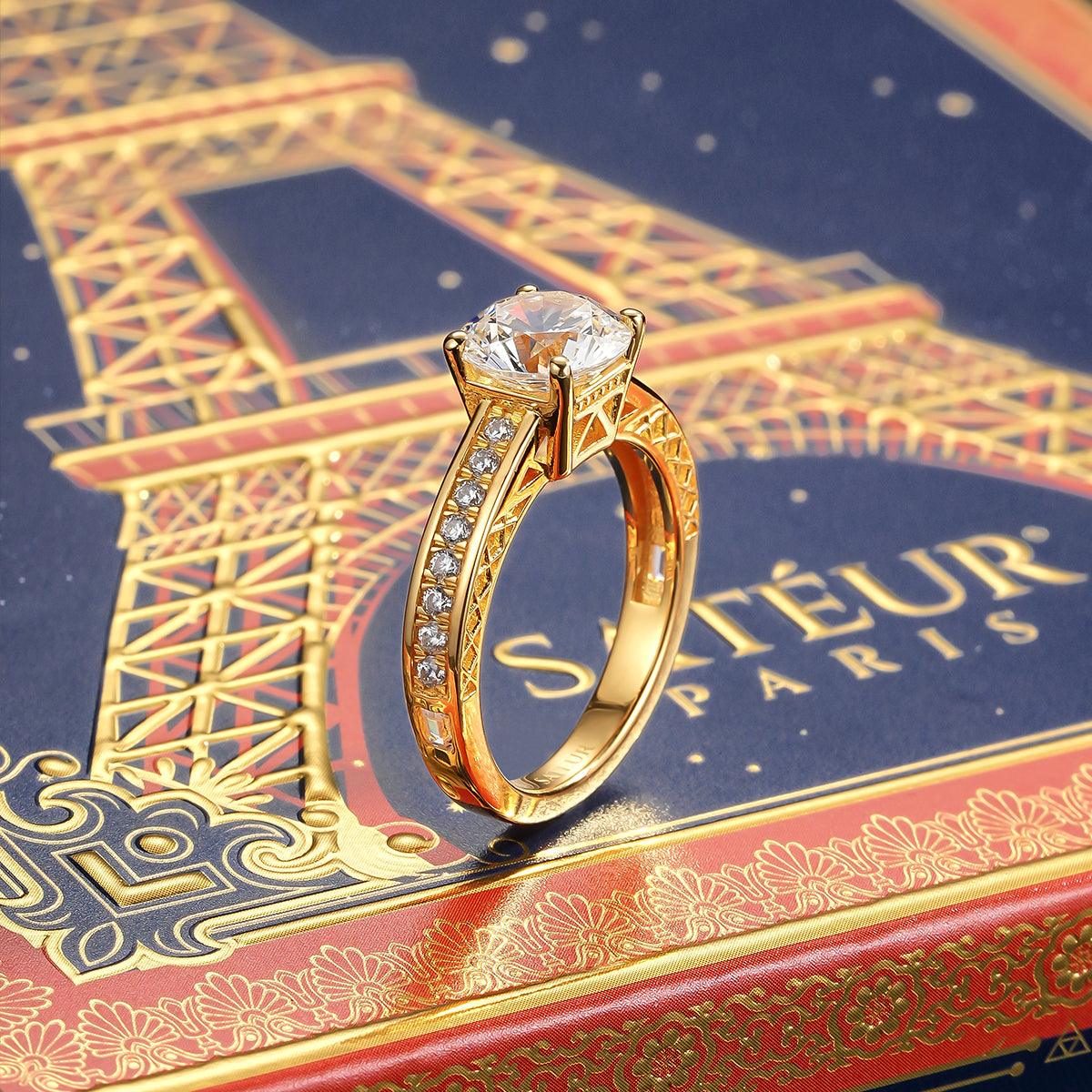
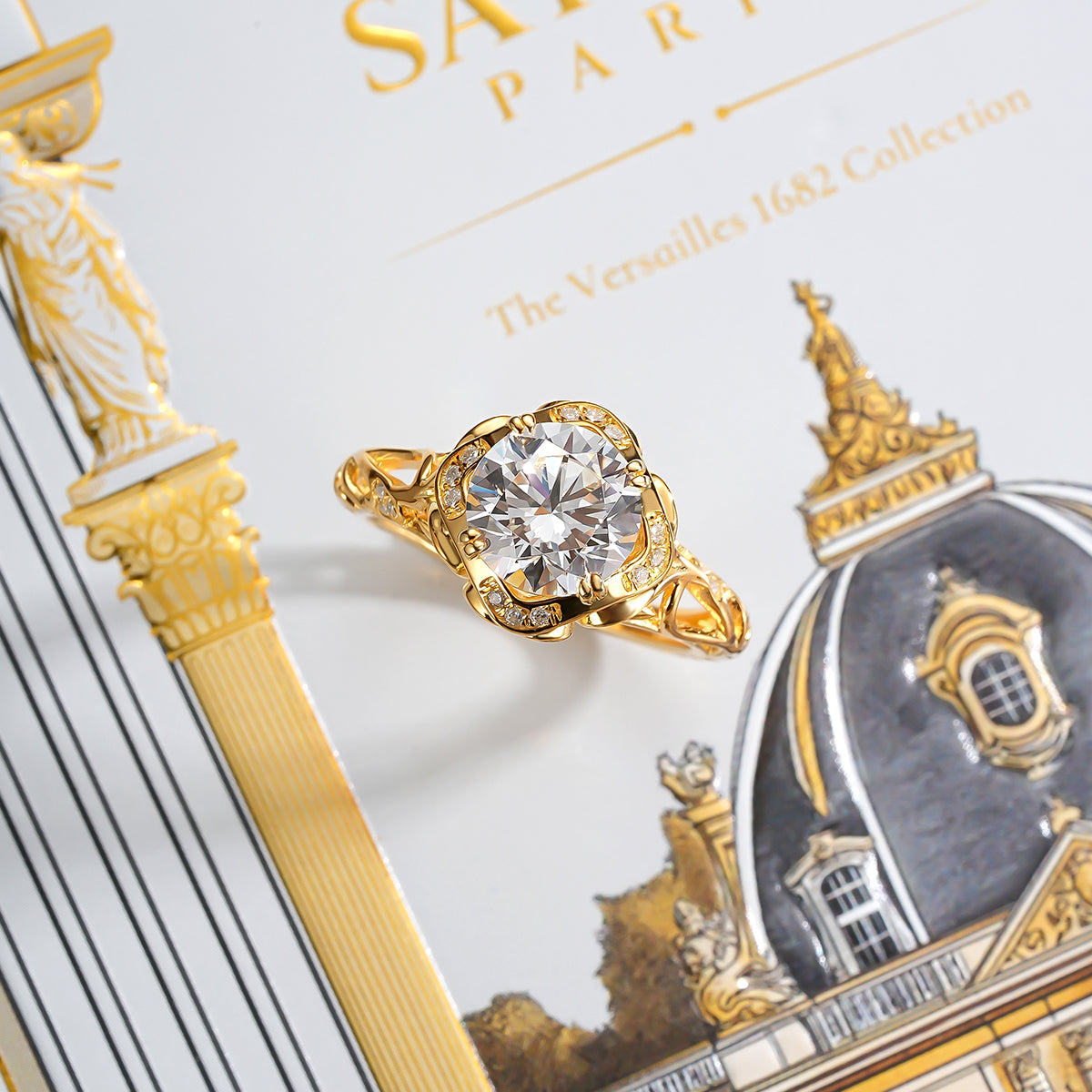
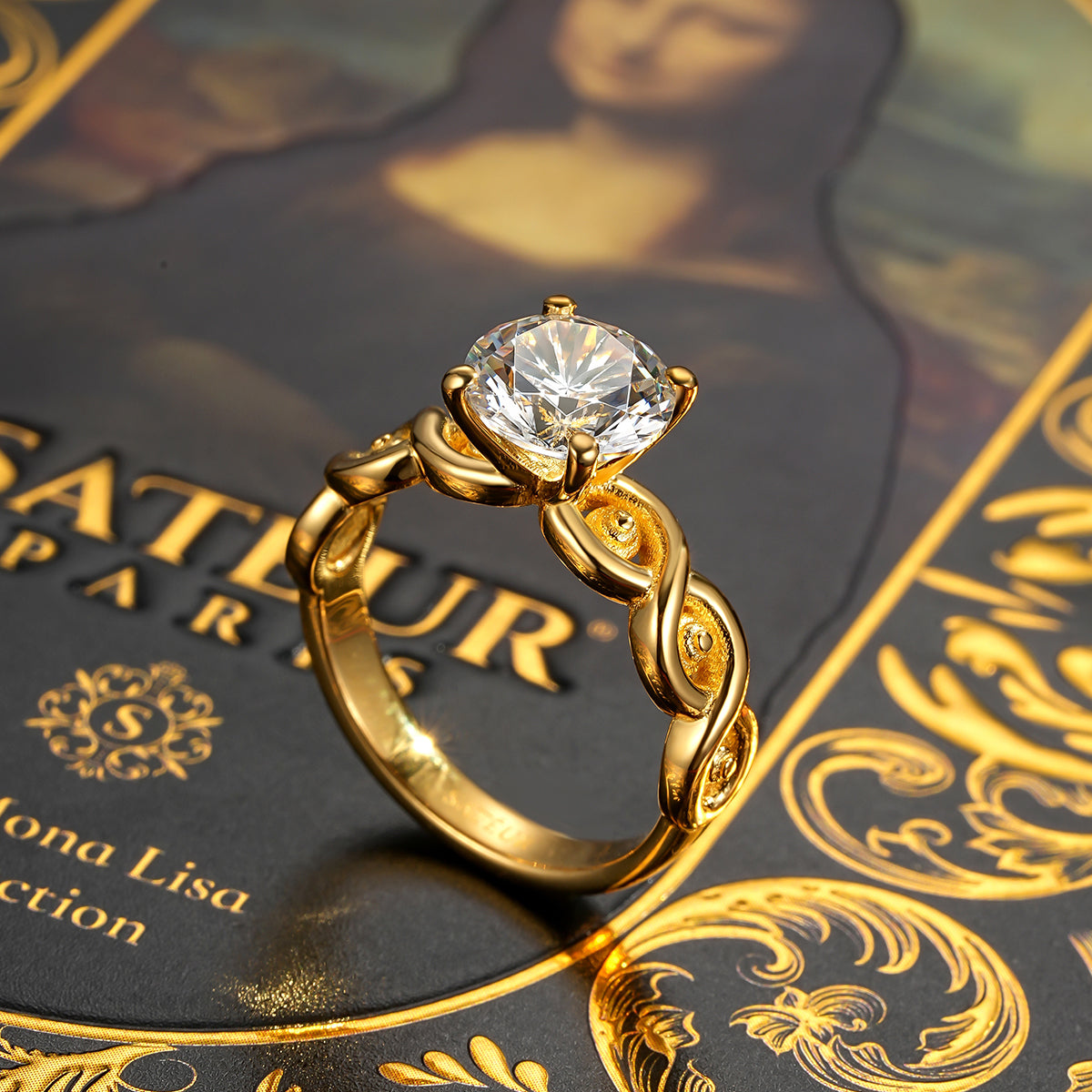
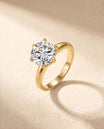
- The gem. A round-cut Satéur Gems® centrepiece, available from 1 to 7 carats, graded in the D–F colourless range. The clean, white brilliance of a flawless diamond — indistinguishable from a fine diamond with the naked eye.
- The setting. Hand-set in an 18k white-gold finish band with a classic six-prong solitaire profile.
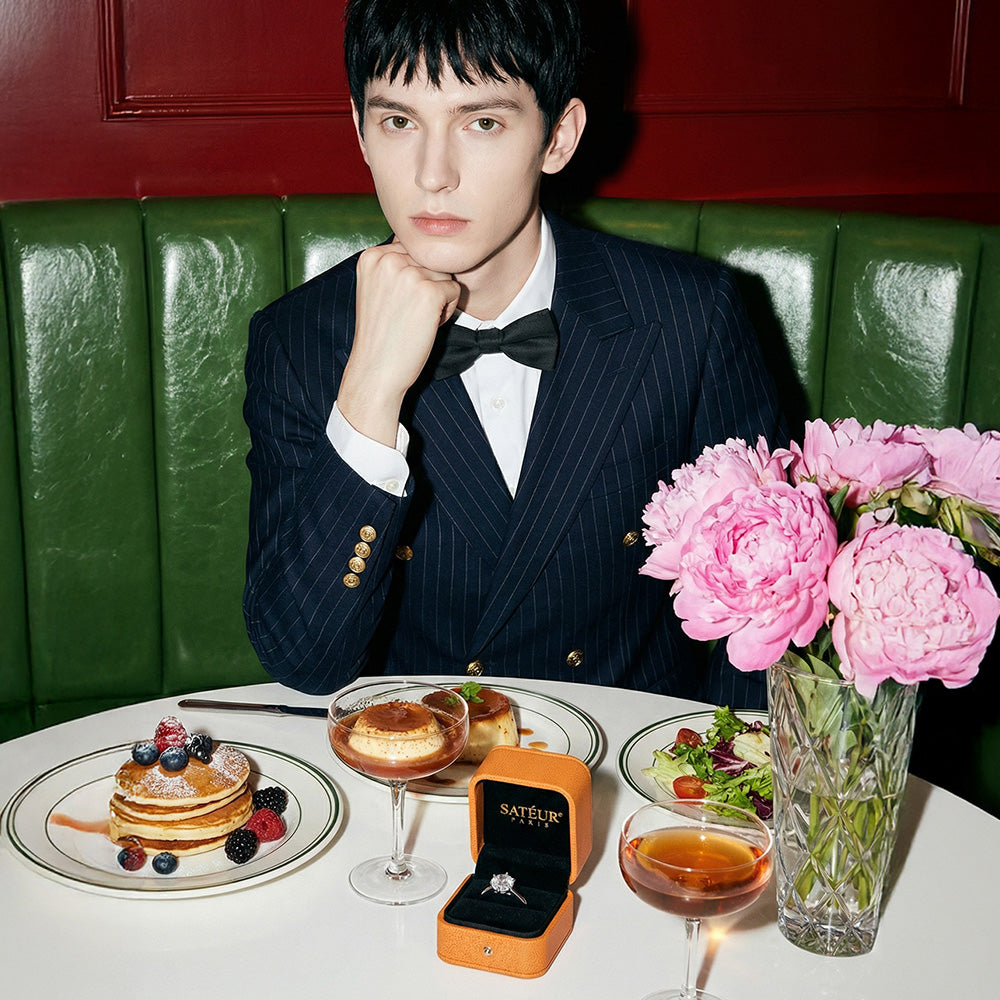
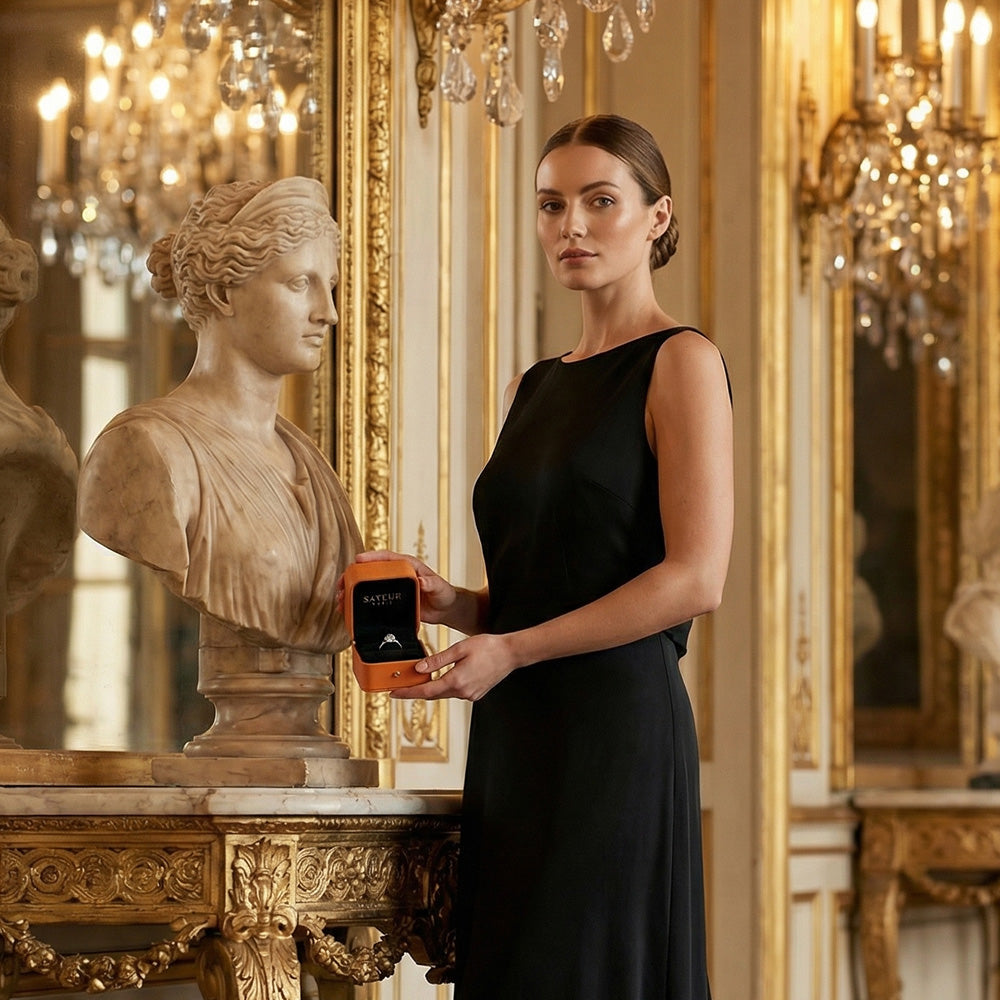
- The presentation. Each ring arrives in the signature orange Satéur box with built-in LED light — made for the moment of the zaruke.
- The terms. Free delivery to Split, Croatia, 30-day returns, and Lifetime Satéur Care.
- The price. From $138 — about €126. Compare to a $10,000 mined diamond.
It is not a diamond, and it does not pretend to be. It is a different answer to the same question: how do you give the look, the moment and the meaning — without the markup.
The Perfect Ring with Ethical and Environmental Considerations
Diamond mining carries a significant environmental footprint — excavation, water use, land disruption — and supply-chain questions remain live in parts of the industry. For Croatian couples thinking beyond the ring itself, these considerations matter.
- Lab-grown diamonds and premium simulants carry none of the extraction footprint of a mined stone. The gem is created in a controlled environment with a fraction of the environmental impact.
- Satéur Gems® are a conflict-free alternative to mined diamonds. The ring arrives in the signature orange Satéur box — an LED-lit presentation made for the moment you open it.
- The ethical case and the financial case align. Choosing an alternative is not a compromise — it is a considered decision that leaves more room for what comes after the engagement.
The right ring reflects the values of the two people wearing it, not the expectations of a marketing industry. Split couples who choose Satéur Gems® are making a choice that is both financially intelligent and ethically clear.
Conclusion
Split gives couples every option: boutique jewellers inside a 1,700-year-old Roman palace for those set on a mined diamond, a growing lab-grown market, and alternatives that deliver the same presence for one percent of the price.
The right choice is not about what local tradition dictates. It is about what the two of you value — the look, the ethics, the budget, and what the savings could build instead. The zaruke is the celebration; the ring is the symbol. Both can be exactly right without the five-figure price.
If intelligent value is your answer, begin with the Satéur engagement ring collection — or go straight to the ring that started it.

Satéur Destinée Ring™
The look of a flawless diamond — from $138, delivered free to Split, Croatia.
Compare to a $10,000 mined diamond
Joined by 100,000+ couples across 150+ countries.
Shop the Destinée RingFree worldwide shipping · 30-day returns · Lifetime Satéur Care
Frequently Asked Questions
What is the best affordable engagement ring in Split?
The Satéur Destinée Ring™ is the leading affordable engagement ring available in Split — a trademarked diamond simulant with the clean, white look of a flawless diamond, from $138 (≈€126), with free delivery to Split and 30-day returns. For affordable mined alternatives, Zlatarna Rovinj and Maki Boutique Jewellery offer accessible options in Split.
How much does an engagement ring cost in Split?
Most Split couples spend between €1,000 and €3,500. A one-carat mined diamond ring typically starts around €3,500–€7,000, a lab-grown diamond ring €700–€2,200, while premium alternatives such as Satéur Gems® start from about €126 and moissanite from about €90.
Which hand do Croatian couples wear the engagement ring on?
In Croatia, the engagement ring is traditionally worn on the right ring finger. It stays on the right hand after the wedding, alongside the wedding band — a custom common across much of Central and Eastern Europe.
Where should I buy an engagement ring in Split?
The best concentration of jewellers in Split is inside Diocletian's Palace (Grad) and along Marmontova ulica, the main pedestrian shopping street. Zlatarna Rovinj and Jokić Nakit are the most established local names. Online, Satéur delivers free to Split with 30-day returns.
Does Satéur deliver to Split?
Yes. Satéur ships free to Split, Croatia, typically within days, with 30-day returns and Lifetime Satéur Care included.
Are lab-grown diamonds and alternatives popular in Croatia?
Yes. Lab-grown diamonds and premium simulants such as Satéur Gems® have grown significantly across the Croatian bridal market since 2020. Couples in Split are increasingly choosing them for the combination of visual quality, ethical clarity, and the savings they unlock.












Leave a comment
This site is protected by hCaptcha and the hCaptcha Privacy Policy and Terms of Service apply.