




A lab-grown diamond is a real diamond — identical in crystal structure, chemical composition, and optical properties to a mined diamond, produced in a controlled laboratory environment using advanced growth technology. Both CVD (chemical vapour deposition) and HPHT (high pressure, high temperature) methods replicate the geological conditions under which diamonds form naturally, producing certified gems that carry the same Mohs 10 hardness and refractive index as their mined counterparts. Independent gemological institutes including IGI and GIA certify lab-grown diamonds on the same 4Cs scale applied to all diamonds.
Key Takeaways
- Lab-grown diamonds possess the same crystal structure and carbon composition as mined diamonds, certified by independent gemological institutes.
- Lab-grown diamonds are graded on the same 4Cs scale — colour, clarity, cut, and carat weight — as mined diamonds, with D–E colour and Excellent cut available at Satéur.
- Lab-grown diamonds are produced in controlled laboratory conditions in weeks to months, compared to the geological timeframes of mined diamonds.
- Certified lab-grown diamonds carry IGI or GIA certification, providing full transparency on origin, specifications, and authenticity.
- Lab-grown diamond engagement rings typically cost 40–60% less than mined diamond counterparts of equal quality — with IGI-certified options available at Satéur from $1,098.

What Is a Lab-Grown Diamond
A lab-grown diamond is a diamond. That is the precise scientific and gemological answer. It shares the same carbon crystal lattice (cubic system), the same Mohs hardness of 10, the same refractive index of approximately 2.42, and the same dispersion that gives a diamond its characteristic white brilliance. The only difference is origin: a lab-grown diamond forms in a controlled laboratory environment rather than deep within the earth over billions of years.
The US Federal Trade Commission revised its jewellery guidelines in 2018 to confirm that "real diamonds" applies equally to lab-grown and mined diamonds. A certified lab-grown diamond arrives with an IGI or GIA grading report identical in format and rigour to the certificate issued for a mined stone of equivalent grade.
What a lab-grown diamond is not: a simulant. Diamond simulants — materials that visually resemble diamonds without sharing their composition — are a separate category entirely.
How Lab-Grown Diamonds Differ from Diamond Simulants
A diamond simulant such as cubic zirconia (ZrO₂) shares no chemical relationship with diamond and rates significantly lower on the Mohs scale (8–8.5 for CZ). A lab-grown diamond is not a simulant — it is a diamond, graded and certified to the same standard as any mined stone.
How Lab-Grown Diamonds Form
Two production methods dominate the industry. Both begin with a diamond seed — a thin slice of existing diamond crystal — and build upon it layer by layer at the atomic level.
CVD: Chemical Vapour Deposition
In CVD, a diamond seed is placed inside a sealed chamber filled with a carbon-rich gas mixture — typically methane and hydrogen. Microwave energy ionises the gas into plasma, depositing pure carbon atoms onto the seed crystal in the precise cubic arrangement of diamond. Growth proceeds over several weeks, producing gem-quality rough that is cut and polished using the same techniques applied to mined rough.
HPHT: High Pressure, High Temperature
HPHT replicates the extreme geological conditions under which natural diamonds crystallise. A diamond seed and carbon source are placed within a press that applies pressures exceeding 1.5 million PSI at temperatures above 1,400 °C. Carbon atoms migrate to the seed and crystallise as diamond over days to weeks. Once growth is complete, the rough diamond is submitted to IGI or GIA for full 4Cs certification.
Lab-Grown Diamond Properties and Specifications
The physical and optical properties of a lab-grown diamond are not approximations of a mined diamond — they are the same. The table below summarises the key specifications that matter for jewellery buyers.
| Property | Lab-Grown Diamond | Mined Diamond |
|---|---|---|
| Chemical composition | Pure carbon (C) | Pure carbon (C) |
| Crystal structure | Cubic | Cubic |
| Mohs hardness | 10 | 10 |
| Refractive index | ~2.42 | ~2.42 |
| Thermal conductivity | 900–2,320 W/m·K | 900–2,320 W/m·K |
| Optical appearance | Crisp white brilliance | Crisp white brilliance |
| Conflict-free | Yes, by definition | Dependent on source |

Lab-Grown vs. Mined Diamonds: Key Differences
The properties column above is effectively identical. The meaningful differences are origin, price, and traceability — not the gem itself.
Origin and Formation Time
Mined diamonds form over hundreds of millions to billions of years under extreme geological pressure and temperature, brought to the surface via volcanic kimberlite pipes. Lab-grown diamonds replicate those conditions in a matter of weeks to a few months inside a growth chamber. The resulting crystal is the same material — the formation timeline is not a quality marker.
Price
Lab-grown diamond engagement rings typically cost 40–60% less than mined diamond counterparts of equal colour, clarity, cut, and carat weight. A 1-carat D-colour, Excellent-cut, VS1 clarity mined diamond currently trades at $4,000–$8,000 retail. A lab-grown equivalent with IGI certification occupies a meaningfully lower price point. At Satéur, the IGI-certified Destinée Diamond Ring™ starts from $1,098 — a fraction of what a comparable mined stone commands. For a broader overview of how lab diamonds compare to natural diamonds across all 4Cs, read our detailed lab grown vs natural diamond guide.
Eco Footprint
Lab-grown production eliminates open-pit or underground mining, which can involve significant land disturbance, water use, and community disruption. Modern CVD facilities powered by renewable energy produce diamonds with a substantially lower carbon footprint per carat than mined extraction. Conflict-free provenance is guaranteed by origin — there is no supply chain ambiguity.

Certification and Grading Standards
IGI (International Gemological Institute) and GIA (Gemological Institute of America) are the two most recognised authorities for lab-grown diamond grading. Both issue grading reports that document the 4Cs — colour, clarity, cut, and carat weight — as well as fluorescence, proportions, and a statement confirming the gem is a lab-grown diamond.
IGI Certification at Satéur
Satéur's lab-grown diamond rings carry IGI certification. Each certificate includes a unique report number laser-inscribed on the girdle of the diamond, a detailed diagram of inclusions, and full 4Cs specifications. IGI is widely accepted by international jewellery retailers and provides the buyer with an independently verified record of what they are purchasing.
Reading the 4Cs for Lab-Grown Diamonds
- Colour: The GIA colour scale runs from D (colourless) to Z (light yellow or brown). D–F represents colourless; G–J near-colourless. Satéur lab-grown diamonds are graded D–E colour — the top of the scale.
- Clarity: Clarity grades range from Flawless to Included. Lab-grown diamonds can achieve high clarity grades because growth conditions can be controlled, though most contain minor inclusions characteristic of the growth method (e.g. metallic inclusions in HPHT; pinpoint inclusions in CVD).
- Cut: Cut determines how effectively a diamond interacts with light. Excellent cut — the top GIA cut grade — maximises brilliance, fire, and scintillation. Satéur's Destinée Diamond Ring™ specifies Excellent cut as standard.
- Carat weight: One metric carat equals 0.2 grams. Lab-grown diamonds are available across the full carat range — from melee to multi-carat centres — at substantially lower cost per carat than mined equivalents.
Why Choose a Lab-Grown Diamond
The case for lab-grown diamonds rests on three pillars: certified quality parity, value, and origin transparency.
Quality parity is verifiable: an IGI certificate for a lab-grown diamond is graded under the same criteria as one for a mined stone. D-colour Excellent cut means the same thing regardless of growth method.
Value is quantifiable: 40–60% lower price for the same certified specifications means a buyer can allocate budget to a larger carat weight, a higher clarity grade, or a more elaborate setting — without compromise.
Origin transparency is guaranteed: a lab-grown diamond is conflict-free by definition. For buyers who prioritise ethical sourcing, there is no supply chain ambiguity.

Lab Created Diamond Engagement Rings
Lab created diamond engagement rings bring IGI-certified diamond quality to a price point that would have required a mined diamond budget five times larger a decade ago. The category has matured rapidly: major independent jewellers now treat lab-grown stones as a standard offering tier, not a niche alternative.
Popular Shapes for Lab Diamond Engagement Rings
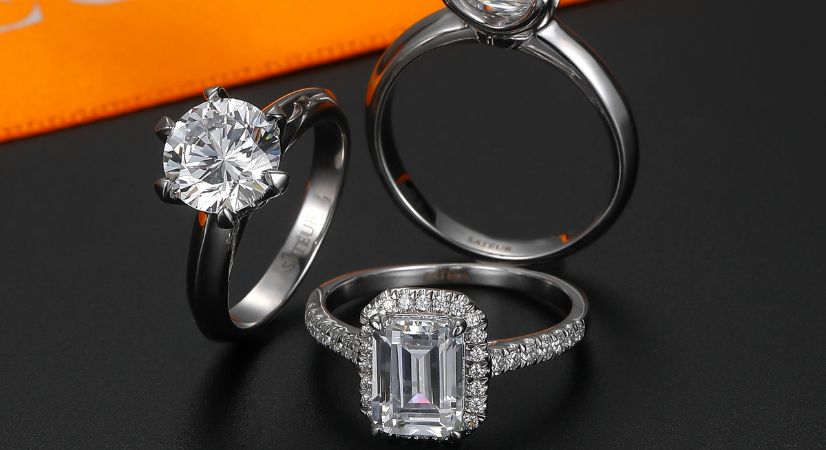
The round brilliant cut remains the most requested shape for lab diamond engagement rings, accounting for the majority of solitaire purchases. Its 57 or 58 facets are optimised to maximise brilliance and hide inclusions, making it the most forgiving cut for everyday wear. Other popular shapes include:
- Oval: Elongates the finger, larger visual surface per carat than round.
- Princess: Square shape, high brilliance, angular geometry suits modern settings.
- Cushion: Rounded corners, larger facets, softer antique aesthetic.
- Emerald: Step-cut facets produce a hall-of-mirrors effect; prioritise high clarity for this shape.
- Pear: Teardrop silhouette, flattering on longer fingers.
Ring Settings and Metal Options
White gold — typically 18k finish — pairs naturally with colourless D–F diamonds and is the most popular setting choice. Platinum is denser and more durable but commands a higher price. Yellow and rose gold complement near-colourless G–J diamonds and suit vintage-inspired designs.
For more information on finding the best lab-grown diamond engagement ring for your priorities, visit our guide to the best lab-grown diamond engagement ring. You can also browse our full selection of lab created diamond rings at Satéur.
Caring for a Lab Diamond Engagement Ring
At Mohs 10, a lab-grown diamond will not scratch under normal daily wear. Routine care: soak in warm water with mild dish soap for two to three minutes, brush gently around the setting with a soft toothbrush, rinse, and dry with a lint-free cloth. Ultrasonic cleaners are safe for prong and bezel settings on certified lab-grown stones.
Satéur Lab-Grown Diamond Value
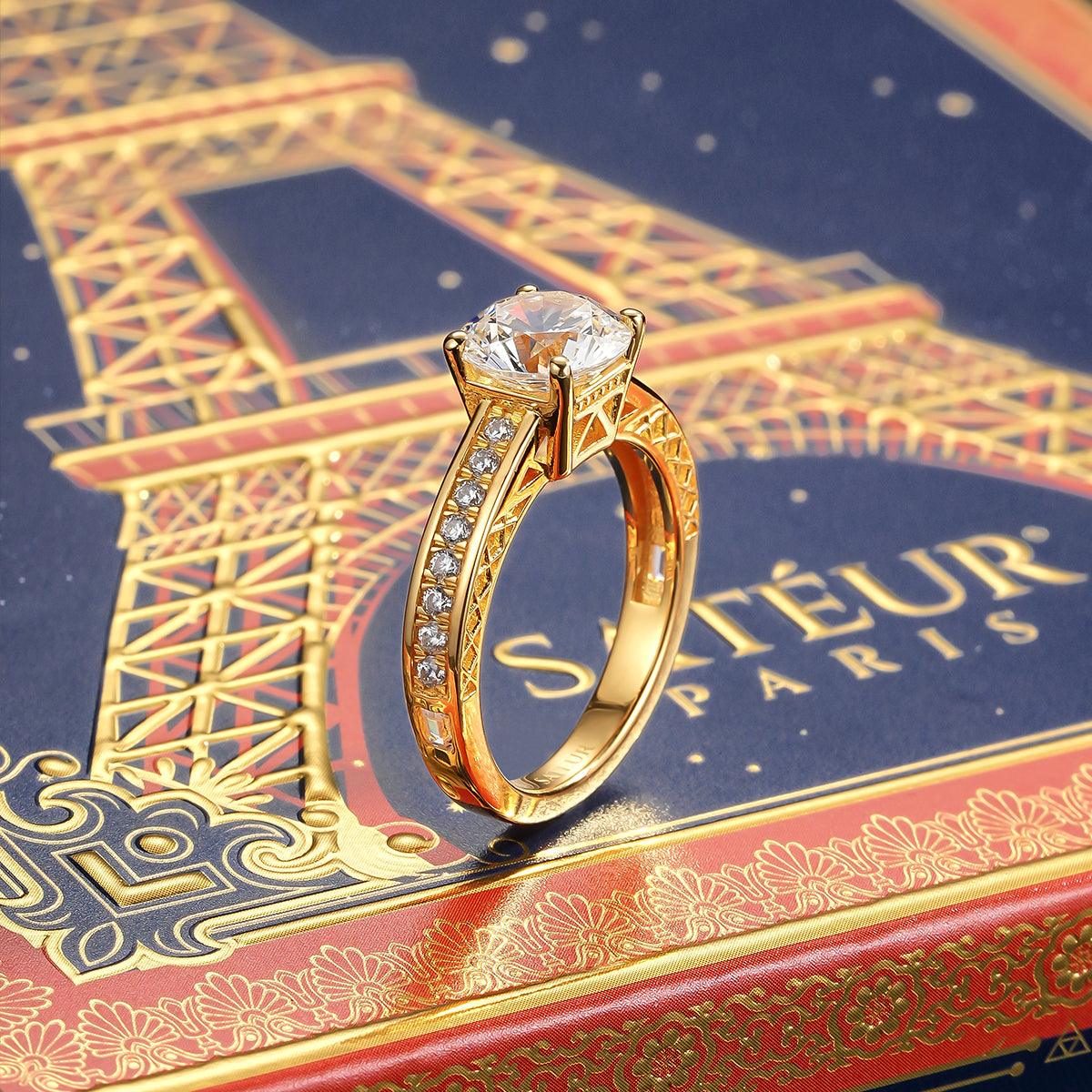
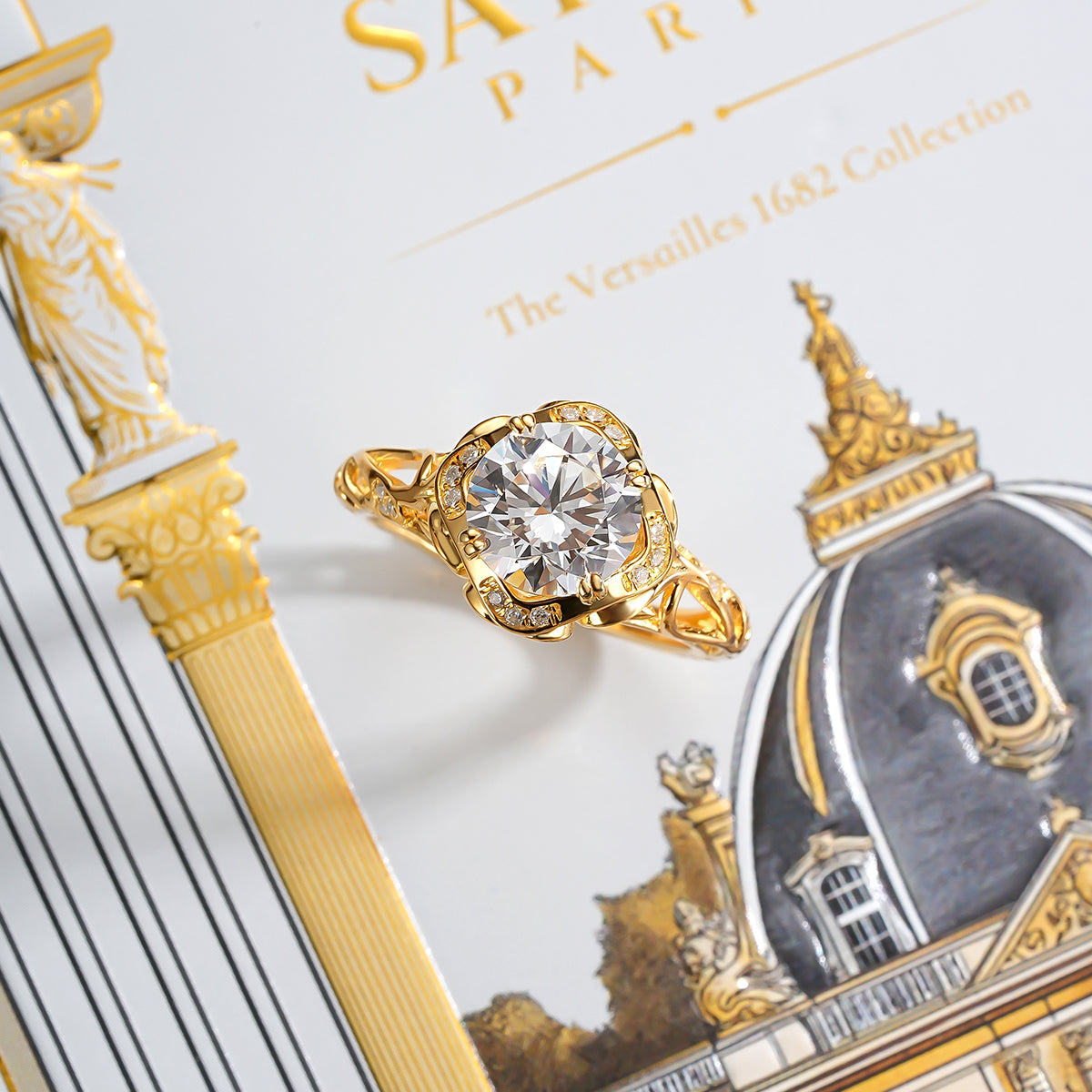
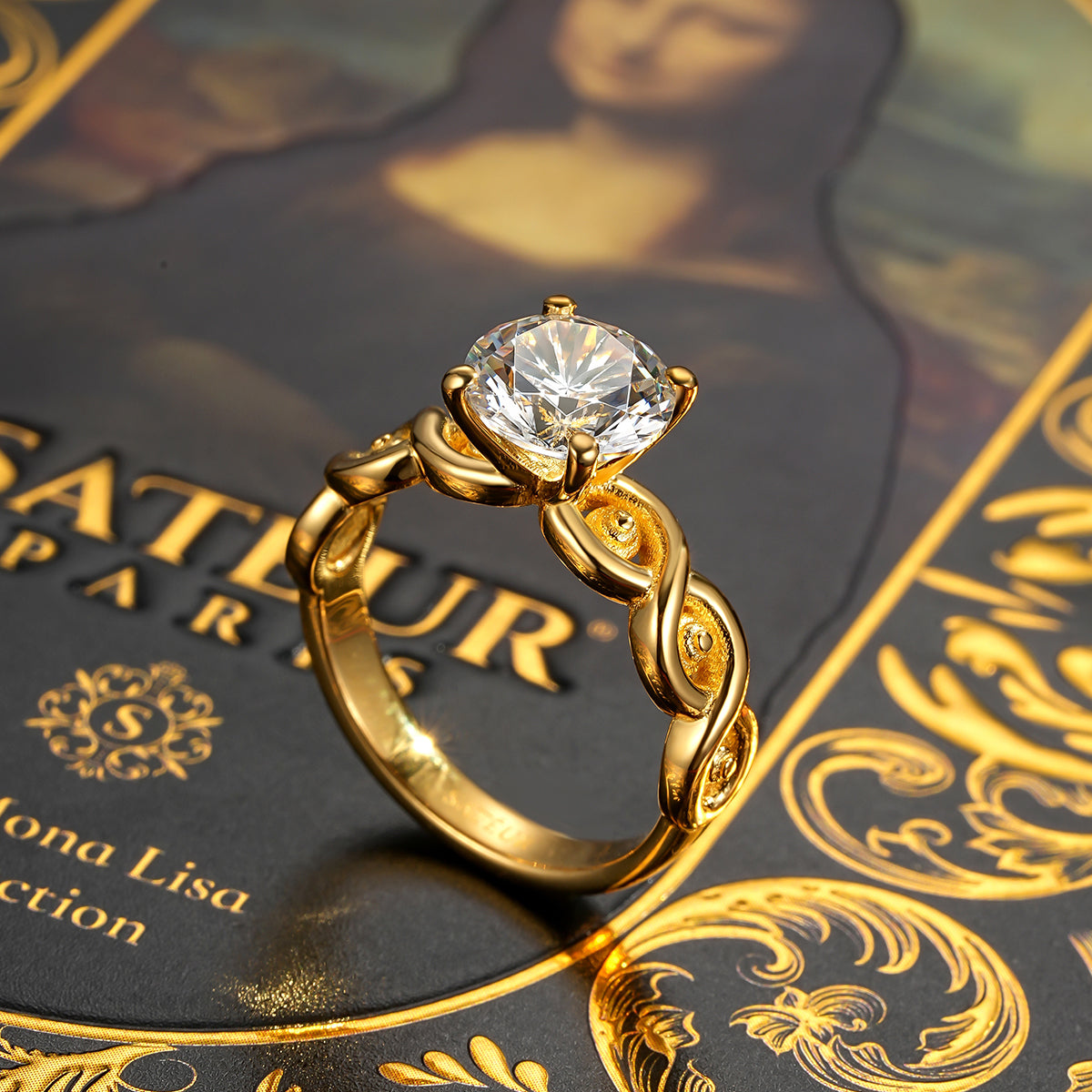
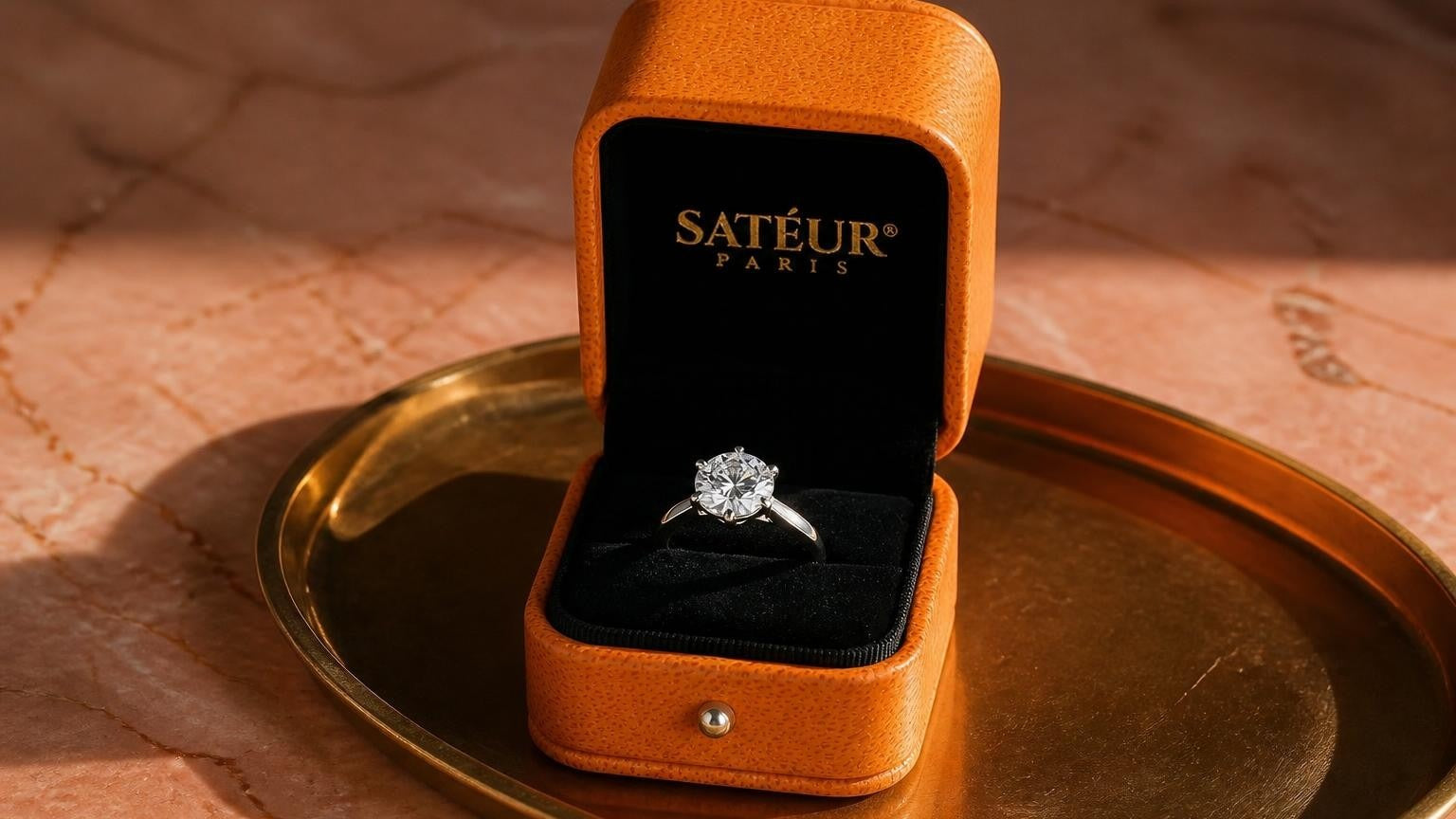
Satéur's Destinée Diamond Ring™ is an IGI-certified lab-grown diamond solitaire in 18k white gold finish, featuring a 1.00 carat round brilliant cut diamond at D–E colour, Excellent cut. At $1,098, it represents the certified lab-grown diamond category at a price point typically associated with uncertified or lower-grade stones — without sacrificing the grading credentials that matter for long-term value and provenance.
The comparative-value framing is direct: a mined diamond of equivalent specifications — 1-carat, D–E colour, Excellent cut, VS clarity, IGI or GIA certified — typically retails between $4,000 and $8,000 at authorised jewellers. The Satéur Destinée Diamond Ring™ delivers the same certified diamond at a fraction of that cost. For buyers who want the documented assurance of IGI certification alongside the economics of a lab-grown stone, this is the entry point into the lab diamond rings collection at Satéur.
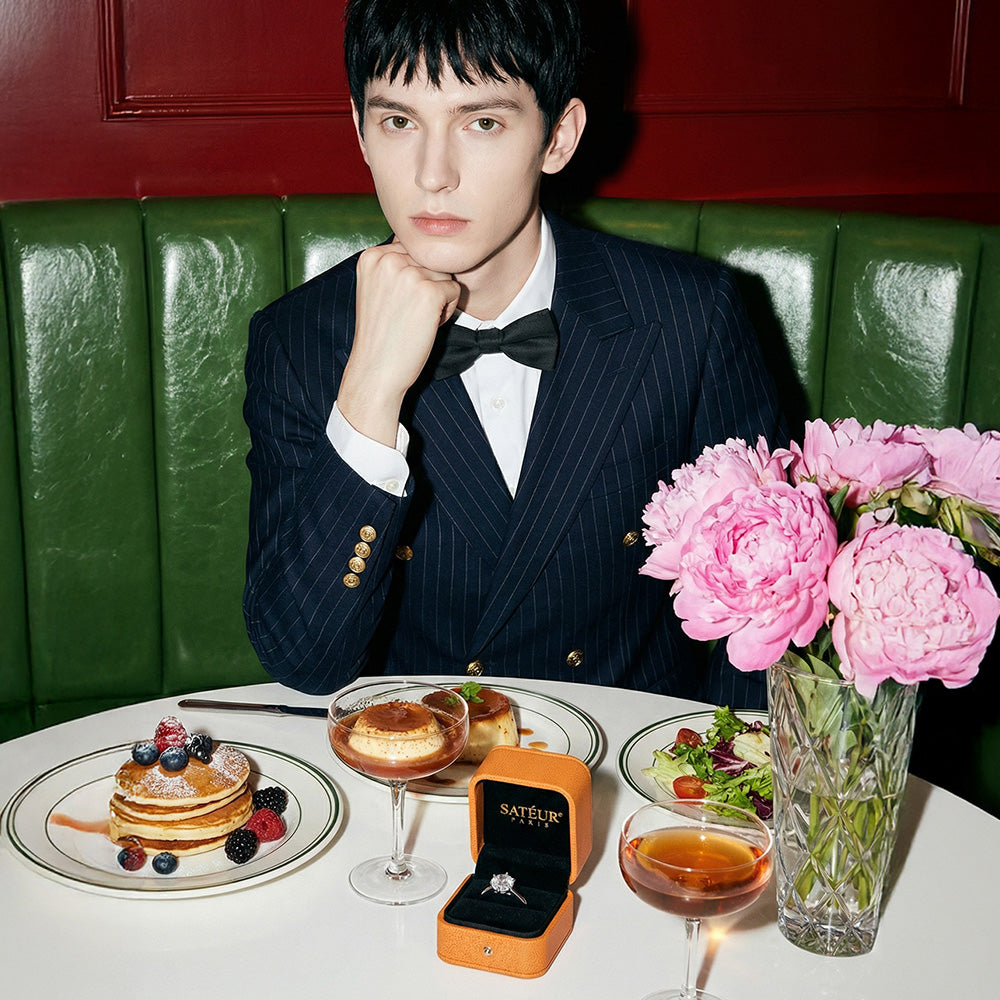
Satéur ships worldwide with full tracking, offers a 30-day return policy, and includes the orange Satéur box with every order.

Satéur Destinée Diamond Ring™
The look of a flawless diamond — from $138.
D-E colour · Excellent cut · 18k gold finish
Free worldwide delivery. 30-day returns. Lifetime Satéur Care.
Shop the Destinée Diamond RingFree worldwide shipping · 30-day returns · Lifetime Satéur Care
Frequently Asked Questions
What is the difference between a lab-grown diamond and a mined diamond?
The origin. Lab-grown diamonds are produced in a controlled laboratory environment using CVD or HPHT technology; mined diamonds crystallise deep within the earth over hundreds of millions of years. In every measurable property — chemical composition, crystal structure, Mohs hardness of 10, refractive index of ~2.42 — they are identical. Both are graded by IGI and GIA on the same 4Cs scale.
Are lab-grown diamonds real diamonds?
Yes. Lab-grown diamonds are chemically and physically identical to mined diamonds — pure carbon in a cubic crystal lattice at Mohs 10. The US Federal Trade Commission formally recognised lab-grown diamonds as real diamonds in its 2018 jewellery guidelines revision. A lab-grown diamond is not a simulant; it is the same material as a mined diamond.
How are lab-grown diamonds certified?
Lab-grown diamonds are submitted to independent gemological laboratories — most commonly IGI (International Gemological Institute) or GIA (Gemological Institute of America) — which grade each stone on colour, clarity, cut, and carat weight using the same criteria applied to mined diamonds. The resulting certificate includes a unique report number laser-inscribed on the diamond's girdle for permanent identification.
What are the 4Cs for lab-grown diamonds?
Identical to those for mined diamonds. Colour is graded D (colourless) to Z (light tint); clarity from Flawless to Included; cut from Excellent to Poor; carat weight in metric carats (0.2g per carat). Satéur's Destinée Diamond Ring™ specifies D–E colour and Excellent cut as standard — the top tier on both scales.
Can you see a visible difference between a lab-grown and mined diamond?
No — to the naked eye, a lab-grown diamond and a mined diamond of equivalent grade are visually indistinguishable. Both display the same crisp white brilliance and fire characteristic of a well-cut diamond. Distinguishing the two requires advanced spectroscopic analysis of trace growth characteristics — a process only available at specialist grading laboratories.
Why is a lab-grown diamond more affordable than a mined diamond?
Supply and production efficiency. Lab-grown diamonds are produced in weeks to months in controlled facilities rather than extracted from finite geological deposits over long timelines with significant operational costs. The result is a 40–60% reduction in retail price for equivalent certified quality — without any compromise to the gem's physical or optical properties.
What is a lab created diamond?
A lab created diamond is another term for a lab-grown diamond — a real diamond produced in a laboratory using CVD (chemical vapour deposition) or HPHT (high pressure, high temperature) technology. The terms lab-created, lab-grown, lab-made, and man-made diamond are used interchangeably by the industry and gemological bodies to refer to the same category of certified real diamond.
How do lab diamonds compare in quality to mined diamonds?
Lab diamonds achieve the same quality grades as mined diamonds, including D-colour (top of the colourless scale), Flawless clarity, and Excellent cut. Quality is determined by the finished gem's specifications and verified by an independent grading certificate — not by the production method. A D-colour Excellent-cut IGI-certified lab-grown diamond meets the same quality standard as a mined diamond with identical grading.
What diamond shapes are popular for engagement rings?
Round brilliant is the most requested shape — 57 facets optimised for maximum light return and the most forgiving choice for inclusions. Oval, cushion, princess, and emerald cuts are the next most popular. Oval elongates the appearance of the finger; emerald's step-cut facets reward high clarity stones; cushion suits vintage-style settings. Shape preference is a personal aesthetic decision rather than a quality indicator.
Are lab diamonds certified and graded?
Yes. IGI and GIA both issue full grading reports for lab-grown diamonds using identical methodology to their mined diamond reports. The certificate documents 4Cs grades, proportions, fluorescence, and a statement confirming the gem is laboratory-grown. Satéur's lab-grown diamond rings carry IGI certification as standard.
How should I care for a lab diamond engagement ring?
Routine cleaning: soak in warm water with mild dish soap for two to three minutes, brush gently with a soft toothbrush around the setting, rinse thoroughly, and dry with a lint-free cloth. At Mohs 10, the diamond itself will not scratch under normal wear. The metal setting benefits from occasional professional inspection to check prong integrity, particularly for rings worn daily.















Leave a comment
This site is protected by hCaptcha and the hCaptcha Privacy Policy and Terms of Service apply.