



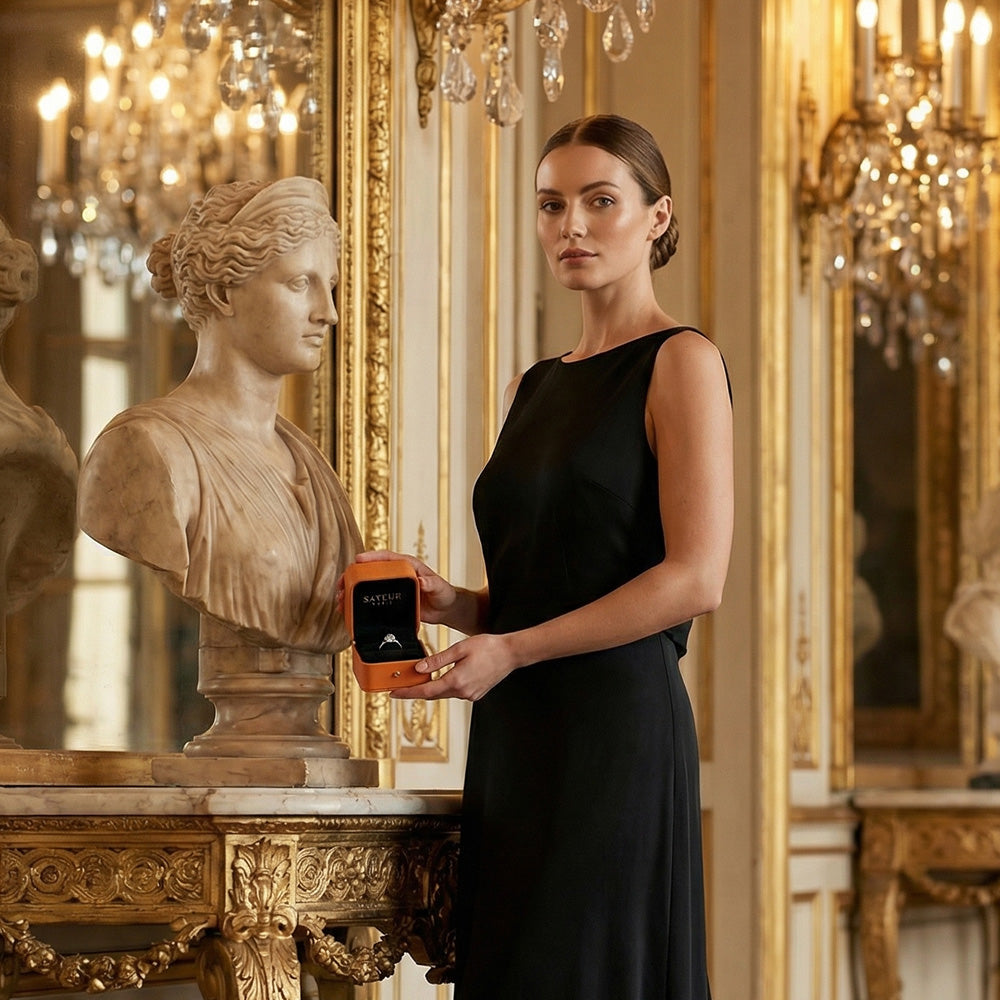

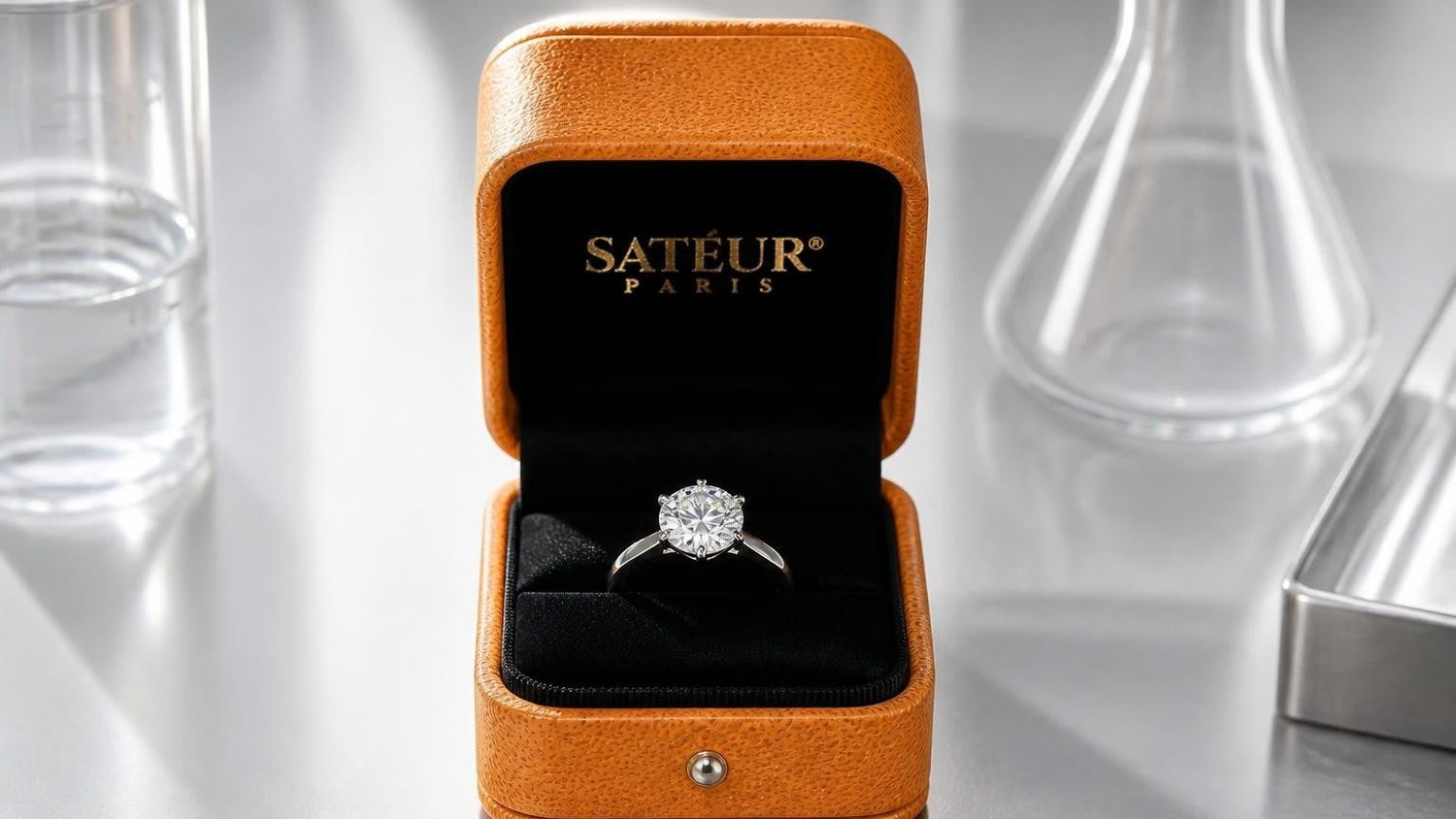
Lab-grown diamonds are real diamonds — chemically, physically, and optically identical to mined stones, certified as such by the FTC and graded by the IGI. They typically cost 40–60% less than a comparable mined diamond of the same carat weight and clarity, making them the most direct value alternative for buyers who want a certified diamond without the mined-earth premium.
Key Takeaways
- Lab-grown diamonds are certified real diamonds by the FTC, with identical crystal structure, hardness, and optical properties to mined diamonds.
- Lab diamonds typically cost 40–60% less than comparable mined diamonds of the same carat weight and clarity grade.
- Lab diamonds achieve D–E colour grades and Excellent cut with a hardness of 9.25 on the Mohs scale — identical to mined.
- Lab diamonds are created via HPHT or CVD processes in controlled environments, taking weeks to months rather than billions of years.
- Lab diamonds exhibit the same optical properties and durability as mined diamonds for everyday and heirloom wear, and are IGI-certifiable.
Lab Grown vs Traditional Diamonds
Are They the Same Gem?
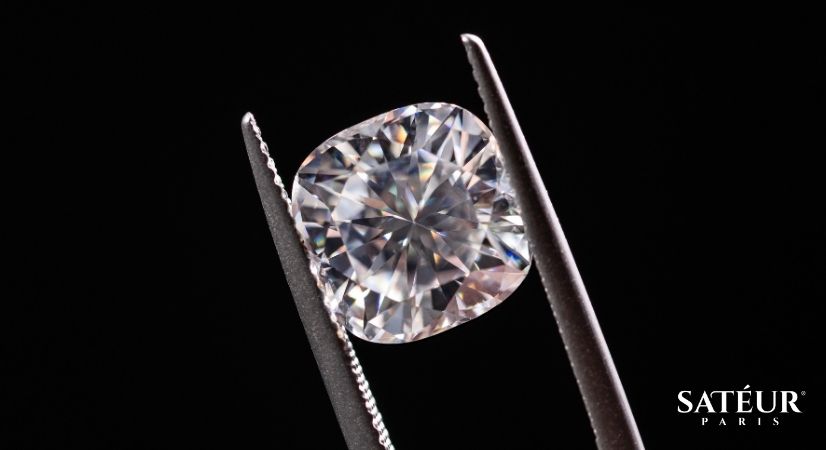
The phrase "lab grown vs traditional diamonds" often implies a trade-off — but in most measurable respects, the two are the same gem. Both are pure crystallised carbon in cubic form, both register 9.25 on the Mohs hardness scale, both produce the same crisp white light dispersion, and both can achieve D–E colour and Excellent cut grades under the same international grading standards. The single difference is provenance: one formed over billions of years underground; the other in a controlled facility over weeks.
Where the Price Gap Comes From
What changes between them is price and supply chain. A 1-carat mined diamond of D colour and VS1 clarity typically retails in the $4,000–$8,000 range depending on cut and origin. An equivalent IGI-certified lab diamond of the same grades typically sits 40–60% lower. That gap is the central fact of the lab-grown diamond market.

What is a Lab Created Diamond?
Definition and FTC Classification
A lab-created diamond is a diamond grown in a controlled environment using one of two industrial processes. The gemstone is chemically, physically, and optically identical to a mined diamond — it is carbon in the same cubic crystal structure, not a simulant and not a synthetic substitute. Under a standard gemological microscope, the two are visually indistinguishable to the naked eye.
The FTC officially classifies lab-grown diamonds as diamonds (with no modifier required, beyond disclosure of origin). The IGI — International Gemological Institute — grades lab diamonds on the same 4C scale used for mined stones, issuing a full certificate recording cut, colour, clarity, carat weight, and the growth method.
Key Properties
- Same hardness: 9.25 on the Mohs scale — identical to mined diamond
- Same refractive index: 2.42, producing the same characteristic brilliance
- Same fire: dispersion value 0.044, the same crisp white and spectral flash
- Same chemical formula: pure carbon, cubic crystal system (C)
- Same durability: fully suitable for heirloom and everyday wear
How Lab Diamonds Are Made
HPHT: High Pressure High Temperature
Two methods produce the majority of gem-quality lab diamonds at commercial scale.
HPHT (High Pressure High Temperature) replicates the conditions deep in the earth's mantle. A carbon source is subjected to pressures of 1.5 million pounds per square inch and temperatures exceeding 1,400°C, causing diamond crystallisation around a seed crystal over days to weeks. The process produces diamonds with the same inclusions profile and crystal growth patterns as mined stones.
CVD: Chemical Vapour Deposition
CVD (Chemical Vapour Deposition) places a diamond seed crystal in a chamber filled with carbon-rich gas at lower pressures. Microwave or radio-frequency energy breaks down the gas, and carbon atoms precipitate layer by layer onto the seed, building up a diamond crystal over several weeks. CVD diamonds often achieve higher colour grades, as the low-pressure environment limits nitrogen incorporation.
Certification After Growth
Both methods are independently verifiable via IGI grading. The method of growth is noted on the certificate but has no bearing on the gem's optical or durability properties.
Lab Diamond vs Mined Diamond: Key Differences
Side-by-Side Comparison
Setting aside origin, the practical differences between lab and mined are narrow. The table below covers the factors buyers typically weigh.
| Factor | Mined Diamond | Lab Diamond |
|---|---|---|
| Chemical composition | Pure carbon (cubic) | Pure carbon (cubic) — identical |
| Hardness (Mohs) | 9.25 | 9.25 — identical |
| Refractive index | 2.42 | 2.42 — identical |
| Certification | GIA, IGI | IGI (same grading scale) |
| Colour grades available | D–Z range | D–E commonly available |
| Typical retail price (1 ct, D/VS1) | $4,000–$8,000 | $1,600–$3,500 |
| Resale value | 10–30% of retail | Lower; improving market |
| Visual appearance | Crisp white brilliance | Identical to the naked eye |
| Environmental sourcing | Open-pit or underground mining | Controlled lab environment |

Price Comparison: Lab and Natural Diamonds
The 40–60% Savings Rule
The price differential between lab and mined diamonds widened significantly from 2020 onward as lab-diamond production scaled. The savings are consistent across carat weights: lab diamonds typically run 40–60% below equivalent mined stones on the primary market, and that gap is currently stable rather than narrowing.
What That Means by Carat Weight
For perspective on what that means in practice:
- A 1-carat mined diamond of D colour and VS1 clarity: $4,000–$8,000 retail
- An IGI-certified 1-carat lab diamond of equivalent grades: $1,600–$3,500 retail
- A 2-carat mined diamond of comparable quality: $16,000–$30,000+
- A 2-carat lab diamond of comparable quality: $5,000–$10,000 range
The savings become more pronounced at higher carat weights because the mined-diamond market prices rarity exponentially. A 3-carat mined diamond is not three times the price of a 1-carat — it is often six to ten times. Lab production removes the scarcity premium entirely, which is where the 40–60% figure understates the savings at larger sizes.
For a deeper comparison of the lab-diamond vs natural-diamond market, the lab grown vs natural diamond guide covers grading, resale, and long-term market dynamics in full.
Durability and Longevity of Lab Diamonds
Hardness and Everyday Wear
Lab diamonds wear identically to mined diamonds because they are the same material. At 9.25 on the Mohs hardness scale, a diamond — lab or mined — is harder than sapphire (9.0), harder than topaz (8.0), and the hardest commercially worn gemstone category. It does not scratch under normal wear conditions, does not cloud over time, and does not require any special care beyond standard jewellery maintenance.
Do Lab Diamonds Degrade Over Time?
Longevity concerns are sometimes raised about lab diamonds — these are not supported by the material science. The crystal structure is identical; there is no mechanism by which a lab diamond would degrade at a different rate than a mined diamond. Both are suitable for everyday wear, including engagement rings intended for multi-generational use.

The one genuine consideration for lab diamonds is resale value. The secondary market for lab diamonds is thinner than for mined stones, and resale prices are lower. For buyers who view jewellery as a financial asset, this matters. For buyers who view an engagement ring as a gem to wear rather than liquidate, it does not — the gem on the finger performs identically regardless of its origin notation on a certificate.
For the full breakdown of how lab diamonds compare to the broader diamond-alternative landscape, the guide to real vs synthetic diamonds explains where lab diamonds sit in relation to simulants and other alternatives.
The Satéur Advantage: Lab Diamond Value
IGI-Certified at a Fraction of the Mined Price
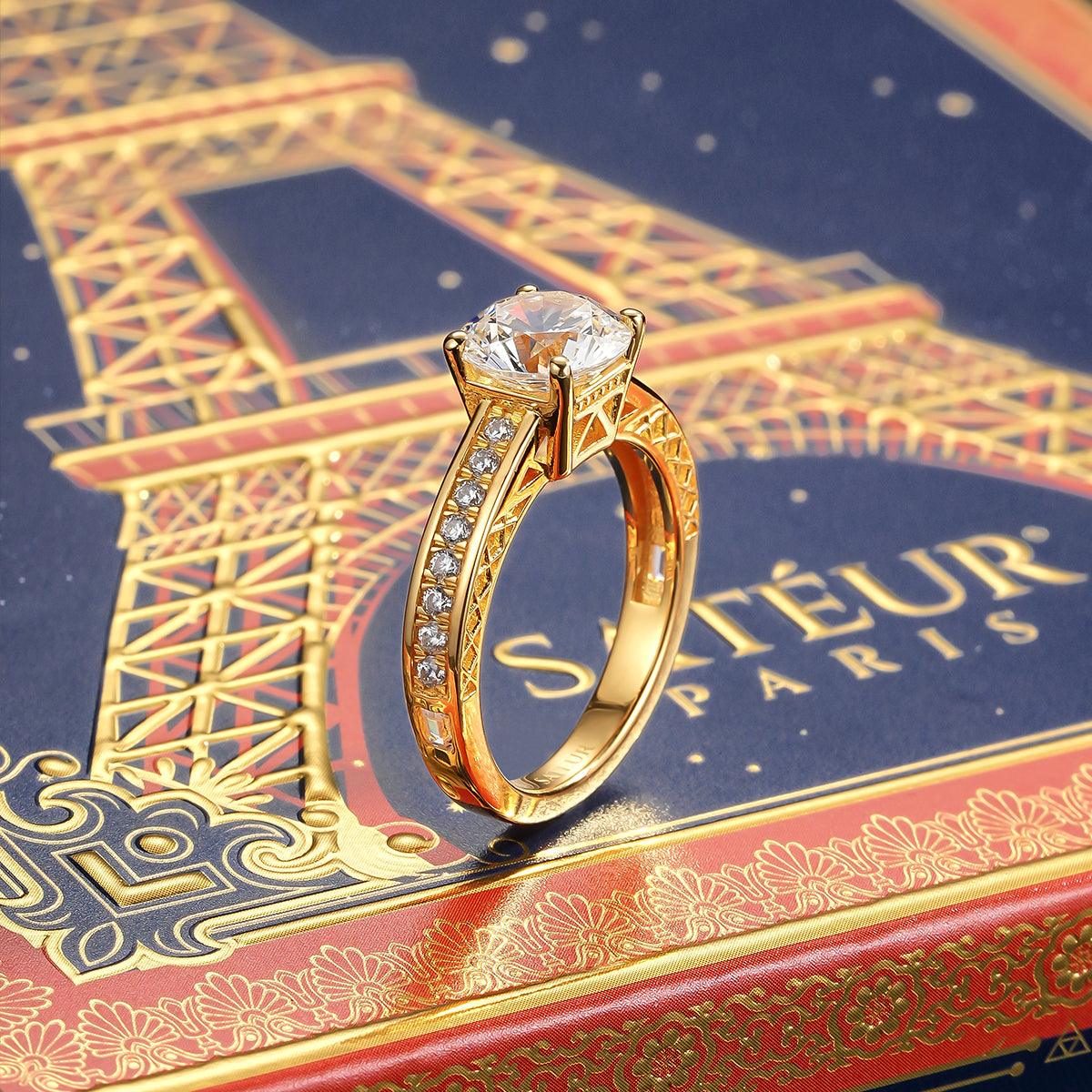
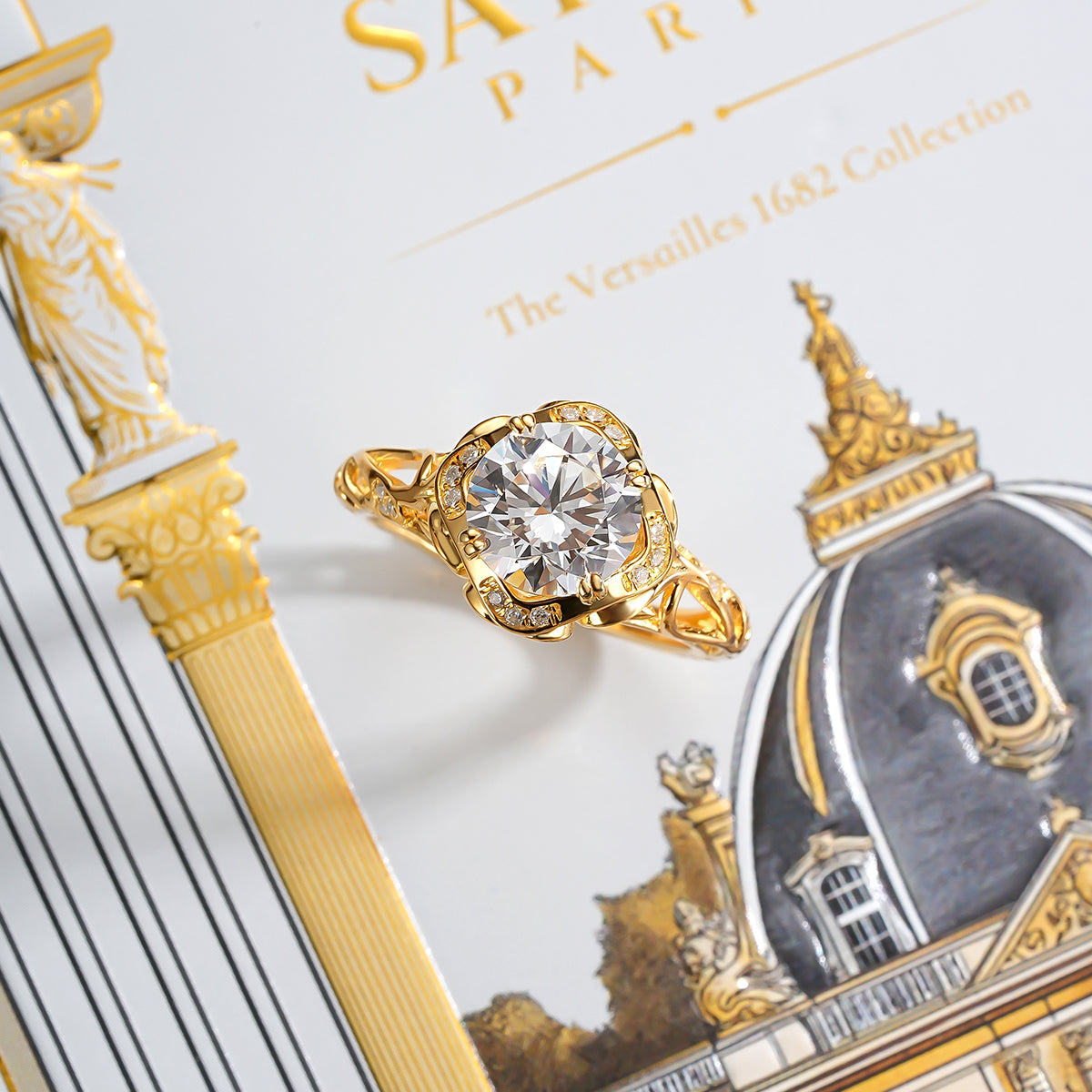
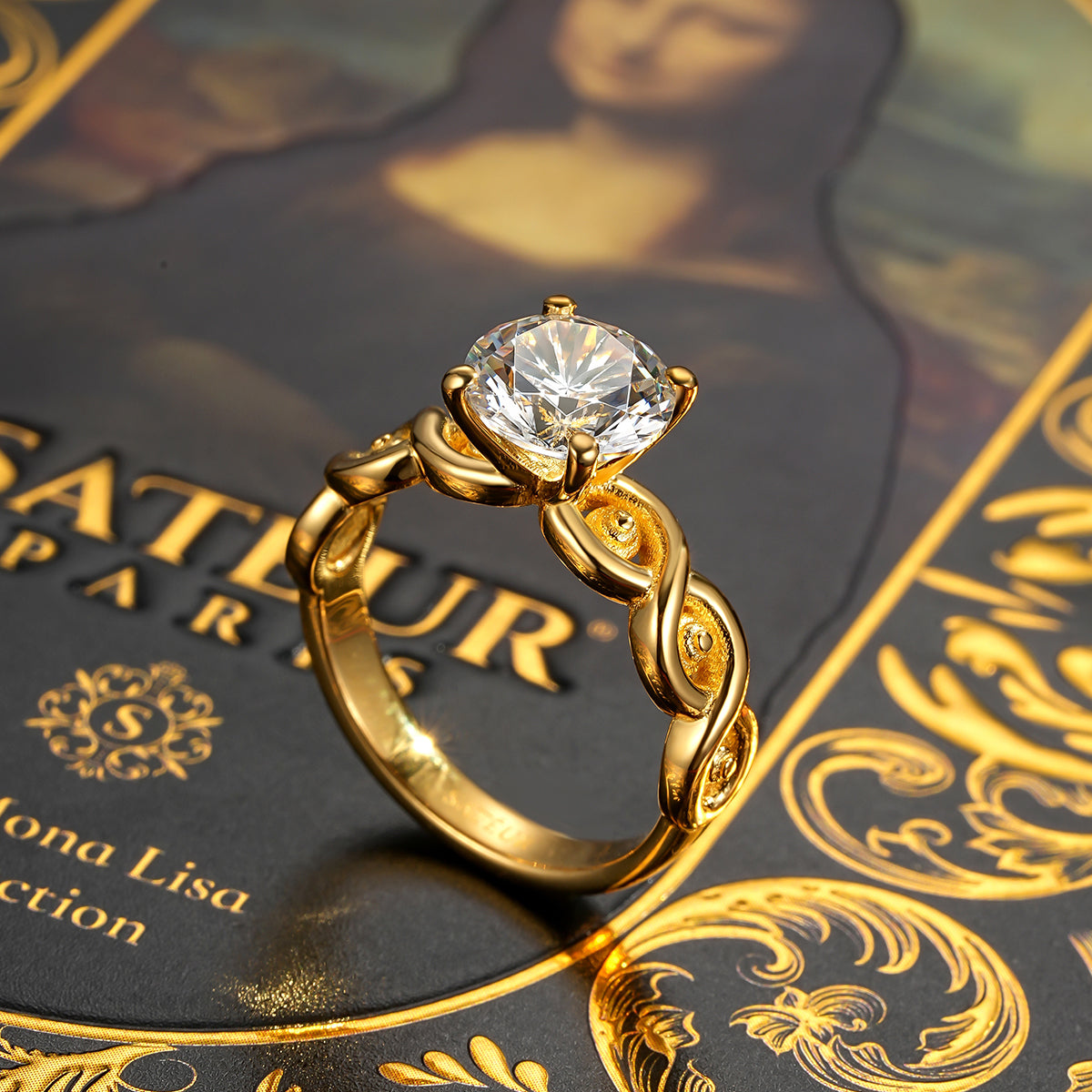
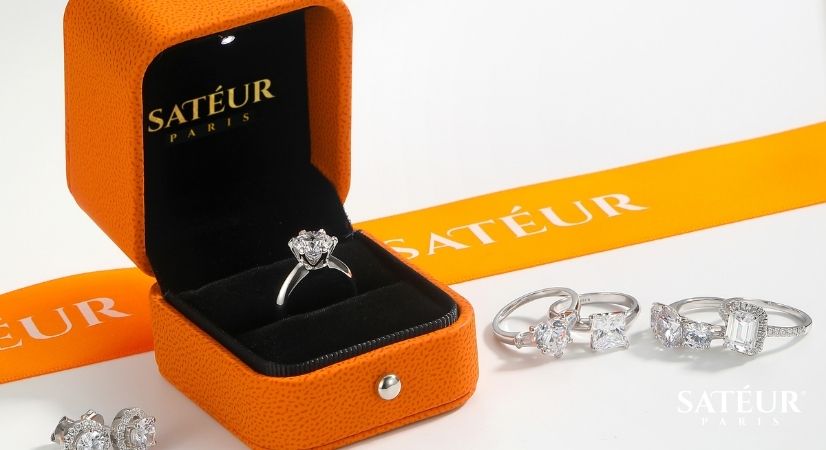
Satéur's lab-diamond tier is IGI-certified, 18k white gold finish, and priced to put a 1-carat certified diamond on the hand at a fraction of what the same carat weight costs from a traditional jeweller. The Satéur Destinée Diamond Ring™ starts at $1,098 — compare that to the $4,000–$8,000 typical retail range for a mined equivalent of the same carat weight and cut grade.
The 1% Value Principle
The 1% framing holds here: the look of a certified, graded diamond, for roughly 1% of what the highest-tier mined stones command. The gem itself is real — the IGI certificate confirms it. The savings come from removing the mining extraction cost, the supply chain premium, and the retailer margin that inflates the mined-diamond market.
Browse the full lab diamond rings collection for the complete range of carat weights and settings available with IGI certification.
For buyers considering the full spectrum of diamond alternatives — from lab diamonds through to moissanite and other simulant tiers — the what is a lab grown diamond guide provides a detailed overview of all available options and how they differ.

Satéur Destinée Diamond Ring™
The look of a flawless diamond — from $138.
D-E colour · Excellent cut · IGI-certified lab diamond
Free worldwide delivery. 30-day returns. Lifetime Satéur Care.
Shop the Destinée Diamond RingFree worldwide shipping · 30-day returns · Lifetime Satéur Care
FAQ: Lab Diamonds Answered
Common Questions on Lab vs Mined Diamonds
What is the difference between a lab-grown diamond and a mined diamond?
The only difference is origin. A lab-grown diamond is created in a controlled facility using HPHT or CVD technology, while a mined diamond forms underground over billions of years. Both are chemically and physically identical — pure carbon in cubic crystal form — with the same hardness (9.25 Mohs), the same refractive index (2.42), and the same optical appearance to the naked eye. Lab diamonds cost 40–60% less than comparable mined stones of the same carat, colour, and clarity grade.
Are lab-grown diamonds real diamonds?
Yes. The FTC officially classifies lab-grown diamonds as diamonds, with no distinction in composition or gemological properties from mined diamonds. Both share the same crystal structure, hardness, and optical characteristics. A lab diamond is not a simulant (such as cubic zirconia or moissanite) — it is a diamond grown in a laboratory rather than extracted from the earth.
How much less expensive are lab diamonds compared to mined diamonds?
Lab diamonds typically cost 40–60% less than mined diamonds of equivalent carat weight, colour, and clarity. At larger sizes (2 carats and above), the savings can be greater because mined-diamond pricing scales exponentially with rarity. A 1-carat lab diamond of D colour and VS1 clarity might retail in the $1,600–$3,500 range; a mined equivalent typically sits at $4,000–$8,000 depending on cut and provenance.
Do lab diamonds last as long as natural diamonds?
Yes. Lab diamonds have identical durability to mined diamonds — 9.25 on the Mohs scale, the hardest commercially available gemstone. The crystal structure is the same, so the gem does not degrade, cloud, or scratch under normal wear conditions. Lab diamonds are fully suitable for everyday wear and for jewellery intended to last multiple generations.
What certifications should I look for when buying a lab diamond?
The IGI (International Gemological Institute) is the primary grading body for lab-grown diamonds, issuing full certificates covering cut, colour, clarity, carat weight, and growth method. GIA also grades lab diamonds. A legitimate lab-diamond purchase should include an IGI or GIA certificate number linked to the specific stone, confirming its grade on the same 4C system used for mined diamonds.
Can a jeweller tell the difference between a lab diamond and a mined diamond?
Visually, with the naked eye, a lab diamond and a mined diamond of equivalent grade are indistinguishable. Specialist instruments in a gemological laboratory can detect certain growth characteristics, but the two gems look identical to the naked eye under normal viewing and wearing conditions. The IGI certificate confirms the origin on record.















Leave a comment
This site is protected by hCaptcha and the hCaptcha Privacy Policy and Terms of Service apply.