





Dedicated jewelry insurance typically costs 1–2% of the ring's appraised value per year — for a $5,000 mined-diamond ring, that is $50–$100 annually for a policy that covers loss, theft, damage, and mysterious disappearance. Standard homeowners or renters insurance often provides only limited scheduled coverage or applies a high deductible that makes small claims impractical. Understanding the difference between these two routes is the first step to protecting any ring properly.
Key Takeaways
- Jewelry insurance typically costs 1–2% of the item's appraised value per year, making it an accessible protection layer.
- Coverage options commonly include theft, loss, accidental damage, and mysterious disappearance, depending on the policy.
- A professional appraisal — or a formal receipt for newer purchases — is required before most insurers will bind coverage.
- Sixty per cent of engagement ring owners carry no dedicated ring insurance, leaving a significant gap in protection.
- The lower replacement cost of a diamond-simulant ring, such as the Satéur Destinée Ring™ from $68, makes insurance budgets considerably more flexible without sacrificing the look of a flawless diamond.

Why Engagement Ring Insurance Matters
An engagement ring is one of the highest-value items most people own — and one of the most mobile. Homeowners or renters insurance typically includes a jewellery sub-limit of $1,000–$2,500, which is often insufficient. Standard policies also require proof of a covered peril; a ring that simply disappears is usually excluded without a dedicated mysterious-disappearance rider.
What dedicated coverage adds
Standalone jewelry insurance closes these gaps: broader perils, agreed-value settlement, and no requirement to prove how the loss occurred.
Who actually carries ring insurance
Roughly 60% of engagement ring owners carry no dedicated ring coverage. Many assume a homeowners policy is sufficient; others postpone. The practical window to arrange coverage is the first thirty days after purchase, while the receipt or appraisal is fresh.
What Does Engagement Ring Coverage Include

Covered perils
Comprehensive jewelry insurance typically covers: theft (confirmed burglary or robbery), accidental damage (a prong broken in a fall, a stone chipped), loss (ring goes missing without explanation), mysterious disappearance (no known cause — the peril most often excluded by homeowners policies), and flood or fire as named perils in standalone products.
What is typically excluded
Intentional acts, normal wear and tear, and cosmetic damage that does not affect the setting's integrity are usually excluded. Gradual degradation — a prong worn thin over years — is a maintenance matter rather than an insurable event.
Agreed value and worldwide scope
Agreed-value policies pay the insured amount in full, without depreciation — strongly preferable to actual-cash-value policies, which deduct depreciation and often settle below replacement cost. Many standalone policies also cover the ring worldwide; homeowners riders may limit coverage to your primary residence. Confirm geographic scope before binding if you travel internationally.
How Much Does Ring Insurance Cost
The benchmark rate
The general industry benchmark is 1–2% of the ring's insured value per year. A ring appraised at $3,000 typically costs $30–$60 per year; a $10,000 ring costs $100–$200 annually. Rates vary by insurer, location, deductible, and policy type.
Factors that affect the premium
- Appraised value — the primary driver. Higher value equals higher premium.
- Deductible — choosing a modest deductible (e.g. $250) raises the premium slightly; choosing no deductible raises it more. Higher deductibles lower the premium.
- Location — theft rates in your ZIP code influence the premium for theft coverage.
- Safe storage — some insurers offer a small discount if you store the ring in a home safe when not worn.
- Claims history — a prior jewelry claim may affect renewal rates.
Homeowners rider versus standalone policy
A homeowners rider schedules the ring beyond the standard sub-limit and consolidates billing, but coverage is often narrower — particularly around mysterious disappearance and worldwide travel. Standalone jewelry insurance typically offers broader perils, agreed-value settlement, and no-deductible options at a comparable premium. The right choice depends on the policy's actual language, not its label.
Appraisal requirements and cost
Most insurers require a professional appraisal before binding standalone coverage. Independent appraisals typically cost $50–$150 for a single piece. The appraisal should document the metal type, gem type, estimated replacement cost, and any identifying characteristics. For newly purchased rings, many insurers accept the purchase receipt in lieu of a formal appraisal for the first policy term. Update the appraisal every three to five years as replacement costs change.
Satéur Gems®: Diamond-Look Value Without the Premium Price

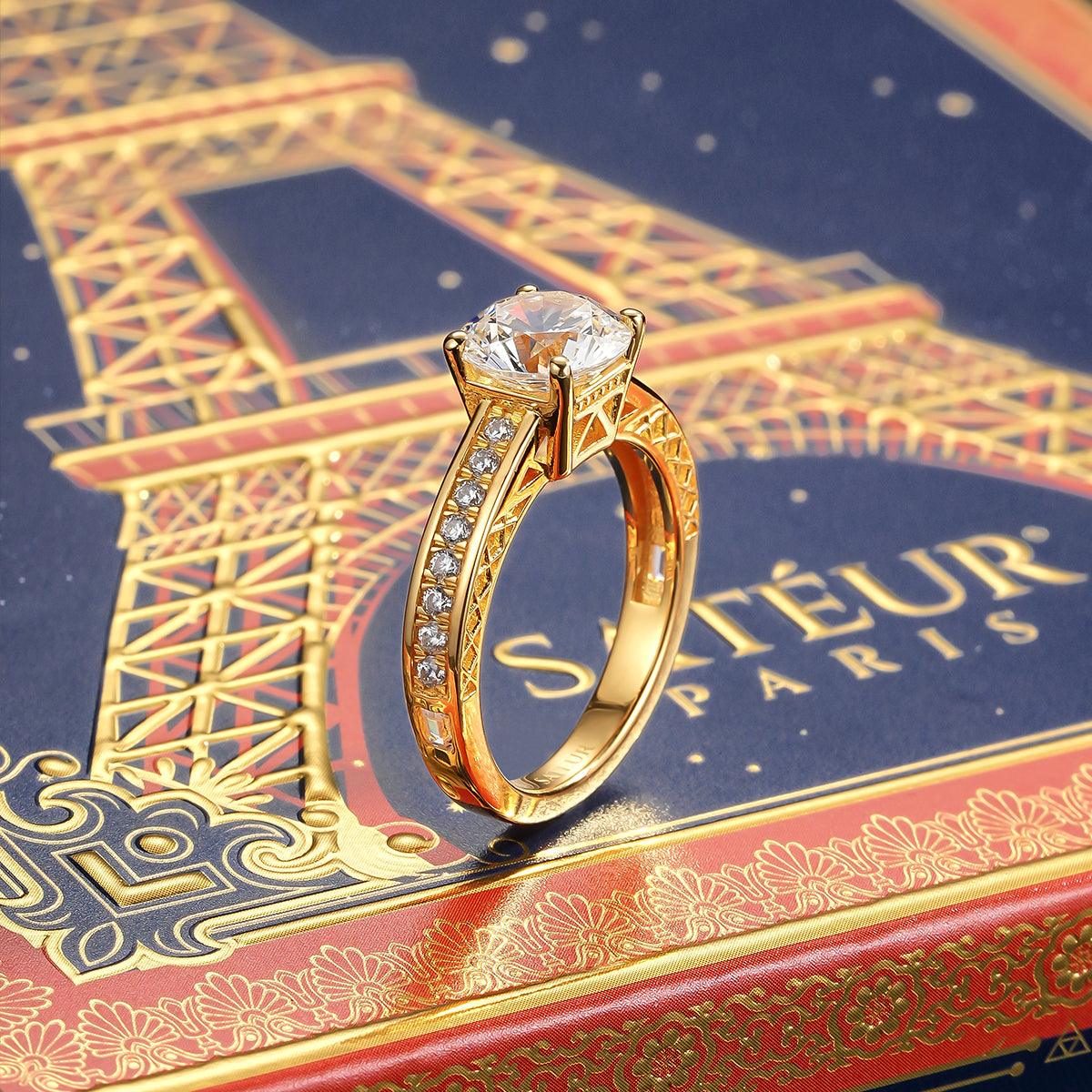
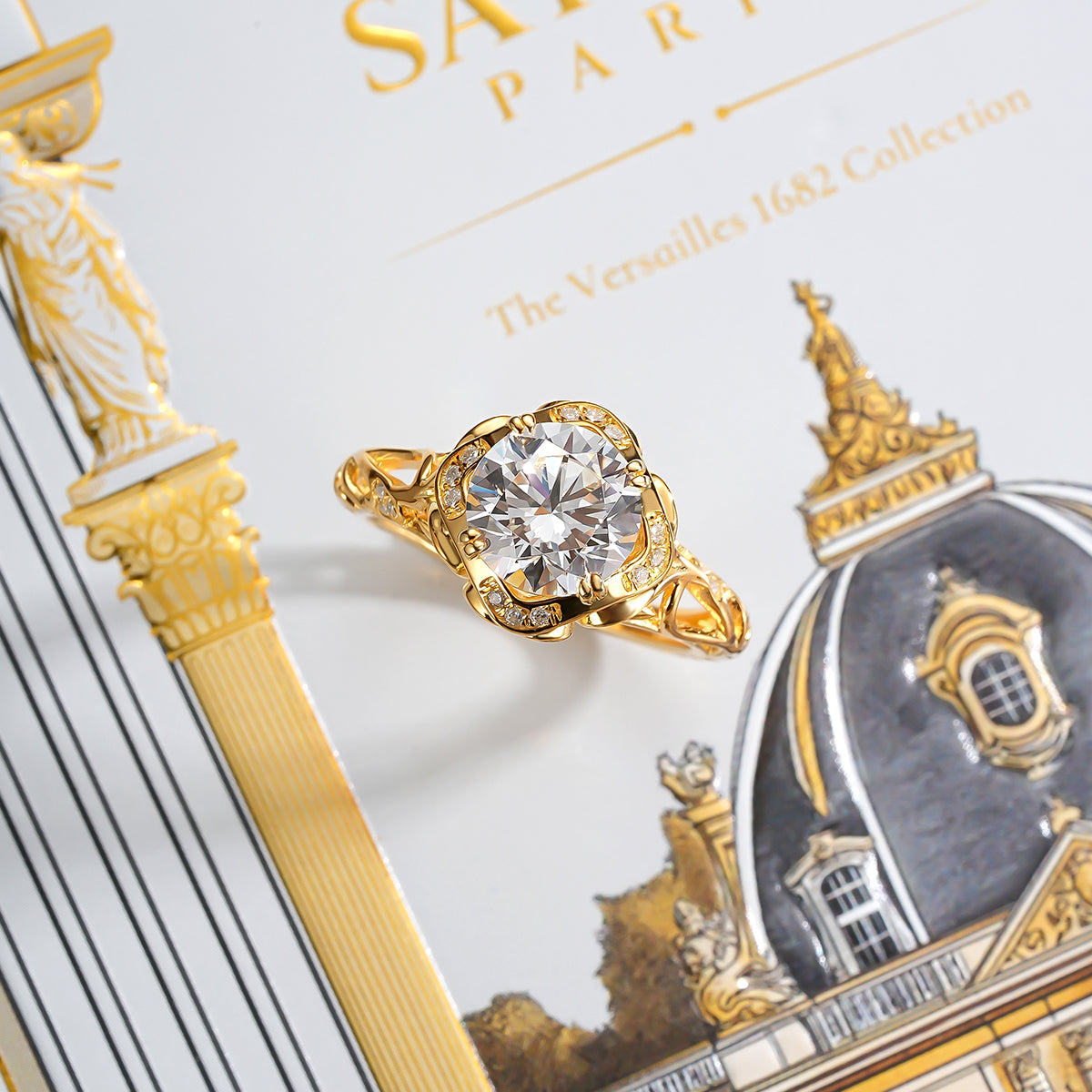
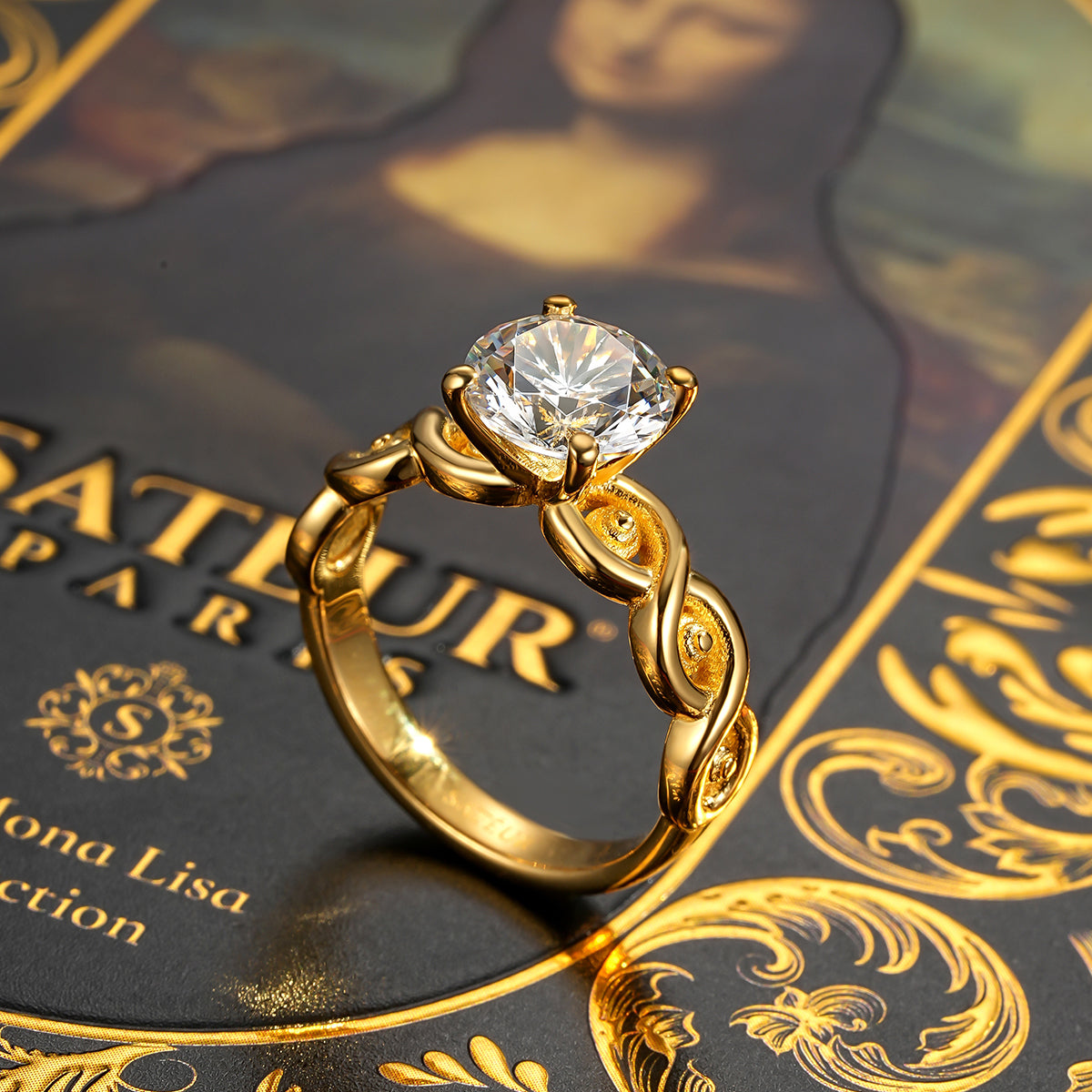
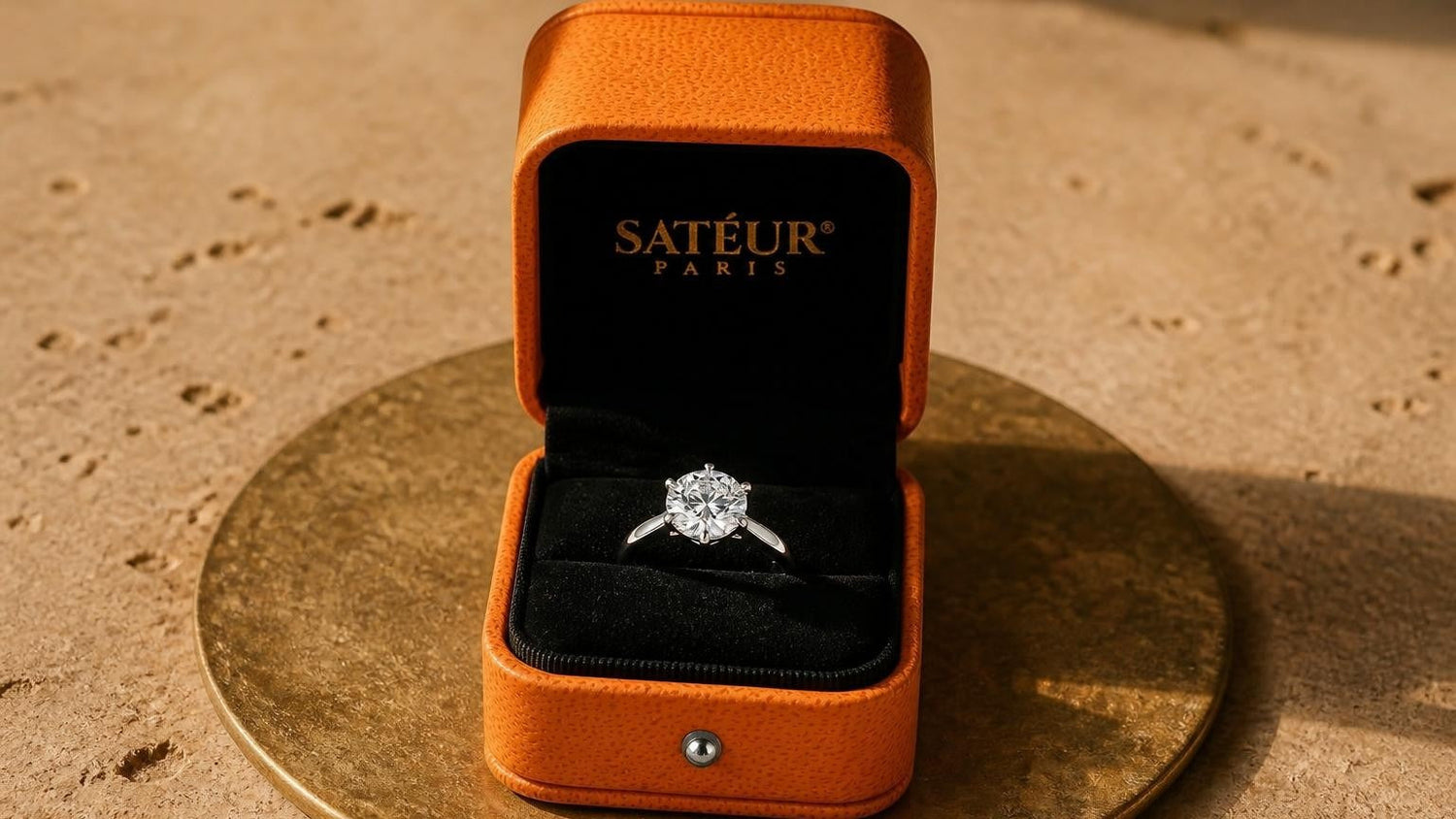
One of the most practical advantages of a Satéur Gems® ring is the effect it has on insurance cost. Satéur Gems® are a trademarked diamond simulant that delivers D–E colour, Excellent cut, and a clean white brilliance visually indistinguishable from a flawless diamond with the naked eye — at approximately 1% of the cost of a comparable mined diamond. The Satéur engagement ring collection starts from $68.
For insurance purposes, the insured value tracks the replacement cost. A ring with a $68 replacement cost requires a premium of roughly $1–2 per year at the 1–2% benchmark — a fraction of the annual premium for a mined-diamond ring of equivalent visual presence. Couples who choose Satéur Gems® effectively redirect thousands of dollars away from both the purchase price and the ongoing insurance premium.
Lifetime Satéur Care versus insurance
Lifetime Satéur Care is a maintenance and care commitment — not an insurance policy. It does not replace a lost or stolen ring. For loss, theft, or accidental damage, a conventional jewelry insurance policy remains the appropriate vehicle. At a $68–$138 replacement cost, the annual premium is genuinely minimal.
Specs for your appraisal
For a Satéur Gems® ring the relevant documented characteristics are: D–E colour equivalent, Excellent cut, Mohs hardness ~8.8, 18k gold finish setting. The appraiser assigns a replacement value from current market cost — the figure your insurer uses to set the premium and agreed value.

For further context on ring cost and value, the average engagement ring cost guide and the engagement ring cost guide both offer detailed breakdowns of how spending benchmarks have shifted. The how much to spend on an engagement ring guide addresses the budgeting decision directly.
Is Jewelry Insurance Worth the Investment
The cost-benefit case
For most rings valued at $500 or more, dedicated jewelry insurance is cost-effective. At 1–2% per year, the mathematical break-even is 50–100 years — in practice, rings are lost or stolen far more frequently. Coverage makes most sense when the ring is worn daily, travels with you, or the replacement cost exceeds your immediate available budget.
Lower-cost rings
For rings with a low replacement cost — particularly Satéur Gems® pieces from $68 — the arithmetic shifts. Some owners choose to self-insure; others prefer formal coverage for the peace of mind. Neither is objectively wrong at this price tier.
How to File a Claim on Your Ring
If your ring is lost, stolen, or damaged, act promptly — most policies require notification within 30 to 60 days of discovery.
Steps to follow
- Report to authorities — for theft, file a police report immediately. The report number is typically required by the insurer. For mysterious disappearance it may not be required, but filing documents when you noticed the loss.
- Contact your insurer — notify them as soon as possible via their claims line or portal. Have your policy number and appraisal or purchase receipt ready.
- Provide documentation — the insurer will request some combination of your appraisal or receipt, ring photographs if available, a written account of circumstances, and the police report for theft.
- Settlement — under an agreed-value policy, the settlement equals the insured amount, taken as cash or applied toward a replacement ring. Straightforward claims typically process within two to four weeks.
Keeping your coverage current
Update your policy whenever the ring's replacement cost changes materially — after resizing, adding stones, or upgrading the piece. An underinsured ring may receive only partial settlement. Annual review is a sound habit.

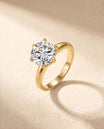
Satéur Destinée Ring™
The look of a flawless diamond — from $138.
D-E colour · Excellent cut · 18k gold finish
Free worldwide delivery. 30-day returns. Lifetime Satéur Care.
Shop the Destinée RingFree worldwide shipping · 30-day returns · Lifetime Satéur Care
Engagement Ring Insurance: Frequently Asked Questions
What does engagement ring insurance typically cover?
Comprehensive ring insurance generally covers theft, accidental damage, loss, and mysterious disappearance — the last being the most commonly excluded peril under homeowners policies. Some standalone policies also cover flood and fire. Intentional acts and normal wear and tear are typically excluded.
How much should I insure my engagement ring for?
Insure the ring for its current replacement cost — the amount required to purchase an equivalent ring today. This figure comes from a professional appraisal, which considers the metal, gem type, cut, and current market prices. For newly purchased rings, the purchase receipt often suffices for the first policy term. Review the insured value every few years as replacement costs change.
Is it cheaper to insure a diamond simulant ring than a mined diamond ring?
Yes. Insurance premiums are calculated as a percentage of the insured value — typically 1–2% per year. A ring with a replacement cost of $68–$138 costs roughly $1–3 per year to insure, compared to $100–$200 or more for a mined-diamond ring of equivalent visual size. The annual saving on premiums alone often exceeds the original price difference for buyers who keep their rings insured for many years.
Do I need a professional appraisal before insuring my ring?
Most standalone jewelry insurers require a professional appraisal or, for recent purchases, a purchase receipt. An independent appraisal typically costs $50–$150 per piece and should specify the metal, gem type, cut, and replacement value. Homeowners riders sometimes have lower documentation thresholds. Confirm requirements with your insurer before purchasing a policy.
What happens if my ring is lost or stolen?
Report theft to the police immediately and obtain a report number. Notify your insurer within the policy's notification window — usually 30 to 60 days. Provide the appraisal or purchase receipt, the police report if applicable, and a written account of the circumstances. Under an agreed-value policy, you receive the full insured amount, which can be taken as cash or used toward a replacement ring.
Can I adjust my coverage if I upgrade my ring in the future?
Yes. Contact your insurer whenever the ring's value changes materially — after resizing, adding stones, or upgrading to a new piece. An updated appraisal reflecting the new replacement cost is typically required. Failing to update coverage after an upgrade may result in partial settlement if a claim is made, because the policy would be based on the original lower value.















Leave a comment
This site is protected by hCaptcha and the hCaptcha Privacy Policy and Terms of Service apply.