



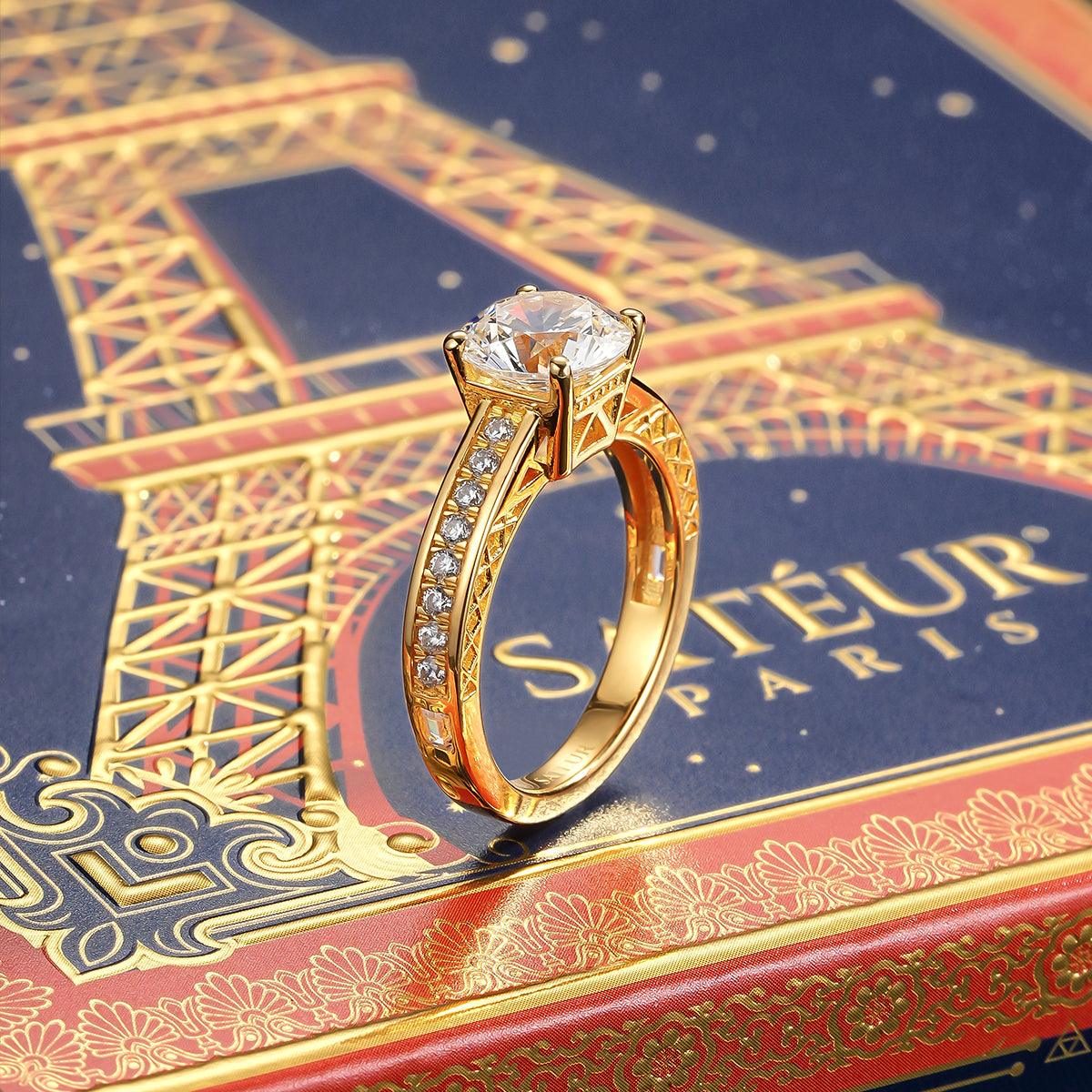
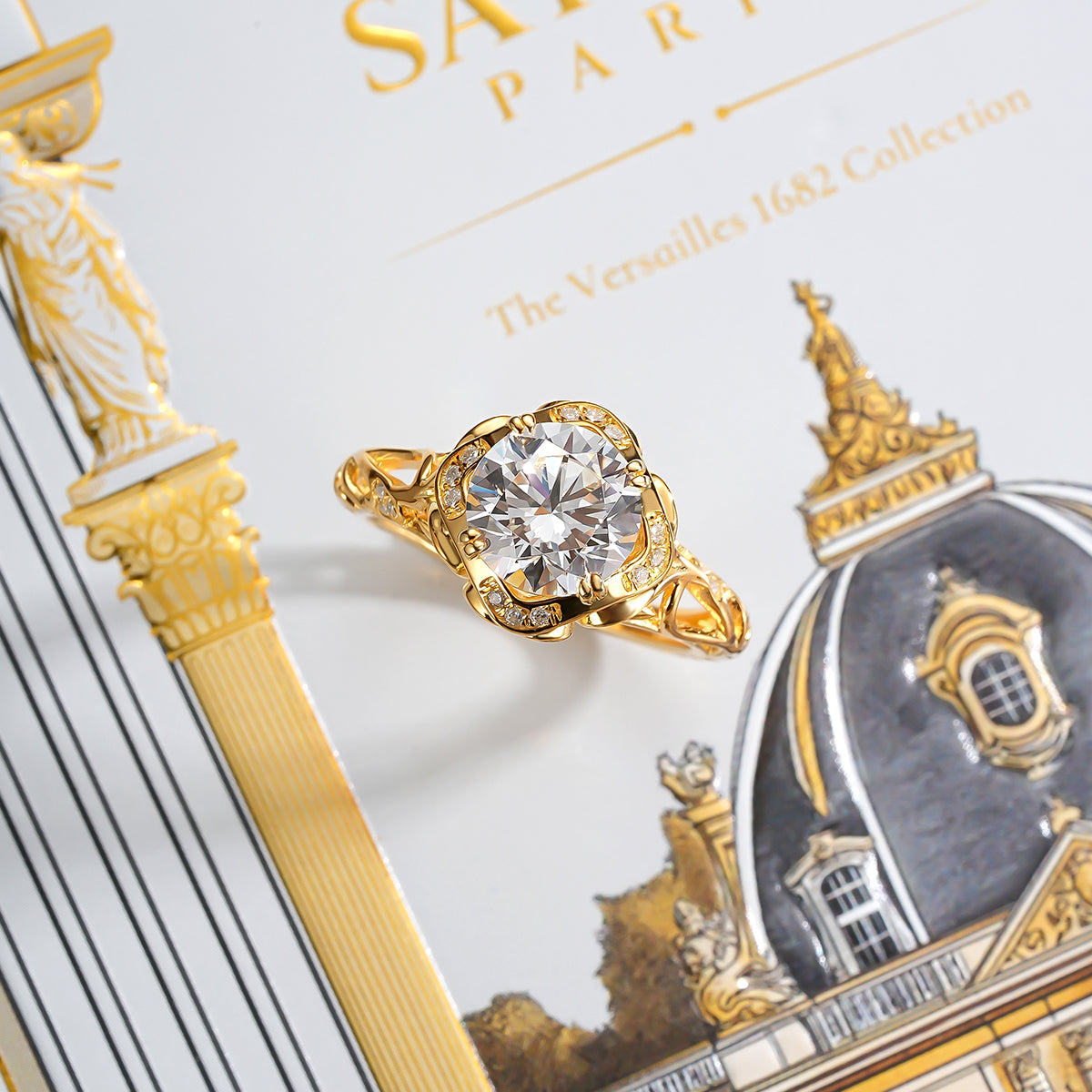
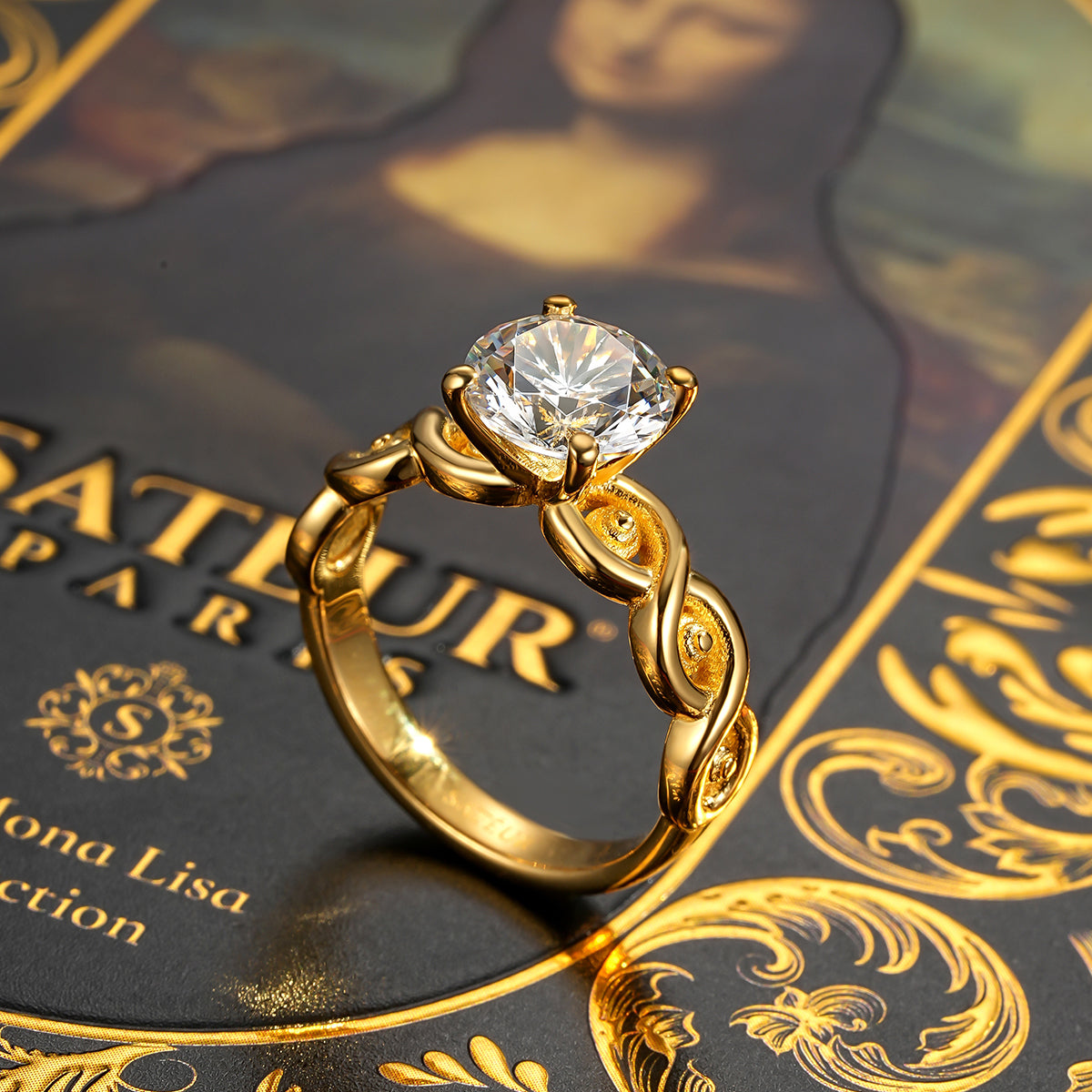


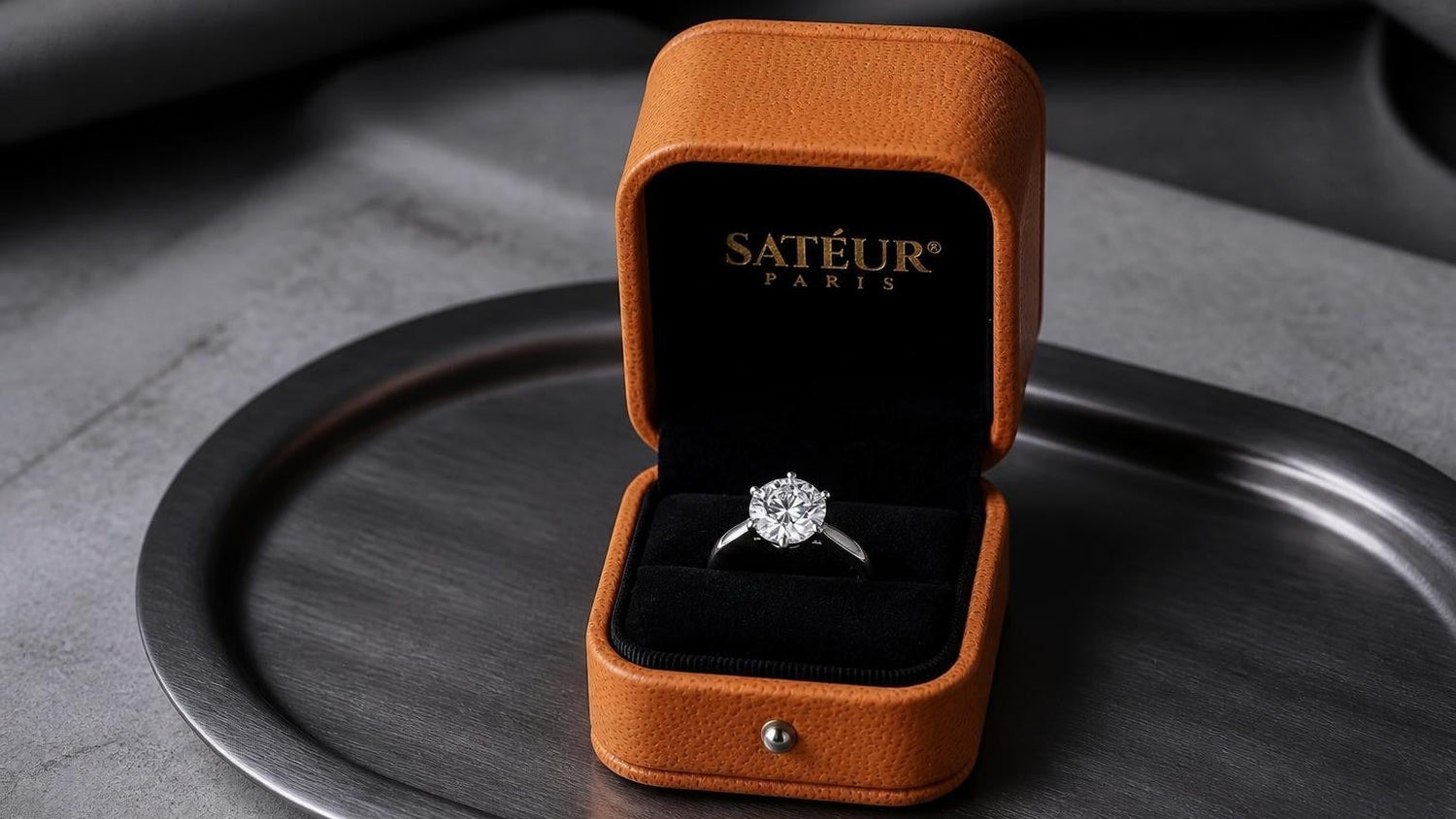
Non tarnish engagement rings are built from metals and finishes that resist oxidation under daily wear — meaning they hold their lustre without routine polishing. The strongest options are platinum, 14k solid gold, rhodium-plated sterling silver, and 18k gold finish settings. Paired with a premium gem, they deliver a ring that looks the same on year five as it did in the box.
The short answer, for those who want it: the Satéur Destinée Ring™ is set in an 18k gold finish band engineered to resist tarnish, with a round-cut Satéur Gems® centrepiece graded D–E colour and Excellent cut — the look of a flawless diamond, from $98. For buyers who want the full breakdown of metals, care, and what to look for, the guide below covers everything.

Key Takeaways
- Platinum, 14k solid gold, and 18k gold finish are the most reliable non-tarnish options for engagement ring settings.
- Satéur Gems® engagement rings deliver the appearance of a flawless diamond in D–E colour with Excellent cut, at approximately 1% of mined diamond pricing, from $98.
- Sterling silver can be made tarnish-resistant with rhodium plating, though the coating wears with prolonged daily contact.
- Diamond simulants paired with non-tarnish metals create low-maintenance rings suitable for active lifestyles and everyday wear.
- Secure prong or bezel construction protects the gem during extended wear and reduces the risk of stone loosening over time.
Non Tarnish Engagement Rings
Tarnish is a surface oxidation reaction — most common with pure silver and low-karat alloys — that produces a dark film over time, accelerated by skin oils, perfume, and chlorine. The metals that resist it best are inherently noble (platinum, gold) or carry a hard protective layer (rhodium plating). For a ring worn every day, metal choice matters as much as gem choice.
Which metals resist tarnish?
- Platinum — the most tarnish-resistant precious metal. Develops a soft patina rather than discolouring; polishes back to mirror-bright easily.
- 14k and 18k solid gold — gold itself does not oxidise. 14k and above hold their tone reliably under daily wear.
- 18k gold finish over sterling silver — a multilayer coating that gives the warmth of gold at a fraction of the cost. Highly resistant to tarnish under normal wear.
- Rhodium-plated sterling silver — rhodium is harder than platinum and tarnish-resistant, though the plating thins at contact points over years of daily use.
Why Choose a Non Tarnish Setting
An engagement ring is worn through handwashing, cooking, exercise, and sleep — environments where ordinary silver dulls within weeks. A non-tarnish setting removes that maintenance cycle entirely.

- Daily wear compatibility. Platinum and gold finish settings do not require removal during normal activity.
- Long-term lustre. A ring that does not tarnish continues to frame the gem correctly, maximising visual presence.
- Low maintenance cost. Non-tarnish metals reduce or eliminate the cost of professional polishing and rhodium re-plating.
For care routines that extend the life of any precious metal setting, see our guide on how often to clean an engagement ring.
Satéur Gems® Engagement Ring Collection
Satéur Gems® is a trademarked diamond simulant graded D–E colour, Excellent cut, with a refractive index of approximately 2.39–2.65 — crisp white light return indistinguishable from a fine diamond with the naked eye. Mohs hardness of approximately 8.8 makes it durable for everyday wear.
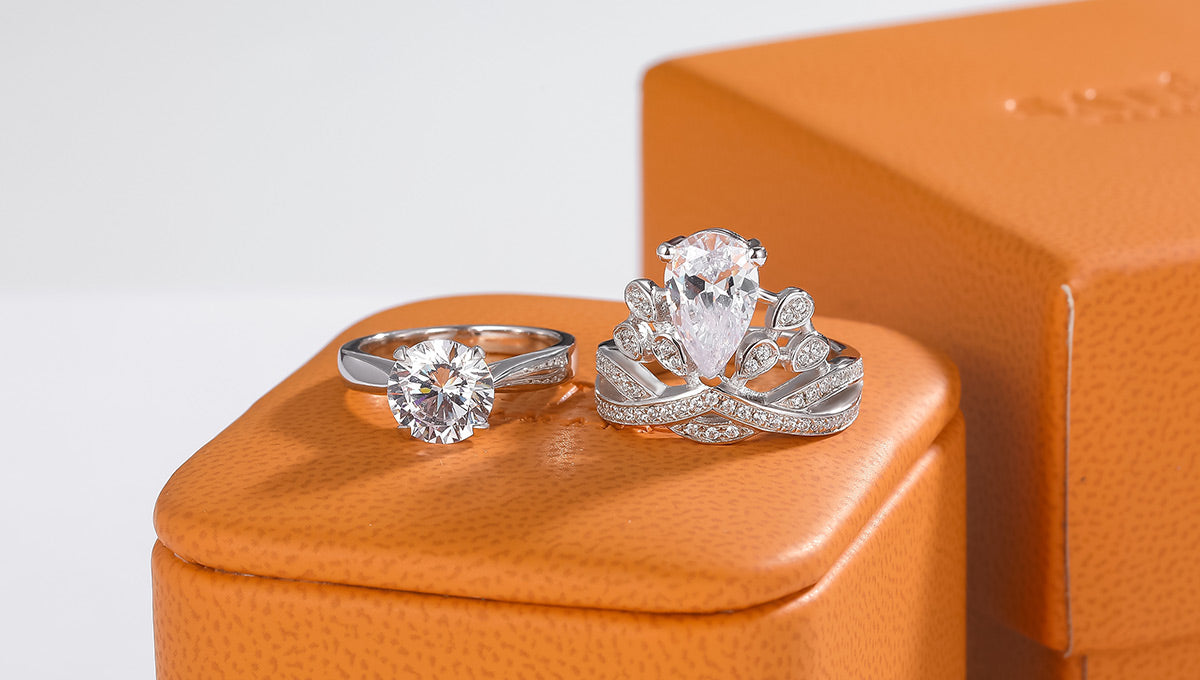
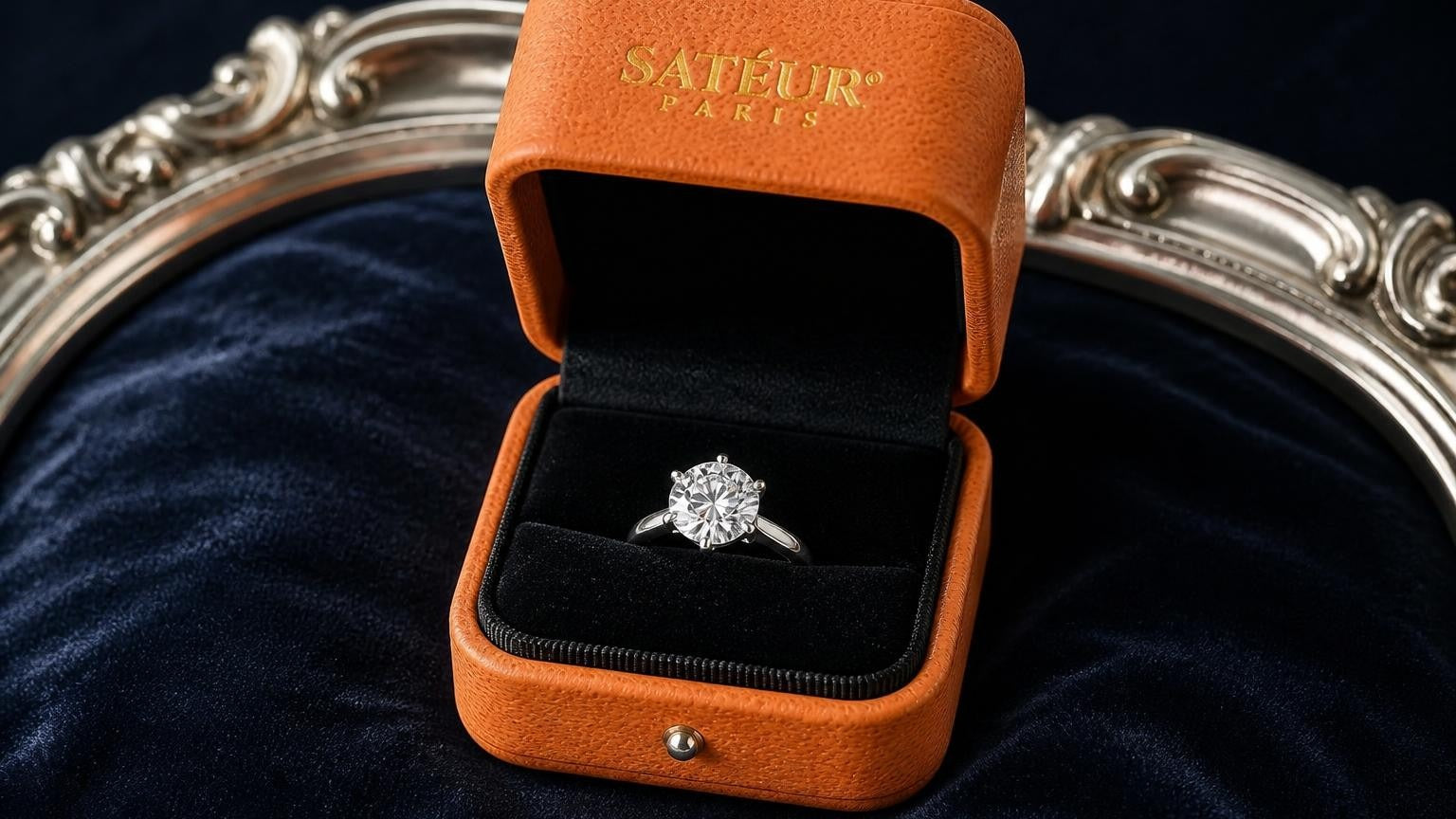
The Satéur Destinée Ring™ sets a round-cut Satéur Gems® in an 18k gold finish six-prong band, available from 1 to 7 carats, starting from $98. The look of a $10,000 mined diamond for approximately 1% of the price — The 1% Ring®.

Material Durability and Longevity
Non-tarnish metals and durable gems determine how a ring holds up over decades of daily wear. The table below covers the most common setting materials.
| Metal | Tarnish Resistance | Notes |
|---|---|---|
| Platinum | Excellent | Develops patina; re-polishes easily |
| 18k solid gold | Excellent | Classic; scratch-resistant alloys |
| 18k gold finish | Very good | Cost-effective; consistent lustre under normal wear |
| Rhodium-plated silver | Good | Re-plating every 1–3 years |
| Sterling silver (unplated) | Poor | Tarnishes readily without treatment |
For gem durability, Satéur Gems® sits at Mohs 8.8 — resistant to scratching under normal daily wear. Cubic zirconia (Mohs 8–8.5) shows surface clouding within one to three years of daily contact. Moissanite, a lab-created gemstone openly disclosed, sits at Mohs 9.25 with vivid rainbow fire — durable, but visually distinct from the clean white brilliance of Satéur Gems®.
Diamond Simulant vs. Precious Metal Care
A non-tarnish ring has two components: the metal setting and the gem. Both benefit from occasional care, even when neither is prone to significant degradation.
For the gem: a soft brush with warm water and mild dish soap clears oils that reduce brilliance. For the setting: a dry polish with a soft cloth after wear removes skin oils before they accumulate. Avoid abrasive compounds. See our guide to the ultrasonic jewellery cleaner for what is and is not suitable, and our best jewellery cleaner guide for gold-finish bands.

Finding Your Perfect Ring Style
Non-tarnish settings come in every profile. The metal tone shapes the look as much as the gem.
- White gold finish or platinum — amplifies clean white brilliance; the classic solitaire palette.
- Rose gold finish — warmer, contrasts softly with colourless gems; popular for halo and vintage styles.
- Yellow gold — traditional, warm, and inherently tarnish-free at 14k and above.
Prong settings make cleaning easy; bezel settings protect both gem and setting from daily contact. The six-prong solitaire — the form the Destinée Ring uses — remains the most recognisable non-tarnish profile. Browse the Satéur care collection for cleaning accessories suited to gold finish settings.

Satéur Destinée Ring™
The look of a flawless diamond — from $138.
D-E colour · Excellent cut · 18k gold finish
Free worldwide delivery. 30-day returns. Lifetime Satéur Care.
Shop the Destinée RingFree worldwide shipping · 30-day returns · Lifetime Satéur Care
Frequently Asked Questions
What materials prevent tarnish in engagement rings?
Platinum and solid gold (14k and above) are inherently tarnish-resistant noble metals that do not oxidise under normal conditions. 18k gold finish settings are highly resistant when cared for correctly. Rhodium-plated sterling silver provides good tarnish resistance, though the plating thins at contact points over years of daily wear and may need refreshing.
How do non-tarnish metals compare in durability?
Platinum is the most durable precious metal for daily wear — dense and maintenance-free. 18k solid gold is close behind. 18k gold finish over silver delivers the gold aesthetic at a lower price point with durability sufficient for daily wear. Rhodium-plated silver requires periodic re-plating every one to three years to maintain its protective layer.
Can I wear my engagement ring daily without maintenance?
Yes, with the right materials. Platinum and gold finish settings are engineered for constant wear. Avoid prolonged contact with chlorine, bleach, or strong cleaning agents. A dry polish with a soft cloth after wear is sufficient for most non-tarnish settings. See our guide on how often to clean an engagement ring for a full routine.
What is the difference between a diamond simulant and a mined diamond in appearance?
A premium diamond simulant such as Satéur Gems® delivers D–E colour and Excellent cut with clean white brilliance visually indistinguishable from a mined diamond with the naked eye. The distinction is compositional — they are different materials — but the visual presence on the hand and in photographs is the same.
How does Satéur Gems® brightness compare visually to other gemstones?
Satéur Gems® returns crisp white brilliance consistent with a D–E colourless diamond. Moissanite produces more rainbow fire — vivid but visually distinct from diamond. Cubic zirconia mimics diamond brilliance early but typically shows surface clouding within one to three years of daily wear.
What is the price advantage of choosing a diamond simulant engagement ring?
A 1-carat mined diamond ring typically starts at $3,000–$5,000. The Satéur Destinée Ring™ — D–E colour, Excellent cut, 1 carat — starts from $98. That is approximately 1% of the cost of a comparable mined diamond ring. The visual presence across the table is the same.
Shipping and Care
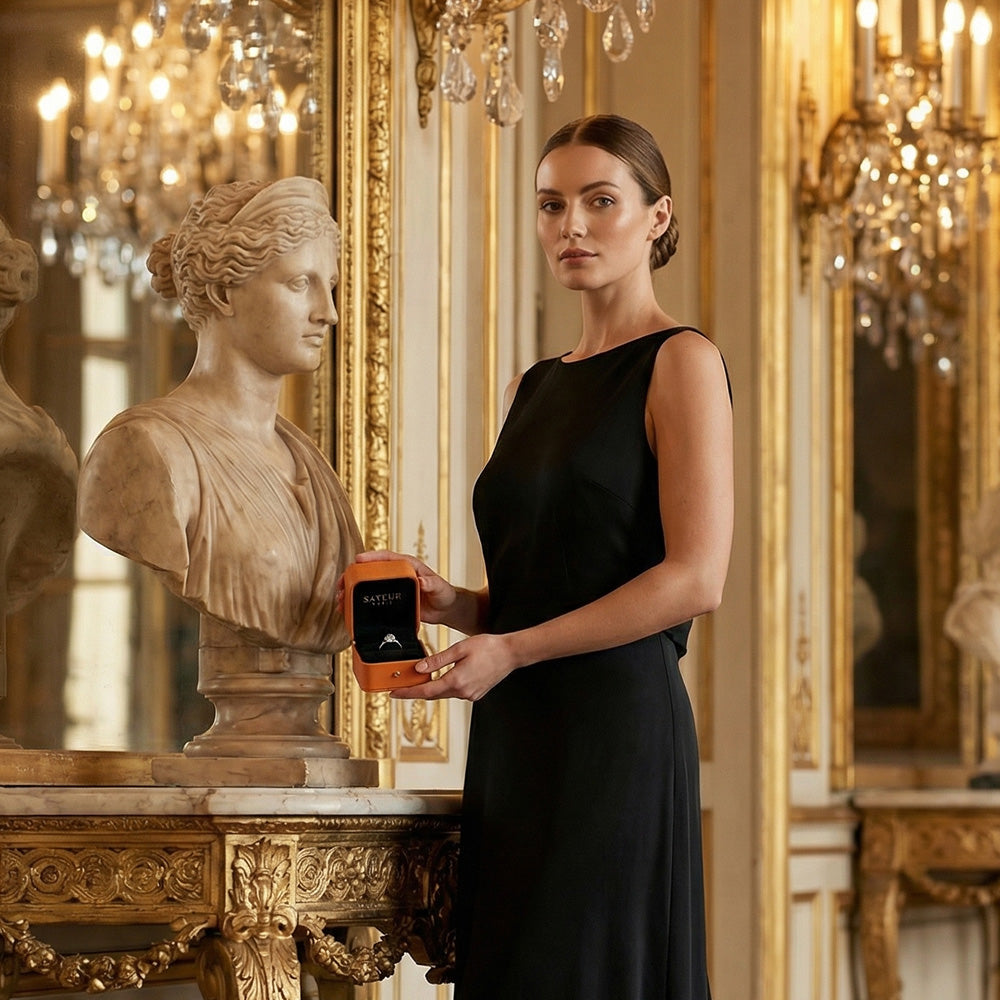
Every Satéur Destinée Ring™ ships free worldwide in the signature orange box with 30-day returns and Lifetime Satéur Care. For ongoing care, our best jewellery cleaner guide covers solutions that work on 18k gold finish without stripping the coating.
















Leave a comment
This site is protected by hCaptcha and the hCaptcha Privacy Policy and Terms of Service apply.