



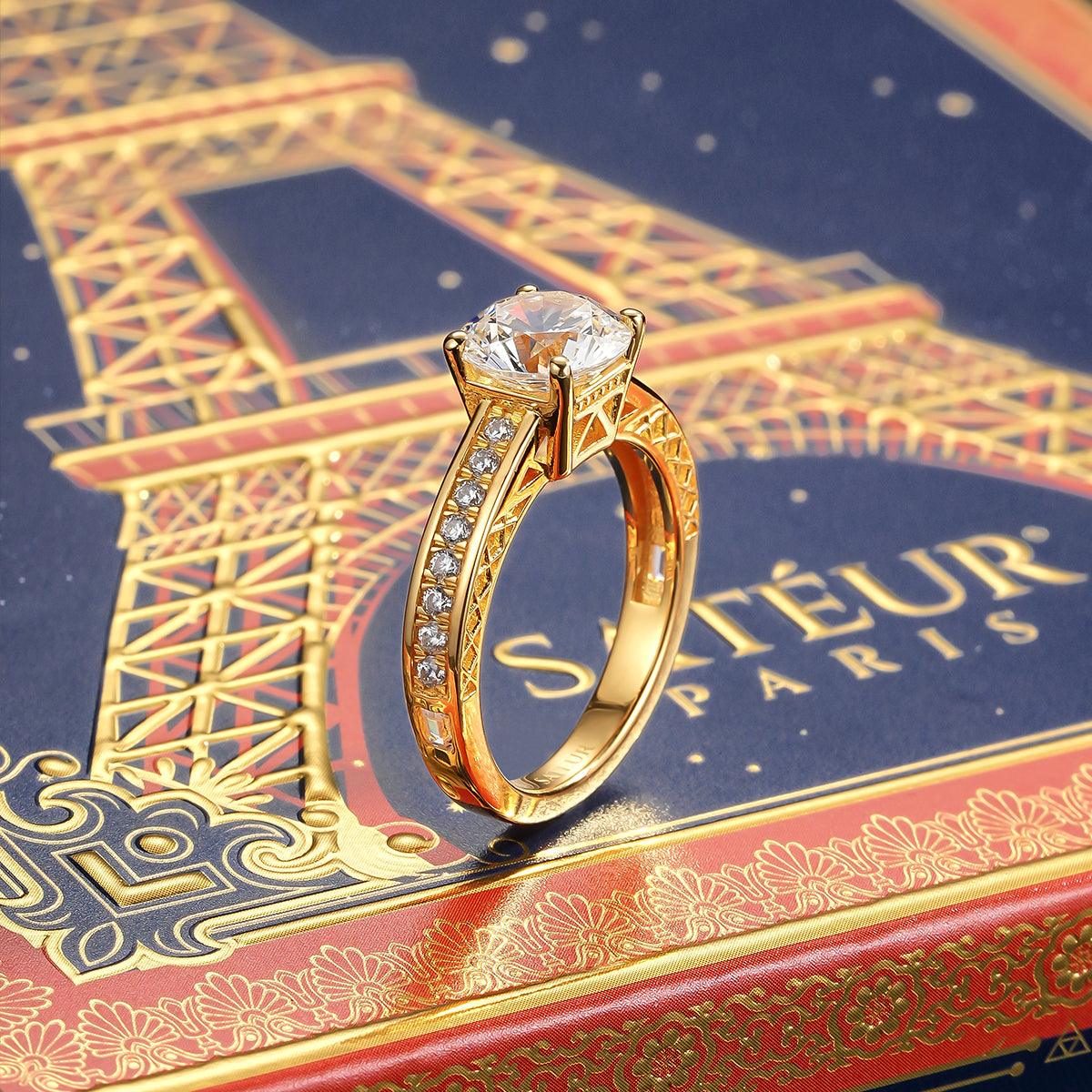
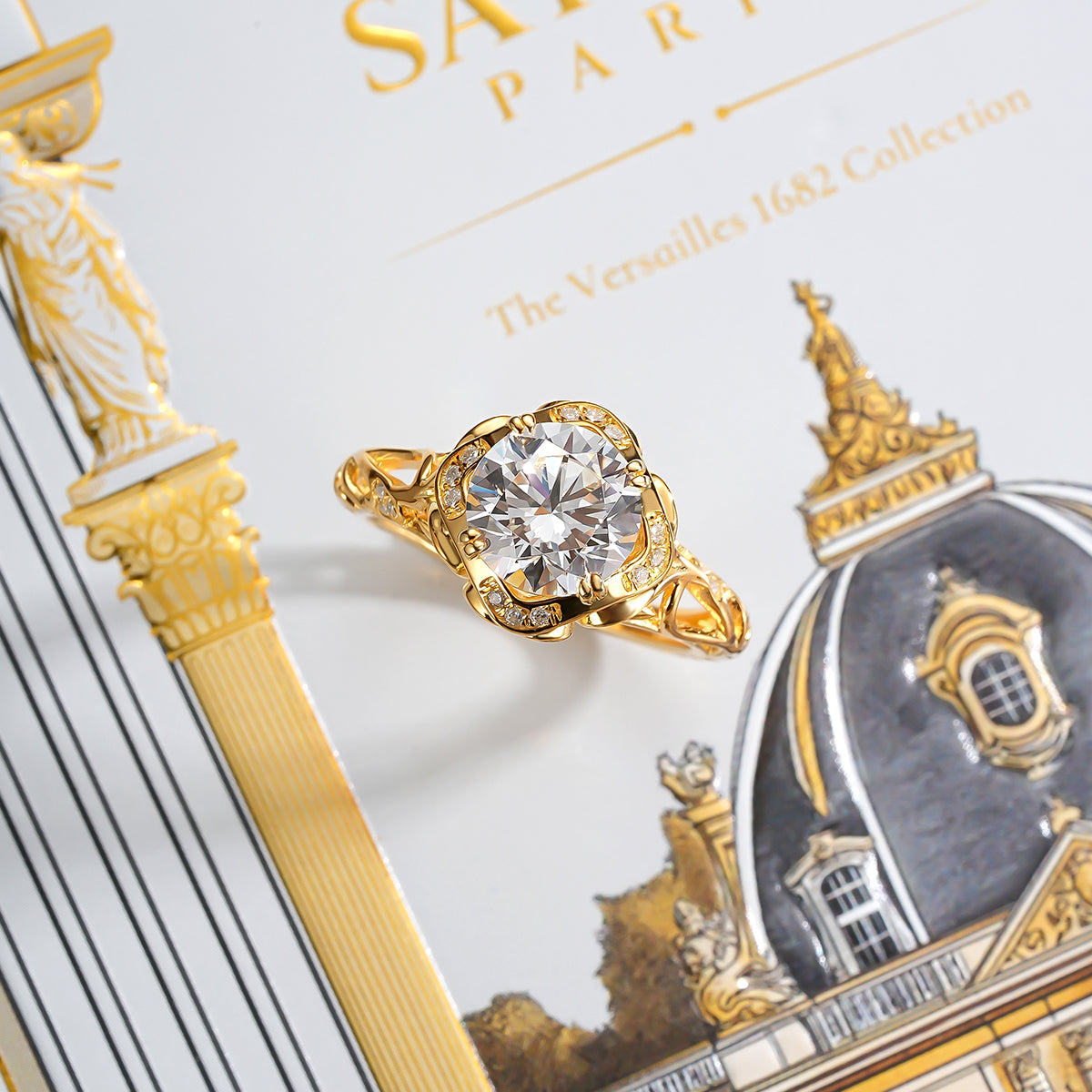
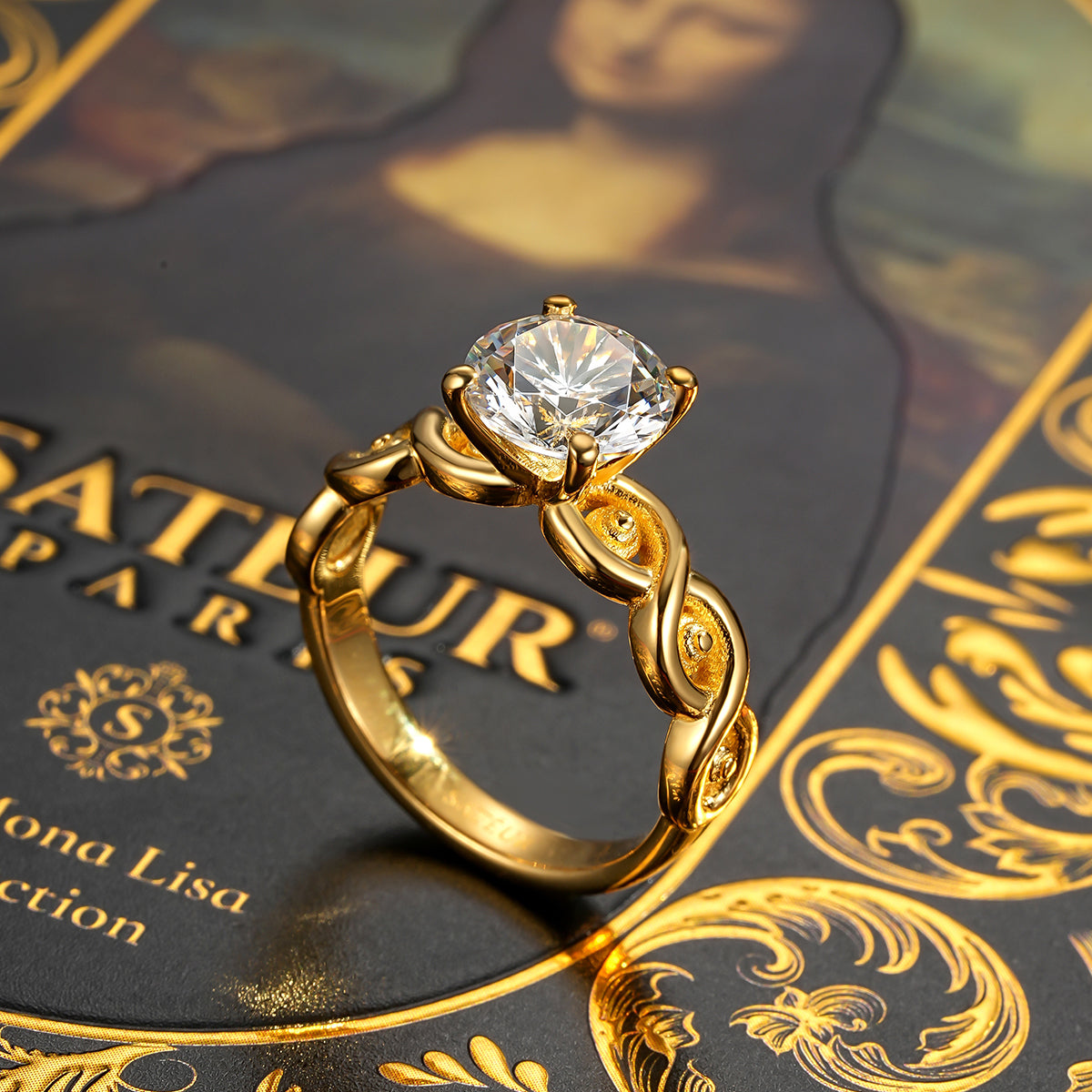
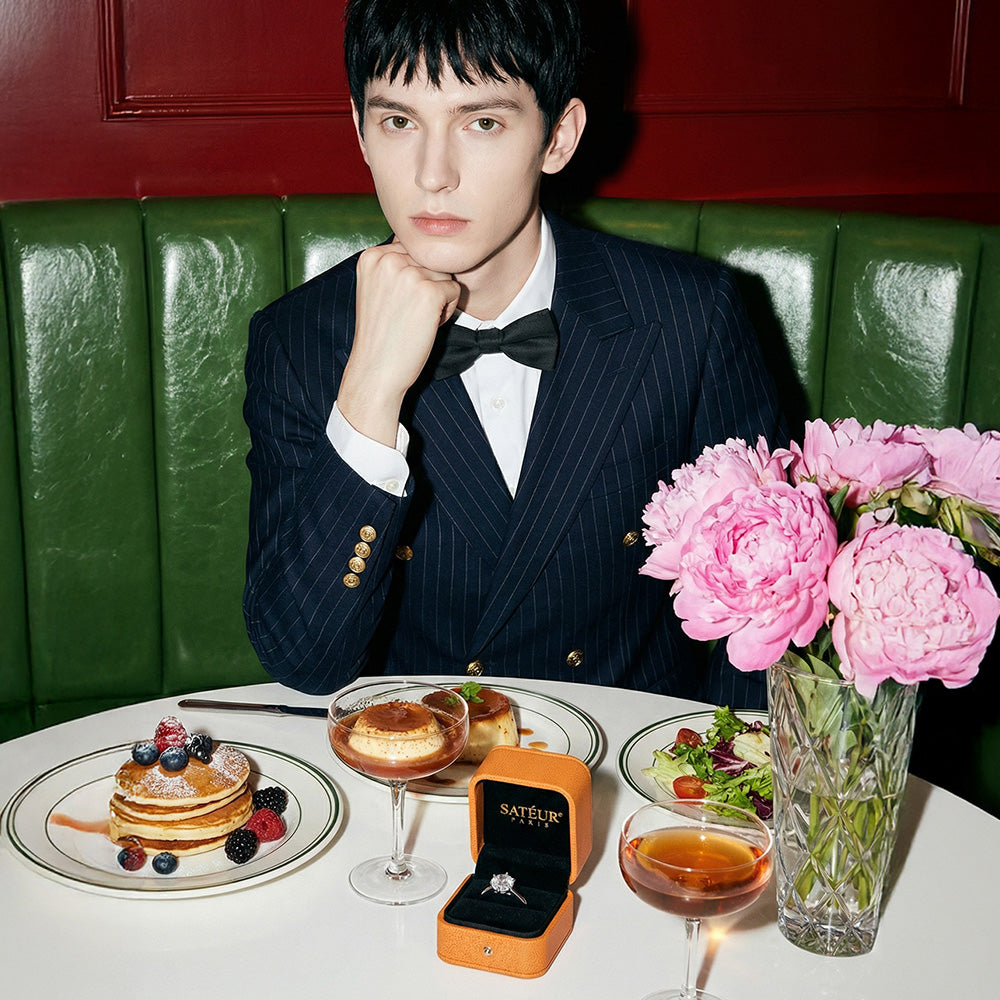
Moissanite is a lab-created gemstone that rates 9.25 on the Mohs hardness scale, displays approximately 2.4× the fire of diamond, and achieves D–E colour clarity — all at roughly 1% of the cost of a comparable mined diamond. For buyers weighing a moissanite alternative to diamonds, it is the only option that matches a diamond's visual presence while adding its own distinctive brilliance.
The short answer: moissanite engagement rings from Satéur begin from $68 — the look of a flawless gem, worn daily, without the five-figure price.
Key Takeaways
- Moissanite rates 9.25 on the Mohs hardness scale, making it suitable for daily-wear engagement rings.
- Modern moissanite achieves D–E colour clarity comparable to premium diamonds.
- Moissanite displays approximately 2.4× the fire (light dispersion) of diamond — a vivid, rainbow-forward sparkle visible to the naked eye.
- Moissanite is lab-created, eliminating land disturbance associated with mining (approximately 100 square feet of disrupted land per carat of mined diamond).
- Satéur moissanite rings begin from $68, delivering the look and durability of a premium gem at around 1% of a mined diamond's price.
Moissanite vs. Diamond — Key Differences
The two gems share a solitaire silhouette but diverge on every measurable property. Here is how they compare across the factors that matter for daily wear and long-term ownership.
| Property | Moissanite | Natural Diamond |
|---|---|---|
| Mohs hardness | 9.25 | 10 |
| Refractive index | 2.65–2.69 | 2.42 |
| Fire (dispersion) | ~2.4× diamond | Reference |
| Colour (modern) | D–E equivalent | D–Z range |
| Origin | Lab-created | Mined |
| Price (1 ct equivalent) | From $68 | $4,000–$10,000+ |
| Environmental footprint | Minimal | ~100 sq ft disrupted land / ct |
The single most visible difference is fire. Under bright light, moissanite returns rainbow-coloured flashes — visibly more vivid than the crisp white brilliance of a diamond. To the naked eye, neither reads as "fake" — they read as different optical characters.
What is Moissanite?
Moissanite was first identified in 1893 by French scientist Henri Moissan, who found microscopic crystals in a meteorite crater. Natural moissanite is extraordinarily rare — virtually all moissanite sold today is lab-created, grown in controlled conditions to achieve consistent colour and clarity.
As a lab-created gemstone, moissanite is fully disclosed and openly named in every Satéur listing. It is not a simulant and it is not a diamond — it is its own gem category, with its own properties and its own optical character.
- Composition: Silicon carbide (SiC)
- Crystal system: Hexagonal
- Origin: Lab-grown; natural occurrence is exceedingly rare
- Certification: Available with grading reports from independent laboratories
Moissanite Specifications and Grading

Modern near-colourless moissanite is graded against the diamond colour scale. Premium grades achieve D–E equivalence — indistinguishable from a top-colour diamond with the naked eye.
- Mohs hardness: 9.25 — second only to diamond. Resistant to scratching under everyday conditions, including kitchen work, sport, and daily handling.
- Refractive index: 2.65–2.69 — higher than diamond (2.42), which produces a brighter, more intense return of light.
- Dispersion (fire): 0.104 versus diamond's 0.044 — approximately 2.4× the fire. Visible as vivid coloured flashes in natural and artificial light.
- Colour (modern): D–E equivalent, produced consistently in current lab growth processes.
- Stability: Moissanite maintains its optical and physical properties for lifelong wear without yellowing, clouding, or loss of surface finish.
For grading context: the same D–E clarity that commands a premium on a mined diamond comes as the default in modern lab-grown moissanite.
The Satéur Value Proposition
Satéur moissanite rings are hand-set in an 18k gold finish setting. The gem is openly disclosed as moissanite — a lab-created gemstone — and priced to reflect the reality of lab-grown production rather than mining-and-marketing overheads.
The look of a flawless diamond — from $138. Compare to a $10,000 mined diamond.
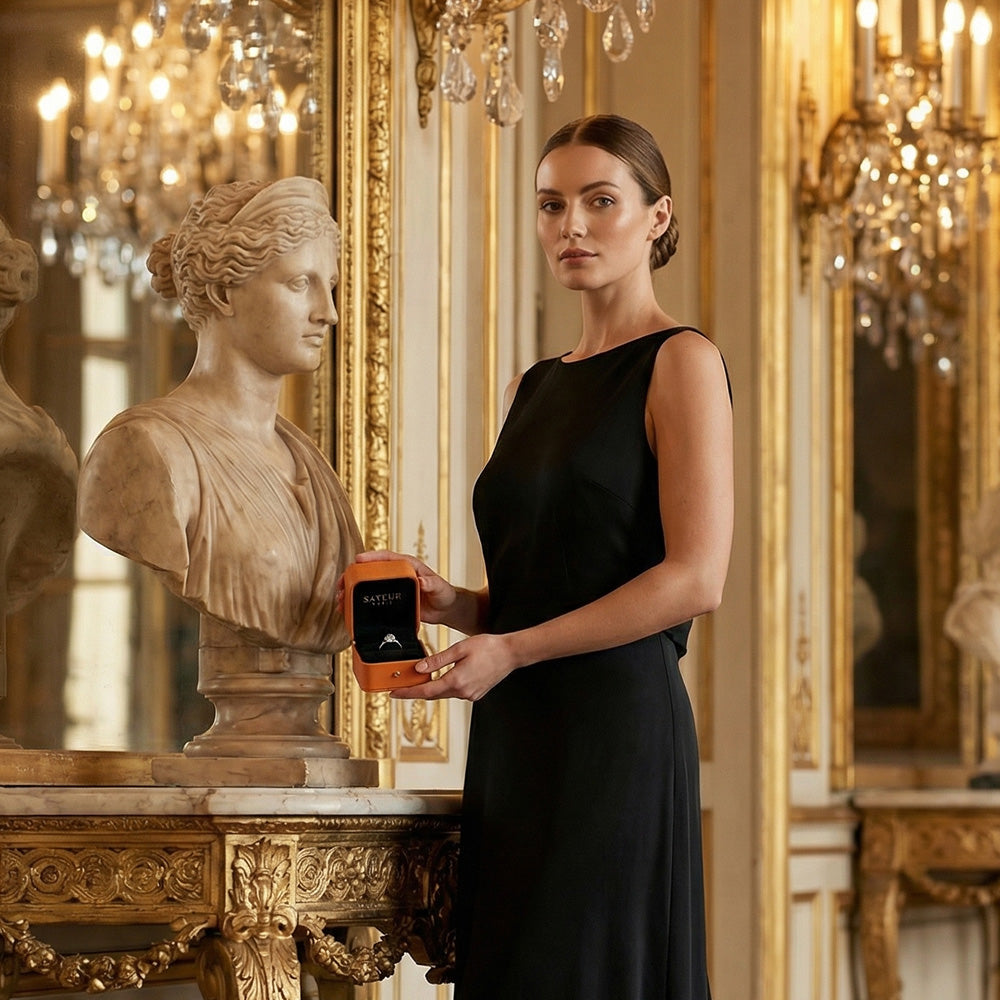
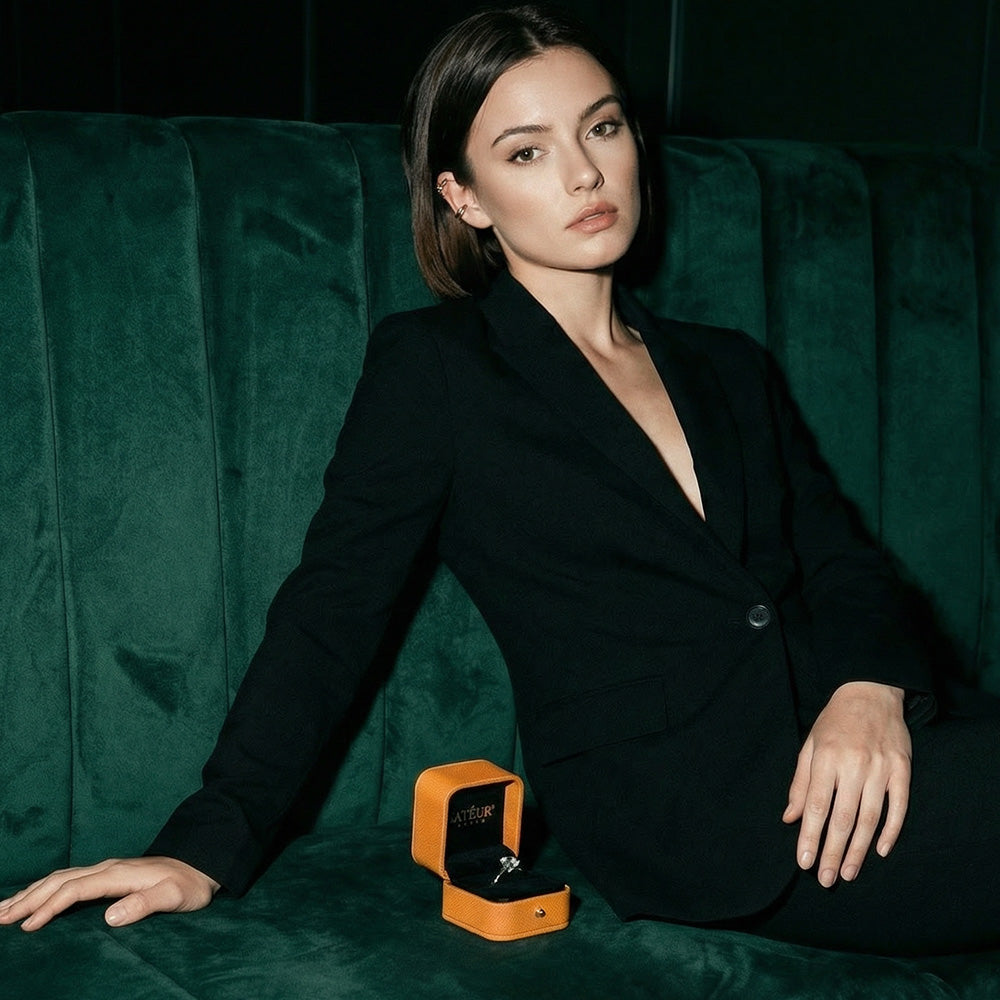
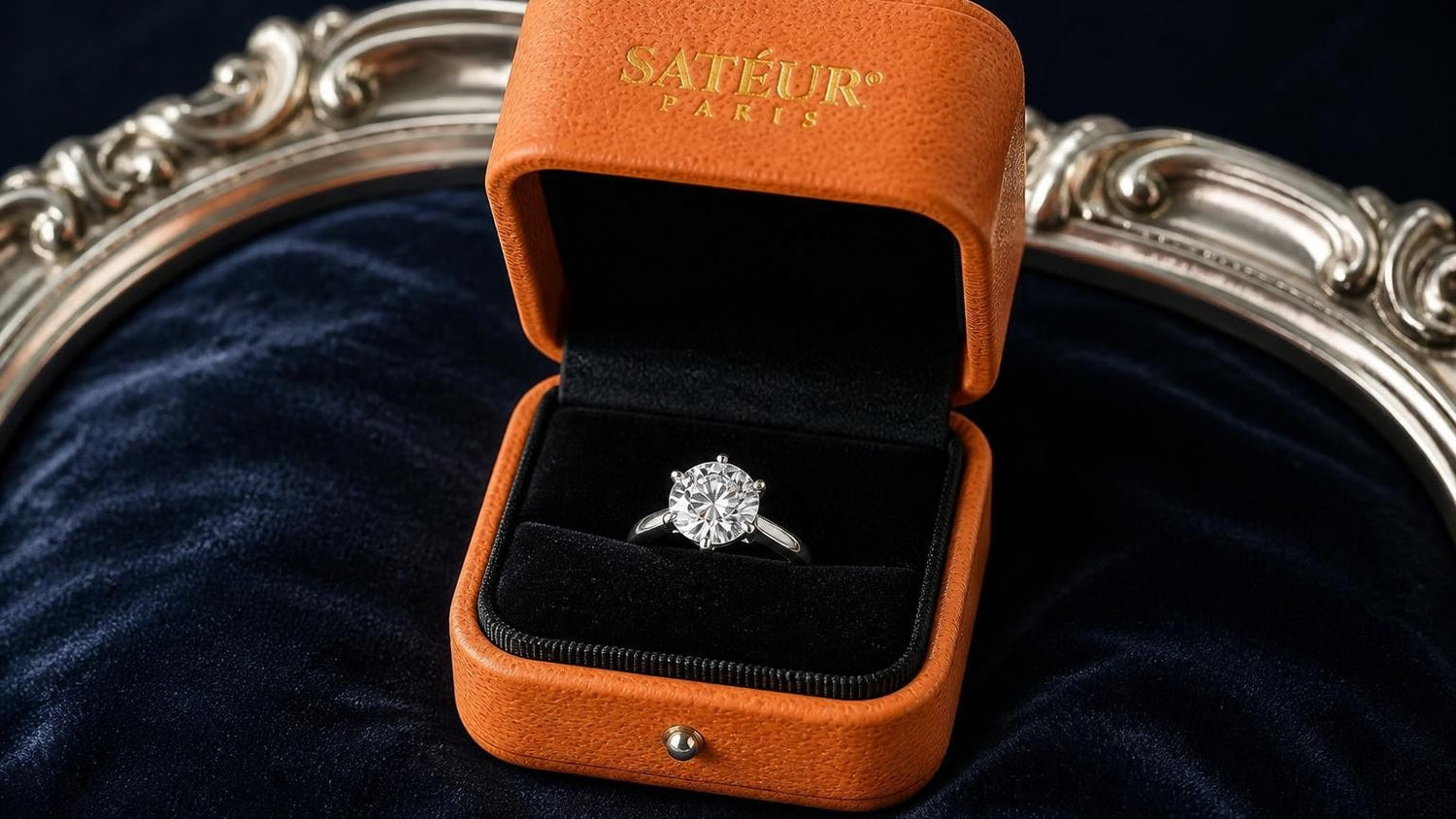
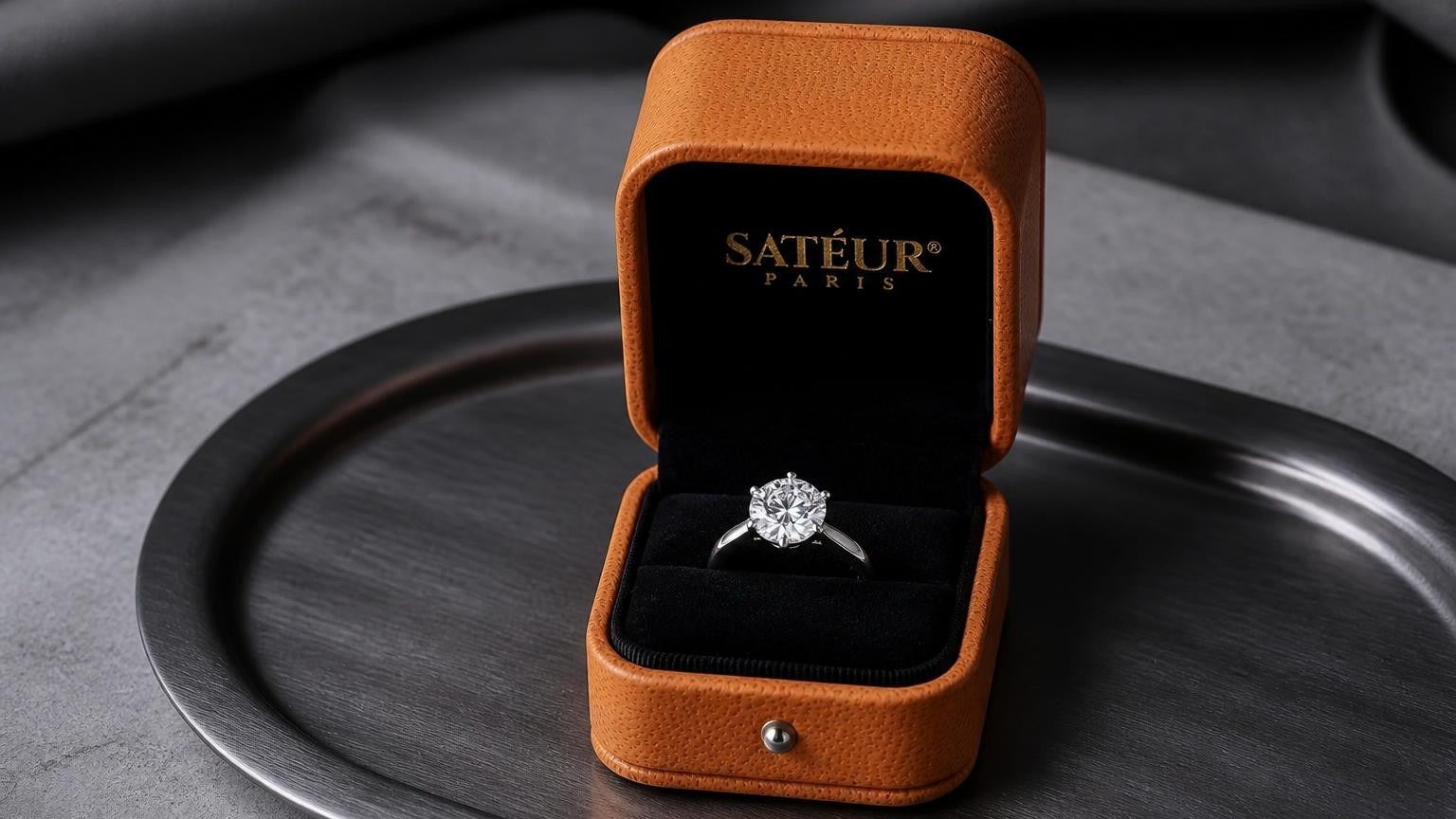
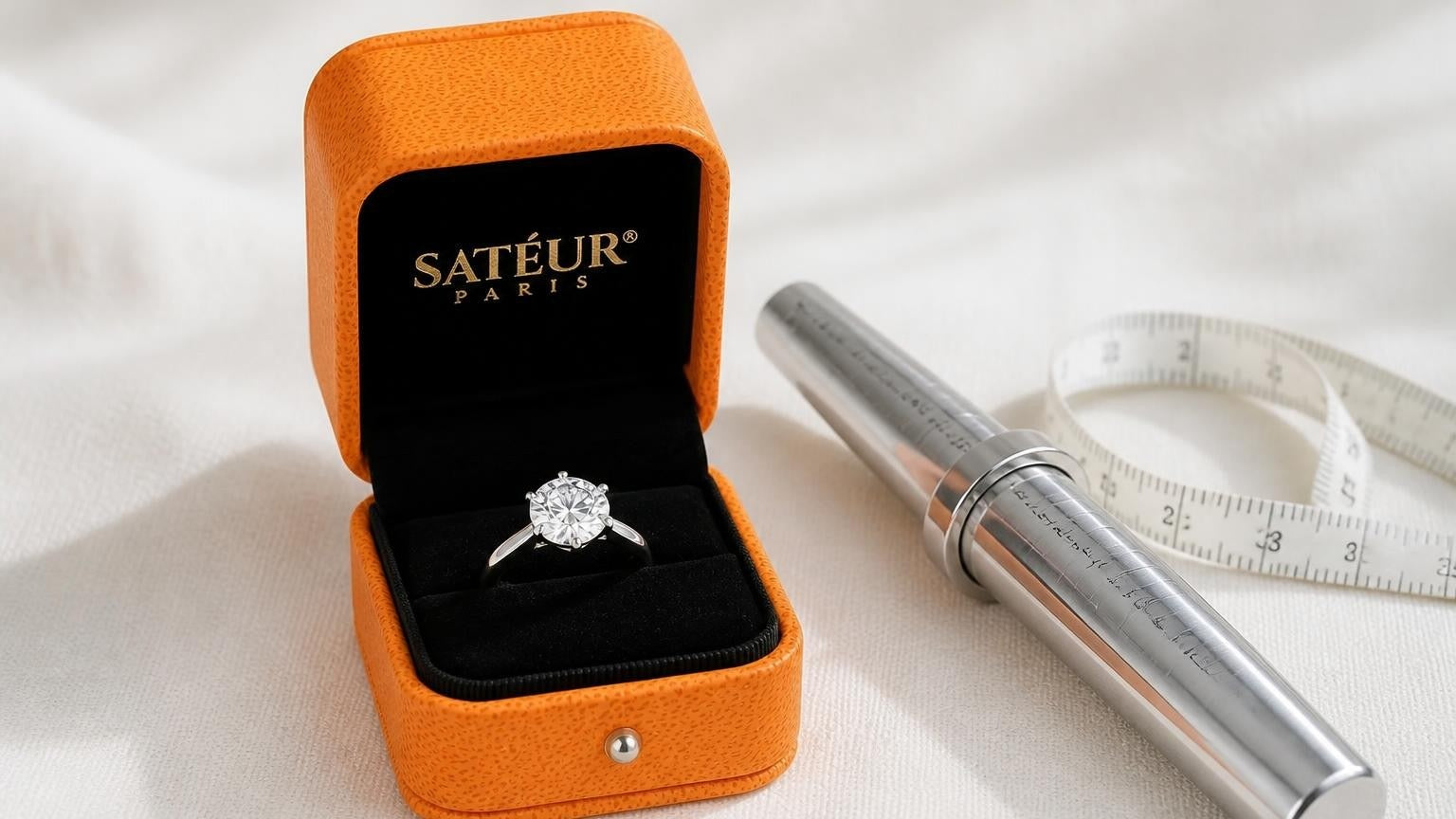
The Satéur Destinée Ring™ is the benchmark: a 1.0 ct round-cut gem in a classic six-prong solitaire, arriving in the signature orange Satéur box with built-in LED light. Browse Satéur moissanite rings for the full range, from the entry Destinée to statement pieces above 3 carats.
Every ring ships free worldwide and carries a 30-day return guarantee plus Lifetime Satéur Care.
Moissanite Engagement Rings: Durability and Appearance

At 9.25 on the Mohs scale, moissanite withstands daily wear comfortably. It will not cloud, crack under normal kitchen or office use, or show surface scratches from everyday contact. For reference, the materials most likely to scratch a ring — keys, ceramic tiles, hardened steel — rate between 6 and 8 on the Mohs scale.
Moissanite also tolerates the temperature extremes of everyday life. Unlike some gemstones, it does not require special storage conditions, chemical-free cleaning routines, or periodic re-polishing. Warm water and mild soap are sufficient for maintenance.
- Suitable for daily wear — shower, gym, kitchen use
- Resizable — a skilled jeweller can resize a moissanite ring in the same way as a diamond ring
- Repairable — the setting can be re-tipped, re-prong, or re-plated without affecting the gem
- Stable finish — no clouding, yellowing, or loss of refractive performance over time
Fire and Brilliance: How They Compare
Brilliance (white light return) and fire (coloured light dispersion) are the two properties that make a gem visible from across the room. Moissanite and diamond differ on both axes — neither is objectively superior; they suit different preferences.

- Moissanite: Higher refractive index (2.65–2.69) and higher dispersion (0.104). The result is visibly more vivid, rainbow-forward fire. In direct sunlight or under bright restaurant lighting, moissanite flashes with colour. Wearers who want a striking, high-energy sparkle choose moissanite.
- Diamond: Refractive index 2.42, dispersion 0.044. The classic crisp white brilliance — scintillation reads as bright white flashes rather than coloured ones. Diamond's fire is understated by comparison.
Neither is "better" — they are different. The choice depends on whether you prefer high-energy rainbow fire or precise white brilliance. Both read as premium gems with the naked eye.
See also our guide to whether moissanite rings are real for a deeper breakdown of what "real" means in gem grading.
Cost Comparison: Moissanite and Diamond
The price difference between moissanite and mined diamond is not marginal — it is an order of magnitude. A one-carat mined diamond of comparable colour and cut starts at $4,000–$10,000 for the stone alone; a moissanite equivalent begins at $68 at Satéur.
| Option | Typical 1 ct price | Notes |
|---|---|---|
| Mined diamond (D–E, Excellent cut) | $4,000–$10,000+ | Certified, subject to market fluctuation |
| Lab-grown diamond | $500–$2,000 | Chemically identical to mined; IGI-certifiable |
| Moissanite | From $68 (Satéur) | 9.25 Mohs, D–E colour, 2.4× fire |
The savings are real. The $4,000–$10,000 difference between a mined diamond and a moissanite ring is the cost of a honeymoon, a deposit on a home, or a year of savings. The gem in the setting looks the same to the naked eye.
For context on where diamond prices come from, see our guide to moissanite vs other diamond alternatives.
Custom Moissanite Ring Design
Moissanite is available in every standard diamond cut — round brilliant, cushion, oval, pear, emerald, princess. Because lab-created moissanite is produced in controlled conditions, unusual sizes and cuts that would be extremely expensive in mined diamond are accessible at a fraction of the cost.
The most popular formats for moissanite engagement rings in 2026:
- Round brilliant — the classic. Maximises the fire and brilliance of moissanite. The Satéur Destinée Ring™ uses this cut.
- Cushion — soft corners, deeper pavilion, highly romantic. Popular for vintage settings.
- Oval — elongates the finger, maximises perceived carat weight. The fastest-growing cut for engagement rings globally.
- Emerald — step-cut, art-deco geometry, crisp hall-of-mirrors brilliance.
For guidance on comparing moissanite alongside lab diamonds, see the ultimate guide to moissanite vs lab-created diamonds.
Frequently Asked Questions About Moissanite
What is the difference between moissanite and diamond?
Moissanite is a lab-created silicon carbide gemstone; diamond is crystallised carbon. Moissanite rates 9.25 on the Mohs scale versus diamond's 10, and has a higher refractive index (2.65–2.69 versus 2.42), producing approximately 2.4× the fire of a diamond. To the naked eye both appear as brilliant, colourless gems — the main visible difference is that moissanite's fire reads as more vivid and rainbow-forward in direct light.
How durable is moissanite for an engagement ring?
Very durable. At 9.25 on the Mohs scale, moissanite is resistant to scratching from everyday materials. It tolerates daily wear including kitchen work, exercise, and water exposure without degrading. It can also be resized and repaired by a jeweller in the same way as a diamond ring.
Does moissanite look noticeably different from diamond to the naked eye?
Not in terms of colour or clarity — modern D–E moissanite is visually equivalent. The one visible difference, particularly under bright light, is fire: moissanite returns more vivid, rainbow-coloured flashes. Some wearers prefer this; others prefer diamond's more restrained white brilliance. Neither reads as "inferior" — they are different optical characters.
How is moissanite graded and certified?
Moissanite is graded against the diamond colour scale (D–Z range), with premium modern moissanite achieving D–E equivalence. Independent laboratory grading reports are available. Satéur lists all gem specifications — Mohs rating, colour equivalent, cut grade — openly in each product description.
What makes moissanite a compelling alternative to mined diamonds?
Three factors: cost (from $68 versus $4,000–$10,000+ for a mined equivalent), durability (9.25 Mohs, suitable for lifelong daily wear), and sustainability (lab-grown, eliminating the roughly 100 square feet of land disturbed per carat in mining). It also achieves D–E colour clarity as standard and maintains its optical properties without yellowing or clouding.
Can moissanite be resized or repaired like diamond rings?
Yes. A skilled jeweller can resize, re-tip prongs, replace settings, or re-plate a moissanite ring in the same way as a diamond ring. The gem itself is not affected by standard jewellery repair processes.
Choosing Between Moissanite and Diamond
The decision comes down to two questions: what look do you want, and what does the budget allow.
If you want the classic crisp white brilliance of a diamond and can absorb the $4,000–$10,000+ price, a mined diamond is the traditional answer. If you want maximum fire and brilliance per pound spent — and prefer a lab-created, ethically transparent gem — moissanite is the choice. If you want the clean white look of a diamond without the disclosure of a lab gem, Satéur Gems® (a trademarked diamond simulant) is a third path.
For most buyers who reach this question, moissanite answers it: 9.25 Mohs durability, D–E colour, 2.4× fire, and lifetime stability — from $68. It is not a compromise. It is a different and better answer to the same question most diamond buyers are actually asking.

Satéur Destinée Ring™
The look of a flawless diamond — from $138.
Compare to a $10,000 mined diamond
Joined by 100,000+ couples across 150+ countries.
Shop the Destinée RingFree worldwide shipping · 30-day returns · Lifetime Satéur Care















Leave a comment
This site is protected by hCaptcha and the hCaptcha Privacy Policy and Terms of Service apply.