



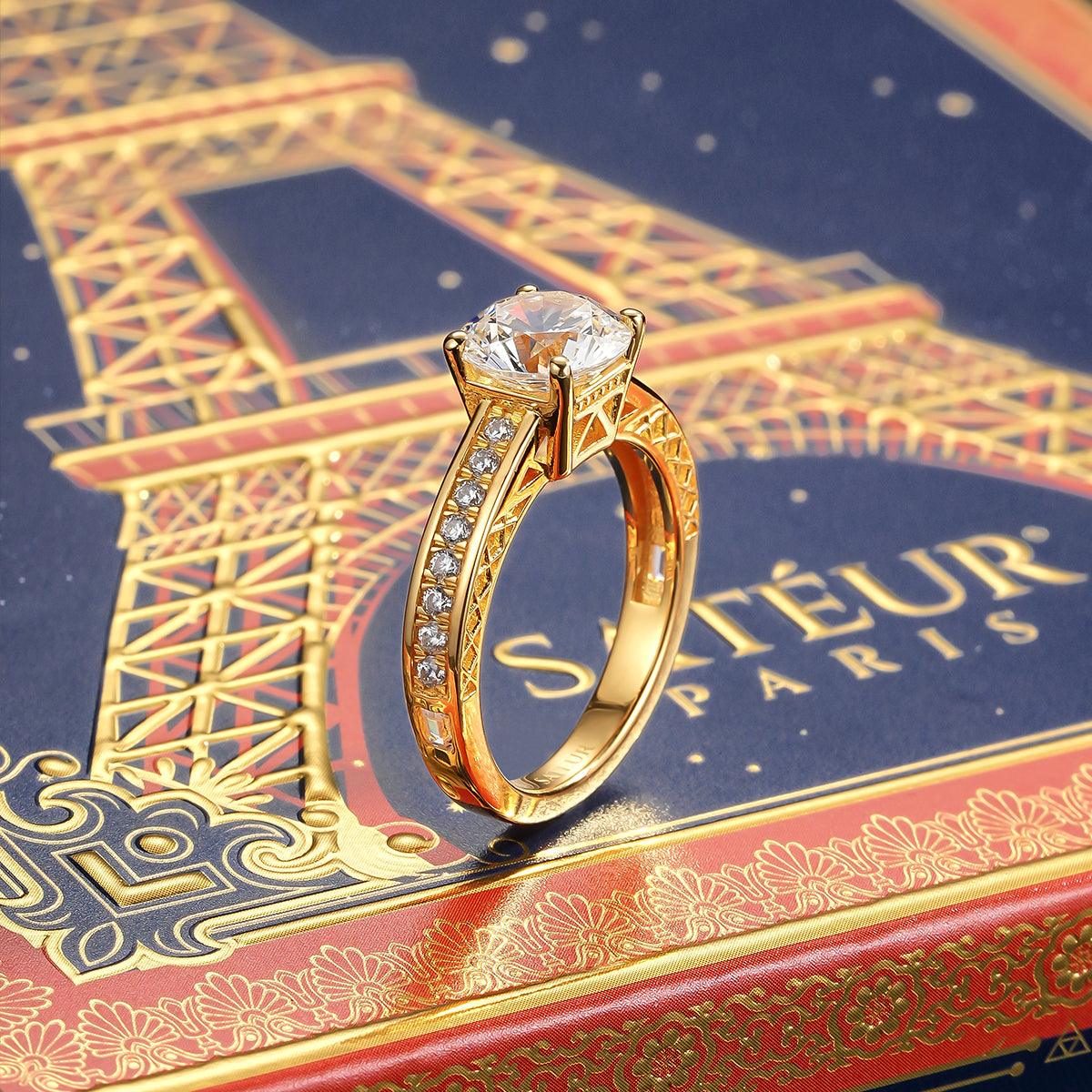
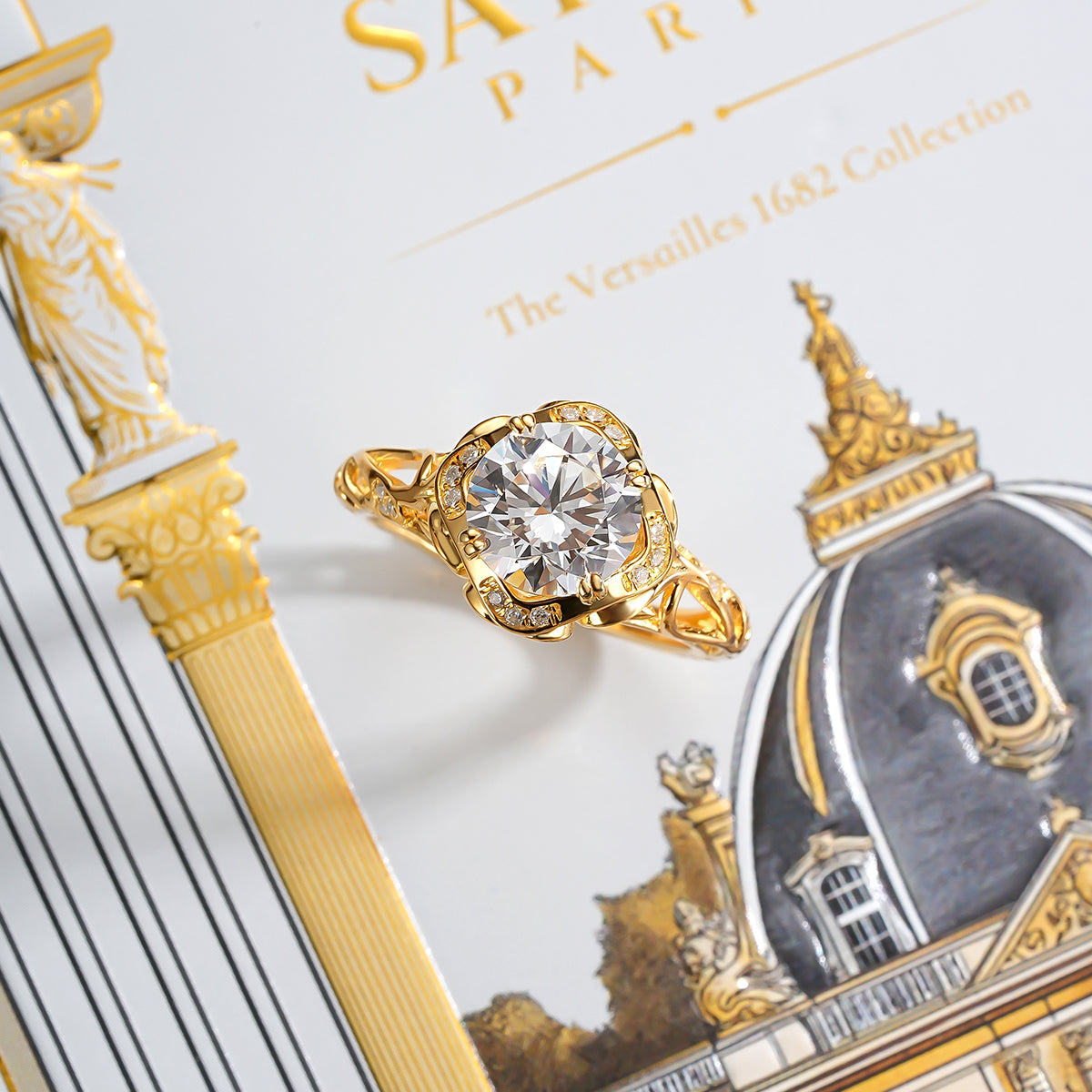
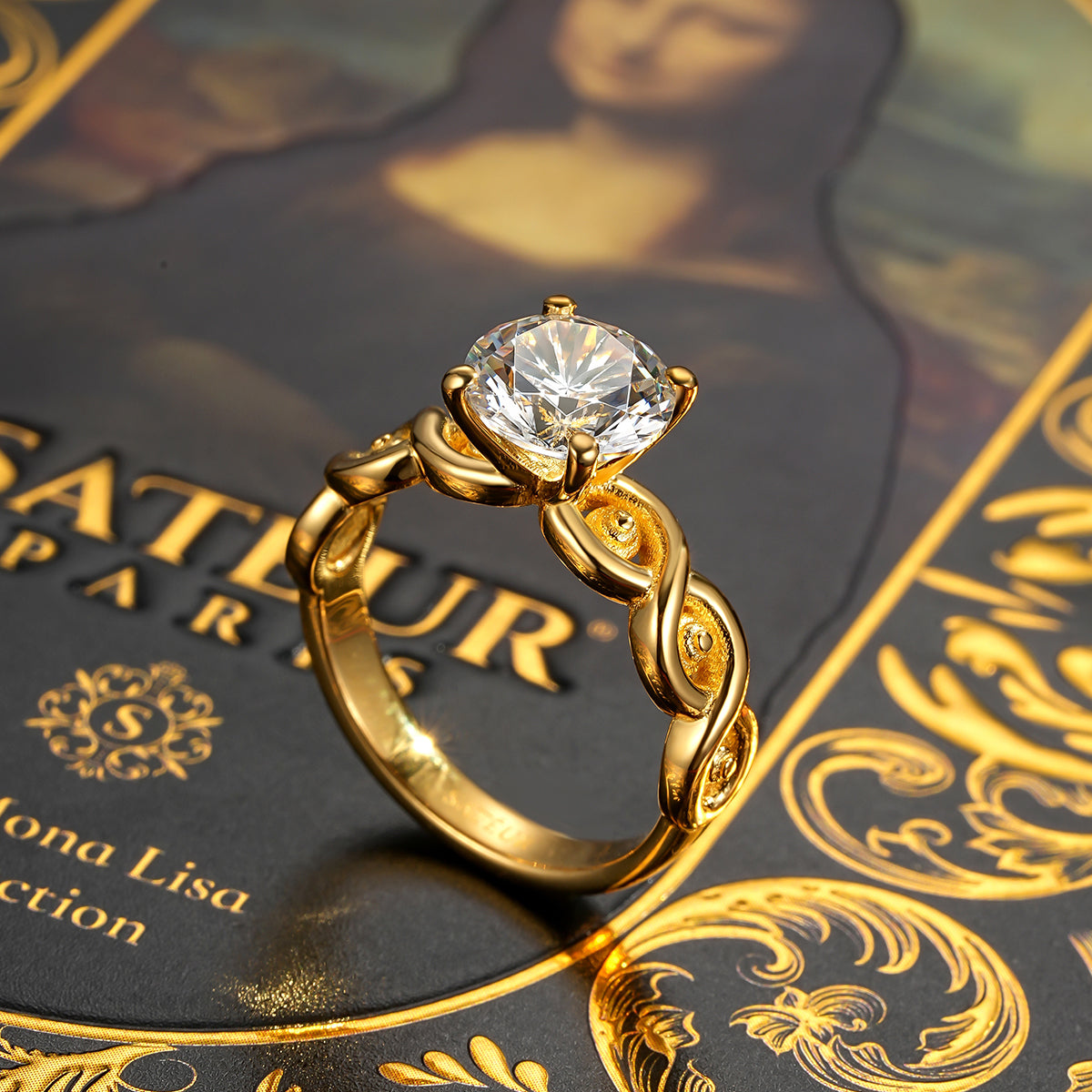
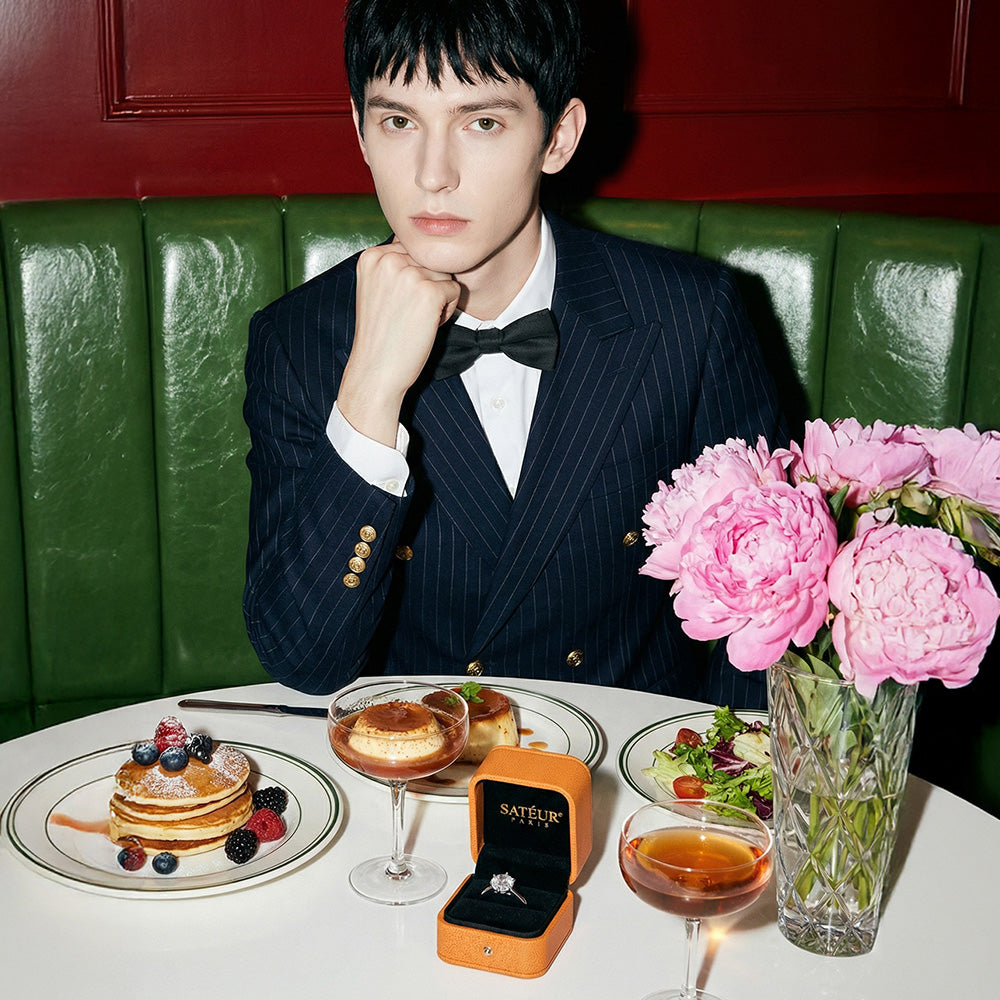
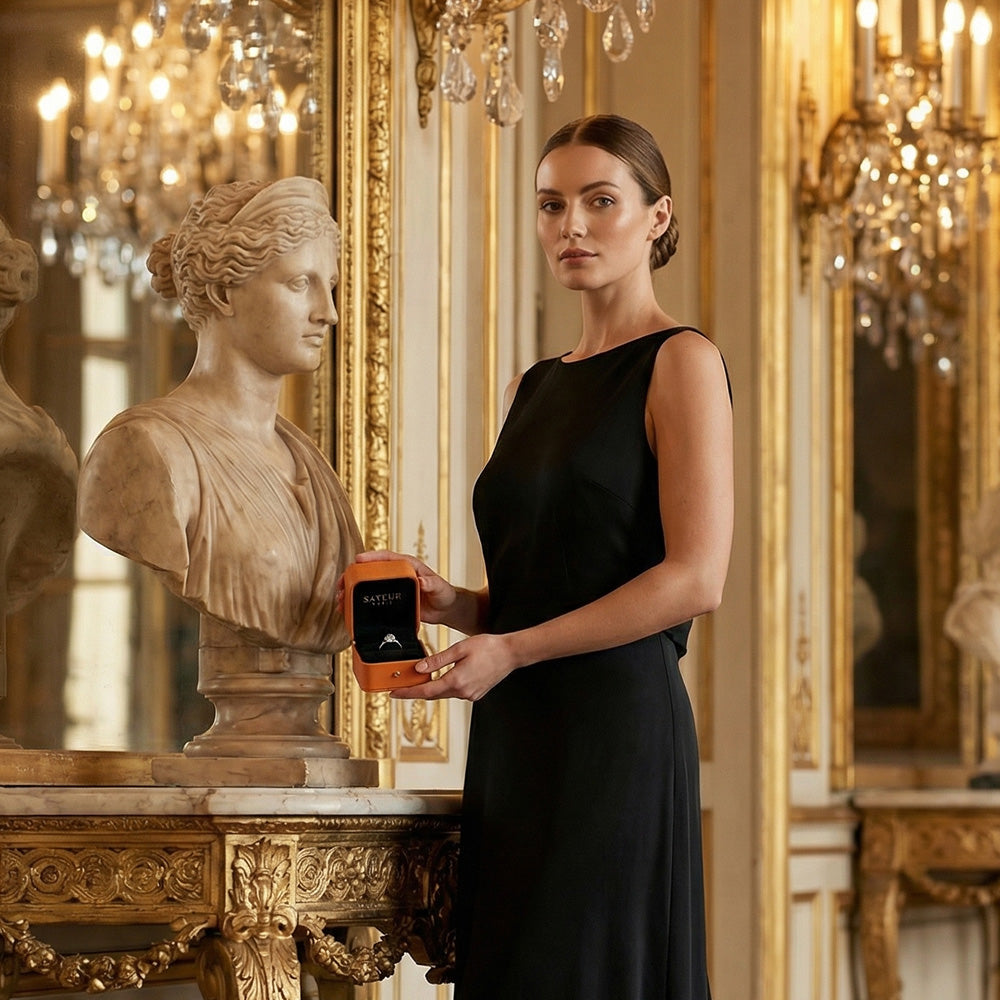
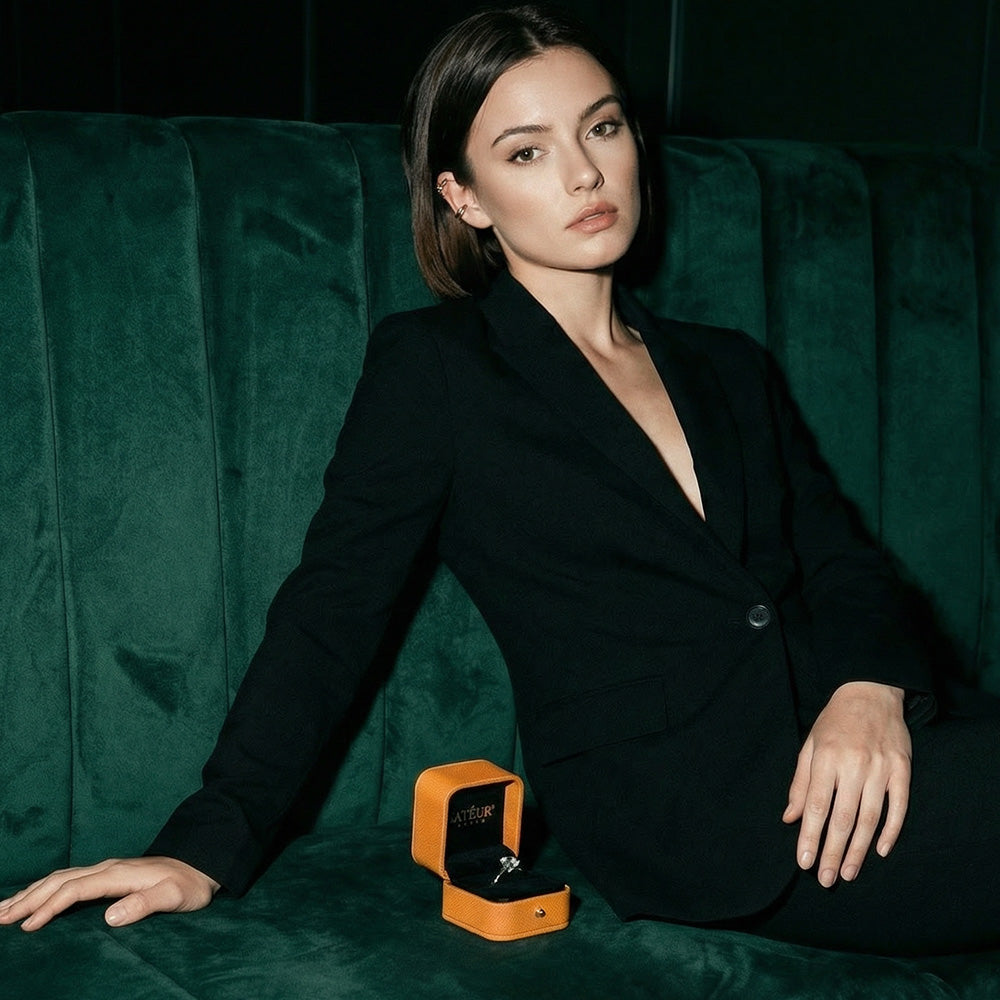
A diamond alternative engagement ring gives you the visual impact of a fine diamond centre stone — D-E colour, brilliant sparkle, wear-everyday hardness — at a fraction of mined-diamond pricing. Satéur Gems®, moissanite, sapphire, and morganite each serve a different buyer; the right choice depends on optics, durability, and budget. This guide covers the full landscape honestly, with a direct comparison table, so you can choose with clarity.
Key Takeaways
- Satéur Gems® offer D-E colour clarity at approximately 1% of a mined diamond's price — the benchmark for diamond-look value.
- Premium diamond simulants achieve Mohs hardness suitable for daily-wear engagement rings, with clean white brilliance visually indistinguishable from a flawless diamond to the naked eye.
- Moissanite is a lab-created gemstone (silicon carbide) with Mohs ~9.25 hardness and approximately 2.4× the fire of mined diamond — vivid rainbow dispersion is its signature trait.
- Alternative gemstones for engagement rings include moissanite, sapphire, morganite, and trademarked diamond simulants — each with distinct optical and durability profiles.
- Diamond alternative engagement rings are available from approximately $88 entry price through the Satéur collection, with the Destinée Ring from $138.

Diamond Alternatives for Engagement Rings
The category has expanded considerably. Today's buyers navigate at least four distinct options when choosing an alternative centre stone: trademarked diamond simulants, lab-created moissanite, sapphire, and morganite. Each occupies a different position on the spectrum of appearance, durability, and price.
Understanding that spectrum is the work of this article. The goal is an honest account of the trade-offs — not a list of superlatives — so you can match the right gemstone to the right ring and the right wearer.
- Trademarked diamond simulants (e.g. Satéur Gems®) — engineered for diamond-accurate colour and brilliance; composition proprietary
- Moissanite — lab-created silicon carbide; harder than diamond on some scales, with vivid rainbow fire that distinguishes it clearly from diamond
- Sapphire — natural or lab-created corundum; Mohs 9, iconic royal blue or colourless varieties
- Morganite — beryl family, Mohs 7.5–8; warm peach-rose tone, softer durability profile
For buyers specifically researching diamond alternatives for an engagement ring, the diamond alternative engagement rings overview and the broader guide to diamond alternatives provide additional context alongside this article.
What Makes a Strong Diamond Alternative
An engagement ring worn daily must meet practical thresholds that a collector's piece does not. Three properties matter most: hardness (Mohs scale), optical performance (refractive index and dispersion), and dimensional stability under heat and cleaning.
Hardness and wearability
Mined diamond is Mohs 10 — the hardest natural material. For daily wear, Mohs 8 is the accepted floor; below that, surface scratching becomes visible within a year or two of everyday exposure. Moissanite (Mohs ~9.25) and quality diamond simulants sit comfortably in the hard-wear tier. Morganite (Mohs 7.5–8) requires more careful handling and is better suited to occasional wear or protective settings.
Optical performance
Two optical properties govern how a gem looks in the hand: refractive index (brightness, light return) and dispersion (fire — coloured sparkle). Mined diamond has a refractive index of approximately 2.42 and a dispersion of 0.044. Moissanite has higher dispersion (~0.104), producing its characteristic rainbow fire. Premium diamond simulants are engineered to replicate diamond's colour profile — the clean white brilliance of a flawless D-E stone — rather than exceed it.
Long-term stability
Hard gemstones and quality simulants are stable under normal cleaning (ultrasonic, steam, mild soap and water). Morganite and some coloured stones can show colour shift or abrasion over years of intensive wear. Sapphire (corundum, Mohs 9) is among the most chemically and mechanically stable alternatives available.
Satéur Gems: The Diamond-Look Value Proposition

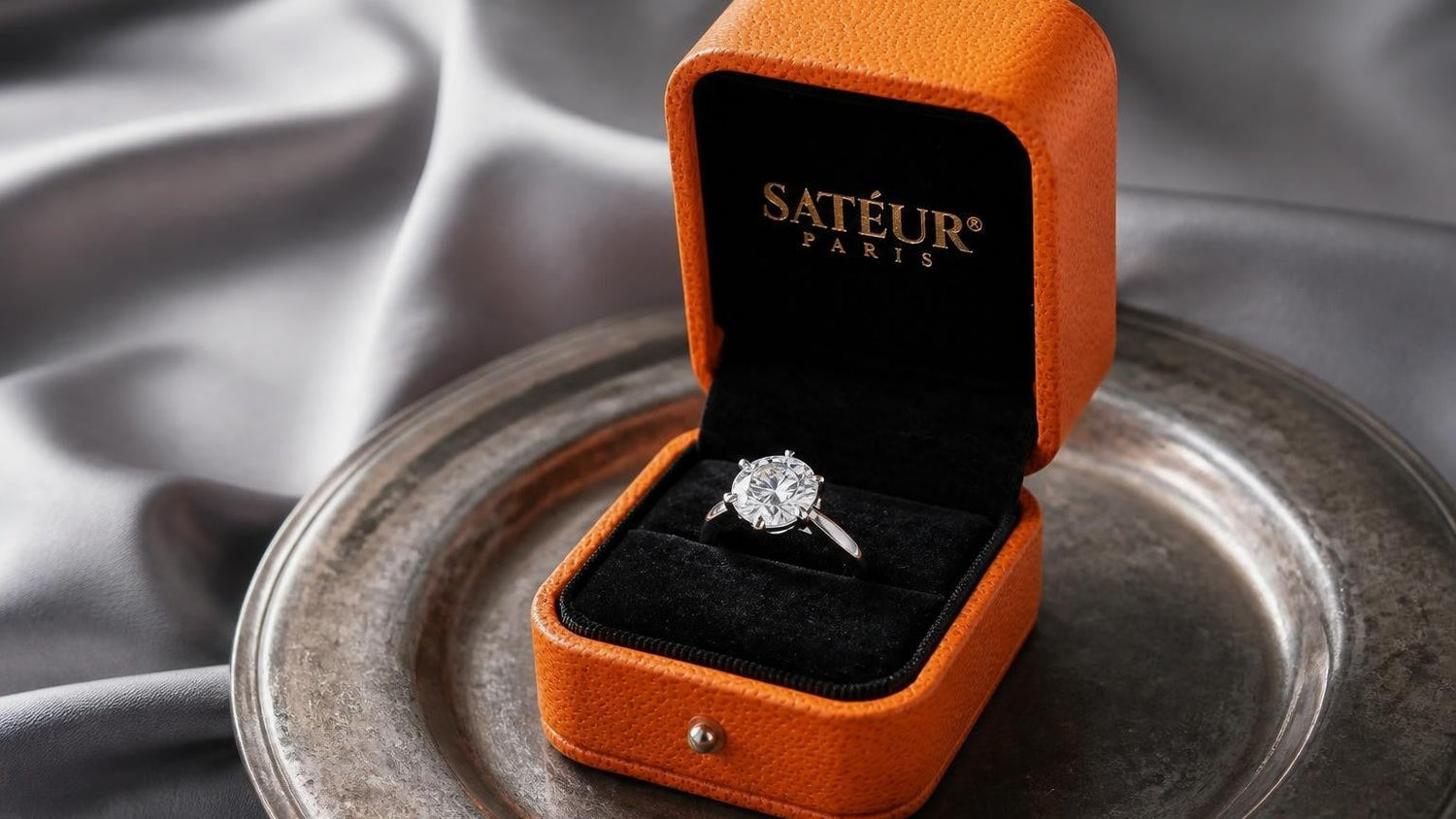
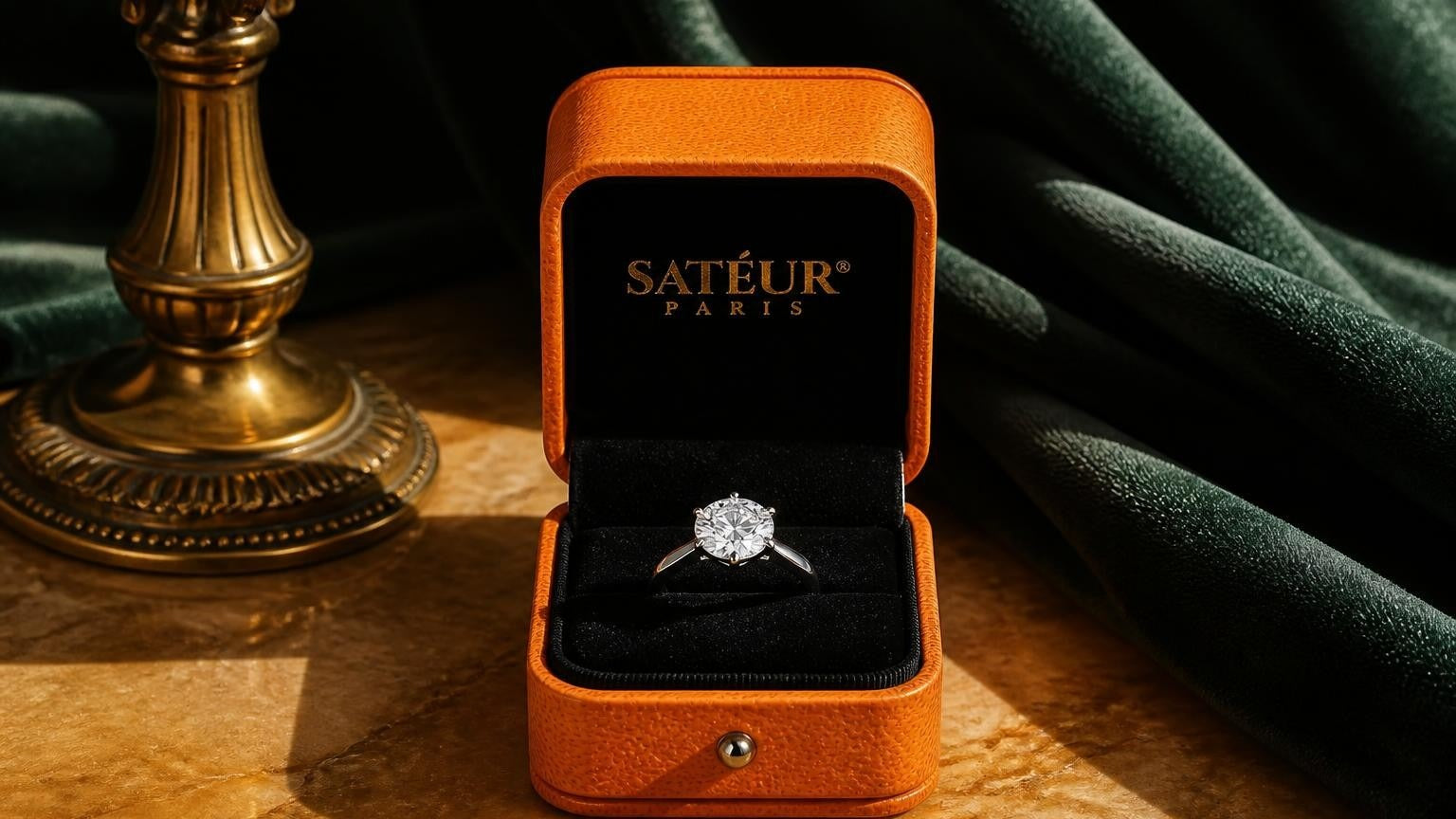
Satéur Gems® is a trademarked diamond simulant engineered to replicate the look of a flawless diamond. The composition is proprietary — never publicly disclosed — but the optical output is specific: D-E colour clarity, excellent cut, clean white brilliance to the naked eye. The price point is approximately 1% of a comparable mined diamond's retail price.
The headline metric: a 1.00 carat mined diamond of comparable colour and cut would retail between $5,000 and $12,000. The Satéur Destinée Ring™ — 1.00 carat round cut Satéur Gems® in 18k gold finish — is available from $138 through the Satéur engagement rings collection.
- Colour grade: D-E
- Cut grade: Excellent
- Refractive index: ~2.39–2.65 (composition-specific, within the diamond-simulant tier)
- Mohs hardness: ~8.8–9.25 (hard-wear daily tier)
- Setting: 18k gold finish
- Price: from $138 (compare to $5,000–$12,000+ for mined equivalent)
The optics read as flawless diamond to the naked eye. Under specialist instruments the material reads differently from mined diamond — which is true of every simulant and lab-grown stone. For a ring worn to dinner, worn in photographs, worn as the centrepiece of a proposal: the visual experience is the point. That experience, at this price, is the Satéur value proposition.
The brand's broader guide to alternative engagement ring stones covers how Satéur Gems® sits within the wider simulant category.
Engagement Ring Styles with Diamond Simulants

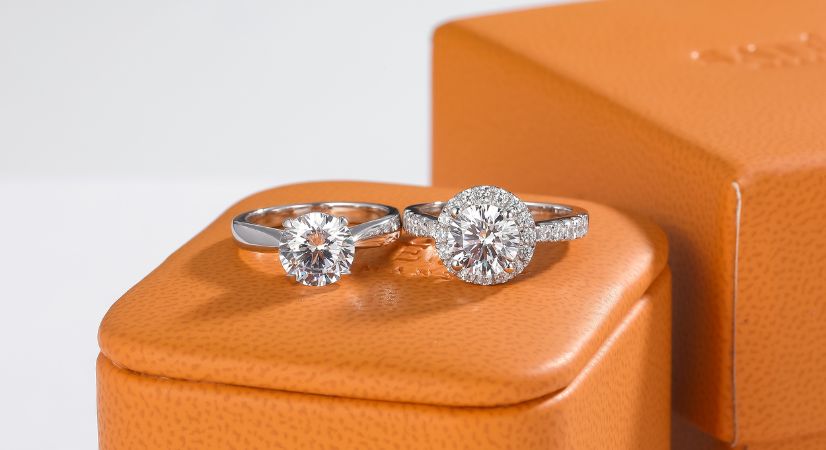
The choice of setting style shapes how any centre stone reads at scale. For a diamond-look simulant, the classic solitaire — a single brilliant-cut stone in a four or six-prong setting on a plain band — is the format that most directly communicates the diamond parallel. The stone reads large, clean, and uncluttered.
Solitaire
The dominant format for engagement rings. A single centre stone, typically round brilliant or princess cut, on a plain or knife-edge band. Every carat of light is concentrated in one stone. Works proportionately on all hand types — narrower bands suit slender fingers; wider bands suit wider fingers.
Halo
A band of smaller accent stones encircles the centre gem. Visually enlarges the centre stone by approximately 0.5 carats in perceived size. Works well with round, oval, cushion, and pear cuts. The accent stones can be simulant, moissanite, or CZ depending on budget tier.
Three-stone
A centre stone flanked by two side stones, often of matched or graduated cut. Symbolically associated with past, present, and future. The wider footprint suits hands with broader proportions.
Cluster and vintage
Multiple smaller stones arranged to fill the visual footprint of a larger stone. Can achieve a striking surface presence with less spend per stone. Vintage and Art Deco settings translate particularly well when the centre simulant has diamond-accurate colour — the metalwork, not the gem, carries the period character.
Design Your Own Alternative Engagement Ring
Most simulant and moissanite rings are available with meaningful customisation within the production range: metal choice (18k gold finish, white gold, rose gold), setting style, band width, and ring size. Custom silhouettes beyond the standard production set require a bespoke commission, which is outside Satéur's direct-sale model but available through specialist jewellers who work with these materials.
Within the Satéur collection, the Destinée Ring™ is available in a full range of finger sizes and ships worldwide, with a 30-day return window and lifetime Satéur Care. For buyers who want to assess scale before committing, the standard sizing guide (based on inner circumference or US ring sizes) is the reliable route — no specialist ring-sizer required.
Comparison: Diamond Simulants vs. Mined Diamonds

The table below provides an honest comparison across the main options. All price figures are USD, based on a 1.00 carat round-cut stone of comparable quality where applicable.
| Stone | Mohs | Optical character | Price (1ct equiv.) | Daily-wear |
|---|---|---|---|---|
| Mined diamond | 10 | Crisp white brilliance, benchmark fire | $5,000–$15,000+ | Excellent |
| Satéur Gems® | ~8.8–9.25 | Clean white brilliance, D-E colour, diamond-accurate to the naked eye | from $138 | Excellent |
| Moissanite | ~9.25 | Vivid rainbow fire (~2.4× diamond dispersion), visibly distinct from diamond | $400–$1,200 | Excellent |
| Lab diamond | 10 | Chemically identical to mined diamond; same optical profile | $400–$2,000 | Excellent |
| Sapphire | 9 | Deep blue or colourless; lower brilliance than diamond-tier gems | $500–$3,000+ | Excellent |
| Morganite | 7.5–8 | Warm peach-rose colour; softer dispersion | $100–$600 | Moderate — protective setting recommended |
| CZ (cubic zirconia) | 8–8.5 | Bright initially; clouds and scratches visibly within 1–3 years of daily wear | $10–$80 | Limited — degrades with wear |
Moissanite's vivid rainbow dispersion is its defining trait — approximately 2.4× the fire of mined diamond. That is not a flaw; for buyers who love coloured sparkle, it is the draw. For buyers who specifically want the diamond's precise colour profile — clean white brilliance with no rainbow differentiation — Satéur Gems® or a lab diamond are the closer matches.
CZ deserves honest treatment: it is a legitimate budget option for non-engagement-ring jewellery, but for a ring worn daily, the degradation timeline (clouding and surface scratching within one to three years) makes it a practical mismatch for the role an engagement ring plays.
FAQ: Diamond Alternatives and Engagement Ring Choice
What is a diamond alternative engagement ring?
A diamond alternative engagement ring uses a centre stone other than a mined diamond — typically a trademarked diamond simulant, moissanite, lab-created gemstone, sapphire, or morganite. The term covers everything from stones that closely replicate diamond's visual profile (simulants, lab diamonds) to those that offer a clearly distinct aesthetic (sapphire, morganite). The unifying factor is that the centre stone is chosen deliberately as a non-mined-diamond option, usually for price, ethics, or design preference.
How do diamond simulants compare to mined diamonds in appearance?
Premium diamond simulants like Satéur Gems® replicate the optical profile of a D-E colour mined diamond — clean white brilliance, excellent light return — to the naked eye. Under specialist spectroscopic instruments, the material reads differently from mined diamond, as it does for every non-diamond material. For visual purposes in daily life — under room light, natural light, or photographic conditions — the difference is not visible to the unaided eye. Moissanite, by contrast, is visibly distinct from diamond due to its higher dispersion producing vivid rainbow fire.
Are diamond alternative engagement rings durable for everyday wear?
The durability answer depends on which alternative. Satéur Gems® (Mohs ~8.8–9.25), moissanite (Mohs ~9.25), lab diamond (Mohs 10), and sapphire (Mohs 9) all sit in the hard-wear tier suitable for daily engagement ring wear without special precautions. Morganite (Mohs 7.5–8) benefits from a protective bezel or halo setting for daily wear. CZ (Mohs 8–8.5) scratches and clouds visibly within one to three years of intensive daily wear, making it less suited to a ring worn continuously.
What price range should I expect for a diamond alternative engagement ring?
Price varies widely by stone and setting. Satéur Gems® engagement rings start from $138 (the Destinée Ring™, 1.00ct round cut, 18k gold finish); the full collection starts from approximately $88 for earring entry points. Moissanite rings in a comparable solitaire setting typically run $400–$1,200. Lab diamond rings are $400–$2,000 for a 1ct equivalent. Sapphire engagement rings range from $500 to $3,000+ depending on carat and origin. All figures are USD.
Can I customise a diamond simulant engagement ring with different metals and settings?
Within Satéur's production range, the Destinée Ring™ is available across all standard ring sizes and ships in an 18k gold finish setting. For alternative metals or fully custom silhouettes beyond the production line, bespoke commission through a specialist jeweller who works with simulant materials is the standard route. Most of the major simulant and moissanite brands similarly offer colour choice (white gold finish, rose gold finish, yellow gold finish) within their catalogued styles.
Why choose a diamond alternative for an engagement ring?
The primary driver for most buyers is price relative to visual impact. A premium diamond simulant or moissanite ring delivers the full visual experience of a fine engagement ring — substantial centre stone, quality setting, lasting wearability — at a fraction of the mined diamond cost. Secondary drivers include ethical preference (no mining), the ability to allocate budget to the wedding or other priorities, and in some cases an active preference for moissanite's vivid fire over diamond's classic white brilliance. The value case is straightforward: the same visual result, for approximately 1% of the price, with an engagement-ring-grade durability profile.

Satéur Destinée Ring™
The look of a flawless diamond — from $138.
D-E colour · Excellent cut · 18k gold finish
Free worldwide delivery. 30-day returns. Lifetime Satéur Care.
Shop the Destinée RingFree worldwide shipping · 30-day returns · Lifetime Satéur Care















Leave a comment
This site is protected by hCaptcha and the hCaptcha Privacy Policy and Terms of Service apply.