



Diamond alternatives cover three distinct categories — diamond simulants, lab-grown diamonds, and alternative gemstones — each delivering a different trade-off between optical appearance, durability, and price. A diamond simulant such as moissanite can offer the look of a flawless diamond at approximately 1% of the mined-diamond price; a lab-grown diamond shares the same chemical structure as a mined stone but costs 60–80% less. Understanding which category fits your priorities is the essential first step.
Key Takeaways
- Diamond simulants offer the optical appearance of a flawless diamond at approximately 1% of a mined diamond's price.
- Moissanite — a lab-created gemstone — rates Mohs 9.25 and produces approximately 2.4 times the fire of diamond, making it the most durable simulant category.
- Cubic zirconia and white sapphire are established diamond alternatives with distinct durability profiles; CZ typically shows visible clouding within one to three years of daily wear.
- Lab-grown diamonds share the same chemical structure as mined diamonds — openly disclosed — and cost 60–80% less; they sit in a separate category from simulants.
- Satéur Gems® diamond simulant engagement rings start from $68, combining D-E colour grading and Excellent cut specifications with the comparative-value positioning of fine jewellery.
What Are Diamond Alternatives
The term "diamond alternative" covers any gemstone used in place of a mined diamond. In practice, three categories dominate the market.
Diamond simulants are stones engineered to replicate the visual appearance of diamond — the crisp white brilliance, the facet geometry, the premium look — without sharing diamond's chemical composition. Moissanite (silicon carbide), cubic zirconia (zirconium dioxide), and white sapphire are the three most widely chosen simulants. They are visually comparable to diamond with the naked eye and cost a fraction of the mined stone.
Lab-grown diamonds are genuine diamonds — same carbon crystal lattice, same Mohs 10 hardness, same optical properties — grown in a controlled environment rather than mined from the earth. They are disclosed openly and priced 60–80% below mined diamonds of equivalent grade.
Alternative gemstones (sapphire, ruby, emerald, morganite) are chosen for their colour and character rather than as diamond substitutes. They sit outside the "diamond look" category and are beyond the scope of this guide.

Top Diamond Simulant Options
Within the simulant category, three stones account for the majority of engagement ring purchases.
Moissanite
Moissanite is a lab-created gemstone of silicon carbide, first identified in meteorite fragments. It rates Mohs 9.25 — close to diamond's Mohs 10 — and its refractive index of 2.65–2.69 produces approximately 2.4 times the fire of diamond: vivid, rainbow-coloured prismatic sparkle under bright light. Modern moissanite is engineered to D-E colour grades, eliminating the yellow tint present in earlier generations. It holds its optical quality permanently; there is no clouding or degradation over time. Of all the diamond simulants, moissanite delivers the strongest combination of durability and optical presence for a ring worn every day.
Cubic Zirconia
Cubic zirconia (CZ) is synthesised from zirconium dioxide and has been commercially available since the late 1970s. It rates Mohs 8–8.5 with a refractive index of 2.15–2.18 — lower than both diamond and moissanite. New CZ shows reasonable brilliance; the practical limitation is durability. At Mohs 8–8.5, everyday contact accumulates fine surface scratches that progressively cloud the stone. Visible degradation typically occurs within one to three years of daily wear. CZ is well suited to occasional-wear fashion jewellery; it is less suited to an engagement ring worn every day.
Cubic Zirconia vs Moissanite: The Key Difference
The distinction between CZ and moissanite reduces to one word: permanence. Moissanite remains unchanged after ten years of daily wear. CZ does not. For budget-conscious fashion pieces worn occasionally, CZ is a sensible choice. For a ring intended to last, moissanite is the stronger option within the simulant tier. For the full two-way breakdown, see our dedicated guide on moissanite vs cubic zirconia.
White Sapphire
Natural and lab-created white sapphire (aluminium oxide, corundum) rates Mohs 9 — durable for daily wear. Its refractive index of 1.76–1.77 is lower than diamond, producing a softer, less intense sparkle. White sapphire delivers durability and an understated diamond-adjacent look; it is a practical choice for those who prefer cooler, quieter optical character over the vivid fire of moissanite.
Simulated Diamonds: Where This Category Fits
Satéur Gems®, moissanite, CZ, and white sapphire are all simulated diamonds in the broad sense — stones designed to replicate diamond's optical appearance without diamond's composition. The meaningful distinctions within the category are hardness, refractive index, and longevity. For a deeper taxonomy, see our guide to simulated diamonds.
Comparison: Diamond Simulants vs. Mined Diamonds
How to Read the Specs
Three numbers determine a simulant's optical performance: Mohs hardness (scratch resistance), refractive index (brilliance), and fire dispersion (colour in sparkle). Diamond is the reference at Mohs 10, RI 2.42, dispersion 0.044. Mohs below 8.8 risks visible scratching under daily wear.

| Property | Mined Diamond | Moissanite | Cubic Zirconia | White Sapphire |
|---|---|---|---|---|
| Mohs hardness | 10 | 9.25 | 8–8.5 | 9 |
| Refractive index | 2.42 | 2.65–2.69 | 2.15–2.18 | 1.76–1.77 |
| Fire (dispersion) | 0.044 | 0.104 (~2.4×) | 0.060 | 0.018 |
| Colour grade | D–Z range | D-E (engineered) | D-E (initial only) | Near-colourless |
| Long-term clarity | Permanent | Permanent | Degrades 1–3 yrs | Permanent |
| Typical cost (1ct) | $4,000–$10,000+ | $300–$700+ | $5–$50 | $100–$400+ |
Moissanite delivers the strongest durability-plus-fire combination among simulants. Its Mohs 9.25 means daily wear does not accumulate the scratching that dulls CZ; its higher dispersion produces vivid colour in its sparkle that is optically distinct from diamond's crisp white brilliance — visible to the naked eye in direct comparison. White sapphire sits between the two in durability but offers the softest optical character. For the two-way simulant comparison in depth, see our guide on moissanite vs cubic zirconia.
Lab-Grown Diamonds vs Simulants: A Different Category
Lab-grown diamonds share diamond's carbon structure, Mohs 10 hardness, and RI of 2.42 — they are diamonds, grown above ground rather than mined. Their price is 60–80% below mined equivalents; a one-carat lab-grown equivalent retails for approximately $1,200–$2,500 versus $4,000–$10,000+ mined. For buyers who want the diamond certificate and composition at a reduced price, lab-grown is the answer. For buyers whose priority is visual equivalence at the lowest possible price point, the simulant tier is the answer.
Fake Diamonds: How the Category Is Framed
The term "fake diamond" informally describes anything that is not a mined diamond. Moissanite is not fake — it is a genuine lab-created gemstone. Lab-grown diamonds are genuine diamonds. Satéur Gems® is a proprietary trademarked simulant, not a counterfeit. The accurate term is diamond alternative or diamond simulant. For a breakdown of how these stones are described, see our guide to fake diamond rings.
Satéur Gems®: The Diamond-Look Value Choice
What Satéur Gems® Is

Satéur Gems® is a trademarked diamond simulant engineered to the optical and durability specifications of the premium simulant tier. The stone carries D-E colour grading and Excellent cut — matching the colour and cut benchmarks of fine diamond — and a Mohs hardness of approximately 8.8. Its clean white brilliance is calibrated to replicate the look of a flawless diamond with the naked eye, without the prismatic rainbow fire of moissanite.
Satéur Gems® composition is not publicly disclosed — a deliberate choice within a trademarked gem category. What is disclosed: D-E colour · Excellent cut · Mohs ~8.8 · refractive index approximately 2.39.
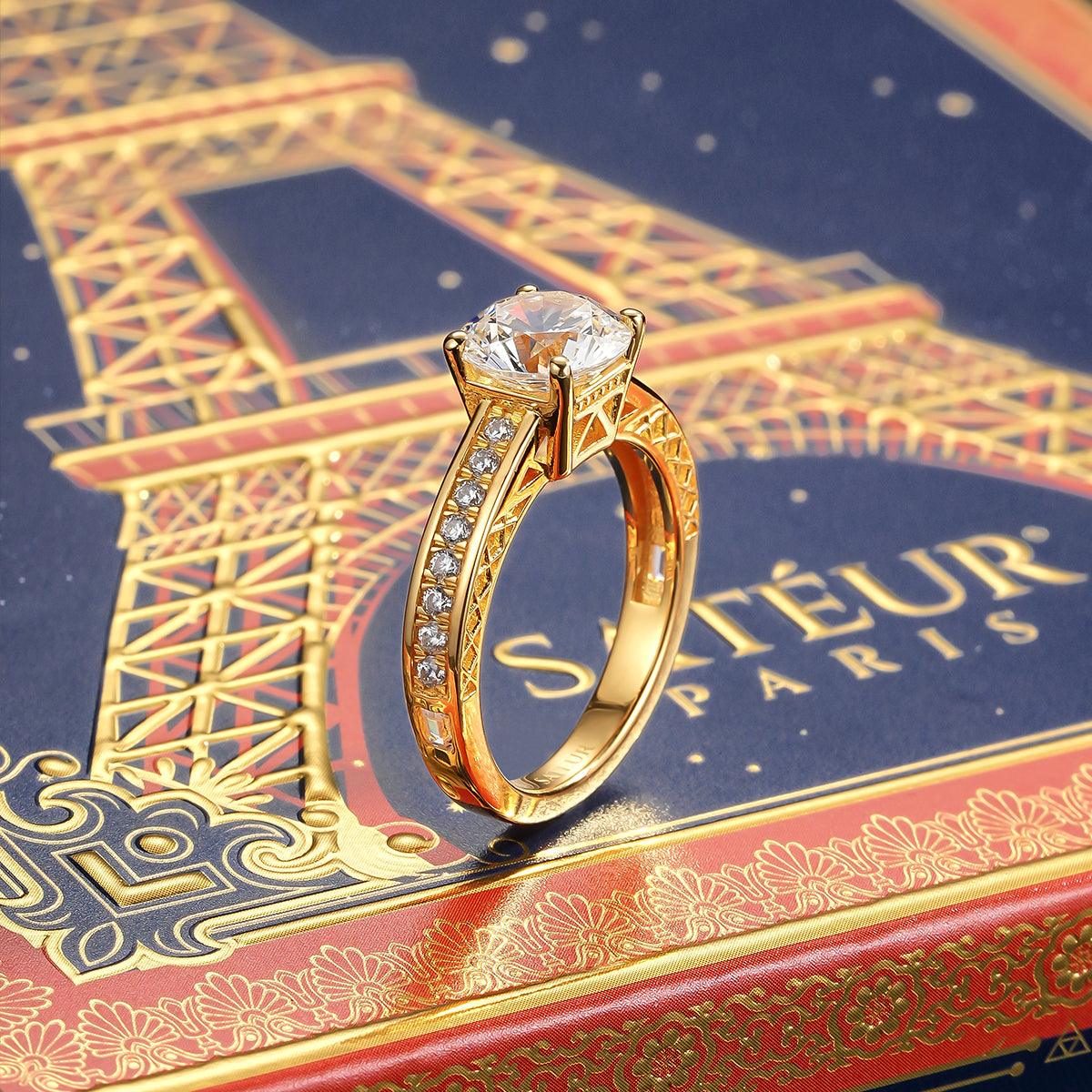
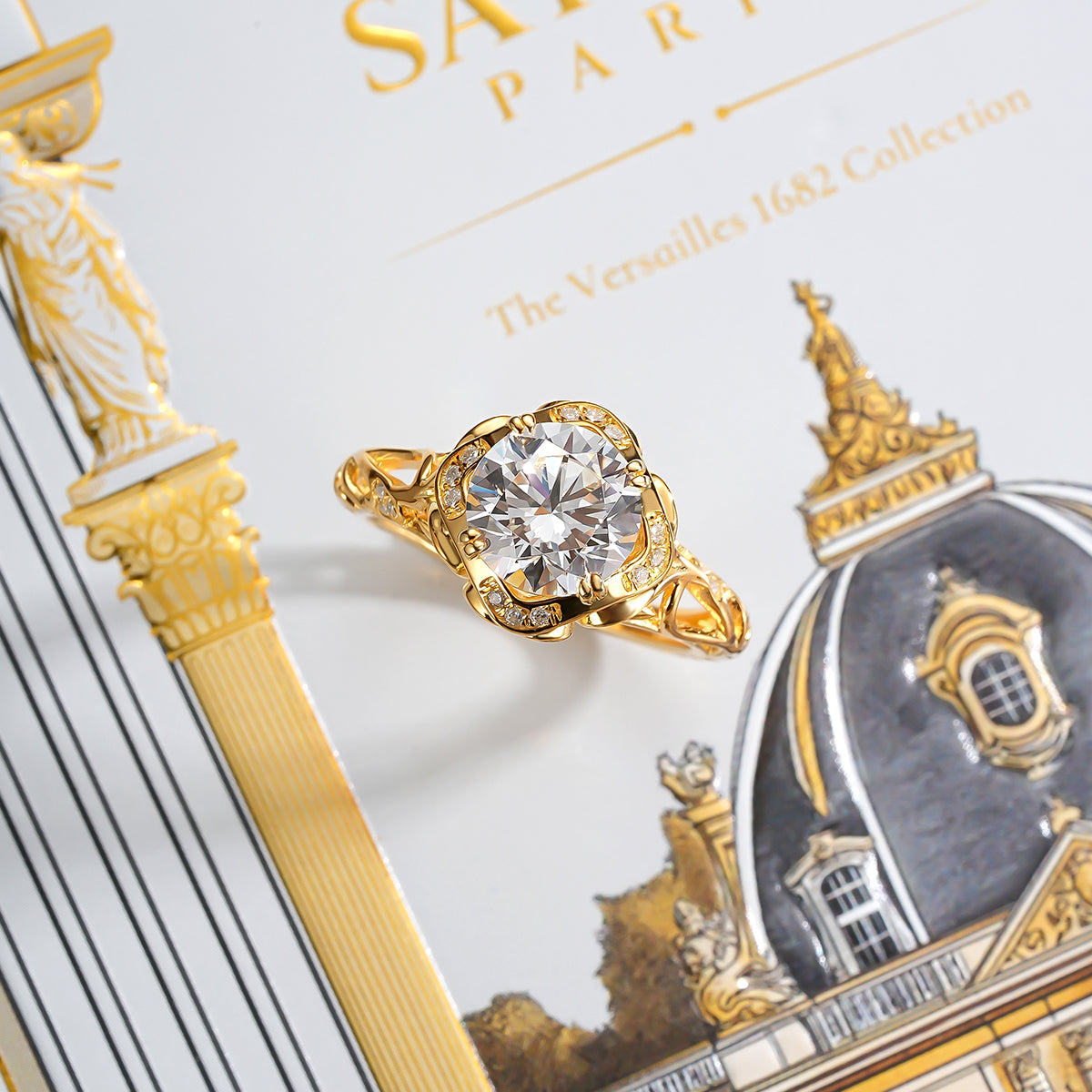
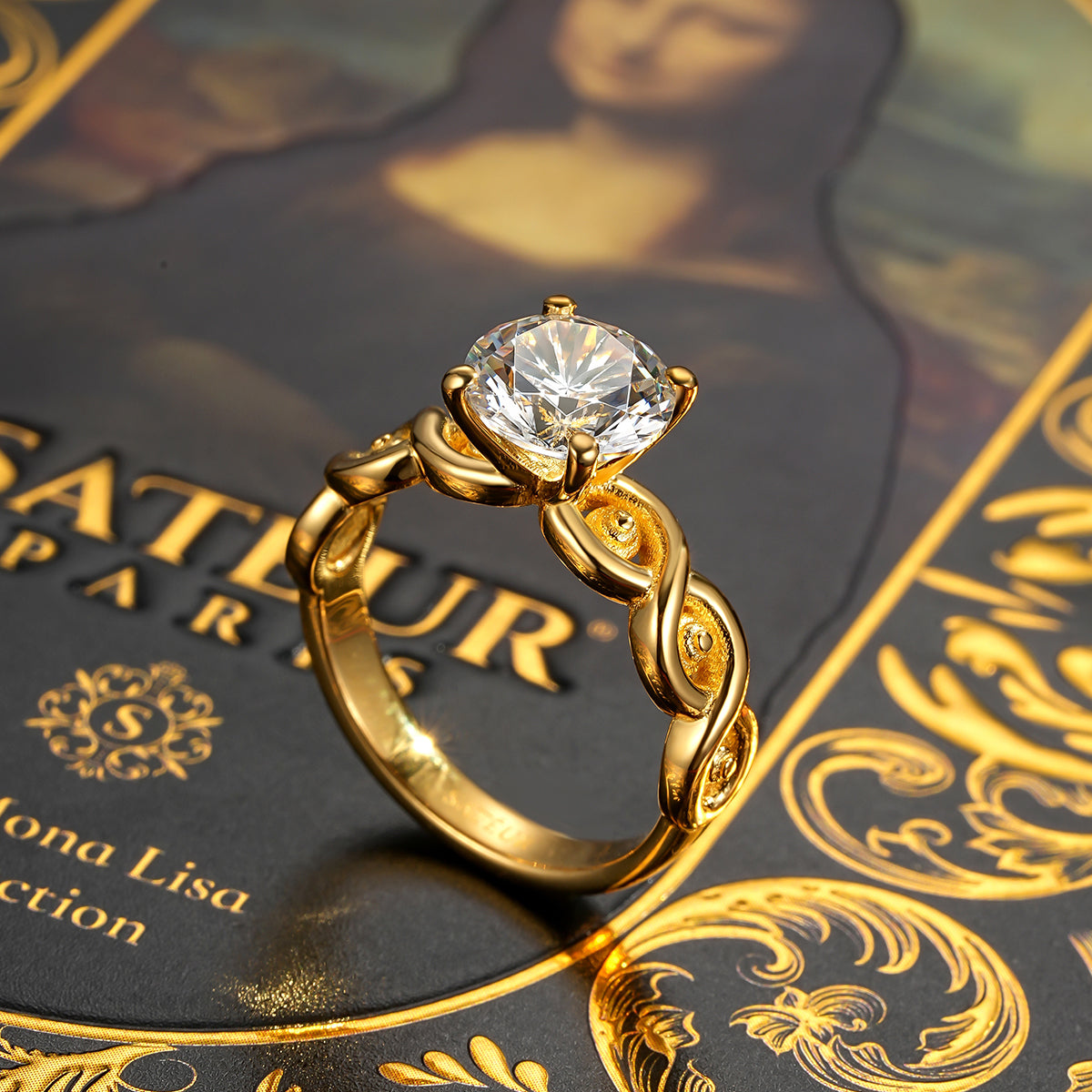
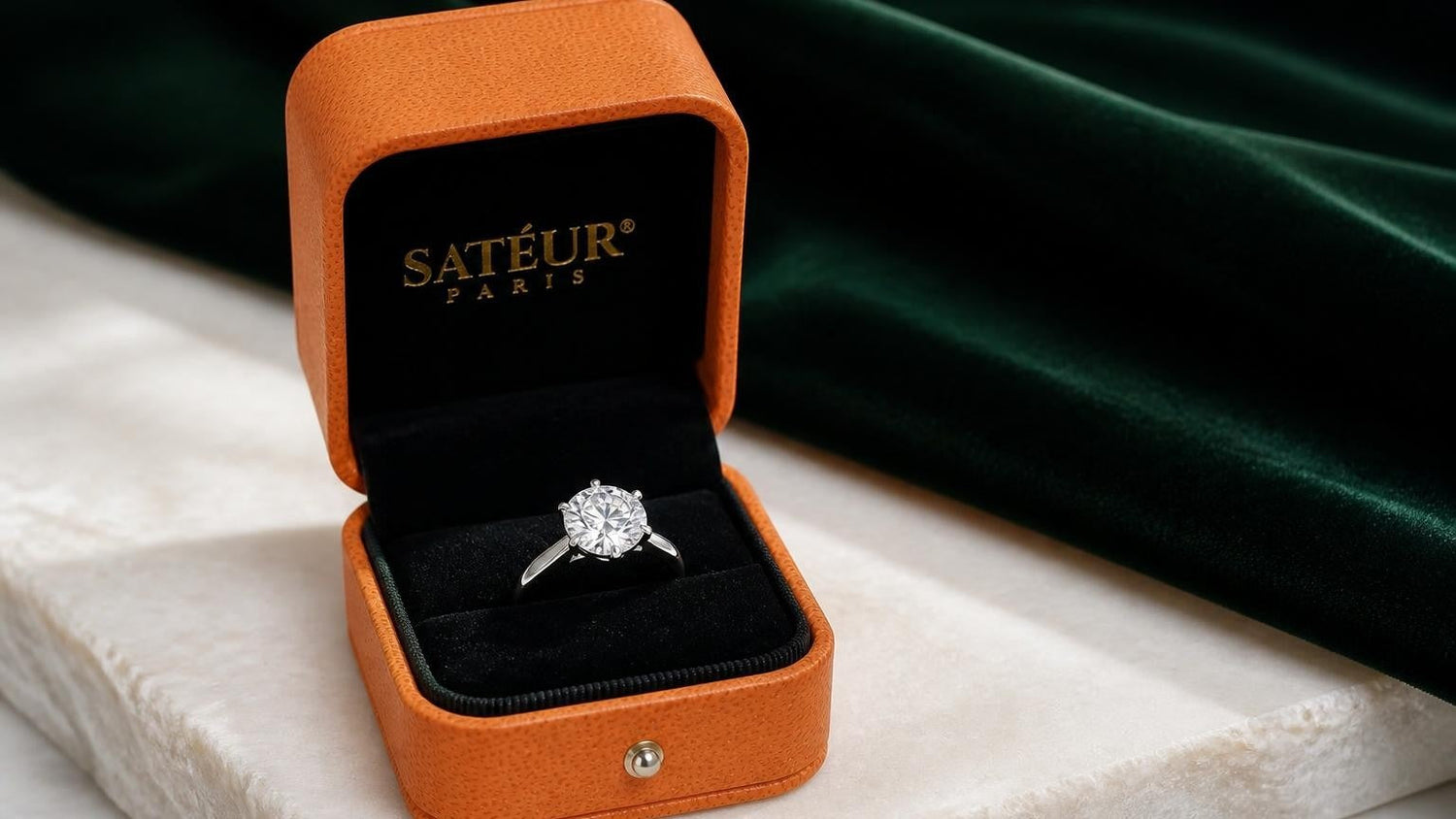
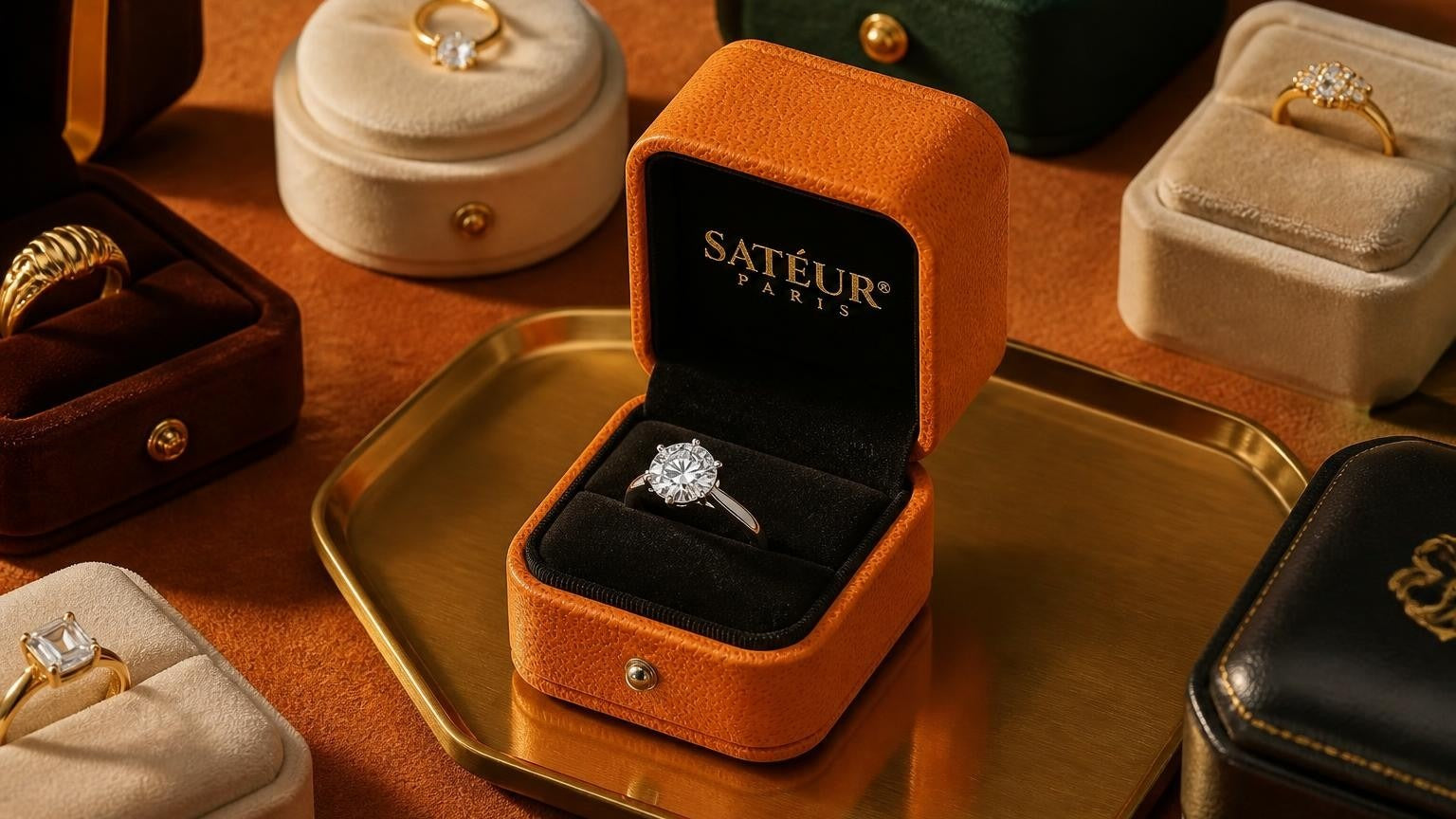
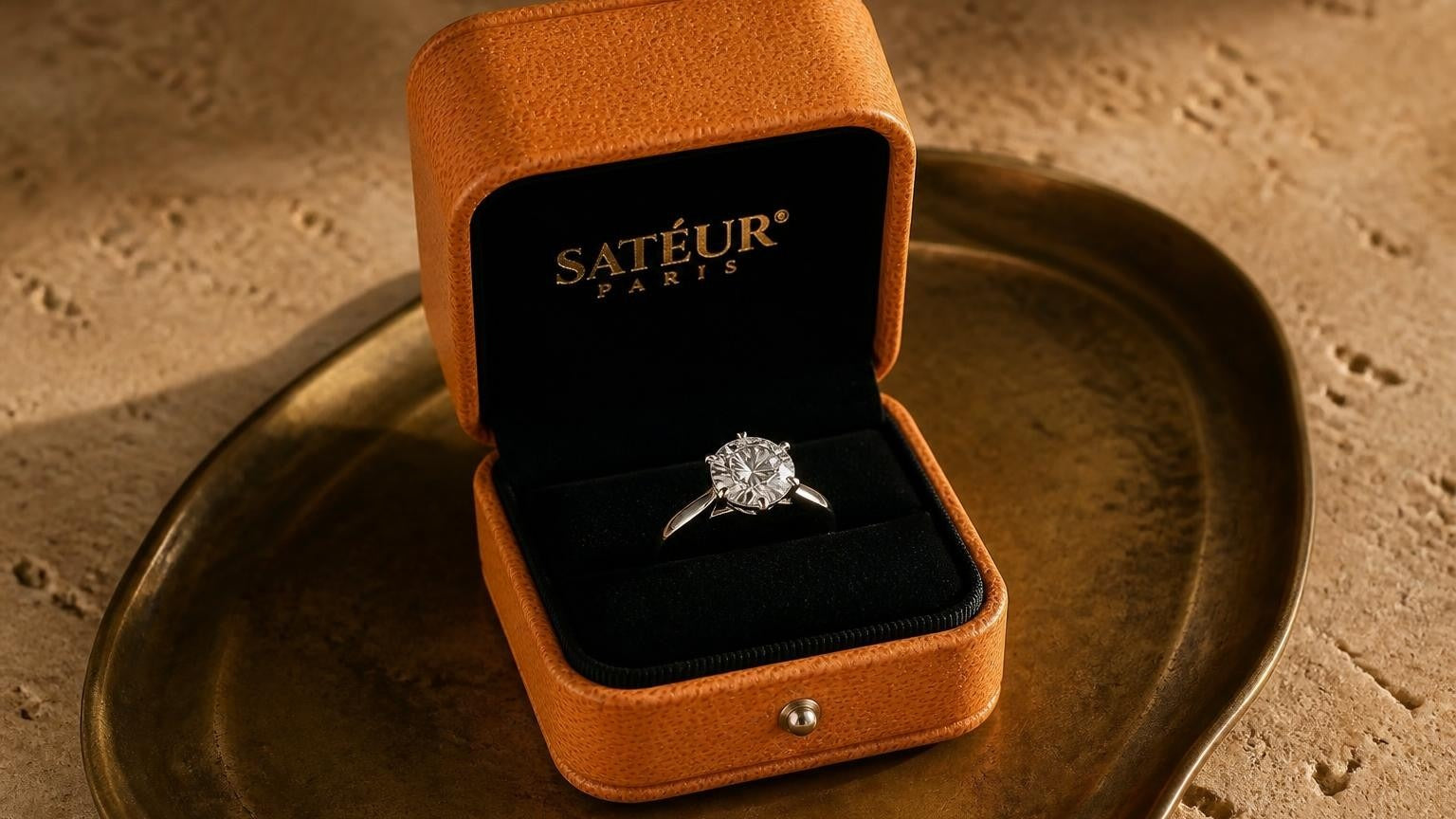
Satéur Gems® engagement rings start from $68 — setting the 1% entry point for diamond-look fine jewellery. The Satéur Destinée Ring™, set in an 18k gold finish, is the signature piece in this tier.
- Comparative value: the look of a flawless diamond at approximately 1% of mined diamond pricing
- D-E colour grade: calibrated to the premium end of the diamond colour spectrum
- Excellent cut: maximises light return and surface brilliance from every facet
- 18k gold finish: warm, durable setting on a fine jewellery standard base
Browse the Satéur engagement rings collection for the full range of Gems® styles and carat weights.
The 1% Value Proposition
A one-carat D-E flawless mined diamond retails from approximately $8,000–$15,000. A Satéur Gems® ring with equivalent visual grading starts from $68. The look is comparable to the naked eye; the price is not. That gap is the brand's core proposition.
Engagement Ring Styles with Diamond Alternatives
Cut and Setting
The most widely chosen silhouettes work equally well across simulant tiers. Round brilliant cut is the dominant choice — it maximises light return and produces the most diamond-adjacent visual impression. Princess cut (square, sharp corners), cushion cut (rounded square), and oval elongate the appearance of the stone. Each of these cuts is available in moissanite, Satéur Gems®, and white sapphire.
Metal Pairing
Metal pairing matters. An 18k gold finish or platinum-finish base amplifies the white optical character of a D-E colour simulant. Yellow gold creates contrast against a colourless stone — a deliberate style choice rather than a matching one. For everyday rings, a four- or six-prong solitaire setting protects the stone and centres attention on the gem. Halo settings add perceived carat weight without changing the stone size.
Which Style Suits Which Simulant
Moissanite's vivid fire is most striking in a solitaire setting. Satéur Gems® clean white brilliance pairs naturally with pavé or halo settings. White sapphire, softer in output, works well in vintage or art-deco designs where the metal detail carries significant visual weight.
For a focused breakdown of ring styles — solitaire, halo, pavé, three-stone, and which simulant suits each — see our guide to diamond ring alternatives for engagement proposals.
Durability and Longevity of Diamond Simulants
Mohs Hardness: The Daily-Wear Test

Durability for an engagement ring worn every day reduces to one question: does the stone scratch under normal conditions? Mohs hardness provides the answer.
- Moissanite (Mohs 9.25): resists everyday contact — keys, granite, fabric, general household surfaces. Optical quality is permanent. No known degradation mechanism under normal wear.
- Satéur Gems® (Mohs ~8.8): durable for daily wear; harder than the quartz (Mohs 7) present in most household dust. The optical surface is stable.
- White sapphire (Mohs 9): comparable durability to moissanite. Surface remains clear over years of wear. The sapphire's lower RI means the stone looks progressively plainer (not cloudier) compared to higher-RI alternatives, but the surface itself holds.
- Cubic zirconia (Mohs 8–8.5): sufficient for occasional wear; insufficient for daily engagement ring use. Fine surface scratches accumulate, producing visible cloudiness within one to three years.
Longevity Over Time
Moissanite and white sapphire maintain their optical quality indefinitely. Satéur Gems® at Mohs ~8.8 holds its surface under normal conditions. Cubic zirconia degrades by hardness physics — no amount of care reverses the cloudiness once surface scratching accumulates.
The practical recommendation for a ring worn every day: moissanite or Satéur Gems® (both above Mohs 8.8), or lab-grown diamond for those who want the mined-diamond specification.
FAQ: Diamond Alternatives Answered
What is a diamond simulant and how does it differ from a mined diamond?
A diamond simulant is a gemstone engineered to replicate the optical appearance of a mined diamond — its brilliance, fire, and colourless character — without sharing diamond's chemical composition (pure carbon). Moissanite is silicon carbide; cubic zirconia is zirconium dioxide; Satéur Gems® is a proprietary trademarked formulation. Mined and lab-grown diamonds are carbon; simulants are not. The visual distinction is minimal to the naked eye in premium simulant tiers; the price distinction is significant.
How do diamond simulants compare in durability to mined diamonds?
Mined and lab-grown diamonds are Mohs 10 — the hardest substance known. Moissanite at Mohs 9.25 and white sapphire at Mohs 9 are highly durable for daily wear. Satéur Gems® at Mohs ~8.8 is suitable for everyday rings. Cubic zirconia at Mohs 8–8.5 is the least durable simulant — adequate for fashion jewellery, less suited to a ring worn every day without replacement.
Can a diamond simulant be used in an engagement ring?
Yes. Moissanite, white sapphire, and Satéur Gems® are all appropriate for daily-wear engagement rings on durability grounds. Cubic zirconia functions in an engagement ring but typically requires stone replacement every one to three years as the surface clouds. The practical choice for a ring intended to last indefinitely is moissanite or a Mohs ~8.8+ simulant.
What colour grades are available in diamond simulants?
Premium moissanite is engineered to D-E colour — colourless, at the top of the diamond colour scale. Satéur Gems® is also D-E colour. Cubic zirconia starts colourless but its colour appearance is affected by surface degradation over time. Older moissanite generations showed a slight yellow or green tint under some lighting; modern production has eliminated this.
Why choose a diamond alternative for fine jewellery?
The primary reason is comparative value: a premium simulant such as moissanite or Satéur Gems® delivers the optical appearance of a flawless diamond at approximately 1% of the mined-diamond price. Secondary reasons include the ethical positioning of lab-created stones (no mining), access to larger carat weights at accessible price points, and the availability of D-E colour grades not dependent on natural diamond supply.
How does the price of a diamond simulant compare to a mined diamond?
A one-carat mined diamond of F colour and VS2 clarity typically retails between $4,000 and $10,000. A one-carat moissanite of equivalent visual grade retails from approximately $300–$700. Satéur Gems® engagement rings start from $68. Lab-grown diamonds of equivalent grade to mined stones cost 60–80% less — so a comparable lab-grown diamond might retail at $1,200–$2,500, versus the simulant tier at $68–$700. The pricing hierarchy: mined diamond > lab diamond > moissanite > Satéur Gems® > CZ.

Satéur Destinée Ring™
The look of a flawless diamond — from $138.
D-E colour · Excellent cut · 18k gold finish
Free worldwide delivery. 30-day returns. Lifetime Satéur Care.
Shop the Destinée RingFree worldwide shipping · 30-day returns · Lifetime Satéur Care















Leave a comment
This site is protected by hCaptcha and the hCaptcha Privacy Policy and Terms of Service apply.