



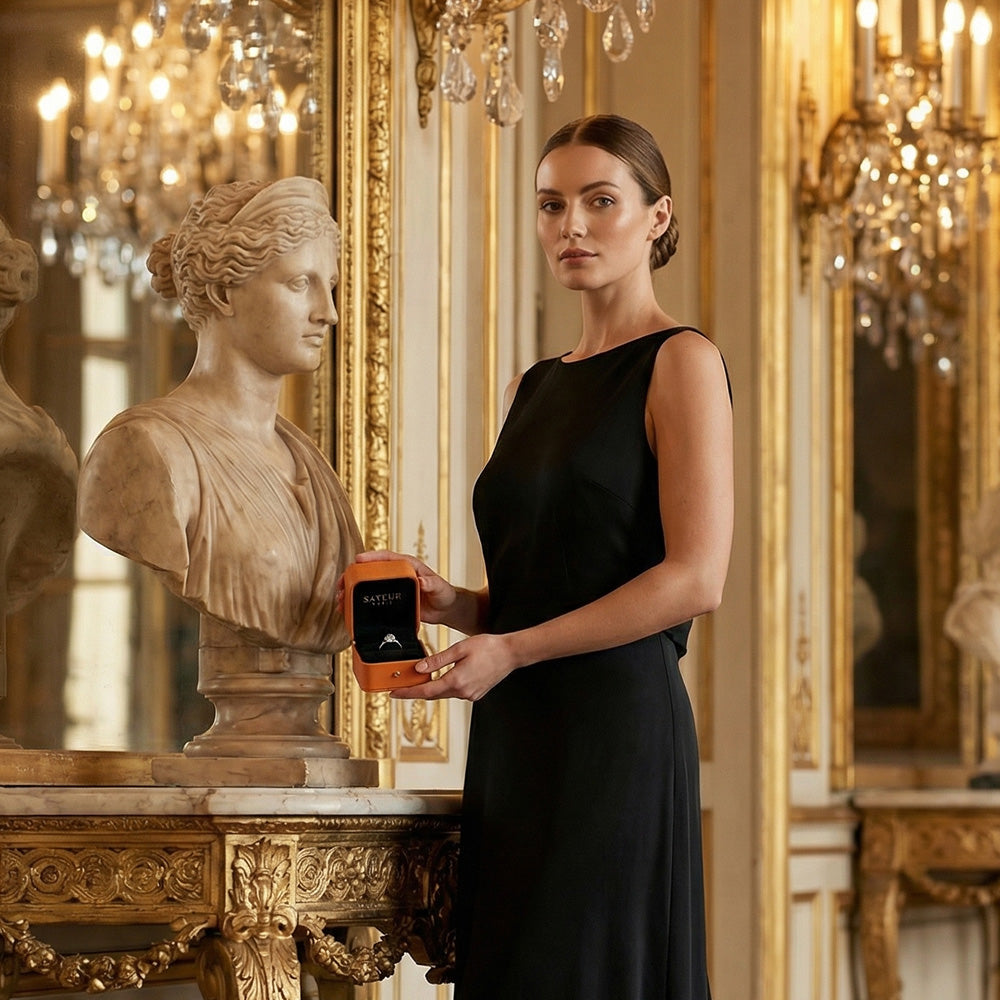


An engagement ring is given during a proposal to mark a couple's intent to marry; a wedding ring is exchanged at the ceremony and worn as a lifelong symbol of the marriage itself. The two rings are distinct in purpose, timing, and design — yet they are often worn together on the same finger.
Key Takeaways
- An engagement ring typically features a centre stone and is presented during a marriage proposal, symbolising commitment and intent to marry.
- A wedding ring or band is worn during the marriage ceremony and after, signifying the legal and emotional bond of marriage.
- Traditionally, both rings are worn on the left ring finger — the wedding band closest to the hand, the engagement ring above it.
- Engagement rings are generally more elaborate and more expensive; wedding bands are typically plainer and more restrained in cost.
- Satéur Gems® with D-E colour and Excellent cut deliver the visual brightness and sparkle of premium diamonds at approximately 1% of mined diamond cost, starting from $138.

Engagement vs Wedding Ring: Core Differences
The engagement ring and wedding ring serve different roles in a couple's journey. The engagement ring arrives first — typically as a surprise — and is worn from proposal to wedding day. The wedding ring enters at the ceremony, exchanged as a mutual vow, and is worn every day thereafter.
| Feature | Engagement Ring | Wedding Ring / Band |
|---|---|---|
| When given | At the proposal | During the wedding ceremony |
| Who wears it | Typically the person being proposed to | Both partners |
| Design | Elaborate; usually features a centre stone | Simple band; plain or with small stones |
| Finger | Left ring finger | Left ring finger, closest to the hand |
| Relative cost | Higher — driven by centre gem and setting | Lower — simpler construction |
| Symbolism | Promise to marry; intent and commitment | Marriage itself; the legal and emotional bond |
What Is an Engagement Ring
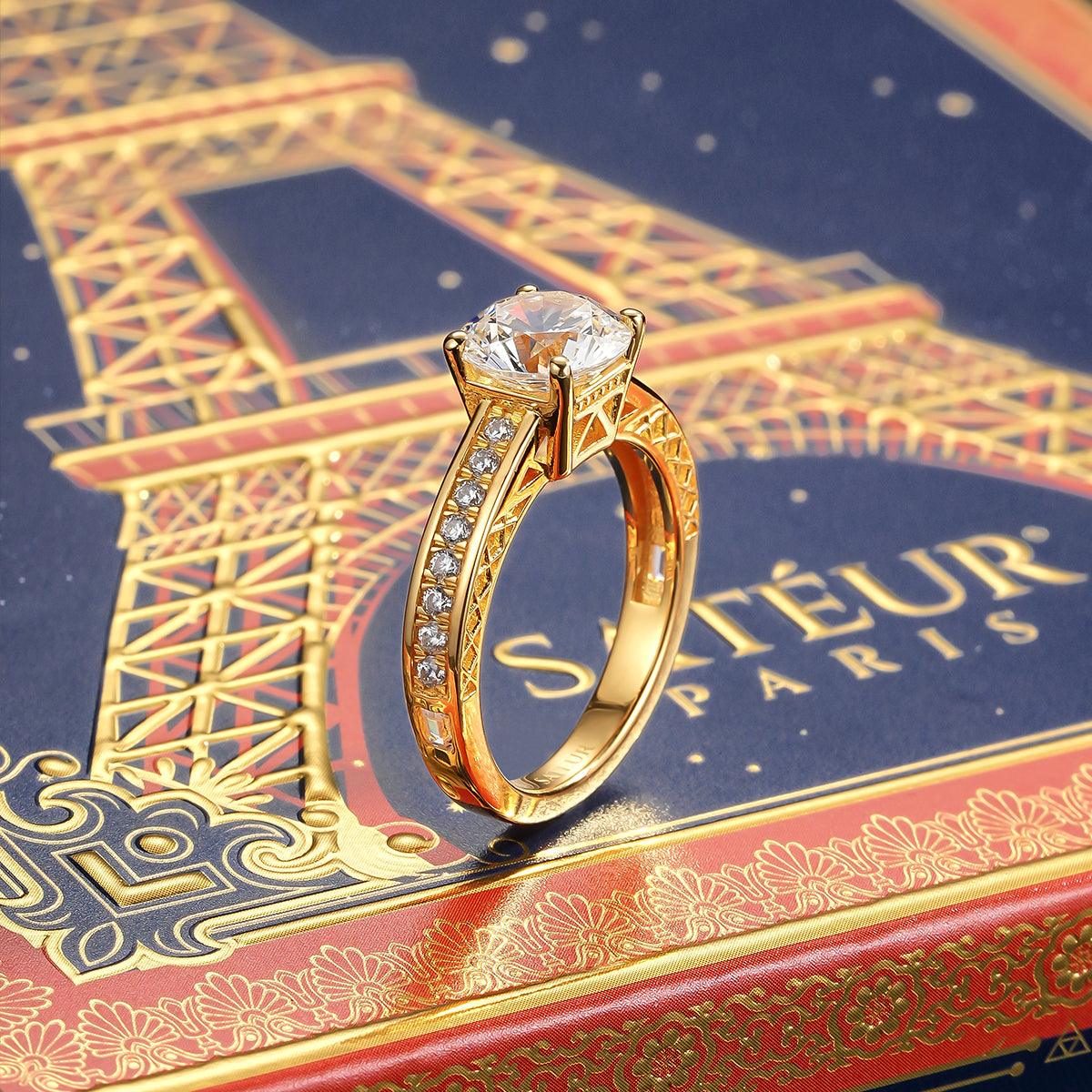
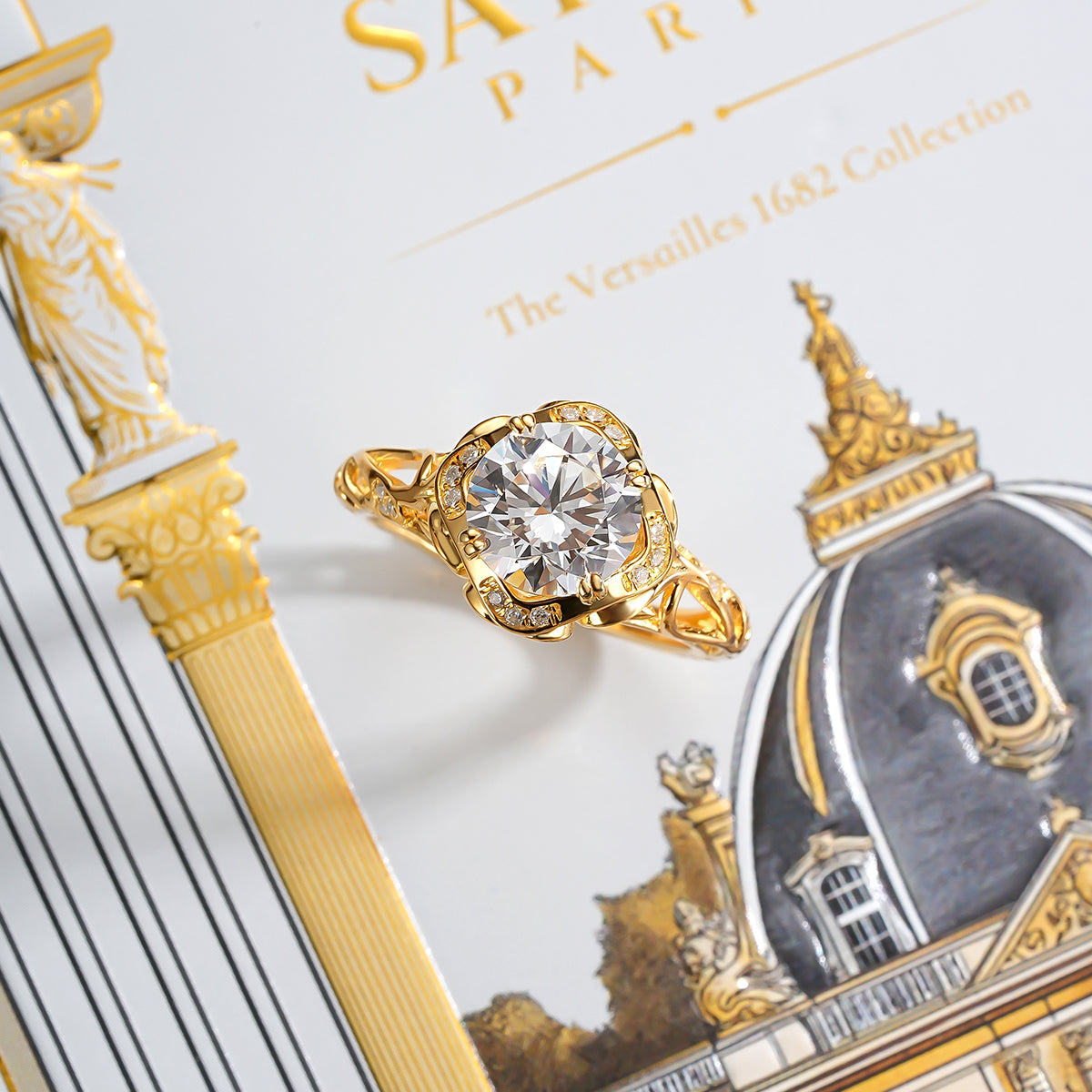
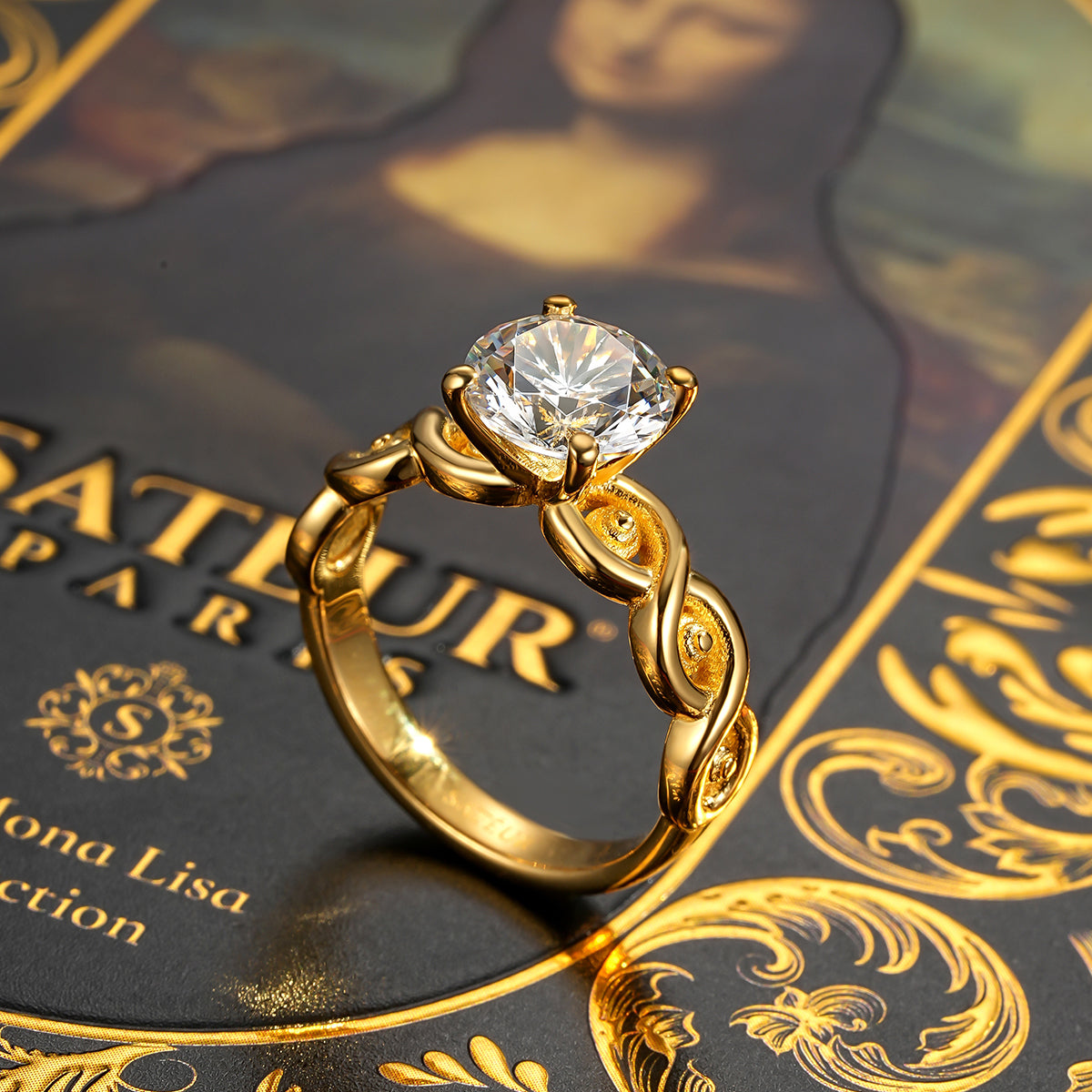
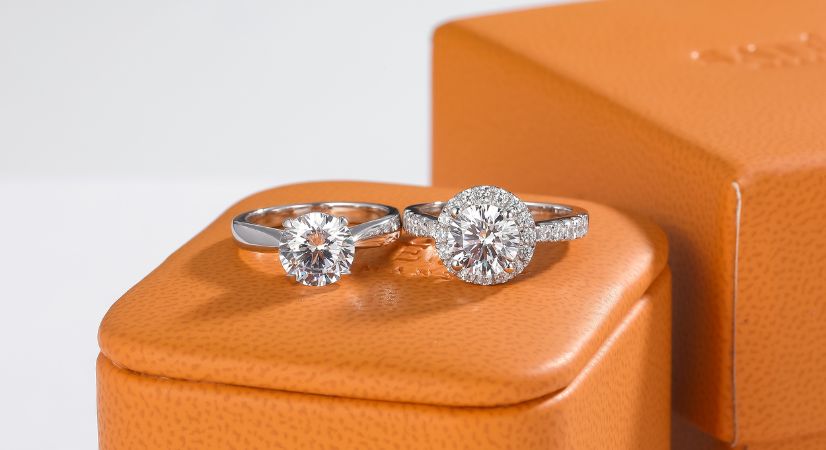
An engagement ring is given at a proposal to symbolise a couple's commitment to marriage. Worn on the left ring finger, it typically features a centre gemstone — diamond, diamond simulant, or coloured stone — in a solitaire, halo, or pavé setting. In most Western traditions, only the person receiving the proposal wears one, though matching proposal sets are increasingly common.
What Is a Wedding Ring or Band
A wedding ring is exchanged during the marriage ceremony itself by both partners. It is characteristically simpler than the engagement ring — a plain polished band is the most traditional form, though eternity and pavé bands are popular. Made from the same metal as the engagement ring, it is worn closest to the hand after the ceremony.

Significance of the Engagement Ring
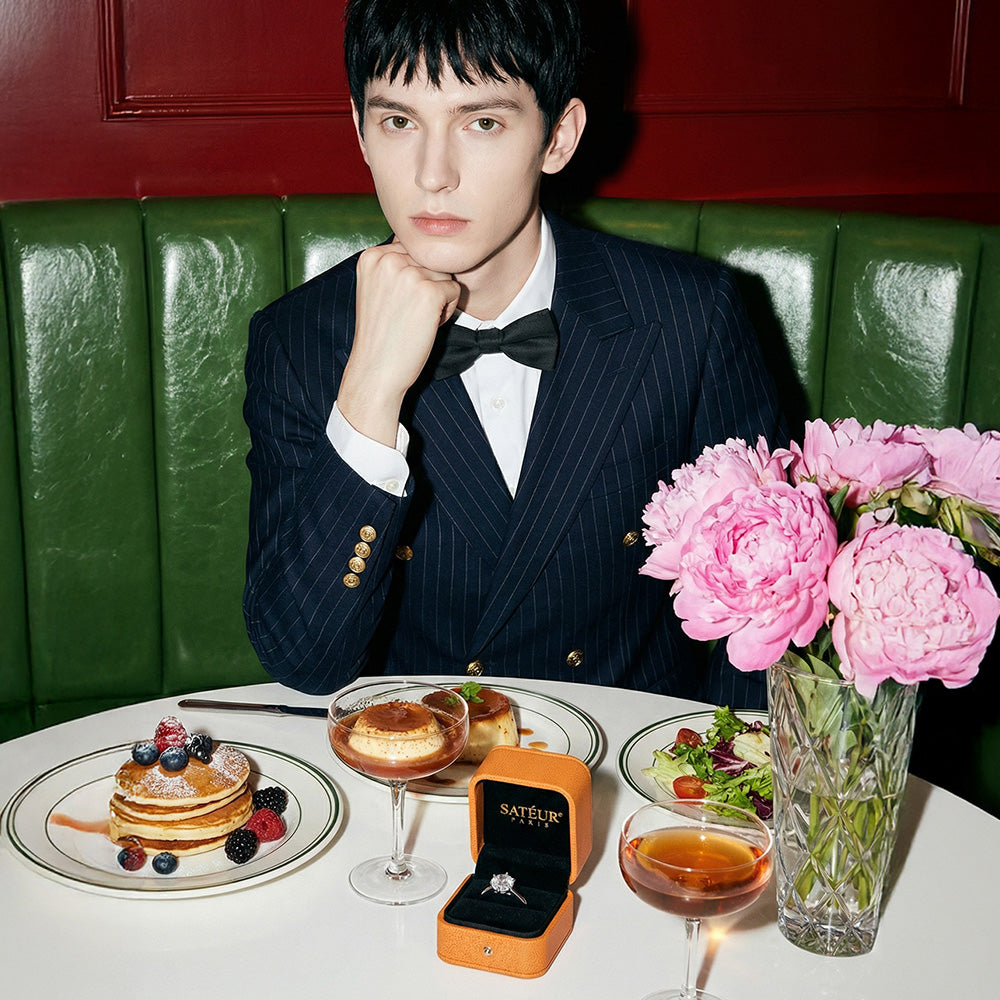
The engagement ring communicates a private commitment made public. It is worn through the engagement period as a visible marker of the promise made at the proposal. The centre stone — traditionally a diamond or diamond simulant — carries most of the symbolic weight, chosen to reflect the wearer's taste and the couple's values.
Significance of the Wedding Ring
The wedding ring is exchanged in the ceremony as a physical token of the vows spoken. Where the engagement ring represents the promise, the wedding ring marks its fulfilment. The circular form — unbroken, with no beginning or end — has symbolised eternity across cultures for centuries. Because it is worn every day, durability and comfort matter as much as design.

How to Wear Engagement and Wedding Rings Together
Both rings are worn on the left ring finger — the wedding band closest to the hand, the engagement ring above it. On the wedding day, many people move the engagement ring to the right hand before the ceremony so the band is placed first, then switch it back. Some couples solder both rings into a seamless set; others wear the wedding band alone day-to-day and reserve the engagement ring for evenings and special occasions.
Engagement Ring Styles and Options
Engagement ring styles range from the classic solitaire — one centre stone in a minimal prong setting — to halo, three-stone, and pavé designs. The centre gem is the defining element and drives most of the cost. Metal choice (yellow gold, white gold, rose gold, platinum) affects both the aesthetic and how the wedding band will stack against it.

Wedding Band Styles and Options
Wedding bands lean towards restraint — a plain polished band is the most traditional form. Pavé and eternity bands add stones; contoured bands are shaped to sit flush against specific engagement ring profiles. Men's bands typically run 5–8 mm wide, often plain with brushed or hammered texture. Comfort fit (rounded interior) is worth requesting for any band worn daily.
Satéur Gems® for Engagement and Wedding Rings: Comparable Beauty at 1% Cost
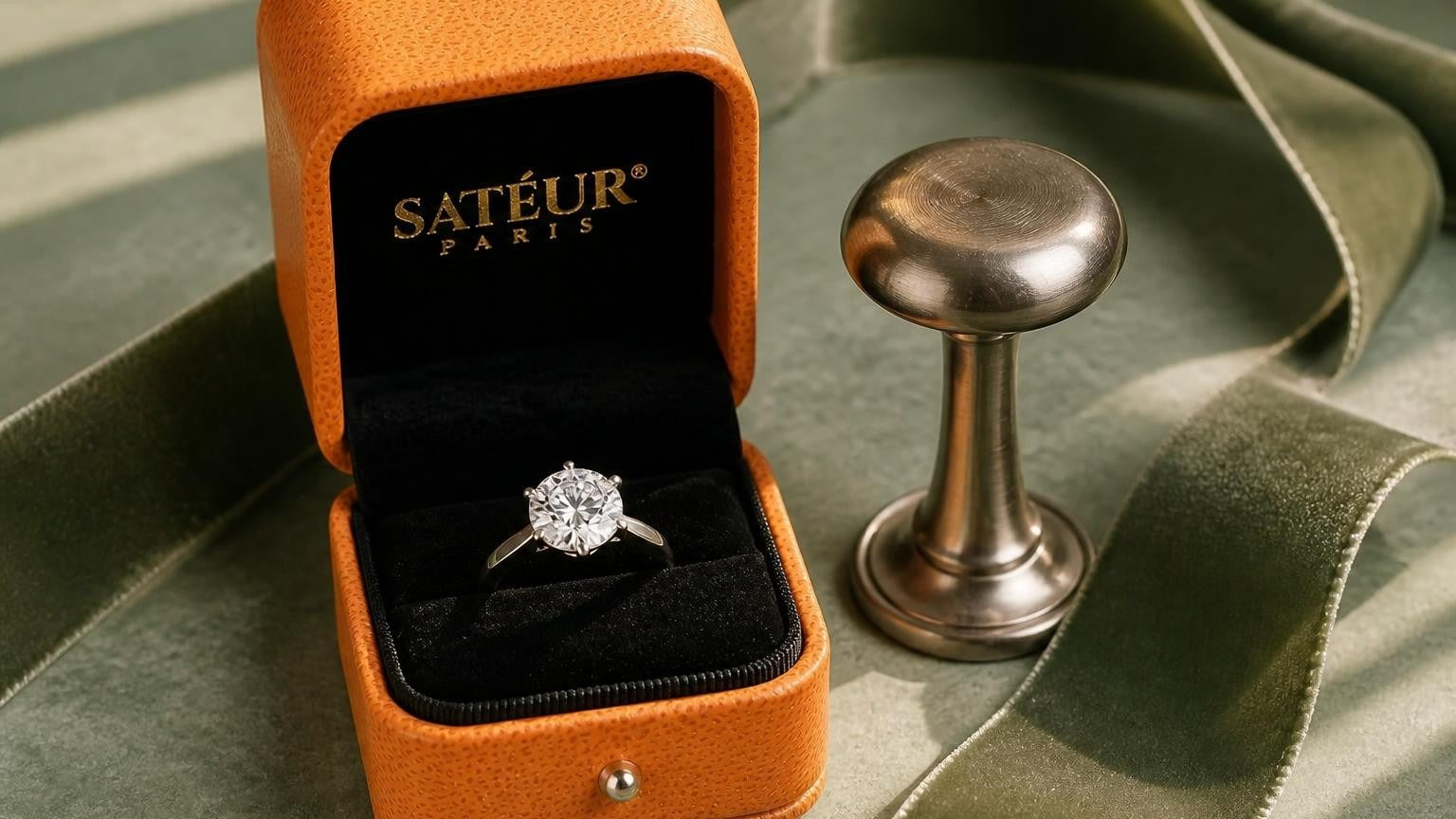
Satéur Gems® are a trademarked diamond simulant with D-E colour grading and Excellent cut — delivering clean white brilliance indistinguishable to the naked eye from a premium mined diamond. At approximately Mohs 9.25, they are durable enough for daily wear across both engagement and wedding rings.
The cost difference is the point. A comparable mined diamond engagement ring typically costs $3,000–$15,000 or more. A Satéur Gems® ring in 18k gold finish achieves the same visual result for approximately 1% of that cost — making a matching engagement ring and wedding band set financially realistic. The Satéur wedding ring collection includes solitaires and stacking bands designed to sit flush together, all sharing D-E colour and Excellent cut for visual coherence as a set.
See also: best wedding band for emerald cut engagement ring · best engagement ring for matching wedding band · best wedding band for solitaire engagement ring

Satéur Destinée Ring™
The look of a flawless diamond — from $138.
D-E colour · Excellent cut · 18k gold finish
Free worldwide delivery. 30-day returns. Lifetime Satéur Care.
Shop the Destinée RingFree worldwide shipping · 30-day returns · Lifetime Satéur Care
Frequently Asked Questions
What is the difference between an engagement ring and a wedding ring?
An engagement ring is given at the proposal; it typically features a centre stone and signifies intent to marry. A wedding ring is exchanged at the ceremony by both partners and worn permanently as a symbol of the marriage itself. Both are worn on the left ring finger, the wedding band sitting closest to the hand.
Do I need both an engagement ring and a wedding ring?
There is no requirement. Some couples choose only a wedding band; others wear an engagement ring alone and skip a separate band. That said, the tradition of wearing both — a centre-stone ring above a simple band — is the most common Western convention. The choice is entirely personal.
Can an engagement ring and wedding band be worn together?
Yes — this is the standard way to wear them. Both rings are worn on the left ring finger, the wedding band sitting closest to the hand beneath the engagement ring. On the wedding day, many people move the engagement ring to the right hand before the ceremony so the band can be placed first, then return it afterwards.
When should I start wearing my wedding ring after the ceremony?
Most people begin wearing their wedding ring immediately after it is placed on the finger during the ceremony. There is no prescribed waiting period. Some couples choose to wear the wedding band alone for the honeymoon and add the engagement ring back afterwards; others stack both from the ceremony onwards.
What metals and styles pair well for matching engagement and wedding rings?
Match the metal across both rings — yellow gold, white gold, rose gold, or platinum. The band profile should complement the engagement ring: solitaires pair well with plain or pavé bands; halo rings often need a curved contoured band to sit flush without a gap.
What are the benefits of choosing a diamond simulant for an engagement or wedding ring?
A quality diamond simulant such as Satéur Gems® offers D-E colour and Excellent cut — the same optical benchmarks as premium mined diamonds — at approximately 1% of the cost. With a Mohs hardness rating of approximately 9.25 and clean white brilliance visually indistinguishable from a flawless diamond to the naked eye, Satéur Gems® provide a durable, visually comparable, and significantly more accessible option for both engagement and wedding rings.
Find Your Perfect Ring Set
Browse the Satéur wedding ring collection to explore matching sets, solitaire options, and stacking-ready bands — all in Satéur Gems® with D-E colour and Excellent cut.

















Leave a comment
This site is protected by hCaptcha and the hCaptcha Privacy Policy and Terms of Service apply.