



Lab Created Diamond Simulant: Understanding the Difference
The phrase lab created diamond simulant bundles two distinct categories that are routinely conflated — and the confusion carries real consequences when choosing an engagement ring. A lab-grown diamond is a real diamond: the same carbon crystal structure, the same optical properties, the same gemstone grown in a controlled environment rather than extracted from the earth. A diamond simulant is something else entirely — a gemstone engineered to produce the look of a diamond without sharing its chemical composition. Both are legitimate categories. Neither is a compromise. But they answer different questions, and clarity here is not pedantic. It is the foundation of an informed decision.
This article draws the line precisely: what each category is, how they differ in composition, certification, optics, and price, and where Satéur Gems® and moissanite sit within that map. For those already drawn toward the certified diamond route, Satéur's lab-grown diamond collection is the place to begin.
Key Takeaways
- A lab-grown diamond is a real diamond — chemically and optically identical to a mined diamond, IGI-certified, graded by the same standards.
- A diamond simulant — such as Satéur Gems® or moissanite — gives the look of a diamond but is a different material entirely. It is not a diamond.
- Diamond simulants cost approximately 90–99% less than mined diamonds for comparable visual presence.
- Satéur Gems® are a trademarked diamond simulant offering D–E colour and Excellent-cut diamond optics from approximately $138.
- Moissanite (silicon carbide, ~9.25 Mohs) produces vivid rainbow-forward fire — distinctly more colourful under bright light than a diamond.
- The decisive question: do you want the certified diamond, or the diamond look at a fraction of the price?
What Is a Lab Created Diamond Simulant
The term combines two ideas. "Lab created" signals a laboratory origin — grown or produced in a controlled environment rather than mined. "Simulant" means it replicates the appearance of a diamond. Together, the phrase most commonly refers to lab-grown gemstones — moissanite, cubic zirconia, and proprietary simulants like Satéur Gems® — that are engineered to deliver the diamond look without being diamonds themselves.
The category distinction is gemological. Diamonds — mined or laboratory-grown — share a specific chemical identity: carbon in a cubic crystal structure. Simulants are different materials producing similar visual results through different means. Moissanite, for instance, is silicon carbide. Cubic zirconia is zirconium oxide. Satéur Gems® are a proprietary trademarked formulation whose exact composition is not publicly disclosed — by design, in the same way that Swarovski does not disclose its crystal formula. What all simulants share is this: they are not diamonds, and they do not claim to be. They offer something else — a different economic logic applied to the same aesthetic outcome.
Understanding that line resolves most of the confusion. A lab-grown diamond is a diamond grown in a lab. A diamond simulant is not a diamond, regardless of where it is produced.

Lab Grown Diamonds: IGI-Certified Origin
A lab-grown diamond is produced in a controlled environment using one of two established processes: high-pressure high-temperature (HPHT) or chemical vapour deposition (CVD). Both processes replicate the conditions under which natural diamonds form — the result is a carbon crystal that is chemically, physically, and optically identical to a mined diamond. Same refractive index. Same Mohs hardness of 10. Same fire, brilliance, and scintillation. The only difference is origin.
That origin is fully documented. Lab-grown diamonds are graded by the International Gemological Institute (IGI) — the same institution that grades natural diamonds — using identical criteria for cut, colour, clarity, and carat weight. The grading report accompanying an IGI-certified lab-grown diamond is a comprehensive gemological document. When a stone is described as VS+ clarity, D–F colour, Excellent cut, those specifications carry the same meaning for a lab diamond as they do for a mined one.
Price is where the difference becomes tangible. Lab-grown diamonds typically cost 50–80% less than mined diamonds of equivalent graded specifications. A 1-carat IGI-certified lab diamond in VS clarity might be priced at $1,200 to $2,500, versus $6,000 to $12,000 for the natural equivalent. For buyers who want the certified real diamond — the IGI report, the known chemical identity, the knowledge that what they own is a diamond in every defined sense — the lab-grown route closes that gap without the mined-diamond premium. The lab-grown vs natural diamond guide covers this distinction in full.
Diamond Simulants Explained
Diamond simulants are gemstones — real, durable, and beautiful — engineered or selected for their optical resemblance to diamond. They are not imitations in the pejorative sense. They are a distinct category: designed to deliver the diamond look without the diamond certificate. The visual result, with the naked eye in normal settings, is the point. The chemical identity is not.
Moissanite is the most widely known premium simulant. A lab-created gemstone composed of silicon carbide, it carries a Mohs hardness of approximately 9.25 — making it extremely durable and suited to everyday wear. Its optical character is distinctive: moissanite exhibits higher fire dispersion than diamond, producing vivid, rainbow-forward sparkle under direct and bright light. That higher dispersion is moissanite's signature — brilliant, vivid, and more colourful than a diamond. For buyers who want that optical energy, it is a deliberate and positive choice.
Cubic zirconia (CZ) occupies the entry tier of diamond simulants. Softer at 8–8.5 Mohs, it is more prone to surface abrasion and clouding over years of daily wear. CZ remains a functional simulant for fashion jewellery but lacks the durability of moissanite or Satéur Gems®.
Between moissanite and CZ sits a category Satéur has defined independently: a trademarked diamond simulant engineered specifically for diamond-accurate optics rather than maximum fire. That is Satéur Gems®.

Key Differences: Simulant vs Lab Grown
The properties that matter most when choosing between a lab-grown diamond and a diamond simulant resolve into a clear structure. Origin and certification define one axis; optics and price define the other.
| Property | Lab-Grown Diamond | Satéur Gems® (Simulant) | Moissanite (Simulant) |
|---|---|---|---|
| Is it a diamond? | Yes — IGI-certified | No — trademarked simulant | No — lab-created gemstone |
| Chemical composition | Carbon (cubic crystal) | Proprietary (not disclosed) | Silicon carbide |
| Mohs hardness | 10 | ~8.8 | ~9.25 |
| Optical character | Crisp white brilliance | Clean white, diamond-accurate brilliance | Vivid rainbow fire (higher dispersion) |
| Colour equivalent | D–F (graded) | D–E equivalent | D–E equivalent |
| Certification | IGI full grading report | None (not a diamond) | None (not a diamond) |
| Price vs mined diamond | 50–80% less | ~99% less | ~95% less |
| Satéur entry price | From ~$500 | From ~$138 | From ~$98 |
The structural divide is unambiguous: lab-grown diamonds sit on one side — certified, chemically defined, graded diamonds; simulants sit on the other — different materials optimised for the diamond look, available at radically lower price points. The right answer depends entirely on what you are choosing for.
Satéur Gems: Diamond-Look Value Without Lab Certification
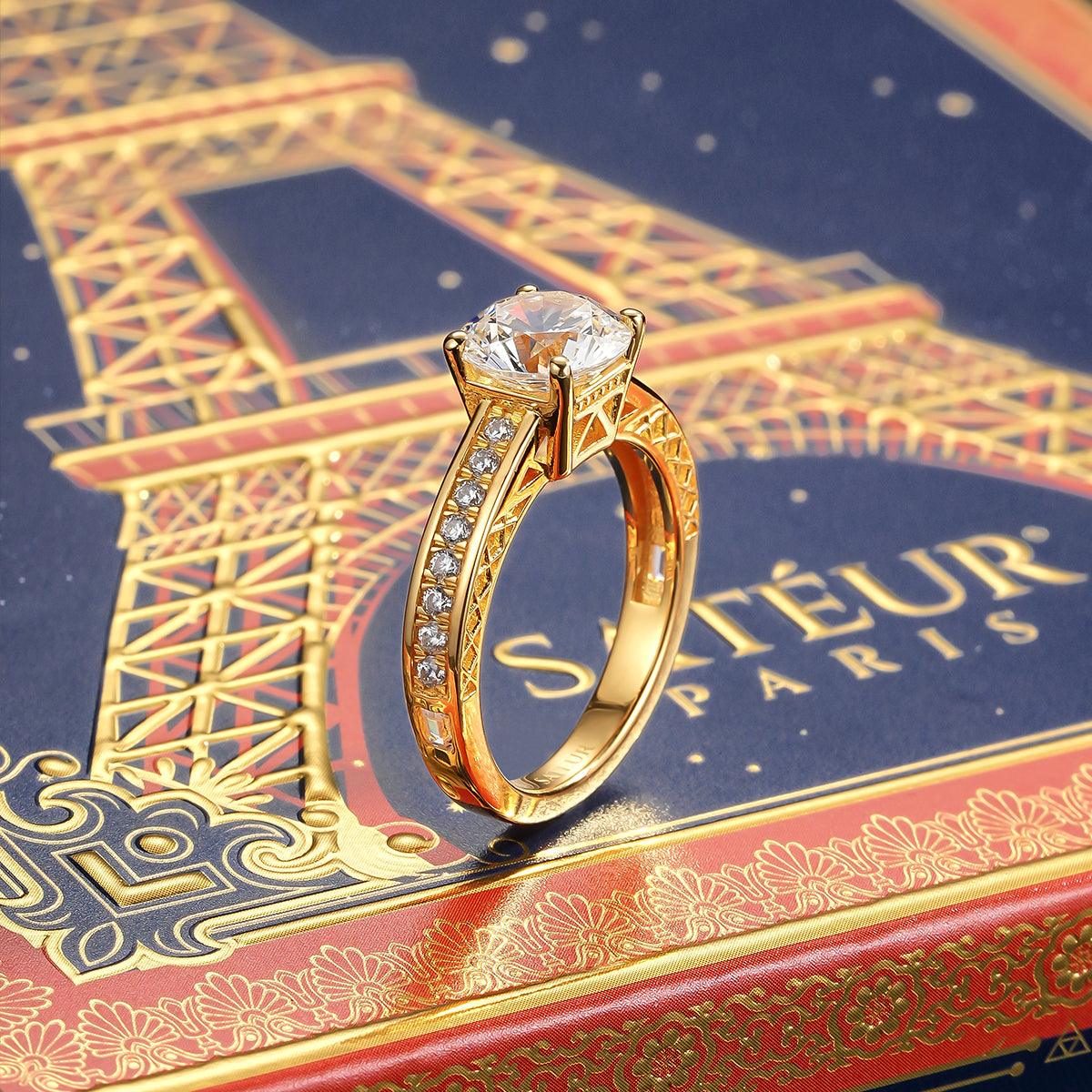
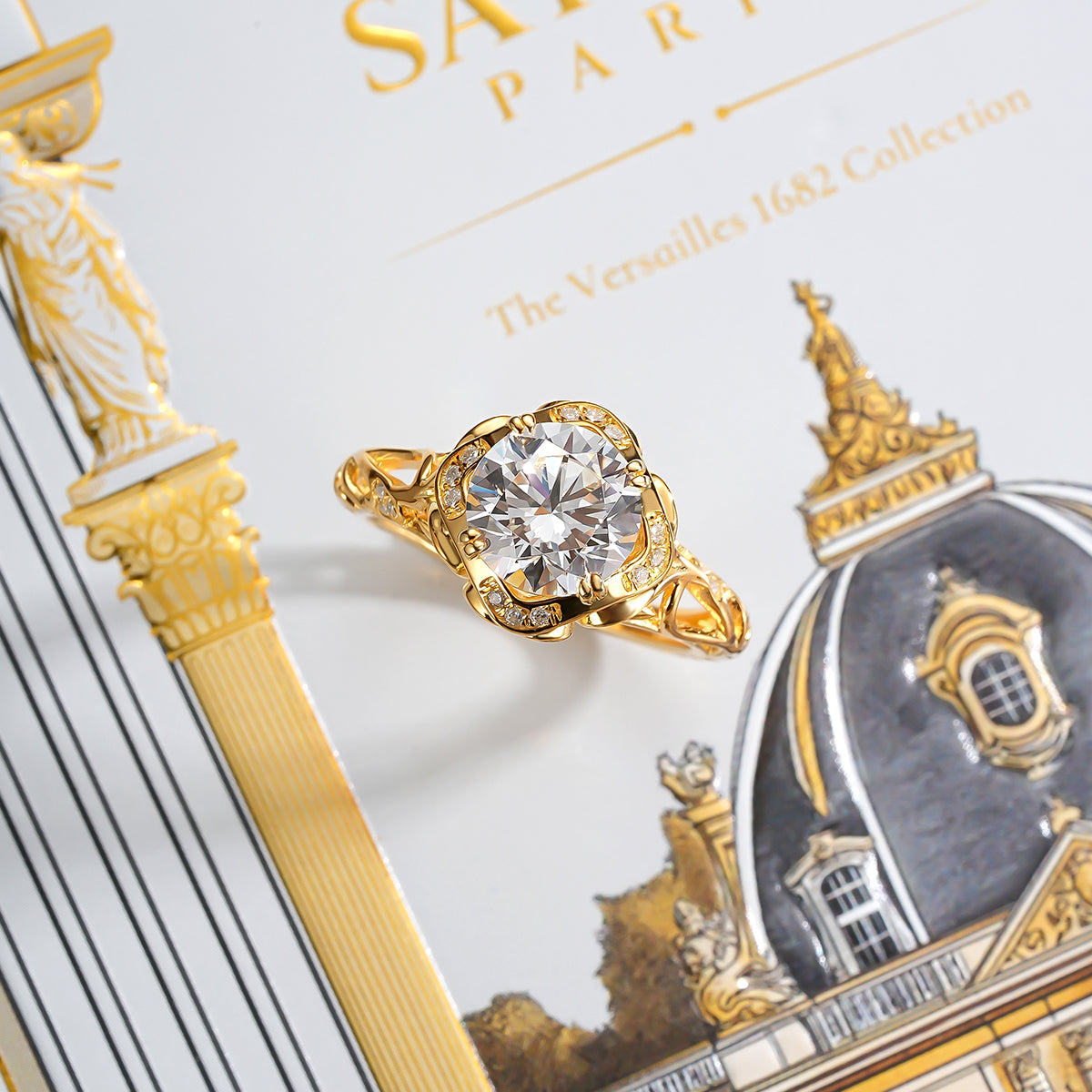
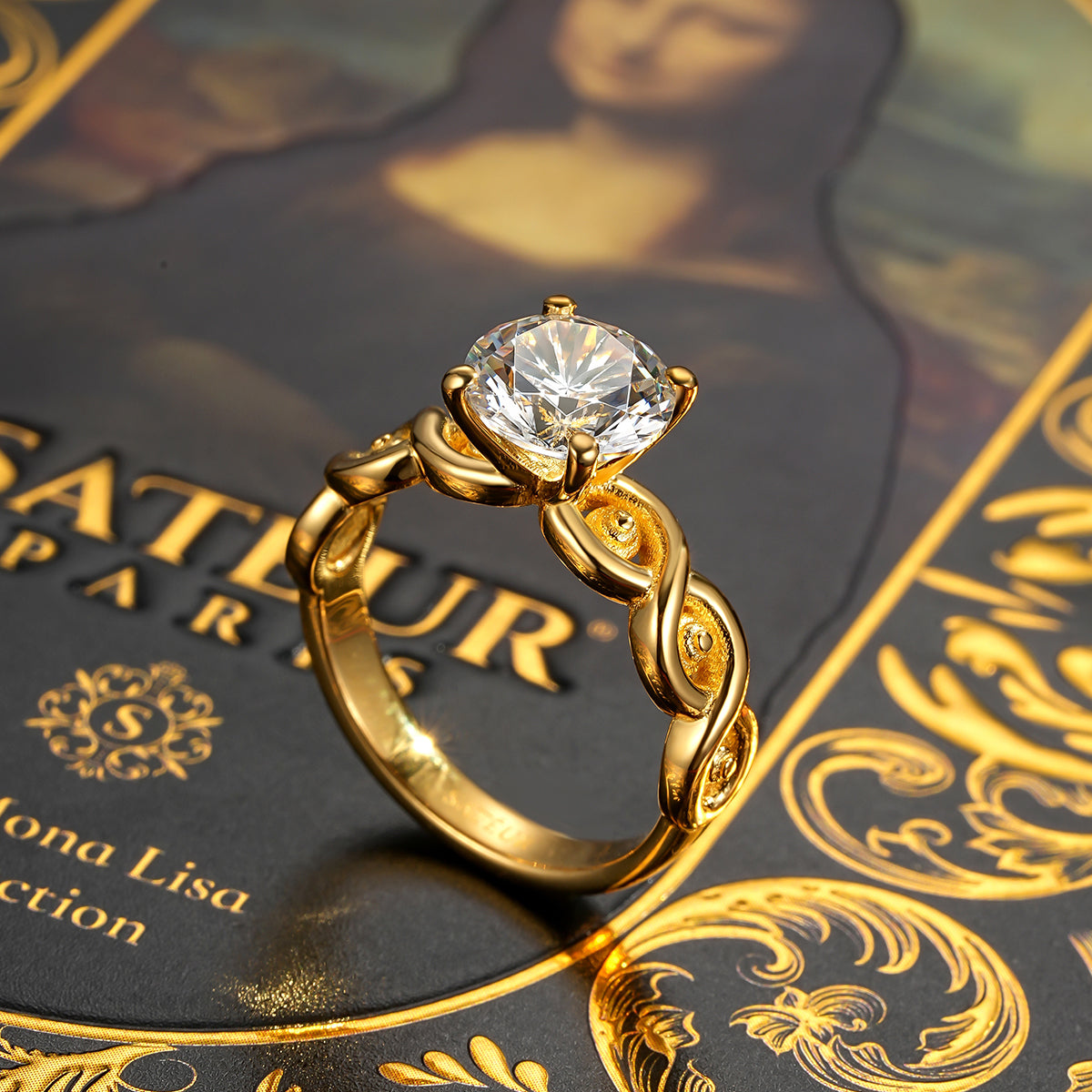
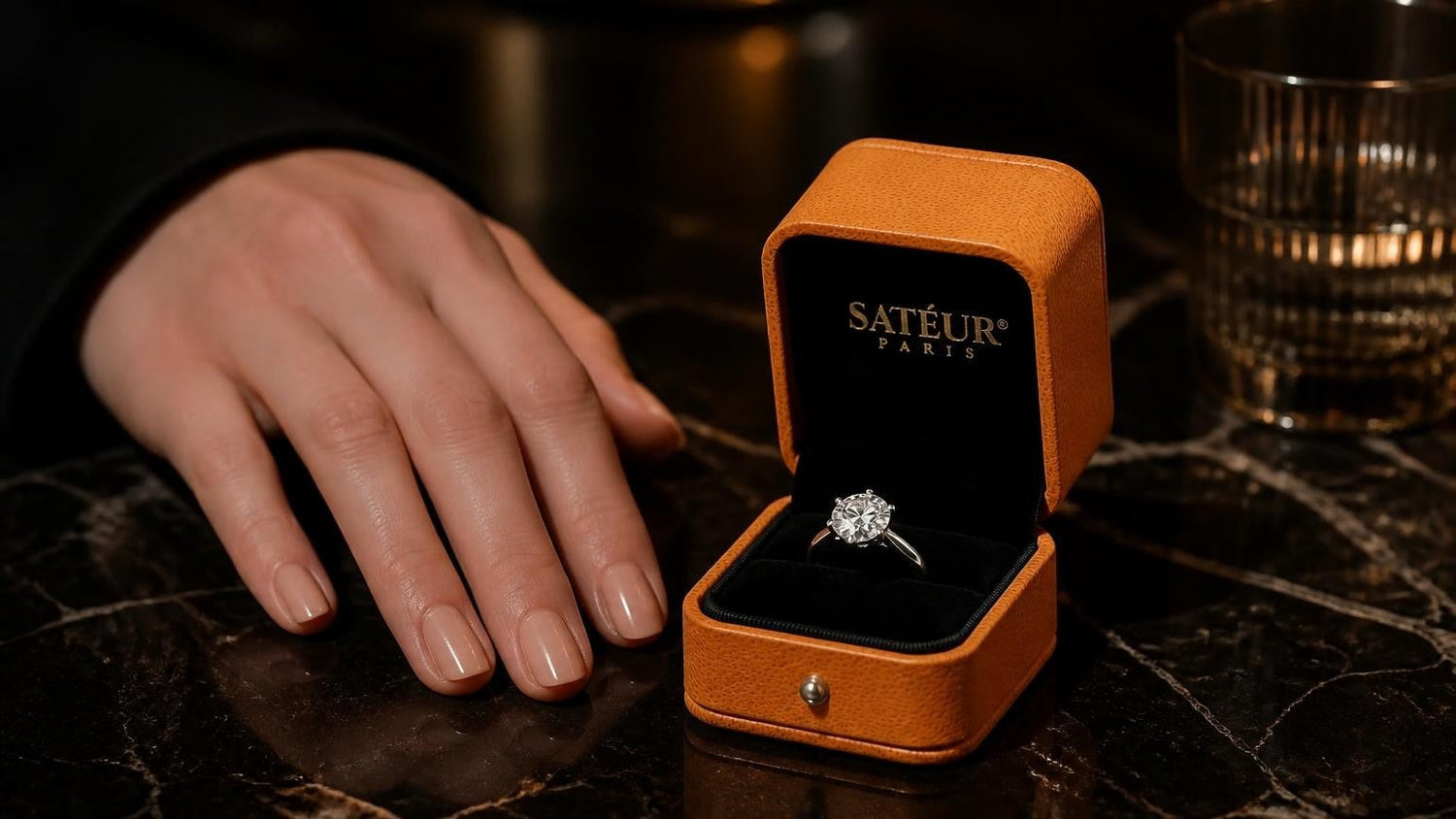
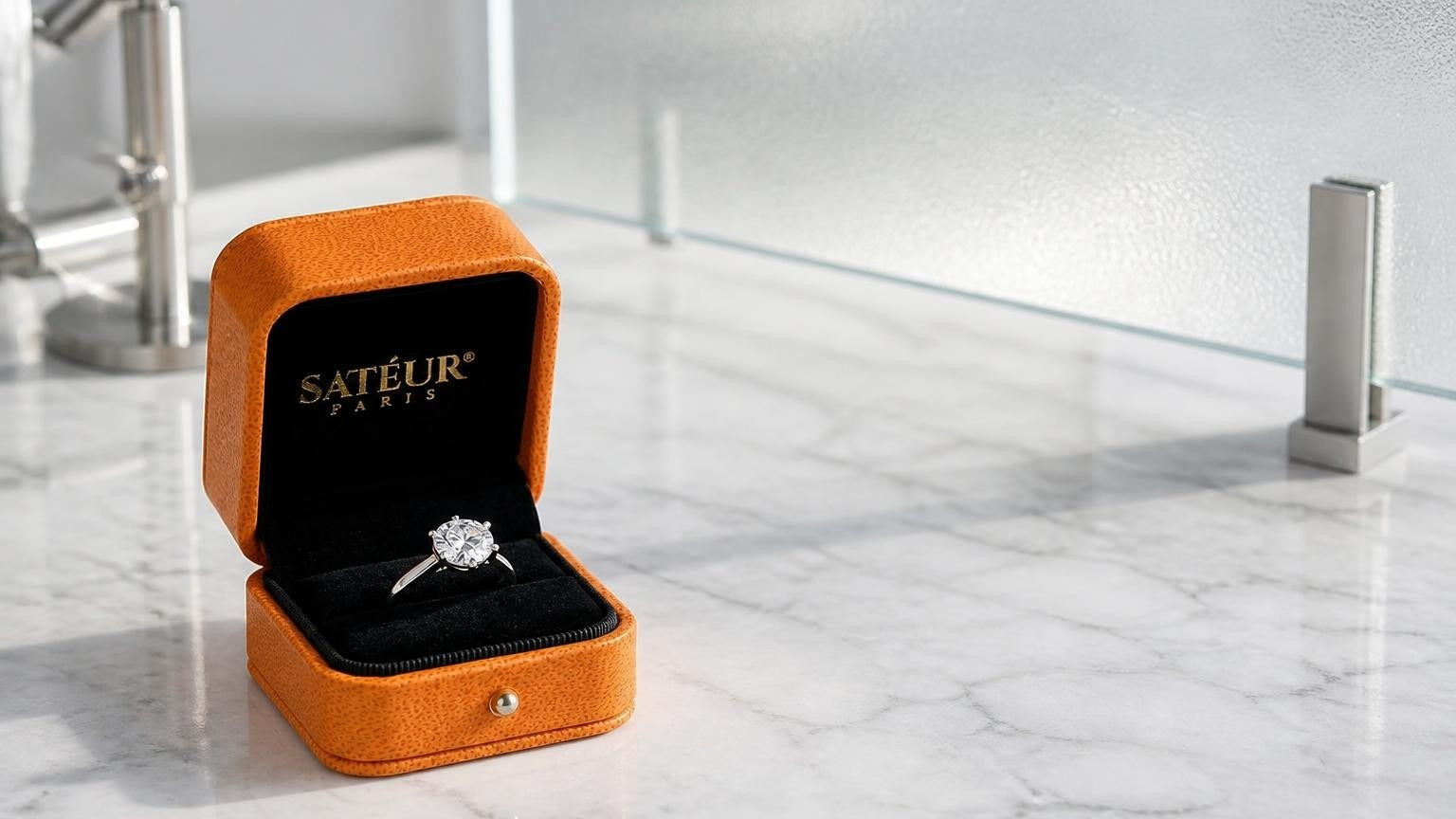
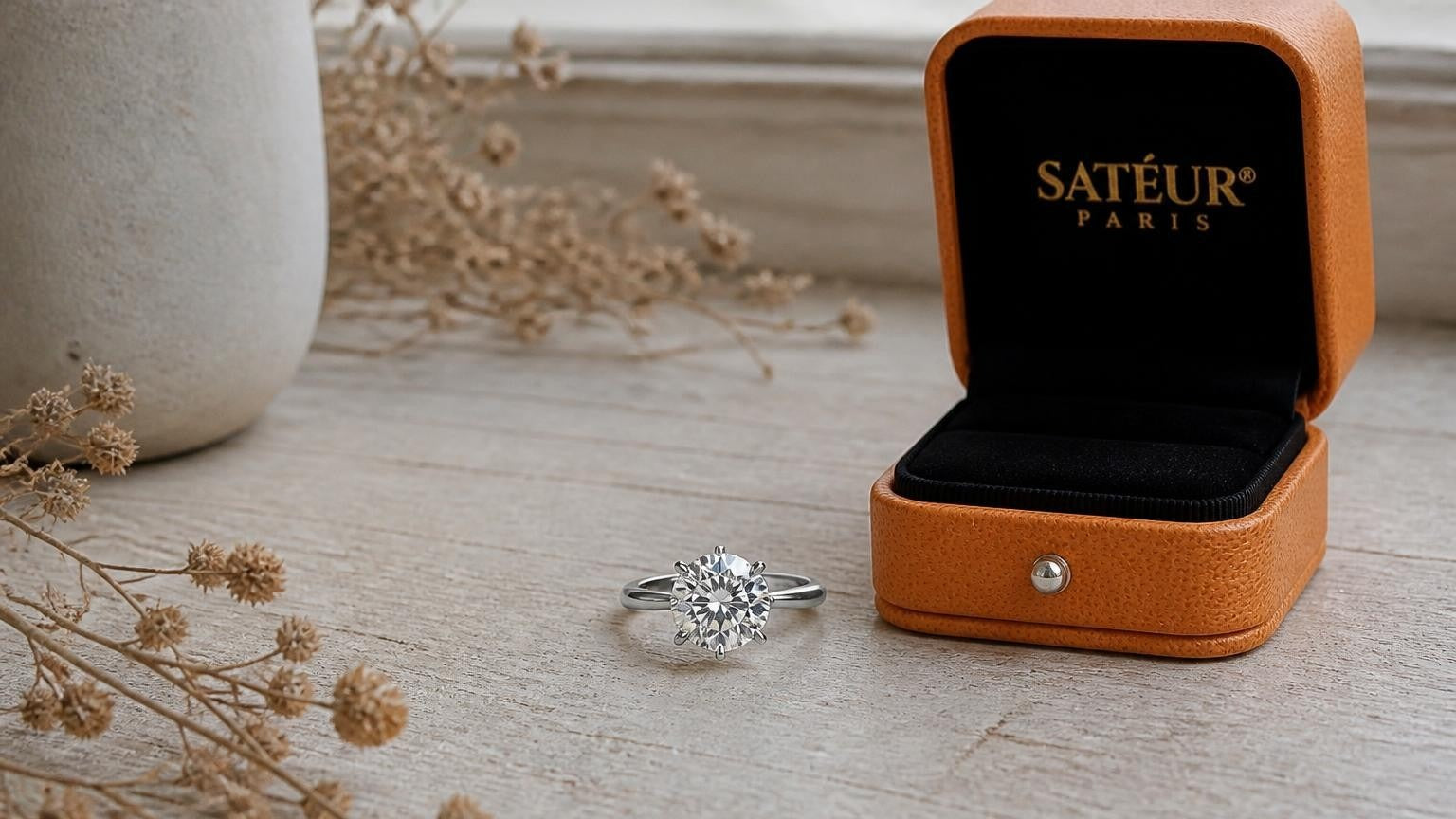
Satéur Gems® are Satéur's flagship diamond simulant. A trademarked gemstone formulation, engineered to deliver the restrained, clean brilliance of a flawless diamond — not the vivid, rainbow-forward character of moissanite, but something more diamond-accurate: D–E colour equivalent, Excellent cut, a Mohs hardness of approximately 8.8, extremely durable for everyday wear.
What you see, across the table and with the naked eye, reads as a flawless diamond. The price reflects what it is not: approximately $138 for entry-level designs, compared to $8,000 to $12,000 for a mined diamond of equivalent visual presence. That is the 1% proposition — not a concession, not an imitation. A different economic logic applied to the same aesthetic result. The New Diamond Standard.
Satéur also makes the distinction openly in how it structures its tiers. The moissanite tier delivers the vivid, higher-fire gemstone option — for buyers who want that optical energy — at a price point that begins around $98. The lab-grown diamond tier is for those who want the IGI-certified real diamond. The Satéur Destinée Diamond Ring™ is that flagship: 1.00 carat Round, IGI-certified, in 18k white gold finish. The same icon. The actual diamond.
Over 100,000 customers across 150+ countries have built their version of the choice Satéur presents. For most, the Gems® tier answers it completely. For some, the certified diamond matters — and the lab-grown route closes the pricing gap while preserving every gemological property that makes a diamond a diamond. Both answers exist here. The decision is yours to make.

Satéur Destinée Diamond Ring™
The look of a $10,000 mined diamond. IGI-certified lab-grown diamond, for a fraction of the price.
Compare to a $10,000 mined diamond
Joined by 100,000+ couples across 150+ countries.
Discover the Destinée Diamond RingFree worldwide shipping · 30-day returns · Lifetime Satéur Care

What both routes share is this: neither requires overpaying for an artificially scarce material. Lab-grown diamonds deliver the certified diamond at a fraction of the mined premium. Satéur Gems® deliver the diamond look at a fraction of everything. The question is simply how far along that axis your decision sits.
The engagement ring collection brings both together — Gems®, moissanite, and lab diamond — in a single curated space. The best lab-grown diamond engagement rings article covers the IGI-certified route in depth for those for whom the certificate is the deciding factor.
FAQ: Simulant and Lab Grown Diamond Questions
What is the difference between a lab created diamond and a diamond simulant?
A lab-created diamond is a real diamond — grown using HPHT or CVD processes, chemically and optically identical to a mined diamond, certified by the IGI with a full grading report. A diamond simulant is a different gemstone — Satéur Gems®, moissanite, cubic zirconia — engineered to produce the visual appearance of a diamond without sharing its chemical composition. Both may be lab-produced; only the diamond is actually a diamond.
Are lab grown diamonds the same as diamond simulants?
No. Lab-grown diamonds are real diamonds. Simulants are not. The confusion arises because both are sometimes described as "lab-created" — but the distinction is chemical. A lab-grown diamond carries a full IGI grading report. A simulant such as Satéur Gems® or moissanite does not, because it is not a diamond and would not meet diamond grading criteria.
How much do lab created diamonds cost compared to simulants?
Lab-grown diamonds typically cost 50–80% less than equivalent mined diamonds. A 1-carat IGI-certified lab diamond in VS+ clarity might be priced at $1,200 to $2,500. Diamond simulants cost significantly more than that below the mined-diamond price: Satéur Gems® start at approximately $138 — roughly 99% less than a comparable mined diamond for visual presence. The price gap between a lab-grown diamond and a Satéur Gems® simulant is itself substantial, reflecting the difference between the certified diamond and the diamond look.
What certifications do lab grown diamonds receive?
Lab-grown diamonds are graded by the International Gemological Institute (IGI) — the same institution that grades natural diamonds — and receive full reports covering cut, colour, clarity, and carat weight. Diamond simulants, including Satéur Gems® and moissanite, are not certified by diamond grading institutes because they are not diamonds. Satéur's lab-diamond pieces include full IGI documentation with every purchase.
Can a diamond simulant provide the appearance of a high-quality diamond?
Yes — with the naked eye and in normal social settings, a well-cut diamond simulant such as Satéur Gems® is visually indistinguishable from a flawless diamond. Satéur Gems® are cut to D–E colour equivalent and Excellent cut grade, producing the clean, white brilliance that characterises a fine diamond. Moissanite produces a different optical signature — vivid, rainbow-forward sparkle — that is equally beautiful but distinctly more colourful under direct light than a diamond. Both are beautiful. They answer different aesthetic intentions.
Which option is more affordable for an engagement ring: lab grown or simulant?
Diamond simulants are substantially more affordable. A Satéur Gems® engagement ring in the flagship tier begins at approximately $138, versus $1,500 to $3,000 for a comparable lab-grown diamond ring. The decision turns on what you are actually choosing: the IGI-certified diamond itself — which lab-grown delivers — or the diamond look at the lowest possible price, which is what Satéur Gems® exists for. Both are built to last a lifetime. Only one carries the diamond certificate.
The distinction between a lab created diamond and a diamond simulant is structural, not cosmetic. A lab-grown diamond is a certified real diamond — the same gemstone, a different origin, a fraction of the mined-diamond cost. A simulant delivers the diamond look through a different material at a radically lower price still. Both answers are intelligent. Both are made to wear for a lifetime. The right one depends on which question you are actually answering: the certificate, or the presence.
Satéur holds both. The 1% Ring® collection represents the simulant route — Satéur Gems® at approximately 1% of the mined diamond price. The lab-grown diamond collection is for those who want the IGI-certified real diamond with the same Satéur design rigour. The New Diamond Standard. Both directions lead here.















Leave a comment
This site is protected by hCaptcha and the hCaptcha Privacy Policy and Terms of Service apply.