



Best Moissanite Engagement Rings: A Complete Guide
Moissanite has become the gemstone of a generation that questions inherited assumptions. For couples who want the presence of a diamond — the light, the clarity, the enduring symbol — moissanite offers something the mined-diamond market never anticipated: genuine beauty at a fraction of the cost. Understanding what makes a moissanite ring truly exceptional starts with knowing the gemstone itself.
This guide covers the best moissanite engagement rings available today: the gemstone's real specifications, what they mean in daily wear, which cuts perform best, and how to choose intelligently. It is part of Satéur's broader resource on moissanite engagement rings — a gemstone the Maison takes seriously enough to offer in its own curated tier.
Key Takeaways
- Moissanite rates 9.25 on the Mohs hardness scale — extremely durable for daily engagement ring wear.
- Moissanite exhibits approximately 2.4× the fire of diamond, producing vivid rainbow dispersion in certain lighting.
- Satéur moissanite rings start from approximately $88 — the presence of a fine engagement ring at roughly 1% of comparable diamond cost.
- Moissanite is available in D-E colour grades, appearing colourless to the naked eye under standard lighting.
- Moissanite does not cloud, fade, or change colour over time with ordinary care.
- Cut quality determines more of a moissanite ring's visual performance than any other single factor.

Best Moissanite Engagement Rings
The best moissanite engagement ring is not a product category — it is the intersection of the right cut for the wearer's aesthetic, the right setting for their lifestyle, and the right gemstone quality for the look they are building toward. Moissanite's unique combination of hardness, vivid fire, and accessible price point has made it the considered choice for couples who want an exceptional ring without the inherited markup of the diamond market.
What separates a good moissanite ring from an exceptional one: the cut grade of the gemstone, the colour tier (D-E colourless versus near-colourless), the setting quality, and the metal finish. These factors determine the visual result in daily wear — not the marketing language around the product.
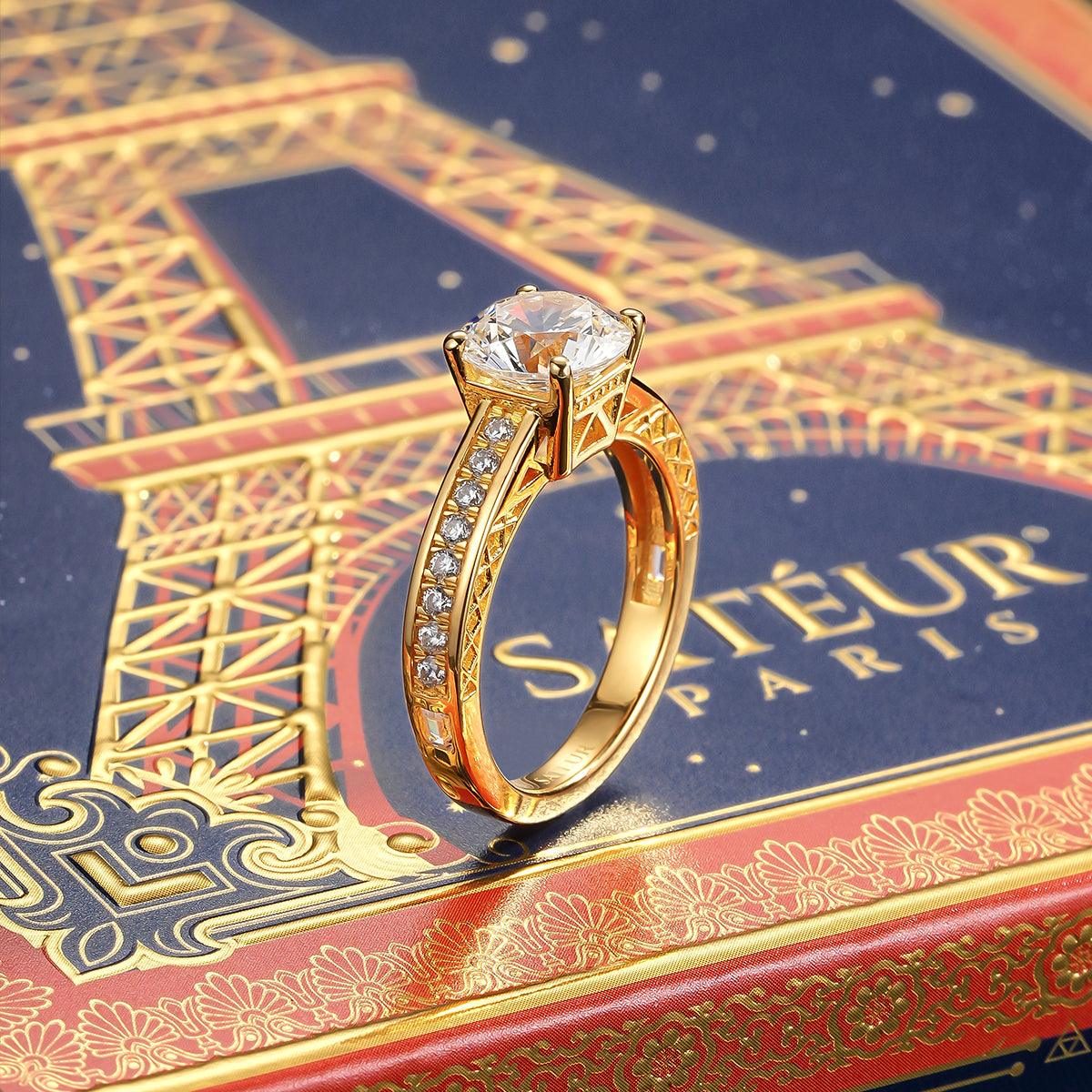
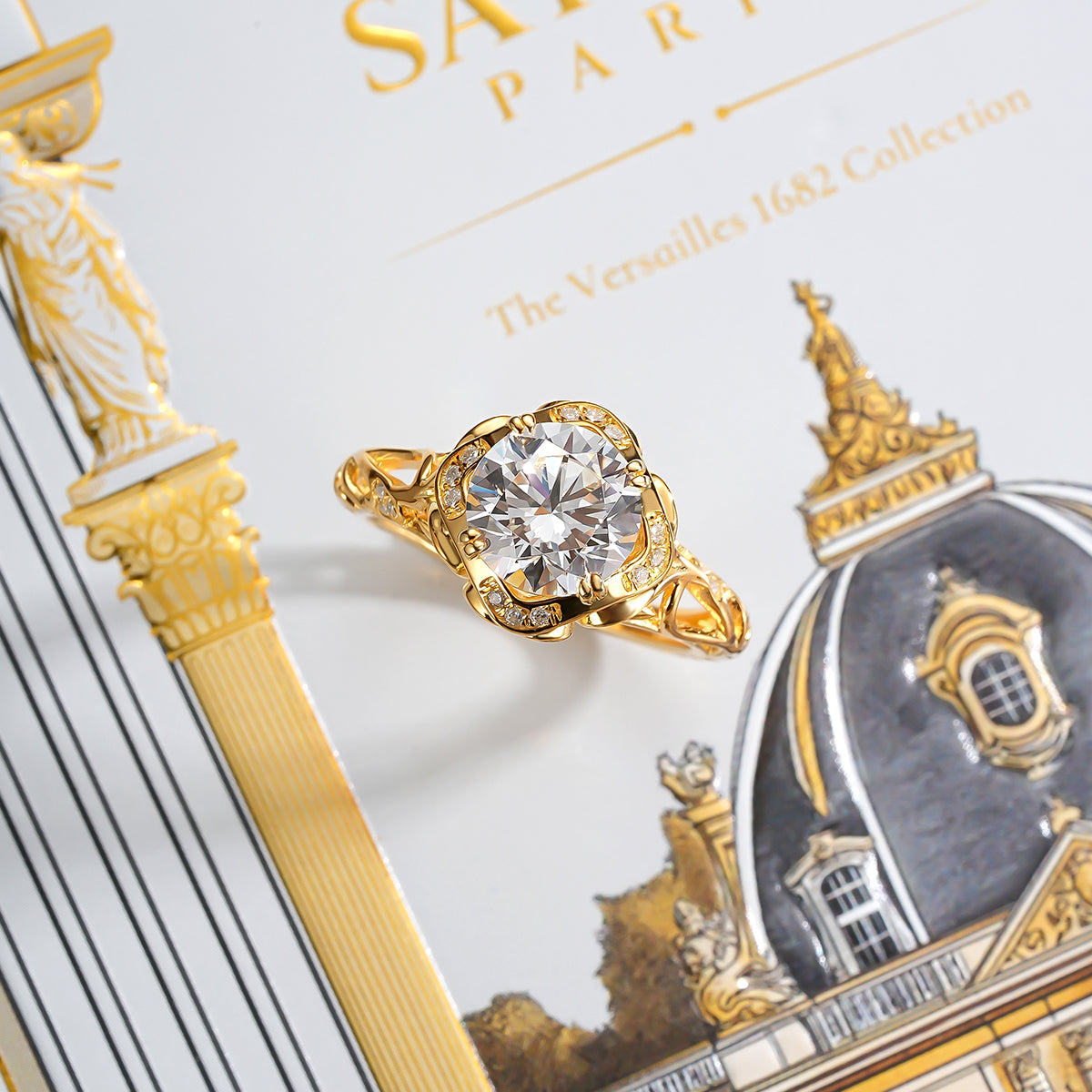
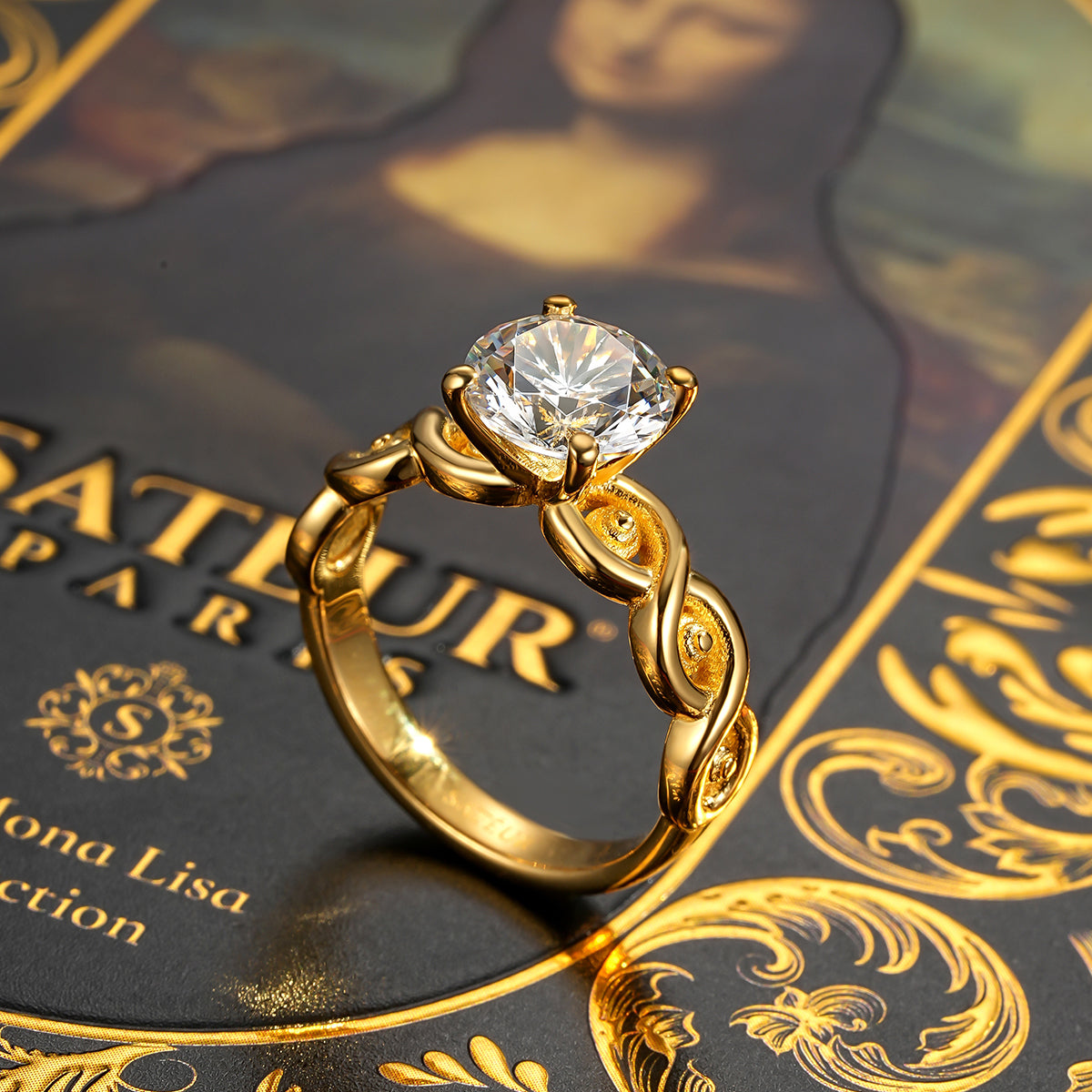
Satéur's moissanite ring collection is built around D-E colour grade gemstones in an excellent cut, finished in 18k gold. It represents the Maison's position on what moissanite should be: beautiful, disclosed, and honestly priced. The collection spans solitaire settings, pavé-shoulder designs, and statement cuts — each serving a different expression of the same intention.
What Is Moissanite
Moissanite is a lab-created gemstone composed of silicon carbide. First discovered in a meteorite crater in 1893 by Henri Moissan, the natural form is extraordinarily rare. Today, every moissanite sold in jewellery is grown in a controlled laboratory environment — identical in crystal structure to the rare mineral, without the geological scarcity.
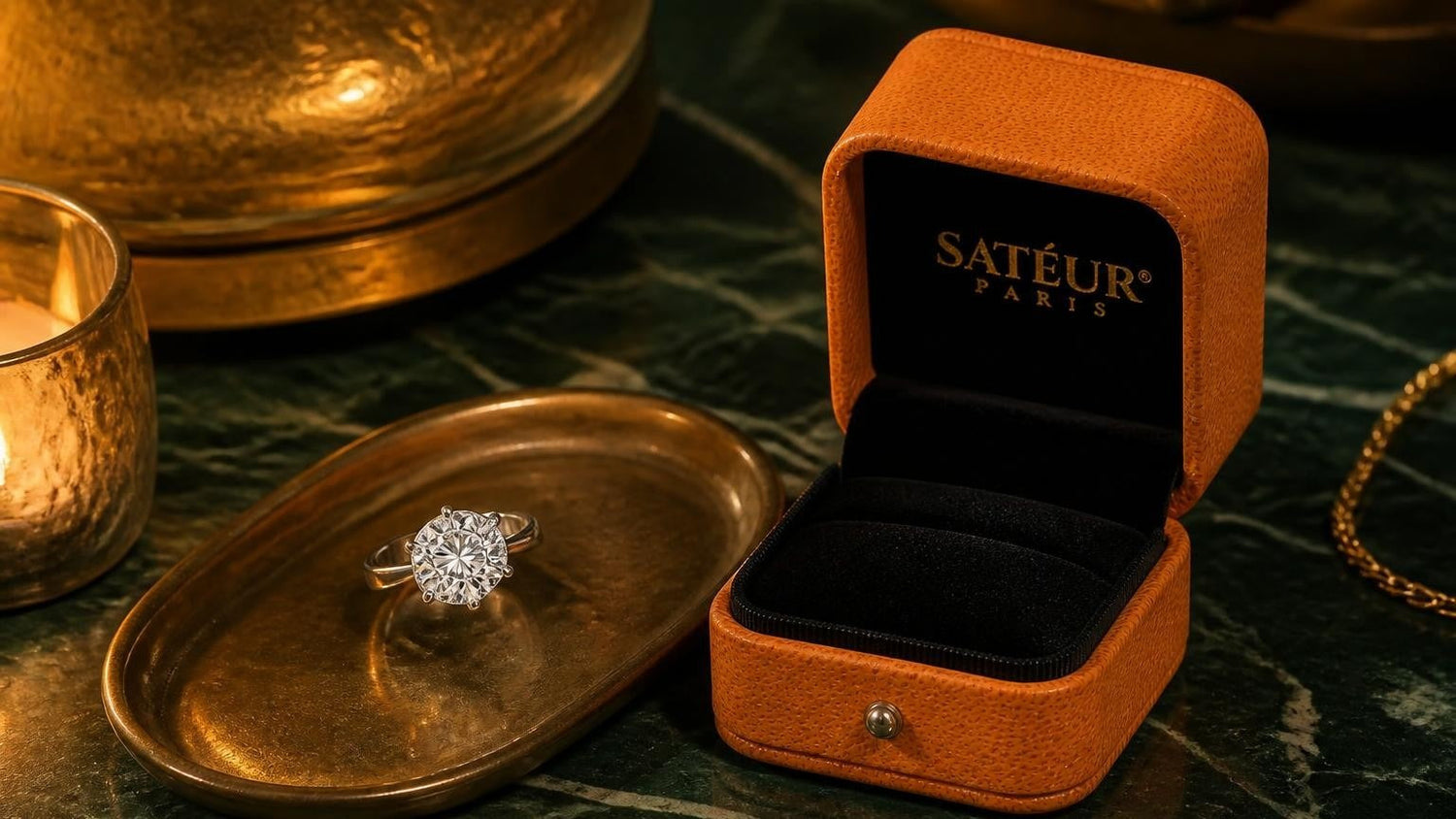
The gemstone's defining trait is its optical character. Moissanite has a refractive index of approximately 2.65 — higher than diamond — giving it more fire: that vivid, rainbow-forward dispersion visible when light passes through the facets. It is a real gemstone with real optical properties, not a coating or imitation. It simply has different optical behaviour from a diamond — more pronounced, more openly brilliant, more immediately legible across a room.
Moissanite is not a diamond, nor is it presented as one. It is an independently beautiful gemstone that happens to carry a brilliant, diamond-proximate presence — with specifications that make it genuinely compelling for engagement ring wear. Understanding the distinction matters: it is what allows moissanite to hold its own as a choice rather than a substitute.
Moissanite vs. Diamond: Key Differences
The comparison between moissanite and diamond is one of optics, hardness, and value — not quality of character. Both are exceptional gemstones. The differences are technical, real, and worth understanding before choosing.
| Property | Moissanite | Diamond |
|---|---|---|
| Hardness (Mohs) | 9.25 | 10 |
| Refractive Index | ~2.65 | ~2.42 |
| Fire (Dispersion) | ~2.4× a diamond — vivid, rainbow-forward | Crisp, white brilliance |
| Colour Grades Available | D-E colourless | D–Z range |
| Origin | Lab-created silicon carbide | Mined or lab-grown carbon |
| Price (1ct equivalent) | From ~$88 (Satéur) | $3,000–$10,000+ |
| Fading / Clouding | None — permanent brilliance | None — permanent brilliance |
The practical distinction comes down to this: moissanite offers spectacular, vivid brilliance with high fire, at a fraction of the price of mined diamond. A diamond offers a crisper, more restrained white light — and carries the weight of a centuries-old cultural shorthand. Both have genuine merit. The choice depends on what the wearer values in daily wear.
For a detailed exploration of the optical and durability differences, Satéur's guide on choosing the best moissanite rings covers the buying decision in depth.

Why Choose Moissanite
The case for moissanite engagement rings is not purely economic, though the economics are striking. Satéur moissanite rings start from approximately $88 — that is the look and presence of a fine engagement ring at roughly 1% of the price of a comparable mined diamond. Over 100,000 customers across 150+ countries have arrived at the same conclusion: the gemstone's origin does not diminish what it represents.
Moissanite is also an ethically uncomplicated choice. Lab-created, with no mining footprint, no conflict-zone provenance questions, and no geological lottery. For couples who care about what their ring stands for beyond its price tag, moissanite closes that consideration entirely.
Then there is the optical character itself. Moissanite's high dispersion creates a sparkle that reads differently from diamond in certain lighting — more vivid, more openly brilliant. For those who want immediate, generous presence, it delivers emphatically. The gemstone rewards light in a way that makes it unmistakable.
Those who specifically want the restrained white brilliance of a fine diamond — the precise look of the world's most recognised gemstone — will find a different answer in Satéur Gems®, the Maison's flagship trademarked gemstone with diamond-accurate optics. But for moissanite's own vivid character, the collection makes a strong and honest case on its own terms.
Durability and Everyday Wear
Moissanite rates 9.25 on the Mohs hardness scale — second only to diamond among gemstones used in fine jewellery. This means it resists scratching from almost every material encountered in daily life: keys, countertops, hand sanitiser, ordinary wear. None will mark a moissanite gemstone.
Engagement rings are worn daily for decades. The relevant question is not whether a gemstone looks beautiful in a display case, but whether it holds that brilliance through years of ordinary life. Moissanite answers that question without qualification. It does not fade, cloud, or change colour over time. Its optical properties are intrinsic to its crystal structure — not applied, not coated, not reversible with use.
The setting metal matters alongside the gemstone. Satéur moissanite rings are finished in 18k gold — offering the appearance and colour of fine gold jewellery at a sensible price point. A 9.25 Mohs gemstone in a quality metal setting produces a ring built for life, not for occasional wear.
The combination of exceptional hardness, permanent brilliance, and quality setting is what makes moissanite genuinely appropriate for a ring worn every day without thought or caution.

Satéur Destinée Ring™
The look of a flawless diamond, for 1% of the price.
Compare to a $10,000 mined diamond
Joined by 100,000+ couples across 150+ countries.
Discover The 1% RingFree worldwide shipping · 30-day returns · Lifetime Satéur Care
Satéur Moissanite: Specs and Value
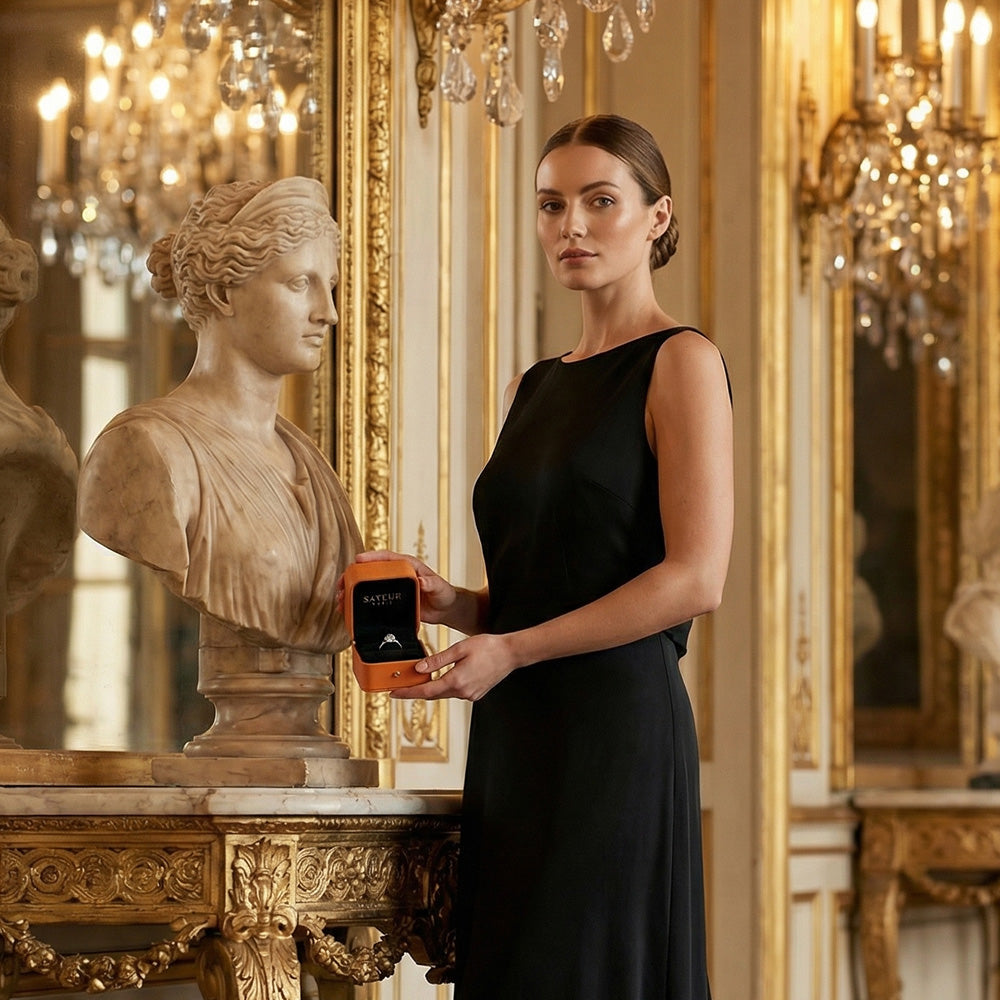
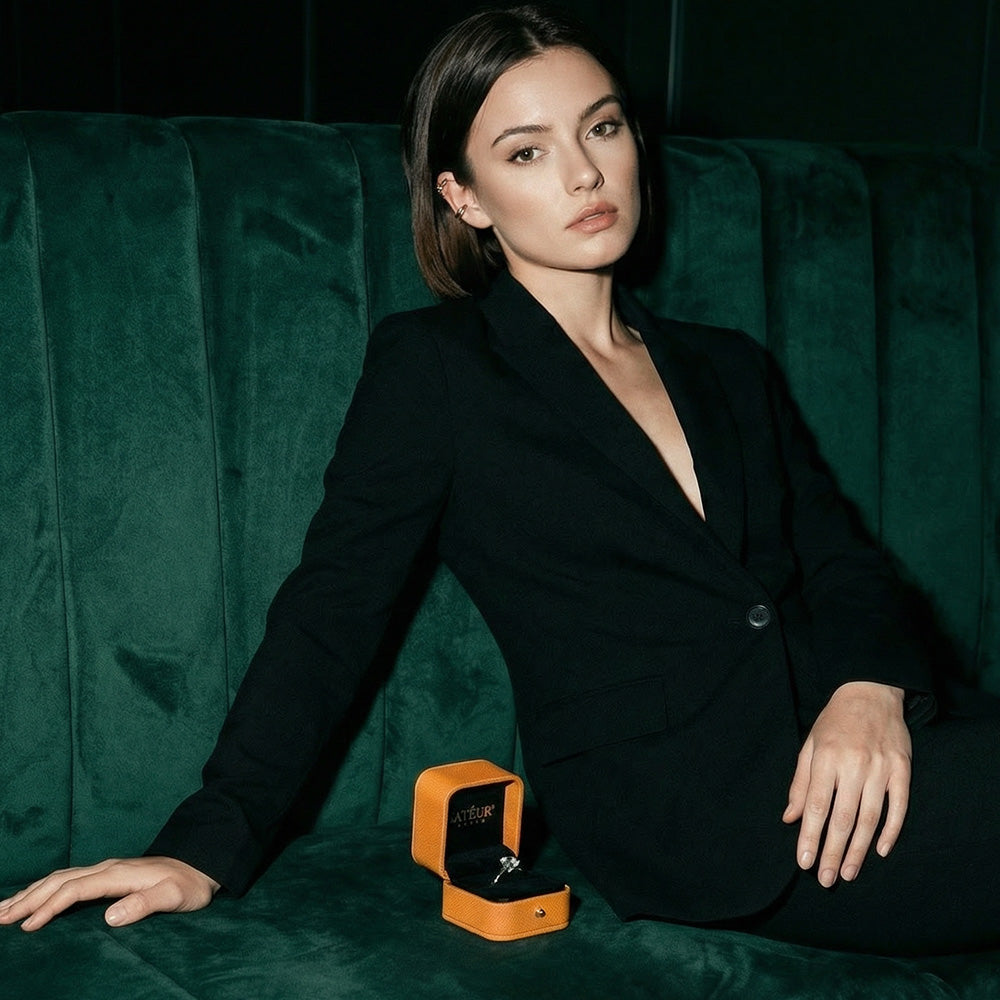
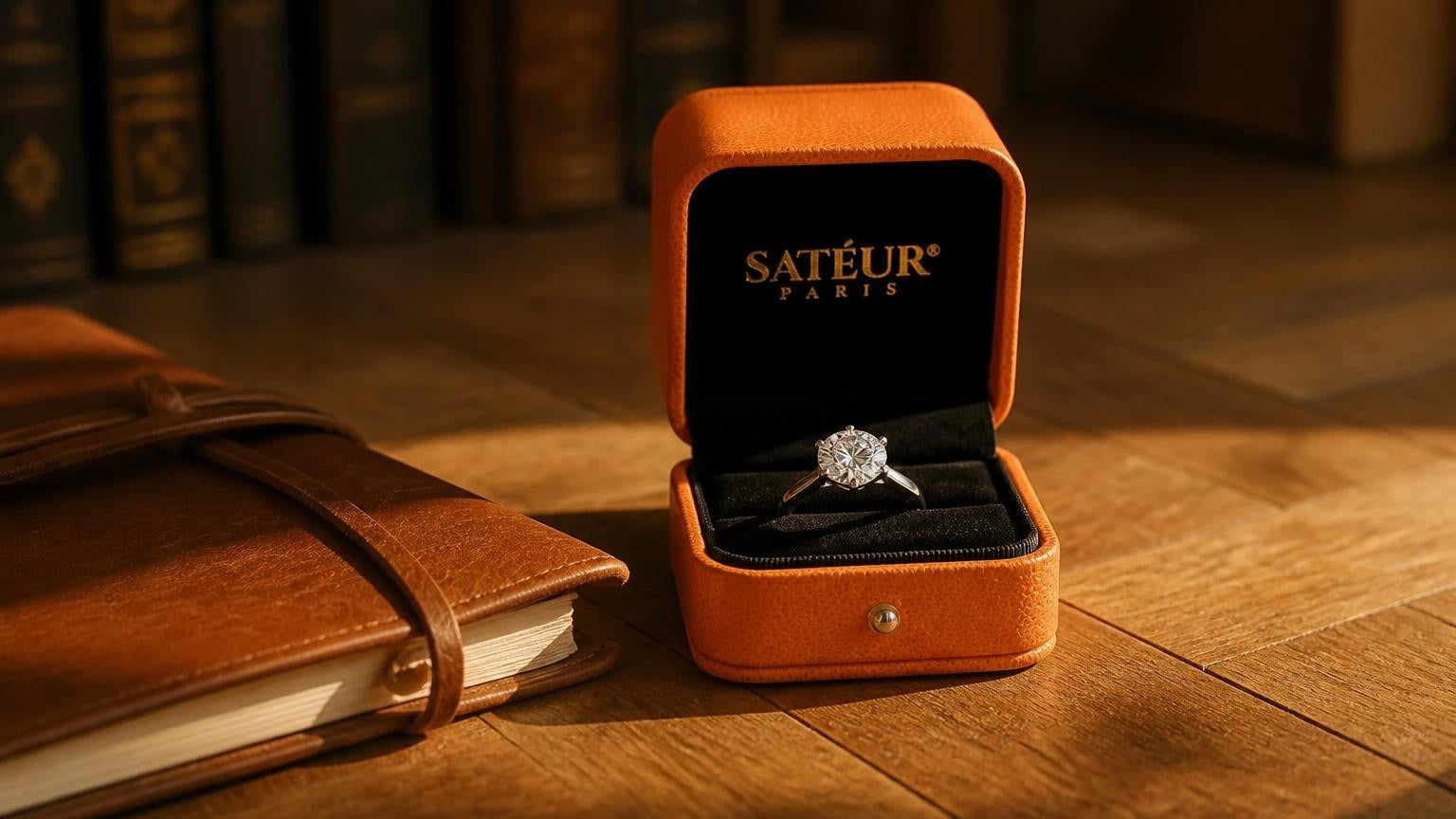
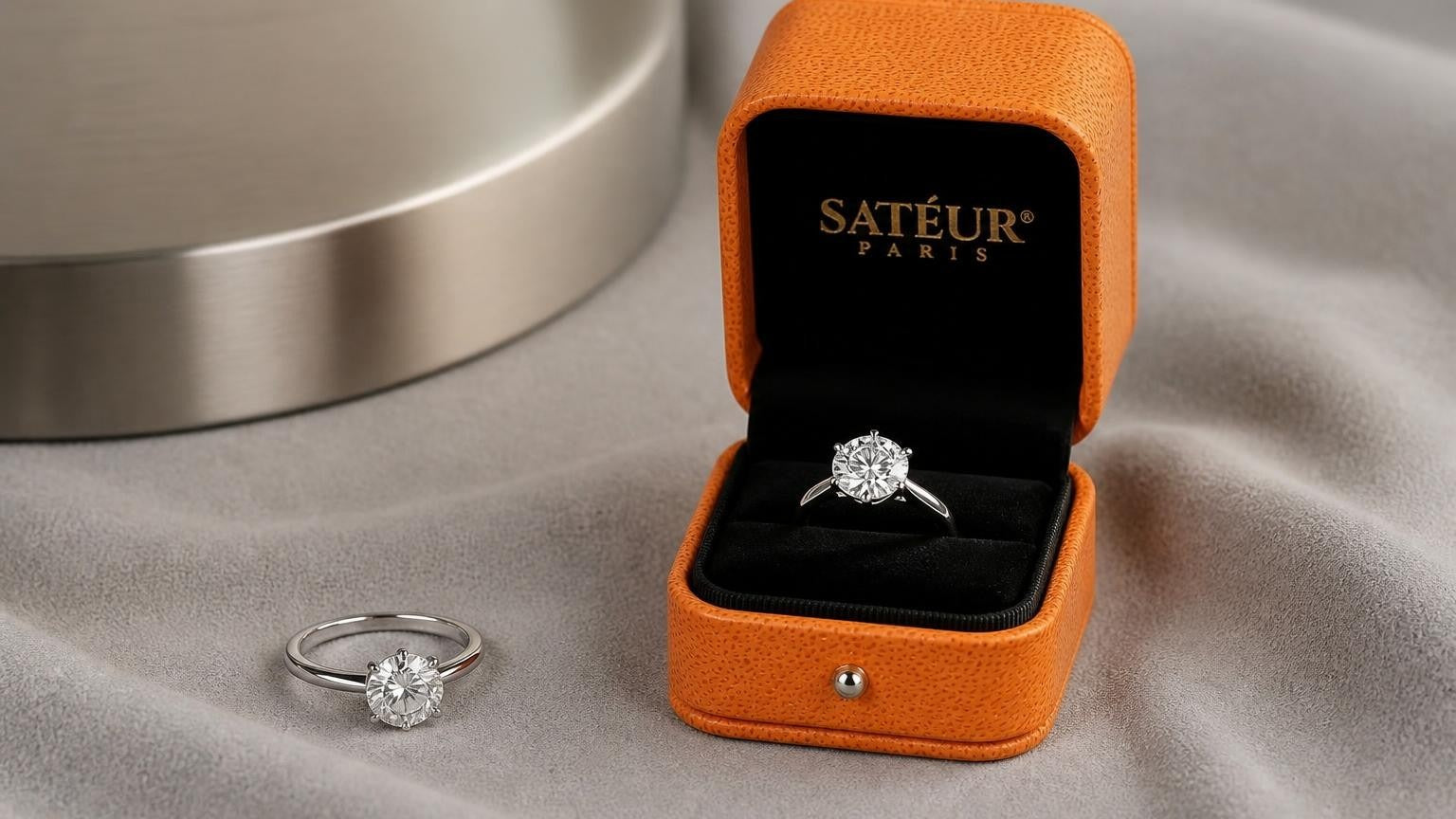
Satéur sources top-tier moissanite — D-E colour grade, colourless to the naked eye under standard lighting. The gemstones are selected for clarity, cut grade, and consistency of optical performance. What arrives in the orange box should look as exceptional as its specifications suggest.
The Satéur moissanite line sits within a three-tier gem system. Moissanite occupies the lab-credibility tier: openly lab-created, named, priced transparently, with all its specifications disclosed. Starting from $98 for moissanite rings, the collection represents the full diamond-look value proposition without obscuring what the gemstone is.
For couples who have considered their options and want the lab gemstone answer — disclosed, credible, and genuinely beautiful — Satéur's moissanite solitaire collection is the clearest expression of that position. The solitaire setting isolates the gemstone's character entirely — nothing competes with its fire and clarity.
The pricing reality is worth stating plainly. A comparable mined diamond engagement ring averages $5,500–$7,500 in the United States. A Satéur moissanite ring delivers the full visual presence — the same centre-stone size, the same setting quality, the same daily experience — at a fraction of that figure. The difference is not quality. It is what you know about where the gemstone came from.

Moissanite Cuts and Styles
Cut is the single most important factor in how a moissanite engagement ring performs visually. The round brilliant cut maximises the gemstone's high dispersion — 58 facets, maximum pathways for light to break into fire. For moissanite specifically, a round brilliant in D-E colour with an excellent cut grade delivers the full optical character the gemstone is capable of. It is the canonical choice for a reason.
Beyond round, moissanite is available in cuts that each produce a distinct visual personality:
- Oval: Elongates the finger, balances fire with a quieter silhouette. Pairs elegantly with slim pavé shoulders.
- Princess (square): More geometric, contemporary. Strong corner reflections, clean modern profile.
- Cushion: Soft corners, deep-cut facets, vintage appeal with modern clarity standards.
- Emerald: Step-cut facets — the most restrained brilliance, architectural quality. Linear flashes of light rather than sparkle.
- Pear: Asymmetric, striking, contemporary. Exceptional fire in the pointed tip under direct light.
The setting style shapes the ring as much as the cut. Solitaire settings isolate the gemstone's brilliance — nothing competes with it. Pavé shoulders frame the centre gemstone with smaller stones, multiplying the light return. Halo settings surround the centre gemstone to amplify its apparent size. Each serves a different aesthetic intention.
Satéur's engagement ring collection spans these styles. The starting point is always the centre gemstone — what cut, what presence, what daily expression of the wearer's character. The collection also includes options at the lab diamond tier for couples who want the certified diamond experience. Moissanite sits between those two positions: more fire than a diamond, more openly brilliant, at the most accessible price point in the range.

FAQ: Moissanite Care and Longevity
What is moissanite and how does it compare to diamonds?
Moissanite is a lab-created gemstone composed of silicon carbide, with a hardness of 9.25 on the Mohs scale and a refractive index of approximately 2.65. It produces approximately 2.4× the fire of diamond — a more vivid, rainbow-forward sparkle. Diamond has a refractive index of ~2.42 and delivers a crisper white brilliance. Moissanite is not a diamond: it is a distinct gemstone with its own optical character, fully disclosed, and considerably more accessible in price. The visual differences are subtle in most indoor lighting; the fire difference becomes more apparent in direct sunlight or bright spot lighting.
Is moissanite durable enough for everyday engagement ring wear?
Yes. Moissanite rates 9.25 on the Mohs hardness scale — one of the hardest gemstones in jewellery, second only to diamond. It resists scratching from virtually every material encountered in daily life. Combined with a quality metal setting, a moissanite engagement ring is built for decades of ordinary wear without any diminishment in its optical performance.
Will moissanite change colour or cloud over time?
No. Moissanite's optical properties are intrinsic to its crystal structure — not applied and not reversible. It does not fade, cloud, or yellow with ordinary care. The brilliance visible at purchase is the brilliance you will see in twenty years. Periodic cleaning with mild soap and warm water maintains surface clarity.
What cuts and styles does Satéur offer in moissanite rings?
Satéur offers moissanite engagement rings in round brilliant, oval, princess, cushion, and other cuts, in solitaire and pavé settings finished in 18k gold. The moissanite solitaire ring collection is the clearest expression of the gemstone's character. The broader engagement ring line includes styles from understated to statement, each finished to the same quality standard regardless of price point.
How should I care for and clean a moissanite engagement ring?
Clean with warm water, a small amount of mild dish soap, and a soft-bristle brush — the same approach used for a diamond ring. Avoid harsh chemicals such as bleach or chlorine. Ultrasonic cleaners are generally safe for moissanite and the metal settings Satéur uses. The gemstone itself is extremely resistant to scratching and will not cloud or lose clarity with ordinary daily exposure.
Why do couples choose moissanite engagement rings?
Couples choose moissanite for its genuine optical beauty, ethical provenance as a lab-created gemstone with no mining footprint, exceptional durability for daily wear, and its value relative to mined diamond. At Satéur, moissanite engagement rings start from approximately $88 — the full presence of a fine ring at roughly 1% of the cost of a comparable mined diamond. For couples who want a gemstone that is beautiful, transparent about what it is, and intelligently priced, moissanite is a considered choice rather than a compromise. For more on the moissanite versus diamond decision, Satéur's overview of moissanite vs diamond rings sets out both cases clearly.















Leave a comment
This site is protected by hCaptcha and the hCaptcha Privacy Policy and Terms of Service apply.