





Engagement Ring for Fair Skin Tone: Choosing the Right Metal
Fair skin is one of the most versatile canvases in jewelry. The question is not which metal works — most do — but which one elevates the look you have in mind. This guide covers the honest differences between white gold, rose gold, yellow gold, and platinum against fair and light complexions, then closes with a note on gem choice that changes the calculus entirely.
If you are exploring engagement rings for a fair or light complexion, understanding undertones — the cool, warm, or neutral blush beneath your surface skin — is the single most useful filter you can apply before any other decision.
Key Takeaways
- Cool undertones (blue, pink, or red tones beneath the skin) pair most naturally with white gold and platinum.
- Warm undertones (yellow, peachy, or golden) are flattered by yellow gold and, often, rose gold.
- Rose gold bridges both undertone categories — it suits fair skin across the cool-to-warm spectrum.
- White gold and platinum remain the most popular metal choices for engagement rings across all skin tones.
- Gemstone optics interact with metal: cool metals heighten colour contrast; warm metals soften and vintage-tone the look.
- Satéur Gems® — diamond-accurate white brilliance at D-E colour, approximately 8.8 Mohs — starts from around $138, roughly 1% of a comparable mined diamond.
Engagement Rings and Fair Skin Tone
Fair skin spans a wide spectrum — porcelain, ivory, light beige, pale olive. What matters more than the surface tone is the undertone: the colour cast beneath. The vein test is reliable — blue-green veins suggest cool; green or olive suggest warm. Most fair-skinned people lean cool, which explains why white gold and platinum appear so frequently on lighter hands. Warm-toned fair skin exists too, and opens the full gold palette.
Metal tone either creates contrast — making the hand feel more defined — or creates harmony, blending softly into the complexion. Neither is wrong. Both can be intentional.
Understanding Cool and Warm Metal Undertones
Every metal carries a colour temperature. White gold and platinum are cool-toned — silvery, bright. Yellow gold is warm — rich, sun-inflected. Rose gold sits between: warm in hue, with a pink softness that reads differently against skin than yellow does.
For cool-undertoned fair skin, cool metals echo the skin's own colour cast — the metal dissolves into the hand, making the gemstone the sole visual statement. For warm-undertoned fair skin, warm metals pick up the golden or peachy notes in the complexion, creating a unified warmth that reads rich and considered.

White Gold for Fair Complexions
White gold is the most chosen metal for engagement rings on fair skin. Its cool, silvery tone amplifies contrast between metal and gemstone, making stones appear brighter and more saturated. On a fair complexion with blue or pink undertones, white gold reads as modern and precise — the metal almost disappears, letting the gem dominate.
White gold is a gold alloy finished with a rhodium plate that gives it its bright, reflective surface. Over time the rhodium layer requires occasional replating to maintain its white sheen — the main trade-off versus platinum, which is naturally white with no plating required. For fair-skinned wearers who want the cleanest, most gem-centric look, white gold remains the reference choice.
Rose Gold: Warmth and Contrast
Rose gold has become the defining metal of modern engagement ring design. The blush-copper tone creates soft contrast against pale complexions — neither jarring nor absent — picking up the natural rosy undertones many fair-skinned people carry, even those who identify as cool-toned.
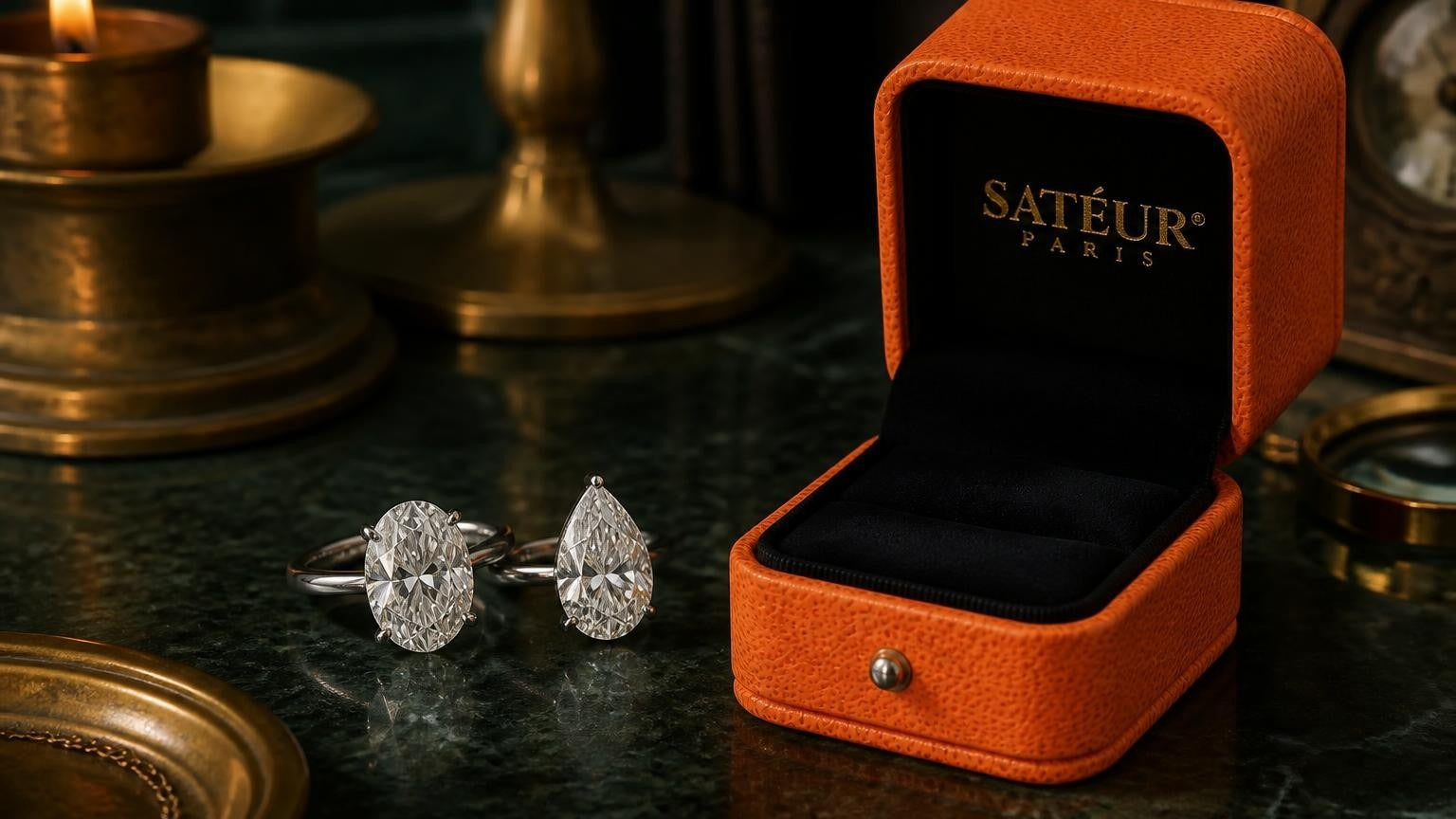
It is also the most forgiving across undertone categories. A cool-toned fair skin that might not suit yellow gold will almost always suit rose gold. Rose gold engagement rings — including pear-shaped cut settings and halo styles — photograph especially well on fair skin, a factor behind their dominance in bridal imagery.
Yellow Gold: Classic Radiance
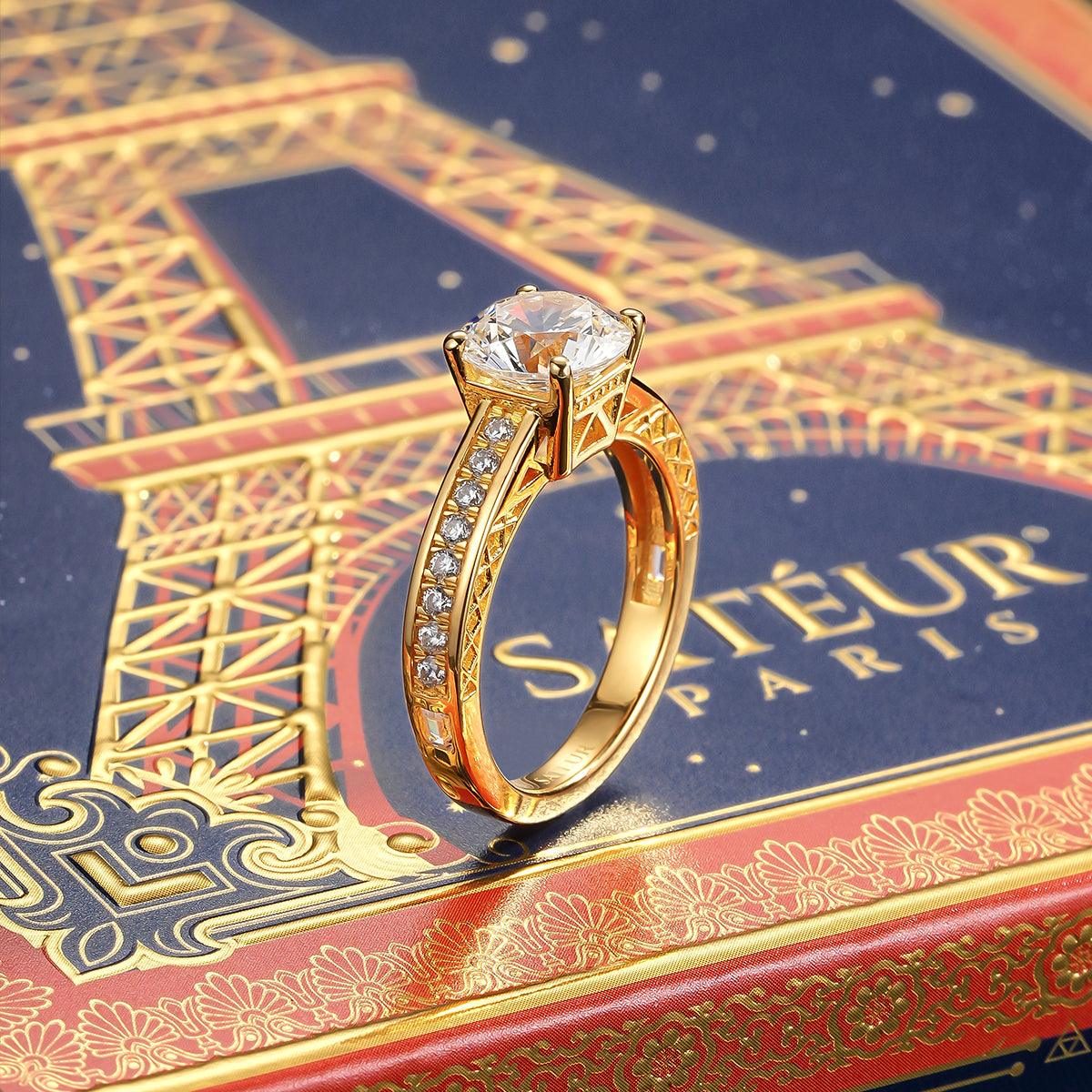
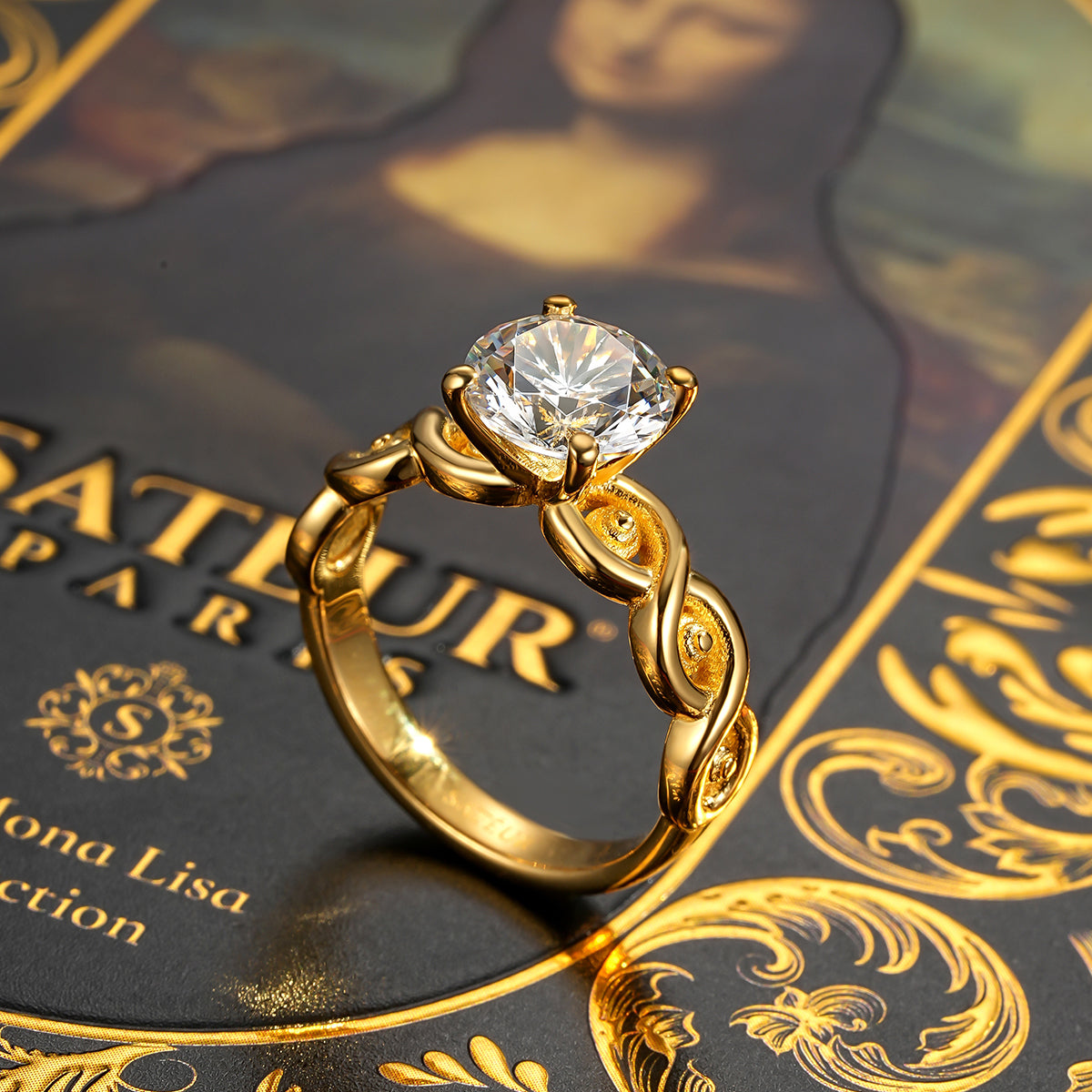
Yellow gold is the oldest engagement ring metal and, for fair skin with warm undertones, it can be the most flattering of all. It produces a luminous, sun-warmed look — metal and skin reading as harmonious rather than contrasted.
For cool-toned fair skin, yellow gold creates high contrast. Historically considered unflattering, that rule has largely dissolved — wearing yellow gold on a cool-fair complexion now reads as a deliberate style decision. Personal preference overrides traditional color conventions. Yellow gold also softens the colour saturation of a near-colourless gem, producing a vintage-romantic tone that suits certain wearers precisely.

Platinum and Silver Metals
Platinum is the premium of cool metals. Naturally white and exceptionally dense, it carries a slightly cooler, greyer tone than rhodium-plated white gold. On fair skin with cool undertones, platinum reads austere and precise — a choice that communicates permanence. It requires no replating and develops a gentle patina over decades. The price premium over white gold is real, though it matters less when the gemstone itself is priced at a fraction of its mined equivalent.
Silver and sterling silver are rarely used for fine engagement jewelry. Silver's relative softness makes it impractical for daily finger wear — it scratches and deforms more readily than gold alloys or platinum. Sterling silver rings exist but are fashion pieces rather than lifetime jewelry.
Gemstone Selection for Fair Skin
Metal and gemstone interact. Cool metals — white gold, platinum — enhance colour contrast, making near-colourless stones appear brighter and more saturated against pale skin. Warm metals soften that saturation, producing a richer, more intimate tone.
For fair skin, D-E colour stones read cleanest against the pale, neutral backdrop of a light complexion, especially in a cool metal setting. Cut matters too: a round brilliant or hidden halo setting returns maximum light and creates the most radiant impression on a pale hand. Elongated cuts — oval, pear, emerald — can visually lengthen the finger, a common preference for more compact hands.

Satéur Destinée Ring™
The look of a flawless diamond, for 1% of the price.
Compare to a $10,000 mined diamond
Joined by 100,000+ couples across 150+ countries.
Discover The 1% RingFree worldwide shipping · 30-day returns · Lifetime Satéur Care
Satéur Gems®: Diamond-Look Value at Entry Price
A mined diamond of D-E colour in a 1-carat round brilliant typically reaches $8,000–$12,000 for the stone alone. The same look is achievable at a fundamentally different price point.
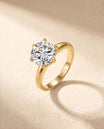
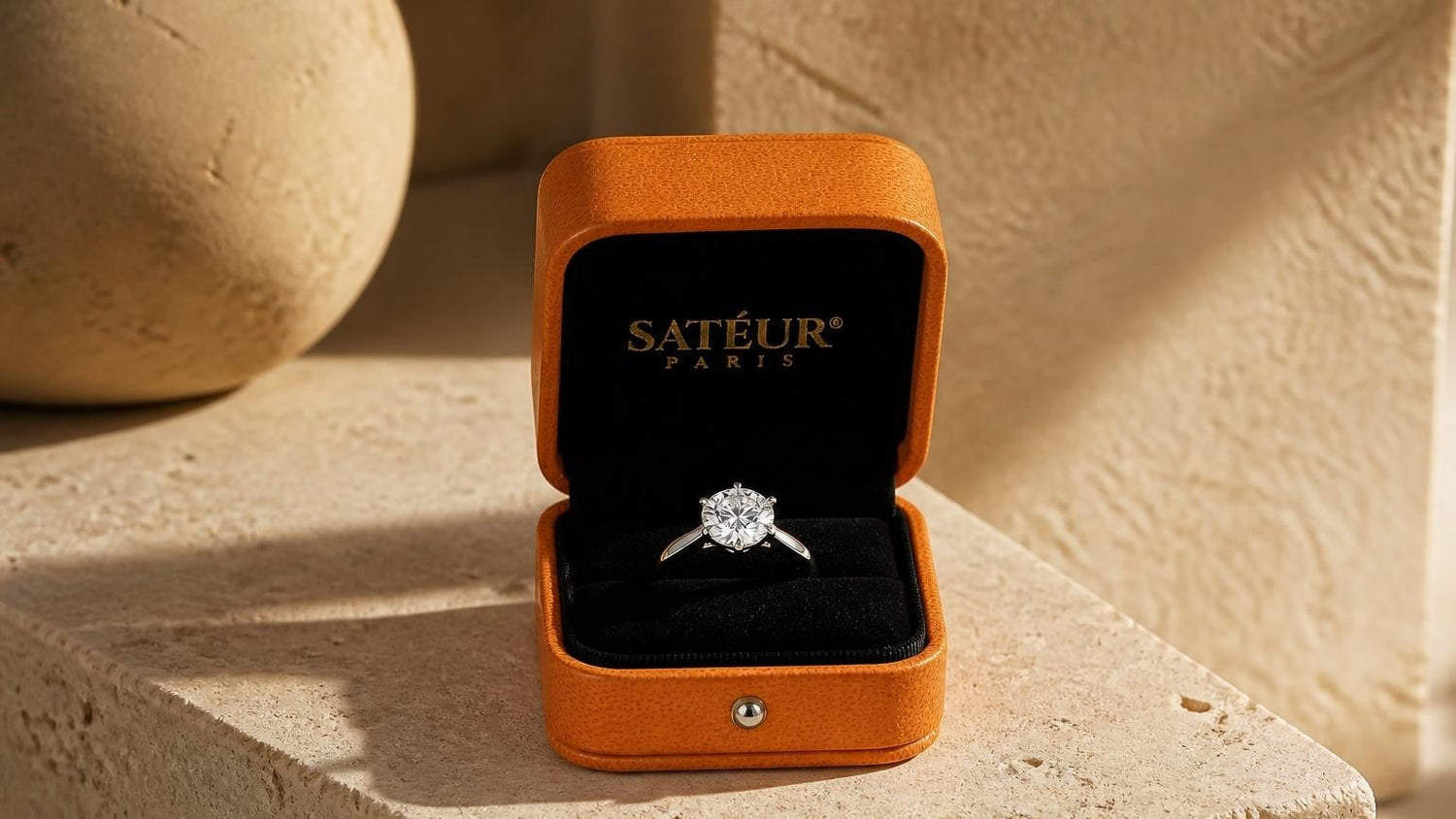
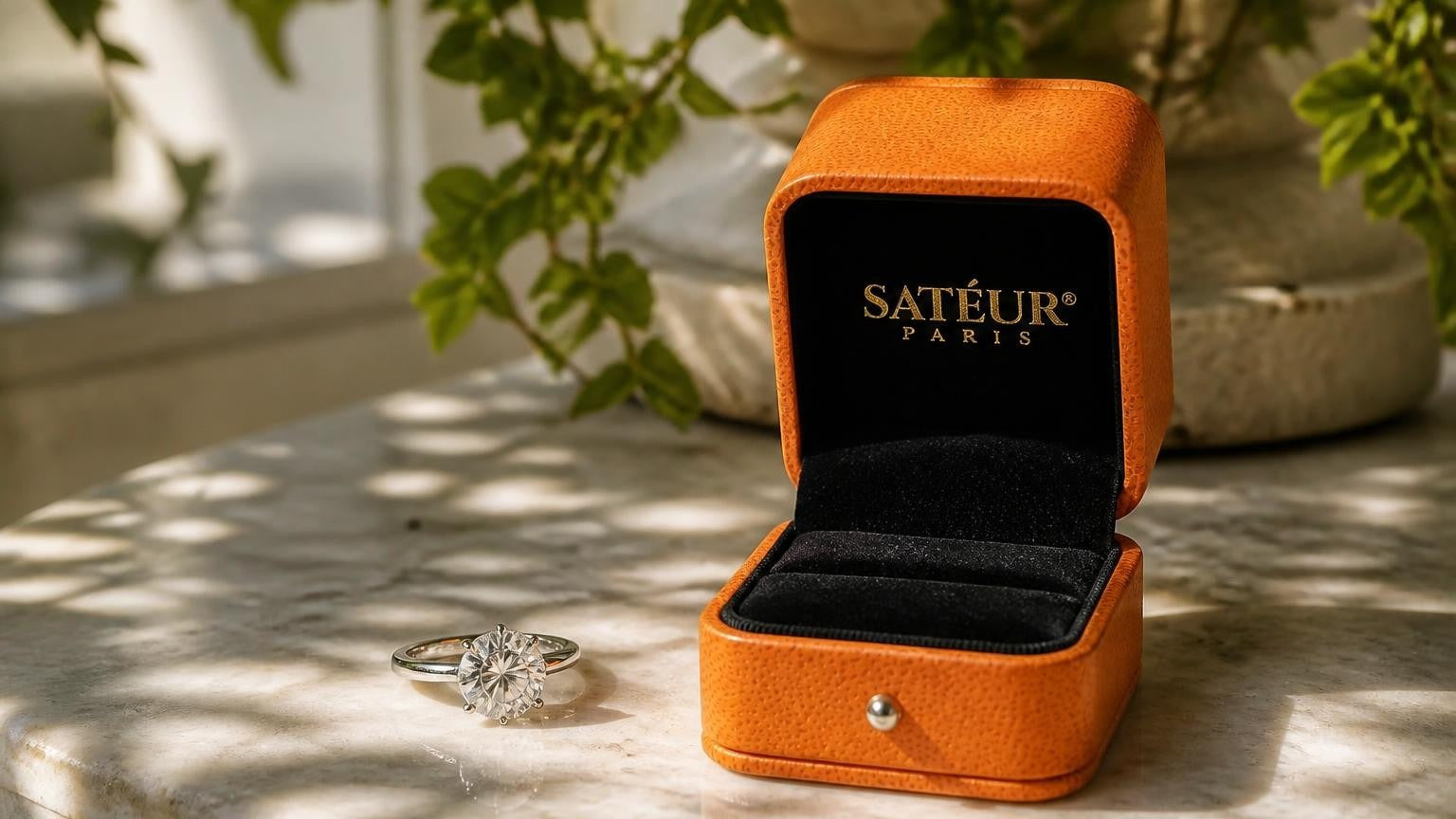
Satéur Gems® is the Maison's trademarked diamond simulant — engineered for the clean, white brilliance of a flawless diamond. D-E colour equivalent. Excellent cut. Approximately 8.8 Mohs — extremely durable, built for everyday wear. The restrained, diamond-accurate sparkle that a white gold or platinum setting is designed to amplify. Not more fire than a diamond — the precise look of one, with the naked eye. Starting from approximately $138: roughly 1% of a comparable mined stone.
Those who prefer the slightly warmer, more vivid sparkle of moissanite — a lab-created gemstone with more fire than a diamond — will find it in the Satéur moissanite range from approximately $98. The trade-off is aesthetic: moissanite's higher dispersion produces a rainbow-forward sparkle that reads more vivid but less diamond-accurate in certain lights.

Frequently Asked Questions
What metal colour looks best with fair skin?
White gold and platinum are the most consistently flattering for fair skin, particularly cool undertones — blue, pink, or red-toned veins beneath the wrist. Rose gold is nearly as versatile, bridging cool and warm undertones. Yellow gold suits warm-undertoned fair skin well and reads as intentional high contrast on cool-toned complexions.
Do cool undertones or warm undertones matter more for metal selection?
Undertones are a useful starting point, not a rule. Cool undertones point toward white gold and platinum; warm undertones toward yellow gold and rose gold. Engagement rings are worn for decades — the aesthetic you want to project and personal comfort with the choice typically outweigh undertone theory. Undertones guide; preference decides.
Can I wear yellow gold if I have cool undertones in my fair skin?
Yes. The traditional caution against yellow gold on cool-toned fair skin is aesthetic guidance, not a constraint. The contrast between a cool-fair complexion and a warm yellow metal can be intentional and striking — it has appeared as a deliberate styling decision in editorial and bridal fashion for years. Undertone matching is one school of thought. Contrast dressing is another. Both produce valid, considered results.
How does white gold compare to platinum for fair complexions?
Both are cool-toned and suit fair skin with cool undertones. Platinum is naturally white and requires no replating; white gold needs occasional rhodium replating to keep its bright surface. Platinum is denser and more expensive; white gold is lighter and more accessible. On fair skin the visual difference is subtle — platinum carries a slightly cooler, greyer tone. For most wearers, maintenance and budget matter more than the tonal distinction.
Does the gemstone choice change based on metal and skin tone?
Yes. Cool metals enhance colour contrast, making near-colourless stones appear brighter on fair skin's pale backdrop. Warm metals soften that saturation for a richer, more vintage effect. D-E colourless gems in white gold or platinum create the most striking result on fair skin. Satéur Gems® — diamond-accurate white brilliance at D-E colour, approximately 8.8 Mohs — is engineered for exactly this pairing.
What if I cannot decide between white gold and rose gold?
White gold produces the cleaner, more minimal look — the metal recedes, the gem leads. Rose gold adds warmth and soft contrast. For a modern, precise aesthetic: white gold. For a romantic, warm one: rose gold. For genuinely undecided buyers, rose gold's versatility across undertone categories makes it the more forgiving choice.
Choosing Your Metal: A Personal Decision
Fair skin is adaptable — it does not foreclose any metal. What it does is amplify the properties of whichever metal you choose: cool metals read cooler and more precise; warm metals read richer. The gem's brilliance registers against a pale backdrop with particular clarity in either case.
The choices that endure are made for personal reasons, not rules. A cool-toned wearer who loves yellow gold should wear yellow gold. Someone undecided often finds rose gold resolves it — it sits at the intersection of both palettes.
If the gemstone decision is still open, consider it alongside the metal. Princess-cut settings in white gold read markedly different with a diamond-accurate Gems® versus a vivid moissanite — the two together determine the final visual. Satéur's The 1% Ring collection makes it possible to experience diamond-accurate white brilliance in an 18k white gold finish, starting from approximately $138.
Over 100,000 customers across 150+ countries have chosen a different path: The New Diamond Standard. The look of a flawless diamond, at 1% of the price.

















Leave a comment
This site is protected by hCaptcha and the hCaptcha Privacy Policy and Terms of Service apply.