



Engagement Ring Trends 2026: What's In and Why
Engagement ring trends in 2026 have shifted decisively — away from the minimalist solitaire that defined the previous decade, toward rings that carry visual weight, narrative, and intention. Couples today are choosing statement centre stones, ornate settings drawn from Victorian and Art Deco vocabularies, and metal combinations that feel considered rather than conventional.
Understanding what drives these trends — and which elements endure beyond a single season — allows for choices that feel both current and lasting. This guide covers the key directions shaping engagement rings in 2026, from stone cuts to metals to the rise of intelligent diamond alternatives.
Key Takeaways
- 2026 favours bold centre stones — oval, elongated cushion, and pear cuts are leading choices.
- Yellow gold and mixed-metal bands have overtaken white gold as the dominant metal direction.
- Victorian and Art Deco settings — milgrain, filigree, cluster designs — are the primary aesthetic influence.
- Coloured gemstones and diamond alternatives are entering mainstream engagement jewelry consideration.
- Satéur Gems® — D-E colour equivalent, ~8.8 Mohs — deliver diamond-accurate brilliance at approximately 1% of mined diamond pricing, starting at ~$88.
- Personalisation and design specificity have replaced convention as the leading buying criteria.
Engagement Ring Trends 2026: What's Driving the Shift
The defining force behind 2026 engagement ring trends is a rejection of understatement. The quiet diamond solitaire — for decades the industry default — no longer reads as aspirational to a generation that has grown up watching fine jewelry on social platforms, in editorial shoots, and through the resurgent appetite for vintage and estate pieces.
What has replaced it is more considered: rings with architectural presence, stones that hold the light in ways that invite a second look, and settings that speak to a specific aesthetic point of view. The ring has become, again, a statement of who you are.
The economics have shifted in parallel. The traditional expectation that an engagement ring should represent months of salary has been quietly abandoned by the generation now proposing. Value intelligence is no longer an apology; it is a position. The question is no longer simply "how much?" but "how wisely chosen?"

The Rise of Bold Centre Stones
The most consistent signal across 2026 ring trends is scale. Centre stones are larger — not necessarily heavier, but visually commanding. Oval, elongated cushion, and elongated radiant cuts are particularly prominent, delivering apparent size at lower carat weights than equivalent round brilliants.
Pear-shaped engagement rings have maintained strong momentum from 2025 into this year, offering a silhouette that reads both modern and vintage simultaneously. The asymmetry of the pear, once considered informal, now registers as intentional. Round brilliants remain the best-selling cut globally, but couples are more willing to choose a cut for its distinctiveness than for adherence to convention.
For those prioritising visual scale, mined diamond pricing creates a compelling argument for alternatives. A 3-carat mined diamond of comparable colour and clarity carries a retail price of $58,000 or more. The same visual presence — the same diameter across the hand, the same light return across the table — is achievable through more intelligent stone choices at a fraction of the cost.
Precious Metal Choices: Gold, Platinum, and Mixed Metals in 2026
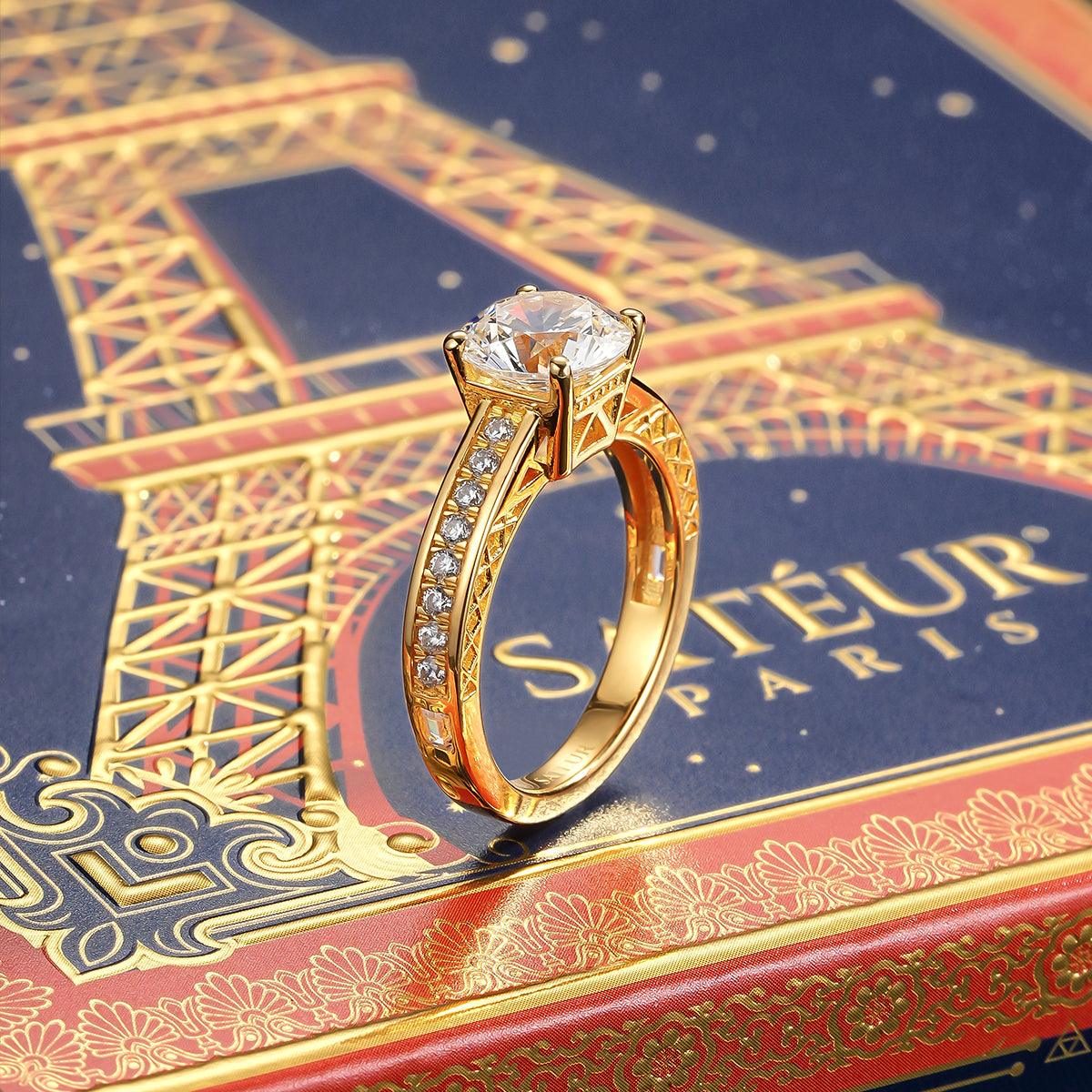
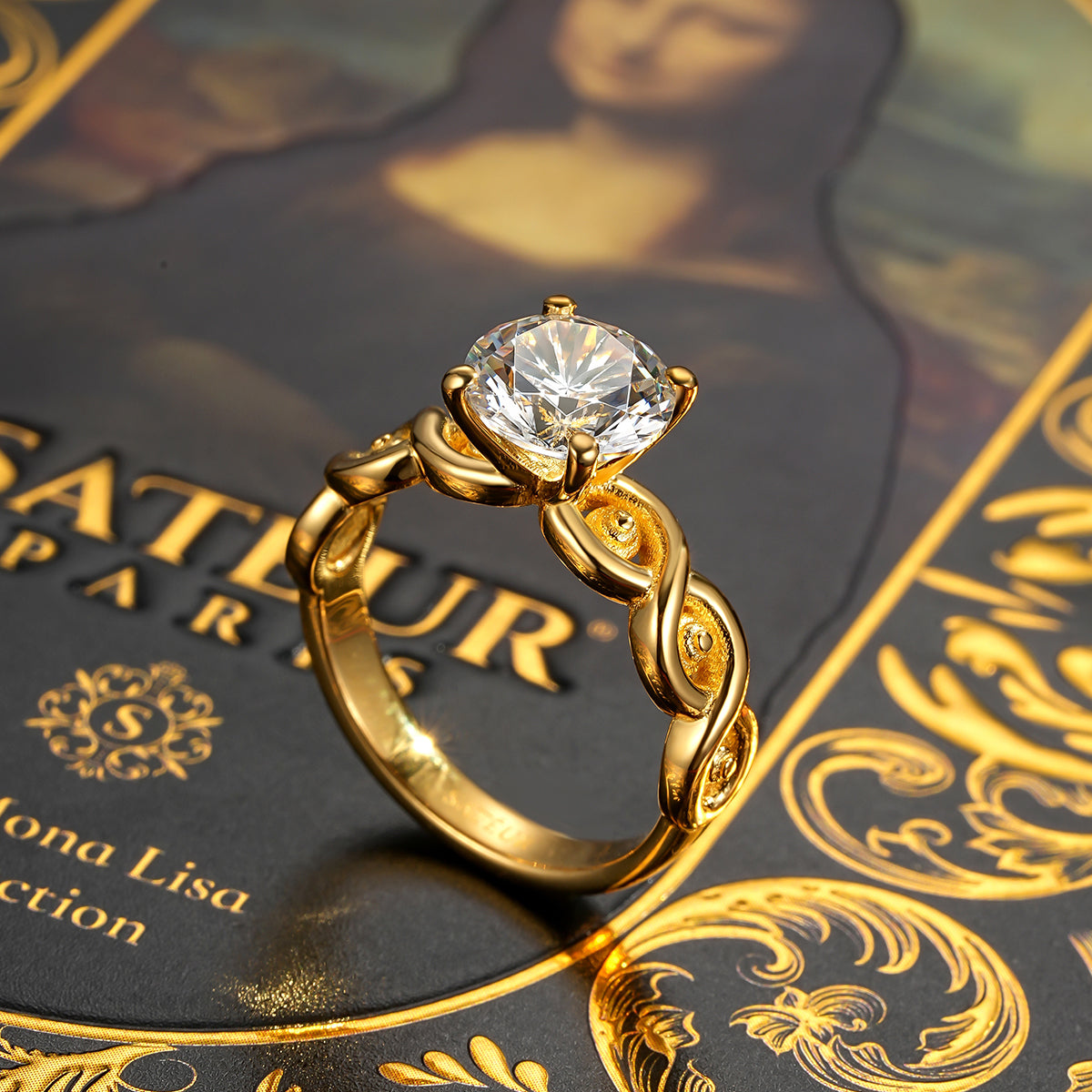
Yellow gold has made its most significant return in a generation. After a decade in which white gold and platinum were the engagement ring defaults, yellow gold has reclaimed its position as the leading metal choice for 2026. Its warmth against skin reads as intentional in a way that cooler metals do not.
More significant still is the rise of mixed-metal bands — yellow gold paired with white gold or platinum in the same setting. Two-tone designs that were once a period eccentricity are now among the most-requested styles in contemporary jewelry. The design logic is clear: different metals draw attention to different elements of the setting, and the contrast becomes part of the visual statement.
Rose gold has stabilised rather than retreated, remaining a coherent choice particularly for warmer skin tones. Platinum maintains its appeal for buyers who prioritise the brightest white setting and maximum metal durability — particularly when paired with diamond or diamond-equivalent centre stones where colour accuracy matters most.

Victorian and Art Deco Settings Return in 2026
The dominant aesthetic shift of 2026 is historical. Victorian and Art Deco design languages — intricate, architecturally considered, and carrying a sense of accumulated meaning — have moved from the estate-jewelry market into mainstream modern production.
Milgrain texturing, in which tiny beaded metal details line the edges of settings and bands, has become a signature of the year. Alongside milgrain, filigree work — open metalwork in which the metal itself forms a decorative pattern — is appearing in contemporary settings, creating a fusion of historical craft and modern proportion.
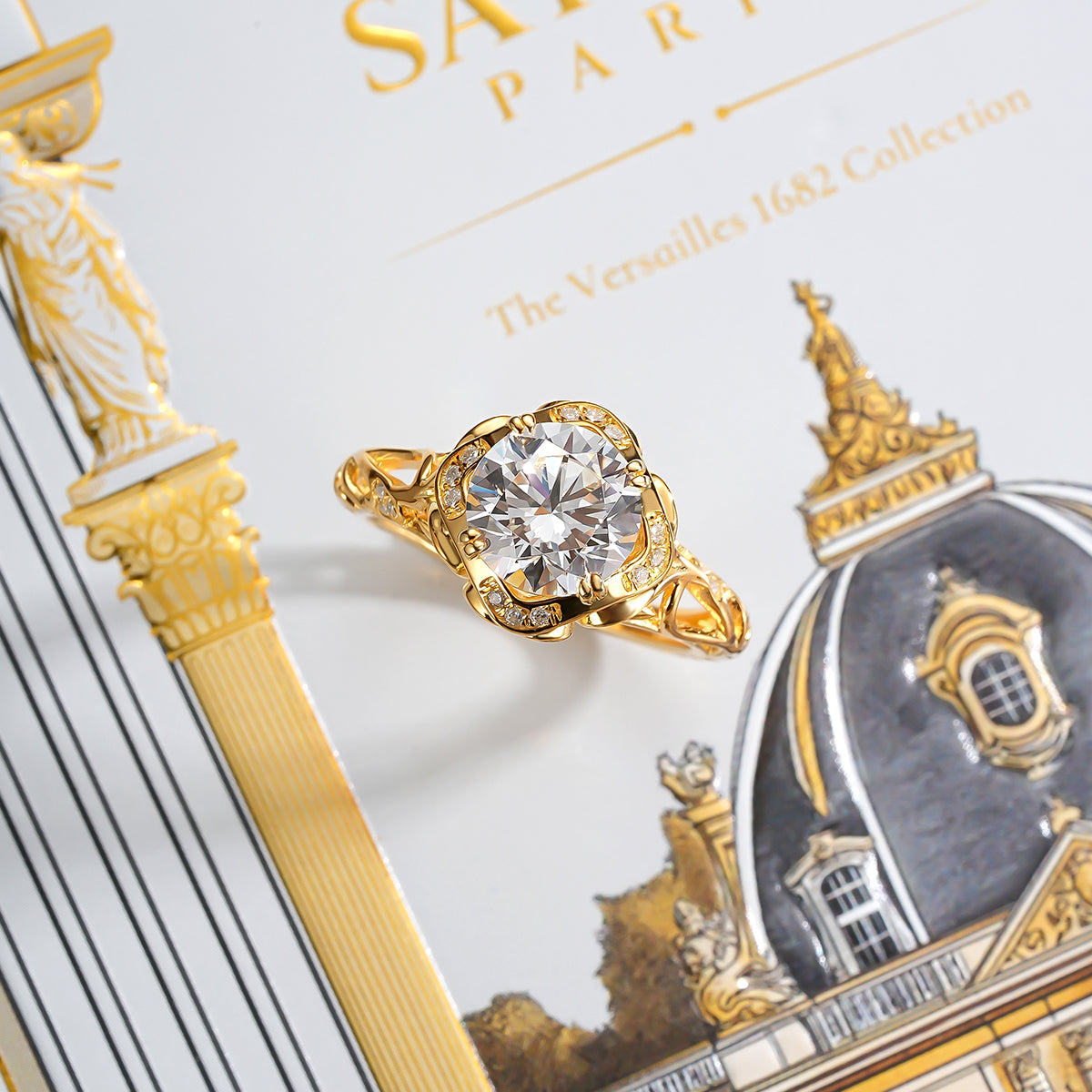
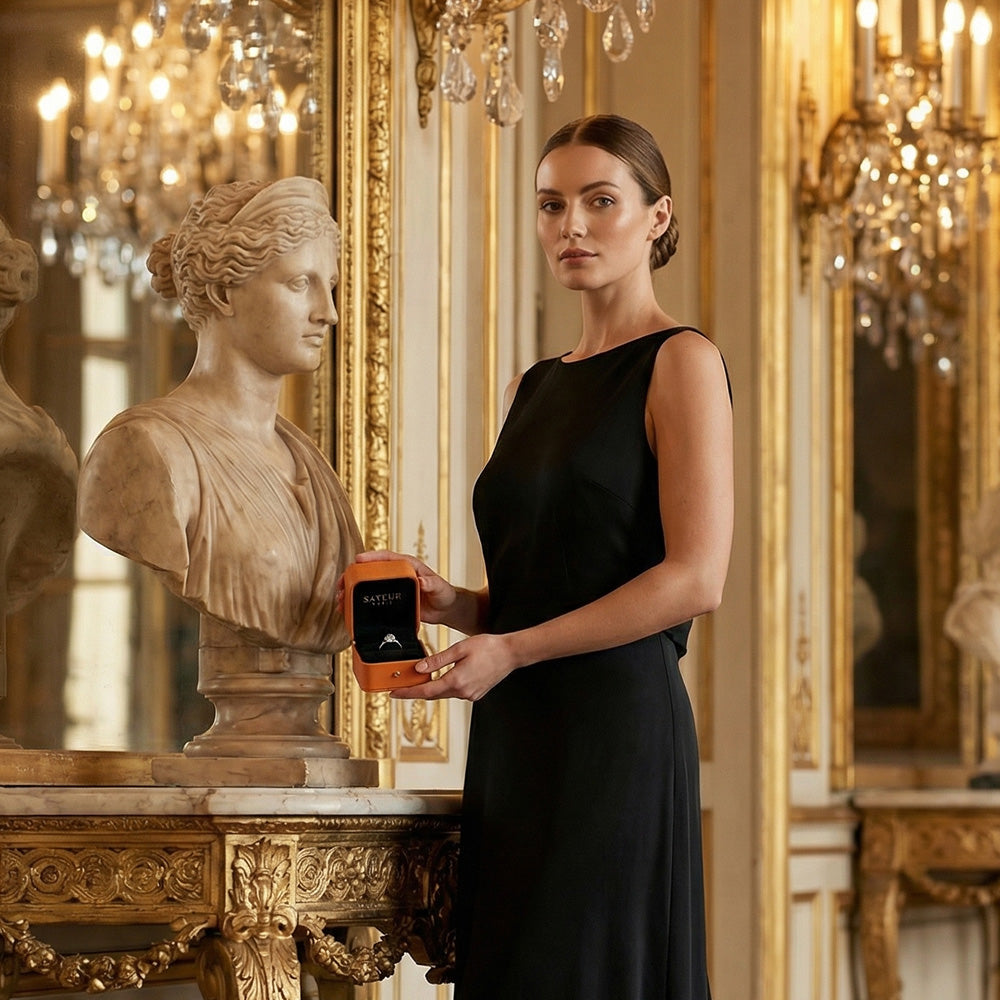
The Satéur hidden halo engagement ring sits precisely in this tradition: a central stone elevated by surrounding brilliance, with the halo recessed beneath the centre stone's girdle for a cleaner profile when viewed from the side. The appeal of these historical references is partly visual and partly cultural. A ring that carries the design language of the 1920s or the 1880s implies a relationship with time — something worth making carefully and worth keeping.
Colourful Gemstones and Diamond Alternatives
Coloured gemstones — sapphires, emeralds, and rubies — have moved from accent stones to primary centre stones in 2026 engagement rings. High-profile choices have normalised the idea that an engagement ring need not be colourless to be precious or meaningful. A deep blue sapphire or vivid green emerald in a vintage-inspired setting can read as more considered and more personal than a conventional diamond solitaire.
Alongside coloured stones, the category of diamond alternatives has entered genuine mainstream consideration. Couples who might have stretched to a modest mined diamond five years ago are now choosing larger, more visually striking stones that achieve the same effect at a fraction of the cost. The distinction between types matters for discerning buyers.
Moissanite is a lab-created gemstone with approximately 9.25 Mohs hardness — extremely durable for daily wear. Its defining visual characteristic is more fire than a diamond: a vivid, rainbow-forward sparkle that catches the light with distinctive intensity, different from the crisp white brilliance of a fine diamond.
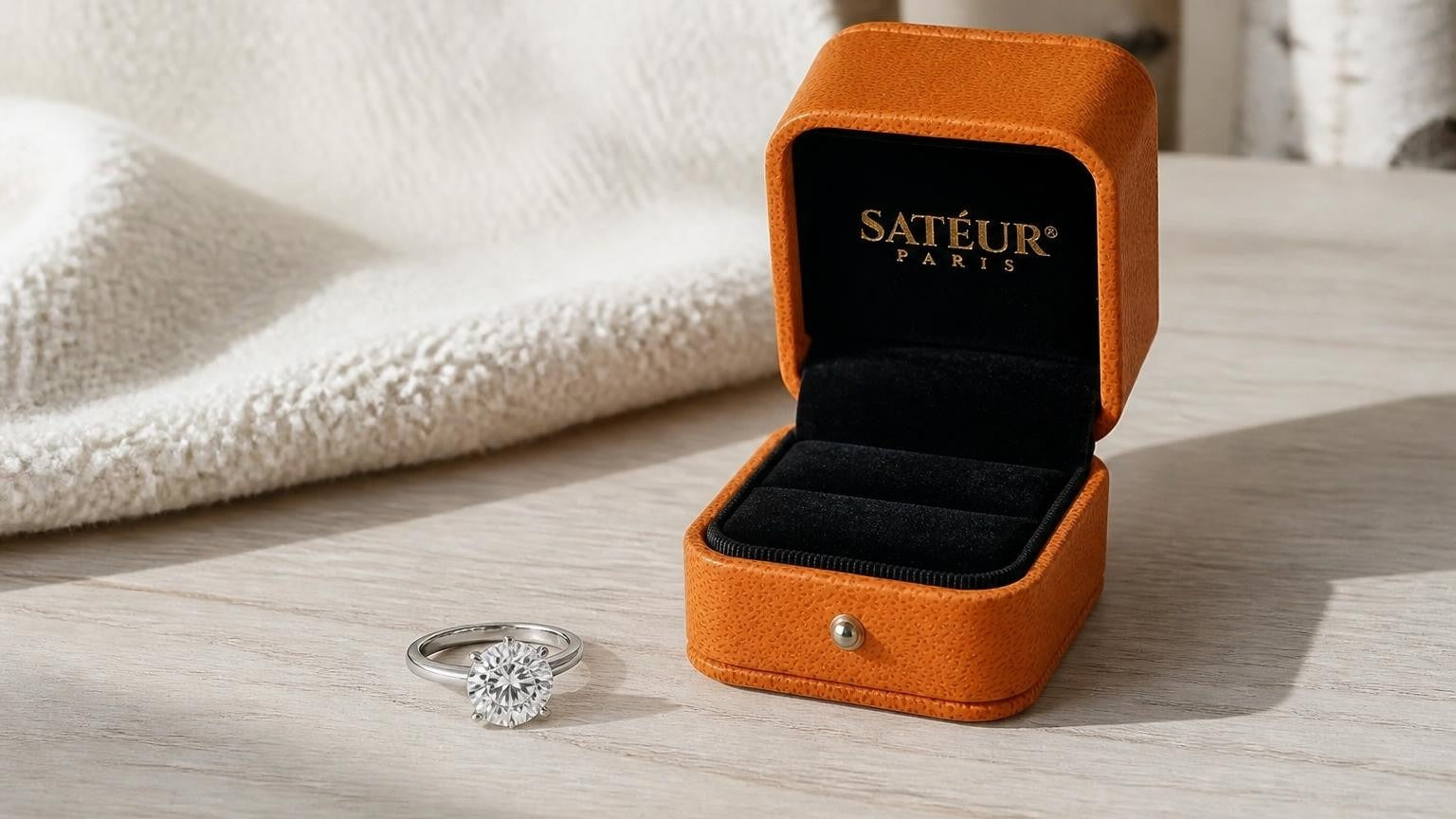
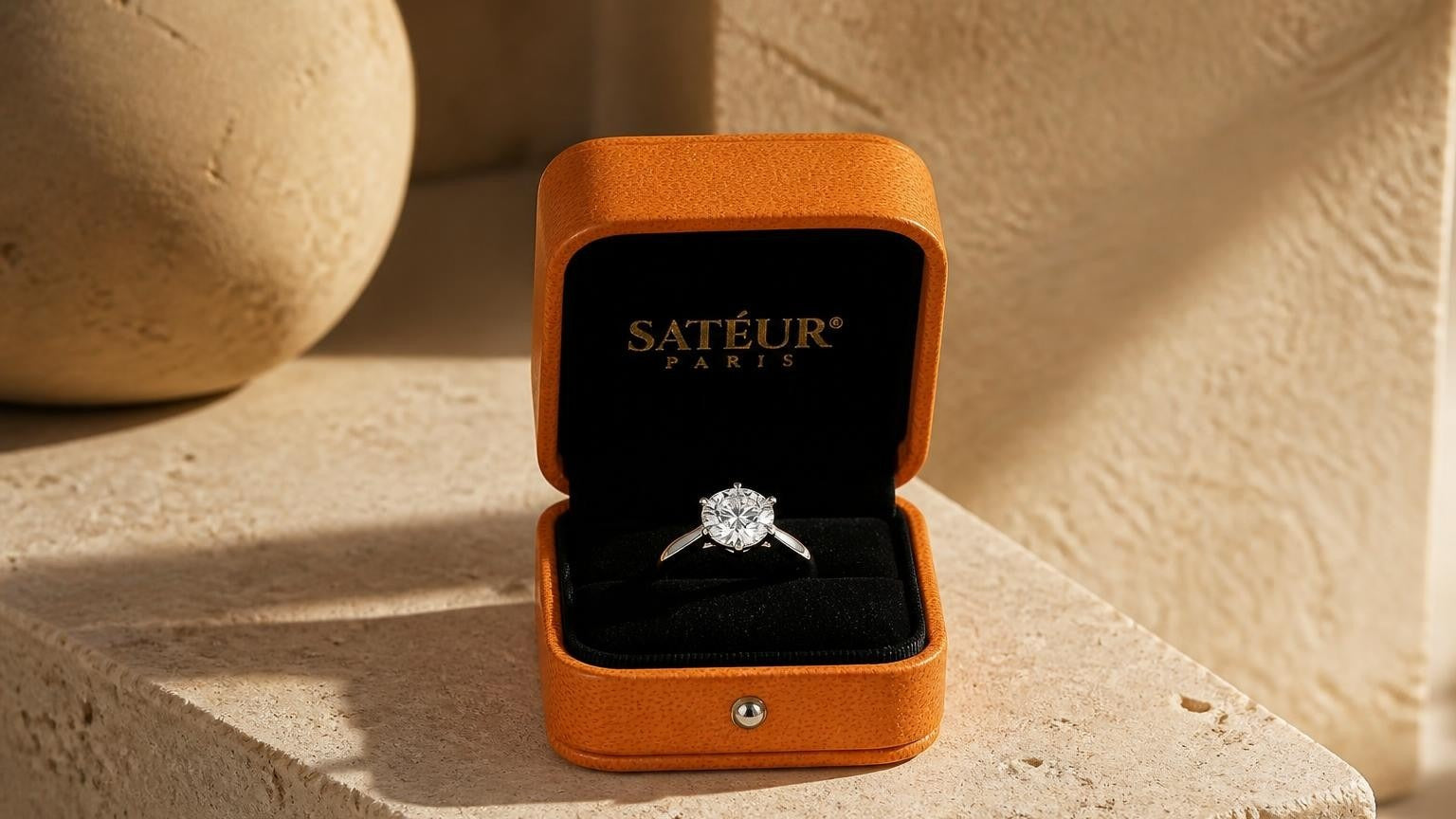
Satéur Gems® occupy a different position. The Gems® deliver the restrained, white brilliance of a flawless diamond — diamond-accurate in their light return, indistinguishable from a D-E colour stone with the naked eye. For couples who want the appearance of a premium diamond without the premium price, the Gems® offer the most direct answer 2026 has to offer. See the full range at The 1% Ring® collection.

Why Satéur Gems® Fit 2026 Engagement Ring Trends
Every major 2026 trend converges on the same requirements: visual scale, diamond-accurate brilliance, durability for daily wear, and value that reflects intelligent choice. Satéur Gems® answer all four directly.
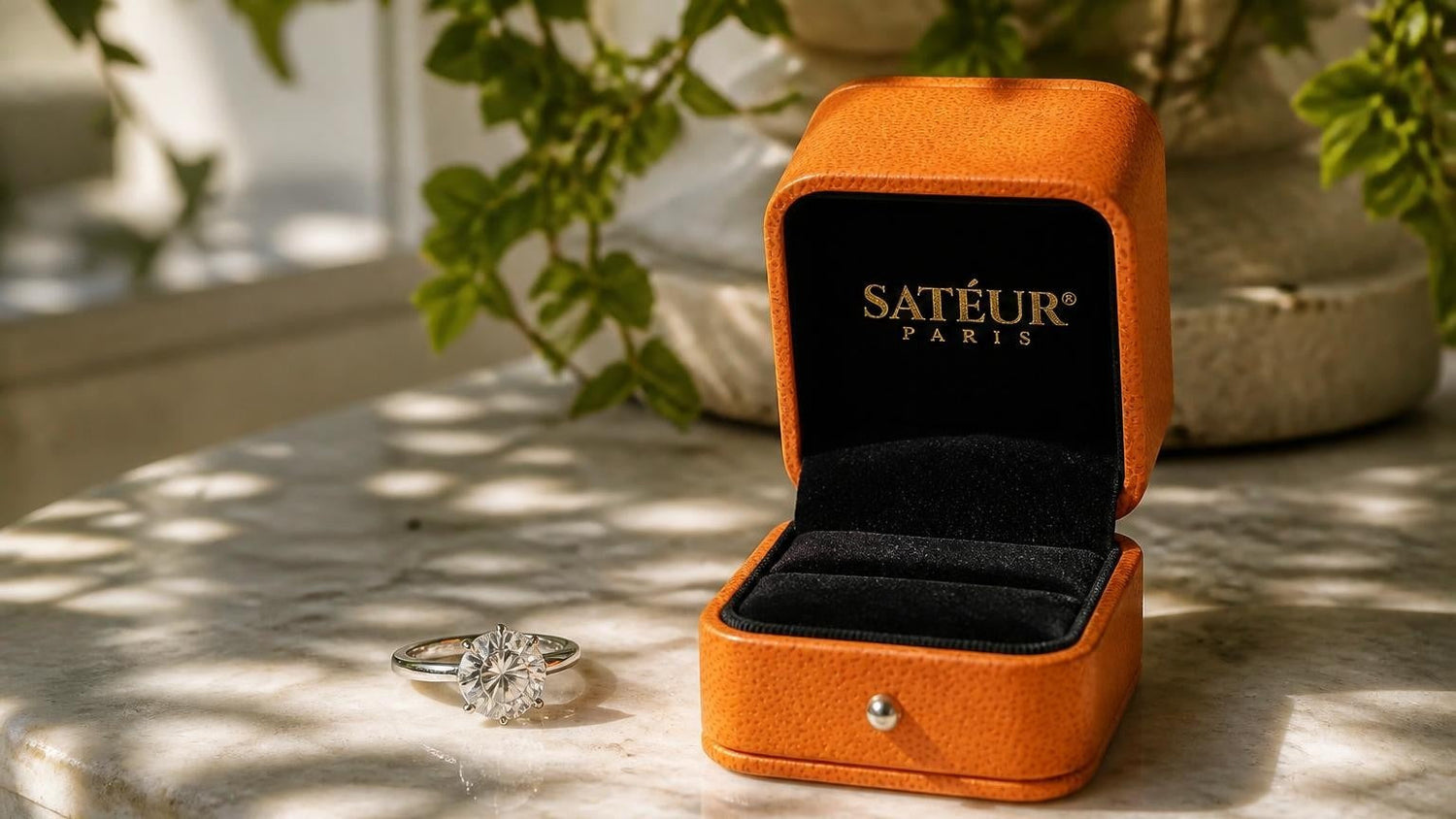
The Gems® are graded at D-E colour equivalent — the same range occupied by the finest mined diamonds — and cut to deliver the clean, white brilliance that distinguishes a flawless diamond from near-colourless stones. At approximately 8.8 Mohs hardness, they are extremely durable for engagement ring wear. The price comparison is direct: a 1-carat mined diamond of D-E colour in an excellent cut commands approximately $10,000 at retail. The Satéur Destinée Ring™ — a round-cut Gems® solitaire in 18k white gold finishing — begins at approximately 1% of that figure.
For the bold centre stone trend specifically: because the Gems® are priced at approximately 1% of mined diamond equivalents, couples can choose significantly larger stones — 2, 3, or 5 carats — without the financial exposure that mined diamonds at those sizes would require. The result fits exactly where 2026 ring trends are pointing: larger, more visually present, and more confident in its choices.
The Gems® also work across all the principal metal and setting combinations driving 2026 aesthetics: yellow gold, two-tone bands, hidden halo settings, and Art Deco-influenced metalwork. For couples exploring princess-cut engagement rings, the geometric precision of the square cut reads as architectural in a clean bezel setting and as ornate in a milgrain claw setting — the same stone, two entirely different expressions.

Satéur Destinée Ring™
The look of a flawless diamond, for 1% of the price.
Compare to a $10,000 mined diamond
Joined by 100,000+ couples across 150+ countries.
Discover The 1% Ring®Free worldwide shipping · 30-day returns · Lifetime Satéur Care
Custom Design and Personalisation
Personalisation has moved from a premium option to an expectation in 2026 engagement jewelry. Buyers are not looking for the ring that everyone chooses; they are looking for the ring that could only belong to them. This is expressed in small choices — engraving, metal selection, side stone shapes — and in larger ones: fully custom settings built around a specific cut or cultural reference.
Drawing on Art Deco or Victorian design vocabularies provides a rich set of specific details — filigree, cluster arrangements, stepped settings — that can be combined with contemporary stone shapes. Personalisation also extends to meaning: couples are increasingly choosing settings or stone shapes that carry a specific reference, a design tradition, or a connection to place. The goal is a ring that is distinctly specific to this person, not simply a different configuration of standard elements.
Timeless vs. Trendy: Finding Your Style in 2026
Every trend discussion carries an implicit question: will this feel current in ten years? The 2026 trends with the greatest longevity are those rooted in historical precedent. Victorian and Art Deco design vocabularies have been continuously valued for over a century. A milgrain-edged setting or a cluster ring inspired by Edwardian jewellery does not date in the same way that a purely contemporary novelty choice does.
Bold centre stones are similarly durable. Scale is not inherently trend-dependent — a 2-carat oval cut in a considered setting reads as intentional in any year. The most enduring approach in 2026 uses the trend vocabulary as a filter: take what is genuinely resonant — the return to craft detail, the intelligence of value-led choices, the preference for visual presence over convention — and build a ring that expresses something specific and lasting. The New Diamond Standard is not about following trends. It is about making the smarter choice, definitively.
Engagement Ring Trends 2026 — Frequently Asked Questions
What are the top engagement ring trends for 2026?
The dominant trends are bold centre stones (oval, elongated cushion, pear, and round cuts at larger sizes), yellow gold and mixed-metal bands, Victorian and Art Deco settings featuring milgrain texturing and filigree, and the mainstream adoption of coloured gemstones and diamond alternatives. The overarching direction is toward rings that carry a specific aesthetic point of view rather than defaulting to convention.
How do I choose between a classic solitaire and a vintage-inspired setting?
A classic solitaire maximises the presence of the centre stone and ages well — it is less trend-dependent. A vintage-inspired setting with milgrain, filigree, or cluster elements adds visual complexity and connects the ring to a historical design vocabulary, which also tends to endure. The choice depends on whether the wearer values simplicity and stone focus, or craftsmanship and setting detail.
Why are colourful gemstones and diamond simulants gaining popularity in engagement rings?
Diamond alternatives — particularly Satéur Gems® — deliver the visual presence of premium diamond centre stones at approximately 1% of mined diamond pricing. Satéur Gems® are graded at D-E colour equivalent, cut to deliver the clean white brilliance of a flawless diamond, and are indistinguishable from mined diamonds with the naked eye. The value difference is real; the visual result is not.
What metals are trending for engagement rings in 2026?
Yellow gold has made its strongest return in a generation and is the leading metal choice. Mixed-metal bands — yellow and white gold, or yellow gold with platinum — are prominent. Platinum remains preferred for buyers who prioritise the brightest white and maximum metal durability. Rose gold has stabilised and remains a valid choice for warmer aesthetic preferences.
How can I customise my engagement ring to reflect personal style?
Personalisation operates at the setting level: milgrain or plain edge detailing on the band, choice of metal or metal combination, presence or absence of a halo, and the cut of the centre stone. Drawing on Art Deco or Victorian design vocabularies provides a rich set of combinable elements — filigree, cluster arrangements, stepped settings — that produce a ring that is distinctly specific to the wearer.
What makes a high-quality centre stone for an engagement ring?
For a white centre stone, the key quality indicators are colour grade, cut precision, and durability. D-E colour stones deliver the clearest, most unambiguous white brilliance. Satéur Gems® measure approximately 8.8 Mohs hardness — extremely durable for daily engagement ring wear — and are cut to D-E colour equivalent standards with diamond-accurate white brilliance. Moissanite measures approximately 9.25 Mohs with more distinctive rainbow fire; also a fully durable choice for engagement rings.














Leave a comment
This site is protected by hCaptcha and the hCaptcha Privacy Policy and Terms of Service apply.