



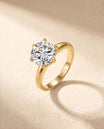

Best Wedding Band for a Radiant Cut Engagement Ring
The radiant cut is one of the most architecturally demanding shapes in fine jewellery. Its cropped corners and 70-facet pavilion pull brilliance from every angle, yet the rectangular profile makes band selection more nuanced than a round solitaire. Choose the wrong pairing and the geometry fights itself. Choose well, and the combination becomes something closer to a signature.
This guide covers every wedding band style suited to radiant solitaires — from delicate stackable rings to bold contoured wraps — alongside the practical questions of width, metal, and fit. It closes with an honest look at how modern engagement ring gemstone options, including Satéur Gems® and moissanite, perform visually in these pairings at a fraction of mined-diamond prices.
Key Takeaways
- Radiant cuts have 70 facets and deliver exceptional light return comparable to brilliant rounds — the wide pavilion demands a flush-fitting or contoured band.
- Band widths of 1.5–2.5 mm work best for most radiant solitaires; go wider only if the centre stone is 2 ct or larger.
- Curved and shadow bands are the most forgiving fit; straight bands leave visible side gaps on most radiant settings.
- Satéur Gems® are graded D–E colour with Excellent cut — the same optical benchmarks as the finest mined radiant-cuts, from £88.
- Satéur Moissanite offers ~9.25 Mohs hardness and more fire than a diamond — a vivid profile that pairs particularly well with yellow or rose gold bands.
- Radiant cuts bridge cushion and brilliant geometries, making them versatile with both slender and bold band profiles.
What Makes a Radiant Cut Engagement Ring
The radiant cut was developed in the 1970s as an attempt to bring the fire of a brilliant round to a rectangular outline. It succeeded by combining the step-cut's elongated silhouette with the brilliant's triangular and kite-shaped facets — 70 in total, arranged across both crown and pavilion. The result is a stone that radiates light rather than channelling it in the contained flashes typical of emerald or Asscher cuts.
That facet density is the defining technical reality for band selection. The radiant cut's brilliance comes from the entire lower half of the gem, which means the setting's prongs and the adjacent wedding band both sit very close to an active light zone. A band that pinches or overhangs that zone suppresses sparkle. A band that fits flush and follows the solitaire's profile amplifies it.
Radiant cuts also bridge two aesthetic families — the cushion (soft, romantic) and the princess or brilliant (sharp, modern). That dual nature is a genuine advantage: it makes the radiant cut engagement ring compatible with more band styles than almost any other rectangular shape.
For those exploring radiant-cut solitaire options, Satéur offers the full geometry in both Gems® and moissanite tiers, set in 18k gold finishing — all graded to the same optical standards as fine mined stones.

Radiant Cut Diamond Simulant Specs and Brilliance
Before selecting a band, it helps to understand what your centre stone is doing optically — because the wedding band radiant pairing should serve the stone's character, not compete with it.
A radiant cut's 70 facets deliver exceptional light return and fire comparable to brilliant rounds. The wide pavilion distributes that light broadly, creating a softer, more diffuse sparkle than the concentrated flash of a round brilliant. In practice, this means radiant cuts look their best in settings that keep metal away from the lower girdle — and alongside bands that do not compete for visual attention.
Satéur Gems® are graded D–E colour with Excellent cut and ~2.39 refractive index — delivering the clean, white brilliance of a flawless diamond, reproduced in a trademarked diamond simulant from approximately £88. Both Satéur Gems® and our moissanite are extremely durable, built for everyday wear. Because Gems® deliver diamond-accurate, restrained white brilliance, they perform beautifully in radiant profiles against platinum, white gold, and silver-finish bands.
Satéur Moissanite is a lab-created gemstone with ~9.25 Mohs hardness and more fire than a diamond — a vivid, rainbow-forward sparkle with ~2.65 refractive index. That higher dispersion makes moissanite radiant cuts a natural partner for yellow or rose gold bands, which warm the fire rather than competing with it. Explore the full range of moissanite rings to compare cut and carat options.
Both tiers deliver the optical presence of a fine diamond radiant cut to the naked eye — at approximately 1% of comparable mined-diamond prices. The difference is character: Gems® reads diamond-accurate; moissanite reads vivid and distinct.

Wedding Band Styles That Complement Radiant Cuts
The radiant cut's cropped corners and rectangular outline create a natural challenge: bands are circular, but they need to sit flush against a non-circular shape. The solutions range from standard straight bands (which leave small triangular gaps at the shoulders) to precision-fitted contoured bands that follow the solitaire's exact profile.
Curved and Shadow Bands
The most popular pairing for any radiant cut engagement ring. A curved or shadow band has a gentle inward arc that allows it to nestle directly against the engagement ring's setting — the gap disappears and the two rings read as a single designed piece. For radiant cuts in four- or six-prong settings, a shallow curve is sufficient; for taller, bezel-set radiant solitaires, a deeper shadow band keeps the fit flush.
Straight Eternity or Half-Eternity Bands
A straight band sits with a small gap at the shoulders of the radiant setting. Many wearers embrace this as a design element — the two rings are clearly distinct, which suits those who want the engagement ring to read independently. Eternity bands work particularly well here because the band's own sparkle draws the eye and the gap becomes a considered detail rather than a misfit.
Contoured or V-Shaped Bands
A fitted contour band is machined or cast to mirror the exact profile of the solitaire's setting — the most architectural solution, producing the most cohesive bridal stack. Often sold as part of a bridal set. If buying the engagement ring and band separately, have the ring assessed for the correct contour depth before ordering.
Stackable Slim Bands
Two or three very slim bands (1–1.5 mm each) worn alongside the radiant solitaire is a modern alternative to a single defined wedding band. The slim profile reduces visual conflict with the solitaire's geometry and adds flexibility — rings can be swapped, layered, or worn alone. Particularly effective for radiant cuts in taller settings where a precisely fitted band is harder to engineer.
Stacking and Pairing Your Radiant Solitaire
Stacking with a radiant cut requires more deliberate planning than with a round brilliant, because the rectangular outline has a strong directional character. An asymmetric stack — bands of different widths or textures — can look unresolved unless anchored by a clear visual logic.
The most reliable approach: keep the dominant wedding band close to the solitaire in metal, and place any accent bands on the opposite side. A plain polished band on the inner side combined with a diamond or pavé band on the outer side creates graduated brightness that leads the eye inward to the centre stone.
Width ratios matter more for radiant solitaires than for rounds. The combined width of all stacking bands should not exceed the width of the radiant's setting base. For most 1 ct radiant solitaires, that means keeping the total stack to 4–5 mm. For 2 ct or larger, slightly bolder bands work proportionally.
Metal consistency is more critical with radiant cuts than other shapes. The angular facets catch light from the sides as well as the top, meaning a contrasting metal band can create colour discord in motion. Matched metals (white + white, yellow + yellow) read cleanly; deliberately contrasting two-tone combinations work when designed intentionally.
For a full guide to rectangular-cut band fitting, the best wedding band for emerald cut engagement ring guide covers the overlapping principles in detail.

Satéur Gems® Value: The Look of Fine Diamonds at ~1% Price
A mined radiant cut in D–E colour, VS clarity, Excellent cut averages £8,000–£28,000 for a 1–2 carat stone alone. Add a matching diamond wedding band and the bridal set typically reaches £12,000–£40,000. This is the price structure that The New Diamond Standard was built to challenge.
Satéur Gems® deliver D–E colour grading, Excellent cut, and ~2.39 refractive index — the same optical benchmarks you would specify for a fine mined radiant cut — from approximately £88 for the signature solitaire. The look is indistinguishable from a fine mined stone with the naked eye. The difference is in origin and price, not in the presence it creates across the table.
Over 100,000 customers across 150+ countries have chosen this path. The intelligence is not in finding a cheaper version — it is in recognising that the visual experience of fine jewellery has never required the mined-diamond price structure.

Satéur Destinée Ring™
The look of a flawless diamond, for approximately 1% of the price.
Compare to a $10,000 mined diamond
Joined by 100,000+ couples across 150+ countries.
Discover The 1% RingFree worldwide shipping · 30-day returns · Lifetime Satéur Care

For the full range of solitaire profiles including radiant-cut options, explore The 1% Ring collection — available in both Gems® and moissanite tiers, all designed to pair with coordinating wedding bands.
Common Questions About Radiant Wedding Band Pairings
What defines a radiant cut engagement ring compared to other diamond shapes?
A radiant cut combines the rectangular outline of an emerald or Asscher cut with the brilliant-cut facet arrangement used in round brilliants. The result is 70 facets — more than most rectangular cuts — which produce exceptional fire and light return across the entire stone. Unlike the emerald cut (which uses step facets to create long, mirror-like flashes), a radiant cut delivers sparkle from every angle. It bridges cushion and brilliant geometries, making it one of the most versatile rectangular shapes for wedding band pairing.
How do I choose a wedding band width to complement my radiant solitaire?
For most radiant solitaires under 1.5 ct, a band width of 1.5–2.5 mm is ideal — it frames the stone without competing with it. For larger stones (2 ct and above), bands of 2.5–3.5 mm create better visual balance. If stacking multiple bands, keep the combined width below the visual footprint of the solitaire's setting base. The profile matters as much as the width: curved and shadow bands sit flush and eliminate shoulder gaps; straight bands leave small gaps that read as either intentional space or visual misalignment, depending on preference.
Can I stack multiple bands with a radiant cut engagement ring?
Yes — radiant cuts stack well with the right approach. Keep your wedding band on the inner side and accent bands on the outer side, so the centre stone remains the focal point. Limit total stack width to match the solitaire's setting base proportionally. Match metals within the stack, or commit to a deliberate two-tone design. Slim bands (1–1.5 mm each) work best for three-ring stacks; a 2 ct+ radiant can carry slightly bolder proportions without the stack overpowering the stone.
What metal settings work best with radiant cut stone profiles?
White metals — platinum, white gold, silver-finish — suit Satéur Gems® radiant cuts because the neutral backing amplifies the stone's diamond-accurate white brilliance. Yellow and rose gold work particularly well with moissanite radiant cuts, warming the stone's natural fire into something warmer and more vivid. Two-tone settings (white gold prongs, yellow gold band) bridge both aesthetics cleanly. The radiant cut's angular facets reflect the band metal's colour into the stone, so metal choice has a notably larger effect here than with brilliant rounds.
Are there more considered options for radiant wedding band sets at lower price points?
Satéur's complete bridal approach — a Gems® or moissanite radiant solitaire paired with a matching band — delivers the appearance of a mined-diamond bridal set at approximately 1% of comparable fine jewellery prices. The Satéur Destinée Ring™ begins at £88 for the signature 1 ct solitaire; radiant-cut options are priced proportionally. D–E colour, Excellent cut, 18k gold finishing — the same standards as fine mined stones.
What is the difference between a wedding band and a wedding ring?
The terms are used interchangeably in most contexts, but technically: a wedding band is the plain or pavé ring exchanged during the ceremony; a wedding ring can refer to the engagement ring, the wedding band, or both together as a set. For radiant cut pairings specifically, the wedding band is the ring that requires careful selection for fit, profile, and proportion — because the rectangular geometry rewards a deliberate choice and makes a poor fit more visible than it would be on a round solitaire.
There is a particular satisfaction in a radiant cut that has been paired well. The shape demands consideration — and the bands that answer that demand, in metal and profile and proportion, become part of the ring's identity rather than an afterthought to it.















Hinterlasse einen Kommentar
Diese Website ist durch hCaptcha geschützt und es gelten die allgemeinen Geschäftsbedingungen und Datenschutzbestimmungen von hCaptcha.