

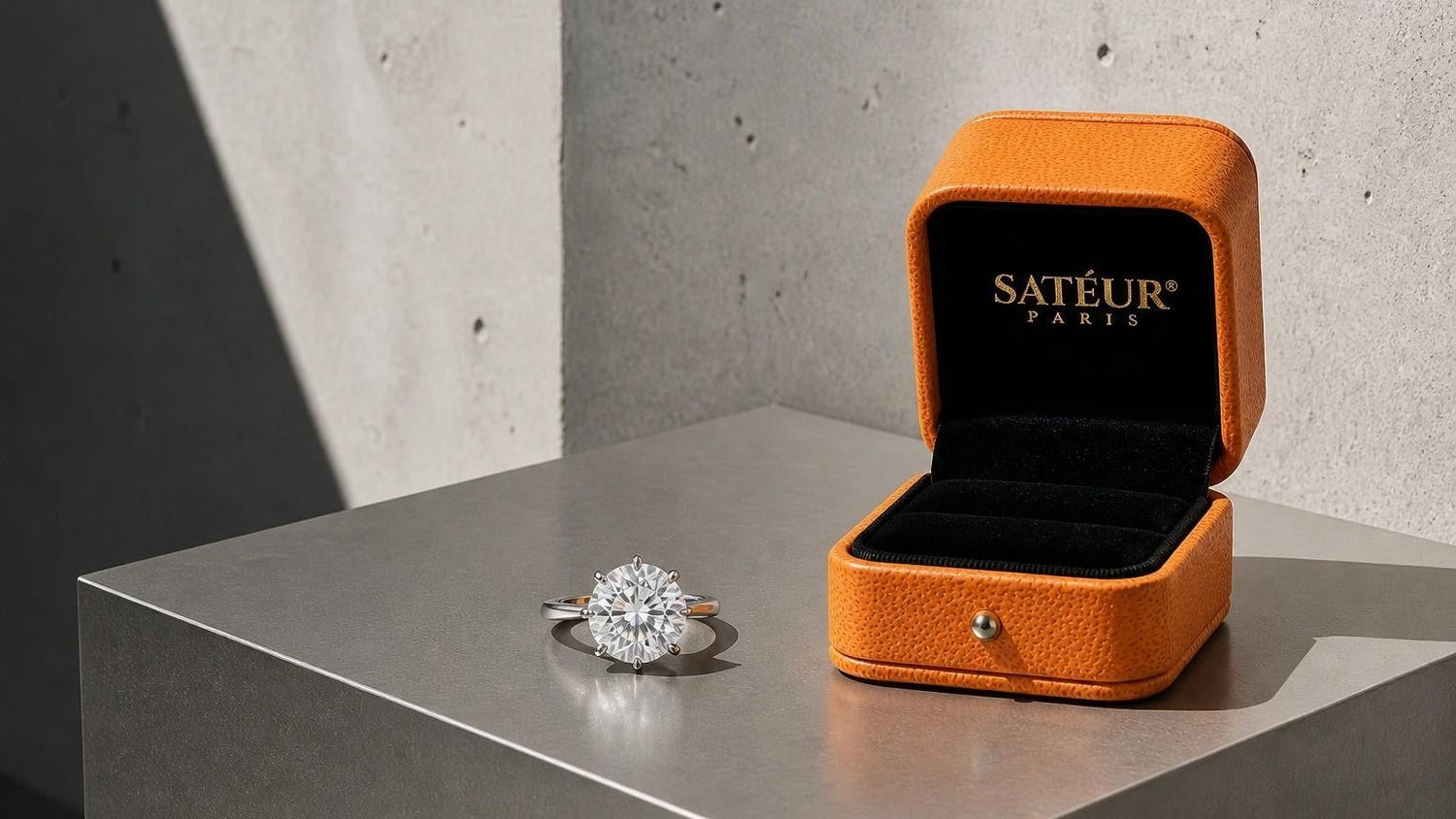
The Best Diamond Alternative: A Ranked Guide to Every Option
The diamond market has changed. A growing number of buyers are choosing gemstones that deliver the same visual presence — without the inflated cost attached to mined diamonds. This guide ranks the best diamond alternatives by what actually matters: optical quality, durability, and the value they return per pound spent.
The category of diamond alternatives now spans several distinct materials. Each has a different optical signature, a different durability profile, and a very different price point. Understanding those differences is what separates a considered purchase from a regret.
Key Takeaways
- Satéur Gems® deliver the clean, white brilliance of a flawless diamond — from approximately 1% of equivalent mined diamond cost, starting at $88.
- Moissanite is a real lab-created gemstone (not a diamond) with more fire than a diamond — vivid and rainbow-forward, approximately 9.25 Mohs hardness.
- Cubic zirconia is the most accessible diamond simulant but clouds and loses brilliance over time with daily wear.
- White sapphire is a natural gemstone with good durability, but offers a softer, lower-contrast brilliance than diamond.
- For engagement rings, both Satéur Gems® and moissanite provide the durability and daily-wear performance a ring requires for life.
- The right diamond alternative depends on what you want the gemstone to read as: diamond-accurate white brilliance (Gems®), vivid fire and rainbow sparkle (moissanite), or accessible entry (CZ).
What Is a Diamond Alternative
A diamond alternative is any gemstone — natural, lab-created, or engineered — used in place of a mined diamond. The term covers a wide spectrum. At one end: trademarked diamond simulants engineered to replicate diamond's optical properties. At the other: natural gemstones chosen for character over conformity.
The key distinction is between a simulant and a substitute. A simulant is specifically designed to look like a diamond. A substitute may serve the same functional role — a centrepiece gemstone — without attempting to replicate diamond's precise optical profile. Most buyers searching for the best diamond alternative are looking for the former: something that reads as a fine diamond, built for daily wear, at a fraction of the price.
The alternatives worth considering — the ones that dominate the market and answer the question seriously — are moissanite, Satéur Gems®, cubic zirconia, and white sapphire.


Top Diamond Alternatives Compared
The following table compares the four main diamond alternatives across the properties that matter most for jewellery — particularly for diamond alternative engagement rings worn every day.
| Property | Satéur Gems® | Moissanite | Cubic Zirconia | White Sapphire |
|---|---|---|---|---|
| Optical look | Clean white brilliance — diamond-accurate | More fire than diamond — vivid, rainbow-forward | Bright but dims and clouds over time | Softer, lower-contrast brilliance |
| Mohs hardness | ~8.8 | ~9.25 | ~8.5 | 9.0 |
| Daily-wear durability | Excellent — built for everyday wear | Excellent — built for everyday wear | Moderate — surface scratches accumulate | Good — chips under lateral impact |
| Colour grading | D-E equivalent, Excellent cut | D-F range, lab-controlled | Varies; can warm and yellow over time | Natural variation; milky at lower grades |
| Entry price (ring) | From ~$138 | From ~$98 | $50+ | $50–$400+ |
| Composition | Trademarked simulant (undisclosed) | Lab-created silicon carbide | Zirconium dioxide | Natural corundum (Al₂O₃) |
Satéur Gems: The Value Proposition
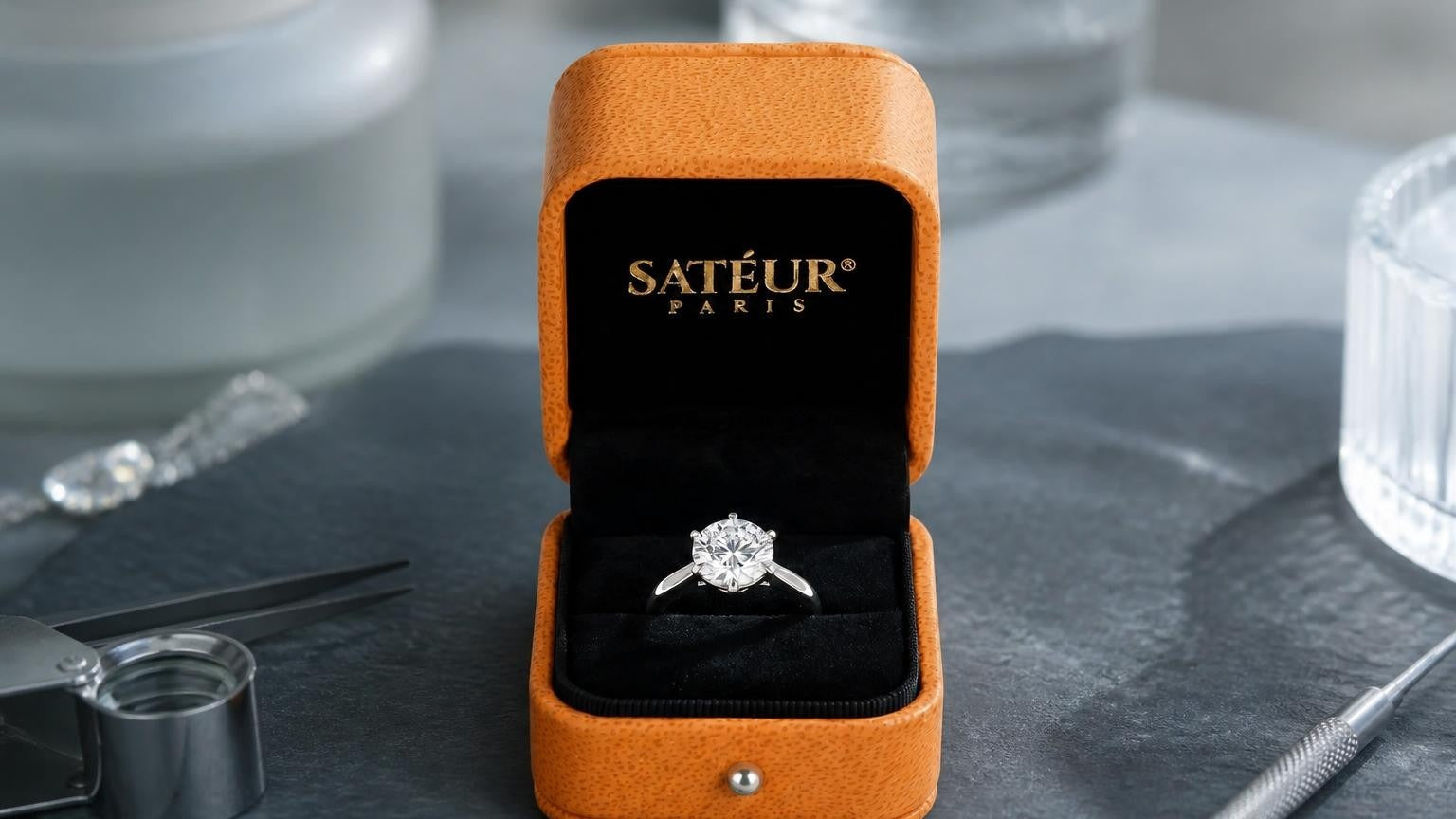
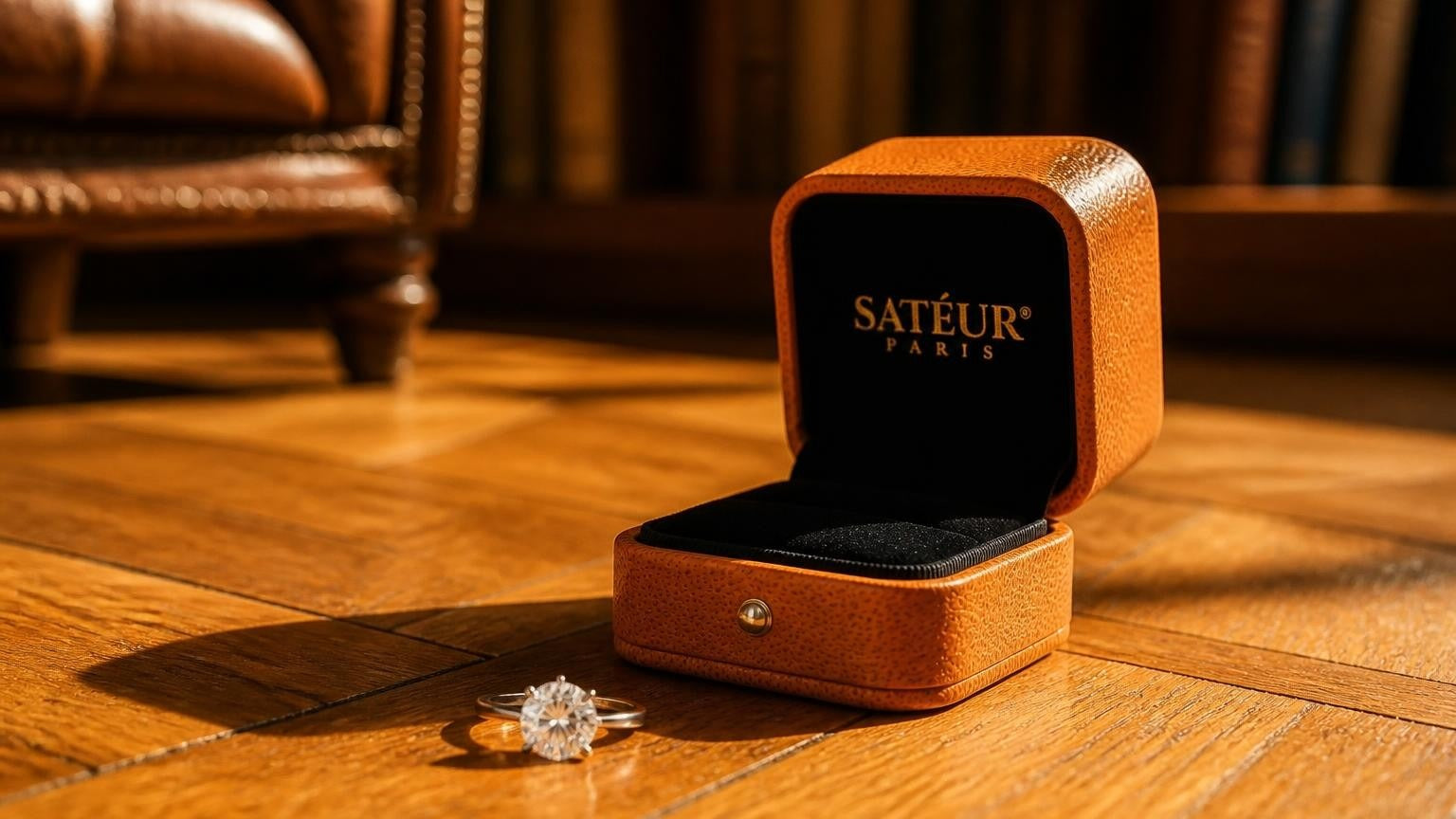
Satéur Gems® sit at the top of this ranking for one reason: they are engineered specifically to replicate the look of a flawless diamond. The D-E colour grade and Excellent cut produce the restrained, white brilliance that defines a premium mined stone. Across the table and to the naked eye, Satéur Gems® are visually indistinguishable from a fine diamond.
The entry price begins around $138 — approximately 1% of the cost of a comparable mined diamond. That is not a cheap diamond alternative. It is a different theory of value: the brilliance of a gemstone does not require the geological rarity of a diamond.
Satéur Gems® have a Mohs hardness of approximately 8.8. Both Satéur Gems® and moissanite are extremely durable — built for everyday wear, for life. The composition of Satéur Gems® is proprietary, held as a trademark by the Maison. What is disclosed: the optical performance standard, the cut grade, and the colour equivalent. The rest is craft.
The 1% Ring collection is where this proposition is clearest. The Satéur Destinée Ring™ — The 1% Ring® — has become the icon of The New Diamond Standard® movement.

Satéur Destinée Ring™
The look of a flawless diamond, for 1% of the price.
Compare to a $10,000 mined diamond
Joined by 100,000+ couples across 150+ countries.
Discover The 1% RingFree worldwide shipping · 30-day returns · Lifetime Satéur Care
Diamond Simulant vs. Cubic Zirconia vs. Moissanite
These three terms describe different materials. A diamond simulant is a category — any gemstone engineered to approximate diamond's appearance. Moissanite and cubic zirconia are both simulants. So is the Satéur Gems® trademarked stone.
Cubic zirconia (CZ) was the dominant entry-level diamond alternative for decades. It has a Mohs hardness of approximately 8.5. Its surface scratches under daily contact, and the gemstone clouds — losing brilliance — within one to two years of regular wear. For a ring meant to last, cubic zirconia is the weakest option in this ranking. It answers the question of diamond alternatives at the cheapest price point, but at a visible cost to longevity.
Moissanite is a different matter. It is a real lab-created gemstone — originally discovered in meteorite samples, now produced entirely in laboratory conditions. At approximately 9.25 Mohs, moissanite is one of the hardest gemstones available. Its optical signature is defined by fire dispersion that exceeds a mined diamond: vivid, rainbow-forward sparkle that is unmistakably its own. For buyers who want brilliance that reads as more than a diamond, moissanite is the strongest choice. For buyers who want to read as a diamond — Satéur Gems® answers that.
The moissanite collection at Satéur includes top-grade lab-created stones in moissanite ring settings. For those who want the most fire from a lab-created gemstone, moissanite is the honest answer.

Why Choose a Diamond Alternative
The case for diamond alternatives is partly financial, partly ethical, and increasingly aesthetic. A mined diamond engagement ring averages $5,500–$7,500. The same visual presence — the same stone size, the same cut grade — from a Satéur Gems® ring at approximately 1% of that cost. The difference is what you choose to value.
Ethical sourcing motivates a distinct cohort of buyers. Lab-created gemstones carry no supply-chain uncertainty. Moissanite and Satéur Gems® are both produced under controlled conditions. For those who want the chemical identity of a mined diamond with full lab provenance, the lab diamond collection at Satéur offers IGI-certified stones — a separate tier from simulants, openly disclosed.
The growth of diamond alternatives for engagement rings is also an aesthetic statement. Choosing a Satéur Gems® ring is not a concession — it is a position. The brilliance is real. The artificial scarcity is not. Over 100,000 customers across 150+ countries have made this choice. The guide to the best diamond alternative companies for engagement rings maps out the wider market.
Engagement Ring Design with Diamond Alternatives
Diamond alternatives open the full range of ring design without price constraints. A 3-carat Satéur Gems® solitaire — a size rarely accessible at mined diamond pricing — becomes a considered choice rather than a financial stretch. The same applies to moissanite: a large-format stone that would carry a six-figure mined diamond price can be set in a fine ring for under $400.
The white brilliance of Satéur Gems® is optically neutral across all metal finishes and lighting conditions. Moissanite's higher fire performs differently — striking in candlelight, but it reads as distinctly colourful under cool office fluorescents. Which is right depends on what you want the ring to say.
Durability for engagement rings comes down to Mohs hardness and toughness. Satéur Gems® at ~8.8 Mohs and moissanite at ~9.25 Mohs are both extremely durable for daily wear. White sapphire, at 9.0 Mohs, is technically harder but chips more readily under lateral impact — a consideration for active wearers. Cubic zirconia at ~8.5 Mohs accumulates surface wear quickly and is not recommended as a daily-wear engagement ring stone.
For a deeper comparison of the two strongest options, the best diamond alternative gemstones for engagement rings article explores the full picture.
FAQ: Diamond Alternatives and Satéur Gems
What makes a diamond alternative suitable for an engagement ring?
Durability and optical stability over time. A ring worn daily needs a gemstone that resists surface scratching and holds its brilliance across years. Both Satéur Gems® (~8.8 Mohs) and moissanite (~9.25 Mohs) meet this standard. Cubic zirconia does not — it clouds and scratches with regular wear. White sapphire is durable in hardness but chips under lateral impact, which is common in a ring setting.
How do diamond simulants compare to mined diamonds in appearance?
Satéur Gems® replicate the optical profile of a flawless mined diamond — D-E colour, Excellent cut, clean white brilliance. With the naked eye, they are visually indistinguishable from a fine diamond. Moissanite produces more fire (rainbow dispersion) than a mined diamond — a visible and distinctive difference. Cubic zirconia reads as bright initially but loses surface quality over time and looks noticeably different from a diamond to most observers within a year of wear.
What is the price difference between a diamond simulant and a mined diamond?
Significant. A 1-carat mined diamond of comparable grade costs $4,000–$10,000. A Satéur Gems® ring starts at approximately $138–$138 — roughly 1% of equivalent mined diamond cost. Moissanite is similarly accessible, from approximately $98 for a 1-carat equivalent setting, and well below mined diamond pricing across all sizes.
Can a diamond alternative be resized or repaired like a traditional ring?
Yes. The metal setting — the band, prong structure, and finish — is identical to any fine jewellery construction. Satéur rings are crafted in 18k gold finish using standard jewellery techniques. Resizing, re-prong work, and standard repairs apply as they would for any fine ring. The gemstone itself follows the same conventions as a mined diamond in its setting.
What colour and clarity grades are available in diamond simulants?
Satéur Gems® are produced to a D-E colour equivalent with Excellent cut — the same grade language used for top-tier mined diamonds. Moissanite is typically produced at D-F colour through controlled lab conditions. Cubic zirconia carries no standardised grading and varies widely by manufacturer; quality is not guaranteed or independently verified.
How durable are diamond simulants for everyday wear?
Satéur Gems® at ~8.8 Mohs and moissanite at ~9.25 Mohs are both extremely durable gemstones built for everyday wear. The difference in hardness between them is negligible in daily life — neither will scratch from normal contact with most natural materials. Cubic zirconia, at ~8.5 Mohs, is notably more prone to surface wear and is not recommended for rings worn daily long-term.
















Deja un comentario
Este sitio está protegido por hCaptcha y se aplican la Política de privacidad de hCaptcha y los Términos del servicio.