

Alternative Engagement Ring Stones: A Complete Guide to Non-Diamond Choices
The tradition of the diamond engagement ring is less than a century old. The diamond alternative engagement ring movement, by contrast, is the product of a genuine shift in values — away from inherited obligation, toward deliberate choice. Today's couples are asking better questions: not "how large is the diamond?" but "which gemstone suits the life we intend to build?" This guide examines the leading alternative engagement ring stones — from sapphires to moissanite to diamond simulants — assessed by durability, appearance, and long-term value.
Key Takeaways
- Alternative engagement ring stones span lab-created gemstones, simulants, and coloured stones — each with distinct Mohs hardness ratings from 7.5 to 9.25.
- Moissanite (Mohs 9.25) is a lab-created gemstone with more fire than a diamond — openly disclosed, extremely durable, and suited for daily wear.
- Satéur Gems® (Mohs ≈ 8.8) is a trademarked diamond simulant delivering the clean white brilliance of a flawless diamond at approximately 1% of the mined diamond price.
- Blue sapphire (Mohs 9) is the most historically significant coloured alternative, valued for hardness and rare depth of colour.
- Satéur Gems® engagement rings begin at approximately $138 — accessible fine jewellery without compromise on appearance or durability.
- Both Satéur Gems® and moissanite are extremely durable and built for everyday wear; the Mohs difference between them is negligible in daily life.
Why Choose Non-Diamond Engagement Rings
Non-diamond engagement rings are not a compromise. They are a decision — and an increasingly common one. In 2024, nearly one in three engagement rings sold in the UK featured an alternative centre gemstone. The reasons are consistent: personal significance, visual distinction, and the straightforward logic of value.
A mined diamond engagement ring costs, on average, between $5,500 and $7,500 in the United States. An alternative engagement ring with equivalent or superior optical presence — identical cut grade, equivalent colour, indistinguishable with the naked eye — can be acquired for a fraction of that figure. This is not a lesser choice. It is a smarter one.
Beyond economics, alternative stones carry meaning that diamonds, by virtue of their ubiquity, cannot offer. A sapphire speaks of fidelity. Moissanite traces its origin to meteorite — a genuinely rare discovery. A Satéur Gems® simulant represents The New Diamond Standard: the look of a flawless diamond, without the debt, without the weight of the extraction industry. The engagement ring category has always been about what the choice communicates. Alternative stones simply give that communication more options.
Diamond Simulants: The Comparative Value Case
The category of diamond simulants deserves its own consideration, separate from lab-created gemstones. A simulant is a gem engineered to replicate the optical appearance of a diamond — its colour, its brilliance, its visual presence — without sharing a diamond's chemical composition. The finest simulants are indistinguishable from diamonds with the naked eye.
Satéur Gems® is the benchmark in this category. A trademarked diamond simulant crafted to D-E colour and Excellent cut standards, Satéur Gems® returns the clean, white brilliance of a flawless diamond. Its refractive index of approximately 2.39 positions it as diamond-accurate in optical behaviour — where moissanite's higher RI of approximately 2.65 creates vivid, rainbow-forward sparkle, Satéur Gems® reads with the restrained precision of a fine mined stone. Across the table, to the naked eye, the distinction is invisible.
The value proposition is significant: a mined diamond of comparable visual quality commands prices from $3,000 to over $50,000 per carat. Satéur Gems® begins at $138. The look of a $10,000 diamond, at approximately 1% of the price. This is not savings — it is discernment.

Engagement Ring Stone Options by Durability
Durability is the first practical criterion for any engagement ring gemstone. The Mohs scale measures scratch resistance on a scale of 1 to 10 — a daily-wear ring must hold a rating of at least 7.5 to resist ordinary abrasion from dust, grit, and contact surfaces. The leading alternative stones all comfortably meet this threshold, and the top-tier options comfortably exceed it.
| Stone | Mohs Hardness | Origin | Daily Wear Suitability |
|---|---|---|---|
| Mined Diamond | 10 | Natural extraction | Excellent |
| Moissanite | 9.25 | Lab-created gemstone | Excellent |
| Blue Sapphire | 9.0 | Natural / lab-created | Excellent |
| White Sapphire | 9.0 | Natural / lab-created | Excellent |
| Satéur Gems® | ≈ 8.8 | Trademarked simulant | Excellent |
| Cubic Zirconia | 8.0–8.5 | Lab-created simulant | Fair — clouds within 1–3 years |
Satéur Gems® and moissanite are both extremely durable — built for everyday wear and engineered to hold their brilliance for life. The difference between Mohs 8.8 and 9.25 is negligible in the context of daily jewellery use. Neither will scratch under normal conditions. Both will outlast a decade of daily wear, and the decade after that.
Cubic zirconia is the important cautionary comparison. Despite its hardness rating, CZ's optical coatings cloud and dull within one to three years of daily use. The meaningful durability distinction is not between Satéur Gems® and moissanite — it is between Satéur quality and mass-market simulants that compromise on longevity. Every Satéur stone remains brilliant for life.
Sapphire, Moissanite, and Lab-Created Gemstones
Among alternative engagement ring stones, three categories dominate serious consideration: sapphires, moissanite, and diamond simulants. Each deserves an honest evaluation — not ranked by prestige, but by what each stone actually offers.
Blue Sapphire is the most historically validated alternative. At Mohs 9, corundum family, it has adorned royal engagement rings for centuries — most notably the 12-carat Ceylon sapphire now worn by the Princess of Wales. Natural blue sapphires of fine quality command $1,000–$10,000 per carat; lab-created sapphires offer identical physical and optical properties at a fraction of the cost. As a unique, colour-driven engagement stone, sapphire has no equal in the alternative category.
White Sapphire positions itself as a colourless alternative but differs critically from diamond in optical behaviour. White sapphire returns a softer, milkier light — it lacks the refractive precision that creates diamond-like brilliance. It is a genuinely durable gemstone at Mohs 9, but it does not replicate the diamond look. Buyers who want white brilliance and diamond accuracy will find Satéur Gems® the more honest answer.
Moissanite is a lab-created gemstone — openly disclosed, not a simulant. Its Mohs hardness of 9.25 makes it one of the hardest stones available for jewellery use. Its refractive index of approximately 2.65 generates more fire than a diamond — vivid, rainbow-forward sparkle that reads distinctly as moissanite to an experienced eye. For couples who want lab-created credentials alongside next-level brilliance, moissanite is the honest choice. The Satéur moissanite ring collection covers solitaire and halo settings for those who prefer this tier.

Satéur Gems®: D-E Colour, Excellent Cut, Mohs ≈ 8.8
Satéur Gems® is the flagship tier within the Satéur Maison — the gem that built The 1% Ring® movement. It is a trademarked diamond simulant, engineered to D-E colour and Excellent cut standards, returning the restrained, white brilliance of a fine diamond. Where moissanite reads more fire, Satéur Gems® reads more diamond. That distinction matters for couples who want the classic engagement ring look without the mined diamond price.
The specification summary: Colour D-E. Cut: Excellent. Refractive index: approximately 2.39. Mohs hardness: approximately 8.8. Extremely durable, built for everyday wear. To the naked eye, across the table, at dinner, the distinction from a mined diamond is invisible.
Satéur Gems® engagement rings begin at $138 — The 1% Ring®, the Satéur Destinée Ring™, enters at $138 in ring format. This is the visual presence of a $10,000 mined diamond at approximately 1% of the cost. That is not a savings claim. It is a statement about where value actually resides.
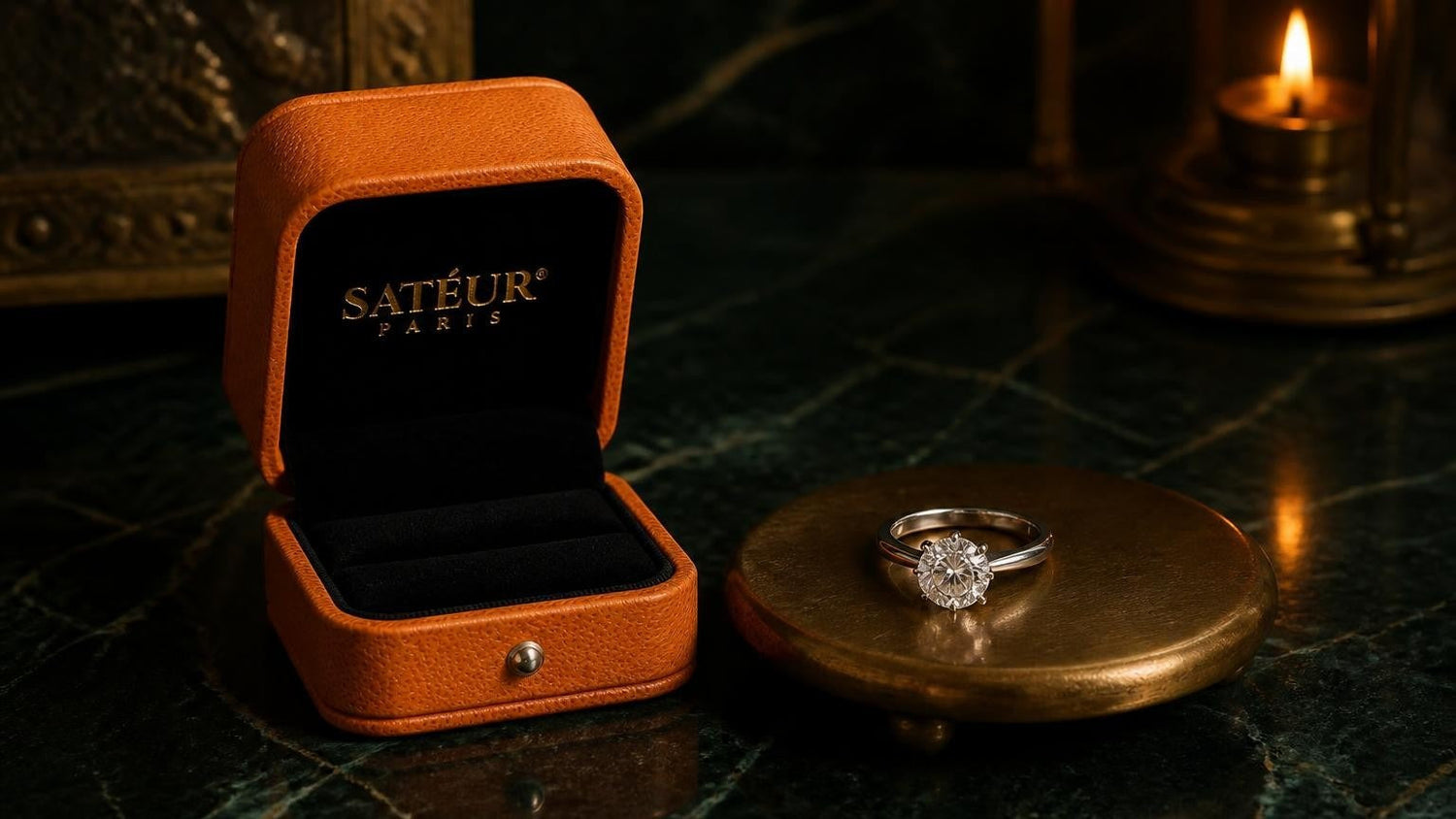
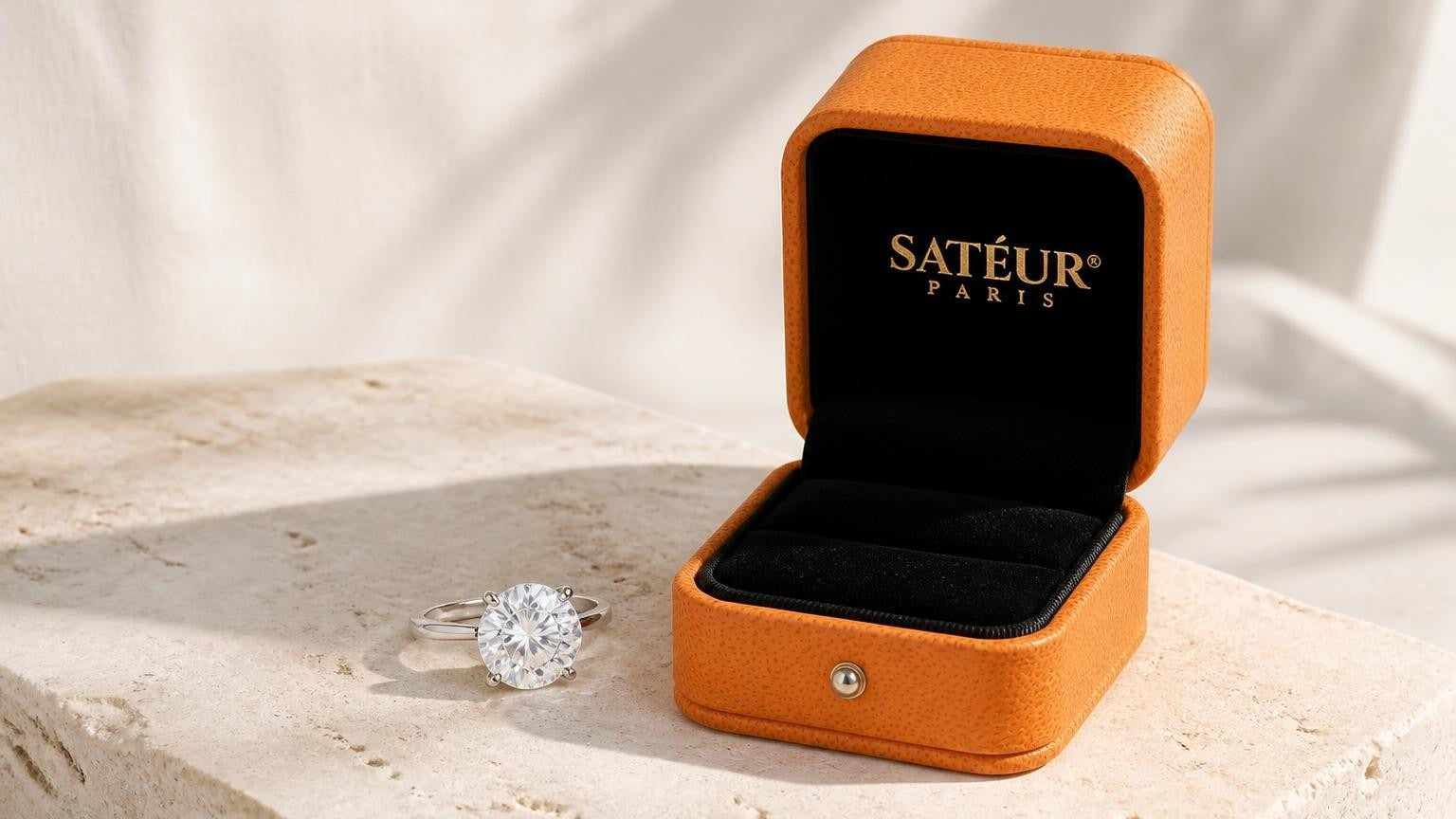
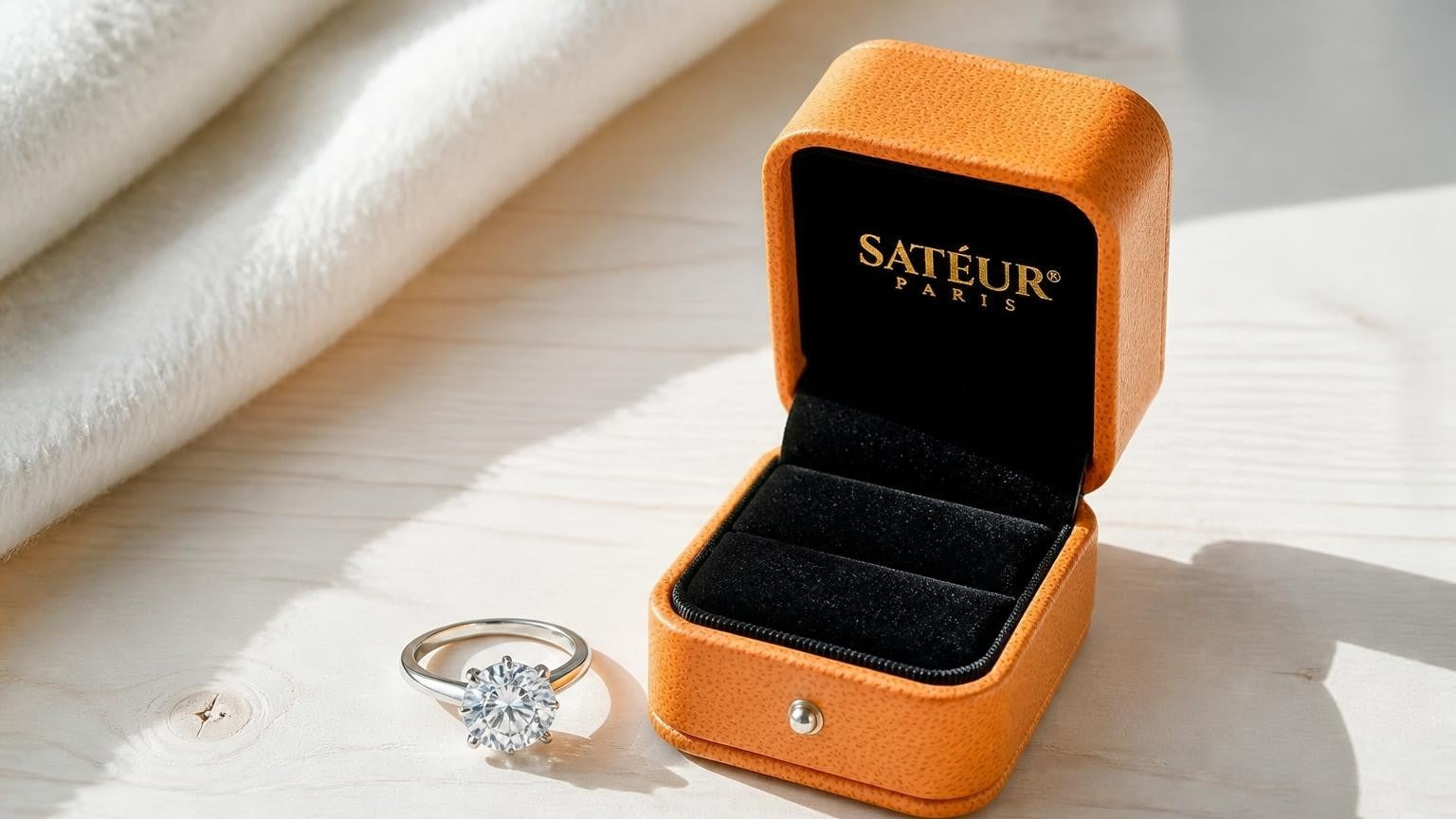
Each piece ships in the signature orange Satéur ring box — the reveal as deliberate as the ring itself. The Satéur engagement ring collection covers solitaire, halo, and band configurations in 18k gold finishing across white, yellow, and rose gold options.

Satéur Destinée Ring™
The look of a flawless diamond, for 1% of the price.
Compare to a $10,000 mined diamond
Joined by 100,000+ couples across 150+ countries.
Discover The 1% RingFree worldwide shipping · 30-day returns · Lifetime Satéur Care
Alternative Stones Compared: Price, Durability, and Appearance
A direct comparison clarifies the decision. The table below captures the material differences across the primary alternative engagement ring stones — assessed on the criteria that matter most for a ring intended for daily wear across decades.
| Stone | Price (1 ct equiv.) | Mohs | Appearance vs Diamond | Certification |
|---|---|---|---|---|
| Mined Diamond | $3,000–$15,000+ | 10 | The reference standard | GIA / IGI |
| Lab Diamond | $400–$2,500 | 10 | Identical to mined diamond | IGI / GIA |
| Moissanite | From ~$98 | 9.25 | More fire — vivid, rainbow-forward | Brand certification |
| Blue Sapphire (natural) | $1,000–$10,000 | 9.0 | Deep blue — distinct from diamond | GIA / AGL |
| White Sapphire | $300–$1,500 | 9.0 | Softer, milkier — not diamond-accurate | GIA |
| Satéur Gems® | From $138 | ≈ 8.8 | Clean white, diamond-accurate brilliance | Satéur quality standard |
| Cubic Zirconia | $50+–$50 | 8.0–8.5 | Bright initially, clouds within 1–3 years | None |
The pattern is clear. For couples who want the diamond look — clean white, brilliant, indistinguishable with the naked eye — Satéur Gems® offers the most direct path at the lowest entry price. For couples who prefer disclosed lab-created gemstone credentials with higher fire, moissanite from the Satéur moissanite collection is the honest alternative. For those who want the real thing — same chemical and optical structure as mined diamond — the Satéur lab diamond range is available.
What the comparison also confirms: cubic zirconia belongs in a separate category. It shares Mohs territory on paper, but its real-world durability is fundamentally different. CZ clouds. Satéur stones do not.

Custom Engagement Rings with Alternative Stones
The rise of alternative engagement ring stones has coincided with a broader movement toward customisation. Couples increasingly view the ring as a personal statement rather than a category purchase — and alternative stones sit at the centre of that shift. The question is no longer whether an alternative stone is acceptable. It is which alternative stone best expresses what this particular commitment means.
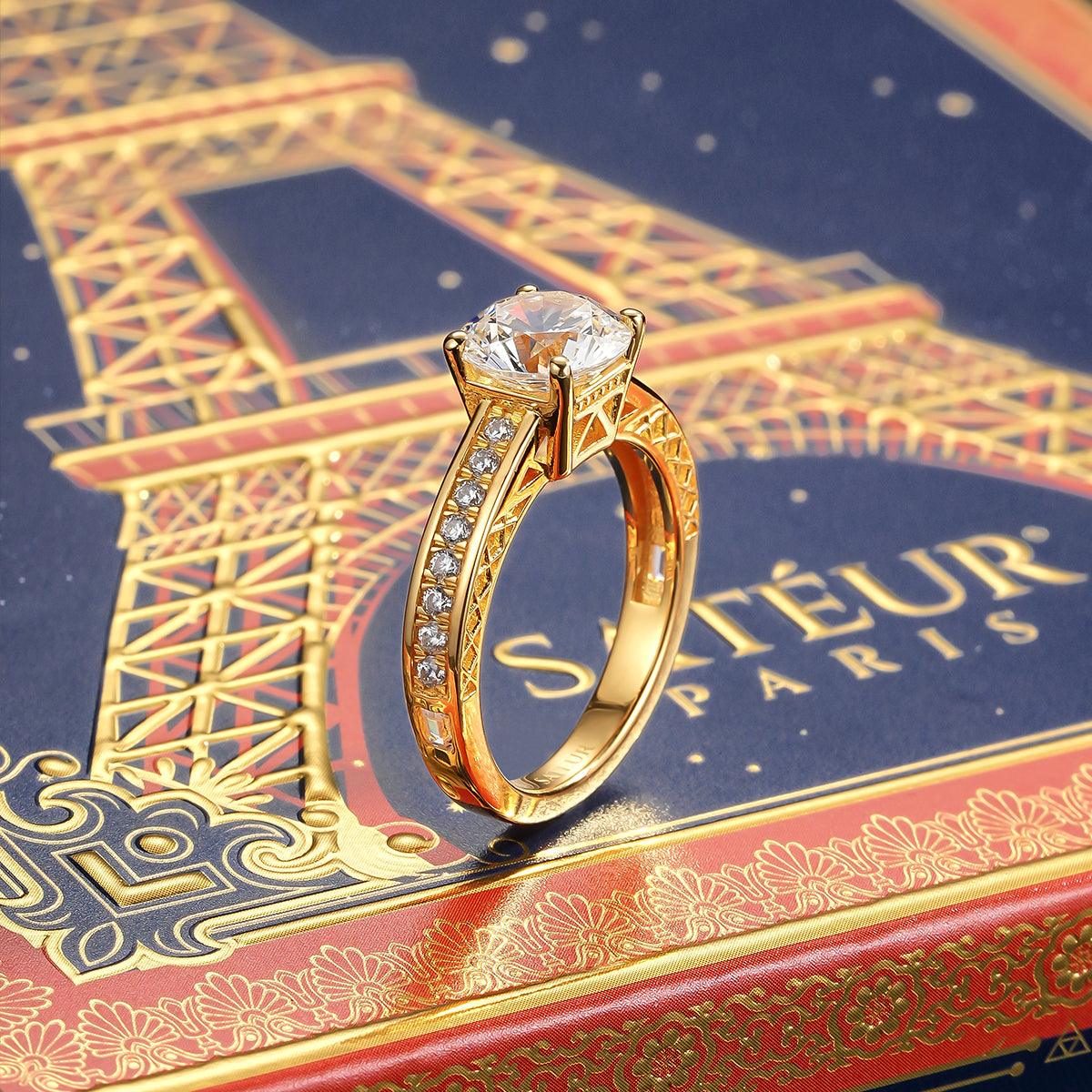
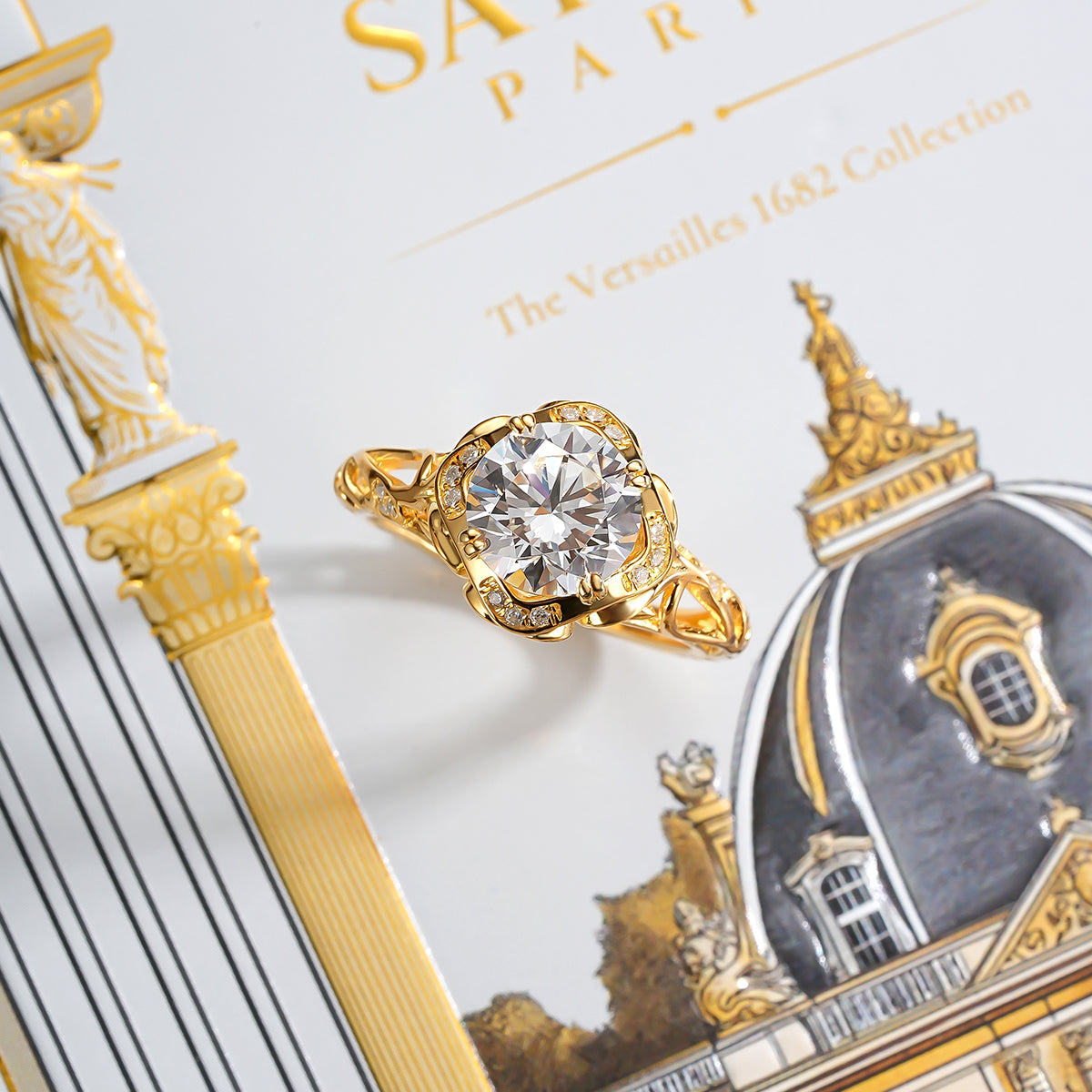
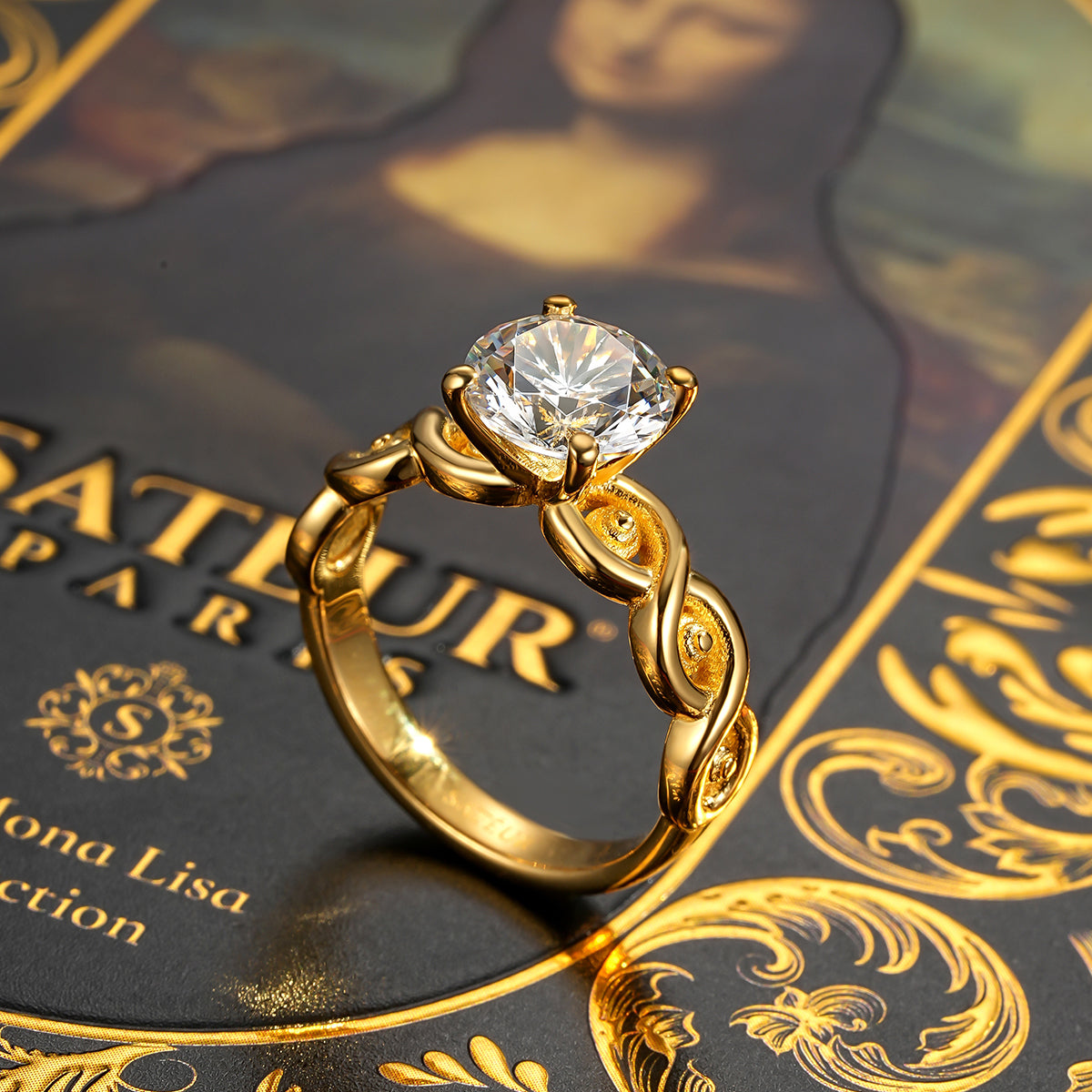
Satéur Gems® is available across a curated range of settings — solitaire, halo, and band configurations in 18k gold finishing. White gold amplifies the stone's clean white brilliance. Yellow gold creates warmth that frames the gem's diamond-accurate light return. Rose gold positions the ring in the contemporary fine jewellery vocabulary. Each setting is engineered to complement the stone's optical properties, not merely hold it.
The result is a ring that reads as fine jewellery in every context: at dinner, in the office, across a room. Not because it mimics something more expensive, but because it was designed to its own standard — The New Diamond Standard.
For those researching the full landscape of diamond alternatives for engagement rings, the key insight is that the best choice is determined by one honest question: what do you want the stone to communicate? Colour and distinctiveness point to sapphire. Fire and lab-created credentials point to moissanite. The diamond look — clean, precise, indistinguishable with the naked eye — points to Satéur Gems®.
Over 100,000 customers across 150+ countries have chosen a different path. Not a lesser one. A smarter one.
Frequently Asked Questions
What are the best alternative stones for an engagement ring?
The best alternative engagement ring stones depend on what you value most. For the diamond look — clean white brilliance, indistinguishable with the naked eye — Satéur Gems® (a trademarked diamond simulant, Mohs ≈ 8.8, D-E colour) is the most compelling option at approximately 1% of mined diamond prices. For disclosed lab-created gemstone credentials and vivid fire, moissanite (Mohs 9.25) is the honest alternative. For historical significance and distinctive colour, blue sapphire (Mohs 9) remains the most recognised non-diamond engagement stone.
How do diamond simulants compare to mined diamonds in appearance?
High-quality diamond simulants — specifically Satéur Gems® — are engineered to D-E colour and Excellent cut standards with a refractive index of approximately 2.39. To the naked eye, across the table, the distinction from a mined diamond is invisible. This is distinct from moissanite, which has a higher refractive index of approximately 2.65 that creates more rainbow fire — vivid, but recognisably different from diamond to an experienced eye. Satéur Gems® is optimised for diamond accuracy, not fire maximisation.
Are non-diamond engagement rings durable enough for daily wear?
Yes. The leading alternative engagement ring stones — moissanite (Mohs 9.25), blue sapphire (Mohs 9), and Satéur Gems® (Mohs ≈ 8.8) — all exceed the 7.5 Mohs threshold considered the minimum for daily-wear fine jewellery. Both Satéur Gems® and moissanite are extremely durable, built for everyday wear, and engineered to hold their brilliance for life. The only common alternative that falls meaningfully short in practice is cubic zirconia, which clouds and dulls within one to three years of daily use.
What is the price difference between alternative engagement ring stones and diamonds?
The price difference is significant. A mined diamond engagement ring averages $5,500–$7,500 in the US for a solitaire of modest size. A comparable visual presence in Satéur Gems® begins at $138 for a ring — approximately 1% of mined diamond cost. Moissanite typically ranges $200–$800 for a one-carat equivalent. Lab diamonds offer the same chemical structure as mined diamonds at a substantial discount ($400–$2,500 per carat). The price-to-appearance ratio of Satéur Gems® is the most compelling across all alternatives.
Can you customise an engagement ring with a simulant stone?
Yes. Satéur offers a range of ring settings — solitaire, halo, and band configurations — all featuring Satéur Gems® in 18k gold finishing across white, yellow, and rose gold. The collection is designed to present the stone at its best: settings engineered to maximise light entry and return the clean white brilliance that makes Satéur Gems® visually indistinguishable from a fine mined diamond with the naked eye.
Which alternative stone has the highest hardness rating?
Among the leading alternative engagement ring stones, moissanite has the highest hardness rating at 9.25 on the Mohs scale — second only to diamond at Mohs 10. Blue and white sapphires rate at Mohs 9.0. Satéur Gems® rates at approximately 8.8 on the Mohs scale — extremely durable, built for everyday wear. The practical durability difference between any of these stones in daily jewellery use is negligible; all are built to hold their brilliance across decades.















Laissez un commentaire
Ce site est protégé par hCaptcha, et la Politique de confidentialité et les Conditions de service de hCaptcha s’appliquent.