

Moissanite vs Diamond Cost Per Carat: Pricing & Value Guide
The numbers are not subtle. A 1-carat moissanite in D-E colourless grade costs under $300. A 1-carat natural diamond of comparable grading typically runs $6,000 to $12,000. That is not a modest difference — it is a structural one. Both stones look near-identical with the naked eye. The cost divergence is a product of supply, history, and marketing, not optics.
This guide covers per-carat pricing for moissanite, natural diamonds, and lab-grown diamonds — with clear numbers, the factors that move them, and what the gap actually means for a considered buyer. For a broader look at the moissanite price per carat landscape across stone types, that guide covers the full market context.
Key Takeaways
- Moissanite runs approximately $88–$600 across 0.5–3ct depending on colour grade and carat weight
- Natural diamonds cost $3,000–$15,000+ per carat for comparable D-F, VS+ specifications
- Lab-grown diamonds sit 2–4× above moissanite — significant savings vs mined, but well above moissanite pricing
- Moissanite offers 9.25 Mohs hardness and more fire than a diamond — a distinct lab-created gemstone with exceptional optical properties
- Satéur moissanite engagement rings start under $400 — the look of a fine stone for a considered price
- At 1ct, the moissanite-to-natural-diamond price ratio is approximately 1:30 to 1:60 depending on diamond grade
How Much Does Moissanite Cost Per Carat?
Moissanite pricing has stabilised significantly over the past decade as lab-creation processes have scaled. Today, a well-cut D-E colourless moissanite starts at approximately $88 for a 0.5ct round and reaches roughly $300–$600 for a 2–3ct stone in top colourless grades. This makes moissanite one of the most accessible fine-jewellery gemstones available — without compromising on hardness, cut, or visual quality.
The per-carat cost of moissanite scales gently. There is no exponential price jump above 1ct the way natural diamonds exhibit. A 2ct moissanite does not cost twice a 1ct — it often costs 1.3 to 1.5 times. This is the inverse of the diamond market's pricing curve, where each half-carat above 1ct triggers a disproportionate premium.
Moissanite is a lab-created gemstone — silicon carbide — not a simulant or substitute. It has its own gemological identity: higher fire dispersion than a diamond, exceptional hardness at 9.25 Mohs, and optical properties that have made it a preferred choice for buyers who understand what they are choosing. How much is moissanite per carat in practice? For most buyers, under $300 for a 1ct stone in colourless grade — versus $6,000–$12,000 for its diamond equivalent.

Moissanite Pricing by Colour Grade
Colourless Moissanite: Grade D, E, and F
Colourless moissanite (D-E-F on the GIA diamond colour scale analogue) represents the top tier for buyers seeking the closest visual alignment to a fine white diamond. In this grade range, the stone appears entirely colourless under standard viewing conditions — no warmth, no tint, and maximum contrast against any metal setting. Prices for a 1ct round in D-E grade typically run $200–$350 depending on supplier and cut specification.
For an engagement ring where the stone will be viewed against a white or yellow-gold setting, colourless grade is the recommended starting point. The cost premium over near-colourless is modest — typically 15–25% — and the visual result is noticeably cleaner in larger stones above 1.5ct where body colour becomes easier to detect.
Near-Colourless Moissanite: Grade G, H, and I
Near-colourless moissanite (G-H-I) displays a faint warmth that becomes more visible in larger carat weights, particularly in solitaire settings with white metal. The cost reduction relative to D-E-F is 10–25% depending on supplier — and in many settings, particularly yellow or rose gold, the colour difference is imperceptible in person.
For buyers focused on value within moissanite pricing, near-colourless grades offer a meaningful cost reduction without compromising on the fundamental quality that draws buyers to moissanite: its fire, durability, and visual presence.
Moissanite vs Natural Diamond Pricing Comparison
The gap is not subtle. It is structural — and it widens at every carat increase.

| Carat Weight | Moissanite (D-E, Excellent) | Natural Diamond (D-F, VS1, Excellent) | Lab Diamond (D-F, VS1) |
|---|---|---|---|
| 0.5 ct | ~$88–$120 | ~$1,200–$2,500 | ~$250–$450 |
| 1.0 ct | ~$200–$300 | ~$6,000–$12,000 | ~$700–$1,400 |
| 1.5 ct | ~$280–$380 | ~$12,000–$22,000 | ~$1,200–$2,500 |
| 2.0 ct | ~$350–$500 | ~$20,000–$40,000 | ~$2,000–$4,000 |
| 3.0 ct | ~$500–$650 | ~$50,000–$100,000+ | ~$4,000–$8,000 |
At 1ct, the price spread between moissanite and a natural diamond is roughly 30:1 to 60:1. For a detailed breakdown of the 1-carat moissanite vs diamond price, the comparison makes clear where the value lies for a buyer who weighs the look against the cost. The visual difference between D-E moissanite and a D-F natural diamond? Negligible to the naked eye in a standard viewing environment.
Natural diamond pricing operates under a different logic entirely. Prices are set not by production cost but by the Rapaport pricing sheet — a wholesale index that has historically been controlled by a small number of dominant market players. Scarcity, real and manufactured, is built into every price point. The Satéur moissanite collection bypasses this structure entirely.
Why Moissanite Costs Significantly Less
The cost difference reflects the supply chain, not the quality of the stone.
Natural diamonds require extensive geological survey, mine development, extraction, rough sorting, cutting, polishing, and multiple layers of trade before reaching a retail setting. Each stage adds cost — and the entire chain sits within an industry that has historically maintained price floors through supply control. The result is a retail price that bears little relationship to production economics.
Moissanite — silicon carbide — is grown in laboratory conditions with a replicable, scalable process. There is no geological scarcity. There is no supply cartel. The per-unit cost reflects what it actually costs to produce a high-quality lab-created gemstone, not what the market can be trained to pay. That is the honest explanation of the price gap.
The optical properties of moissanite are its own, not borrowed from diamond. Moissanite has a refractive index of approximately 2.65 and a dispersion of 0.104 — compared to diamond's 0.044. It produces more fire, more rainbow sparkle, than a diamond of equivalent cut quality. For buyers who want that vivid, distinct sparkle, moissanite is not a substitute for diamond. It is a first choice.
Lab Diamond vs Moissanite: The Price Difference
Lab-grown diamonds have changed the landscape for buyers who specifically want the chemical and optical identity of diamond without the mining premium. A 1ct lab diamond in D-F, VS1 now retails for roughly $700–$1,400 — a dramatic reduction from mined diamond pricing, but still 3–5× the cost of a comparable moissanite.
The lab diamond carries one distinction moissanite does not: it is chemically and optically identical to a mined diamond. Same crystal structure, same refractive index, same hardness at 10 Mohs. For buyers who require that specific identity — for whom "diamond" is the non-negotiable — the lab route is the intelligent path. Satéur's lab diamond collection is IGI-certified, VS+ clarity, D-F colour.
For buyers focused on the visual result — the look of a fine stone, worn with confidence, at a price that does not compromise other choices — moissanite is the sharper value. The 3–5× premium for lab diamond over moissanite does not correspond to a 3–5× visible difference in appearance. That ratio is the core of the decision.

Satéur Moissanite: The Look of a Flawless Diamond for ~1% of the Price
Satéur's moissanite stones are top-tier: colourless D-E grade, Excellent cut, 9.25 Mohs hardness — selected for maximum visual quality, not lowest cost. The ring that starts at under $400 is not priced low because the stone is inferior. It is priced at what an honestly-costed lab-created gemstone with full quality specifications actually costs.
Compare that to a $10,000 mined diamond. The look, worn in natural light, across the table, in daylight — identical with the naked eye. The difference is where the money went: into the earth, or onto the hand.
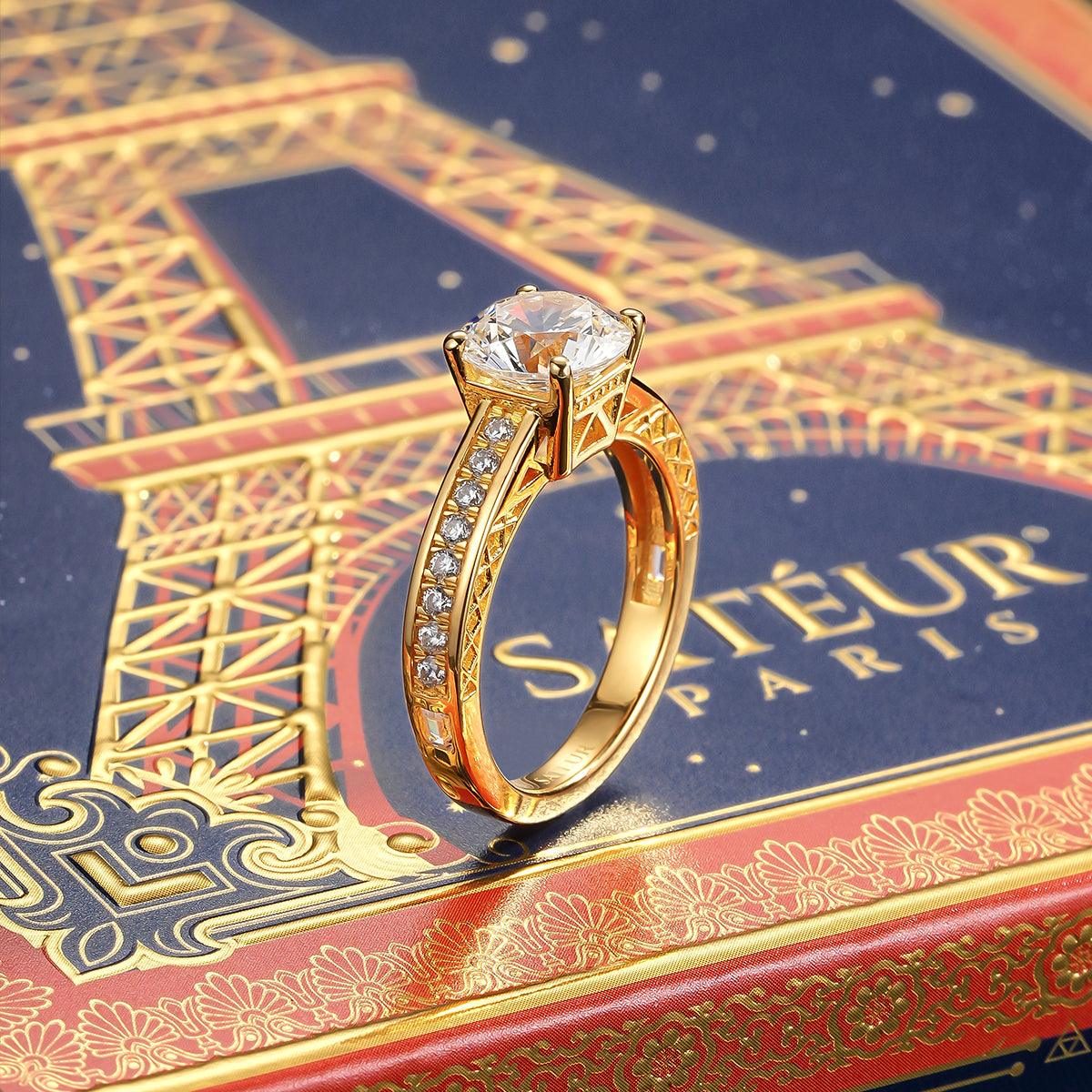
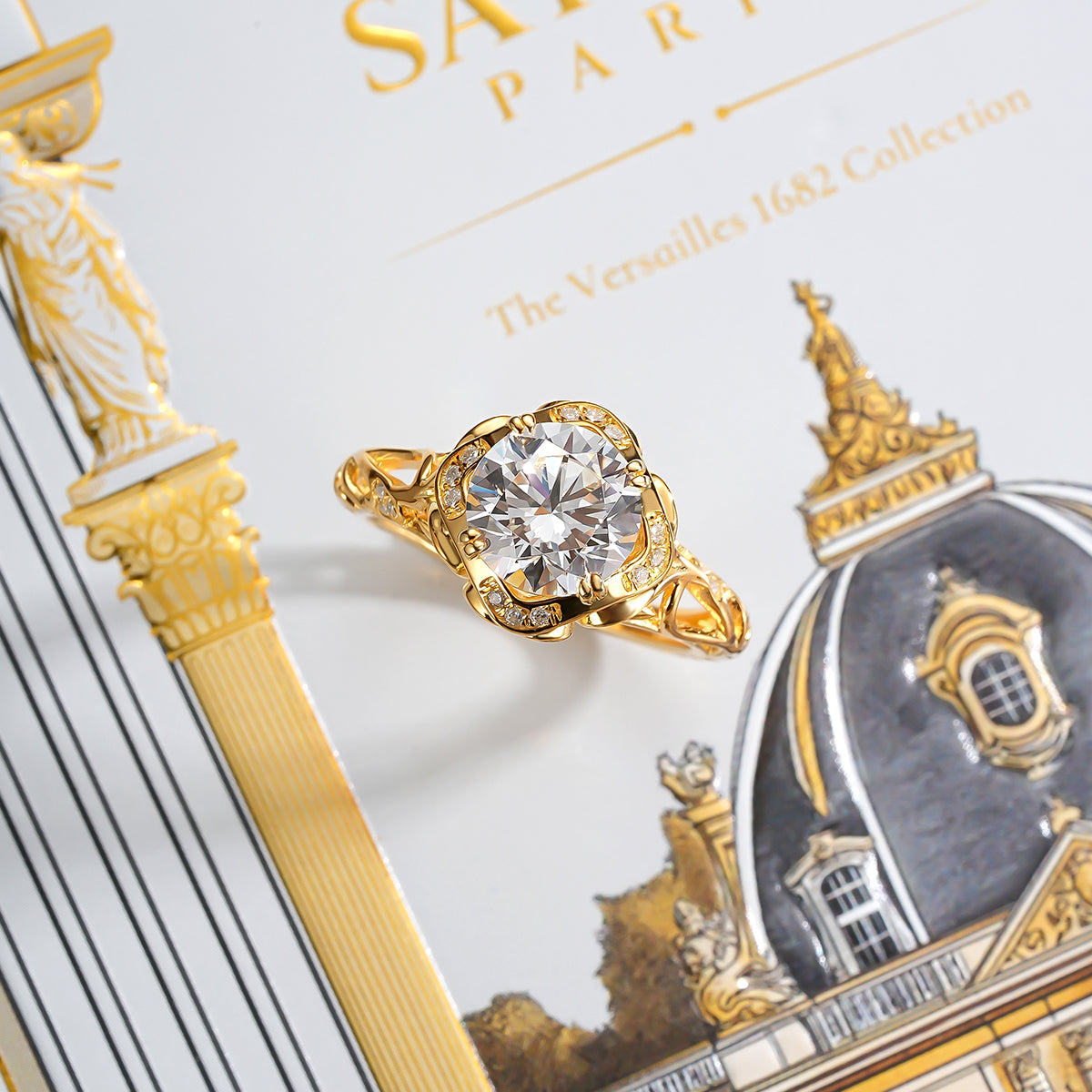
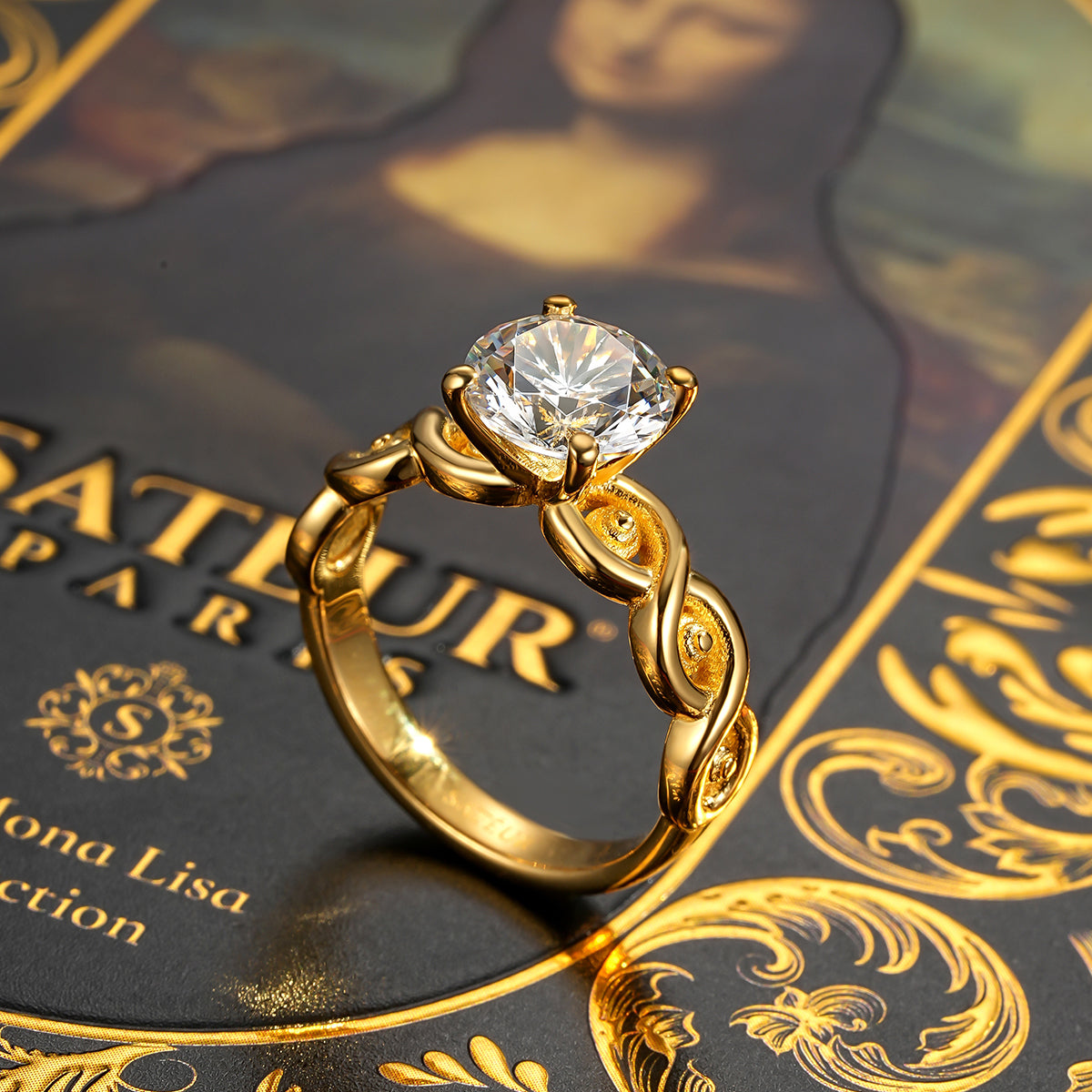
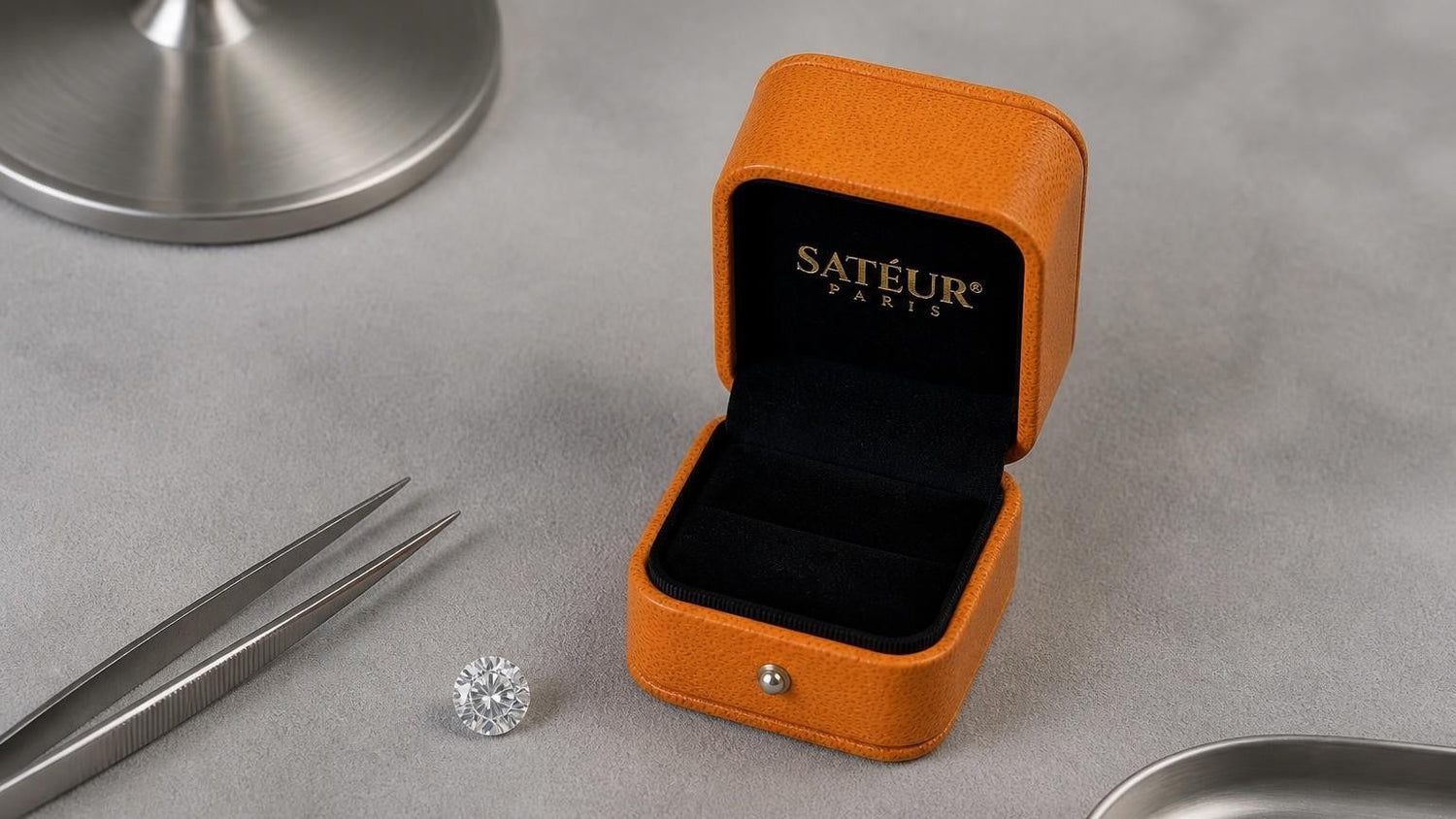
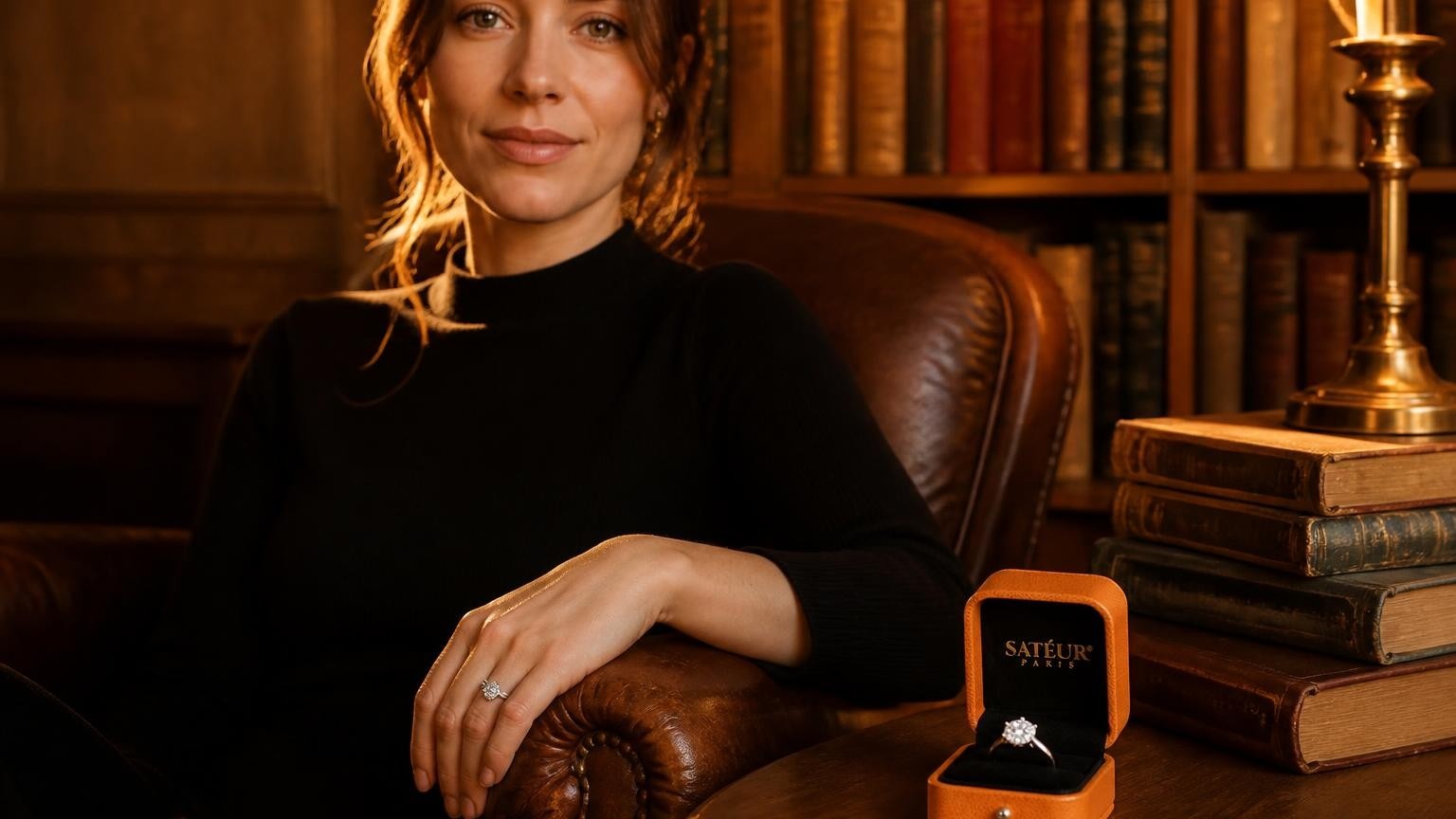
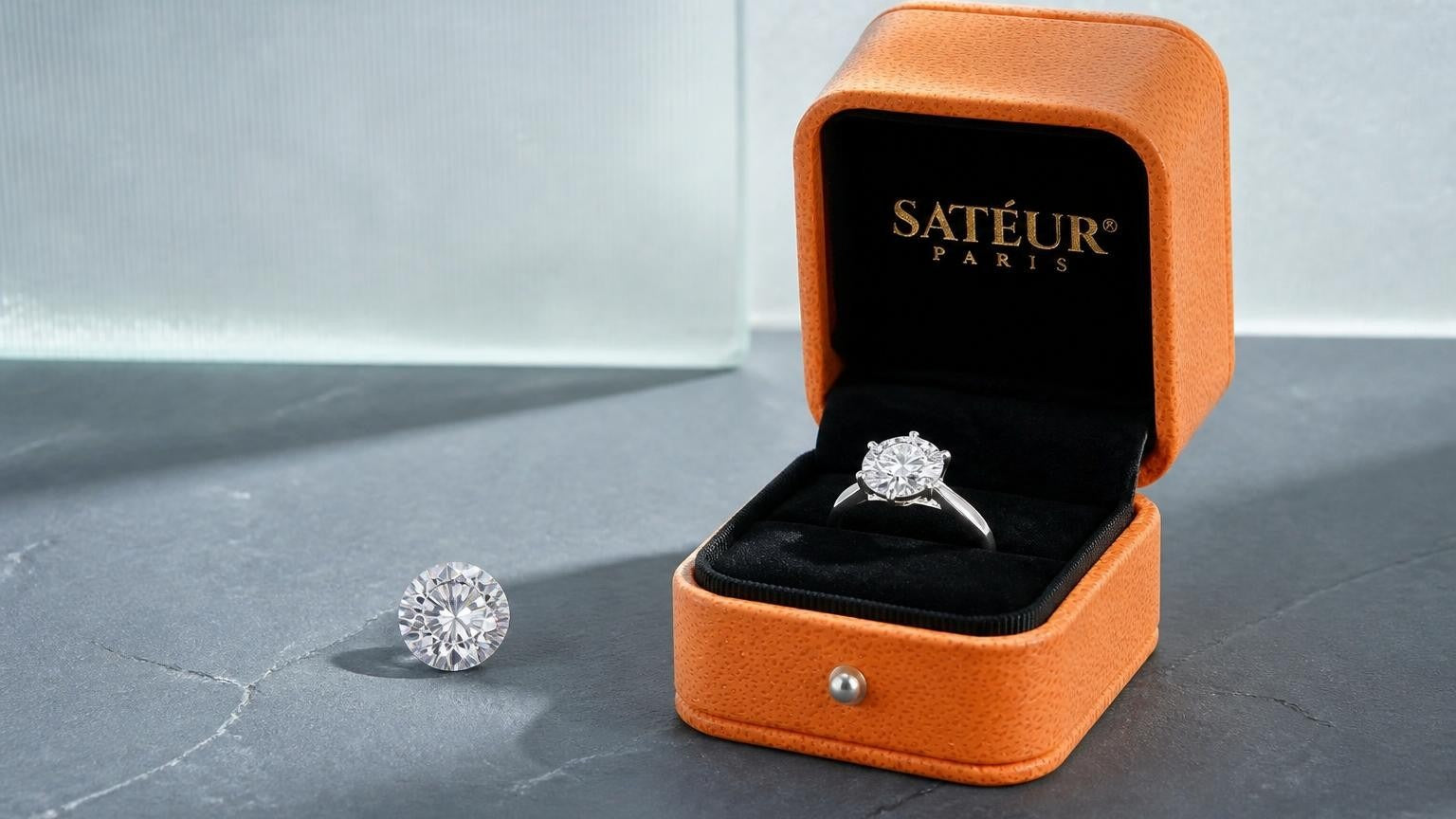
The Satéur moissanite engagement ring collection spans classic round solitaires, halo settings, and statement pieces — all carrying the same D-E colourless standard. Each piece comes in the Satéur orange box. The visual experience of the presentation is part of the product.
The Satéur Destinée Ring™ — The 1% Ring® — is where this value logic is most visible. The 1-carat round brilliant, set in 18k white gold finish. The look of a $10,000 diamond. The decision of someone who understands what they are choosing.
Over 100,000 customers across 150 countries have chosen a different path. The New Diamond Standard is not a compromise. It is a point of view.

Satéur Destinée Ring™
The look of a flawless diamond — for a fraction of the price.
Compare to a $10,000 mined diamond
Joined by 100,000+ couples across 150+ countries.
Shop the Destinée RingFree worldwide shipping · 30-day returns · Lifetime Satéur Care
Frequently Asked Questions About Moissanite Cost
How much does a moissanite ring cost compared to a diamond ring?
A moissanite engagement ring typically costs 5–10% of an equivalent natural diamond ring. At the 1-carat mark, a moissanite ring in D-E grade and Excellent cut runs $200–$600 in stone cost alone, versus $6,000–$12,000 for a comparable natural diamond. Setting and metal costs are broadly equivalent for both — the divergence is almost entirely in the gemstone. For Satéur moissanite engagement rings, finished pieces start under $400.
What factors determine the price of moissanite by carat weight?
Carat weight, colour grade (D-E-F colourless vs G-H-I near-colourless), cut quality (Excellent vs Very Good), and gemstone shape all influence moissanite pricing. Unlike natural diamonds, there is no exponential price jump above 1ct — moissanite scales modestly and predictably. Round brilliants carry a modest premium over fancy shapes (oval, cushion, pear) due to production yield. Supplier sourcing also affects retail pricing, with significant variation across the market.
Why is moissanite significantly less expensive than natural diamond?
Moissanite is a lab-created gemstone with a replicable, scalable supply chain not subject to geological scarcity or industry price controls. Natural diamonds carry extraction, logistics, and legacy pricing costs compounded by a market structure that has historically restricted supply. The per-unit cost of moissanite reflects actual production economics. The price of a natural diamond reflects a century of industry-managed scarcity.
How do moissanite grades (D, E, F) affect pricing?
D and E grades command a 15–25% premium over F-G-I for moissanite depending on carat weight. The distinction matters less than in natural diamonds because moissanite's higher dispersion and fire tend to mask minor body colour in most viewing conditions. Most buyers choosing moissanite for a fine engagement ring opt for D-E colourless grade — particularly for stones above 1.5ct where body colour becomes perceptible in solitaire settings with white metal.
Does moissanite hold its value like a natural diamond?
Moissanite does not hold resale value to the degree a natural diamond may. It should be noted, however, that most natural diamonds do not hold value as well as the industry implies — second-hand jewellery markets apply steep discounts to virtually all stones. Moissanite is not purchased as an investment vehicle. It is purchased for its optical quality, exceptional durability (9.25 Mohs — among the hardest gemstones available for daily wear), and the intelligence of the choice at a fraction of the mined-diamond price.
What is the typical cost difference between moissanite and lab-grown diamond?
Lab-grown diamonds run approximately 2–4× the cost of moissanite at equivalent carat weights. A 1ct lab diamond in D-F, VS1 typically retails at $700–$1,400, versus $200–$300 for a comparable moissanite. The lab diamond is chemically and optically identical to a mined diamond — a distinction that matters for buyers who specifically require it. For buyers focused on the visual result at the best possible value, moissanite is the sharper choice by a meaningful margin.













Laissez un commentaire
Ce site est protégé par hCaptcha, et la Politique de confidentialité et les Conditions de service de hCaptcha s’appliquent.