

Moissanite vs Lab Grown Diamond: The Differences That Matter
Moissanite and lab grown diamonds are frequently grouped together — both lab-created, both brilliant, both far removed from the traditional mined diamond market. Yet they are fundamentally different materials, with distinct optical signatures, hardness ratings, and price points. Understanding the distinction shapes a more considered purchase.
This guide covers the comparison clearly: what each material is, how each performs, and where the value sits. For a broader look at the question of whether moissanite is a lab grown diamond, that article handles the chemistry in full.
- Moissanite is a lab-created gemstone (silicon carbide) — not a diamond in any form.
- Lab grown diamonds are chemically and structurally identical to mined diamonds, produced in controlled environments.
- Moissanite exhibits approximately 2.4× the fire of diamond — vivid, rainbow-forward sparkle under light.
- Lab grown diamonds produce the classic white brilliance of a mined diamond.
- Moissanite rates 9.25 on the Mohs scale; lab grown diamonds rate 10 — both are built for daily wear.
- Moissanite is significantly less expensive than lab grown diamonds of equivalent carat weight.
- Satéur moissanite rings in D–E colour begin from approximately $88.
Moissanite vs Lab Grown Diamond: The Core Distinction
The simplest way to hold the distinction: moissanite is a gemstone that resembles a diamond. A lab grown diamond is a diamond — grown in a laboratory rather than extracted from the earth, but identical in every measurable sense.
Moissanite — silicon carbide (SiC) — does not share diamond's chemical structure (pure carbon). It is a separate mineral, discovered in nature in 1893 by Henri Moissan in a meteor crater, and now produced almost entirely in controlled laboratory conditions. A full guide to buying moissanite, diamond, and lab diamond covers the purchase considerations in depth.
A lab grown diamond, by contrast, is carbon — crystallised under either High Pressure High Temperature (HPHT) or Chemical Vapour Deposition (CVD) processes over weeks to months. The result is chemically, optically, and physically the same as a mined diamond. Satéur's lab diamond tier is IGI-certified, in D–F colour, VS+ clarity, and Excellent cut.
| Property | Moissanite | Lab Grown Diamond |
|---|---|---|
| Material | Silicon carbide (SiC) | Carbon (same as mined diamond) |
| Refractive index | 2.65 | 2.42 |
| Fire (dispersion) | ~2.4× diamond — vivid rainbow sparkle | Classic white brilliance |
| Mohs hardness | 9.25 | 10 |
| Colour grade | D–E (near-colourless, top tier) | D–F (colourless to near-colourless) |
| Certification | Not IGI/GIA certified as diamond | IGI or GIA certified |
| Satéur price (from) | ~$88 | ~$498 (lab diamond tier) |

What Is Moissanite
Moissanite is a lab-created gemstone composed of silicon carbide. It rates 9.25 on the Mohs hardness scale — making it one of the hardest gemstones available and entirely suitable for everyday wear, including engagement rings. It will not chip or cloud under normal conditions.
Its defining characteristic is its optical signature. Moissanite's refractive index of 2.65 — compared to diamond's 2.42 — produces a distinctly higher dispersion: the vivid, rainbow-forward sparkle sometimes called "fire." Under direct light, a moissanite gemstone scatters colour more intensely than a diamond. This is moissanite's signature, and for many buyers, it is precisely the appeal.
At Satéur, moissanite is offered in D–E colour, hand-finished, from approximately $88. The Satéur moissanite ring collection presents the material at its finest — the design-led setting matters as much as the gemstone itself.
What Is a Lab Grown Diamond
A lab grown diamond is an actual diamond — not a simulant, not an alternative. It is carbon, crystallised under controlled conditions that replicate the geological pressures and temperatures of natural diamond formation. The result is chemically and structurally identical to a mined diamond.
Lab grown diamonds carry IGI or GIA certification, graded on the same colour, clarity, cut, and carat standards as mined diamonds. They offer the same optical properties — the classic white brilliance and precise light return that define the diamond aesthetic — without the supply chain and extraction concerns associated with mining.
The distinction matters for the comparison: a lab grown diamond is not "like a diamond" — it is one. Moissanite, however brilliant, is not. For buyers who specifically want a diamond, the lab grown route delivers that precisely. For buyers who want outstanding brilliance at a meaningfully lower price, moissanite offers a genuinely different optical experience. A detailed comparison of lab diamond vs moissanite durability examines the longevity question further.

Optical Properties: Fire and Brilliance
The optical difference between moissanite and lab grown diamonds is visible and consequential. A moissanite's higher refractive index (2.65 vs 2.42) produces an optical effect called "double refraction" — splitting light into two rays as it passes through the stone. The result is the vivid, spectral sparkle that distinguishes moissanite under most lighting conditions.
A lab grown diamond produces the brilliance of a mined diamond: precise, white, controlled. Its single refraction (refractive index 2.42) delivers the classic return of light associated with diamond — crisp, directional, and immediately recognisable.
Neither is superior in an absolute sense — they are different. Moissanite's fire is vivid and dramatic. The diamond look is restrained and classic. The choice is aesthetic as much as material.

Durability and Longevity
Both moissanite and lab grown diamonds are built for lifetime wear. Moissanite at 9.25 Mohs — second only to diamond on the hardness scale — resists scratching from virtually all daily contact. Lab grown diamonds at Mohs 10 are the hardest known natural material.
In practical terms, the difference in hardness between 9.25 and 10 is negligible for daily jewellery wear. Both materials will hold their cut, colour, and brilliance for decades without degradation. Neither clouds, yellows, nor loses its optical character over time. Moissanite in particular has a strong track record in engagement rings — it is not a compromise material, but a deliberate choice.

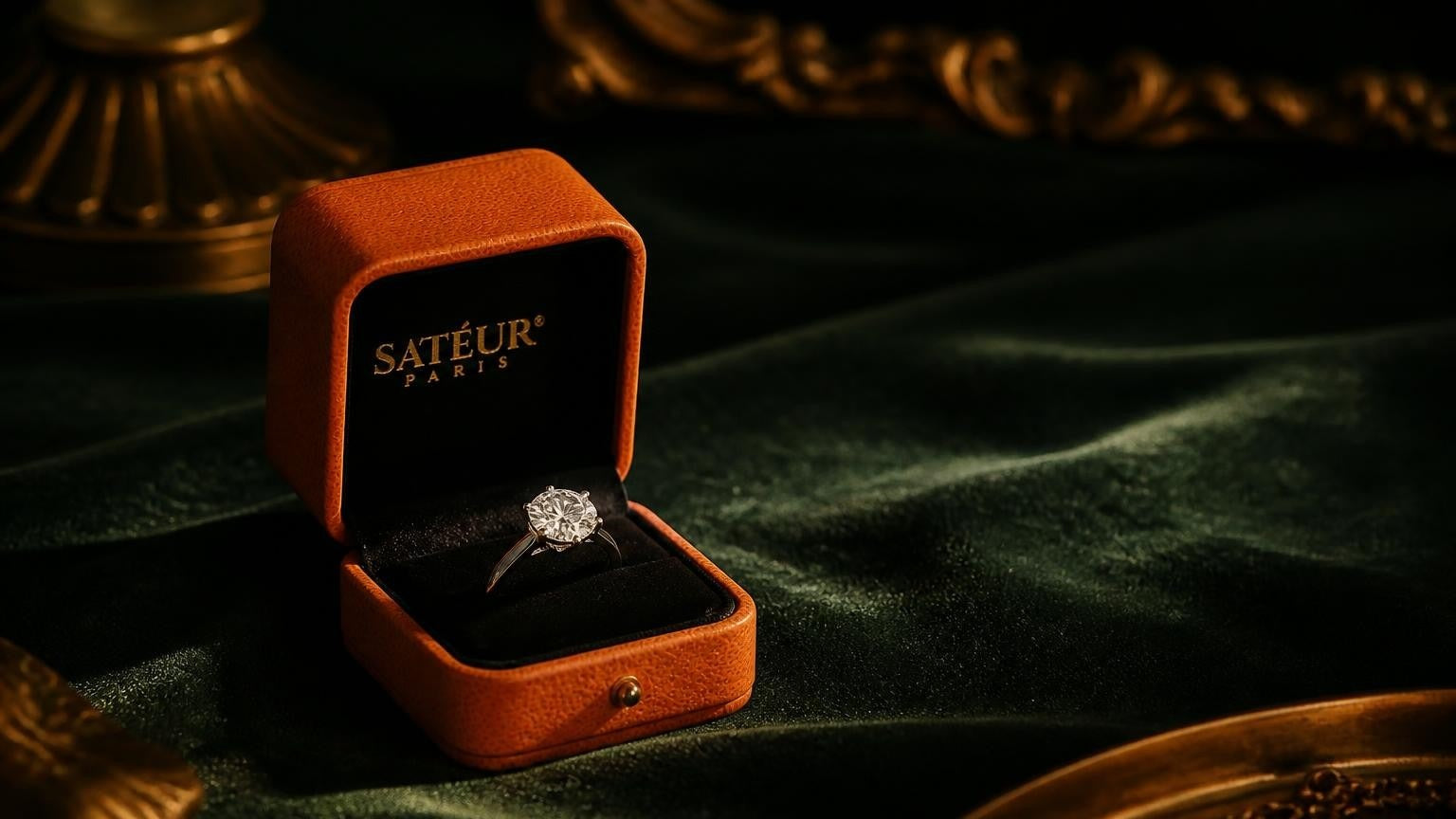
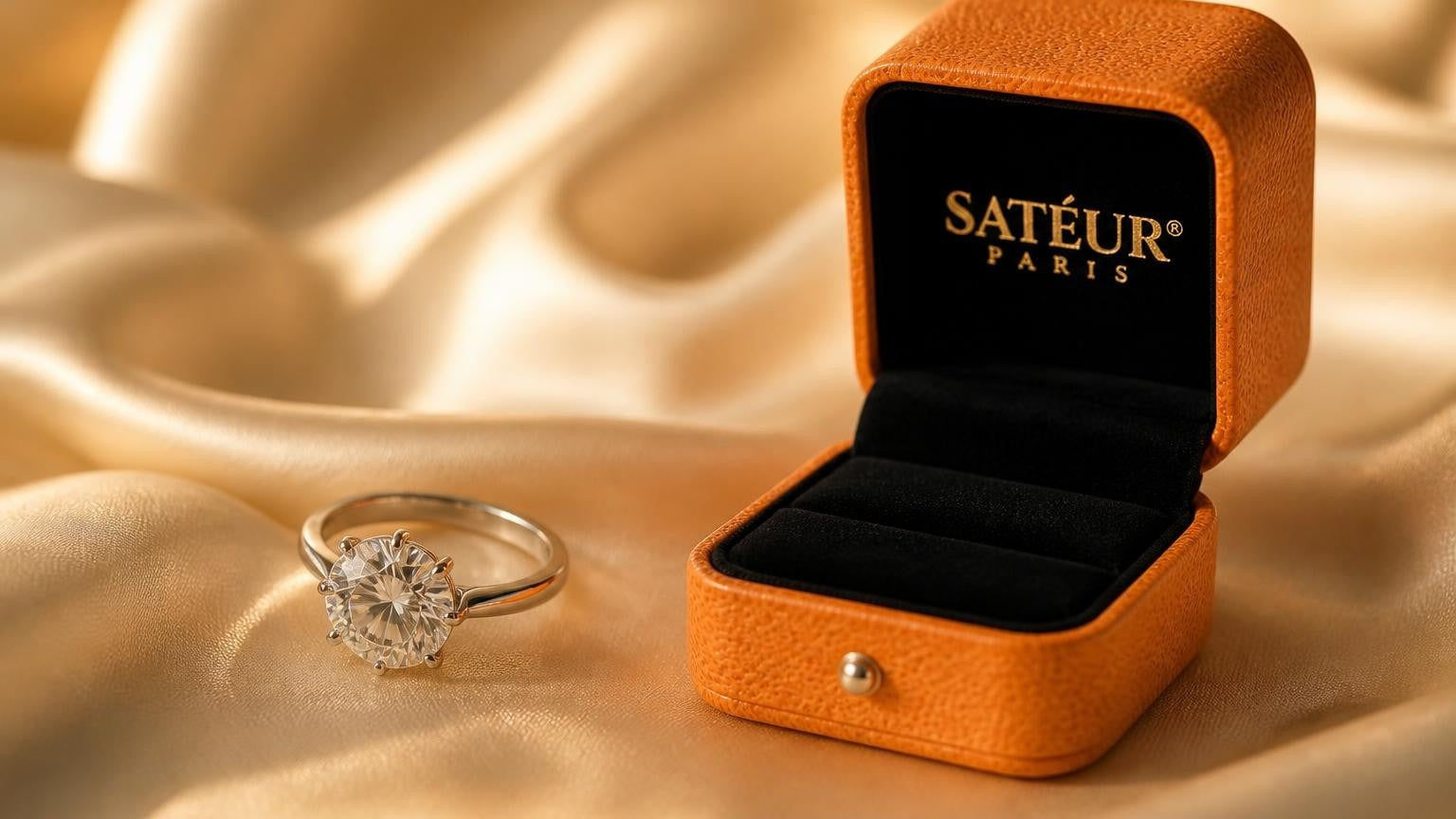
Satéur Destinée Ring™
The look of exceptional brilliance. D–E colour moissanite, from $88.
Compare to a $10,000 mined diamond
Joined by 100,000+ couples across 150+ countries.
Shop Moissanite RingsFree worldwide shipping · 30-day returns · Lifetime Satéur Care
Price Comparison
Price is where the moissanite vs lab grown diamond distinction becomes most visible. Lab grown diamonds follow diamond pricing conventions, adjusted downward for the lab-grown factor — but a 1ct lab grown diamond of strong colour and clarity still represents a meaningful investment, typically from $400 to $1,500 depending on specifications.
Moissanite occupies a different price tier entirely. At Satéur, moissanite rings begin from approximately $88. The material's lower production cost and distinct gemological classification place it at a fraction of lab diamond pricing — making the moissanite and lab grown diamond comparison partly a conversation about where the buyer wants to allocate value.
Neither choice is "budget" in any pejorative sense. Moissanite delivers outstanding optical performance at an accessible price. Lab grown diamonds deliver the certified diamond experience at below-mined prices. The comparison of the two is between different materials at different market positions, not between quality and compromise.
Satéur Moissanite: Design and Value
Satéur's moissanite collection is built on D–E colour gemstones — near-colourless, in the top grading bracket — set in 18k gold-finish designs that begin at $88. The intention is not to approximate a diamond. It is to offer moissanite's distinctive brilliance — that vivid, rainbow-forward fire — in designs that hold their own as fine jewellery.
The Satéur Destinée Ring™, The 1% Ring®, remains the house signature — a 1.00ct round cut that makes the case for intelligent choice in fine jewellery. It is The New Diamond Standard, expressed in moissanite. Over 100,000 customers across 150 countries have chosen Satéur. The full moissanite collection spans rings, earrings, and necklaces — including moissanite engagement rings designed for lifetime wear.
For buyers who want the certified diamond experience, Satéur's separate lab diamond tier delivers IGI-certified stones grown in controlled environments — chemically identical to natural diamonds — at below-mined pricing. The two tiers are distinct — moissanite is not a lab diamond, and the collections serve different preferences with equal commitment to design.
Frequently Asked Questions
Is moissanite the same as a lab grown diamond?
No. Moissanite is a lab-created gemstone composed of silicon carbide — a distinct material from diamond. A lab grown diamond is an actual diamond, chemically and structurally identical to a mined diamond, produced in a controlled environment. The two share no chemical overlap. For a full treatment of this question, see is moissanite a lab grown diamond.
How does moissanite's appearance compare to lab grown diamonds?
Moissanite exhibits approximately 2.4× the fire of diamond — a vivid, rainbow-forward sparkle produced by its higher refractive index (2.65 vs 2.42). Lab grown diamonds produce the classic white brilliance of a mined diamond: precise, crisp, and controlled. Both are visually striking; the optical character is genuinely different. Under direct light, moissanite scatters more spectral colour. A diamond — lab grown or mined — returns more white light.
Which is more durable: moissanite or lab grown diamond?
Lab grown diamonds rate 10 on the Mohs hardness scale — the maximum. Moissanite rates 9.25. In practice, both are extremely durable and built for everyday wear, including engagement rings. The 0.75-point gap is negligible under normal conditions. Neither material will cloud, yellow, or scratch from daily contact. Moissanite's durability is one of its most compelling attributes.
Why is moissanite less expensive than lab grown diamonds?
Moissanite and lab grown diamonds are priced according to entirely different market structures. Diamonds — lab grown or mined — follow established carat-weight and grading conventions that reflect both production cost and category positioning. Moissanite, as a distinct gemstone category, operates outside that pricing framework. At Satéur, moissanite rings begin from approximately $88, making the optical performance accessible at a price point that lab diamonds cannot reach.
Does moissanite discolour or yellow over time?
No. Moissanite does not yellow, cloud, or degrade under normal wear conditions. The material holds its colour grade and brilliance indefinitely. The "yellowing" concern sometimes applied to diamond simulants historically referred to cubic zirconia — a different, softer material. Moissanite at 9.25 Mohs is in a distinct hardness and longevity class.
Can you wear moissanite in an engagement ring?
Yes — and many do. Moissanite's 9.25 Mohs hardness makes it entirely suited to daily wear, including engagement rings. It resists scratching and holds its brilliance for life. The choice of moissanite over a lab grown diamond for an engagement ring is an aesthetic and financial decision, not a durability one. Satéur's moissanite engagement ring collection, beginning from $88, is designed specifically for this purpose.















Laissez un commentaire
Ce site est protégé par hCaptcha, et la Politique de confidentialité et les Conditions de service de hCaptcha s’appliquent.