

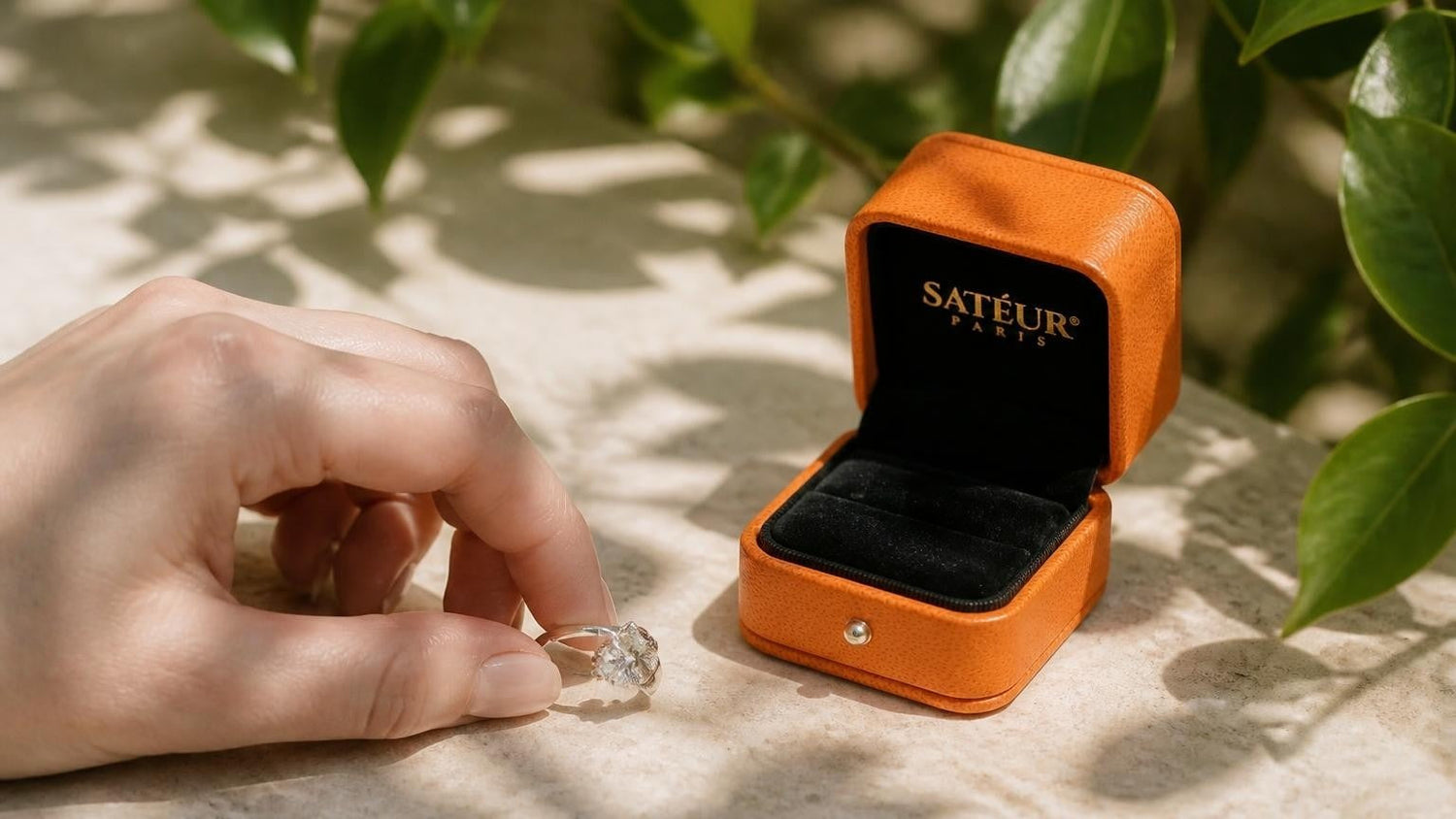
Is Moissanite Too Sparkly? The Honest Answer
The question arrives with a certain anxiety. You have seen moissanite described as brilliant, vivid, exceptional — and then someone mentions the disco ball. Is moissanite too sparkly? The honest answer: moissanite does produce more rainbow fire than a diamond. That is not a flaw. It is optics. Whether it suits you depends entirely on the look you want.
This is a complete guide to what is actually happening inside a moissanite, how its sparkle compares to diamond brilliance under real conditions, and — for those who prefer a more restrained, diamond-accurate look — what the smarter step might be. For broader context on the moissanite category, the Satéur moissanite collection is a good place to begin.
Key Takeaways
- Moissanite has a refractive index of approximately 2.65 versus diamond's 2.42 — producing roughly 2.4× the fire (rainbow dispersion).
- Moissanite's double refraction creates vivid rainbow light; diamond's single refraction returns crisp white brilliance.
- The difference is most visible at larger carat weights and in direct sunlight or bright indoor light.
- Moissanite ranks 9.25 on the Mohs hardness scale — fully suited for daily-wear engagement rings.
- Satéur moissanite rings begin from approximately $88, representing roughly 1% of equivalent diamond pricing.
- For those who prefer diamond-accurate white brilliance, Satéur Gems® offers a restrained, flawless-diamond look.
What Determines a Gem's Sparkle?
Sparkle is not a single quality. It is the result of three optical properties working together: brilliance (the white light returned through the top of a gem), fire (the dispersion of white light into spectral colour), and scintillation (the pattern of light and dark as the gem moves). Different gemstones perform differently across each axis.
The key variable is a gem's refractive index — the degree to which it bends light as it enters and exits the stone. A higher refractive index bends light more sharply, amplifying colour dispersion. Moissanite's higher refractive index is the direct source of its vivid fire. Diamond's lower index returns a tighter, whiter, more restrained light performance. Both are considered high performers; they simply perform differently.
Cut also shapes the outcome. A round brilliant moissanite maximises both fire and brilliance simultaneously. A step-cut moissanite — emerald or asscher — suppresses fire in favour of a linear, less vivid sparkle. The gem's inherent optics set the ceiling; the cut determines how that ceiling is expressed.
Moissanite's Optical Properties and Fire
Moissanite is a lab-created gemstone with a refractive index of approximately 2.65 — notably higher than diamond's 2.42. This elevated refractive index accounts for moissanite fire of roughly 2.4 times that of a diamond. In practical terms: under bright sunlight or strong artificial lighting, moissanite returns vivid rainbow flashes alongside its white light.
Moissanite is also doubly refractive — light entering the gem splits into two rays. This contributes to its characteristic visual depth and the intensity of its light show. At larger sizes, typically above 1 carat, the double refraction and elevated fire become more apparent. In lower light or candlelight, the distinction between moissanite and diamond narrows considerably.
Moissanite is available in D–E colour grades, comparable to premium diamond standards. It is a real gemstone — lab-created, not a diamond, but a distinct and genuinely durable material. At 9.25 on the Mohs hardness scale, it is one of the most resilient gemstones available for engagement rings and daily wear.

Diamond's Optical Properties and Brilliance
Diamond has a refractive index of 2.42 and is singly refractive. Light entering a well-cut diamond returns primarily as crisp white brilliance — fire is present but contained. This is the classic diamond moissanite contrast: where moissanite light is vivid and spectral, diamond light is bright and white.
The lower dispersion is not a limitation. It is the quality that gives diamond its particular character — depth without spectacle, presence without performance. Many buyers specifically seek that restrained white flash. When the question is moissanite vs diamond for an engagement ring, optical preference is often the deciding factor.
Visual Sparkle: Moissanite vs Diamond Under Light
The practical difference between moissanite and diamond sparkle depends heavily on the lighting environment. Indoors under soft natural or diffused artificial light, a well-cut moissanite and a high-quality diamond look strikingly similar. Most people cannot tell the difference with the naked eye in these conditions.
The divergence becomes more visible in direct sunlight, bright office lighting, or under multiple strong artificial light sources. In these environments, moissanite's higher fire produces more intense rainbow flashes. A diamond under the same conditions returns a whiter, more contained sparkle. The moissanite diamond contrast is most legible when light is abundant and direct.
At larger sizes — particularly above 1.5 carats — the distinction becomes easier to perceive. A small moissanite stud in subdued light is virtually indistinguishable from a diamond with the naked eye. A large moissanite solitaire in full sunlight reads as distinctly vivid. Stone size and lighting together determine how present the sparkle difference actually is.
Does Moissanite Sparkle More Than Diamond?
Yes — technically, moissanite sparkly performance exceeds diamond in terms of fire and colour dispersion. This is measurable, consistent, and a direct consequence of its higher refractive index. Whether that reads as "too much" is a matter of personal preference, not a quality judgment.
For buyers who love vivid, colourful light performance — the kind that catches eyes across a room — moissanite is an exceptional choice at dramatically lower cost than a comparable diamond. For buyers who prefer the classic white brilliance of a fine diamond, a different gemstone will serve them better. The question is moissanite too sparkly is really asking: does its sparkle character match what I want to wear every day?
Neither answer is wrong. The spectrum of moissanite diamond preferences is wide. Understanding the optical difference removes the anxiety from the choice.
Moissanite Appearance in Everyday Settings
The "disco ball" concern is most relevant in a specific set of conditions: very large stones (2 carats and above), direct bright sunlight, or settings that maximise light exposure. In the environments most people actually wear jewellery — offices, restaurants, evening settings, candlelight — moissanite reads as brilliantly sparkly without overwhelming the room.
Engagement ring wearers who prefer a more subdued sparkle moissanite style have two practical options: choose a step cut (emerald or asscher) which suppresses rainbow fire while retaining brilliance, or choose a smaller carat weight where the effect is naturally more restrained. Both approaches preserve the value advantage of moissanite while moderating its most vivid optical qualities.
It is also worth noting that moissanite's ring setting plays a role. A bezel or channel setting reduces light entry and exit, tempering fire. A four- or six-prong solitaire setting maximises light performance — and maximises the moissanite sparkly characteristic that some buyers seek and others prefer to moderate.

Why Some Prefer Moissanite's Light Performance
The fire in moissanite is not accidental — it is what draws many buyers to it. Moissanite's vivid sparkle is visible at distance, in photographs, under candlelight. For buyers who want maximum visual presence at a dramatically lower price point — moissanite rings from approximately $88 versus a comparable diamond at $10,000 or more — the optical character is the point, not the compromise.
Moissanite does not lose its sparkle over time. Its optical properties — refractive index, hardness, brilliance — remain stable throughout the gemstone's lifetime. The same vivid fire and white light present on the day of purchase will be present decades later. This permanence, combined with the price point, is why moissanite has become the rational choice for buyers who are as interested in value as they are in light performance.
The broader moissanite vs diamond vs Satéur Gems® comparison makes clear that there is no single right answer — each gemstone occupies a distinct optical and value position. Understanding that spectrum is The New Diamond Standard in action: choosing based on what you actually want, not on inherited convention.
Satéur's Moissanite: The Value Perspective
Satéur's moissanite line — moissanite solitaire rings designed to the same Maison standards as the flagship Gems® tier — offers D–E colour, Excellent cut stones at roughly 1% of equivalent diamond pricing. The vivid sparkle is part of what makes moissanite the rational choice for buyers who want maximum visual presence without a five-figure investment.
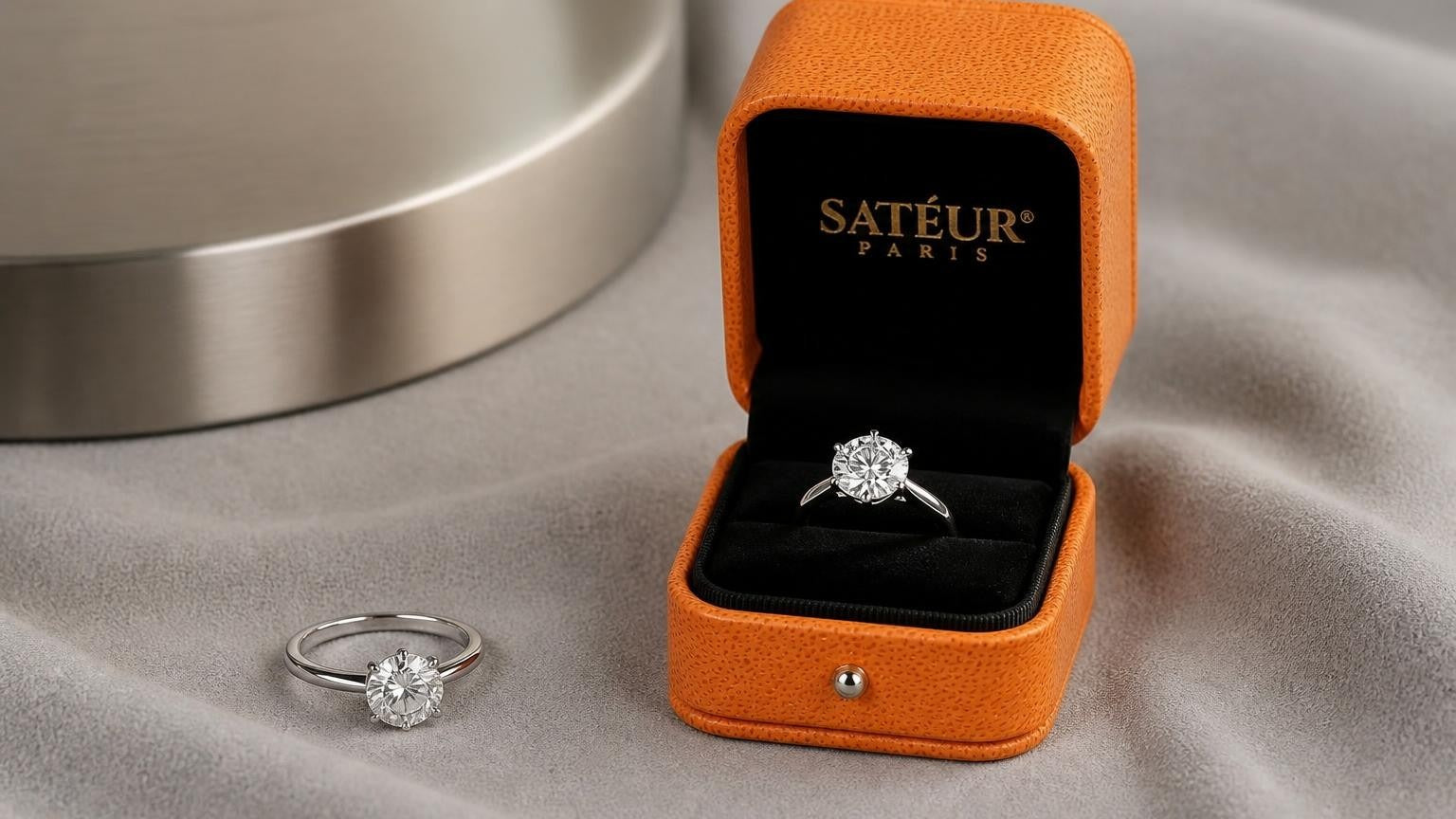
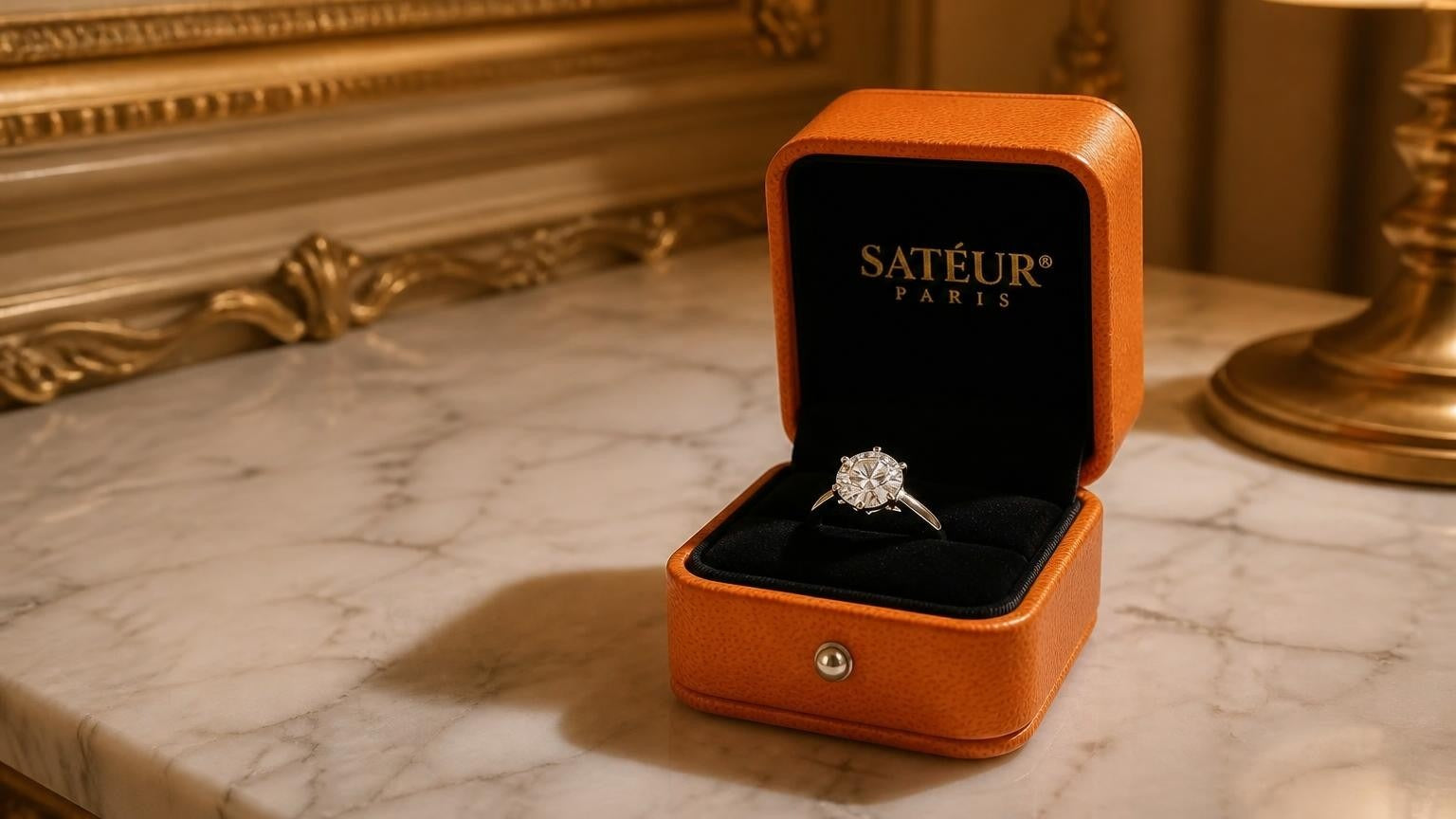
For those who find moissanite's rainbow fire vivid but still want a diamond-accurate look at a fraction of the cost, Satéur Gems® is the smarter step up. Satéur Gems® is a trademarked diamond simulant engineered for the clean white brilliance of a flawless diamond — diamond-accurate rather than diamond-exceeding. It produces a restrained, precise white sparkle that reads as a fine diamond with the naked eye. The two gems serve different preferences, not different quality levels. A full comparison is covered in the guide on buying moissanite vs diamond vs lab diamond.

The The 1% Ring collection — built around Satéur Gems® — begins from $138 and represents the restrained-brilliance option for buyers who want diamond-accurate white light without moissanite's elevated fire.
Frequently Asked Questions About Moissanite Sparkle
Does moissanite sparkle more than a diamond?
Yes. Moissanite has a refractive index of approximately 2.65 versus diamond's 2.42, producing roughly 2.4 times the fire — the rainbow colour dispersion alongside white brilliance. Both gemstones are considered high performers, but moissanite's colour flash is more vivid and visible, particularly in direct sunlight and at larger carat weights.
Will moissanite lose its sparkle over time?
No. Moissanite's optical properties are permanent. Unlike cubic zirconia, which can cloud or scratch within a few years, moissanite's refractive index and hardness (9.25 Mohs) remain constant throughout its lifetime. The same sparkle present on day one remains decades later.
Can you see the difference between moissanite and diamond sparkle with the naked eye?
In many everyday settings — soft indoor lighting, evening light, candlelight — the difference between moissanite and diamond is not visible with the naked eye. In bright sunlight or strong artificial lighting, moissanite's more vivid rainbow fire becomes distinguishable from diamond's whiter return. The difference is most apparent at larger carat weights, typically 1.5 carats and above.
Is moissanite's sparkle considered too much for everyday wear?
This depends on personal preference and stone size. Smaller moissanite — under 1 carat — in everyday office or social settings reads as brilliantly sparkly without drawing particular notice. Larger stones in direct sunlight produce more vivid colour flashes. Those who prefer a more restrained sparkle moissanite style may prefer a step-cut stone, a smaller size, or Satéur Gems® which prioritises diamond-accurate white brilliance.
What causes moissanite to appear more sparkly than diamond?
Two factors: a higher refractive index (approximately 2.65 versus diamond's 2.42) and double refraction. The higher refractive index bends light more sharply, increasing colour dispersion (fire). Double refraction — where light splits into two rays inside the gem — contributes additional visual depth and intensity. Diamond's single refraction and lower refractive index return a tighter, whiter light performance.
How does moissanite's fire compare to diamond's brilliance?
Moissanite produces approximately 2.4 times the fire of a diamond — vivid rainbow colour flashes alongside strong white light. Diamond produces more restrained fire but returns a crisp, pure white brilliance. Moissanite and diamond comparisons consistently show moissanite exceeds diamond on colour dispersion; diamond is regarded as superior for white-light purity. Neither is objectively better — they represent different optical characters suited to different preferences.
For those ready to explore the full range, Satéur's engagement ring collection spans moissanite, Satéur Gems®, and IGI-certified lab diamonds — three distinct choices for three distinct optical preferences. The right gem is the one whose light performance matches what you want to wear every day.

Satéur Destinée Ring™
The look of a flawless diamond. For 1% of the price.
Compare to a $10,000 mined diamond
Joined by 100,000+ couples across 150+ countries.
Discover The 1% RingFree worldwide shipping · 30-day returns · Lifetime Satéur Care















コメントを残す
このサイトはhCaptchaによって保護されており、hCaptchaプライバシーポリシーおよび利用規約が適用されます。