

How Much to Spend on an Engagement Ring
There is no correct number. The idea that a ring must cost a fixed multiple of a salary is a marketing invention — not a measure of commitment, not a cultural tradition, and not a standard with any financial authority. What actually determines how much to spend on an engagement ring is a combination of your own finances, the design qualities that matter most to you, and whether a mined diamond is the only gem worth considering.
This guide covers the real cost landscape for engagement rings in 2026. It explains what drives ring prices, how the Four Cs shape a mined diamond's cost, and where an increasing number of buyers are finding something they did not expect: a genuinely better ring at a fraction of the price.
Key Takeaways
- Average engagement ring spend in the USA sits between $5,500 and $8,000, with wide regional variation.
- The two-month salary rule was created by a diamond industry advertising campaign — it carries no financial or cultural authority.
- USA buyers average just over 1.10 carats; Commonwealth buyers average approximately 0.70 carats.
- 14K gold (58.3% pure) offers the best balance of durability and value for long-term wear in an engagement ring setting.
- Satéur Gems® deliver D-E colour equivalent, Excellent cut brilliance at approximately 1% of a mined diamond's price, from $138.
- Diamond-look alternatives are not a compromise. They are a choice.
Understanding Engagement Ring Budget Options
Engagement ring budgets in 2026 span an enormous range — from under $500 for a simple band to well over $20,000 for a large-carat mined diamond in a platinum setting. The honest starting point is not an industry benchmark. It is your own financial position: what you can allocate without stress, and what proportion of that you want directed toward the gem versus the setting and metal.
The gem accounts for the majority of cost on a mined diamond ring — typically 60–80% of the total. The metal, setting style, and brand account for the rest. For a detailed breakdown of what drives engagement ring prices at each tier, see our complete engagement ring cost guide.
The key variables that push a ring's cost up or down: gem type and carat weight, metal (platinum versus gold, and karat), and setting complexity (solitaire versus pavé, halo, or multi-stone). Understanding these levers lets you direct your budget where it creates the most visible difference.
| Budget Range | Mined Diamond Ring | Diamond-Look Alternative |
|---|---|---|
| Under $500 | Sub-0.5ct, lower clarity, silver or 10K setting | 1ct+ Satéur Gems® in 18K white gold finish solitaire |
| $500–$2,000 | 0.5–0.9ct, SI1–SI2 clarity, 14K gold solitaire | 2–3ct Satéur Gems® with pavé band, premium setting |
| $2,000–$5,000 | 0.9–1.3ct, VS2 clarity, 14K–18K gold | 3–5ct Satéur Gems® or moissanite in premium metal |
| $5,000–$10,000 | 1.0–1.5ct, VS1 clarity, 18K gold or platinum | Large-carat Satéur Gems® — the look of a $10,000 diamond |
| $10,000+ | 1.5ct+, VVS–FL clarity, platinum, designer setting | Full collection access at approximately 1% of mined cost |

The Two-Month Salary Guideline
The two-month salary rule — and its older sibling, the three-month version — originated in advertising campaigns by De Beers beginning in the mid-twentieth century. The intention was to establish a social norm that would anchor consumer expectations to a significant spend. It worked as a marketing strategy. As financial advice, it has no basis whatsoever.
Modern surveys consistently show that the majority of couples spend well below two months of combined income on an engagement ring. The rule persists because the diamond industry continues to amplify it, and because cultural repetition gives it an authority it does not deserve. You are under no obligation to observe it.
The more useful question is: what can you allocate without financial pressure, and what design qualities matter most to you? Starting from those two anchors produces an honest engagement ring budget — one that reflects your actual priorities rather than an invented industry standard. The cost of a ring is not a proxy for the depth of a commitment.
Average Engagement Ring Cost in 2026
According to industry surveys, the average engagement ring spend in the United States falls between $5,500 and $8,000. Regional variation is significant — buyers in major metropolitan areas often spend above the national average, while buyers in smaller markets frequently spend well below it. The national figure has increased gradually over the past decade, largely tracking the rising cost of mined diamonds and platinum.
Carat preferences vary by market. USA buyers average just over 1.10 carats for an engagement ring; buyers in Commonwealth countries — the United Kingdom, Australia, Canada — average approximately 0.70 carats. This divergence reflects different cultural relationships to size as a signal, not any difference in quality standards or commitment.
Gold remains the dominant metal choice globally. 14K gold (58.3% pure gold) offers the best combination of durability and affordability for long-term engagement ring wear. 18K gold (75% pure) provides a richer colour and higher perceived prestige at greater cost. Platinum, at the top of the price range, offers superior durability and a naturally white finish that requires no replating — at a significant price premium over gold.

The Four Cs and Your Budget
For mined diamonds, price is determined almost entirely by the Four Cs: cut, colour, clarity, and carat weight. Understanding how each affects cost helps you make more informed decisions at any ring budget level.
Cut is the most important C for visual performance. An Excellent or Ideal cut grade maximises light return and produces the brilliance most people associate with a diamond. A lower cut grade on a larger stone will appear duller than a smaller, well-cut stone. Cut should not be compromised.
Colour grades run from D (colourless) to Z (noticeably yellow). For most settings and most eyes, G–H colour is visually indistinguishable from D–F and costs substantially less. In a yellow or rose gold setting, an I–J stone will read even whiter, because the warm metal masks body colour.
Clarity grades run from FL (flawless) to I3 (visibly included). Eye-clean stones — where inclusions are invisible without magnification — are typically found at SI1 through VS2. Paying for VVS or FL clarity is paying for perfection that requires a loupe to appreciate. For most buyers, SI1–VS2 is the smart range.
Carat weight has a disproportionate effect on ring cost. Price per carat increases exponentially as you cross the 0.5, 1.0, 1.5, and 2.0 carat thresholds. A 0.90ct stone costs significantly less than a 1.00ct stone of identical quality, while appearing nearly the same on the finger.

If you are working within a defined engagement ring budget, the smart move is to optimise colour and clarity downward — to the eye-clean threshold — while protecting cut quality and targeting the carat weight that looks right on the hand. The eye cannot distinguish D from G colour. It can always distinguish a brilliant cut from a mediocre one.
Satéur Gems®: The Diamond-Look Alternative
Satéur Gems® are a trademarked diamond simulant engineered to deliver the visual appearance of a premium diamond. D-E colour equivalent, Excellent cut, with the clean white brilliance of a flawless diamond — present across the table and visible to the naked eye. They are not moissanite. They are not cubic zirconia. They carry their own trademarked identity and their own performance specification.
The price difference is not subtle. A comparable mined diamond — D-E colour, Excellent cut, 1 carat — commands approximately $10,000. The Satéur Gems® equivalent ring starts from $138. That is the look of a $10,000 mined diamond for roughly 1% of the price. Compare the two side by side across a table: the visual result is indistinguishable with the naked eye.
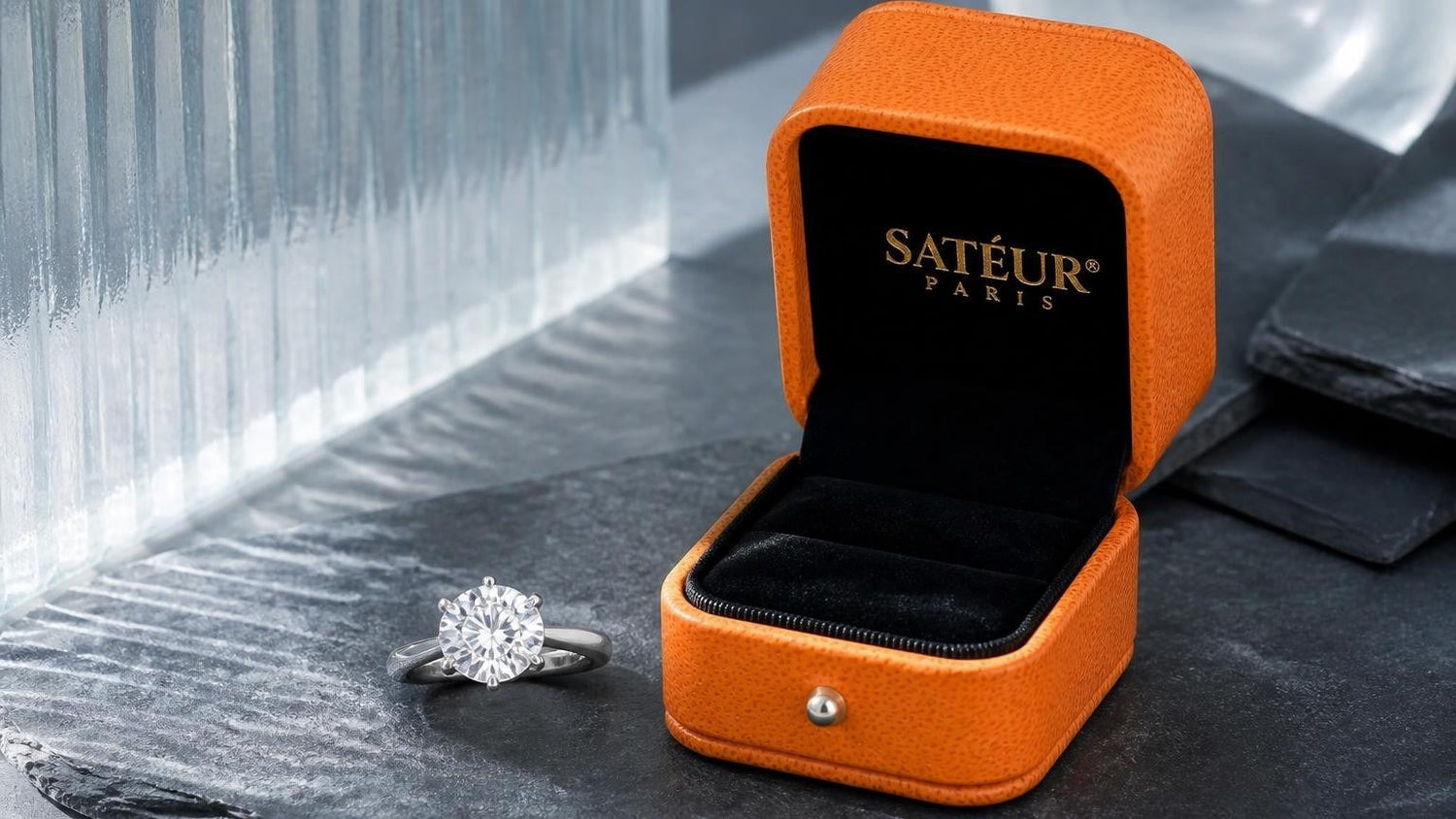
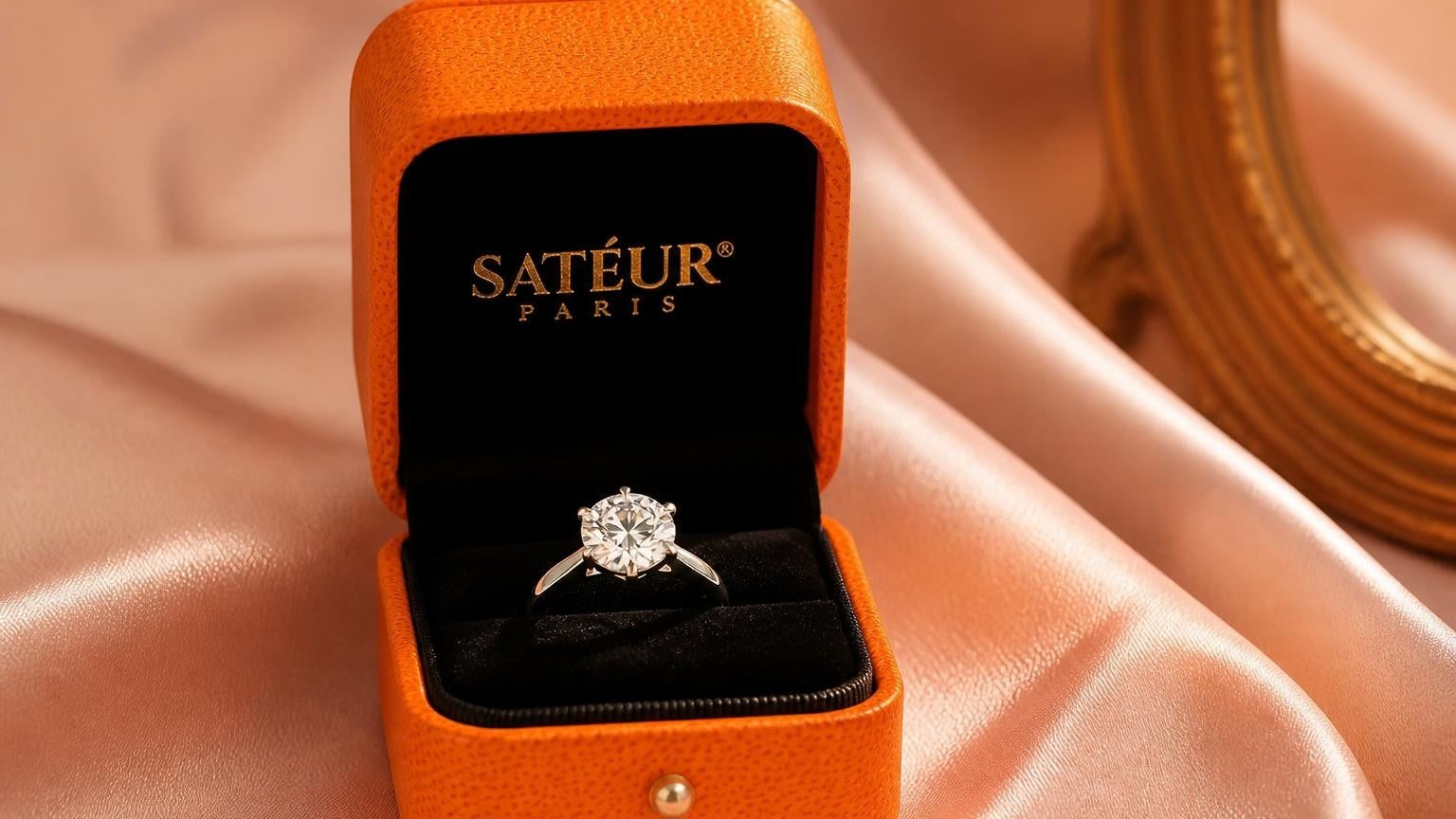
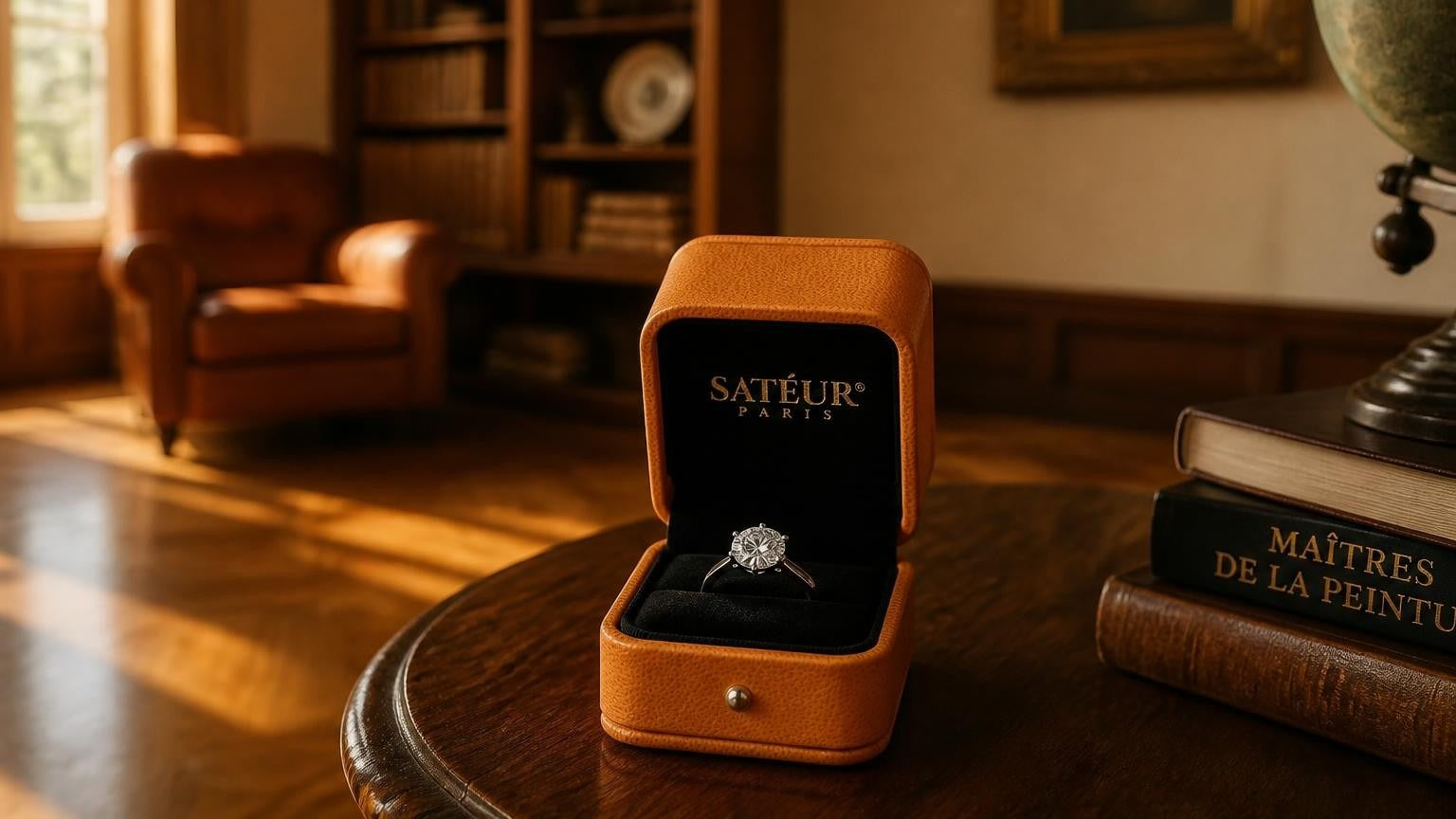
Satéur Gems® rank approximately 8.8 on the Mohs hardness scale — extremely durable, built for everyday engagement ring wear. The setting is 18K white gold finish. Every ring ships in the signature orange Satéur box, which has arrived on the doorsteps of over 100,000 customers across 150 countries.
For buyers who want the presence of a premium engagement ring without the price architecture of artificial scarcity, The 1% Ring collection is where that conversation begins. This is The New Diamond Standard — not a substitute for the real thing, but a redefinition of what the real thing is.

Satéur Destinée Ring™
The look of a flawless diamond, for 1% of the price.
Compare to a $10,000 mined diamond
Joined by 100,000+ couples across 150+ countries.
Discover The 1% RingFree worldwide shipping · 30-day returns · Lifetime Satéur Care
Frequently Asked Questions About Engagement Ring Budgets
How much should I spend on an engagement ring based on my income?
There is no income-based formula that carries any authority. The two- and three-month salary rules are advertising constructs. A more useful approach: determine what you can allocate without financial stress, then decide how much of that you want directed toward the gem versus the setting and metal. Many buyers find that choosing a diamond-look alternative frees up budget for a significantly better setting — or keeps the overall engagement ring spend well within a comfortable range.
What is the average engagement ring cost in 2026?
Industry surveys place the average engagement ring spend in the United States between $5,500 and $8,000, with wide regional variation. Buyers in major metropolitan areas tend to spend above this range; buyers in smaller markets often spend considerably less. The figure has risen gradually over the past decade, largely tracking the increasing cost of mined diamonds and platinum.
Does the three-month salary rule still apply today?
No. The three-month rule — like the two-month version — was introduced by De Beers as part of a mid-century advertising campaign. It is not a cultural tradition, not a financial standard, and not a measure of commitment. The majority of couples today spend well below two months of income on an engagement ring. What you spend is between you and your partner.
How do the Four Cs affect engagement ring pricing?
The Four Cs — cut, colour, clarity, and carat weight — determine almost all of a mined diamond's price. Cut has the greatest effect on visual performance and should not be compromised. Colour and clarity can both be optimised downward to the eye-clean threshold (typically SI1–VS2 clarity and G–H colour) without visible difference in most settings. Carat weight carries the largest price premium, especially at the 1.0ct and 1.5ct thresholds. Choosing a 0.90ct stone of excellent cut and colour will often outperform a 1.00ct stone of lower cut grade, at notably lower cost.
What are the most popular engagement ring sizes and carat weights?
In the United States, the most popular carat weight for engagement rings is just over 1.10 carats. In the United Kingdom and Australia, the average is closer to 0.70 carats. Round brilliant remains the most popular cut globally, followed by oval and cushion. Preferences vary considerably by setting style — a solitaire reads differently from a halo at the same carat weight.
How can I achieve a luxury appearance while staying within a modest budget?
The most effective strategy is to separate the visual presence of a ring from the cost of the gem. Satéur Gems® deliver D-E colour equivalent, Excellent cut brilliance — the clean white appearance of a flawless diamond — at approximately 1% of a mined diamond's price. Entry pieces start from $138 in 18K white gold finish. The visual result across the table and to the naked eye is indistinguishable from a fine mined diamond. For buyers who want the look of a premium engagement ring without the $5,000–$15,000 price, this is the practical path.













Deixe um comentário
Este site está protegido pela Política de privacidade da hCaptcha e da hCaptcha e aplicam-se os Termos de serviço das mesmas.