

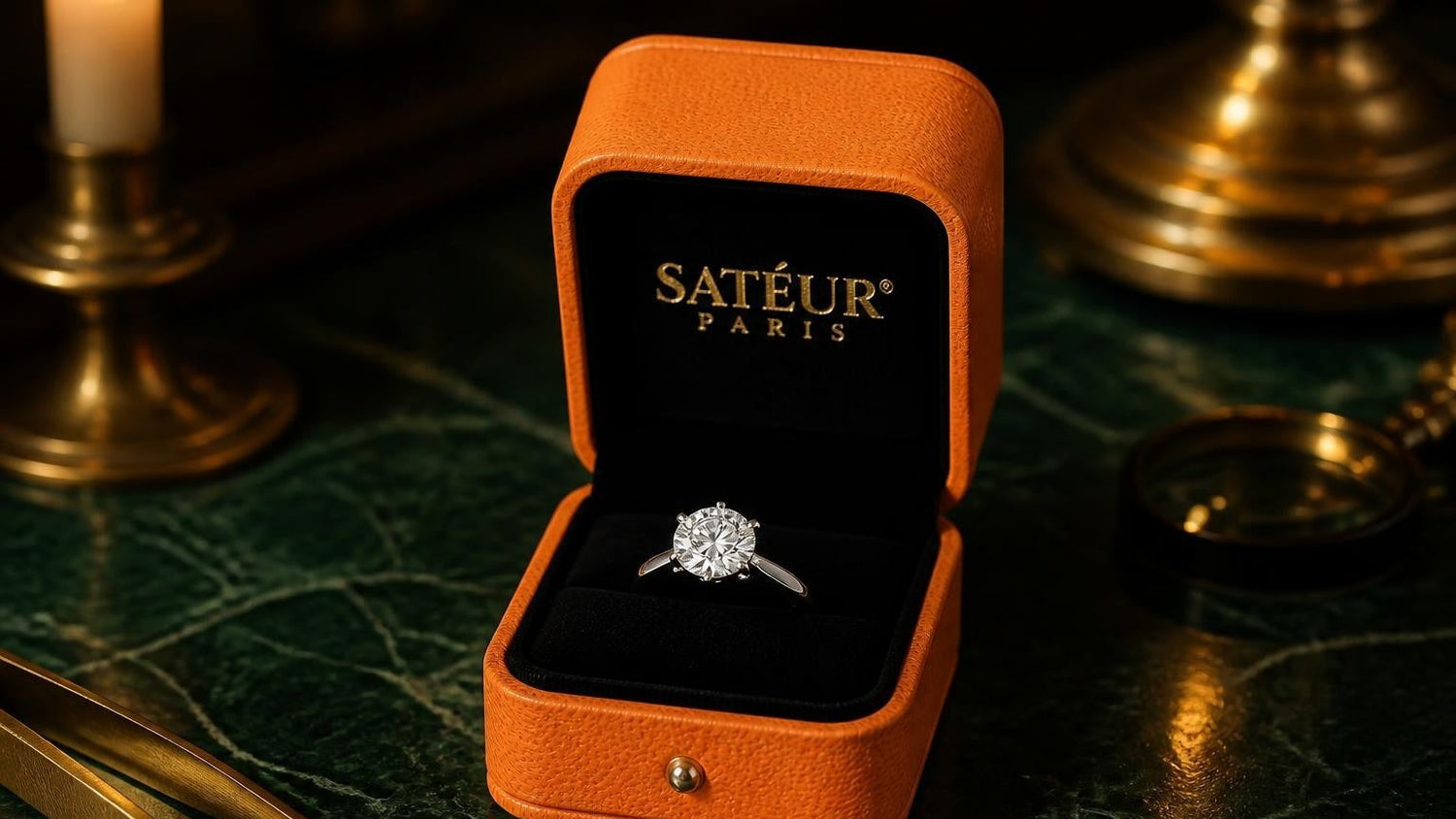
Diamond Alternative Engagement Rings: A Complete Guide
Diamond alternative engagement rings have moved from niche curiosity to mainstream consideration. The shift is driven not by compromise, but by clarity — buyers who understand gem science now choose diamond alternatives as a deliberate, intelligent act. This guide maps the landscape: what each alternative is, how it performs, and where each sits in the hierarchy of brilliance, durability, and value.
For couples exploring engagement rings beyond the conventional, the options are more sophisticated than they have ever been. The question is no longer whether alternatives exist — it is which one is right for you.
Key Takeaways
- Satéur Gems® display D–E colour grades comparable to premium mined diamonds, with clean white brilliance that reads as a flawless diamond to the naked eye.
- Diamond simulants offer identical naked-eye appearance in standard lighting and jewellery settings — indistinguishable from mined diamonds with the naked eye.
- Satéur engagement rings start from approximately $88, at roughly 1% of the cost of an equivalent mined diamond.
- Moissanite rates 9.25 on the Mohs scale — among the hardest gemstones available — built for everyday wear.
- Diamond alternatives have become a mainstream choice across all buyer demographics, not only budget-conscious ones.
- Each tier — Satéur Gems®, moissanite, cubic zirconia, white sapphire — has distinct optical and durability properties worth understanding before purchase.
What Is a Diamond Simulant
A diamond simulant is a gemstone — natural or lab-created — engineered to replicate the visual properties of a mined diamond. Unlike a lab-grown diamond, which shares the same chemical composition as its mined counterpart, a simulant is a distinct material that achieves a comparable appearance through its optical and physical characteristics.
The term covers several categories: diamond simulants such as Satéur Gems®, lab-created gemstones such as moissanite, and lower-tier options including cubic zirconia and white sapphire. Each occupies a different position on the spectrum of brilliance, durability, and long-term performance.
Understanding that distinction — simulant versus lab-grown diamond — matters. A simulant does not claim to be a diamond. It claims to look like one. For the vast majority of wearers, that is the only property that counts in daily life.
The broader category of diamond alternatives spans this full spectrum, from gemstones with near-identical optics to those offering distinctive fire in their own right.

Satéur Gems® vs. Mined Diamonds: Value Comparison
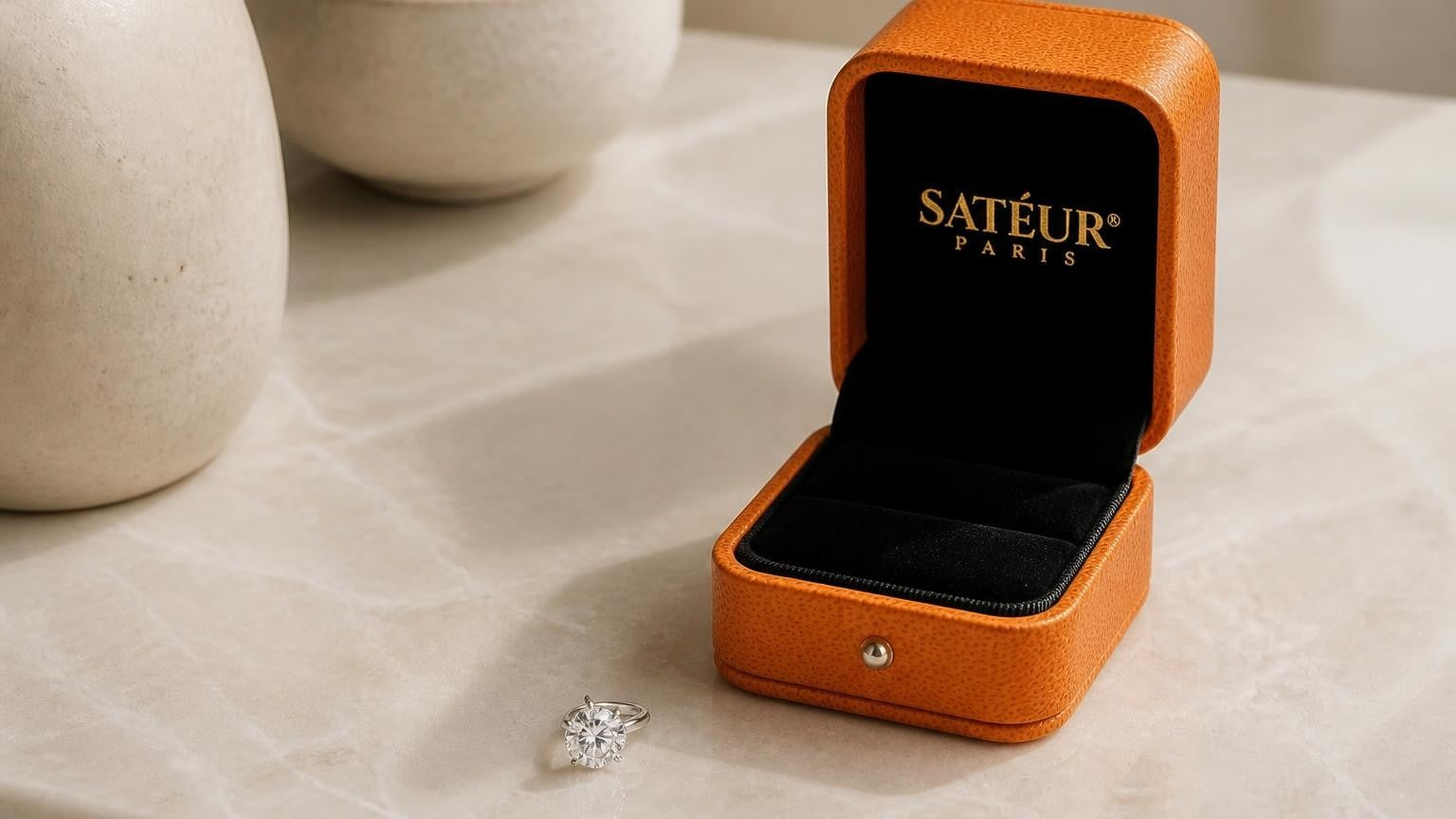
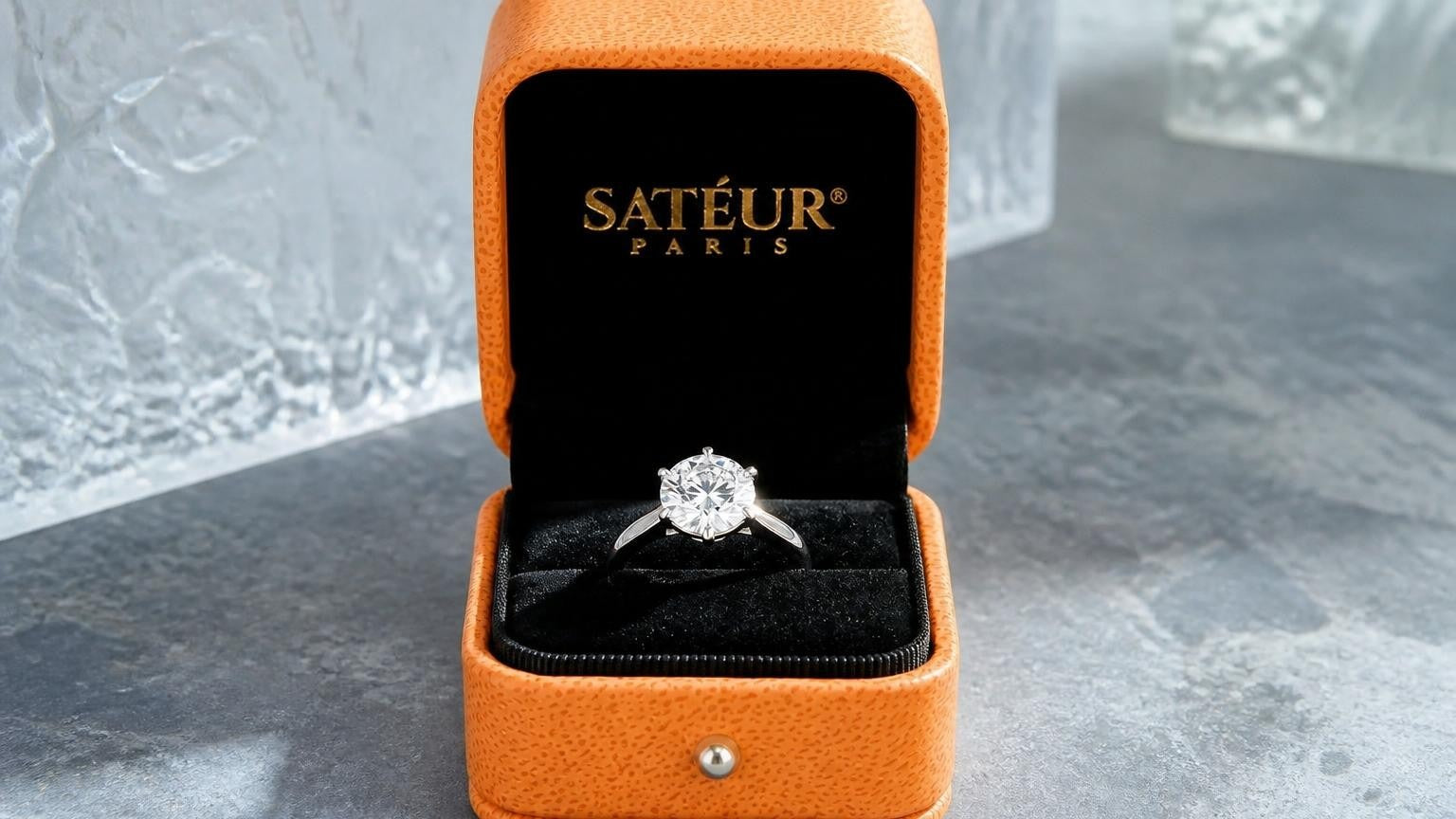
The case for Satéur Gems® begins with a single fact: a 1-carat mined diamond of comparable colour and clarity commands $8,000–$12,000 at retail. The Satéur Destinée Ring™ — set with a 1.00 carat Round cut Satéur Gems® in 18k white gold finishing — enters at a fraction of that. The visual result, across the table and to the naked eye, is indistinguishable with the naked eye from a fine mined diamond.
Satéur Gems® carry D–E colour grades, an excellent cut with 58 facets, and a refractive index of approximately 2.39 — close enough to diamond that standard lighting renders them optically identical to the untrained observer. The brilliance is clean and white, characteristic of a flawless diamond: not the rainbow-forward fire of moissanite, but the restrained, elegant sparkle of a stone that looks exactly like the real thing.
That distinction is intentional. Satéur Gems® were engineered for diamond-accuracy, not spectacle. The result is a gem that holds its own in every setting — daylight, candlelight, photography — without broadcasting its origins.
| Property | Mined Diamond | Satéur Gems® | Moissanite | Cubic Zirconia | White Sapphire |
|---|---|---|---|---|---|
| Colour (typical) | D–J | D–E | D–F (near-colourless) | Colourless | Near-colourless |
| Mohs hardness | 10 | ~8.8 | 9.25 | 8–8.5 | 9 |
| Refractive index | 2.42 | ~2.39 | ~2.65 | ~2.15 | ~1.77 |
| Optical character | Crisp white brilliance | Clean white, diamond-accurate | Vivid rainbow fire | Bright but glassy | Subdued, milky |
| Durability for daily wear | Excellent | Excellent | Excellent | Good (may cloud over time) | Good |
| Price range (1 ct equiv.) | $8,000–$12,000+ | From ~$138 | From ~$98 | $50+ | $150–$400 |
Key Specifications: Colour, Cut, and Durability
The three technical pillars of any engagement ring gemstone are colour, cut, and durability. Each matters differently depending on the wearer and the setting.
Colour. Satéur Gems® are graded at D–E, placing them in the colourless range — the same tier as premium mined diamonds. Moissanite from quality producers typically reaches the near-colourless range (D–F). Cubic zirconia is chemically colourless but tends to read slightly different under certain lighting conditions. White sapphire, though naturally occurring, often carries a soft milky quality that reads distinctly non-diamond even in simple settings.
Cut. Satéur Gems® are cut to 58 facets in a round brilliant format — the same architecture as a traditional diamond solitaire. Facet precision governs how light enters and exits, and the 58-facet cut is the most tested architecture in the engagement ring category. Moissanite is cut similarly, though its higher refractive index means it returns more fire — more rainbow dispersion — than a diamond. Whether that reads as more beautiful or less diamond-like depends entirely on the wearer's preference.
Durability. Both Satéur Gems® (approximately 8.8 Mohs) and moissanite (9.25 Mohs) are extremely durable and built for everyday wear. The difference in hardness between the two is negligible in practice — both hold their brilliance for life. Cubic zirconia sits at 8–8.5 Mohs and can develop micro-scratches over years of daily wear. White sapphire, at 9 Mohs, is durable but its optical character softens over time in a way that the other tiers do not.
For a deeper look at how diamond alternative gemstones compare across engagement ring categories, the guide to diamond alternative gemstones for engagement rings covers each tier in further detail.

Engagement Ring Styles with Diamond Simulants
Diamond simulants work in any engagement ring setting. This is an important practical point: the choice of simulant does not constrain the design. Solitaire, halo, pavé, three-stone, bezel — all standard architectures accommodate Satéur Gems® and moissanite without modification to the setting itself.
The solitaire remains the most popular format for diamond alternative engagement rings. It places the central stone in direct focus, which makes optical quality the primary concern. Satéur Gems® perform exceptionally in solitaires precisely because their clean white brilliance holds up under direct scrutiny. There is no visual shorthand that reads as "not a diamond" — the stone simply looks like a fine, flawless white gem.
Moissanite works particularly well in settings where brilliance is the priority over diamond-accuracy. In halo settings, where multiple small stones surround a central gem, the vivid fire of moissanite creates a distinctive, striking result. Buyers who want presence and spectacle — rather than the quiet confidence of a diamond simulant — often find moissanite satisfying in these formats.
Metal choice shapes the total composition. 18k white gold finishing pairs naturally with both Satéur Gems® and moissanite — the cool tone amplifies the clean white optical character of each. Yellow or rose gold creates warmth that can complement the fire of moissanite particularly well.
The guide to engagement ring styles and diamond alternatives explores silhouette, proportion, and setting depth in further detail for buyers working with specific hand shapes and preferences.

Satéur Destinée Ring™
The look of a flawless diamond, for approximately 1% of the price.
Compare to a $10,000 mined diamond
Joined by 100,000+ couples across 150+ countries.
Discover The 1% RingFree worldwide shipping · 30-day returns · Lifetime Satéur Care

Over 100,000 customers across 150 countries have chosen a different path. Diamond alternative engagement rings are no longer a quiet category — they are the considered choice of buyers who have done the work and reached the same conclusion: the brilliance is real. The difference is the bill.
FAQ: Diamond Alternatives for Engagement Rings
What makes a diamond simulant different from a mined diamond?
A diamond simulant is a distinct material — not a diamond — engineered to replicate the visual properties of a mined stone. It does not share the chemical composition of a diamond. What it does share is the appearance: the colour grade, the cut geometry, and the brilliance that make a diamond ring identifiable. Satéur Gems® are graded D–E colour with a 58-facet round brilliant cut and a refractive index close enough to diamond that the result is indistinguishable with the naked eye in standard lighting and jewellery settings.
Are diamond alternative engagement rings durable for everyday wear?
Yes. Both Satéur Gems® (approximately 8.8 Mohs) and moissanite (9.25 Mohs) are extremely durable and built for a lifetime of everyday wear. The Mohs scale difference between them is negligible in practice — neither is at risk from the surfaces encountered in daily life. Both hold their brilliance without clouding or fading. Cubic zirconia, at 8–8.5 Mohs, is also suitable for daily wear, though it may show surface wear over years in ways that Satéur Gems® and moissanite do not.
How do diamond simulants compare in appearance to natural diamonds?
Satéur Gems® are engineered for diamond-accuracy: clean white brilliance, D–E colour, and a 58-facet cut that replicates the optical behaviour of a fine mined diamond. To the naked eye, in standard lighting conditions, the appearance is indistinguishable with the naked eye from a premium mined stone. Moissanite produces more fire — a vivid, rainbow-forward sparkle — due to its higher refractive index (~2.65 versus diamond's 2.42). That fire is distinctive and beautiful, but reads differently to diamond rather than identical to it.
What price range should I expect for a diamond simulant engagement ring?
Satéur engagement rings start from approximately $138 for the Destinée earrings and from similar entry points for rings — placing them at roughly 1% of the cost of a comparable mined diamond engagement ring. A 1-carat mined diamond solitaire typically retails at $8,000–$12,000. The same visual presence, set in 18k white gold finishing with a D–E colour simulant, begins at a fraction of that investment.
Can a diamond simulant be set in any engagement ring metal?
Yes. Satéur Gems® and moissanite are compatible with all standard engagement ring metals: 18k white gold, yellow gold, rose gold, platinum, and sterling silver. The stone hardness of both tiers is sufficient for prong settings, bezel settings, and pavé formats without special accommodations. Metal choice affects the overall visual tone — white gold amplifies the clean brilliance of Satéur Gems®, while yellow or rose gold can enhance the fire of moissanite.
What colour grades are available for Satéur Gems® diamond simulants?
Satéur Gems® are produced at D–E colour grades — the colourless range, equivalent to the upper tier of mined diamond colour grading. This ensures the stone reads as a pure, icy white in all settings and lighting conditions, consistent with the visual character of a premium mined diamond. The colour grade is held consistent across the Satéur range so that metal pairing and setting design remain the primary creative variables.
The choice of an engagement ring is not about the material's origin. It is about the presence it carries, the life it is built for, and the intelligence behind the decision. Diamond alternative engagement rings — when chosen from the right tier — offer all three. Satéur Gems® deliver the clean, white brilliance of a flawless diamond. The The 1% Ring collection is where that decision begins.
Explore the full engagement rings collection to find the setting, stone, and scale that is right for the moment.















اترك تعليقًا
This site is protected by hCaptcha and the hCaptcha Privacy Policy and Terms of Service apply.