



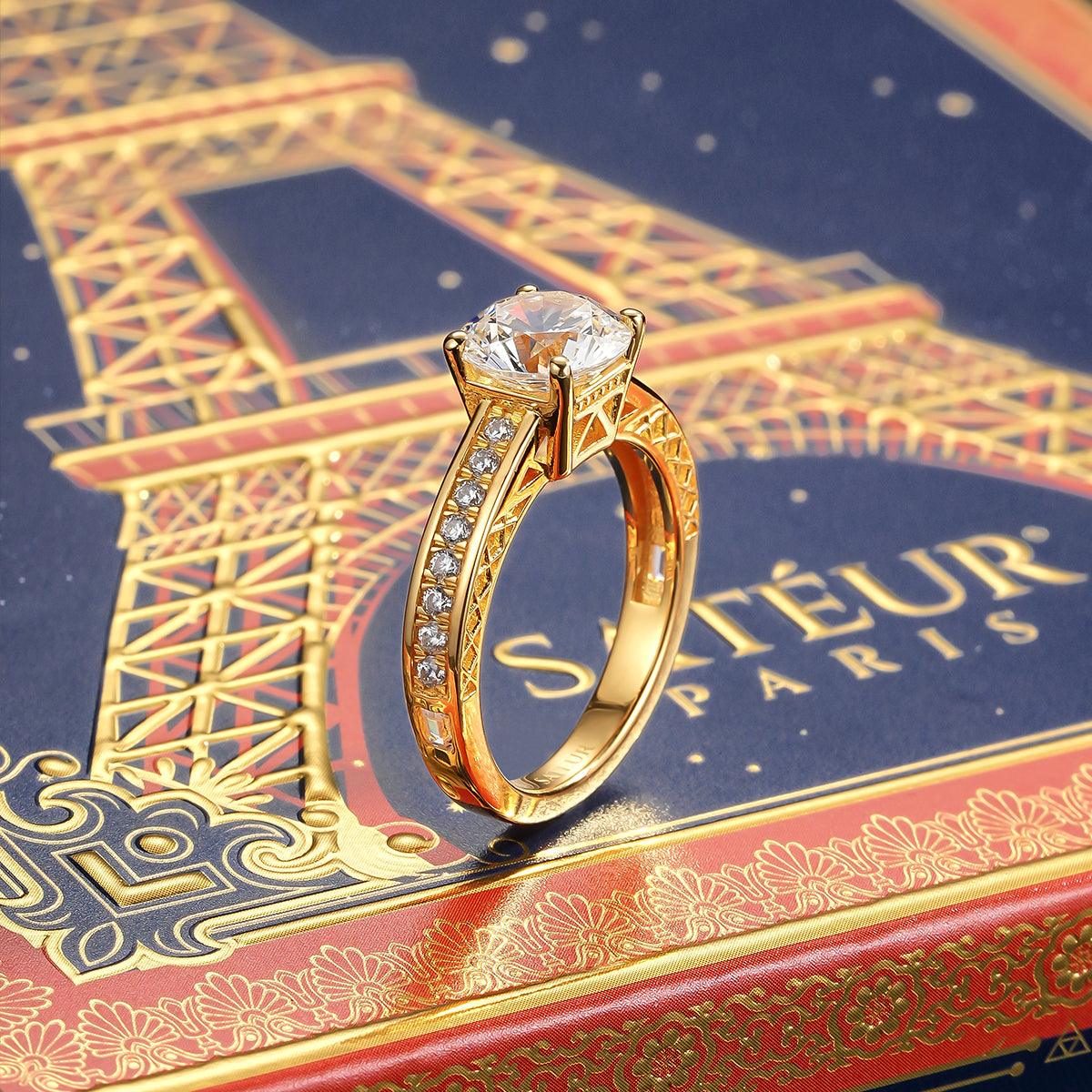
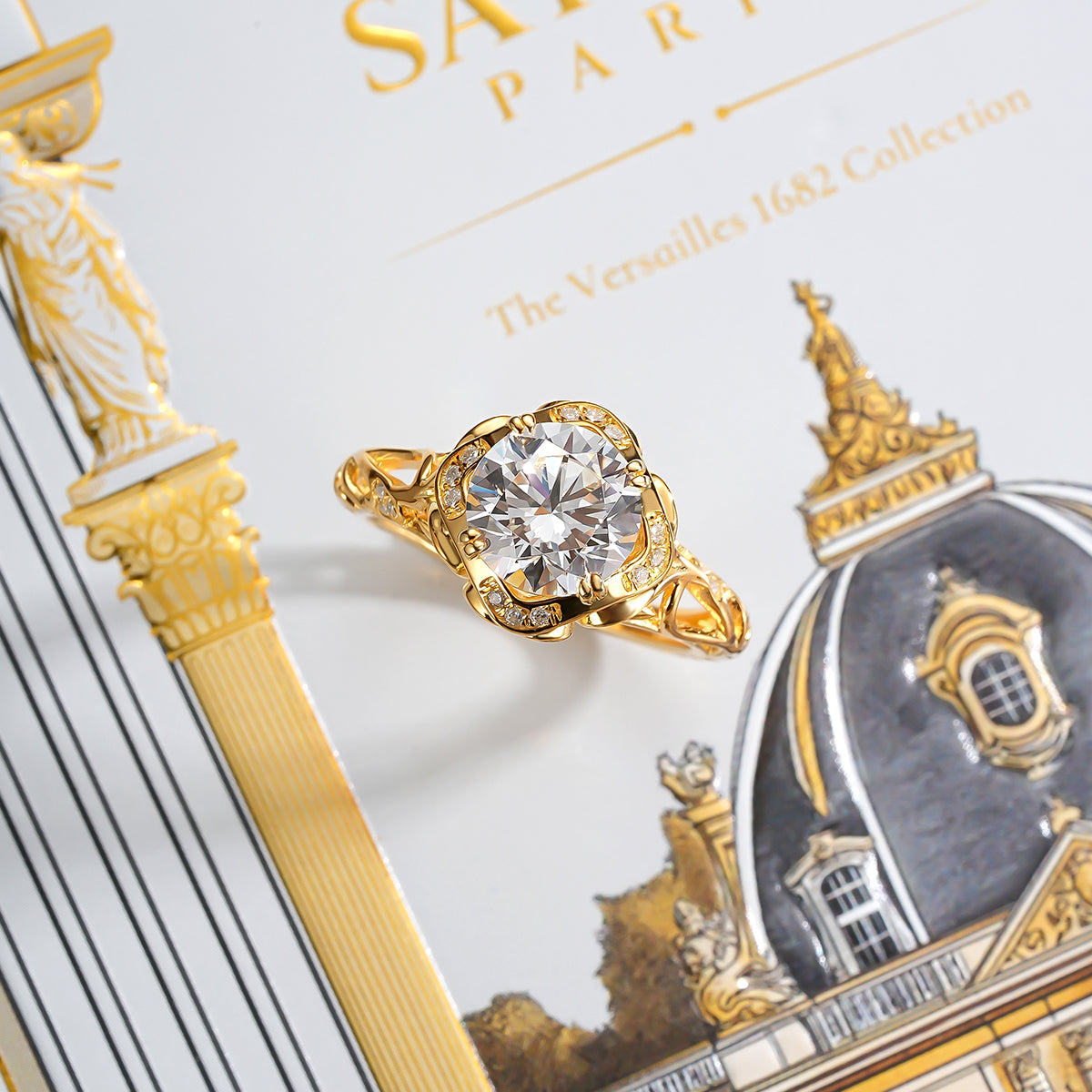
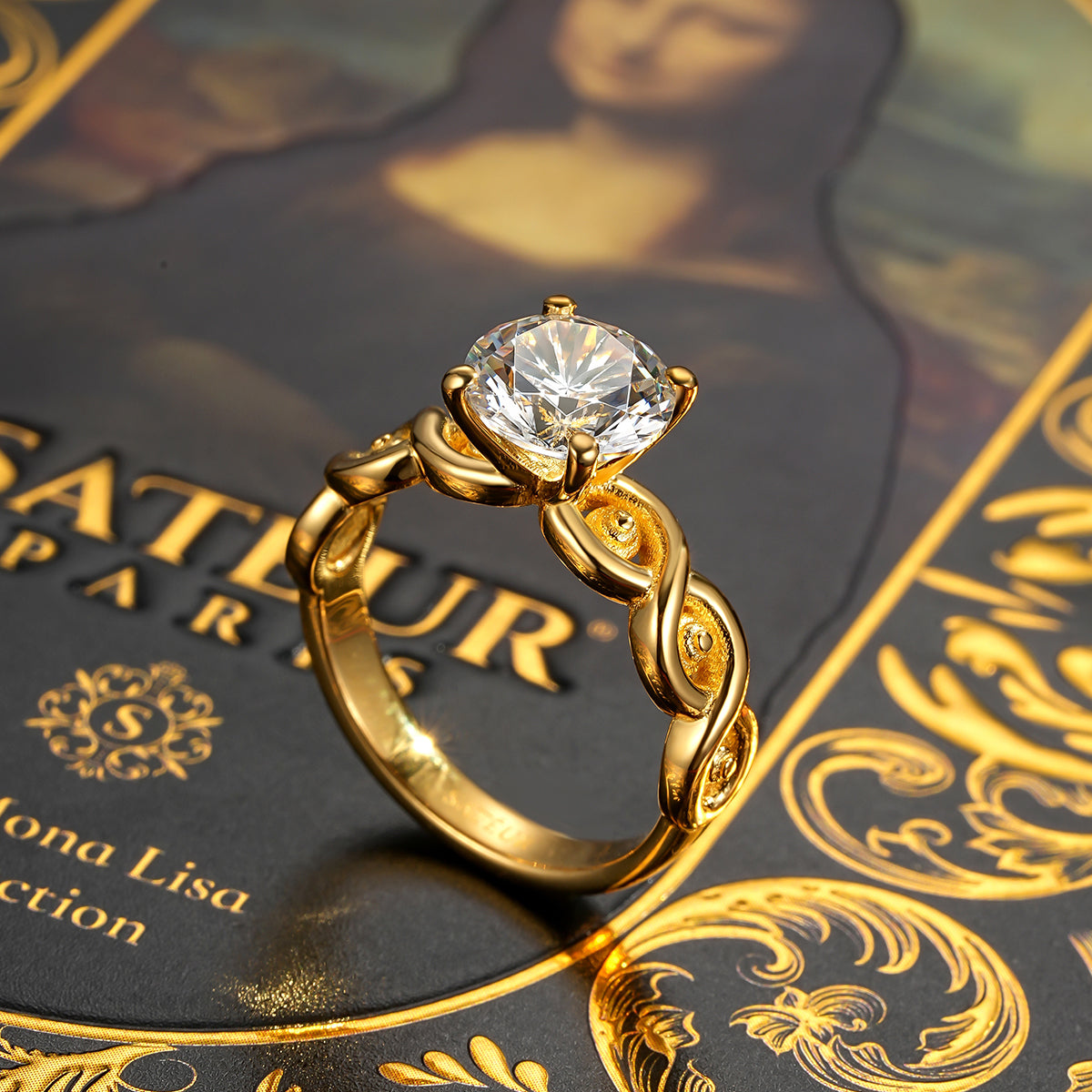
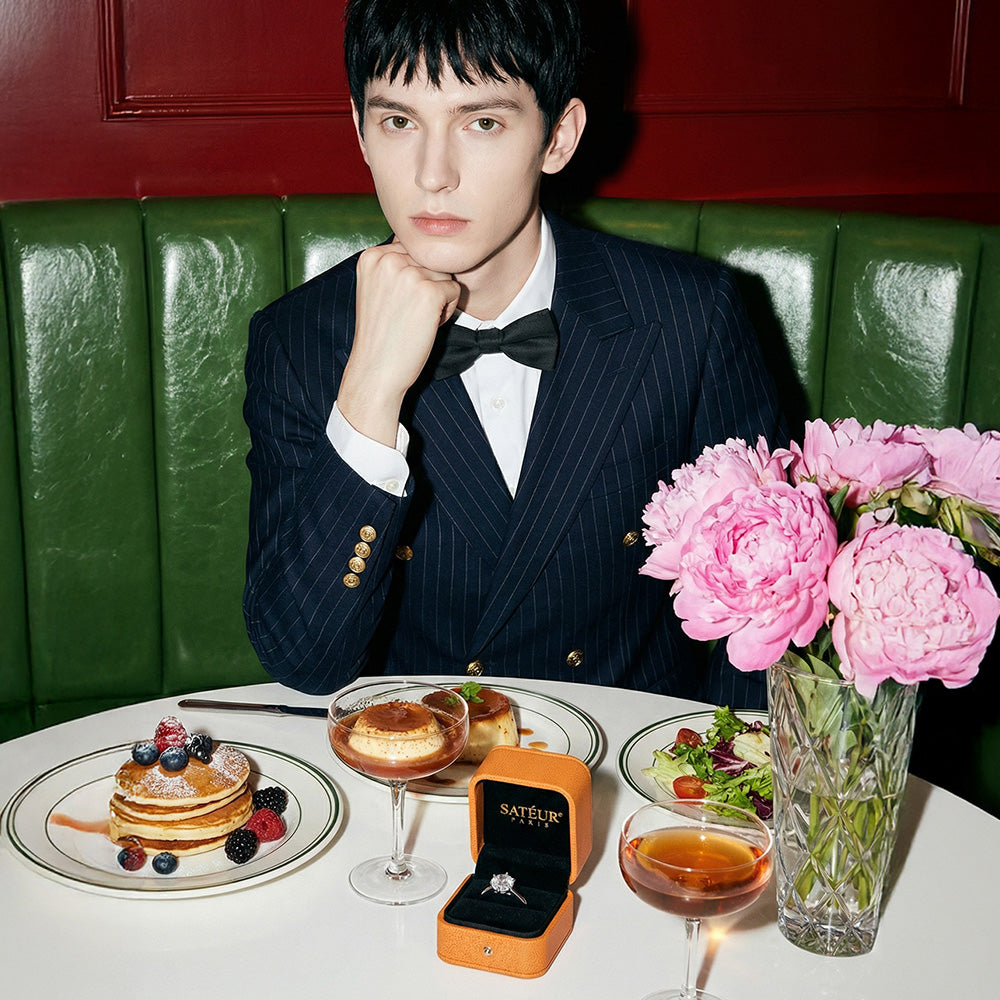
Diamond ring alternatives span a wide range — from moissanite and lab-grown diamonds to white sapphire, cubic zirconia, and trademarked diamond simulants like Satéur Gems®. Each gem has distinct optical properties, durability ratings, and price points that make it right or wrong for daily wear. Understanding those differences leads to a better decision than price alone.
Key Takeaways
- Moissanite is a lab-created gemstone rated Mohs 9.25 — exceptionally durable for daily wear — producing approximately 2.4 times the fire of a mined diamond.
- Lab-grown diamonds are chemically identical to mined diamonds, IGI-certified, and typically 60–80% less expensive for the same carat weight.
- White sapphire offers Mohs 9 hardness and a clean colourless appearance, though with less fire than moissanite or diamond.
- Cubic zirconia is the most affordable option but typically shows visible clouding and surface scratching within one to three years of daily wear.
- Diamond simulants like Satéur Gems® deliver the visual appearance of a flawless diamond at roughly 1% of mined diamond pricing — engagement ring alternatives begin from approximately $88.
What Are Diamond Ring Alternatives?
A diamond ring alternative is any gemstone used in an engagement ring in place of a mined diamond — lab-created stones, coloured gemstones, or trademarked diamond simulants designed to replicate diamond's appearance at a fraction of the cost.
The categories are distinct. Lab-grown diamonds are real diamonds: same carbon structure, same 4 Cs grading, same optical properties. Moissanite is a separate lab-created gemstone (silicon carbide) with higher fire than diamond, rated Mohs 9.25. Sapphire, ruby, and emerald are coloured gemstones with their own hardness and optical character. Diamond simulants like Satéur Gems® are engineered to produce the look of a flawless diamond without disclosing exact composition, at a fraction of mined diamond pricing.
Why Consider an Alternative?
Mined diamonds represent the benchmark in visual appearance and cultural symbolism — and the highest price point. For couples who want the look without the spend, or a distinct optical character, an alternative is a considered choice, not a compromise.
Key Gemstone Options for Engagement Rings

The principal diamond ring alternatives each occupy a distinct position on the spectrum of durability, optical character, and price.
Moissanite
Moissanite is a lab-created gemstone of silicon carbide, rated Mohs 9.25 — the most durable of the non-diamond alternatives. Its refractive index of 2.65–2.69 produces vivid rainbow fire approximately 2.4 times the dispersion of diamond: intense, multi-coloured flashes visually distinct from diamond's cool white brilliance. Modern moissanite is engineered to D-E colour grades.
- Mohs hardness: 9.25
- Refractive index: 2.65–2.69
- Fire (dispersion): ~2.4× diamond — vivid rainbow sparkle
- Colour: D-E (engineered, current generation)
- Longevity: Permanent — no clouding or degradation
- Disclosure: Openly sold as a lab-created gemstone
Lab-Grown Diamond
A lab-grown diamond is a real diamond — grown in a controlled environment, identical in carbon structure, hardness (Mohs 10), and optical properties to a mined stone. IGI-certified, same 4 Cs grading, typically 60–80% less expensive at retail.
White Sapphire
White sapphire is a colourless corundum, rated Mohs 9 — durable for daily wear. It returns clean, subdued brilliance rather than diamond's intensity. A practical natural-gemstone choice at a lower price than diamond.
Cubic Zirconia
Cubic zirconia (Mohs 8–8.5) is the most affordable option — typically $5–$50 for a one-carat stone — and produces reasonable white brilliance when new. The limitation: fine surface scratches accumulate from everyday wear, producing visible cloudiness within one to three years. Practical for fashion jewellery; less suited to a ring worn daily.
Sapphire, Ruby, and Coloured Gemstones
Traditional coloured gemstones — sapphire (Mohs 9), ruby (Mohs 9), emerald (Mohs 7.5–8) — bring their own optical character to an engagement ring. Sapphire's deep blue is among the most enduring engagement choices; ruby commands intense red; emerald offers deep green with a softer light return. Each requires consideration of hardness, inclusions, and lifestyle. See our comprehensive guide to diamond alternatives for the full breakdown.
Satéur Gems: The Look of a Flawless Diamond at 1% of the Price

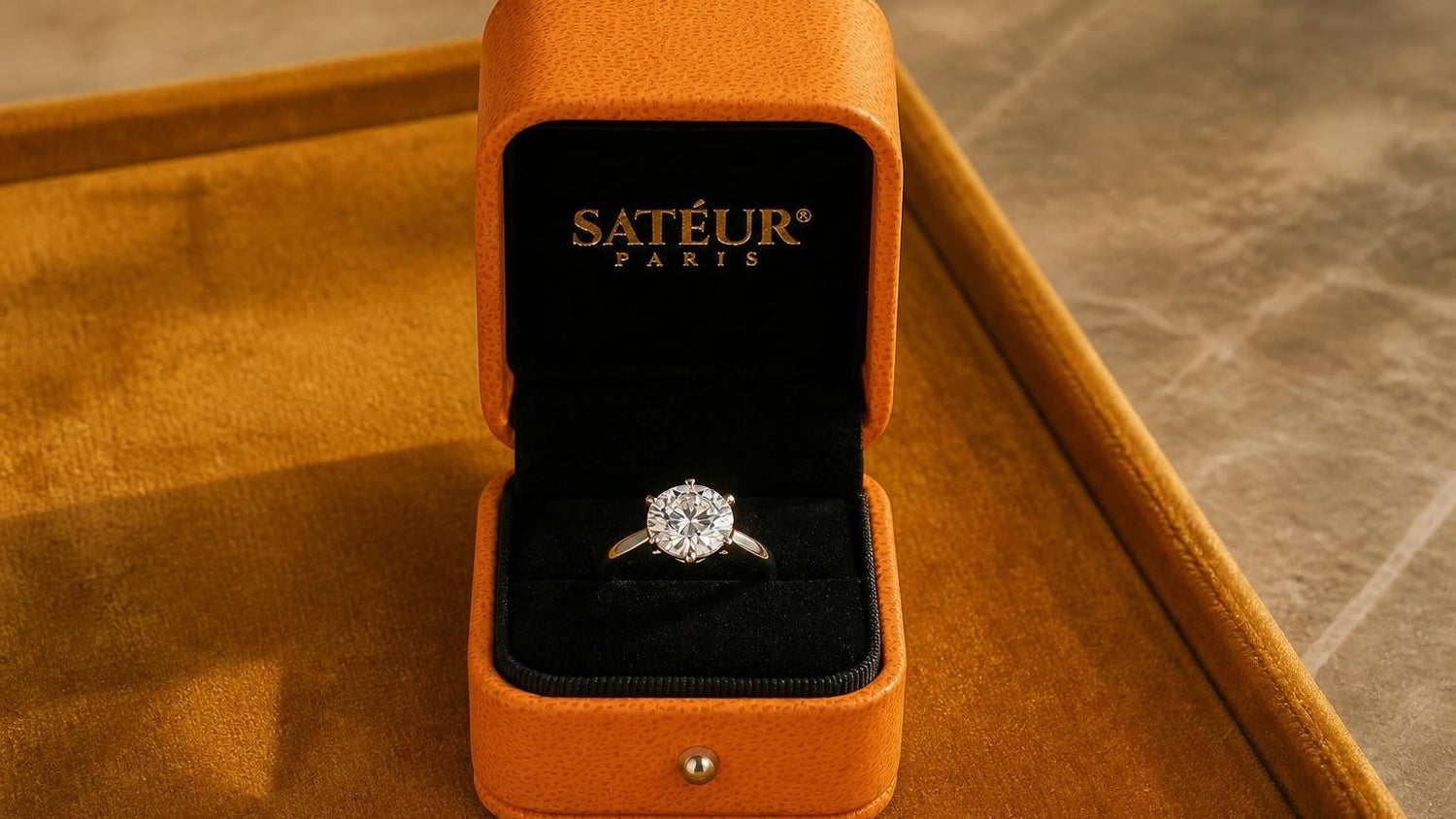
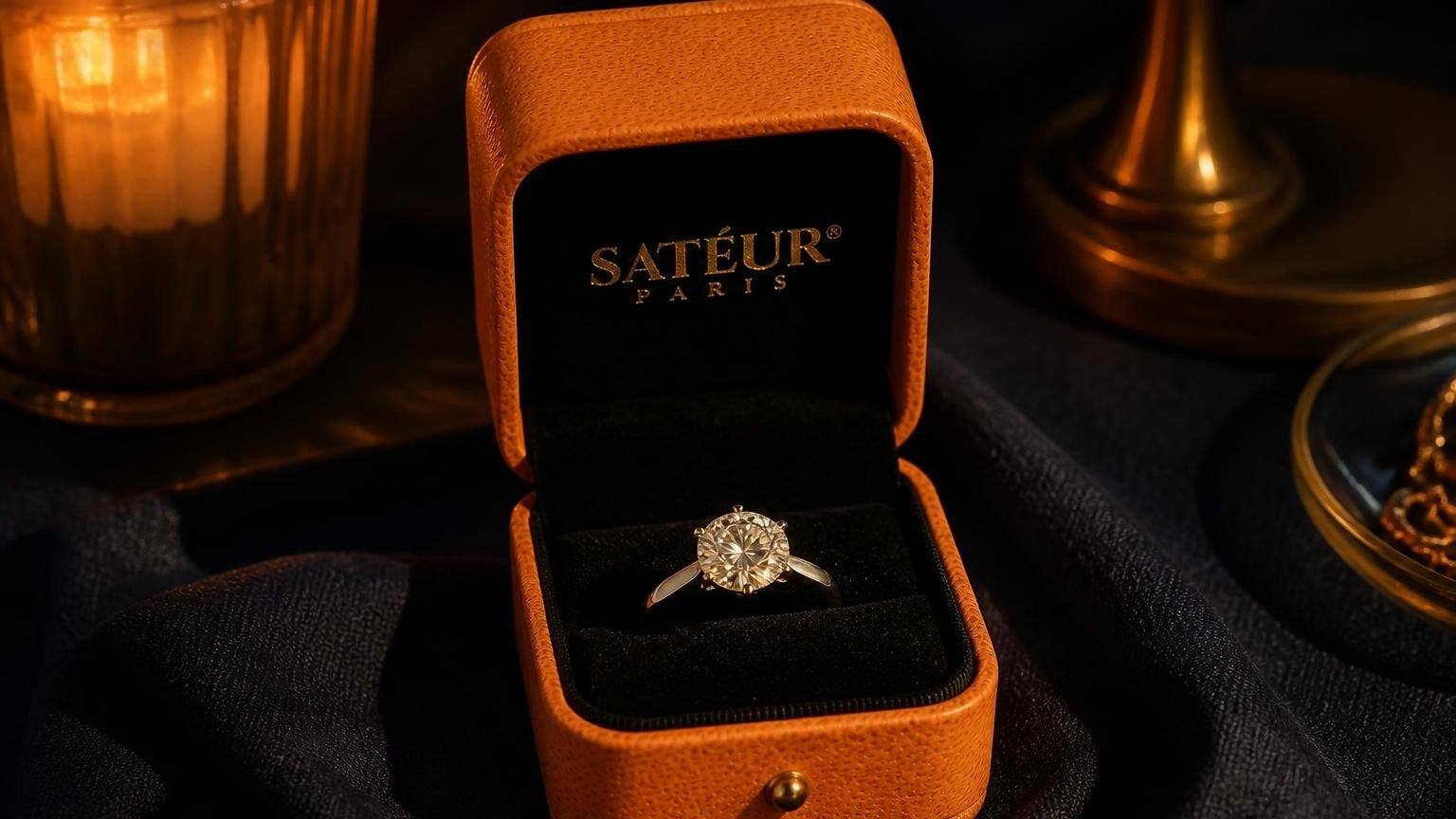
Satéur Gems® is a trademarked diamond simulant engineered to replicate the clean, white brilliance of a flawless diamond. Its composition is not publicly disclosed — what is disclosed is its graded performance: D-E colour, Excellent cut, and the visual character of a flawless diamond, indistinguishable to the naked eye.
The Satéur Destinée Ring™ — The 1% Ring® — delivers this visual presence from $138: approximately 1% of a comparable mined diamond ring. Hand-set in an 18k white gold finish, classic solitaire proportions.
What Satéur Discloses
- Colour grade: D-E — top of the diamond colour scale
- Cut grade: Excellent — maximum light return and symmetry
- Visual character: Clean white brilliance of a flawless diamond, to the naked eye
- Setting: 18k white gold finish
- Price: From $138 — compare to $10,000+ for a mined diamond equivalent
Browse the full Satéur engagement rings collection.
Comparison: Hardness, Colour, and Fire

The properties that matter most for an engagement ring are durability (Mohs hardness), optical character (fire and brilliance), and long-term stability. This table covers the five principal options.
| Stone | Mohs Hardness | Refractive Index | Fire Character | Colour Grade | Longevity | Typical Cost (1 ct) |
|---|---|---|---|---|---|---|
| Mined Diamond | 10 | 2.42 | Crisp white brilliance | D–Z range | Permanent | $4,000–$10,000+ |
| Lab-Grown Diamond | 10 | 2.42 | Crisp white brilliance (identical to mined) | D–Z range (IGI graded) | Permanent | $800–$2,500+ |
| Moissanite | 9.25 | 2.65–2.69 | ~2.4× diamond — vivid rainbow fire | D-E (engineered) | Permanent | $300–$700+ |
| White Sapphire | 9 | 1.76–1.78 | Subdued, clean | Colourless | Permanent | $150–$500+ |
| Satéur Gems® | Undisclosed | Undisclosed | Clean white brilliance of a flawless diamond | D-E (graded) | Permanent | From $138 |
| Cubic Zirconia | 8–8.5 | 2.15–2.18 | Bright initially, fades | D-E (initial only) | 1–3 years (clouding) | $5–$50 |
Hardness and Daily Wear
Above Mohs 9, a gemstone resists everyday contact without visible surface damage. Below Mohs 8.5, scratches accumulate with wear. Diamond and lab-grown diamond (Mohs 10) and moissanite (9.25) are permanently durable; white sapphire (9) close behind. Cubic zirconia at 8–8.5 is the weakest choice for a daily-wear ring.
Fire: The Visual Signature of Each Stone
Moissanite's dispersion (0.104 vs diamond's 0.044) produces rainbow sparkle approximately 2.4 times more intense than diamond — a deliberate optical signature, not a flaw. Diamond and lab-grown diamond return clean white brilliance. Satéur Gems® replicates diamond's white brilliance specifically — not moissanite's rainbow character. Cubic zirconia sparkles when new and degrades as surface wear accumulates.
Why Choose a Diamond Alternative
The most common motivations are price, ethics, and optical preference.
- Price: Satéur Gems® engagement rings start from $138; moissanite from a few hundred dollars. A mined diamond at the same visual presence starts at $4,000–$10,000.
- Ethics: Moissanite and lab-grown diamonds have fully traceable supply chains — no mined gemstone sourcing concerns.
- Optical character: Moissanite's rainbow fire is its own identity, not a diamond approximation. Some couples specifically choose it for that reason.
- Permanence over CZ: Moissanite looks identical in twenty years. Cubic zirconia requires replacement within a few years for daily-wear pieces.
See our guide on diamond simulant rings or browse simulant engagement rings to compare styles.
Design Your Own Engagement Ring
The gemstone is one part of the ring. Setting style, metal finish, and carat weight all affect the final visual result.
Setting and Metal
Solitaire settings in four or six-prong mounts are the most versatile — they let the stone carry the visual weight. Halo settings add perceived size with accent gems; pavé bands add continuous sparkle to the band. For metal: 18k white gold finish is the standard pairing with colourless gems, maximising diamond-look clarity. Yellow gold works well with moissanite's rainbow fire; rose gold is a distinct direction.
Carat Weight
A 1.00 carat round brilliant simulant in an Excellent cut delivers diamond-scale visual presence at a fraction of mined diamond cost. The price advantage compounds at larger weights: a mined 2-carat diamond starts at $15,000–$30,000; an equivalent Satéur simulant starts well under $300.

Satéur Destinée Ring™
The look of a flawless diamond — from $138.
D-E colour · Excellent cut · 18k gold finish
Free worldwide delivery. 30-day returns. Lifetime Satéur Care.
Shop the Destinée RingFree worldwide shipping · 30-day returns · Lifetime Satéur Care
Frequently Asked Questions
What are the most popular alternatives to diamond engagement rings?
Moissanite is the most widely chosen alternative — Mohs 9.25, permanently stable, and significantly less expensive than diamond. Lab-grown diamonds suit buyers who want a real diamond without the mined-stone premium. Satéur Gems®, white sapphire, and cubic zirconia cover different positions on the price and durability spectrum.
How do diamond simulants compare to mined diamonds in appearance?
Satéur Gems® are engineered to produce the clean white brilliance of a flawless diamond — indistinguishable to the naked eye. Moissanite produces vivid rainbow fire distinctly more intense than diamond's. Cubic zirconia resembles diamond when new but loses clarity within a few years of daily wear.
What is the price difference between a diamond ring and an alternative gemstone ring?
A mined 1-carat round brilliant starts at $4,000–$10,000. Moissanite starts from a few hundred dollars. Satéur Gems® engagement rings from approximately $138. Lab-grown diamonds deliver identical diamond properties at 60–80% less cost than mined.
Can I customise an engagement ring with a non-diamond stone?
Yes. Most settings accept any round brilliant-cut gem of standard sizes. Setting style, band metal, and stone size are chosen independently of gem type. Satéur, moissanite, and sapphire are all available in multiple weights and settings.
How durable are diamond alternative gemstones for everyday wear?
Moissanite (Mohs 9.25), white sapphire (9), and lab-grown diamond (10) are all suitable for constant daily wear. Cubic zirconia at Mohs 8–8.5 accumulates visible surface scratches within one to three years — the weakest option for a ring worn every day.
What colour and clarity options are available in diamond simulant rings?
Modern moissanite and Satéur Gems® are both graded D-E colour with Excellent cut — the top of the diamond colour scale, no yellow tint. Cubic zirconia begins at D-E but does not maintain that clarity under daily wear.















Leave a comment
This site is protected by hCaptcha and the hCaptcha Privacy Policy and Terms of Service apply.