



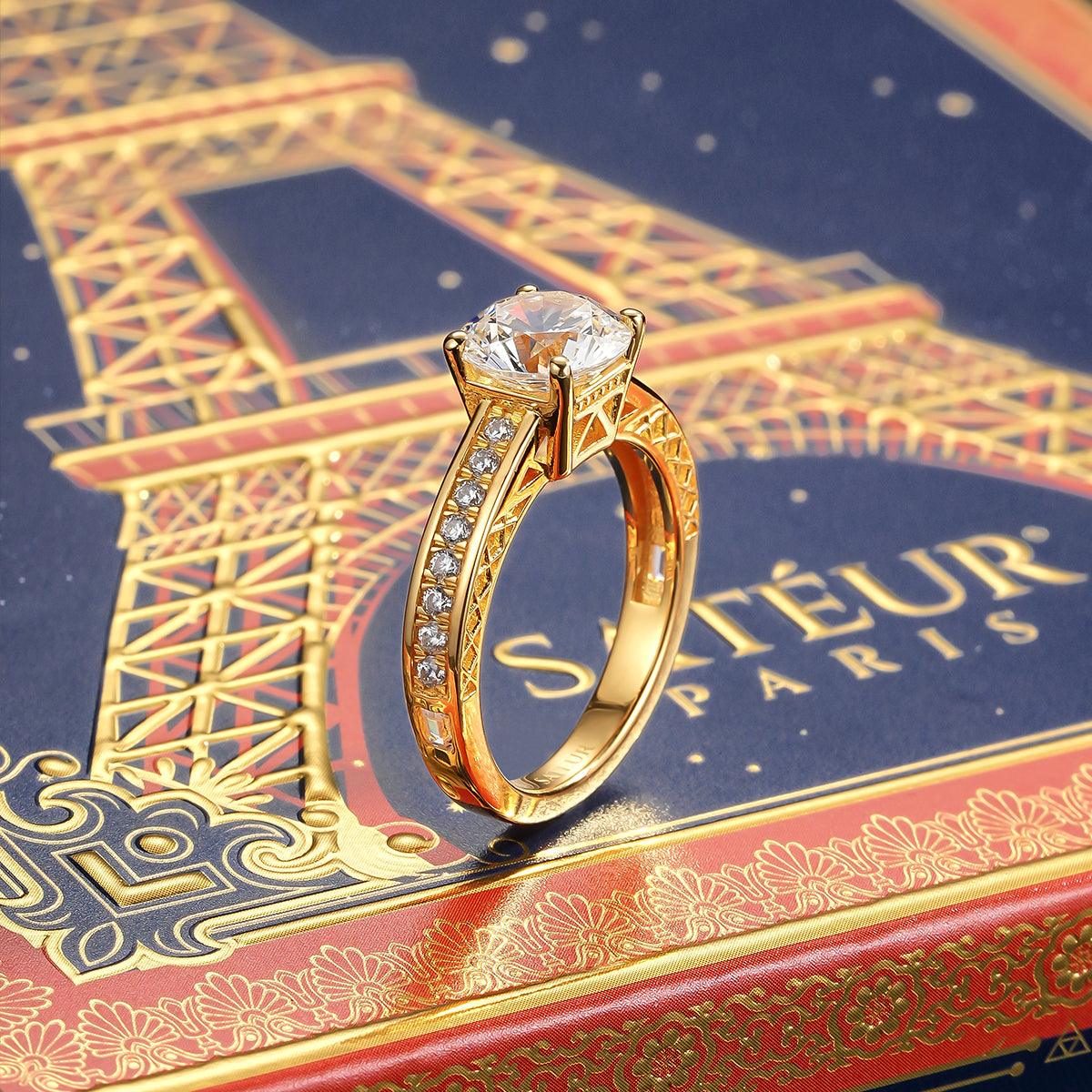
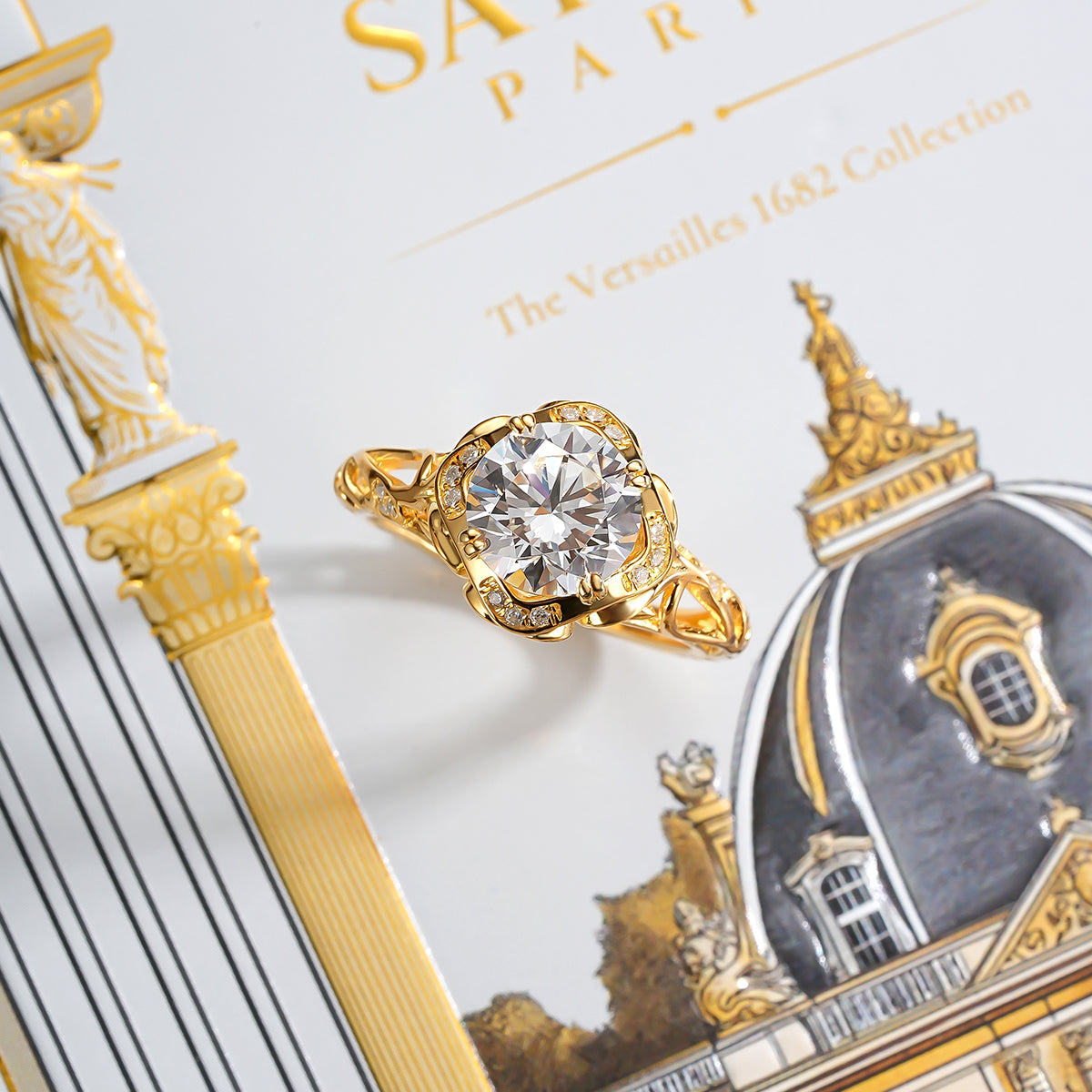
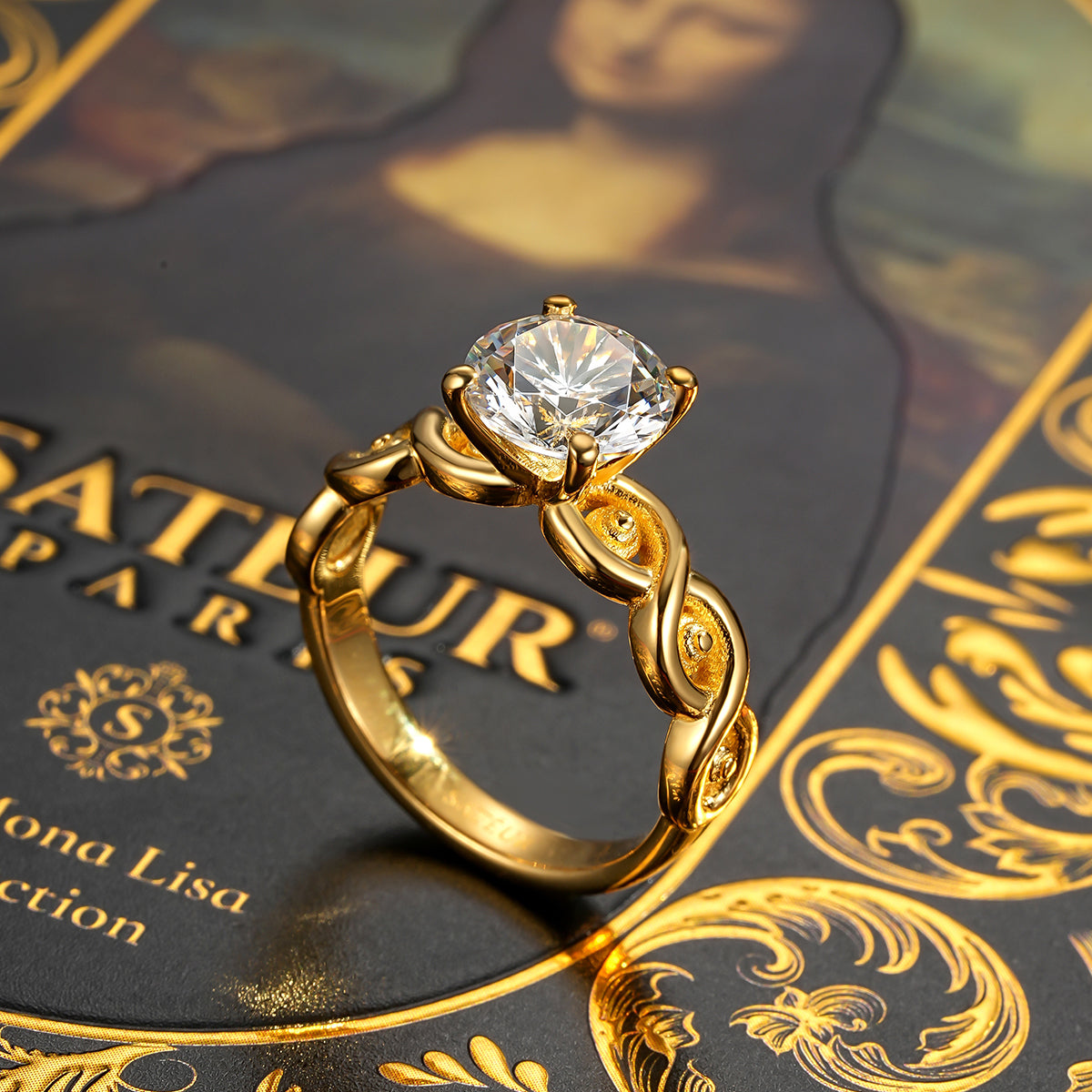
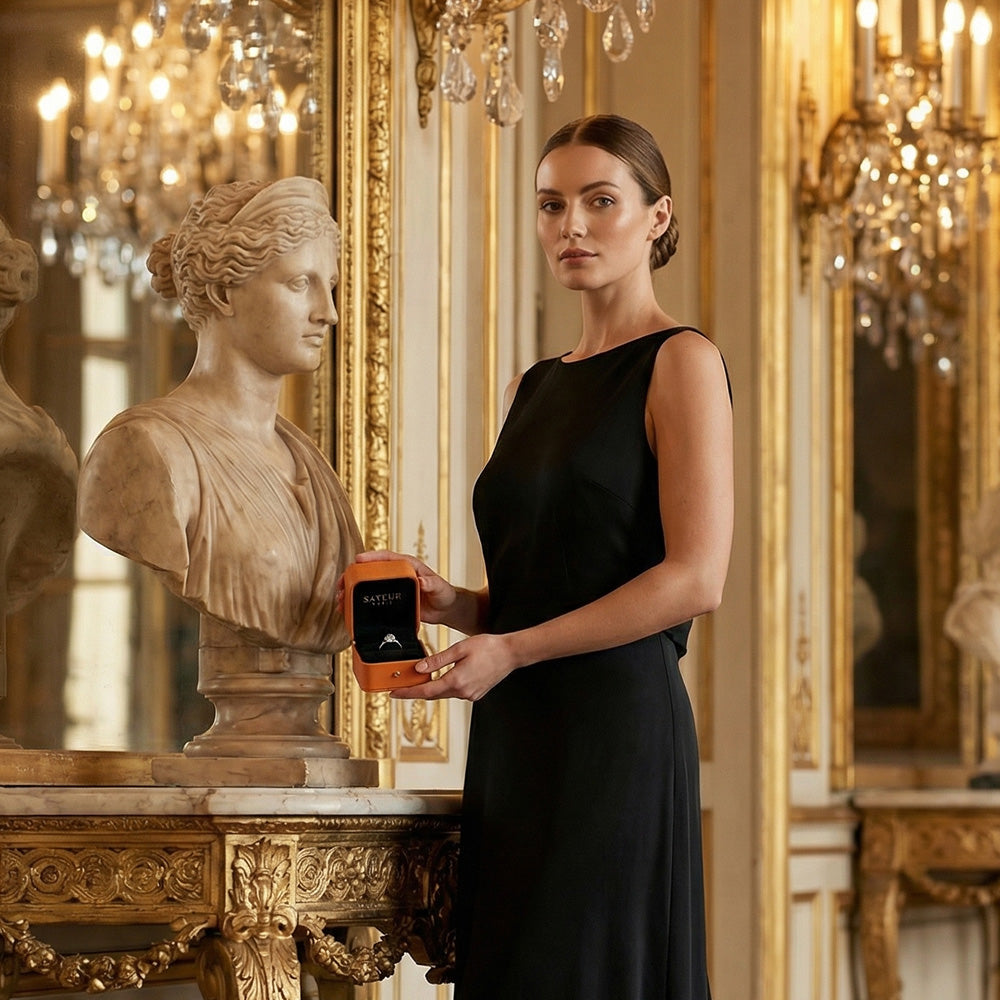
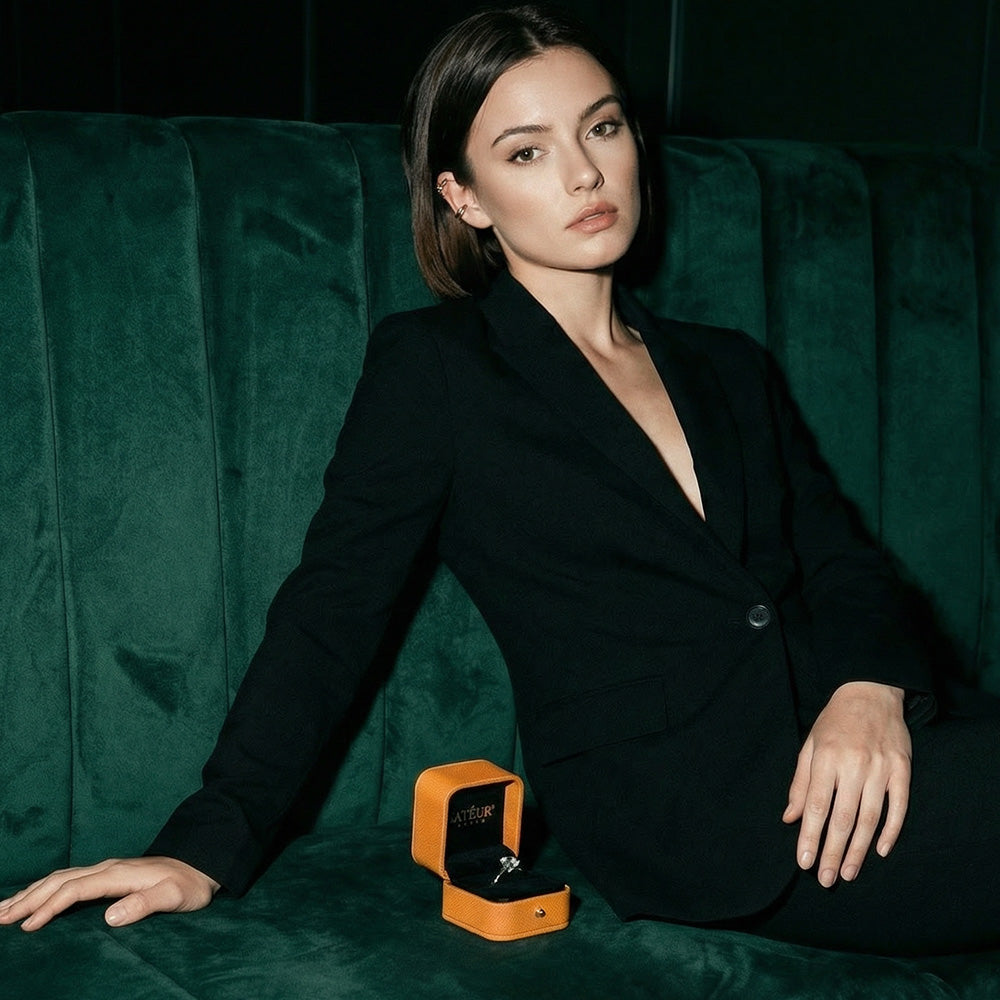

Cubic zirconia engagement rings are the most affordable entry point in the diamond-simulant category — colourless, lab-created stones available in sterling silver and gold-flashed settings at very low prices. The honest trade-off: CZ rates 8–8.5 on the Mohs scale and typically shows visible clouding within one to three years of daily wear. For a ring worn every day, that matters.
Key Takeaways
- Cubic zirconia rates 8–8.5 on the Mohs scale; visible surface clouding typically develops within one to three years of daily wear.
- Premium diamond simulants such as Satéur Gems® are engineered to D-E colour and Excellent cut with permanent optical stability.
- Diamond simulants can produce fire approximately 2.4 times that of mined diamonds, creating visible rainbow sparkle under directional light.
- Sterling silver and 18k gold finish settings are the standard bases for solitaire, halo, and three-stone diamond-simulant designs.
- Satéur diamond-simulant engagement rings start from $68 — approximately 1% of the mined diamond price for an equivalent appearance.

Cubic Zirconia Engagement Rings in Sterling Silver and Gold
Cubic zirconia is synthesised from zirconium dioxide, commercially produced since the 1970s. CZ stones are colourless when new, with a refractive index of 2.15–2.18 and dispersion of 0.058–0.066. The sparkle is reasonable at the price; the limitation is durability. At Mohs 8–8.5, everyday contact accumulates fine surface scratches, and most CZ rings show visible cloudiness within one to three years of daily wear.
CZ makes sense as a travel ring, a fashion piece, or a low-stakes placeholder. As a permanent engagement ring, the degradation timeline is worth understanding before purchase. See our guide on cubic zirconia as a diamond alternative.
Why Choose a Diamond Simulant Engagement Ring

Diamond simulants deliver the visual presence of a mined diamond at a fraction of the price. The meaningful differences across the category are durability and longevity — not initial appearance, which is strong across all tiers when new.
| Property | Mined Diamond | Diamond Simulant (Gems®) | Cubic Zirconia |
|---|---|---|---|
| Mohs hardness | 10 | ~8.8–9.25 | 8–8.5 |
| Colour grade | D–Z range | D-E (engineered) | D-E (initial) |
| Longevity | Permanent | Permanent | 1–3 years (clouding) |
| Typical cost (1ct) | $4,000–$10,000+ | From $68 | $5–$50 |
For the full comparison, see our guide on cubic zirconia and sterling silver rings.
Satéur Gems® Diamond Simulants: The Look, the Durability, the Value

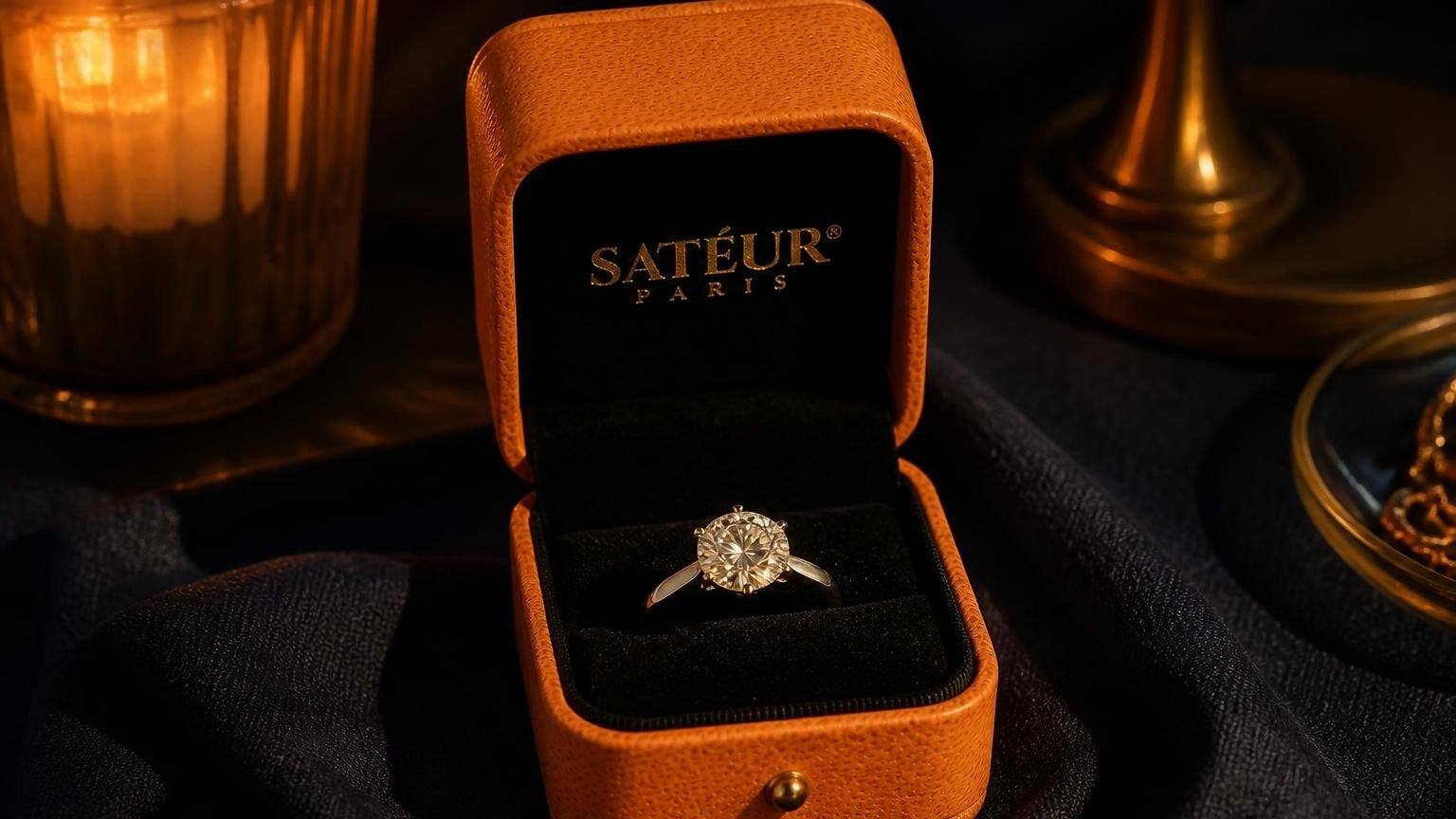
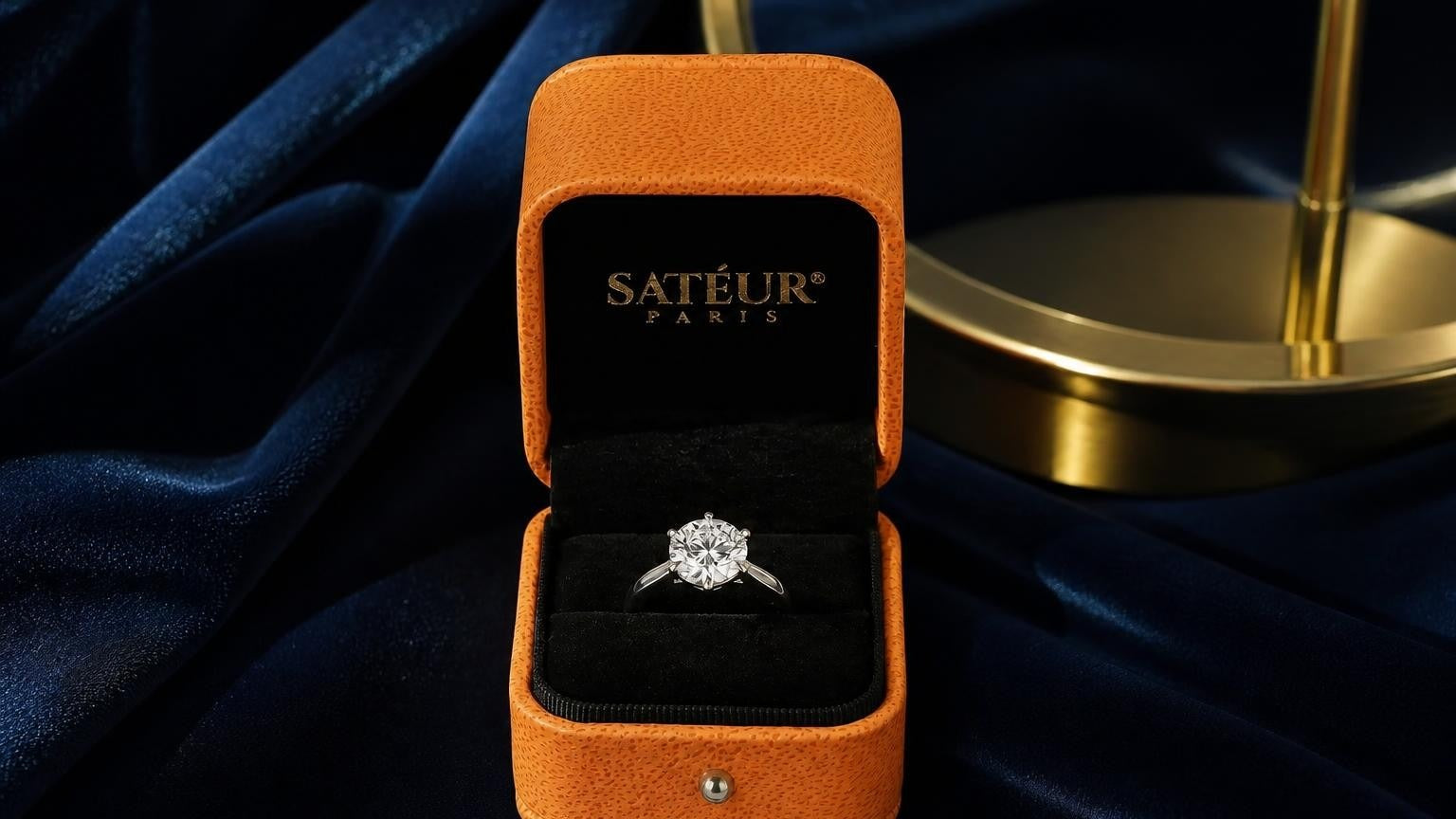
Satéur Gems® are a trademarked diamond simulant engineered to D-E colour and Excellent cut. They deliver the clean white brilliance of a flawless diamond — visually, with the naked eye — and hold that appearance permanently. No clouding, no replacement cycle.
A mined diamond of equivalent appearance costs $4,000–$10,000 per carat. Satéur Gems® engagement rings start from $68 — approximately 1% of that price, set in an 18k gold finish. Browse the full range at Satéur engagement rings.
Engagement Ring Styles: Solitaire, Halo, and Three-Stone
Diamond-simulant rings are available across classic settings. A solitaire places the full focus on the centre stone — round brilliant cut maximises visual size. A halo surrounds the centre gem with accent stones, amplifying overall brilliance. A three-stone setting flanks the centre gem with matching or contrasting side stones. All three styles work in both CZ and premium simulant tiers.
Metal Options: Sterling Silver and Gold-Flashed Settings
Sterling silver (925) is the most affordable base and pairs cleanly with colourless stones. Gold-flashed sterling adds warmth and resists tarnishing better than plain silver. White gold finish provides a neutral setting that works across all skin tones. For CZ, sterling silver is standard. For premium simulants, an 18k gold finish completes the aesthetic.
Carat Weight and Cut Clarity in Diamond-Look Stones

Cut quality has an outsized effect on brilliance in any simulant. An Excellent-cut 1.0ct stone outperforms a poorly cut 2.0ct stone in light return. Satéur Gems® are cut to Excellent grade as standard. For CZ, cut quality varies by vendor and is worth checking before purchase.
How Diamond Simulants Compare to Mined Diamonds
To the naked eye, a well-cut D-E colour simulant is visually comparable to a mined diamond of equivalent size under normal lighting. The differences are measurable in a laboratory, not visible on a finger. The practical distinction is price and long-term durability — not initial appearance. For the full data comparison, see our guide on diamond vs cubic zirconia differences.

Satéur Destinée Ring™
The look of a flawless diamond — from $138.
D-E colour · Excellent cut · 18k gold finish
Free worldwide delivery. 30-day returns. Lifetime Satéur Care.
Shop the Destinée RingFree worldwide shipping · 30-day returns · Lifetime Satéur Care
FAQ: Diamond Simulants and Engagement Ring Care
What is a diamond simulant engagement ring?
A diamond simulant engagement ring uses a lab-created gem engineered to resemble the appearance of a mined diamond — colourless, brilliant, cut to comparable standards. Simulants are produced in controlled laboratory conditions and available at a fraction of mined diamond prices. Common options include cubic zirconia at the budget end and premium trademarked simulants such as Satéur Gems® at the higher-durability tier.
How do diamond simulants compare to mined diamonds in appearance?
A well-cut D-E colour diamond simulant is visually comparable to a mined diamond of equivalent size to the naked eye under normal conditions. Both return clean white brilliance. Measurable optical differences exist under laboratory instruments; they are not visible on a finger at ordinary viewing distances.
Are diamond simulants durable enough for an engagement ring?
It depends on the specific simulant. Cubic zirconia at Mohs 8–8.5 develops visible cloudiness from surface scratching within one to three years of daily wear. Premium simulants with Mohs ratings above 8.8 hold their optical character permanently. For a ring worn every day, the hardness rating matters more than the simulant category label.
What carat weights and cuts are available in diamond-simulant engagement rings?
Diamond simulant engagement rings are available from 0.5ct to 8ct and beyond, in round brilliant, oval, emerald, cushion, and pear cuts. Round brilliant is most popular for maximising fire and visual size. Excellent cut grade delivers the best light return from any simulant stone.
How should I care for a diamond-simulant ring?
Mild soap and warm water with a soft brush is sufficient for regular cleaning. Store separately from harder materials to avoid contact scratches. For CZ specifically, avoid prolonged exposure to harsh chemicals and chlorine, which accelerate surface degradation.
What metals work best with diamond-simulant engagement rings?
18k gold finish and white gold finish are the most popular pairings — warm or neutral metal complements the colourless stone well. Sterling silver (925) is the most affordable option and pairs cleanly, though it requires periodic polishing. Platinum-plated silver delivers the cool tone of platinum at a lower price.















Leave a comment
This site is protected by hCaptcha and the hCaptcha Privacy Policy and Terms of Service apply.