



Moissanite and morganite sit at opposite ends of the gemstone spectrum: moissanite is a near-colourless lab-created gemstone rated 9.25 on the Mohs hardness scale, built for durability and colourless brilliance; morganite is a naturally occurring peach-pink beryl rated 7.5–8 Mohs, prized for its warm romantic hue but requiring more care in daily wear. Both are legitimate choices for an engagement ring — the decision comes down to the look you want and how actively you plan to wear it.
Key Takeaways
- Moissanite rates 9.25 on the Mohs hardness scale, making it highly resistant to scratching in daily wear.
- Morganite typically grades 7.5–8 Mohs, requiring more careful wear and maintenance.
- Moissanite exhibits approximately 2.4× the fire of a diamond, creating vivid rainbow sparkle under certain light.
- Morganite presents warm pink to peach hues; moissanite is optically colourless in the D–E colour range.
- Satéur's moissanite rings start from $68, delivering the look of premium gemstones at a fraction of traditional diamond costs.
Moissanite vs Morganite at a Glance
The two gems share almost nothing in common beyond being popular diamond alternatives. Moissanite is silicon carbide, originally discovered in meteorite craters, now grown in laboratories to strict optical specifications. Morganite is a pink variety of the mineral beryl — the same family as emerald and aquamarine — found naturally in Brazil, Madagascar, and Afghanistan.
| Property | Moissanite | Morganite |
|---|---|---|
| Mineral type | Silicon carbide (lab-created) | Beryl (natural or lab-grown) |
| Mohs hardness | 9.25 | 7.5–8 |
| Colour | Colourless (D–E range) | Peach to pink |
| Refractive index | 2.65–2.69 | 1.57–1.60 |
| Fire (dispersion) | ~2.4× that of diamond | Soft, pastel-tinged sparkle |
| Typical price range | $100–$1,500+ | $150–$2,500+ |
| Best for | Daily wear, colourless brilliance | Romantic aesthetics, softer look |
Morganite: Soft Pink Elegance
Morganite occupies a distinctive niche in engagement ring jewellery: its peach-to-pink colouring produces a warmer, softer look than any colourless stone. Named after financier and gem collector J.P. Morgan, it has been a fixture in romantic fine jewellery since the early 20th century.
Optical character
The colour in morganite comes from trace amounts of manganese within the beryl crystal. Natural morganite ranges from pale blush to deeper salmon-peach; heat treatment is standard practice to remove any orange or yellow overtones, intensifying the pink. Its refractive index of 1.57–1.60 produces a gentle, pastel-tinged sparkle rather than the vivid fire associated with moissanite or diamond.
Durability considerations
At 7.5–8 on the Mohs scale, morganite is meaningfully softer than moissanite. Household dust contains quartz particles that rate 7 Mohs — meaning daily contact with dust is enough to accumulate micro-scratches on morganite's surface over time. For daily wear, a protective setting style (bezel or halo) is advisable, and periodic professional cleaning is recommended to maintain its surface clarity.
Maintenance
Morganite should be cleaned with warm water and mild soap only — ultrasonic cleaners can fracture inclusions or loosen settings. Remove it before activities involving impact, chemicals, or abrasive surfaces. With attentive care, morganite retains its colour and appearance for decades; without it, surface dulling becomes visible.
Moissanite: Colourless Brilliance and Durability
Moissanite is a lab-created gemstone of silicon carbide, grown to produce a colourless stone with exceptional optical and physical properties. Its Mohs rating of 9.25 makes it the hardest gemstone in common commercial use after diamond (10 Mohs), and its refractive index of 2.65–2.69 exceeds both diamond (2.42) and morganite.
Fire and brilliance
Moissanite's high refractive index and strong dispersion (0.104, versus diamond's 0.044) produce vivid rainbow flashes under directional light — approximately 2.4× the fire of a diamond. This is intentional: moissanite was engineered for maximum optical performance. Under diffused light the effect is more restrained, presenting clean white brilliance.
Durability in practice
At 9.25 Mohs, moissanite resists the everyday abrasion that affects morganite. It will not cloud, scratch, or change optically over time. Mild soap and warm water is sufficient maintenance, and the stone tolerates ultrasonic cleaning without risk. For buyers who wear their ring continuously — including during exercise, cooking, or manual work — moissanite's durability advantage is practical and significant.
Colour
Lab-created moissanite is produced in the D–E colourless range, meaning it exhibits the clean white appearance associated with premium diamonds. Some older or lower-grade moissanite shows faint yellow or grey tinting under certain light, but modern lab-grown stones at reputable retailers are consistently colourless. If colourless brilliance is the priority, moissanite delivers it reliably.
Key Differences in Appearance
The visual difference between moissanite and morganite is substantial — they do not look similar. Moissanite is colourless and optically intense; morganite is pink-peach and visually soft. The choice is primarily aesthetic rather than technical.

- Moissanite reads as colourless to the naked eye, with vivid white and rainbow fire flashes that draw attention under directional light.
- Morganite reads as warm pink-to-peach, with softer pastel sparkle that harmonises with rose-gold settings and bridal aesthetics.
- Side by side, visually, the two gems are immediately distinguishable — there is no scenario in which moissanite looks like morganite or vice versa.
- Moissanite's fire is notably more intense than morganite's, particularly under bright or directional light.
Neither gem is a visual substitute for the other. The decision should be based entirely on which colour and optical character you prefer for your ring.
Durability and Longevity Comparison
For an engagement ring worn daily over decades, hardness is a practical specification rather than an abstract number. The 1.25–1.75-point Mohs difference between moissanite and morganite represents a meaningful real-world gap.

Daily abrasion
Common dust particles contain quartz (7 Mohs), which will gradually scratch morganite but not moissanite. Over years of daily wear, this produces micro-abrasion on morganite surfaces that diffuses light — the stone's sparkle softens and the surface loses clarity. Moissanite at 9.25 Mohs is unaffected by the same conditions.
Setting recommendations
Morganite benefits from protective settings — bezel or halo styles guard the girdle from impact, and beryl is more prone to cleavage under sharp knocks than silicon carbide. Moissanite is suitable in any setting style, including minimal solitaires with full gem exposure, without durability compromise.
Price and Value
Both gems are significantly more affordable than natural diamond equivalents of similar visual size, though their pricing dynamics differ.
Moissanite pricing
Lab-created moissanite is produced at scale, keeping prices consistent and relatively low. A 1-carat moissanite equivalent typically costs $150–$600 depending on cut quality and brand — compared to $4,000–$10,000 for a comparable mined diamond. The price per carat does not rise dramatically with size, as it does with natural stone.
Morganite pricing
Natural morganite of gem quality at larger carat weights commands prices that can approach or exceed those of moissanite, particularly in fine specimens with deep, even colour. Heat-treated stones of moderate colour are available in the $150–$500 range for 1-carat equivalents. Lab-grown morganite, now commercially available, brings costs down further.
Long-term cost of ownership
Moissanite's durability advantage translates to lower long-term ownership cost. Morganite's additional maintenance — professional cleaning and periodic re-polishing — adds incremental cost over a lifetime of daily wear.
Satéur's Moissanite Rings: Exceptional Value
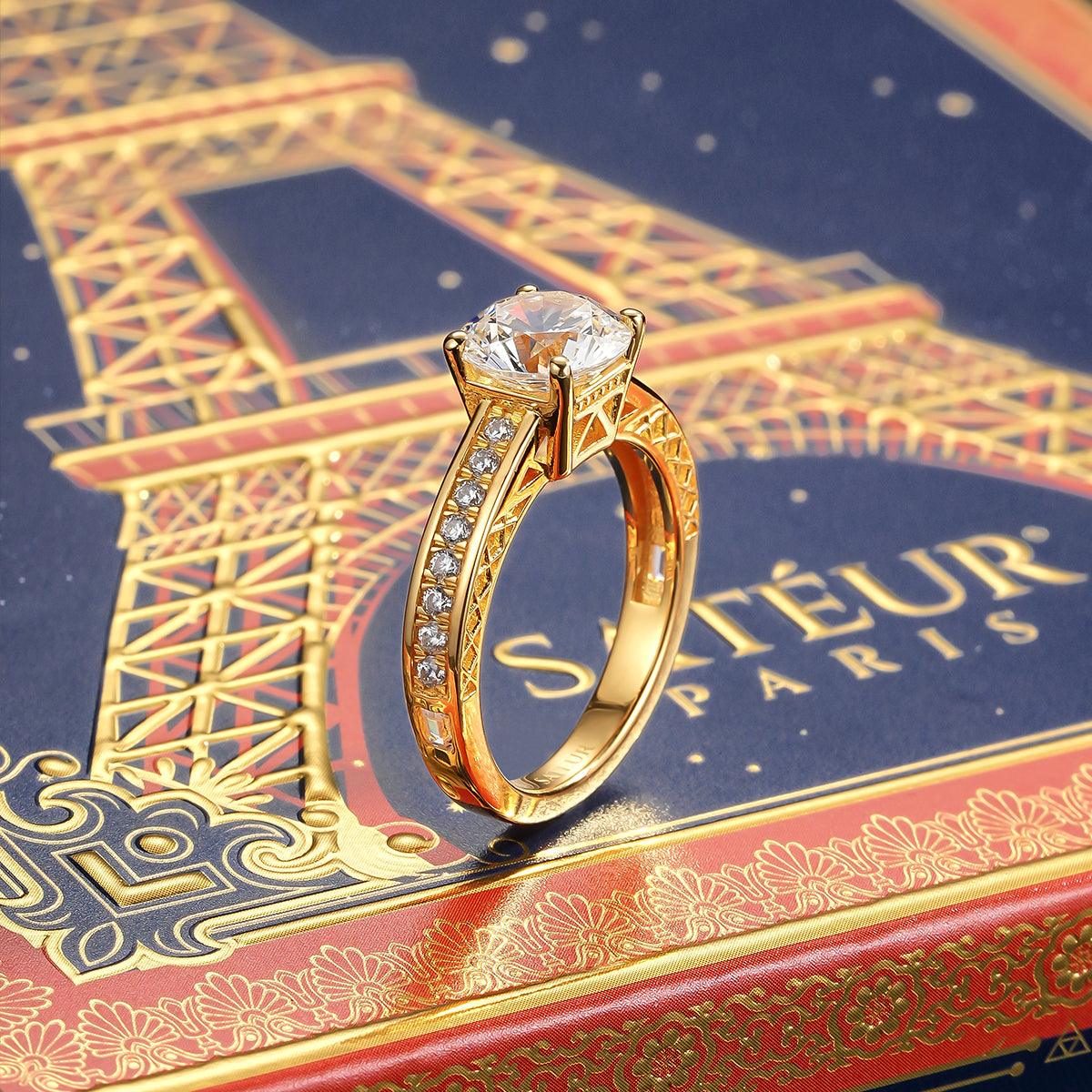
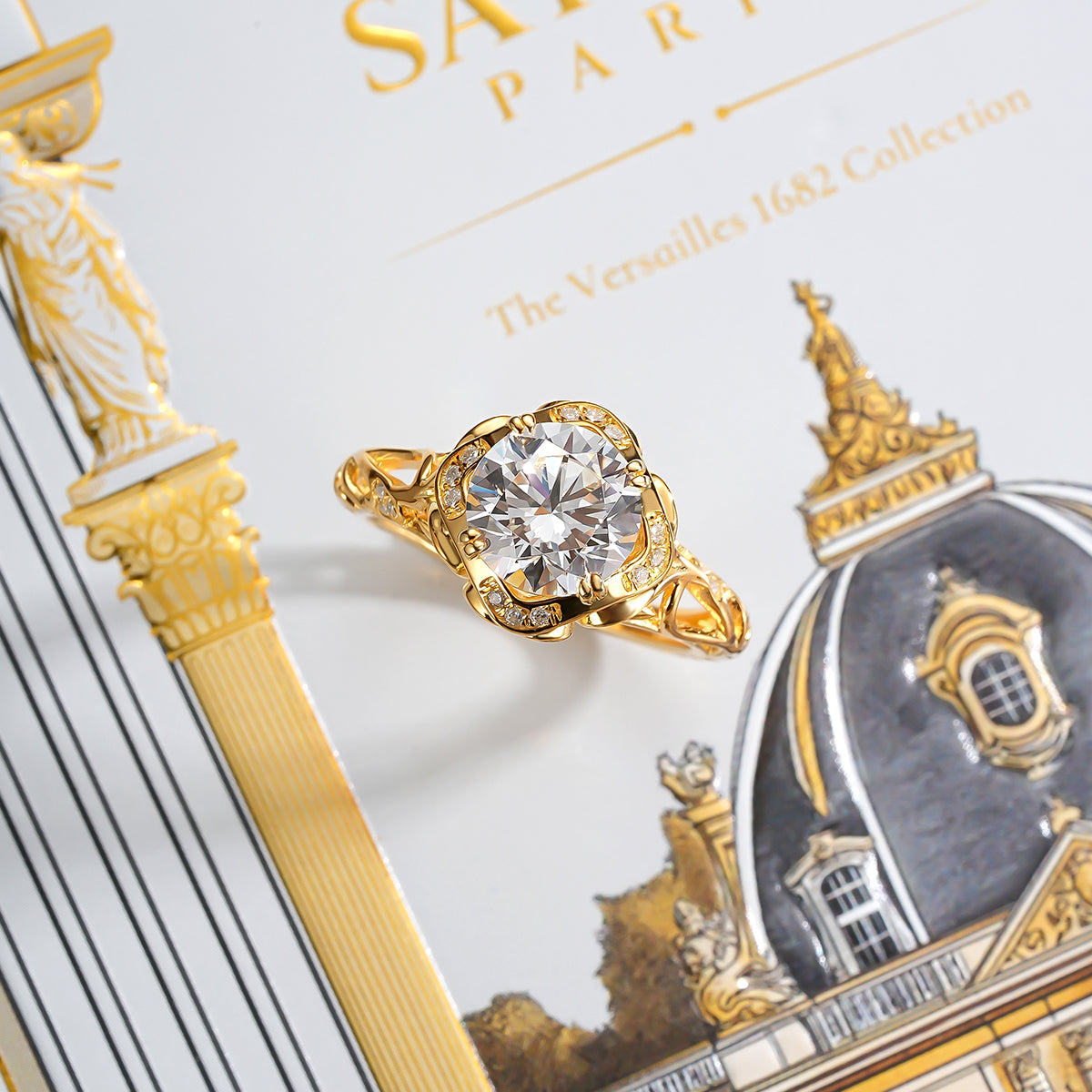
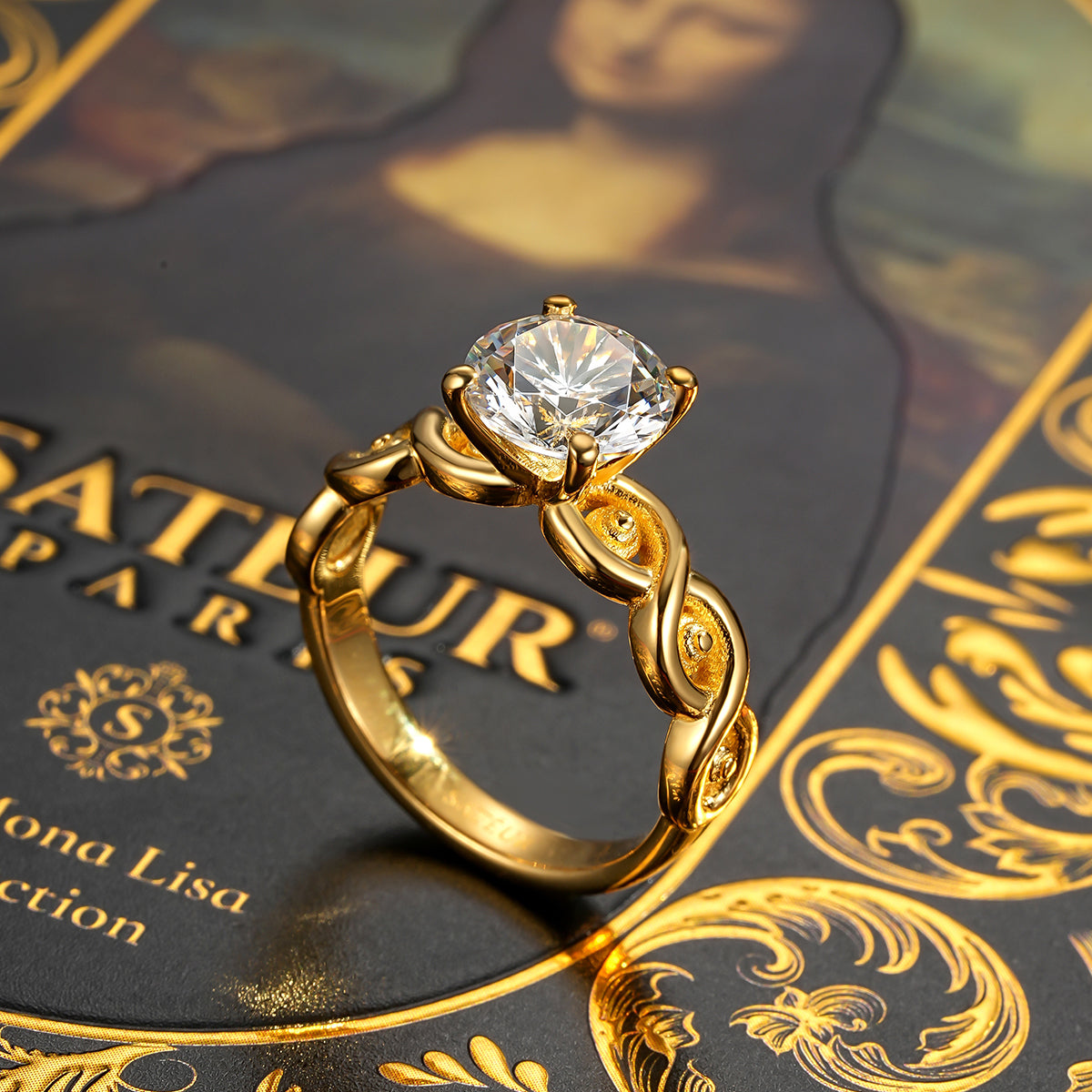
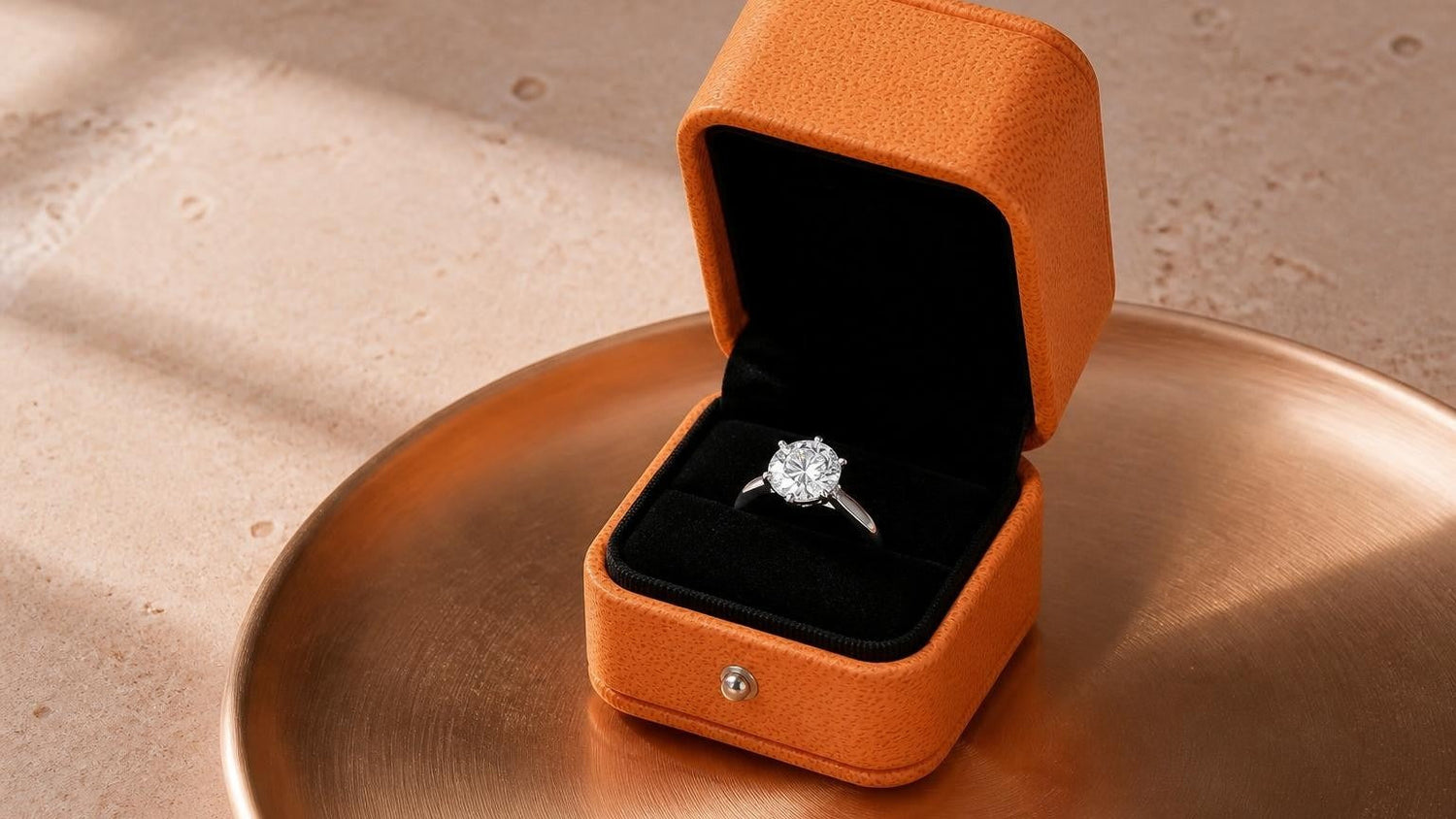
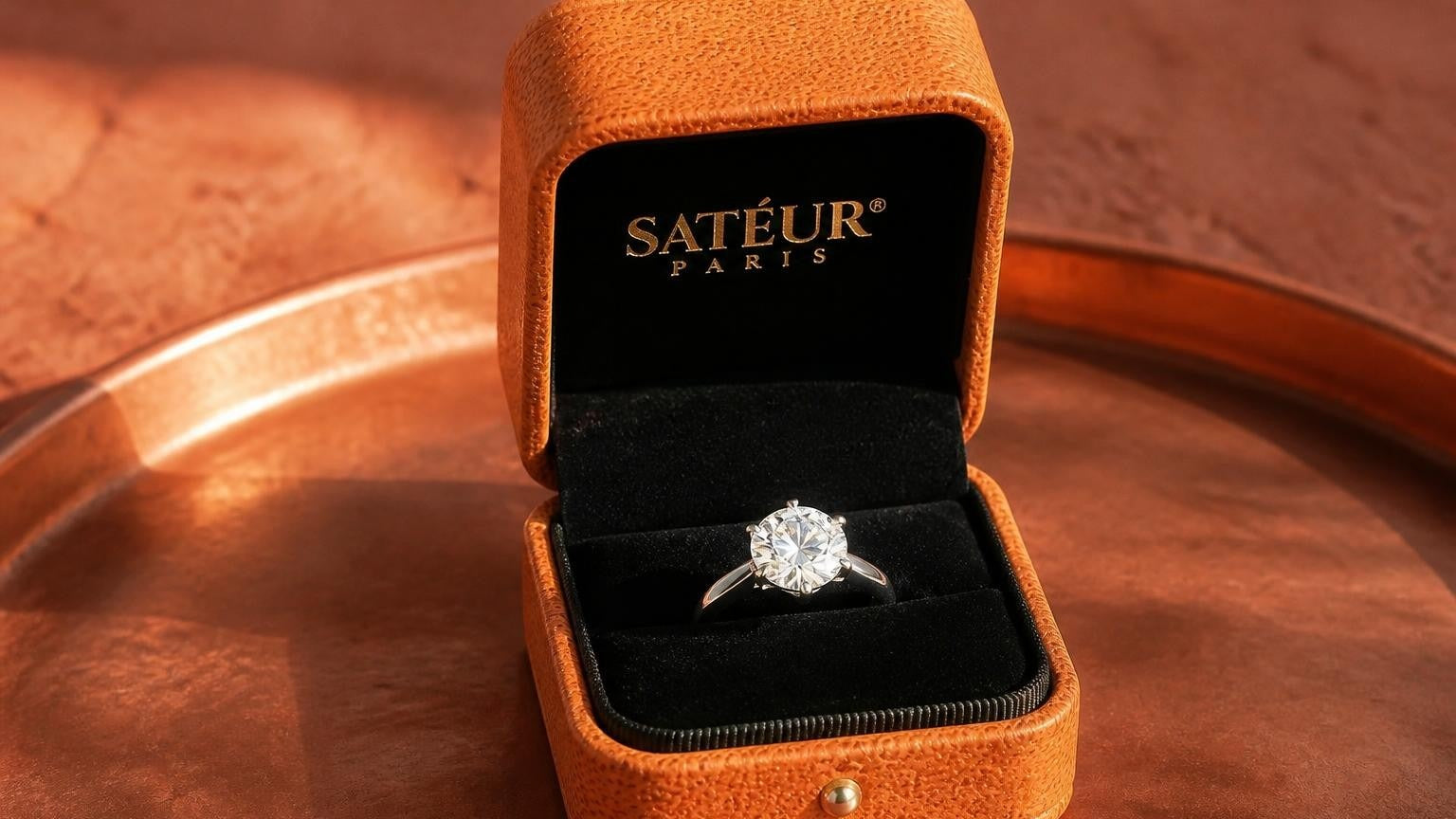
Satéur is a jewellery brand built around a direct comparison: the optical presence of a premium diamond ring, without the premium diamond price. The brand's moissanite rings collection opens from $68, set in 18k gold finish with colourless moissanite in the D–E range.

The flagship Satéur Destinée Ring™ — a round-cut moissanite in a classic solitaire setting — is designed to deliver the clean white brilliance and proportional presence of a high-quality diamond ring. Compare it to a mined diamond ring of similar appearance: the visual result is indistinguishable to the naked eye, at a fraction of the cost.
For buyers comparing moissanite and morganite who prioritise durability and colourless brilliance, the Satéur moissanite range offers a well-specified option. If the appeal of morganite is its pink colouring — that is a genuine aesthetic preference that a colourless moissanite cannot replicate. The comparison is most useful for buyers still deciding between a colourless-brilliant look and a warm-pink look at a similar price point.
If you are already set on a colourless diamond-look ring, Satéur's moissanite collection is worth examining alongside mined diamond alternatives. For more detail on how moissanite compares against the broader market, see the moissanite vs diamond comparison and the broader guide to moissanite, diamond, and lab diamond.
Which Gemstone Is Right for Your Engagement Ring?
The moissanite vs morganite decision is primarily one of aesthetic preference, with durability as a secondary consideration.
- Choose moissanite if: you want a colourless diamond-look ring, plan to wear it daily in varied conditions, and value a stone that requires no special maintenance.
- Choose morganite if: the peach-pink colour is specifically what appeals to you, you are comfortable with the additional care requirements, and the softer optical character suits your aesthetic.
- Budget note: at comparable quality levels, moissanite and morganite sit in similar price brackets — moissanite's advantage is durability rather than price.
- Setting note: morganite looks particularly strong in rose-gold settings, which complement the pink tones. Moissanite works across all metal colours — white gold, yellow gold, rose gold, platinum.
Neither stone is a compromise on the other. They are genuinely distinct gems with different optical characters, suited to different preferences. For a detailed comparison of moissanite against diamond and lab-grown alternatives, see the moissanite vs diamond guide.

Satéur Destinée Ring™
The look of a flawless diamond — from $138.
D-E colour · Excellent cut · 18k gold finish
Free worldwide delivery. 30-day returns. Lifetime Satéur Care.
Shop the Destinée RingFree worldwide shipping · 30-day returns · Lifetime Satéur Care
Frequently Asked Questions
What is the main visual difference between moissanite and morganite?
Moissanite is colourless with vivid rainbow fire and high brilliance; morganite is peach-to-pink with softer, warmer sparkle. The visual difference is immediate and substantial — they do not resemble each other. Moissanite suits buyers who want a diamond-like colourless ring; morganite suits buyers specifically seeking a pink or blush-toned stone.
Which gemstone is more durable for everyday engagement ring wear?
Moissanite is significantly more durable. At 9.25 Mohs it resists the everyday abrasion that gradually dulls morganite (7.5–8 Mohs). For a ring worn daily through varied activities, moissanite requires no special maintenance; morganite benefits from protective settings and more attentive care over time.
Does moissanite look like a diamond to the naked eye?
Moissanite is visually similar to diamond to the naked eye — both are colourless with strong brilliance. Moissanite produces more vivid rainbow fire than diamond under directional light, which is the most noticeable visual difference to a knowledgeable observer. Under normal wear conditions, the two stones look closely comparable visually to most people.
What is the price difference between moissanite and morganite rings?
At comparable carat sizes, quality moissanite and morganite rings occupy similar price brackets — both sit well below natural diamond equivalents. Satéur moissanite rings start from $68. Fine natural morganite with deep, even colour can command premiums at larger sizes. Lab-grown versions of both stones are available at the most accessible price points.
Can morganite be used as a primary stone in an engagement ring?
Yes, morganite is a recognised and commercially established engagement ring stone. Its main practical consideration is hardness: at 7.5–8 Mohs, daily wear will accumulate fine surface scratching over years. A bezel or halo setting provides some protection. With appropriate care and periodic professional cleaning, morganite performs well as an engagement ring centrepiece.
Which gemstone requires more maintenance over time?
Morganite requires more maintenance. Its lower Mohs rating means surface scratching accumulates with daily use — periodic professional re-polishing or cleaning restores clarity. It should also be removed for high-impact activities and cleaned with mild soap only (no ultrasonic cleaners). Moissanite at 9.25 Mohs is maintenance-free beyond basic warm-water cleaning.
Choosing Between Moissanite and Morganite
The practical summary: if the pink colour of morganite is what draws you, choose morganite — it is a genuine, distinctive gem with a warm aesthetic that no colourless stone replicates. If the appeal is a diamond-look colourless stone with maximum durability and minimal upkeep, moissanite is the clearer choice.
Price and durability both favour moissanite. Aesthetic individuality and the specific pink-peach look favour morganite. Both are established, commercially proven engagement ring choices.















Leave a comment
This site is protected by hCaptcha and the hCaptcha Privacy Policy and Terms of Service apply.