



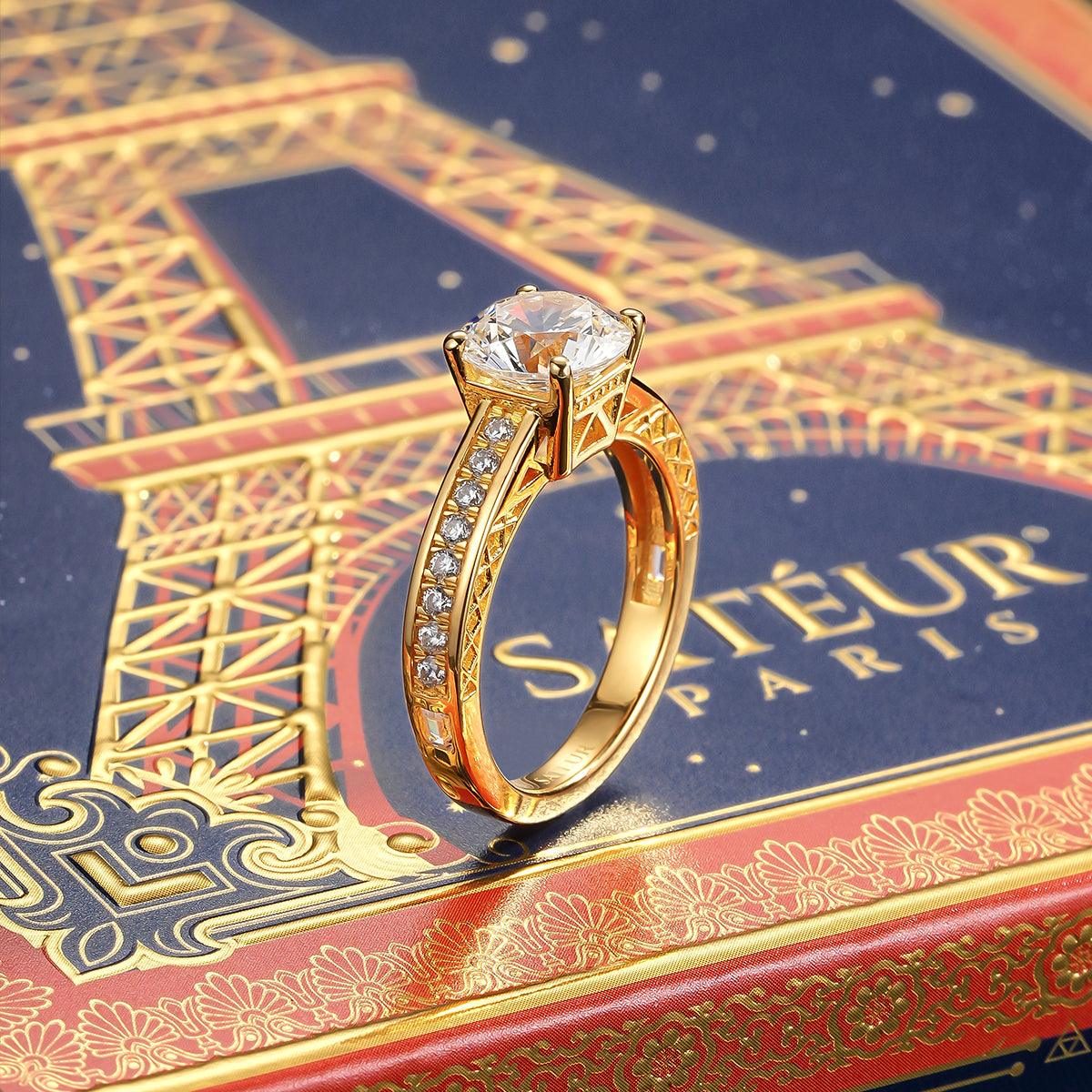
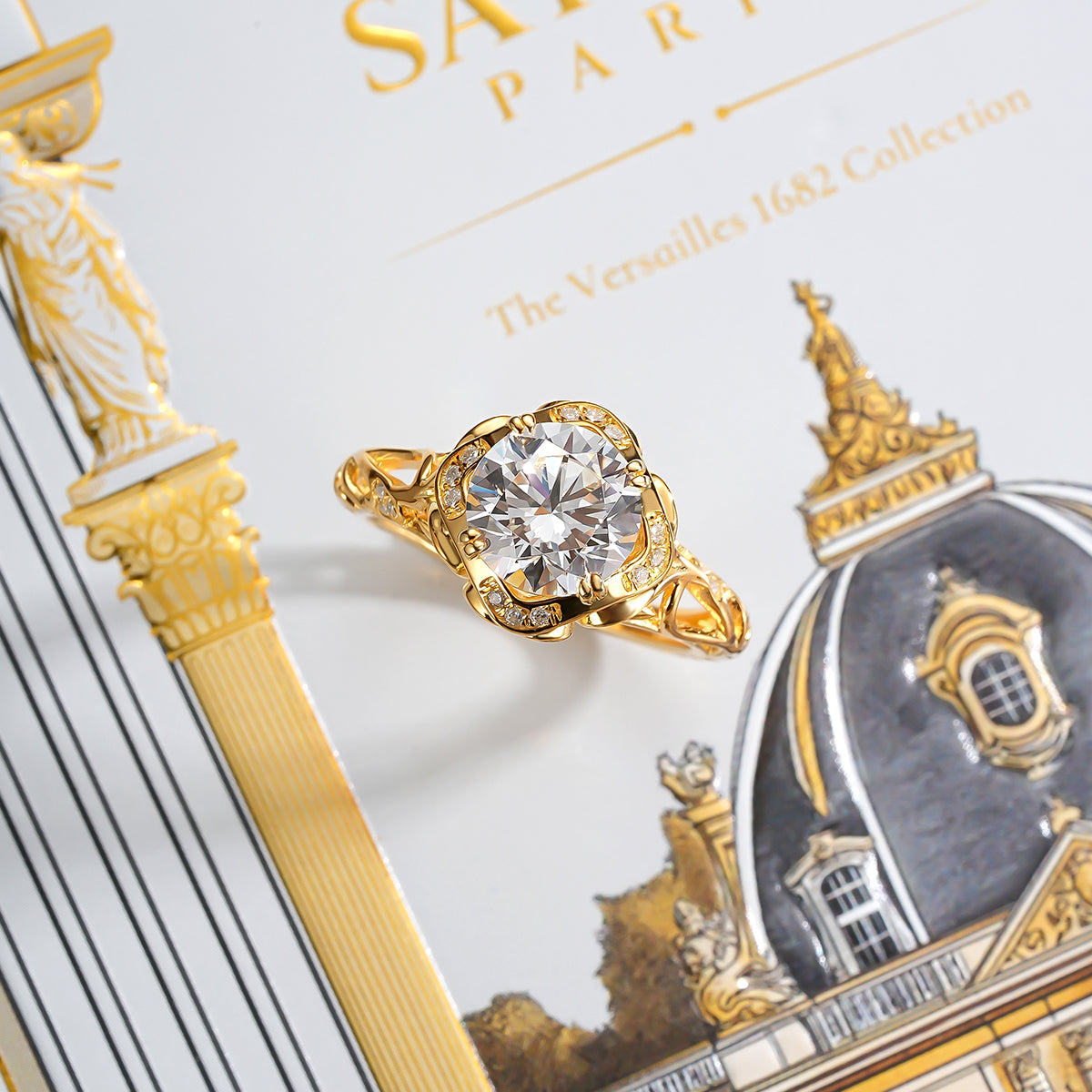
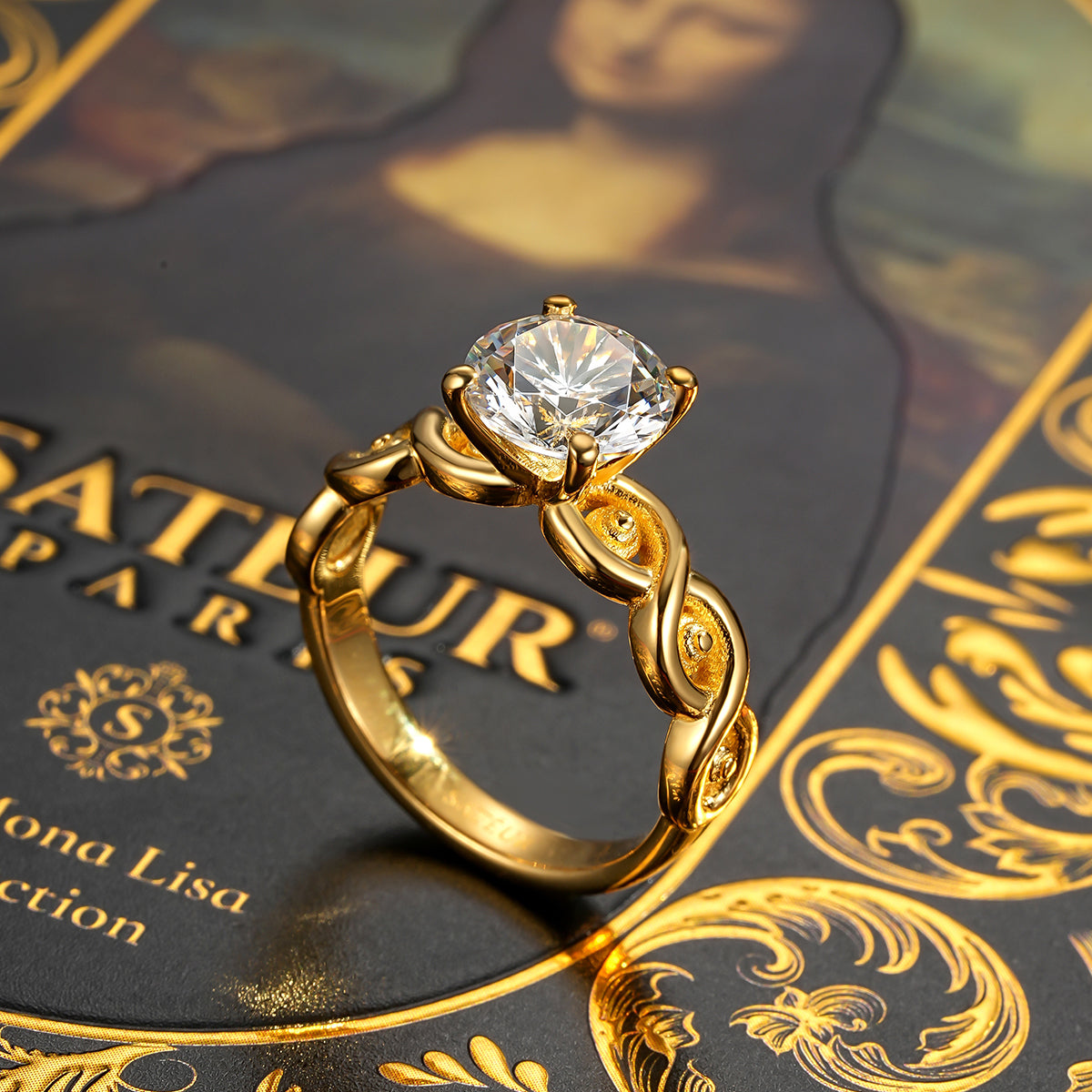
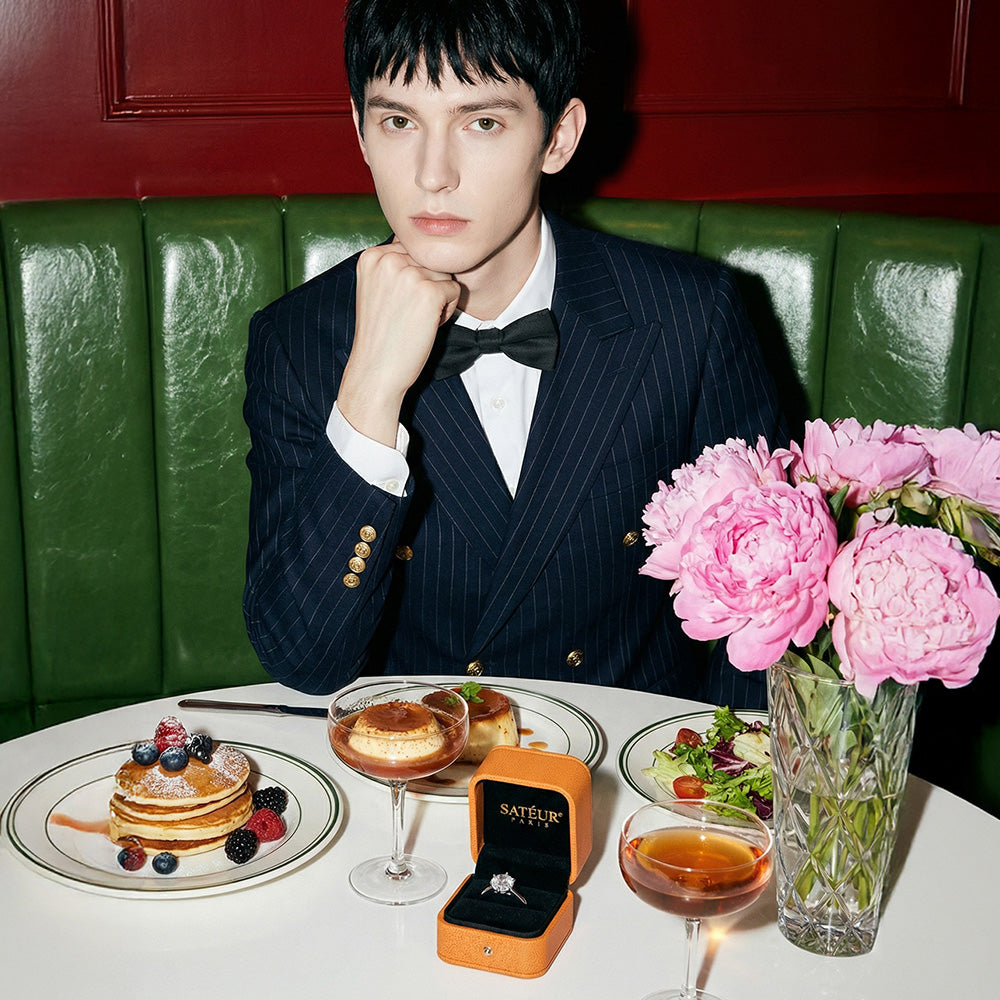

Cubic zirconia is a diamond simulant — a lab-created stone engineered to replicate the look of diamond — not a fake version of a real stone. It rates 8–8.5 on the Mohs hardness scale versus diamond's 10, costs a fraction of the price, and typically shows visible cloudiness within one to three years of daily wear. Whether that trade-off works depends on how you plan to wear it.
Key Takeaways
- Cubic zirconia is a lab-created gemstone of zirconium dioxide — a diamond simulant, not a counterfeit.
- At Mohs 8–8.5, cubic zirconia will scratch and cloud with daily wear, typically within one to three years.
- CZ's light dispersion (fire ~1.9–2.0) produces some sparkle initially; surface degradation dulls it over time.
- Diamond simulants engineered to D–E colour with Mohs hardness above 9 deliver lasting visual performance without the mined-diamond price.
- Satéur Gems® diamond simulants start from $138 — approximately 1% of a comparable mined diamond's price.
What Is Cubic Zirconia?
Cubic zirconia (CZ) is a synthesised crystalline form of zirconium dioxide, first produced commercially in the 1970s. It is a diamond simulant — meaning it replicates the visual appearance of diamond — but is chemically and structurally distinct from diamond, which is pure carbon.
CZ is not a fake diamond in the sense of being mislabelled. Reputable retailers sell it openly as cubic zirconia. The "fake" framing persists because consumers compare it to diamond on appearance alone; assessed on its own terms, it is a genuine lab-created gemstone with consistent optical properties when new.

Cubic Zirconia vs Diamond: Key Visual Differences
Side by side, cubic zirconia and diamond differ in ways that are subtle at first glance and more apparent under scrutiny or with time.
| Property | Cubic Zirconia | Diamond |
|---|---|---|
| Mohs hardness | 8–8.5 | 10 |
| Refractive index | 2.15–2.18 | 2.42 |
| Fire (dispersion) | ~1.9–2.0 | Benchmark |
| Density | ~5.6–6.0 g/cm³ (heavier) | ~3.5 g/cm³ |
| Initial colour | D–E (when new) | D–Z range |
| Long-term clarity | Degrades 1–3 years | Permanent |
To the naked eye, a new CZ in a quality setting looks bright and clear. The distinguishing factor is time: the surface of cubic zirconia accumulates microscopic scratches from daily contact, progressively reducing its reflectivity. A diamond's surface does not degrade under normal wear.

Durability: Why Cubic Zirconia Requires Regular Replacement
The Mohs Scale in Practice
Mohs 8–8.5 means CZ is harder than most materials you encounter day to day — glass, steel, most abrasives. What it does not withstand well is cumulative contact with particles of quartz and corundum, which are common in household dust and outdoor environments. Both are Mohs 7–9, sufficient to abrade CZ's surface gradually.
Cloudiness Over Time
The result is a stone that loses its early brilliance. Micro-scratches scatter light rather than reflecting it cleanly, producing the cloudy, dull appearance often described by CZ wearers after 12–24 months. Cleaning restores surface oils but cannot reverse physical abrasion. For an engagement ring worn daily, this is the central limitation of cubic zirconia.
When CZ Works Well
CZ is a practical choice for fashion jewellery, occasional-wear pieces, and travel jewellery where loss or damage is a concern. Its low price point means replacement is affordable. For everyday rings where long-term visual performance matters, it is worth considering a harder simulant.
Price: The Significant Cost Advantage of Diamond Simulants
Cubic zirconia is among the least expensive diamond simulants available. A one-carat CZ stone typically costs a few dollars wholesale; set in sterling silver or gold-plated settings, finished rings retail from under $20 to a few hundred dollars depending on the metalwork.
Mined diamonds of equivalent visual size (1 carat, D–E colour, excellent cut) cost $5,000–$12,000 or more depending on certification and provenance. The price gap between CZ and mined diamond is therefore not percentage points but orders of magnitude.
Higher-performance diamond simulants — engineered to D–E colour with Mohs hardness above 9 — occupy a deliberate middle ground. They cost more than CZ but remain approximately 1% of mined-diamond prices, delivering lasting clarity without the degradation timeline. For a detailed comparison of diamond vs cubic zirconia on every metric, that article covers the full picture.

Fire and Sparkle: How They Compare to Mined Diamonds
CZ's Optical Character
Cubic zirconia has a dispersion value of approximately 0.060, compared to diamond's 0.044. In practical terms, a new CZ produces visible fire — coloured flashes of reflected light — and reasonable white brilliance. Many buyers are surprised by how bright CZ looks in a jeweller's display.
Why New CZ Loses Its Edge
The high initial sparkle of cubic zirconia is surface-dependent. As the stone accumulates wear, its polished facets dull, and the optical performance drops noticeably. Under bright light, worn CZ appears glassy and lifeless compared with its appearance when new. Diamond, by contrast, maintains its optical character indefinitely.
The Naked-Eye Test
A new CZ in a quality setting is visually comparable to diamond to the naked eye in normal lighting. Under close examination or in high-contrast light, the differences in dispersion pattern and, with age, surface condition become apparent. The cubic zirconia sterling silver rings guide covers setting options that maximise CZ's visual lifespan.

Satéur Gems®: The Diamond Simulant Alternative
Satéur Gems® are a trademarked diamond simulant engineered specifically to address the limitations of cubic zirconia. They deliver D–E colour, Excellent cut, and a Mohs hardness of approximately 9.25 — significantly harder than CZ and closer to diamond on the durability scale. The composition is not publicly disclosed, following the model of other proprietary gem formulations.
Visually, Satéur Gems® produce the clean white brilliance associated with a flawless diamond, without the rainbow excess of moissanite or the degradation trajectory of CZ. The stone is designed to look like a high-quality diamond to the naked eye under natural light — an effect that holds over years of daily wear rather than months.
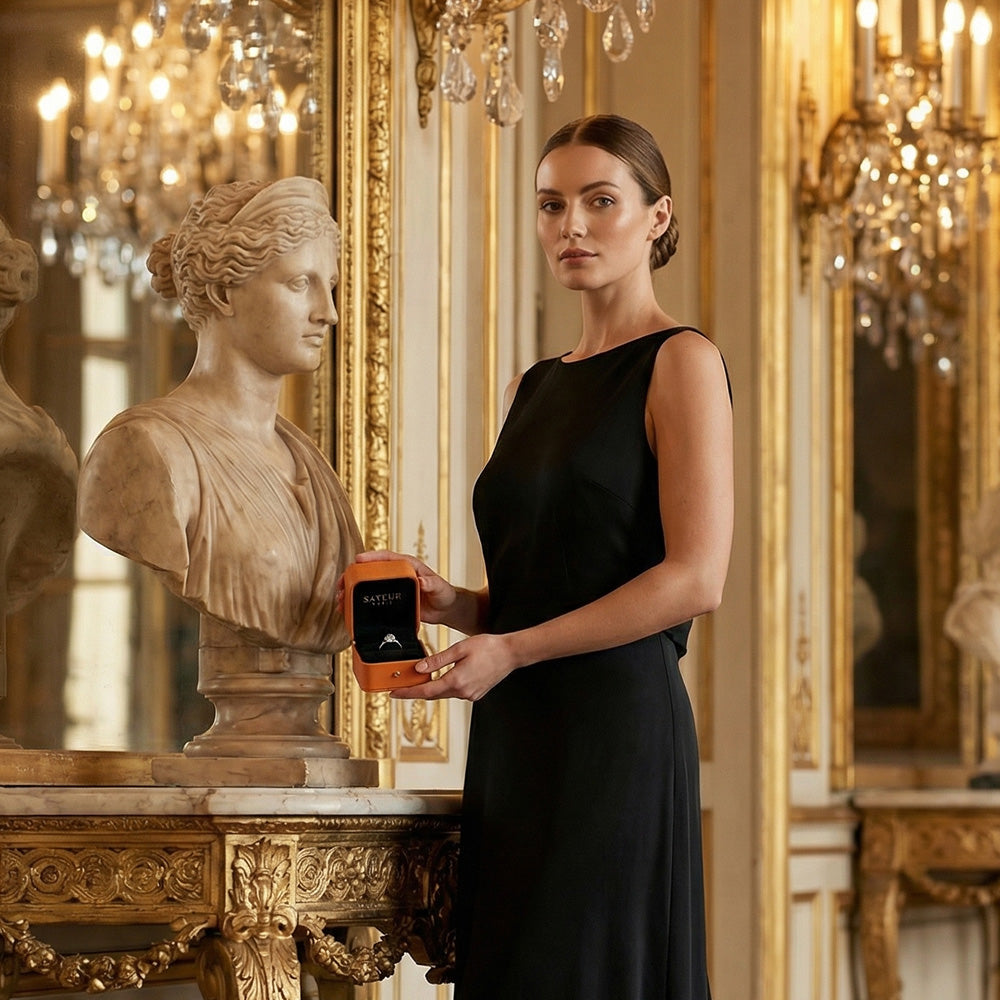
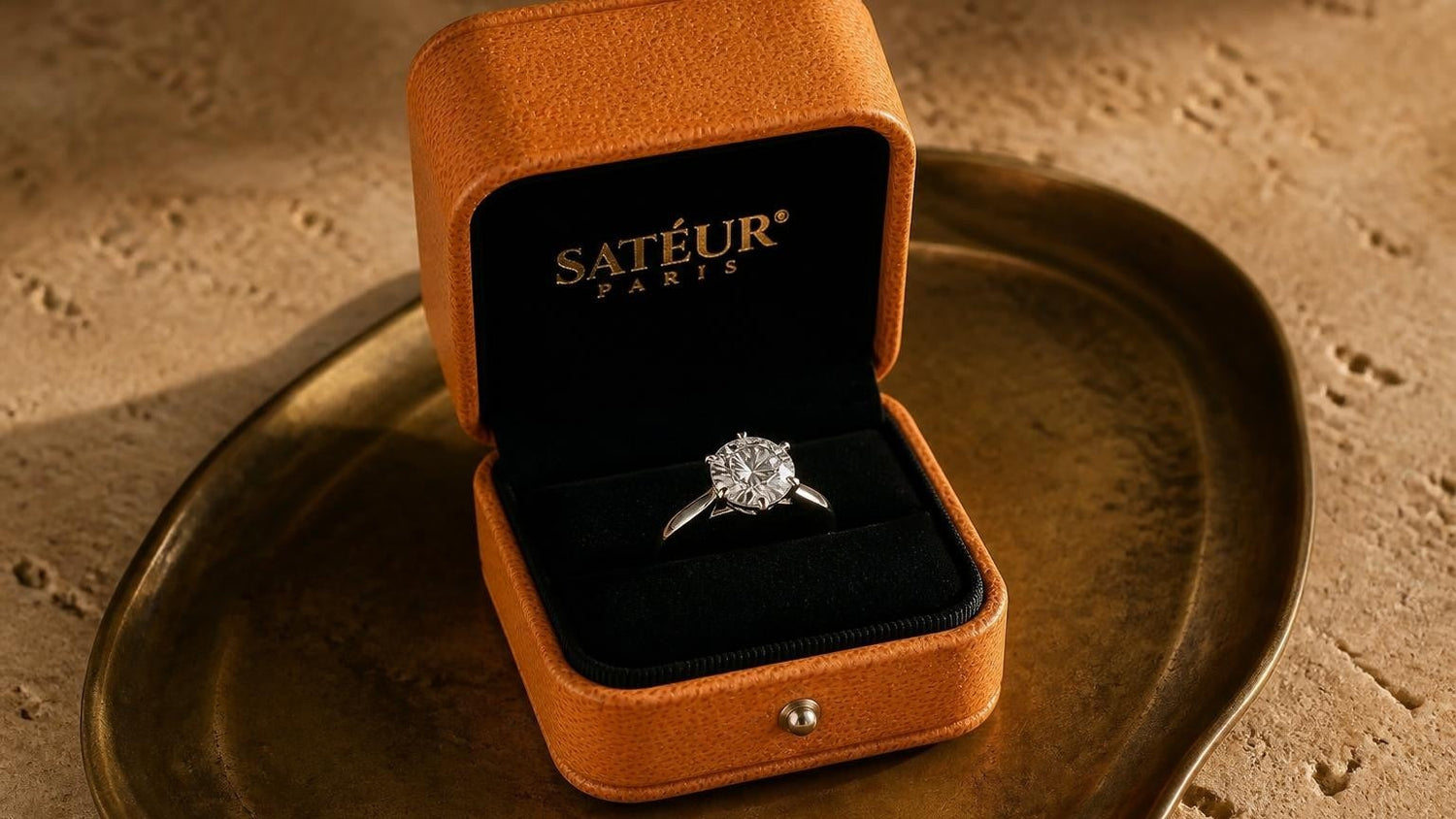
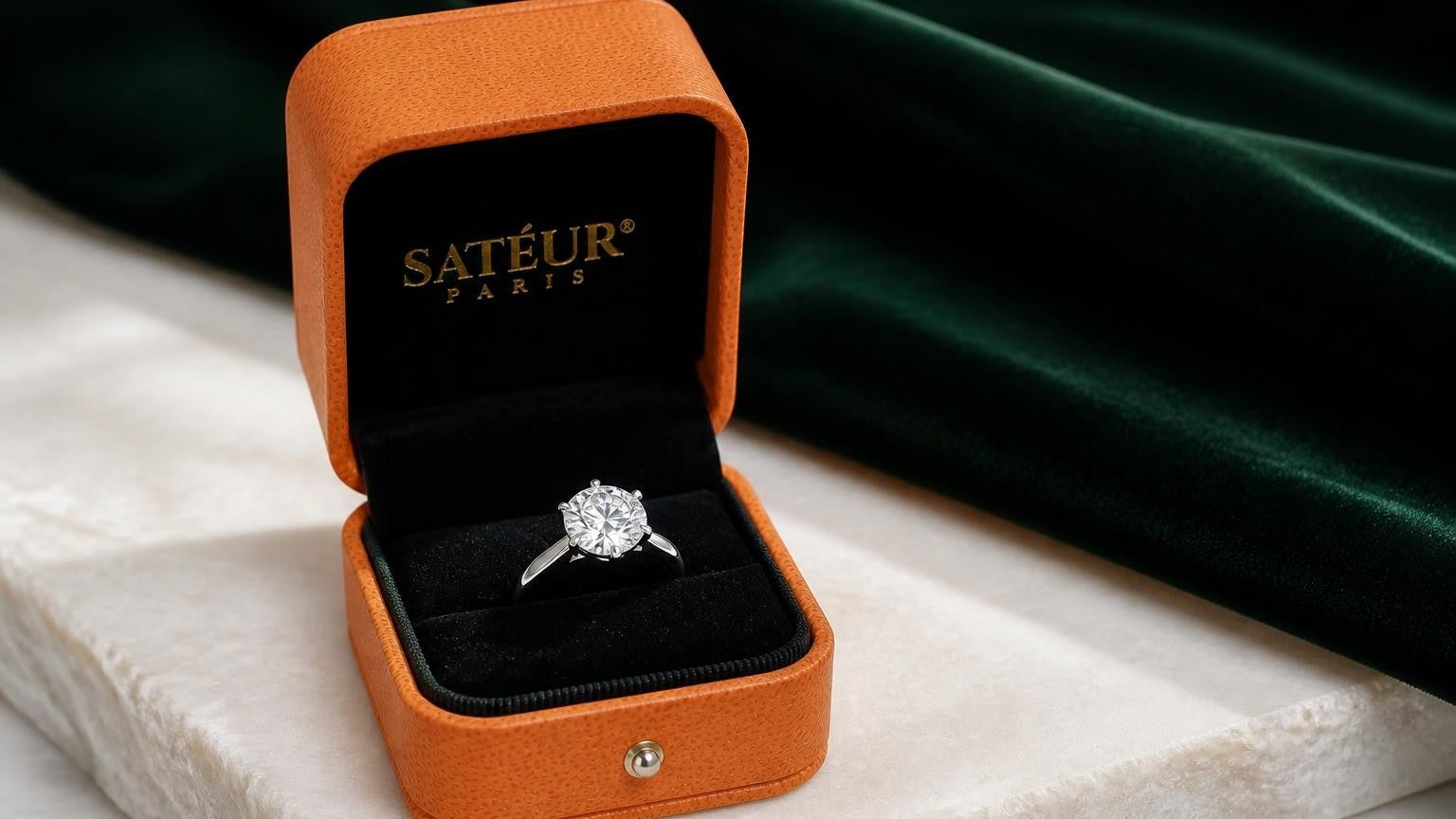
The Satéur Destinée Ring™ — the brand's flagship piece — starts from $138, set in 18k gold finish. That positions it at approximately 1% of a comparable mined diamond ring's retail price. For buyers considering a cubic zirconia engagement ring on a budget, the Satéur alternative offers a lasting option at a modest premium over CZ. The full engagement rings collection covers the range of available designs.
Frequently Asked Questions About Cubic Zirconia and Diamonds
What is the main difference between cubic zirconia and a diamond?
Diamond is pure carbon, rated Mohs 10, and maintains its optical clarity permanently. Cubic zirconia is a lab-created gemstone of zirconium dioxide, rated Mohs 8–8.5, and is chemically distinct from diamond. The key practical difference is durability: CZ accumulates surface scratches under daily wear and degrades visually within one to three years, while diamond does not.
How long does cubic zirconia last in an engagement ring?
With daily wear, cubic zirconia typically shows visible cloudiness and surface scratching within one to three years. The timeline depends on activity level and care; rings worn during cooking, cleaning, or exercise degrade faster. CZ can be replaced or repolished, but the process does not restore the stone permanently.
Why does cubic zirconia cloud over time?
CZ's surface is gradually abraded by contact with harder particles — quartz dust, corundum, and similar materials present in everyday environments. At Mohs 8–8.5, the stone is softer than these particles, and cumulative micro-scratches scatter light rather than reflecting it cleanly. The result is a dull, cloudy appearance that worsens progressively with wear.
Can you see the difference between cubic zirconia and diamond with the naked eye?
A new, well-cut CZ in a quality setting is difficult to distinguish from diamond visually in normal lighting conditions. Under close inspection or bright directional light, differences in dispersion pattern may be apparent to a trained eye. With wear, the distinction becomes much more noticeable as CZ's surface clarity diminishes while diamond's does not.
What is a diamond simulant, and how does it differ from cubic zirconia?
A diamond simulant is any stone — natural or lab-created — designed to replicate the visual appearance of diamond. Cubic zirconia is one type of simulant. Others are engineered to higher hardness and longer-lasting optical performance. Satéur Gems®, for example, are a trademarked simulant rated approximately Mohs 9.25, designed to deliver lasting D–E colour clarity without degrading on the CZ timeline.
Is a Satéur Gems® diamond simulant a better choice than cubic zirconia for durability?
For daily-wear rings where long-term visual performance matters, yes. Satéur Gems® are engineered to Mohs approximately 9.25 — harder than CZ's 8–8.5 — and are designed to maintain D–E colour clarity under sustained wear. The trade-off is cost: Satéur pieces start from $138 versus CZ rings available at lower price points. For a ring intended to last years rather than months, the premium is modest relative to the difference in durability.

Satéur Destinée Ring™
The look of a flawless diamond — from $138.
D-E colour · Excellent cut · 18k gold finish
Free worldwide delivery. 30-day returns. Lifetime Satéur Care.
Shop the Destinée RingFree worldwide shipping · 30-day returns · Lifetime Satéur Care
















Leave a comment
This site is protected by hCaptcha and the hCaptcha Privacy Policy and Terms of Service apply.