



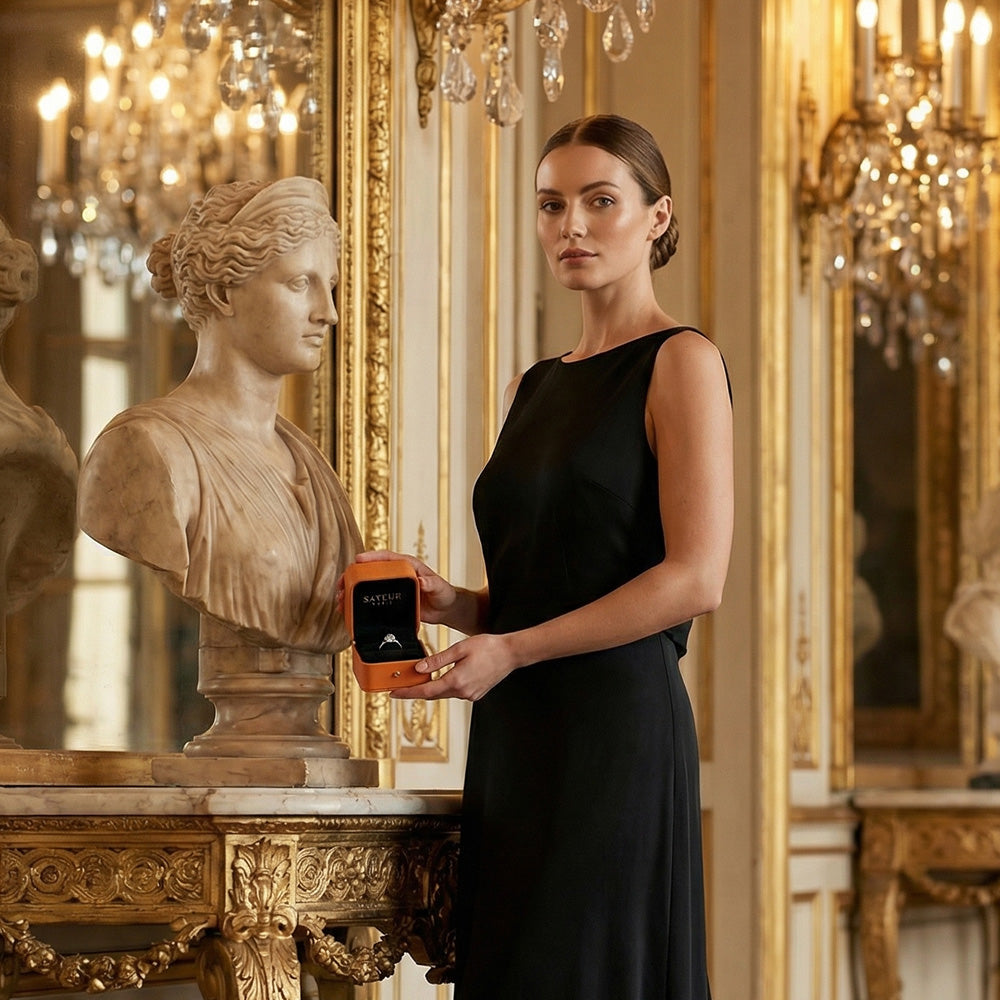
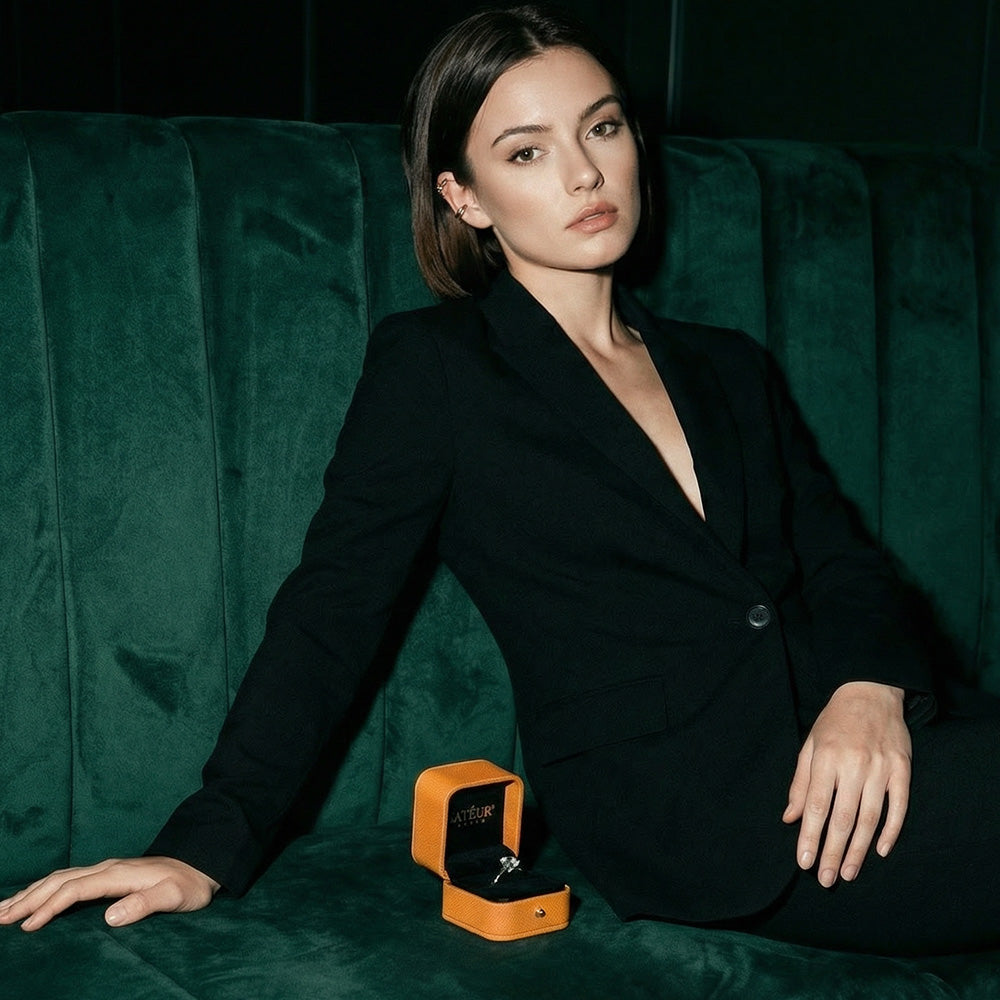
The most expensive engagement rings ever recorded have sold at auction for between $4 million and $71 million — stones so rare that their price is driven not by carat weight alone, but by colour, provenance, and the once-in-a-generation rarity of the gem itself. The global market for diamond engagement rings spans from $5,000 to five figures for quality one-carat stones; exceptional and celebrity pieces push well into the millions.
This guide covers the famous stones, the auction records, the factors that drive price — and how Satéur Gems® deliver the same visual standard for approximately 1% of the cost.
Key Takeaways
- The most expensive engagement rings feature diamonds exceeding 10 carats, with historical examples valued at $4 million to $71 million at auction.
- Diamond price is determined by the 4 Cs: carat weight, colour (D–E grades command the premium), clarity, and cut quality.
- Celebrity engagement rings often feature rare pink, blue, or fancy yellow diamonds, which command exponentially higher prices than colourless stones.
- Engagement ring budgets typically range from $5,000 to $50,000 for quality diamond rings, with luxury settings and rare stones pushing into six and seven figures.
- Satéur Gems® are graded D–E colour, Excellent cut, with a Mohs hardness of approximately 8.8 — delivering the look of a flawless diamond from $138.
Most Expensive Engagement Rings in the World

The records that define this category are set not by jewellers, but by auction houses. A handful of extraordinary diamonds have changed hands at prices that most people will only ever read about.
- The Pink Star — $71.2 million (2017). A 59.60-carat internally flawless Fancy Vivid Pink oval diamond, the largest of its colour grade ever graded by the Gemological Institute of America. Sold at Sotheby's Hong Kong in April 2017, setting a world auction record for any diamond or jewel. The stone was mined in South Africa in 1999 and took two years to cut and polish.
- The Oppenheimer Blue — $57.5 million (2016). A 14.62-carat Fancy Vivid Blue emerald-cut diamond, considered one of the largest and finest blue diamonds ever to appear at auction. Sold at Christie's Geneva in May 2016, breaking the per-carat world auction record for any blue diamond at the time.
- The Blue Moon of Josephine — $48.5 million (2015). A 12.03-carat Fancy Vivid Blue internally flawless emerald-cut diamond, purchased at Sotheby's Geneva by Hong Kong businessman Joseph Lau as a gift for his daughter Josephine, who at the time was seven years old. In the same November 2015 sale, Lau also purchased a 16.08-carat pink diamond for $28.5 million, naming it Sweet Josephine.
- The Graff Pink — $46.2 million (2010). A 24.78-carat Fancy Intense Pink emerald-cut diamond, sold at Sotheby's Geneva in November 2010 to Laurence Graff of Graff Diamonds. At the time it set the world auction record for any gemstone. Graff subsequently had the stone re-cut to improve its colour grade, reducing it slightly in carat weight.
- The Winston Blue — $23.8 million (2014). A 13.22-carat Fancy Vivid Blue pear-shaped diamond, sold at Christie's Geneva and acquired by Harry Winston. At the time it was the largest pear-shaped Fancy Vivid Blue diamond ever graded by the GIA.
What Makes an Engagement Ring Expensive

Engagement ring price is determined by the interaction of four variables — the 4 Cs — plus the rarity premium attached to unusual colour.
| Factor | What it means | Price effect |
|---|---|---|
| Carat | The gem's weight; one carat = 0.2 grams | Exponential — a 2-carat diamond costs 4–6× a 1-carat equivalent quality stone |
| Colour | For colourless diamonds: D (colourless) to Z (light yellow); fancy coloured stones graded separately | D–F stones command 20–40% premium over G–H; Fancy Vivid coloured diamonds can reach 10–100× colourless prices |
| Clarity | FL (flawless) to I3 (included); higher grades have no visible inclusions | Flawless to VS2 drives meaningful premium; below SI1 visible to the naked eye |
| Cut | Proportion and symmetry of the facets; Excellent cut = maximum light return | An Excellent-cut stone returns 20–30% more light than a Poor cut of identical weight |
| Colour rarity | Fancy Vivid Pink, Fancy Vivid Blue, Red diamonds are among the rarest natural materials on earth | These command exponential multiples — the Pink Star's $71.2M was partly because it is simply irreplaceable |
For realistic engagement ring budgets, the hierarchy is: cut first (determines sparkle), then colour (D–E is premium; G–H is the value sweet spot), then clarity (VS2 is eye-clean at far lower cost than FL).
Royal and Celebrity Diamond Rings

Royal and public-figure engagement rings tend toward well-documented historical pieces rather than the auction-market extremes. Several have become cultural reference points for the wider engagement ring market.
- Princess Diana's sapphire ring — an 18-carat oval Ceylon sapphire surrounded by 14 solitaire diamonds in an 18-karat white gold setting, from Garrard of London (1981). Later passed to Catherine, Princess of Wales. The ring sparked a sustained global surge in sapphire engagement ring demand that continues today.
- Grace Kelly's engagement ring — a 10.48-carat emerald-cut diamond given by Prince Rainier III of Monaco in 1956, made by Cartier. One of the earliest celebrity rings to establish the emerald cut as a prestige choice.
- Elizabeth Taylor's Krupp Diamond — a 33.19-carat D-colour Asscher-cut diamond purchased by Richard Burton at auction in 1968 for $307,000. Among the most documented celebrity diamonds of the 20th century.
The pattern across these pieces: large carat weight, colourless or near-colourless grade, Excellent cut, and a setting that places the gem at the centre of attention.
The Cost of High-Carat Diamonds

Price per carat for diamonds is not linear — it rises sharply with size because large, high-quality stones are exponentially rarer than small ones. Approximate market benchmarks for colourless, D–E colour, FL–VS1 clarity, Excellent cut:
- 1 carat — approximately $5,000–$12,000 per stone (retail, depending on cut and clarity grade)
- 2 carats — approximately $15,000–$35,000 (the exponential jump begins here)
- 3 carats — approximately $35,000–$80,000
- 5 carats — approximately $100,000–$250,000
- 10 carats+ — $500,000 to several million; price driven largely by provenance and colour
Fancy coloured diamonds carry a separate pricing structure. Fancy Vivid Pink and Blue stones have sold at auction for $1–$5 million per carat — multiples of 50–500× equivalent colourless stones.
Engagement Ring Price Ranges
For buyers outside the auction market, the practical price landscape looks like this:
| Tier | Typical budget (USD) | What you get |
|---|---|---|
| Entry mined diamond | $3,000–$8,000 | 0.5–0.75ct, G–I colour, VS2–SI1 clarity, standard solitaire |
| Quality mined diamond | $8,000–$25,000 | 1ct+, D–F colour, VS1, Excellent cut |
| Premium/designer diamond | $25,000–$100,000+ | 2ct+, D colour, FL–VVS clarity, signature settings |
| Exceptional/auction | $1M–$71M+ | Rare coloured stones, historically significant provenance |
| Satéur Gems® (diamond simulant) | From $138 | D–E colour equivalent, Excellent cut, Mohs ~8.8 — the look of a flawless diamond at ~1% of the mined diamond price |
The visual gap between a premium mined diamond and a D–E colour, Excellent-cut Satéur Gems® is not detectable to the naked eye. The practical gap is entirely in price.
The Satéur Gem Alternative: Flawless Appearance at 1% of the Price
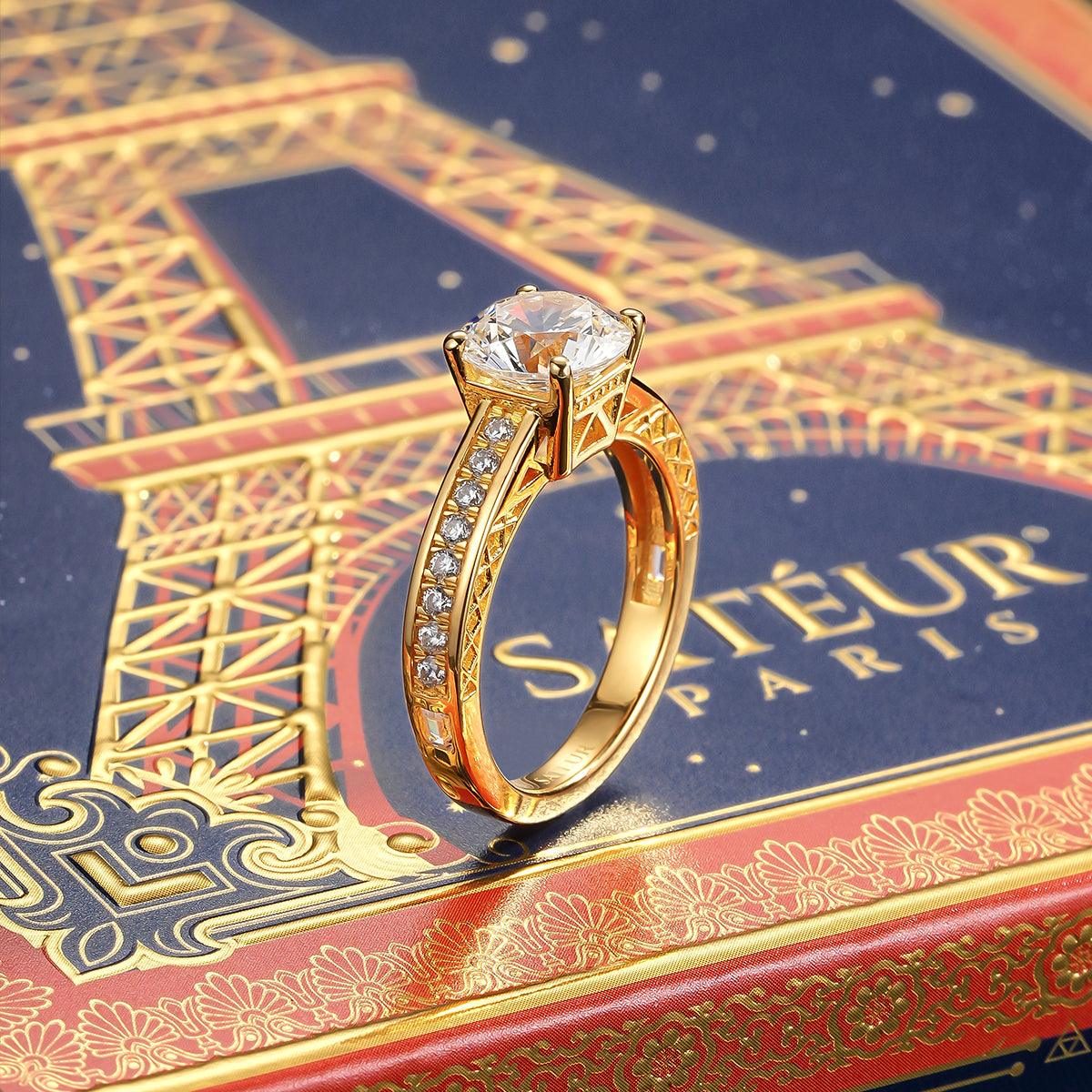
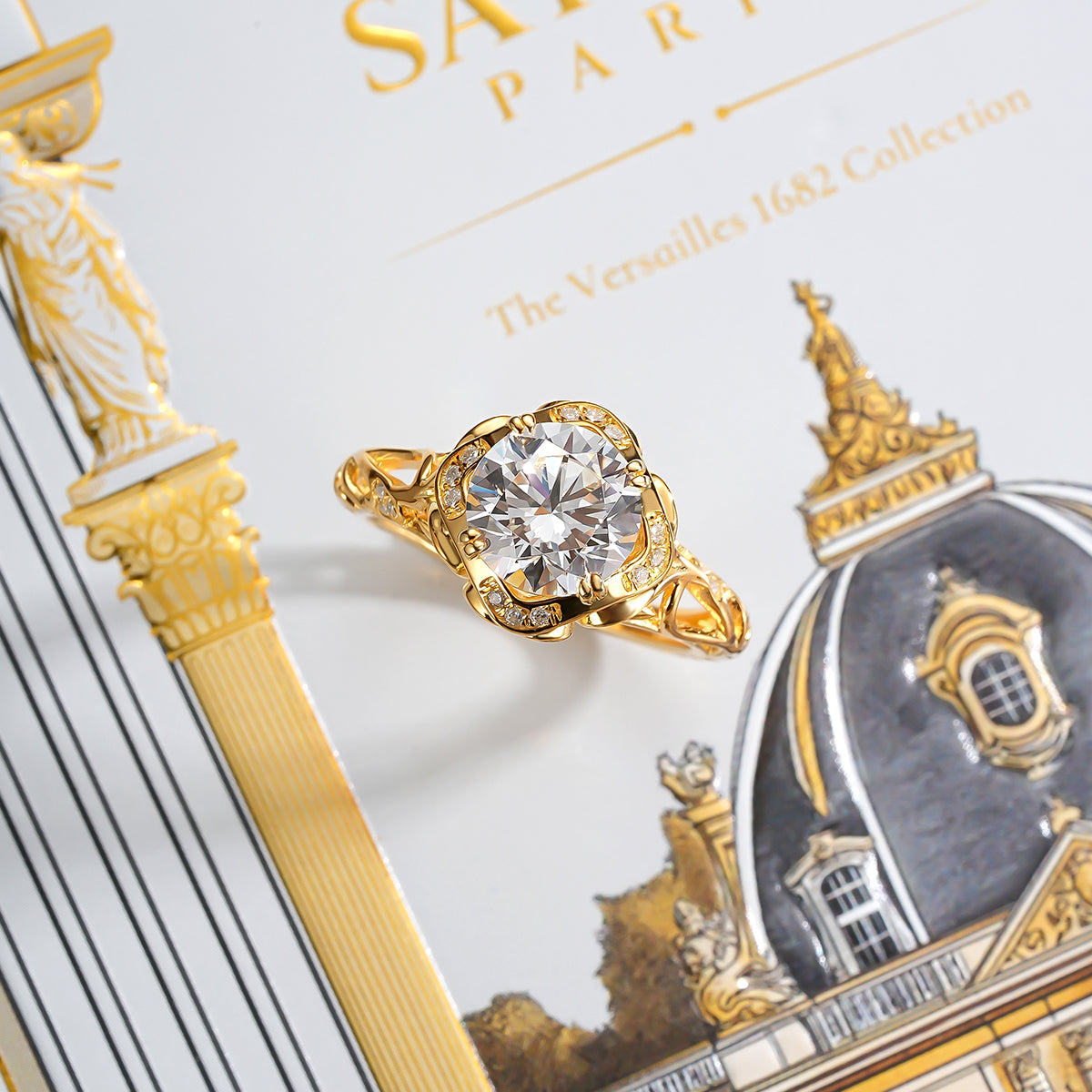
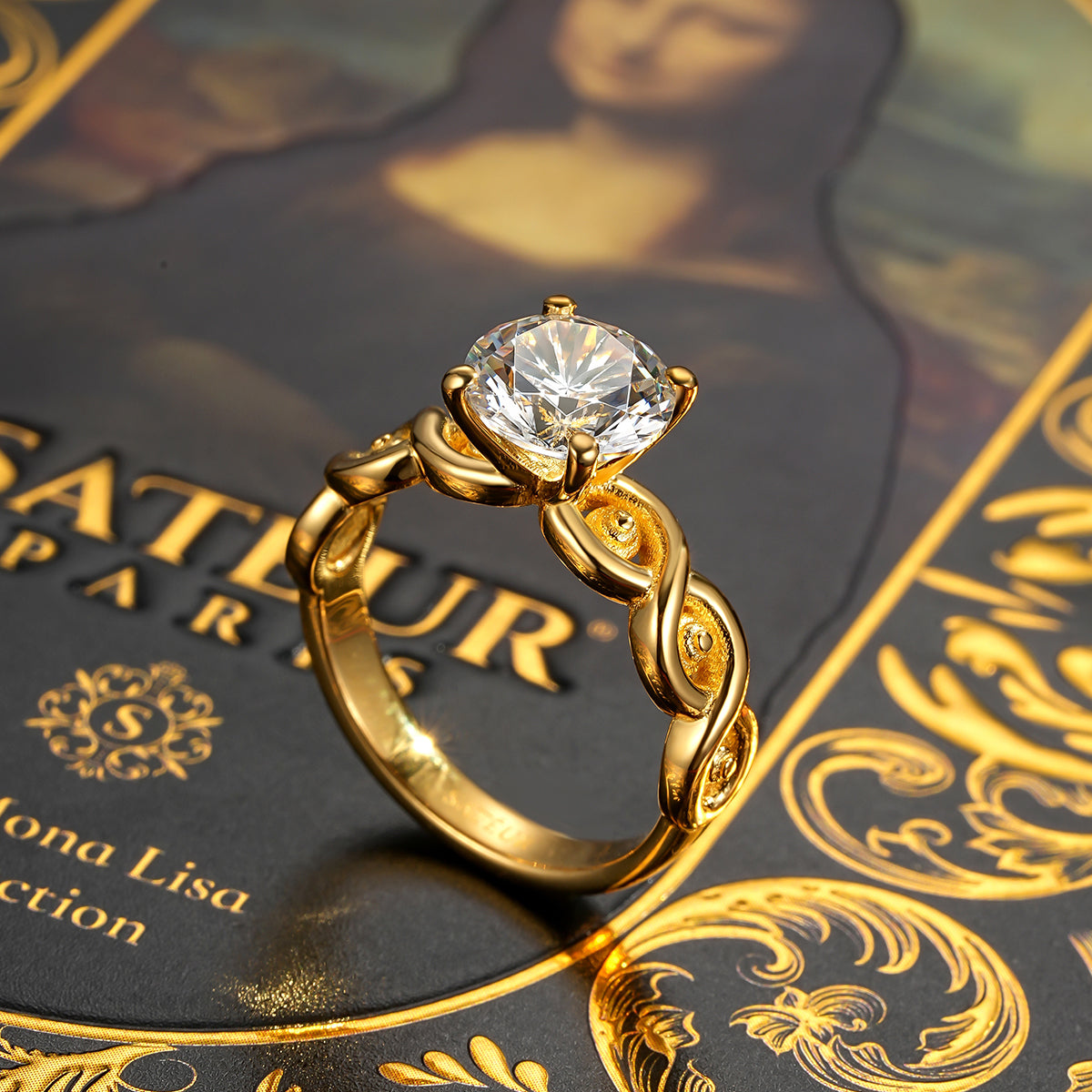
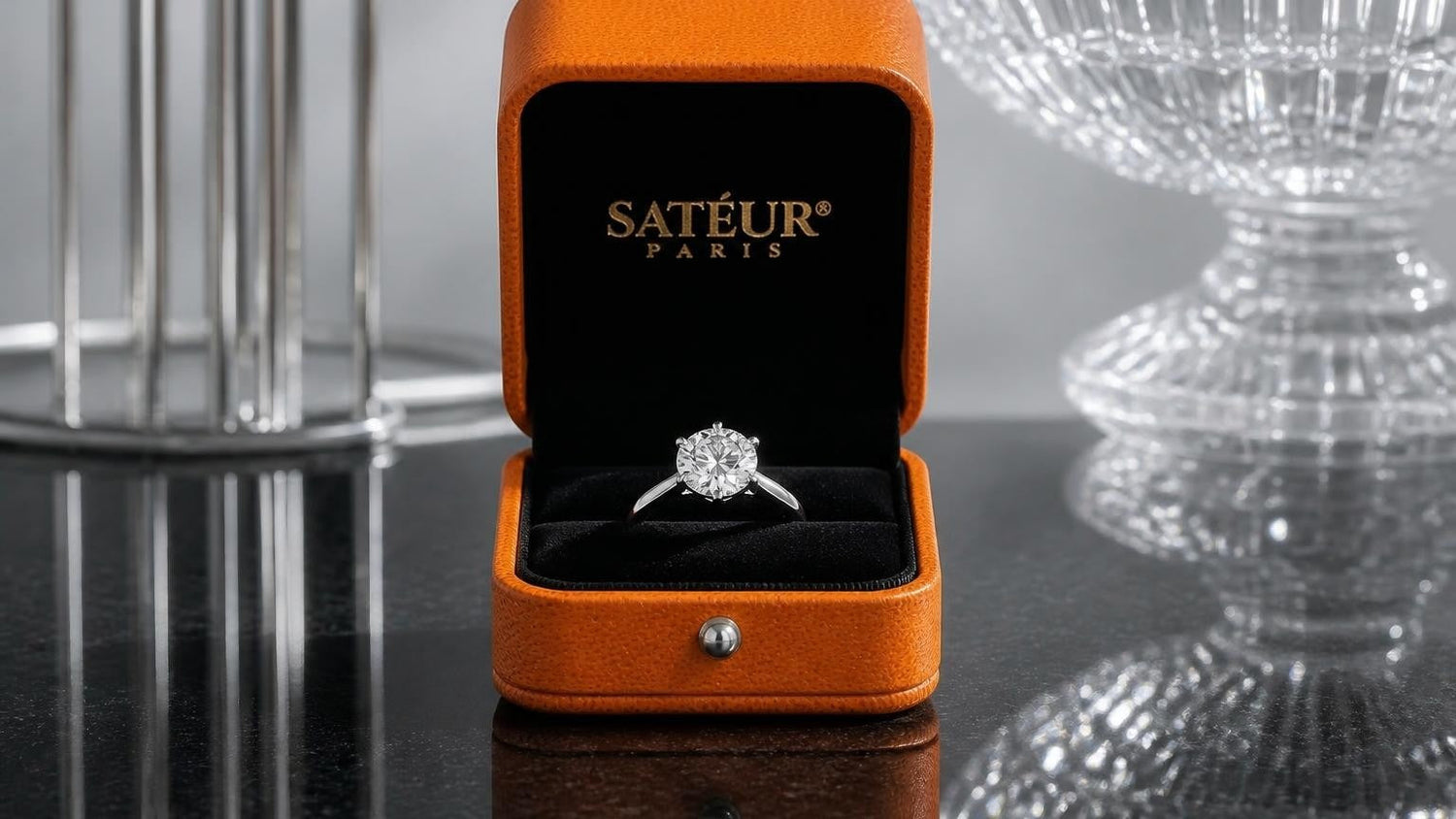
Satéur Gems® are a trademarked diamond simulant engineered to replicate the look of a flawless D-colour diamond. Graded D–E colour equivalent, Excellent cut, Mohs hardness ~8.8, refractive index ~2.39–2.65 — clean white brilliance to the naked eye, suitable for daily wear.
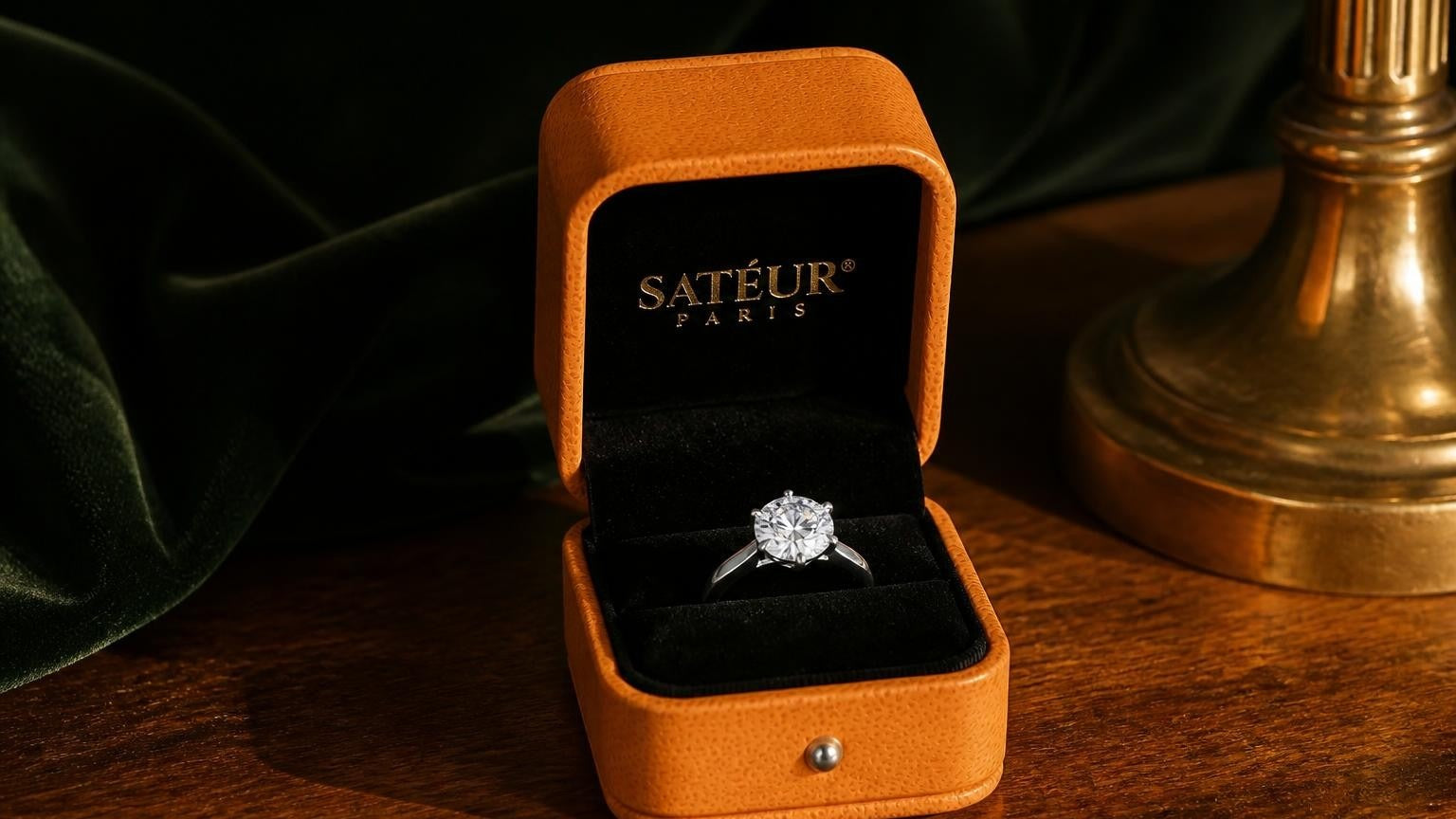
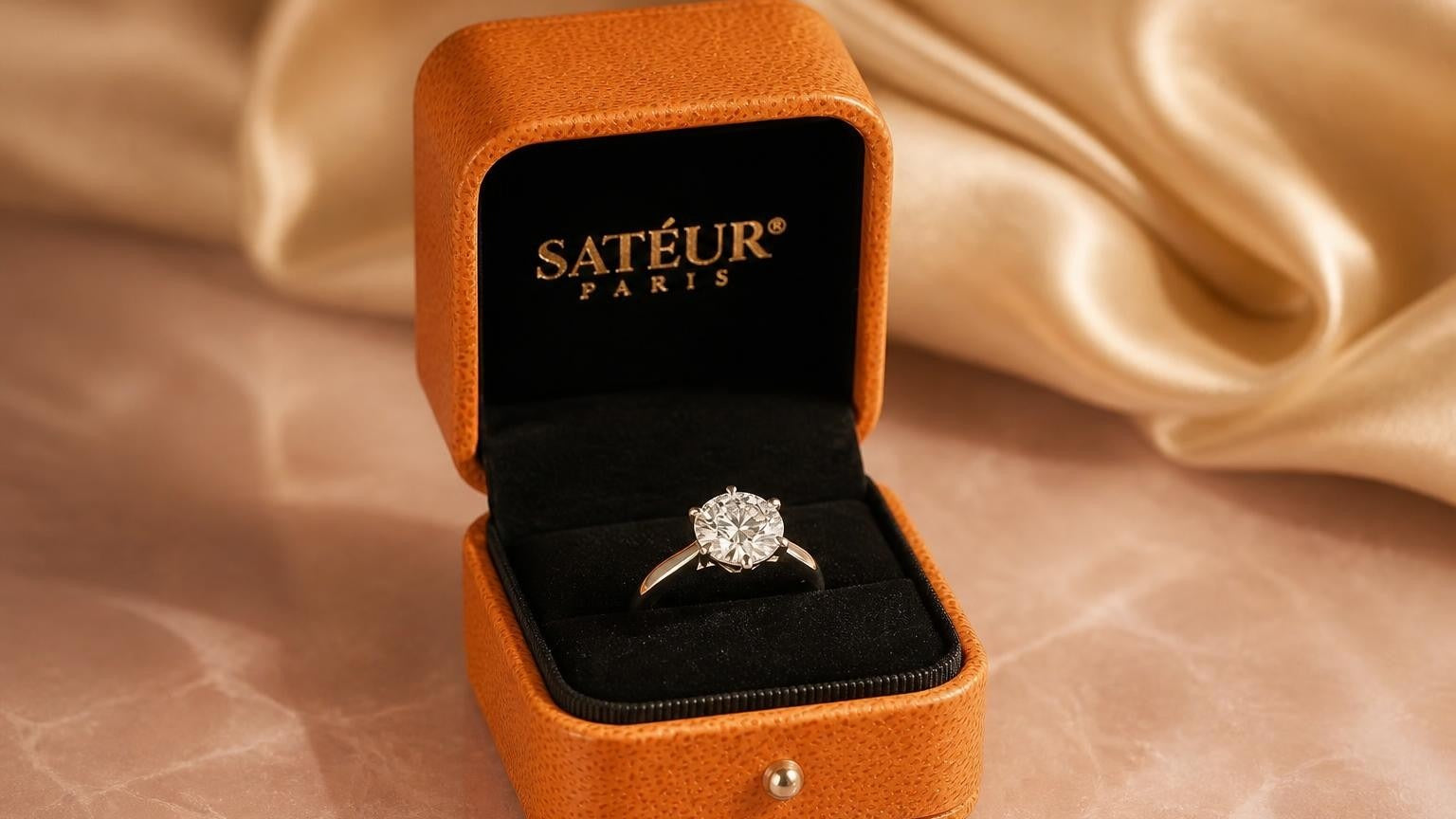
The Satéur Destinée Ring™ — The 1% Ring® — starts from $138 for a 1-carat setting in an 18k gold finish band. Compare that to $5,000–$12,000 for a quality mined 1-carat diamond ring. The visual result is indistinguishable to the naked eye.
The look of a diamond worth $10,000 to $1 million, for 1% of the price. Browse the unique engagement ring collection, the gold engagement ring collection, or the vintage engagement ring collection.

Satéur Destinée Ring™
The look of a flawless diamond — from $138.
D-E colour · Excellent cut · 18k gold finish
Free worldwide delivery. 30-day returns. Lifetime Satéur Care.
Shop the Destinée RingFree worldwide shipping · 30-day returns · Lifetime Satéur Care
FAQ: Expensive Engagement Rings and Affordable Options
What factors determine the price of an expensive engagement ring?
The 4 Cs drive price: carat weight (heavier stones are exponentially rarer), colour (D–E colourless and Fancy Vivid coloured stones command the highest premiums), clarity (flawless to VS2 are the premium grades), and cut (Excellent cut maximises light return and sparkle). Above the 3-carat threshold, rarity compounds all four factors, and exceptional coloured diamonds — Fancy Vivid Pink, Blue, Red — carry further exponential multiples beyond any colourless equivalent.
How much do the world's most expensive celebrity engagement rings cost?
The most expensive engagement rings recorded at auction have sold for between $23 million and $71 million. The Pink Star (59.60-carat Fancy Vivid Pink) sold for $71.2 million in 2017; the Oppenheimer Blue (14.62-carat Fancy Vivid Blue) sold for $57.5 million in 2016; the Blue Moon of Josephine (12.03-carat Fancy Vivid Blue) sold for $48.5 million in 2015. These prices reflect the extreme rarity of exceptional coloured diamonds, not the typical engagement ring market.
What is the difference between a high-carat diamond and a diamond simulant in appearance?
A high-carat D–E colour, Excellent-cut mined diamond and a D–E colour-equivalent, Excellent-cut diamond simulant are visually indistinguishable to the naked eye. Both return crisp white brilliance; both exhibit the same visual fire and light performance under normal viewing conditions. The difference exists in material composition and price, not in how the ring looks when worn.
Can you achieve a luxury engagement ring look without spending a fortune?
Yes. Satéur Gems® deliver D–E colour equivalent and Excellent cut in a diamond simulant from $138 — approximately 1% of the cost of a quality 1-carat mined diamond ring. The visual result is the same to the naked eye. The Satéur Destinée Ring™ starts at $138 for a 1-carat setting in an 18k gold finish band.
What colour and clarity grades are considered most valuable in diamonds?
For colourless diamonds, D (completely colourless) is the highest grade; D, E, and F are the premium tier. For clarity, Flawless (FL) and Internally Flawless (IF) are the highest; VS1 and VS2 are eye-clean at a lower cost. The highest value tier combines D colour, Flawless clarity, and Excellent cut. Fancy coloured diamonds — Vivid Pink, Vivid Blue — occupy a separate value hierarchy where colour intensity drives price above any colourless stone.
How do Satéur Gems compare to traditional diamond rings in terms of visual appeal?
Satéur Gems® are graded D–E colour equivalent and Excellent cut, with a refractive index of approximately 2.39–2.65 — returning the clean white brilliance of a flawless diamond. To the naked eye, the visual appearance matches a premium mined diamond. The Mohs hardness of approximately 8.8 makes them suitable for daily wear as an engagement ring, without the $5,000–$12,000 cost of a quality mined 1-carat stone.










Leave a comment
This site is protected by hCaptcha and the hCaptcha Privacy Policy and Terms of Service apply.