



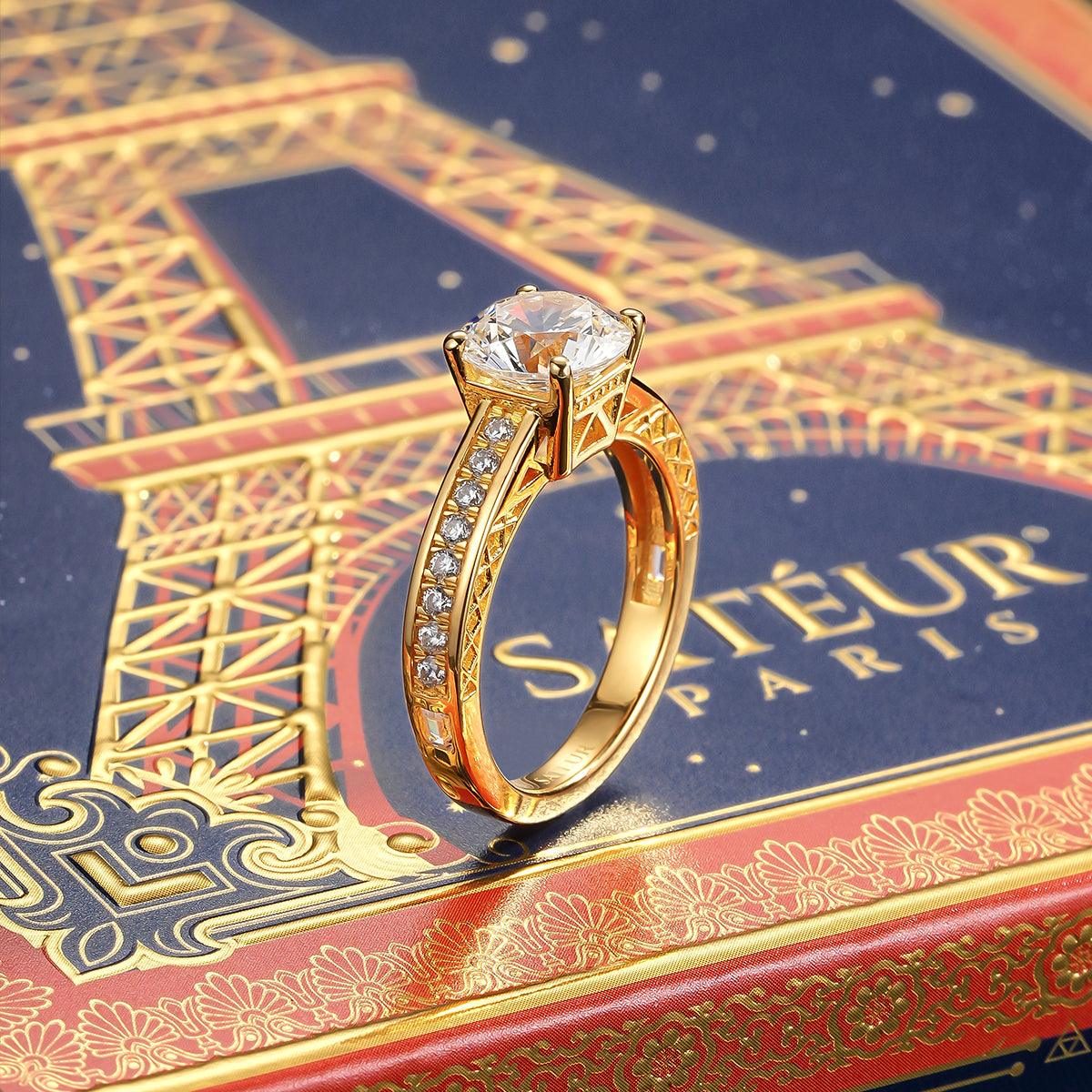
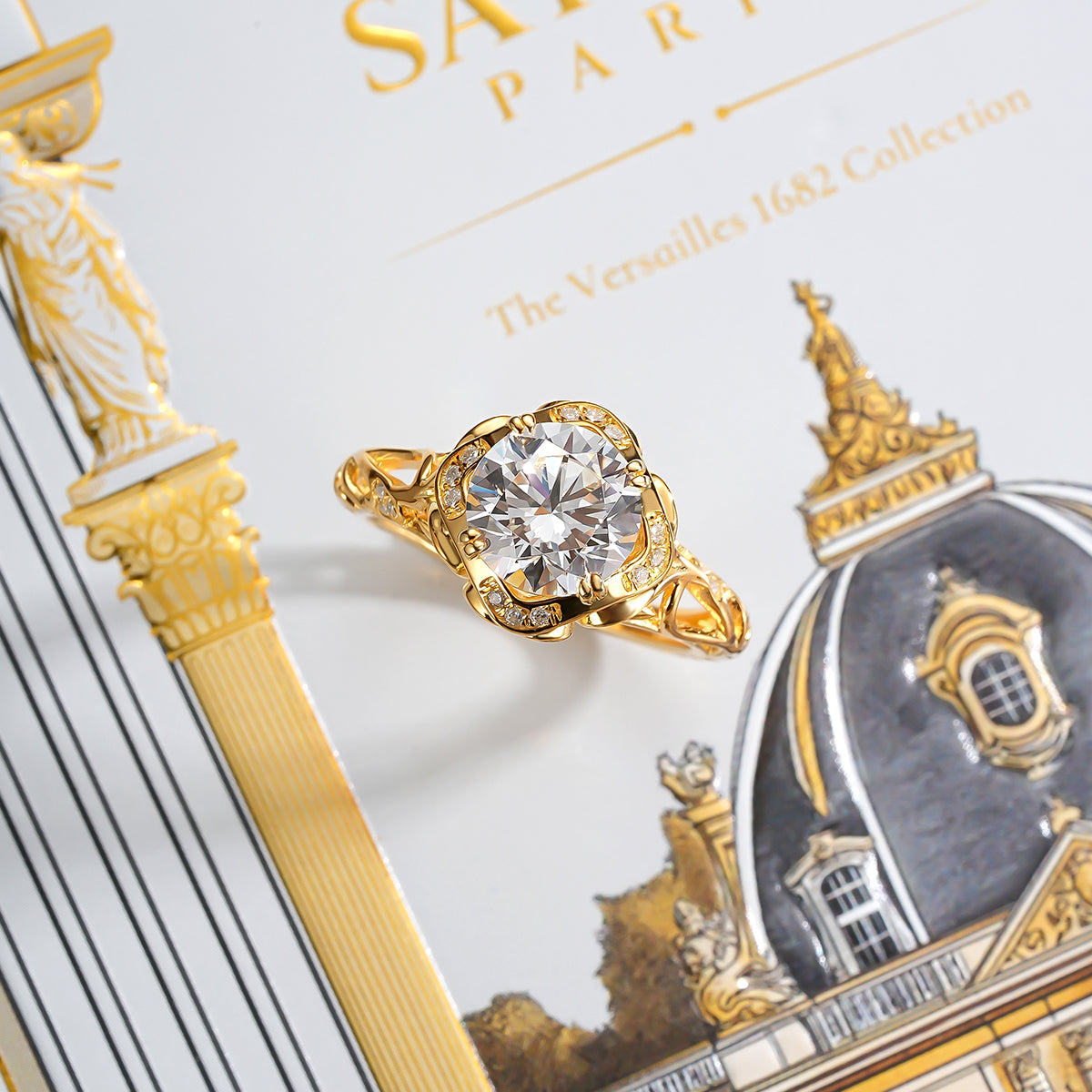
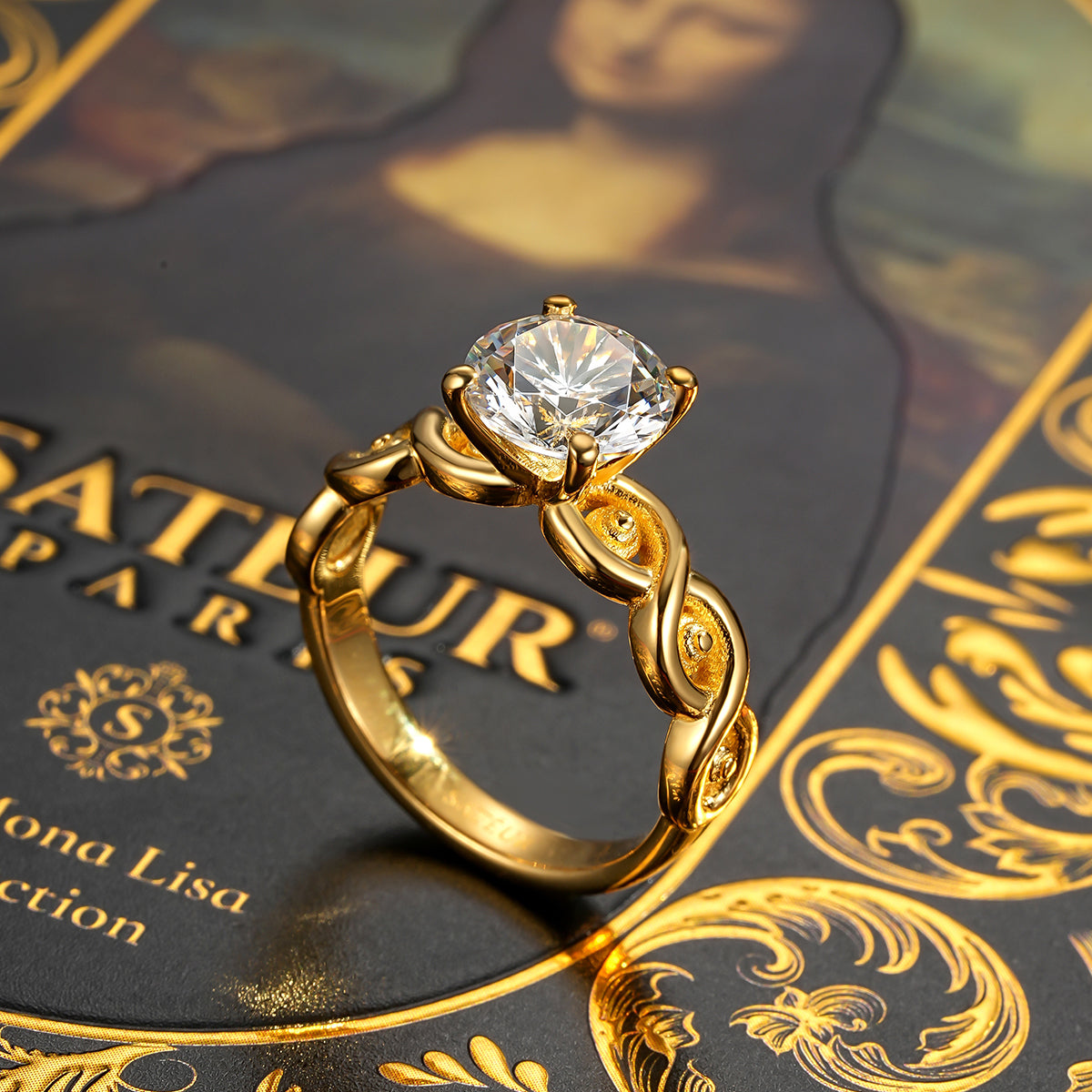
Pink diamond engagement rings occupy the highest tier of coloured diamond rarity — natural specimens from the Argyle mine in Western Australia command $100,000 or more per carat, making them among the most expensive gems on earth. For those drawn to the colour but not the price, lab-grown pink diamonds and rose-gold simulant rings each offer a more accessible route to the same visual impact.
Key Takeaways
- Natural pink diamonds are among the world's rarest gems; the Argyle mine, which supplied over 90% of the global supply, closed in 2020 — further restricting availability.
- Mined pink diamonds typically sell for $100,000 or more per carat depending on colour intensity; lab-grown pink diamonds offer consistent colour and clarity at a fraction of that cost.
- Custom engagement ring settings in 14k white gold and rose gold complement pink-toned stones across all carat ranges and budgets.
- Satéur's rose-gold Destinée family pairs Satéur Gems® with 18k rose gold finishing, delivering the warm, romantic aesthetic of a pink diamond engagement ring from $138.
- Metal choice matters: rose gold deepens and warms a pink gem's appearance, while white gold creates a higher-contrast, modern frame.

Why Choose a Pink Diamond for Your Ring
Pink is one of the rarest colour grades in the diamond spectrum. The colour originates from a phenomenon called plastic deformation — a structural distortion that occurred under extreme heat and pressure during formation — rather than trace element impurities as in blue or yellow diamonds. This mechanism is poorly understood and exceptionally uncommon.
The Argyle mine in Western Australia was the source of roughly 90% of the world's supply of pink diamonds before its closure in November 2020. With no replacement mine of comparable quality, the supply of natural pink diamonds is now strictly finite. That scarcity is the primary driver of price.
- Colour intensity grades run from Faint through Fancy Vivid Pink — the deepest, most saturated grades command the highest premiums.
- Cut is critical: cushion and radiant cuts are favoured because their facet patterns enhance colour saturation more effectively than the standard round brilliant.
- Carat weight compounds rarity — a 1-carat Fancy Vivid Pink can cost 20× more per carat than a comparable 0.25-carat stone.
For most buyers, the pink aesthetic is the goal rather than the geological origin. Lab-grown pink diamonds and pink-toned simulants in rose-gold settings both deliver the visual warmth of a natural pink diamond at accessible price points.
Satéur Gems® vs. Mined Pink Diamonds: Value and Appearance

A mined 1-carat Fancy Pink diamond typically retails between $100,000 and $300,000 depending on saturation, cut, and provenance. Lab-grown pink diamonds are chemically identical to mined stones and sit between $1,500 and $8,000 per carat — still a significant investment for an engagement ring centre stone.
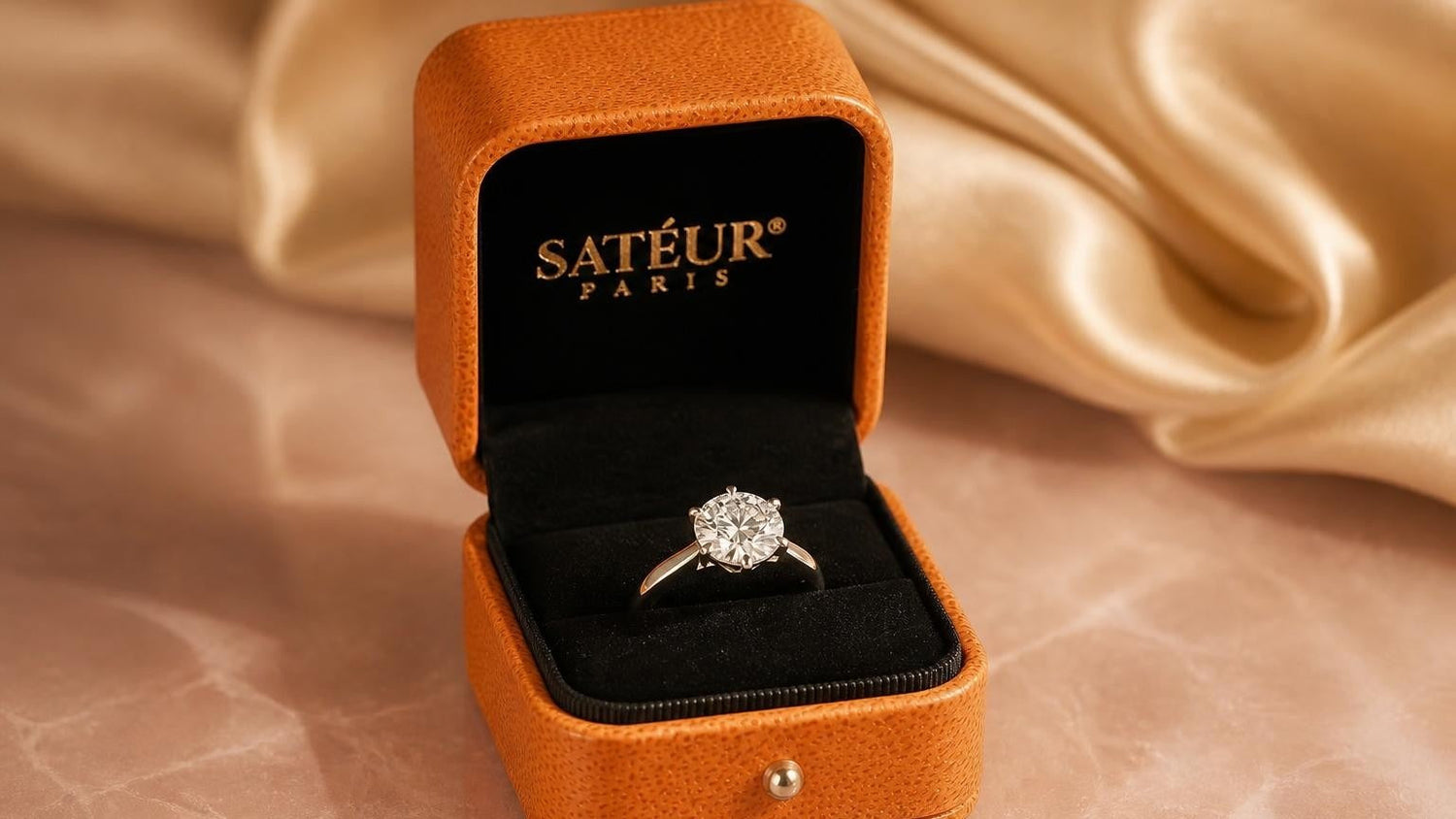
Satéur Gems® is a trademarked diamond simulant that replicates the look of a flawless diamond. Paired with 18k rose gold finishing, the Satéur rose-gold Destinée family delivers the warm visual character of a pink diamond ring at approximately 1% of a mined pink diamond's price. The comparison below covers the three main options across key buying factors.
| Factor | Mined Pink Diamond | Lab-Grown Pink Diamond | Satéur Rose-Gold Ring |
|---|---|---|---|
| Price range (1 ct equiv.) | $100,000 – $300,000+ | $1,500 – $8,000 | From $138 |
| Colour origin | Natural plastic deformation | Lab-introduced during growth | 18k rose gold setting + gem |
| Availability | Extremely limited post-Argyle | Consistent supply | In-stock, immediate |
| Visual to the naked eye | Pink body colour, white brilliance | Pink body colour, white brilliance | White gem, warm rose-gold frame |
| Durability | Mohs 10 | Mohs 10 | Mohs ~8.8 (Satéur Gems®) |
The Satéur approach is honest: the ring does not replicate a pink stone's body colour — it frames a clean white gem in rose gold, producing the warm pink aesthetic through metal rather than gem pigment. That distinction is worth understanding before purchase. For buyers who want an actual pink-coloured centre stone, lab-grown pink diamonds are the accessible alternative to natural specimens. See also: which finger does an engagement ring go on — a practical guide for first-time buyers.
Pink Diamond Specifications: Colour, Cut, and Brilliance

When evaluating a natural or lab-grown pink diamond for an engagement ring, four technical factors govern the purchase decision: colour grade, cut grade, clarity, and carat weight. Of these, colour is the most critical — and the most expensive variable.
- Colour grades: The Gemological Institute of America grades coloured diamonds on a scale from Faint through Fancy Light, Fancy, Fancy Intense, Fancy Deep, and Fancy Vivid. Fancy Vivid Pink is the commercial apex; prices per carat can be 10–20× higher than Fancy Light.
- Cut grades: Cushion and radiant cuts are industry favourites for pink diamonds because their deeper pavilion facets concentrate colour in the table. Round brilliants are also available but tend to appear slightly lighter for the same body colour.
- Clarity: GIA grades coloured diamonds on the same I1–FL scale as colourless stones, though some inclusions are more easily masked in coloured gems.
- Carat weight: Pink diamonds above 1 carat are exceptionally rare in meaningful saturation. Most Fancy Vivid Pink specimens sold at auction are under 5 carats.
For simulant options, the relevant specifications shift to refractive index and hardness. Satéur Gems® carries an RI of approximately 2.39–2.65 and a Mohs hardness of approximately 8.8 — durable for daily engagement ring wear. The clean white brilliance of Satéur Gems® is the same in rose-gold settings as in white gold; the visual warmth comes from the metal frame rather than the gem's body colour.
White Gold and Rose Gold Settings for Pink Diamonds

Metal choice is a meaningful decision for any pink-toned ring. The setting colour influences how the gem's colour is perceived by the eye and changes the ring's overall aesthetic register.
Rose gold deepens and warms any pink or white gem. A rose-gold prong setting adds pink-adjacent warmth around a colourless stone, creating the visual impression of a pink diamond aesthetic without requiring a pink centre stone. Rose gold also harmonises with the natural skin tones of most wearers and reads as romantic and feminine. 18k rose gold (75% gold, balance typically copper and silver) is the standard for fine jewellery; it provides a richer colour than 14k and better durability than 9k.
White gold provides a neutral, modern contrast. For a genuinely pink-coloured centre stone, white gold maximises the contrast between the stone's colour and the setting — allowing the pink saturation to read most clearly. White gold with an 18k gold finish is standard for Satéur's white-setting range. For engagement ring insurance and care information, see our guide to choosing the best engagement ring box for long-term protection.
Yellow gold, while less traditional for pink diamonds, is occasionally chosen for vintage-inspired designs or to echo the warm copper tones in rose gold. It is not typically recommended for Fancy Vivid Pink stones, where the yellow reflections from the prongs can mute the pink saturation.
Custom Pink Diamond Ring Design
The design of an engagement ring for a pink-toned centre stone should amplify rather than compete with the gem's colour. Key decisions include setting style, prong count and material, band profile, and any accent stones.
- Solitaire settings place the entire visual emphasis on the centre stone — ideal for genuinely coloured pink diamonds where the gem's saturation is the primary statement.
- Halo settings encircle the centre stone with smaller accent gems, which can make the centre stone appear larger and deepen the perceived colour intensity.
- Three-stone settings are popular for pink diamonds paired with matching smaller pink stones or contrasting white diamonds on either side.
- Pavé and micro-pavé bands add brilliance along the shank, which creates a sense of continuous sparkle appropriate for engagement ring wear.
For buyers exploring the full range of rose-gold and engagement ring options at accessible price points, Satéur's rings collection includes rose-gold Destinée variants from $138 alongside the full Satéur Gems® and moissanite range. Men's and alternative-setting options are also available in the engagement rings for men collection.

Satéur Destinée Ring™
The look of a flawless diamond — from $138.
D-E colour · Excellent cut · 18k gold finish
Free worldwide delivery. 30-day returns. Lifetime Satéur Care.
Shop the Destinée RingFree worldwide shipping · 30-day returns · Lifetime Satéur Care
FAQ: Pink Diamond Engagement Rings
What makes a pink diamond engagement ring a distinctive choice?
Natural pink diamonds derive their colour from a rare structural phenomenon called plastic deformation rather than trace elements — making them among the rarest coloured diamonds in existence. The closure of the Argyle mine in 2020 removed over 90% of the world's natural pink diamond supply, meaning existing stones now constitute a finite asset. For most buyers, the appeal is as much about the colour aesthetic as geological rarity.
How do pink diamond specifications compare in colour and clarity?
The GIA grades pink diamond colour on an intensity scale: Faint, Fancy Light, Fancy, Fancy Intense, Fancy Deep, and Fancy Vivid. Fancy Vivid is the most saturated and most expensive grade. Clarity follows the same FL–I1 scale as colourless diamonds, though slight inclusions are sometimes less visible against a coloured body. Cut grade — typically cushion or radiant for best colour retention — and carat weight round out the four key buying criteria.
What is the price difference between a pink diamond simulant and a mined pink diamond?
Mined pink diamonds sell for approximately $100,000 or more per carat for Fancy grades; Fancy Vivid examples command considerably more. Lab-grown pink diamonds typically range from $1,500 to $8,000 per carat. Satéur's rose-gold engagement rings, which use Satéur Gems® in 18k rose gold finishing, start from $138 — delivering the warm rose-gold aesthetic at approximately 1% of a mined pink diamond's price.
Which metal settings best enhance a pink diamond's colour?
Rose gold is the most common choice for pink-toned rings: its warm copper undertones deepen the perceived saturation of a pink stone and create a harmonious colour story. White gold provides modern contrast that lets the stone's colour read without interference. Yellow gold works for vintage-inspired designs but can add yellow reflections that slightly mute pink saturation in Fancy Vivid grades.
Can a pink diamond withstand daily wear in an engagement ring?
Natural and lab-grown pink diamonds rate Mohs 10 — the hardest known natural substance — and are entirely suited to daily engagement ring wear. Satéur Gems®, the simulant used in Satéur's rose-gold ring range, rates approximately Mohs 8.8 and is durable for everyday jewellery wear with standard care. Both options hold their visual character indefinitely when worn normally.
How do I choose the right carat weight and cut for a pink diamond ring?
For natural or lab-grown pink diamonds, cushion and radiant cuts are the industry standard because their facet geometry concentrates colour in the table and face-up appearance. Carat weight should be balanced against colour grade: a smaller Fancy Vivid stone often makes a greater colour impression than a larger Fancy Light one. For simulant rings in rose-gold settings, the visual size and metal quality are the primary variables — standard round brilliant cuts perform well across all sizes.
How to Style a Pink Diamond Ring
A pink diamond or rose-gold ring carries strong romantic associations — styling choices that reinforce warmth and femininity tend to land well, while cooler metal contrasts can sharpen a more modern aesthetic.
- Stacking: Rose-gold bands pair naturally with each other or with delicate yellow-gold or champagne-toned rings. Mixing warm metals creates an intentional, layered effect without visual conflict.
- Occasion wear: A pink diamond solitaire or a rose-gold halo ring reads as a statement piece; it works as the sole ring worn or as the centrepiece of a curated stack.
- Wedding band pairing: A contour or fitted wedding band in matching rose gold creates a seamless pair. An eternity band in white gold with a rose-gold engagement ring offers intentional contrast.
- Skin tone compatibility: Rose gold suits a wide range of skin tones, particularly those with warm or olive undertones; its warmth harmonises with natural pigmentation rather than competing with it.
For a broader look at alternative gemstone options for engagement rings alongside pink diamonds, the guide to diamond alternative engagement rings covers shape, setting, and gemstone choice in detail.
















Leave a comment
This site is protected by hCaptcha and the hCaptcha Privacy Policy and Terms of Service apply.