



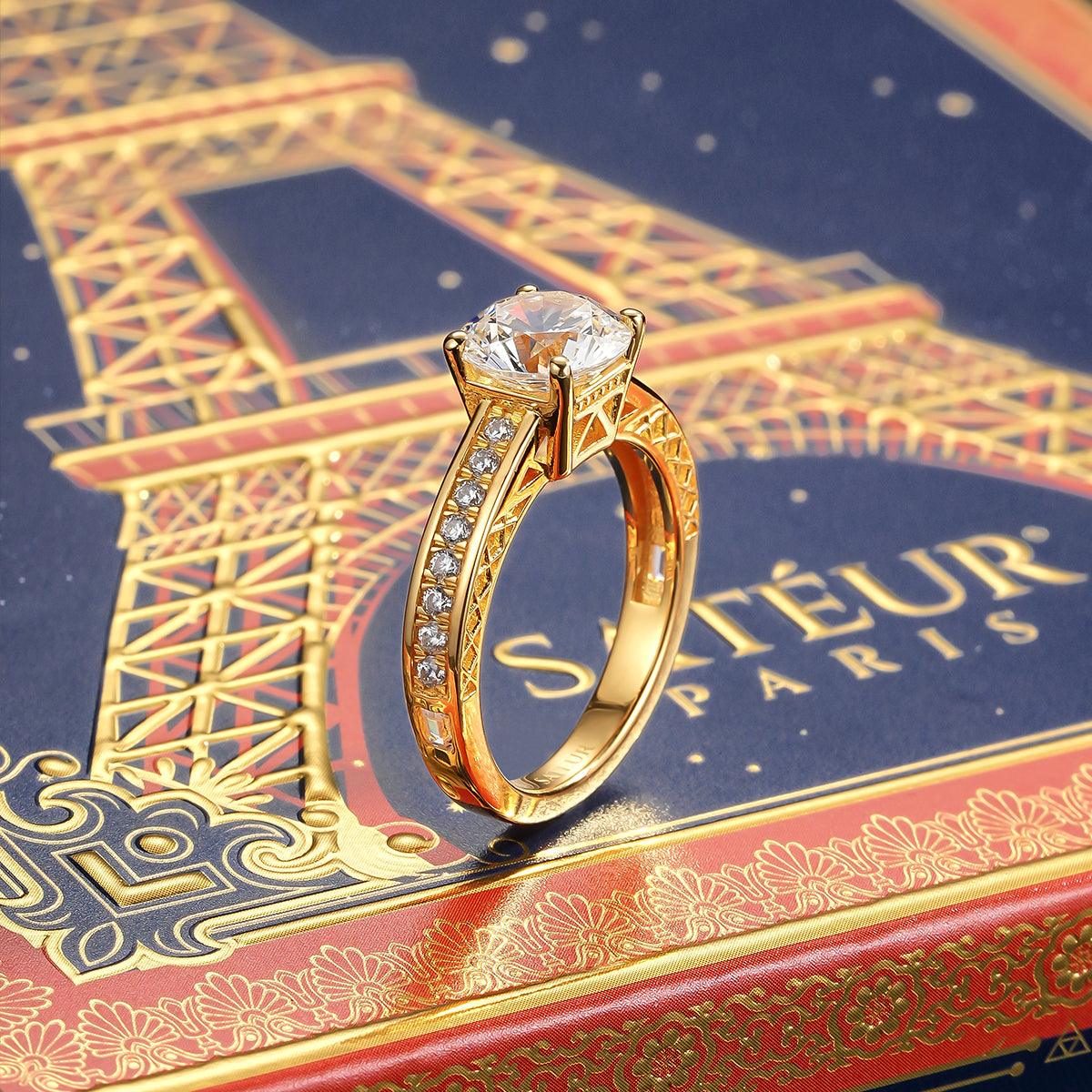
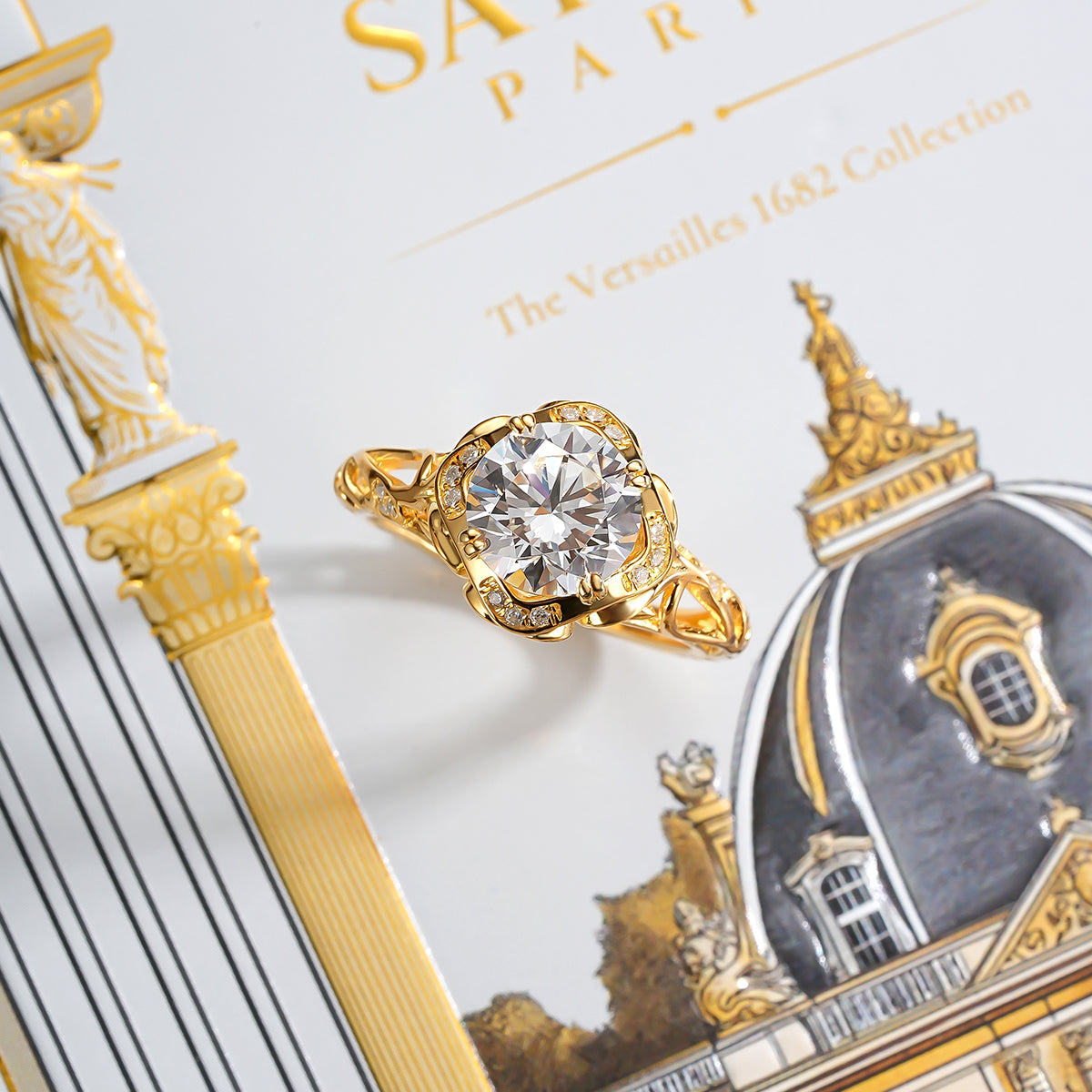
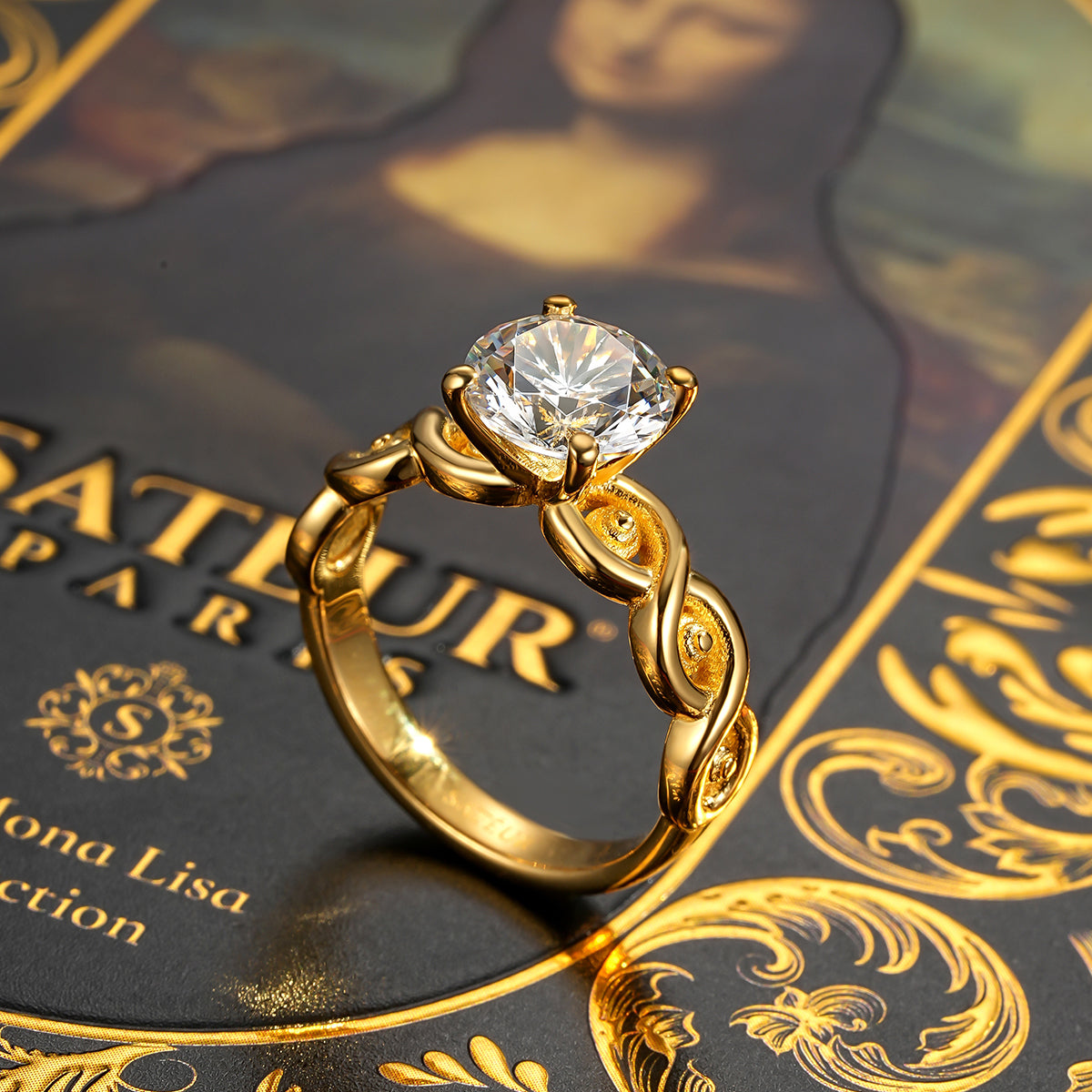
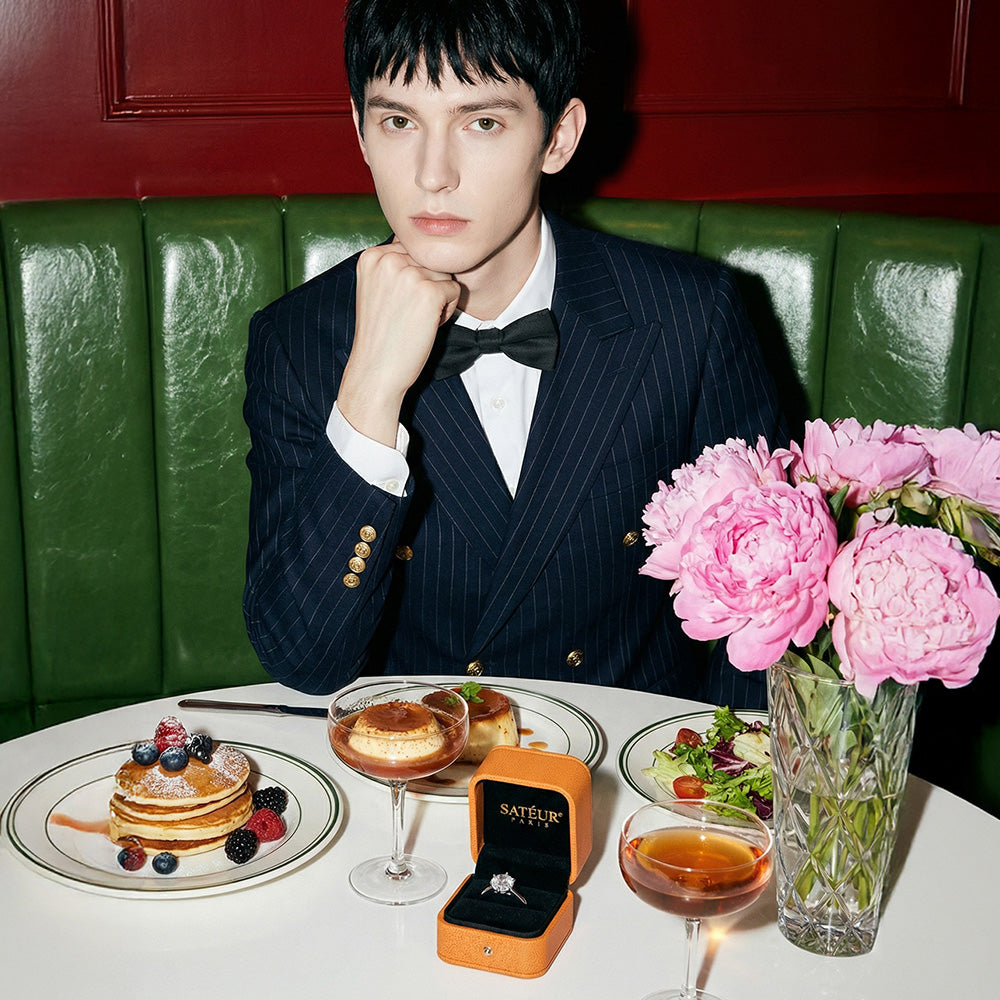
Lab grown engagement rings offer the same visual result as mined diamonds — colourless, brilliant, durable — at a fraction of the cost, with full grading documentation for those who want it. The best choice within the category depends on budget, priorities, and how much weight a buyer places on material origin versus optical appearance.
This guide covers the full buying process: how to compare options across price points, what grading and specs actually matter, how to evaluate metal settings, and how to find a ring ready to ship without a long manufacturing wait.
Key Takeaways
- Lab-grown diamond engagement rings are available from approximately $1,098 for an IGI-certified 1.00 carat round-cut diamond in 18k white gold.
- Diamond simulants — such as Satéur Gems® — offer the look of a flawless diamond at approximately 1% of the price of a mined diamond.
- Satéur Gems® are graded D-E colour with Excellent cut, delivering comparable optical performance to diamond at a fraction of the cost.
- Lab-grown diamonds are chemically, physically, and optically identical to mined diamonds; they carry the same IGI grading criteria including the 4 Cs.
- Lab-created gemstones such as moissanite offer transparent sourcing and consistent quality standards, with a Mohs hardness of ~9.25 and approximately 2.4× the fire of diamond.
Lab Grown Engagement Rings
The phrase "lab grown engagement rings" covers a wide range of products at very different price points. At the top of the category: IGI-certified lab-grown diamonds, which are chemically identical to mined diamonds and priced at roughly 40–60% less for the same carat weight and colour grade. Below that: lab-created gemstones such as moissanite, a distinct material with its own optical properties. Further still: diamond simulants, which replicate the appearance of a flawless diamond without being diamond at all.
Understanding which category fits your situation — and your budget — is the first decision. Each has clear advantages, and none requires compromising on the visual result.

Ready to Ship
One of the practical advantages of lab grown engagement rings is availability. Unlike custom mined-diamond pieces that can involve weeks of procurement, most lab-grown and simulant options are available in finished settings, ready to ship within days.
For buyers on a timeline — an imminent proposal, a birthday, an anniversary — in-stock availability is a genuine differentiator. Satéur's engagement ring collection ships worldwide from existing inventory. The oval moissanite engagement rings selection is a good starting point if a longer oval silhouette suits the recipient's hand.
What to Check Before You Order
- Confirm sizing availability — ready-to-ship rings ship in standard sizes; resizing timelines vary by retailer.
- Check the return window — 30 days is standard for reputable brands; shorter windows are a red flag on a considered purchase.
- Verify the metal finish specification — "18k gold finish" and "solid 18k gold" are not the same; make sure you know which you are buying.
14K Yellow Gold
Yellow gold remains the most traditional setting choice for engagement rings and suits warm-toned skin particularly well. In the lab-grown and simulant category, 14k yellow gold settings are widely available at entry price points — the lower gold content (58.3% pure gold) relative to 18k makes the metal more affordable and slightly more scratch-resistant due to higher alloy content.
For a diamond simulant in yellow gold, the warm backdrop can enhance the gem's white-to-yellow contrast, making the stone appear brighter. The combination is a strong value proposition for buyers who prioritise the visual impact of a large-looking gem over material origin.
14K White Gold
White gold is the dominant setting choice for colourless gems. The cool metallic backdrop maximises the perceived whiteness of a D-E colour diamond or simulant, and the look aligns with contemporary engagement ring aesthetics.
14k white gold is rhodium-plated to achieve its bright silver finish; the plating requires occasional re-application over years of wear. 18k white gold has a higher gold content and slightly warmer undertone beneath the rhodium. For most buyers, 14k white gold is the practical choice — more durable than 18k due to alloy hardness, and more affordable.

Satéur Gems®: The Diamond Simulant Alternative
Satéur Gems® is a trademarked diamond simulant that replicates the look of a flawless diamond. Graded D-E colour with Excellent cut, it delivers clean white brilliance — optically comparable to a high-grade diamond to the naked eye — at approximately 1% of the price of a mined diamond.
The composition of Satéur Gems® is proprietary and not publicly disclosed — in the same way that the formula behind certain luxury fragrances or materials remains a trade secret. What is disclosed: colour grading (D-E), cut grade (Excellent), and the optical performance that follows from those parameters. The 1% framing is the point of the purchase. Compare to a $10,000 mined diamond: the Satéur Destinée Ring™ delivers the same look in the same box, worn on the same finger, for a fraction of the cost.
If you are considering a lab-grown diamond for the material properties — IGI certification, hardness 10, documented chemical composition — the lab diamond engagement ring guide covers that tier in detail. Satéur Gems® is the right choice for buyers who want the visual result of a flawless diamond without spending on a certified stone.

Why Choose a Diamond Simulant for Your Engagement Ring
The central argument for a diamond simulant is cost-effectiveness: the same visual outcome, meaningfully less money. For buyers who prefer to allocate budget elsewhere — a home, travel, experiences — a simulant engagement ring is a rational decision, not a compromise.
A comparison table across the three main options at this price tier:
| Criterion | Lab Diamond | Satéur Gems® Simulant | Moissanite |
|---|---|---|---|
| Entry price (1ct) | From $1,098 | From $138 | From $88 |
| Colour grade | D–F (colourless) | D-E | D–E equivalent |
| Cut grade | Excellent | Excellent | Excellent |
| Mohs hardness | 10 | ~8.8 | ~9.25 |
| Fire / dispersion | Crisp white brilliance | Clean white brilliance | ~2.4× diamond fire |
| IGI certification | Yes | No (proprietary spec) | No |
| Material identity | Lab-grown diamond (real diamond) | Trademarked simulant | Lab-created gemstone |
Lab diamonds are real diamonds — chemically identical to mined stones, graded by the same institutions to the same standards. The difference from a mined diamond is origin only, not composition. This matters to buyers who want documentation and material authenticity at a lower price than mined.
Satéur Gems® is a distinct proposition: visual equivalence to a D-E Excellent diamond at approximately 1% of the mined price, without the IGI certification. The buyer is paying for the look and the brand, not the documentation. For many — particularly those who prioritise the appearance at a given size over the certificate — that is the right trade.
Customise Your Ring Design
Customisation options for lab grown engagement rings vary significantly by retailer. The baseline options — metal type, ring size — are universally available. Beyond that, the degree of flexibility depends on whether the retailer produces rings to order or ships from finished inventory.
- Metal options: white gold, yellow gold, and rose gold are standard across most collections. Confirm whether the gold is 14k or 18k, and whether the finish is solid or plated.
- Carat weight: simulant and moissanite rings are often available across a wide carat range (up to 7–8 carats) at proportionally modest price increases, since the gem cost is low. For lab diamonds, carat weight significantly affects price.
- Setting style: solitaire, pavé, halo, and tension settings each create a different visual effect. Solitaire maximises the appearance of the centre stone; halo settings create the impression of a larger gem.
- Ring sizing: most in-stock rings ship in a standard range. If sizing is outside that range, enquire about lead time before committing.
For guidance on selecting the right ring proportions relative to hand shape, the best hand shape for engagement rings guide covers which settings and stone sizes are most flattering across different finger types.

Durability and Everyday Wear
For a ring worn daily, hardness and resistance to scratching are practical specifications worth understanding. The Mohs scale rates materials from 1 (softest) to 10 (hardest). Diamond scores 10 — the hardest naturally occurring material. Lab diamonds score the same. Moissanite scores approximately 9.25. Satéur Gems® score approximately 8.8.
In practical terms, all three materials comfortably withstand everyday engagement ring wear. Scratching from domestic materials (surfaces, fabrics, other metals) requires something harder than the gem to cause surface damage — quartz-bearing materials (Mohs ~7) are the most common culprit. All three gem options exceed that threshold significantly.
The metal setting is the more relevant durability variable for daily wear. Rhodium-plated white gold requires occasional re-plating (every few years depending on wear frequency). Yellow and rose gold settings develop a patina over time; some buyers consider this desirable.
For rings designed for adjustable fit — useful when sizing is uncertain or the recipient's finger size fluctuates — the adjustable engagement rings guide covers the available options.
Financing and Payment Options
Lab grown engagement rings span a wide price range: from under $100 for an entry-level simulant to over $1,000 for an IGI-certified lab diamond in a finished setting. Financing options vary by retailer.
Common payment structures for this category include:
- Buy now, pay later: services such as Klarna and Afterpay split a purchase into interest-free instalments over four to eight weeks.
- 0% instalment plans: some retailers offer extended payment plans for higher-value purchases, particularly for lab diamond rings above $500.
- Standard credit: for buyers who prefer a single transaction and earn card rewards, standard card payment is the simplest route.
For simulant and moissanite rings under $200, the financing consideration is minimal — the price point means most buyers can purchase outright. For certified lab diamond rings, it is worth confirming the retailer's plan terms (interest rate, instalment schedule, and what happens on late payment) before selecting financing over a single payment.
Satéur Destinée Diamond Ring™ — IGI-Certified Lab Diamond
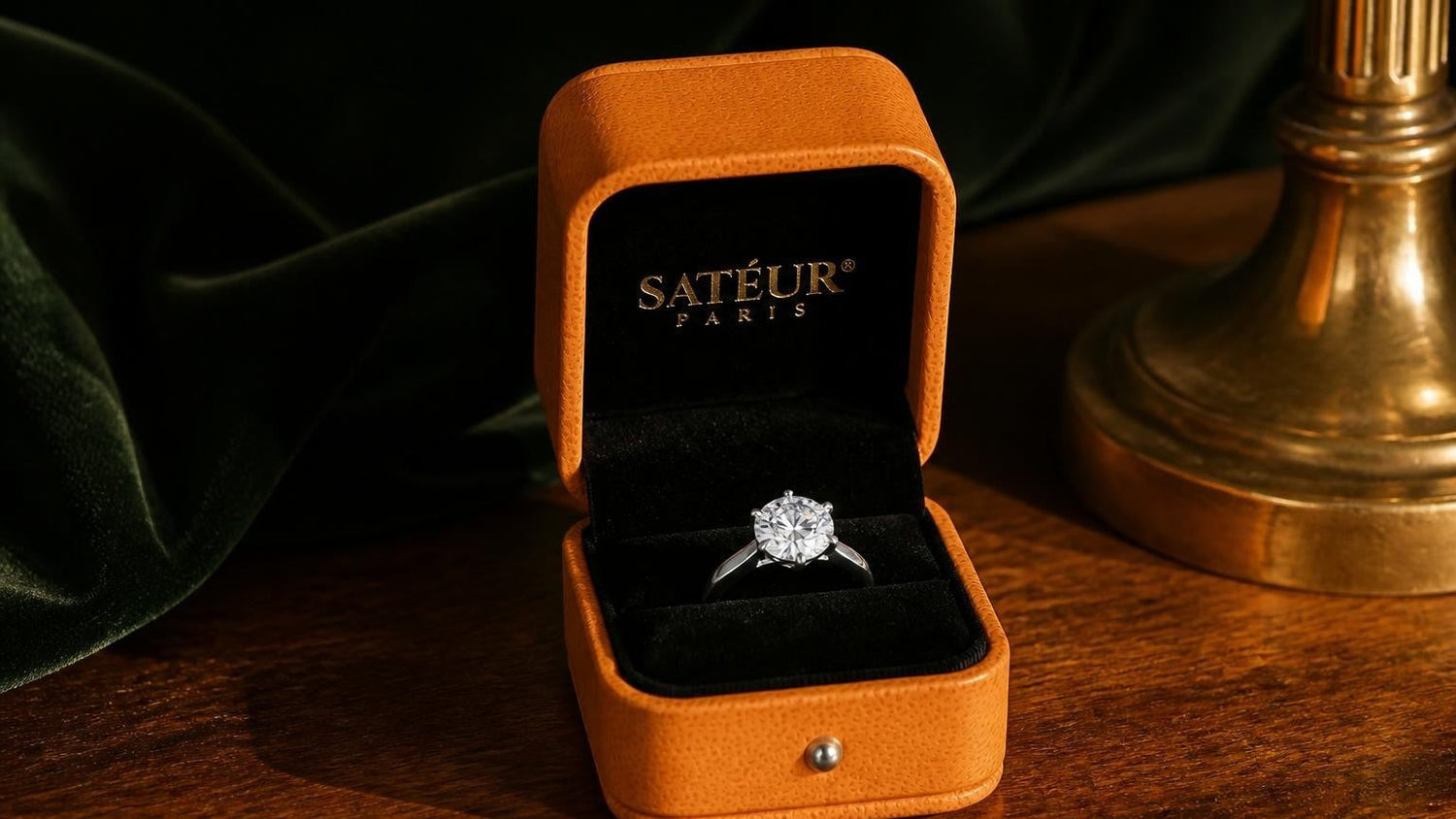
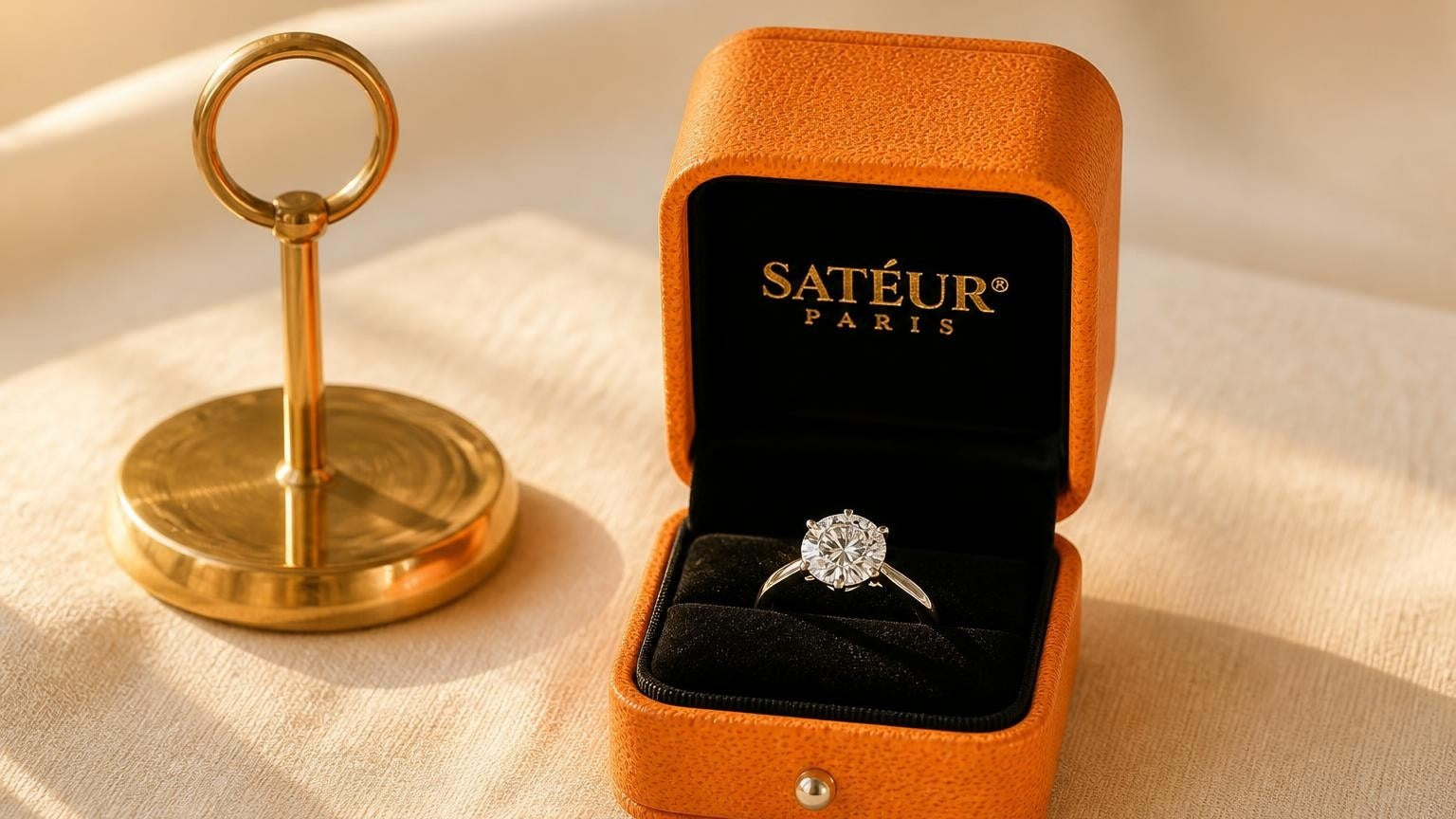
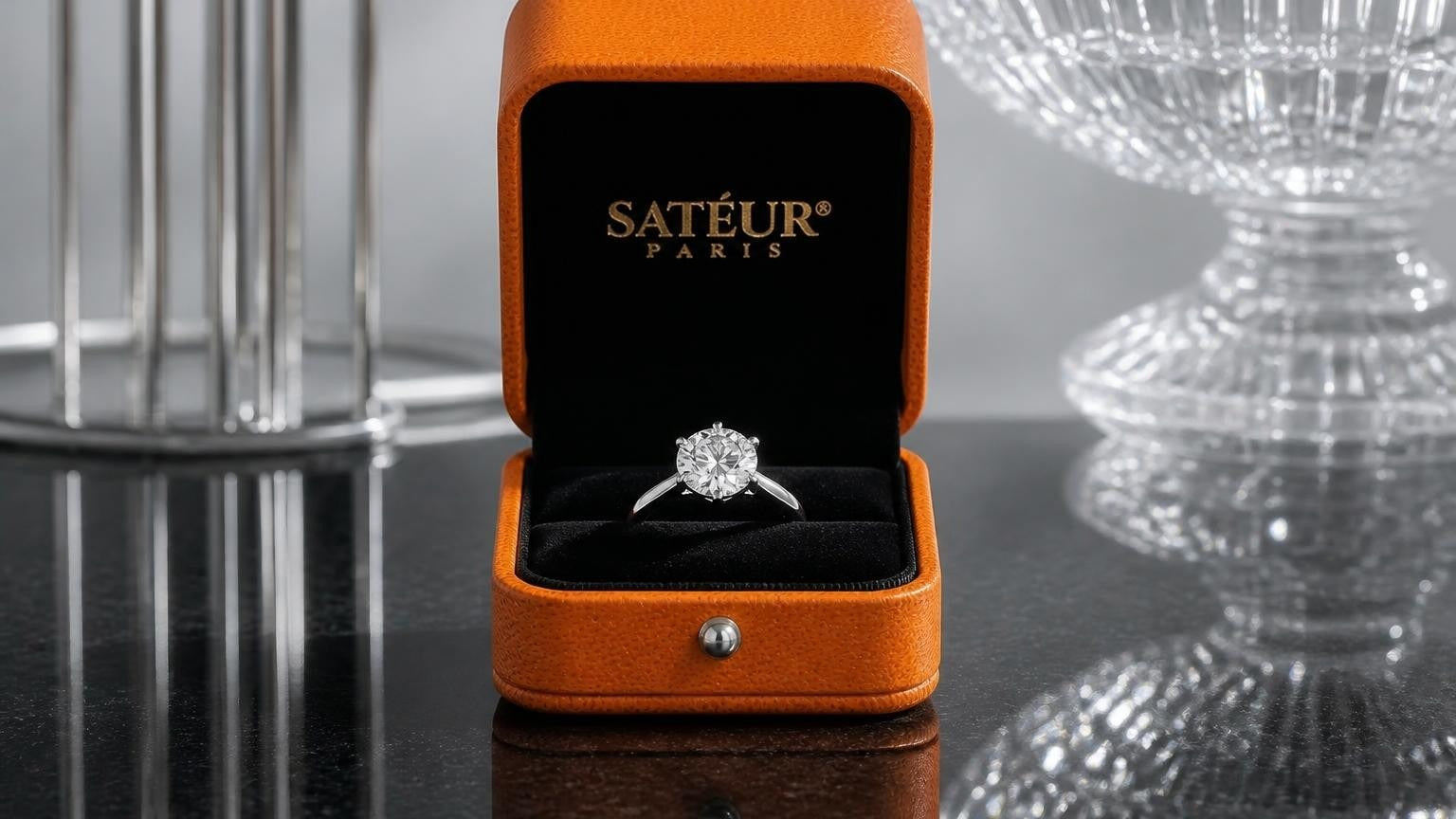
For buyers who want a certified lab-grown diamond, Satéur's Destinée Diamond Ring™ is available in 18k white gold with a round-cut IGI-certified stone. The entry configuration — 1.00 carat at D-E colour, Excellent cut — is priced from $1,098, compared to a $2,098 mined-diamond equivalent.
The ring ships from existing inventory. Full IGI certification documentation accompanies the purchase. The 30-day return window applies.
Frequently Asked Questions
What is a diamond simulant engagement ring?
A diamond simulant is a gem that replicates the visual appearance of a diamond — the colourless brilliance, the facet structure, the optical performance — without being diamond. Satéur Gems® is a trademarked example: graded D-E colour with Excellent cut, it delivers clean white brilliance comparable to a high-grade diamond visually, at approximately 1% of the mined price. It is not a lab-grown diamond; it is a distinct material with a proprietary composition.
How do Satéur Gems® compare in appearance to mined diamonds?
Satéur Gems® are graded D-E colour with Excellent cut, delivering clean white brilliance that is visually comparable to a flawless diamond to the naked eye. The optical performance parameters — colour grade and cut — are the same criteria used to evaluate mined diamonds. The difference is material identity: Gems® is a proprietary simulant, not a diamond. For buyers evaluating appearance alone, the distinction is not visible in normal wear.
Are diamond simulant engagement rings durable for daily wear?
Yes. Satéur Gems® has a Mohs hardness of approximately 8.8, well above the ~7 rating of quartz — the most common abrasive material encountered in daily wear. This means the gem resists scratching from household surfaces, fabrics, and most everyday contact. Moissanite, at approximately 9.25 Mohs, and lab-grown diamonds, at Mohs 10, offer incrementally higher scratch resistance. All three are appropriate for daily engagement ring wear.
Can I customise my lab-created gemstone engagement ring design?
Customisation availability varies by retailer. Most offer metal type selection (white, yellow, or rose gold) and ring sizing as standard. Some offer carat weight options across the same setting design. For simulant and moissanite rings, larger carat weights are available at modest price increments. For certified lab diamond rings, carat weight is a primary price driver. Confirm lead times and return policy for any customised order before committing.
What financing options are available for engagement rings?
Buy now, pay later services (Klarna, Afterpay) split the cost into four to eight interest-free instalments and are widely available at engagement ring retailers. Some retailers offer 0% instalment plans for purchases above a set threshold. For rings under $200, outright payment is usually the simplest route. For lab diamond rings in the $1,000+ range, confirm the instalment terms — particularly the interest rate and any late-payment provisions — before selecting a payment plan over a single transaction.
How do I choose between different metal settings for my ring?
White gold is the most common setting for colourless gems — the cool metallic backdrop maximises the perceived brightness of a D-E stone and suits the majority of engagement ring designs. Yellow gold suits warm skin tones and adds warmth to the overall appearance. Rose gold is an option for buyers who want a softer, contemporary look. Confirm whether the ring is 14k or 18k, and — for white gold — whether it carries a rhodium plating that will require periodic renewal.

Satéur Destinée Diamond Ring™
IGI-certified lab-grown diamond — from $1,098.
D-E colour · Excellent cut · 18k white gold · IGI certified
Free worldwide delivery. 30-day returns. Lifetime Satéur Care.
Shop the Destinée Diamond RingFree worldwide shipping · 30-day returns · Lifetime Satéur Care
















Leave a comment
This site is protected by hCaptcha and the hCaptcha Privacy Policy and Terms of Service apply.