



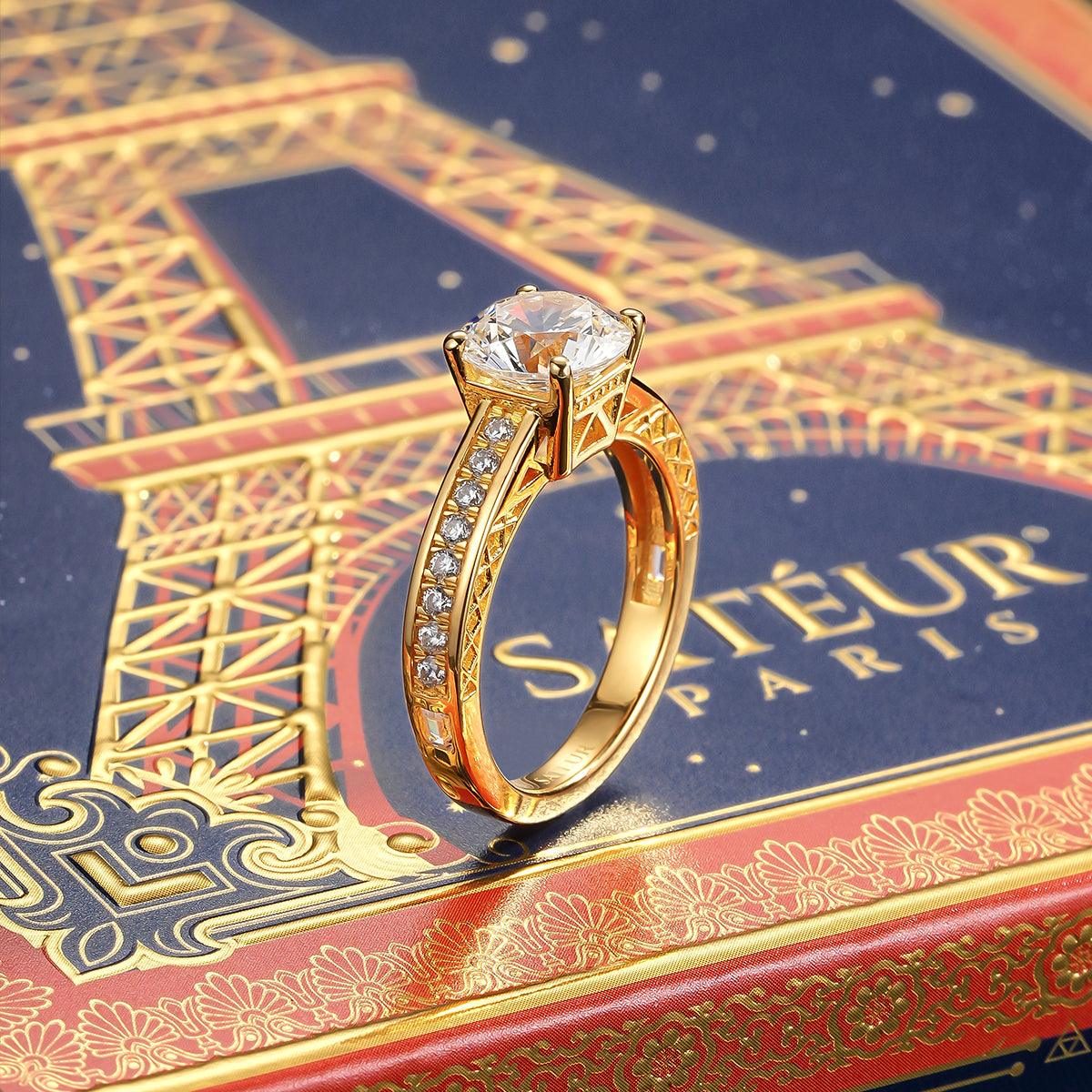
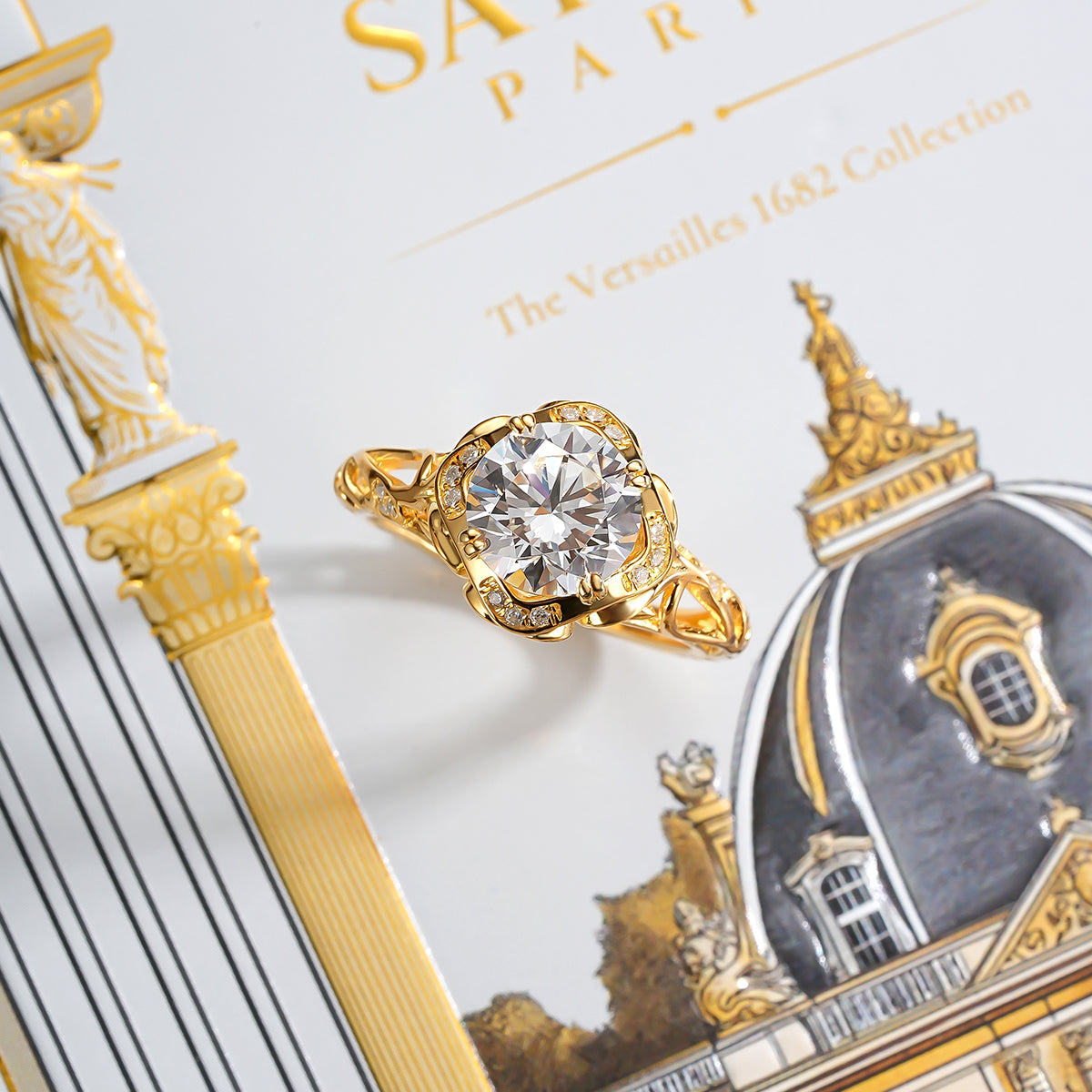
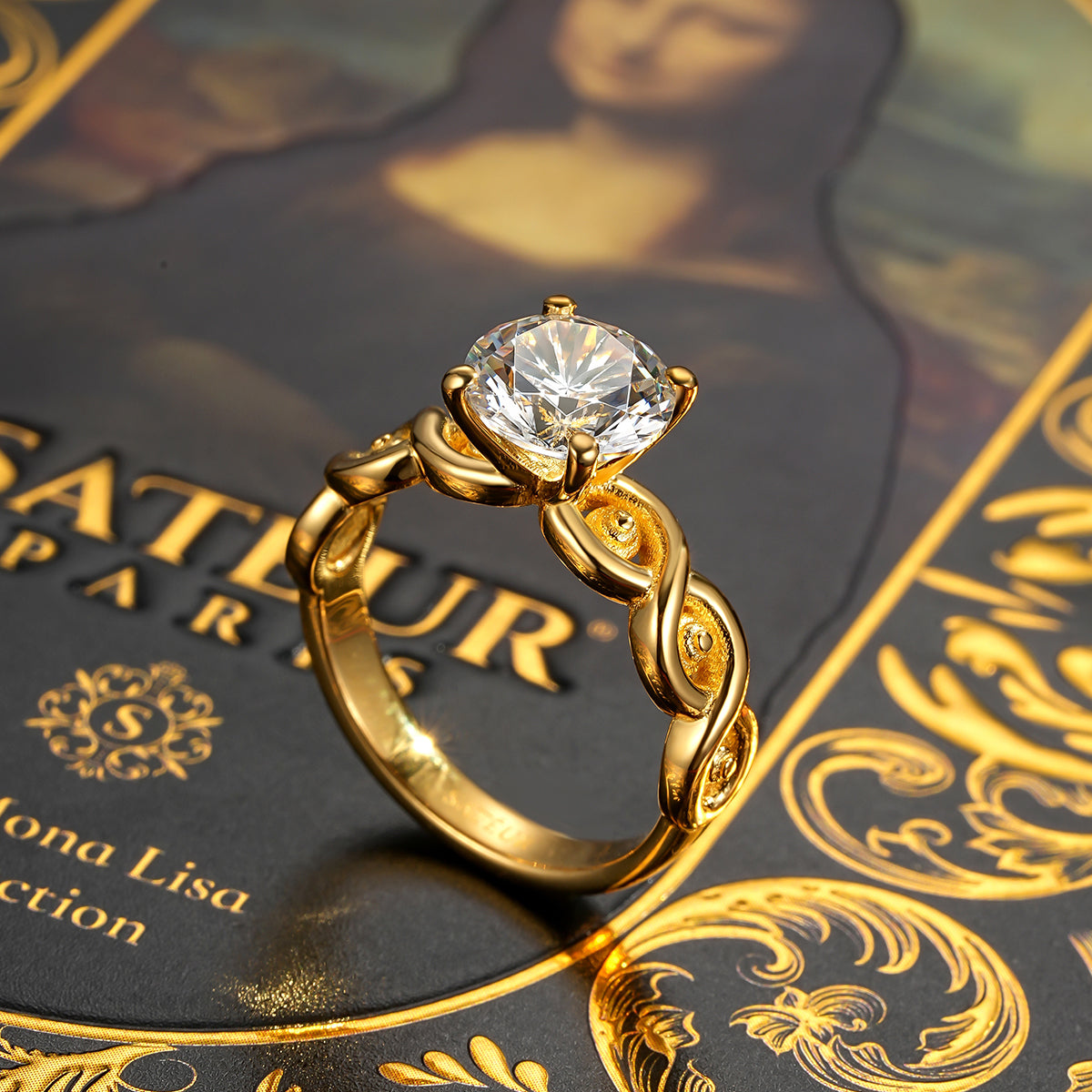
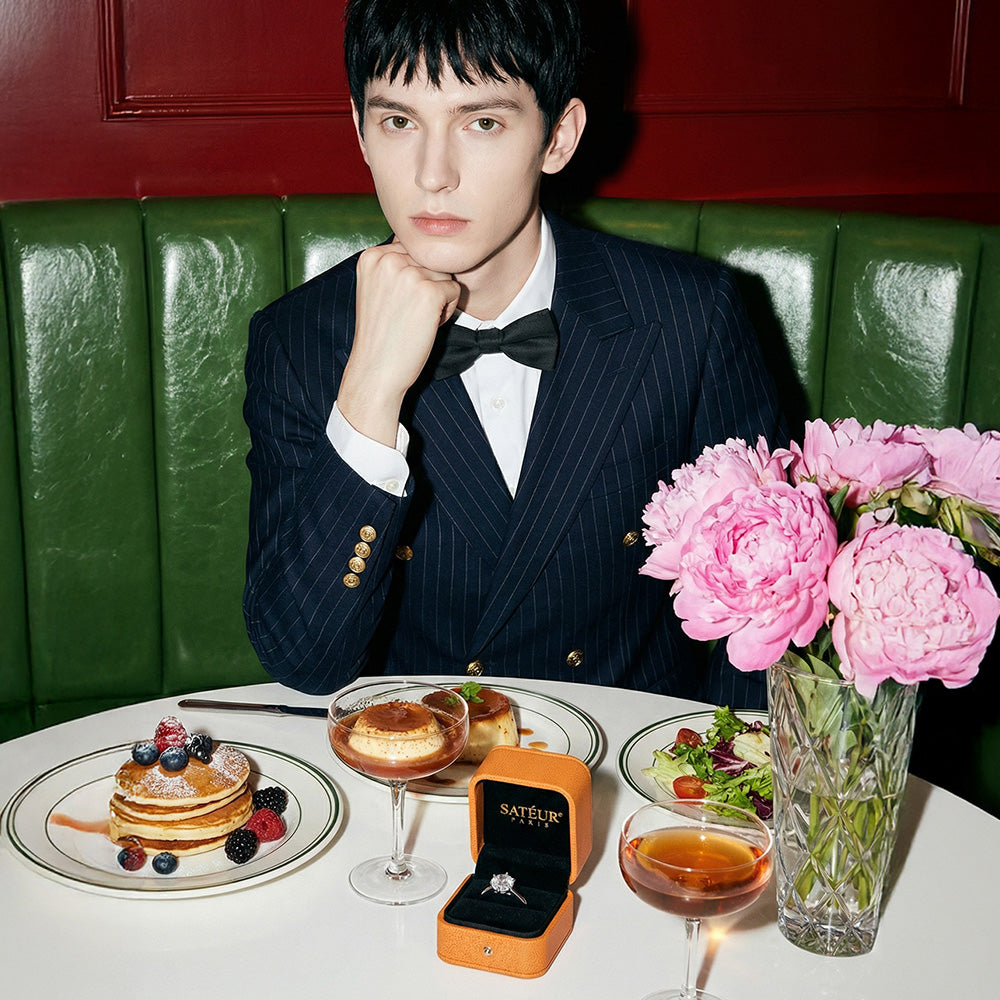

Moissanite is a lab-created gemstone composed of silicon carbide — a material discovered in meteorites in 1893, now engineered in controlled conditions for use in fine jewellery. It is not a diamond. It is a distinct gemstone that, at Mohs 9.25 and with approximately 2.4 times the fire of diamond, stands as one of the most durable and optically compelling alternatives in its own right.
Key Takeaways
- Moissanite is a lab-created gemstone (silicon carbide) — not a diamond, not a diamond imitation. It is a distinct material with defined physical properties.
- Moissanite rates 9.25 on the Mohs hardness scale, approaching diamond's 10 — suitable for daily wear in engagement rings over decades.
- Fire dispersion in moissanite measures approximately 2.4 times that of diamond, producing vivid rainbow brilliance visible to the naked eye under bright light.
- Modern moissanite is graded D-E in colour with Excellent cut, matching the highest diamond colour standards.
- Satéur moissanite rings start from $68, delivering the visual presence of a premium diamond engagement ring at roughly 1% of comparable mined diamond cost.
What Is Moissanite?

Origin and Composition
Moissanite is silicon carbide (SiC) — found originally in the Canyon Diablo meteorite in Arizona in 1893 by Henri Moissan, who initially believed he had found diamond particles. The material proved chemically and physically distinct from diamond in every measurable property.
Lab-Created, Openly Disclosed
All moissanite in jewellery today is lab-created, synthesised in controlled conditions to consistent gemstone quality. Its composition is openly disclosed. It is exactly what it says it is: a lab-created gemstone of exceptional hardness and optical brilliance.
Is Moissanite a Real Diamond?
The Short Answer
No. Moissanite is not a diamond in any technical, chemical, or gemmological sense. Diamond is pure carbon (C), formed under extreme pressure in the earth's mantle. Moissanite is silicon carbide (SiC) — a fundamentally different material with no shared chemical composition.
What Moissanite Shares With Diamond
Both are colourless to near-colourless, both exceptionally hard, both producing brilliance and fire. Those similarities exist because moissanite was engineered to high optical standards — not because it is diamond in disguise. It is its own gemstone category, openly sold as such.
Modern Diamond Alternative: Key Properties

The key physical properties compared across diamond, moissanite, and cubic zirconia:
| Property | Diamond | Moissanite | Cubic Zirconia |
|---|---|---|---|
| Composition | Carbon | Silicon carbide | Zirconium dioxide |
| Mohs hardness | 10 | 9.25 | 8–8.5 |
| Refractive index | 2.42 | 2.65–2.69 | 2.15–2.18 |
| Fire (dispersion) | 0.044 | 0.104 (~2.4× diamond) | 0.060 |
| Colour grade | D–Z range | D-E (engineered) | D-E (degrades) |
| Longevity | Permanent | Permanent | 1–3 years typical |
| Origin | Mined / lab-grown | Lab-created | Lab-synthesised |
Moissanite outperforms diamond in fire dispersion, matches it closely in hardness, and is openly disclosed as a different gemstone at a fraction of the cost. Cubic zirconia is softer and degrades in clarity within a few years of daily wear.
Moissanite Specifications: Colour, Clarity, and Durability
Modern moissanite is engineered to D-E colour grades — the highest range on the diamond colour scale, eliminating the slight yellow tint found in earlier generations. In clarity, lab-created moissanite typically falls in the VS1-VVS2 range: visually flawless without magnification.
At Mohs 9.25, moissanite is the second-hardest gemstone used in fine jewellery after diamond. It resists everyday scratching from keys, countertops, and fabric. Its optical properties do not degrade. A moissanite ring purchased today looks identical in twenty years.
Brilliance and Fire: How Moissanite and Diamond Compare

Diamond produces crisp, white brilliance — clean, concentrated sparkle with moderate colour in its fire. The effect is elegant and restrained.
Moissanite produces vivid rainbow fire — more colour in its sparkle, more intensity under directional light. Its refractive index of 2.65–2.69 (versus diamond's 2.42) and dispersion of 0.104 (versus diamond's 0.044) mean approximately 2.4 times the colour range in its fire. Under bright or directional light, this difference is visible to the naked eye.
Moissanite does not look "fake." It looks like a high-fire gemstone. Some buyers prefer the intensity; others prefer diamond's more subdued brilliance. Both are distinct premium optical characters.
Price and Value Proposition
Cost Comparison
A 1-carat mined diamond in D-E colour retails between $4,000 and $10,000. A 1-carat moissanite in the same colour and cut grade costs well under $500 at most retailers.
Why the Gap Exists
The savings are not a quality gap. Moissanite's hardness, colour grade, and fire are competitive with premium diamond on every measurable specification. The cost difference reflects material scarcity and supply chain structure, not performance.
Moissanite Care and Longevity
Moissanite requires no special maintenance: mild soap, warm water, and a soft brush are sufficient. It does not cloud over time — its fire, colour, and brilliance hold across decades of daily use. See our guide on what is moissanite and the moissanite vs diamond vs lab diamond breakdown for more.
Satéur Moissanite Rings: Why the Value

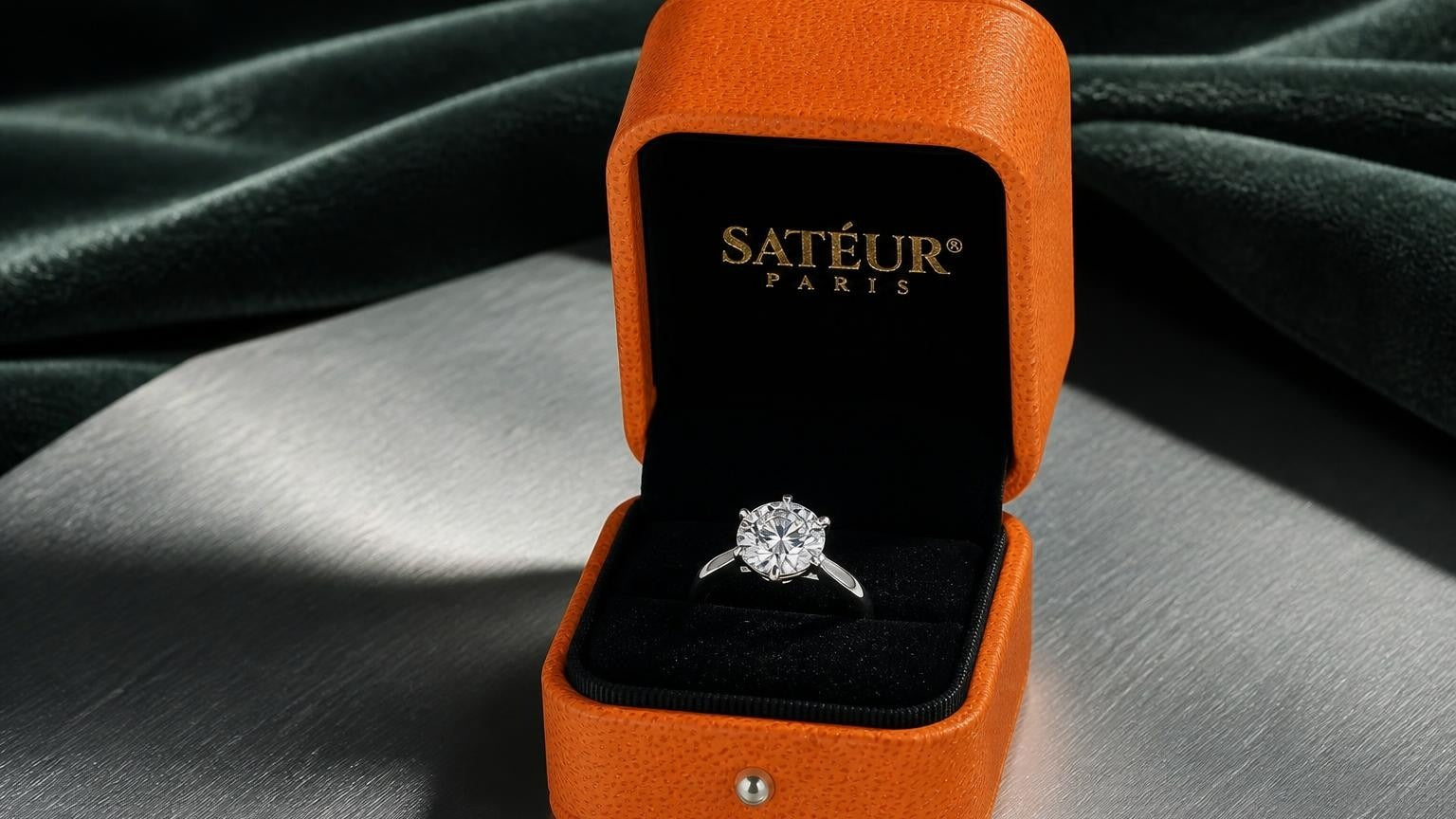
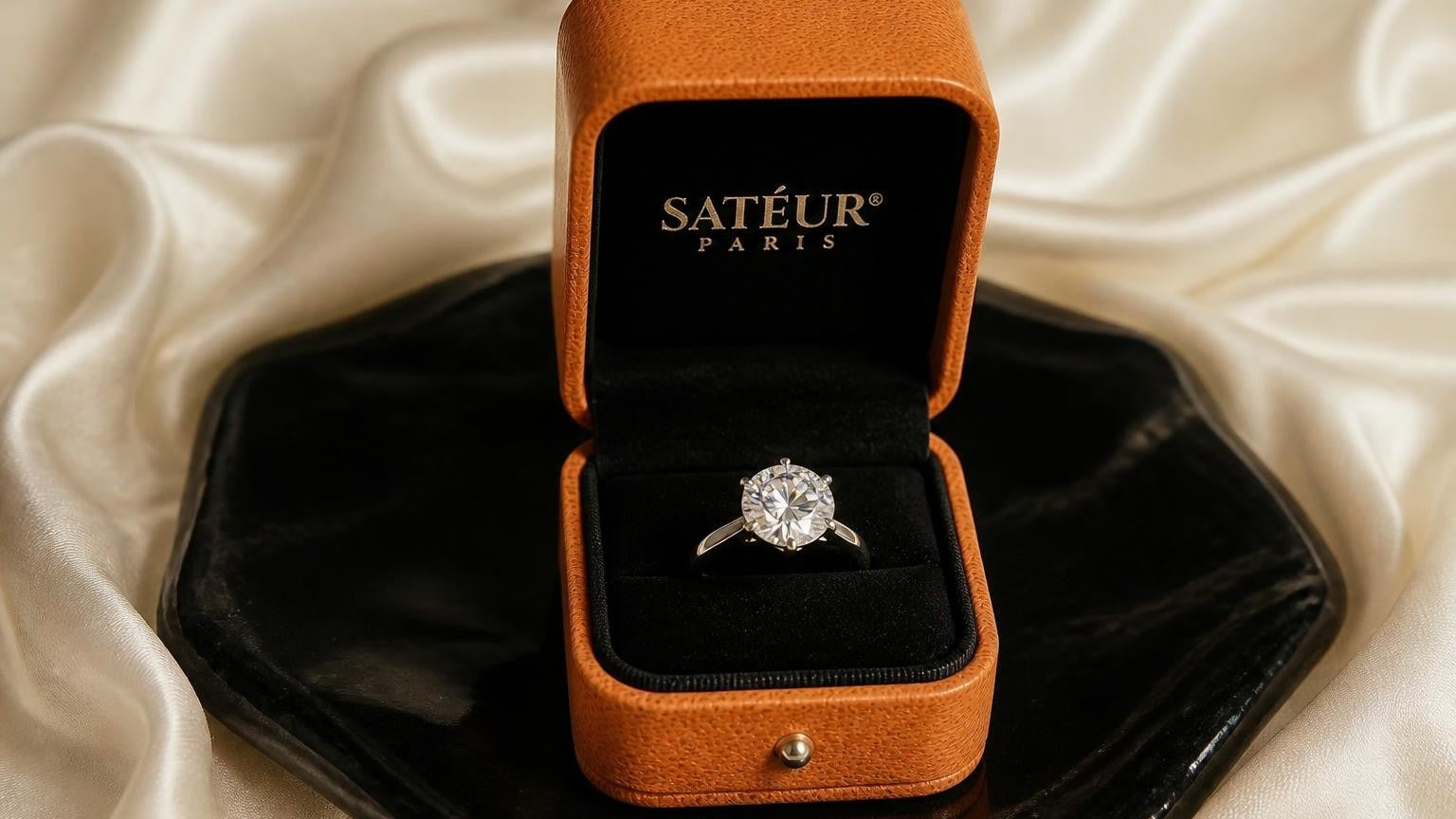
Satéur moissanite rings start from $68 — lab-created silicon carbide, graded D-E colour with Excellent cut, hand-set in an 18k gold finish. A comparable mined diamond ring in D-E colour starts above $4,000. The value proposition is direct: the visual appearance of a flawless diamond ring at roughly 1% of the price.
- From $68 — multiple styles, carat weights, and settings
- D-E colour grade — colourless, matching premium diamond range
- Excellent cut — maximum fire and light return
- 18k gold finish — durable setting for daily wear
- 30-day returns, Lifetime Satéur Care
Browse the full Satéur moissanite rings collection. For a ring-specific comparison, see our guide on moissanite ring vs diamond ring and are moissanite diamonds real.

Satéur Destinée Ring™
The look of a flawless diamond — from $138.
D-E colour · Excellent cut · 18k gold finish
Free worldwide delivery. 30-day returns. Lifetime Satéur Care.
Shop the Destinée RingFree worldwide shipping · 30-day returns · Lifetime Satéur Care
Frequently Asked Questions
What is moissanite and how does it differ from diamond?
Moissanite is a lab-created gemstone of silicon carbide (SiC). Diamond is pure carbon (C). The two are chemically distinct. Moissanite rates Mohs 9.25 (diamond is 10), has a higher refractive index (2.65–2.69 vs 2.42), and produces approximately 2.4 times diamond's fire dispersion. It is openly disclosed as a separate gemstone — not a diamond imitation.
Is moissanite a real diamond?
No. Diamond is pure carbon formed under geologic pressure; moissanite is silicon carbide engineered in a laboratory. They share no chemical composition. Moissanite is its own gemstone category — Mohs 9.25, D-E colour grade, approximately 2.4 times the fire of diamond — sold openly as moissanite with full composition disclosure.
Why is moissanite more affordable than diamond?
Moissanite is lab-created at scale. Diamond's price reflects material scarcity, mining costs, and supply chain structure. The cost gap does not reflect a performance difference — moissanite is competitive with diamond in hardness, colour grade, and optical output. The price difference is a function of supply, not quality.
Will moissanite remain clear and brilliant over time?
Yes. Moissanite does not cloud or degrade under normal wear. Its fire, brilliance, and colour are permanent. At Mohs 9.25, it resists the fine scratching that causes softer stones to lose clarity. A moissanite ring maintained with basic cleaning retains its original appearance indefinitely.
What is the hardness of moissanite compared to diamond?
Diamond is Mohs 10 — the hardest natural substance. Moissanite is Mohs 9.25. Both are effectively scratch-resistant under everyday wear. The practical gap between 9.25 and 10 is negligible for engagement ring use; the meaningful durability difference is between moissanite (9.25) and softer alternatives such as cubic zirconia (8–8.5).
Is moissanite a good choice for an engagement ring?
Yes. It has the hardness for daily wear, D-E colour grades matching premium diamond, and optical properties that hold indefinitely. Its fire is more vivid than diamond's — visible under direct light, which some buyers prefer. The cost difference relative to mined diamond is substantial. It is a transparent, durable choice.
How do I care for a moissanite engagement ring?
Mild soap and warm water with a soft brush is sufficient for routine cleaning. Moissanite is safe in ultrasonic cleaners. Avoid prolonged contact with chlorine bleach. At Mohs 9.25, it is highly resistant to everyday scratch conditions.
Can moissanite be used in any ring setting?
Yes. Moissanite is available in round brilliant, oval, cushion, pear, emerald, and other cuts, and fits standard prong, bezel, halo, and pavé settings. Its hardness makes it compatible with everyday-wear settings that would damage softer stones.
How does moissanite grade compare to diamond grading?
Modern moissanite is graded D-E in colour — the top range on the diamond scale. In clarity, lab-created moissanite is typically free of inclusions visible to the naked eye, equivalent to VS1-VVS2 in diamond terms. Cut grades follow the same Excellent/Very Good/Good scale.
Which gemstone is the right choice for my engagement ring?
That depends on what you are buying for. If you want diamond — the specific material, its provenance, or market value — moissanite is a different choice. If your criteria are visual appearance, hardness, colour grade, and long-term durability, moissanite meets all of those at a fraction of the mined diamond price. Neither choice is inherently "right."















Leave a comment
This site is protected by hCaptcha and the hCaptcha Privacy Policy and Terms of Service apply.