






A mined diamond is one of the rarest gems on earth — and the market for rings that replicate its appearance spans legitimate simulants, undisclosed substitutions, and everything in between. Knowing what distinguishes a real diamond from an alternative comes down to optical properties, grading certificates, and where you buy. The issue is not whether a simulant exists; it is whether the seller discloses what they are selling.
Key Takeaways
- Mined diamonds typically contain inclusions visible under 10× magnification; flawless stones are rare and command premium pricing.
- Diamond simulants such as moissanite are lab-created gemstones with distinct optical properties, including higher fire (~2.4× that of diamond) and different refractive indices.
- Authentic diamonds grade D–E in colour are nearly colourless; visible yellowing under standard light may indicate a simulant or a lower-grade stone.
- Diamond hardness rates 10 on the Mohs scale; simulants typically range 8.5 to 9.25, which affects scratch resistance over decades of wear.
- Professional gemological certification requires laboratory equipment and expertise; home observation of brilliance, colour, and setting quality provides a useful baseline assessment.

Understanding Diamond Authenticity
A real diamond is a naturally occurring carbon crystal that forms under extreme pressure deep within the earth — a process taking billions of years, which is why a one-carat D-colour flawless stone commands tens of thousands of dollars at wholesale.
The question of how to spot a fake diamond ring is, in practice, a question of disclosure. Alternatives to diamond — moissanite, cubic zirconia, white sapphire — are not inherently deceptive. They become a problem only when sold without honest disclosure.
What Makes a Diamond Real
Mined diamonds are graded on four criteria — cut, colour, clarity, and carat weight. A D–E colour stone is nearly colourless under standard lighting. An internally flawless stone has no visible inclusions under 10× magnification. These grades are documented in a laboratory certificate from the GIA, AGS, or IGI.
Why Certification Matters
A certificate from a recognised gemological laboratory is the single most reliable confirmation of what a stone actually is. It records the species, measurements, colour grade, clarity grade, and cut quality. Any seller offering an uncertified stone at a price suggesting it is a mined diamond warrants additional scrutiny.
Brilliance and Fire: The Visual Markers
Diamonds reflect light in a specific way: a mined diamond (refractive index 2.42) produces crisp white brilliance — sharp light reflections with only subtle prismatic colour at the facet edges. This is one of the visual characteristics that distinguishes diamond from other stones visually.

How Different Stones Handle Light
- Mined diamond (RI 2.42): crisp white brilliance, focused reflections, subtle prismatic fire at facet edges.
- Moissanite (RI 2.65–2.69): vivid rainbow fire that is visibly more intense and multi-coloured than diamond. The difference is detectable to the naked eye in bright light.
- Cubic zirconia (RI 2.15–2.18): softer, more diffuse sparkle, visibly less intense than either diamond or moissanite. CZ also accumulates surface scratching within one to three years of regular wear, which reduces brilliance over time.
Colour Under Direct Light
Genuine D–E colour diamonds appear colourless under most lighting. Lower-grade cubic zirconia may display a warm or glassy tone under strong directional light. Moissanite sits close to colourless, though its higher fire distinguishes it from diamond to an attentive observer.
Inclusions and Surface Characteristics
Mined diamonds almost always contain inclusions — microscopic internal features left by the formation process. A stone marketed as internally flawless at a commodity price should be verified by certificate. Simulants such as moissanite and cubic zirconia are manufactured under controlled conditions and are typically free of the natural inclusions that characterise mined diamonds.
Surface Wear Over Time
Hardness determines how a ring's stone holds up over years of wear. Diamond at Mohs 10 does not scratch under normal conditions. Moissanite at Mohs 9.25 is similarly durable in daily use. Cubic zirconia at Mohs 8–8.5 is susceptible to surface scratching from dust and everyday contact, producing a visible cloudiness over time that is irreversible without re-polishing.
For a ring worn daily, surface condition after several years is a practical indicator of the stone's identity — an observation over time, not a purchase-time test.
Weight and Setting Considerations
A real diamond is denser than most simulants. A one-carat mined diamond is smaller in physical diameter than a cubic zirconia of the same carat weight, because CZ is heavier per volume (specific gravity ~5.6–5.9 vs diamond's ~3.5). This means a visually large stone that feels heavier than expected for its visual size may merit closer examination.

Setting Quality as a Signal
High-quality mined diamonds are typically set in precious metals — 14k or 18k gold, platinum, or sterling silver with a durable finish. Prong quality matters: an undisclosed simulant swap sometimes involves a mount that is inconsistent in quality with the claimed stone value. Inspect the setting for finish consistency.
Reading the Metal Stamp
Check the inside of the band for a hallmark indicating metal quality. Genuine jewellery in 10k, 14k, or 18k gold carries a stamped mark. Platinum rings are marked PT950 or PLAT. The absence of any hallmark on an allegedly precious-metal ring is worth noting.
Simple Home Observations
A few straightforward observations require no equipment and provide a useful starting point:
- The fog test: breathe gently on the stone. A real diamond disperses heat almost instantly and clears within one to two seconds. A simulant with lower thermal conductivity takes several seconds to clear. This is not a definitive test — moissanite also clears quickly — but a prolonged fog response is worth noting.
- Colour observation: hold the ring under a neutral light source and observe the stone's body colour and the quality of its light return. Crisp white reflections with minimal colour fringing are consistent with diamond.
- Stamp inspection: check the inside of the band for a hallmark indicating metal quality (10k, 14k, 18k, PT950). The absence of a hallmark on an allegedly precious-metal ring is a concern.
What Jewelers Look for in Authentication
Professional authentication uses instruments not available at home — thermal conductivity probes, electrical conductivity testers, and spectrographic analysis. These tools distinguish diamond from moissanite with reliable accuracy (moissanite conducts electricity; diamond does not — thermal testing alone can misread moissanite as diamond). A professional assessment takes minutes.

What a Certificate Tells You
A GIA, AGS, or IGI certificate records the exact stone identity, dimensions, and grading — it is the most reliable document in the transaction. For any purchase above a few hundred dollars, requesting the original laboratory certificate and verifying it against the grading body's online lookup tool is standard due diligence. A certificate number that does not appear in the grading lab's database is a clear signal that further investigation is warranted.
Buying from Reputable Sources
The most reliable protection against an undisclosed substitution is purchasing from a reputable jeweler who provides a laboratory certificate. Reputable sellers disclose what they are selling — including when a ring contains a simulant rather than a mined diamond.
Diamond Simulants vs. Mined Diamonds
Understanding the simulant landscape helps distinguish between fraud and an intentional, disclosed purchase:
| Stone | Mohs Hardness | Refractive Index | Key Visual Character | Disclosure |
|---|---|---|---|---|
| Mined Diamond | 10 | 2.42 | Crisp white brilliance | GIA/IGI/AGS certificate |
| Moissanite | 9.25 | 2.65–2.69 | Vivid rainbow fire (~2.4× diamond) | Lab-created gemstone, openly sold |
| Cubic Zirconia | 8–8.5 | 2.15–2.18 | Softer sparkle; clouds within 1–3 years | Synthetic, openly sold |
| White Sapphire | 9 | 1.76–1.78 | Milky, low fire | Natural or lab-created, openly sold |
| Trademarked Diamond Simulant | ~8.8–9.25 | ~2.39–2.65 | Clean white brilliance of a flawless diamond | Fully disclosed; proprietary composition |
The Disclosure Principle
The distinction between simulants and mined diamonds is not a moral one — it is a disclosure one. A legitimately sold simulant ring is an honest product at a transparent price. The issue is undisclosed substitution: selling a simulant as a mined diamond without disclosure.
For further reading on distinguishing real diamonds from alternatives, see our guides on how to spot a fake diamond and how to tell a real diamond from a fake.
Why Price Matters When Evaluating Diamonds
A genuine D-colour, one-carat mined diamond in an ideal cut costs $4,000–$10,000 or more at retail. Prices well below market for an item presented as a mined diamond are the clearest single indicator that something warrants closer examination.
The Price Spectrum
- Mined diamond (1 ct, D–F colour, VS1–SI1): $4,000–$12,000+ depending on cut and grading laboratory.
- Moissanite (1 ct equivalent): $400–$800 from reputable sellers, openly disclosed as moissanite.
- Cubic zirconia: $10–$100 for most rings, openly sold.
- Trademarked diamond simulant: from $138, openly disclosed as a simulant.
When a seller prices a "diamond" ring at $80–$200, the probability of a mined diamond is near zero. At those prices, the ring almost certainly contains a simulant. Honest sellers disclose this. Dishonest sellers do not. Price alone is the fastest filter.
Also see: how to tell if a diamond is fake — a companion guide to identification methods and buying safeguards.
Satéur Gems: The Diamond Simulant Alternative
The appropriate response to undisclosed fakes is not to avoid simulants — it is to buy from sellers who disclose exactly what they are selling. Satéur is built on that premise.
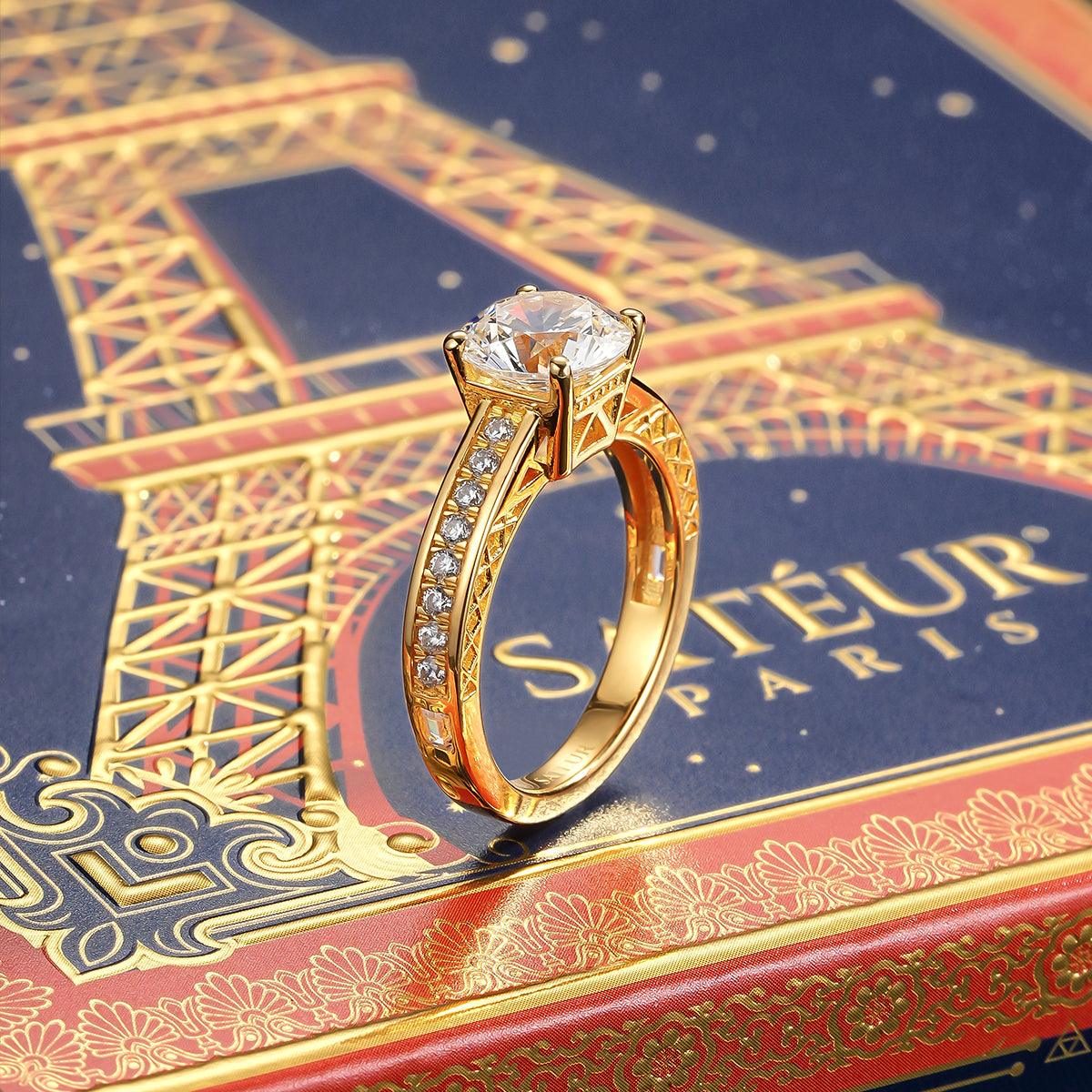
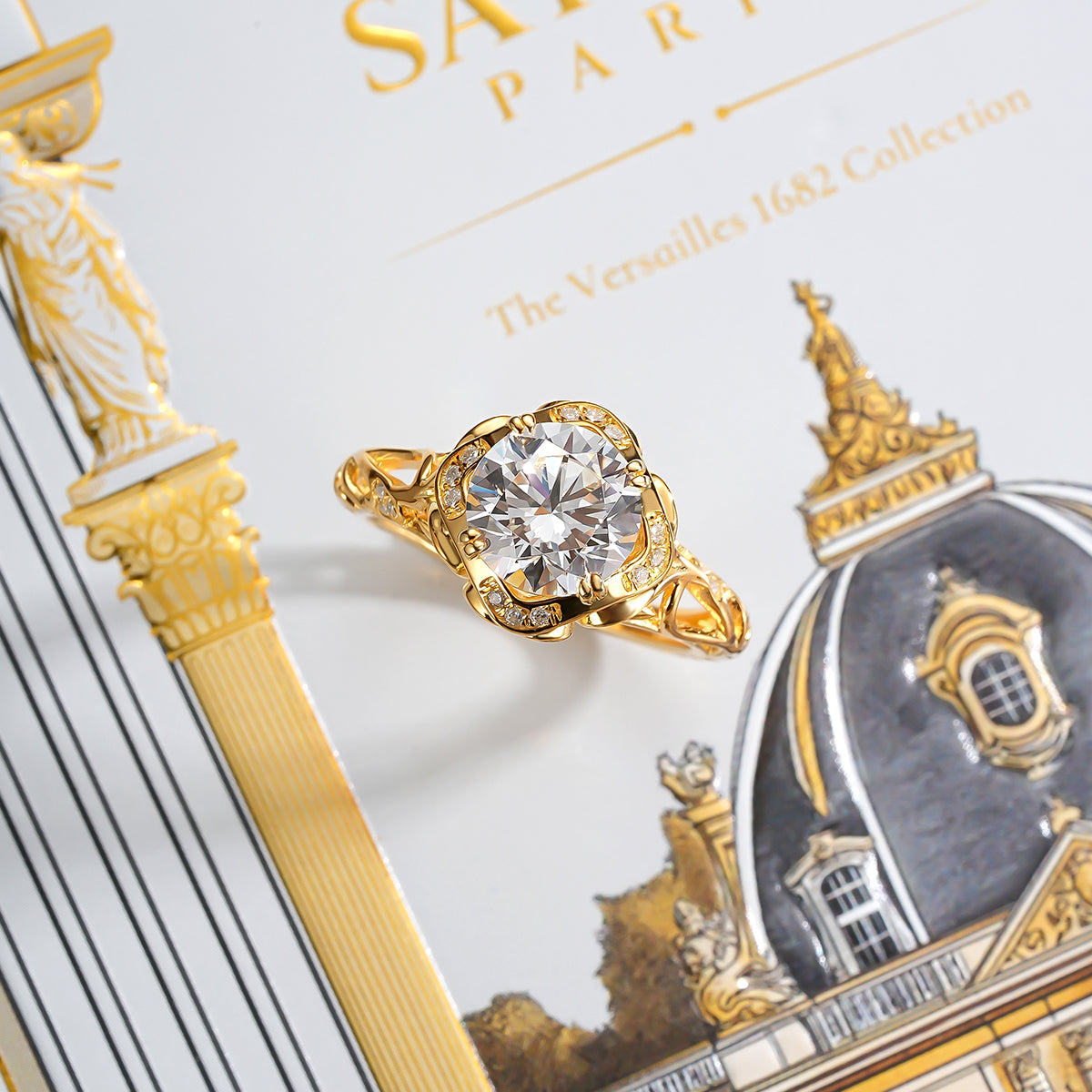
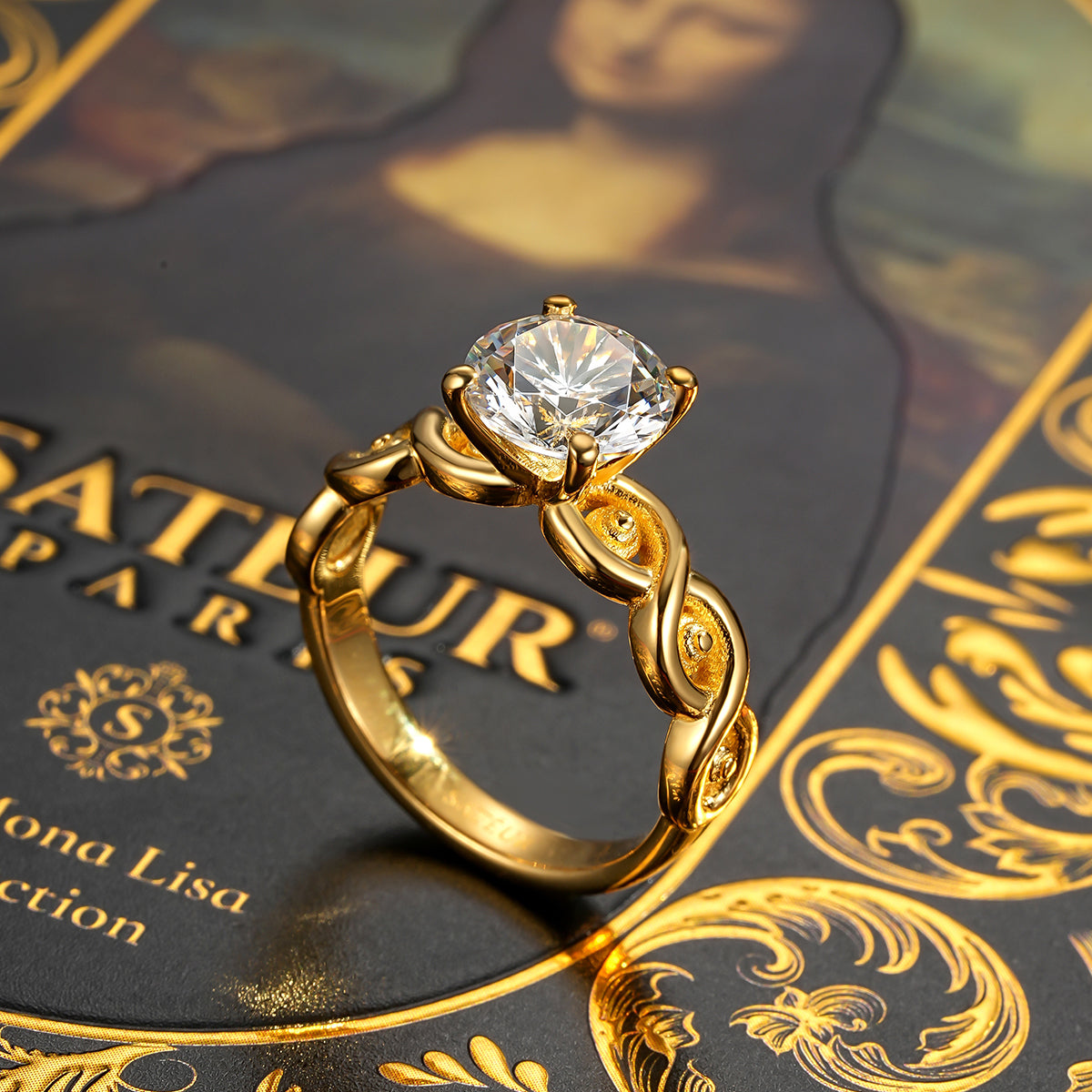
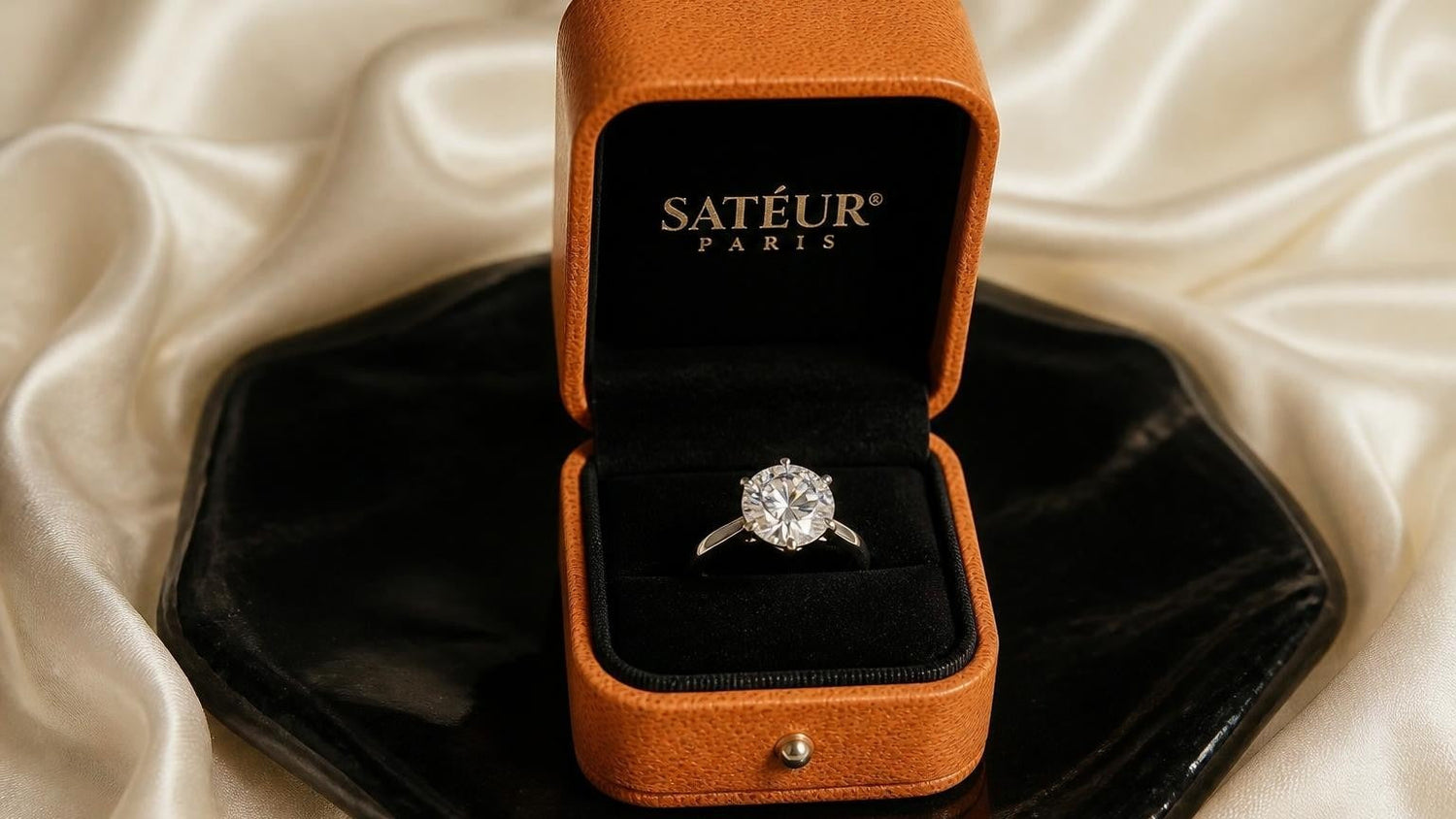
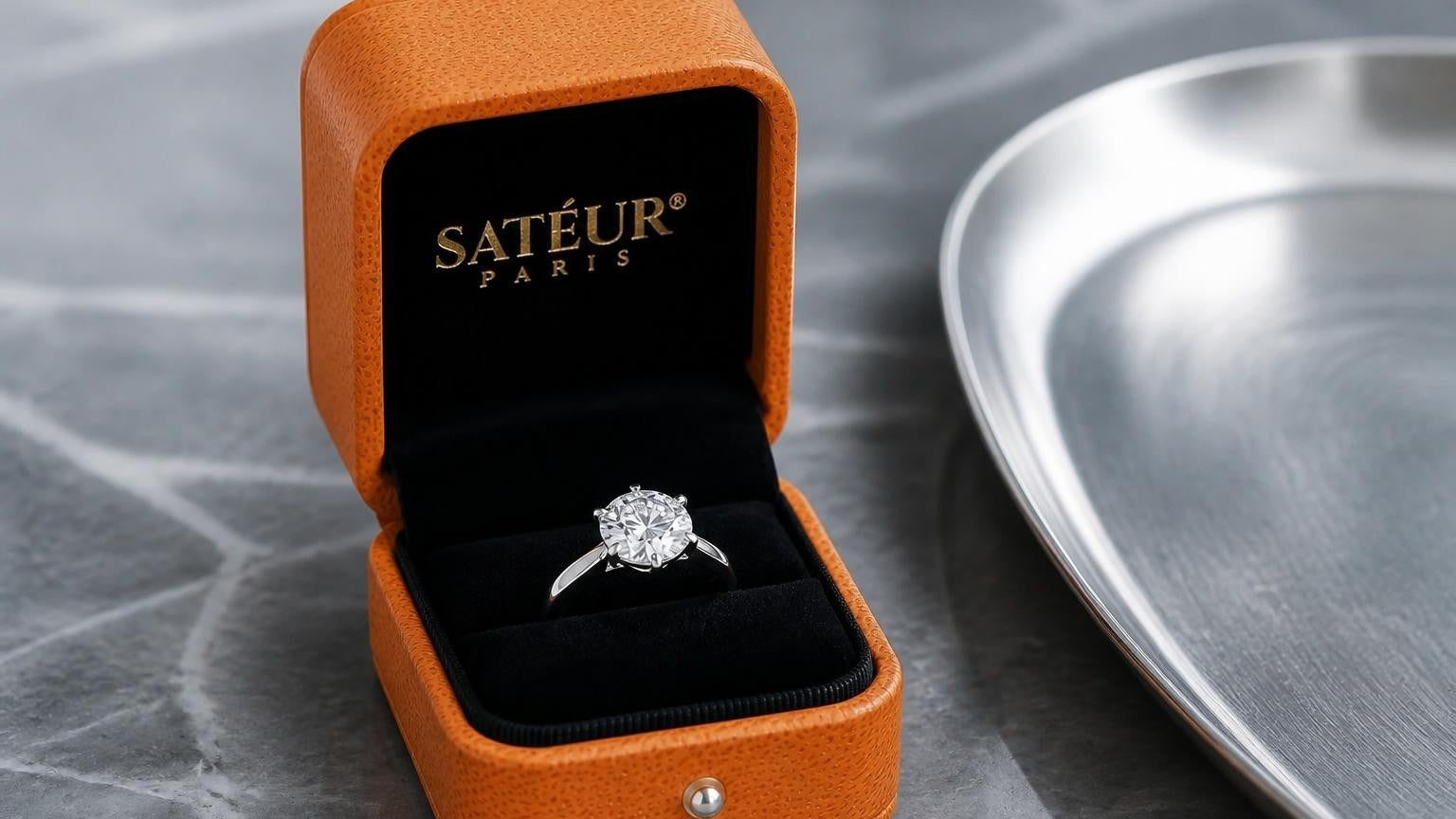
Satéur Gems® is a trademarked diamond simulant that replicates the clean white brilliance of a flawless diamond. The composition is proprietary, and Satéur does not disclose the specific material — but what Satéur does disclose, clearly, is that the stone is a diamond simulant, not a mined diamond. The D–E colour equivalent appearance and Excellent cut are documented. The price is not a mined diamond price: Satéur Gems® rings start at approximately 1% of the cost of a comparable mined diamond.
What Honest Disclosure Looks Like
This is the honest-disclosure model. You know what you are buying. The look is the point — not deception.
Browse the full range of Satéur engagement rings, including designs in Satéur Gems®, moissanite, and lab diamond.

Satéur Destinée Ring™
The look of a flawless diamond — from $138.
D-E colour · Excellent cut · 18k gold finish
Free worldwide delivery. 30-day returns. Lifetime Satéur Care.
Shop the Destinée RingFree worldwide shipping · 30-day returns · Lifetime Satéur Care
Frequently Asked Questions About Diamond Verification
What is the difference between a diamond simulant and a mined diamond?
A mined diamond is a naturally occurring carbon crystal, graded by an independent laboratory (GIA, IGI, AGS) for cut, colour, clarity, and carat weight. A diamond simulant is a stone — natural or lab-created — that replicates diamond's visual appearance using different chemistry and optical properties. The key difference is disclosure: a simulant sold as such is an honest product; a simulant sold as a mined diamond without disclosure is not.
Can you tell if a diamond is real just by looking at it?
With experience, several visual cues help. A mined diamond produces crisp white brilliance with subdued prismatic colour at facet edges. Moissanite's vivid rainbow fire is visibly more intense and multi-coloured to the naked eye. Cubic zirconia appears more glassy and less reflective. These distinctions are easier to observe in bright, directional light — but a definitive identification requires a laboratory instrument or a gemological certificate.
Why do some diamonds appear to sparkle more than others?
Sparkle is primarily a function of cut quality. An Excellent or Ideal cut stone maximises light return through the crown facets. Colour and clarity have minimal visible effect at typical viewing distances. Simulants with higher refractive indices — such as moissanite (RI 2.65–2.69 vs diamond's 2.42) — produce more intense fire, which some observers mistake for superior quality. It is simply a different optical character, not a superior one.
What role does the setting play in evaluating a diamond ring's authenticity?
Setting quality is a useful contextual signal. High-value mined diamonds are invariably set in high-quality precious metals — 14k or 18k gold, platinum — with fine prong finish. A setting inconsistent in quality with the claimed stone value, or an absence of metal hallmarks, warrants closer examination. The setting alone cannot confirm stone identity, but it narrows the probability range.
How much should a real diamond cost compared to a simulant?
A one-carat D-colour mined diamond in VS1 clarity retails for $4,000–$12,000 or more. Moissanite of equivalent visual presence costs $400–$800. Cubic zirconia runs $10–$100. A trademarked diamond simulant ring starts from $138. Any offer of a "diamond" ring at $200 or less almost certainly contains a simulant — the mined diamond pricing floor is orders of magnitude higher.
What certification should you request when purchasing a diamond?
Request a certificate from the GIA (Gemological Institute of America), IGI (International Gemological Institute), or AGS (American Gem Society). Verify the certificate number directly on the grading body's online lookup tool before completing the purchase. A certificate number that does not appear in the official database should end the transaction.

















Leave a comment
This site is protected by hCaptcha and the hCaptcha Privacy Policy and Terms of Service apply.