




Cubic zirconia sterling silver rings offer the diamond look at a fraction of mined-diamond cost — a practical entry point for anyone who wants a bright, sparkling ring without the premium price. Sterling silver (.925 hallmark) is the industry standard for fine-jewellery rings, pairing well with diamond simulants at prices that begin from $68. Understanding how cubic zirconia compares to a dedicated diamond simulant such as Satéur Gems® helps you choose the right ring for your lifestyle and budget.
Key Takeaways
- Sterling silver (.925 hallmark) is the industry standard for fine-jewellery rings, offering durability paired with accessible pricing.
- Cubic zirconia and Satéur Gems® are distinct diamond simulants; both deliver diamond-look aesthetics at a fraction of mined-diamond cost.
- Diamond simulants in sterling silver do not require annual appraisals or insurance riders tied to precious-metal spot price.
- Satéur entry-price point begins around $68, positioning diamond-simulant rings within reach of most budgets.
- Sterling silver cubic zirconia rings require basic care — mild soap, dry storage — to maintain their appearance over time.

Sterling Silver Cubic Zirconia Rings
Sterling silver is an alloy of 92.5% pure silver and 7.5% copper — the .925 hallmark confirms this standard. Cubic zirconia (CZ) is a synthetic crystalline material, refractive index ~2.15–2.18, Mohs hardness ~8.0–8.5. It scratches more easily than diamond and can cloud after one to three years of daily wear. CZ suits occasional wear or rings replaced every few years without regret.
The 925 silver plus CZ combination is the most affordable entry into diamond-look jewellery, with prices typically from $20 to $150. If everyday durability is the priority, the limits of both CZ (scratching, clouding) and sterling silver (tarnishing without proper storage) are relevant factors to weigh upfront.
What Are Cubic Zirconia Diamond Simulants
Diamond simulants are materials engineered to replicate the visual appearance of a mined diamond. Cubic zirconia has been the most widely used simulant since the 1970s; it is optically clear, inexpensive to produce, and available in any cut or carat weight. Its dispersion (0.060) slightly exceeds that of diamond (0.044), which creates a flash of colour some buyers find appealing and others find artificial.

Key limitations of CZ in everyday use: surface micro-scratches accumulate over months, dulling the gem visually; skin oils penetrate those scratches producing a foggy appearance; and the sterling silver band tarnishes through oxidation without proper storage. For fashion rings, occasion pieces, or travel jewellery, a sterling silver cubic zirconia ring delivers genuine value. The honest position: budget for periodic replacement if worn daily, and clean it every two to three weeks.
For buyers who want a higher-durability diamond simulant, understanding how cubic zirconia compares to other simulants helps clarify the trade-off.
Satéur Gems® vs. Cubic Zirconia: Comparative Value

Satéur Gems® is a trademarked diamond simulant engineered to replicate the optical performance of a flawless mined diamond. Its composition is not disclosed — the brand follows the Swarovski model, protecting proprietary stone identity — but the measurable specifications are:
| Property | Cubic Zirconia | Satéur Gems® | Mined Diamond |
|---|---|---|---|
| Mohs Hardness | ~8.0–8.5 | ~8.8 | 10 |
| Colour Grade | Variable (often I–J visually) | D–E (colourless) | D–Z (varies) |
| Cut Grade | Variable | Excellent | Ideal–Excellent |
| Brilliance character | Moderately bright; dulls over time | Clean white brilliance of a flawless diamond | Crisp white brilliance |
| Price (1ct equivalent) | $10–$50 | From $68 | $3,000–$12,000+ |
The Satéur Gems® entry price is higher than generic CZ — but so is the durability floor and colour consistency. Satéur rings are set in an 18k gold finish over 925 silver, adding tarnish resistance and visual longevity. The comparison to a mined diamond is direct: the look of a flawless diamond for approximately 1% of the cost. For a deeper breakdown, the diamond vs cubic zirconia comparison guide covers seven key distinctions.
Designs Available: Solitaire, Halo, Three-Stone, Eternity

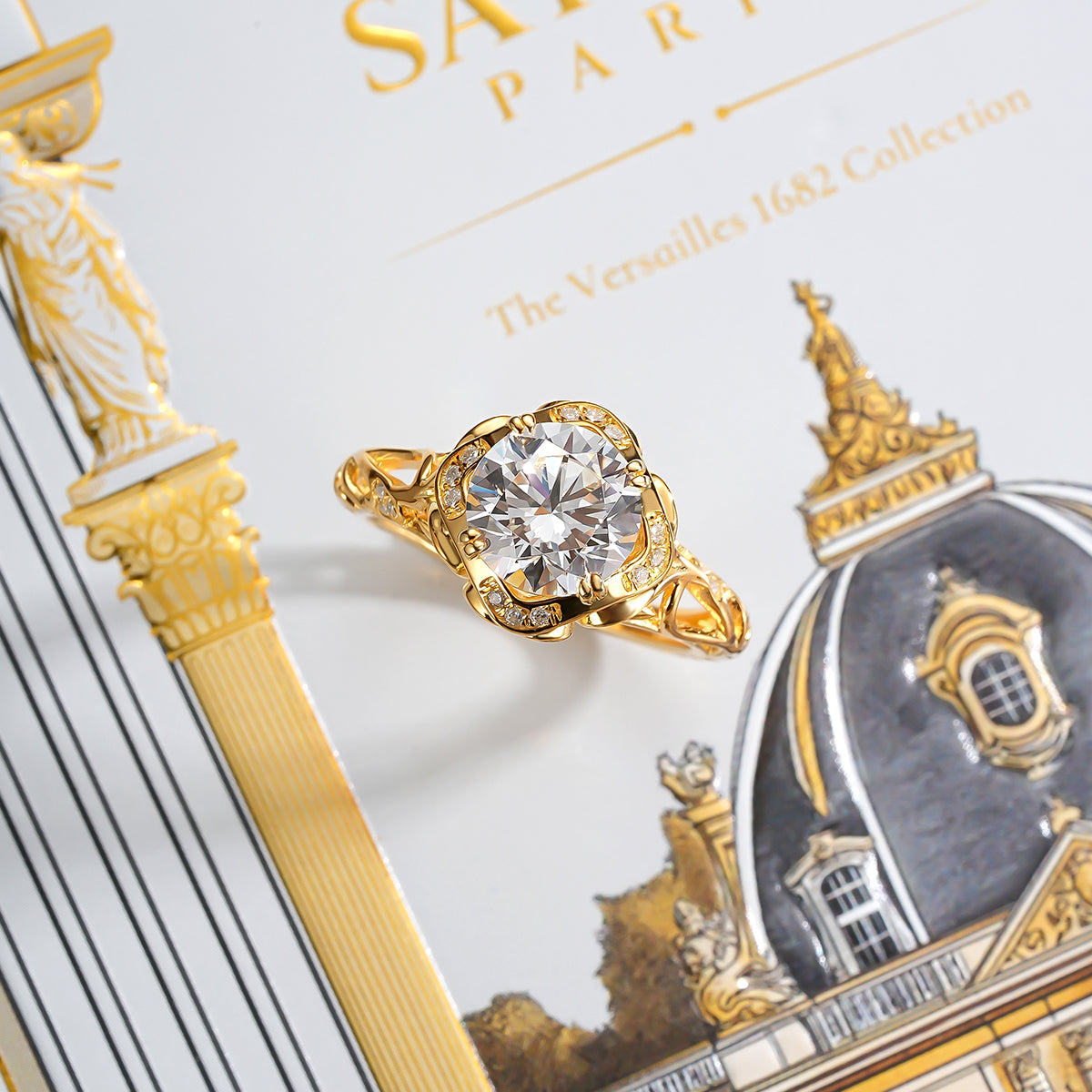
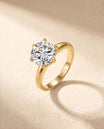
Sterling silver cubic zirconia rings cover every major setting style. Solitaire — a single round-cut CZ on a plain silver band — is the easiest to keep clean and the most timeless silhouette. Halo settings surround the centre stone with pavé CZ to increase perceived size; intricate settings trap dirt faster, so clean weekly. Three-stone designs feature a centre stone flanked by two matching side stones, traditionally representing past, present, and future. Eternity and half-eternity bands circle the band with CZ; half-eternity is more practical for daily wear since full-eternity bands in silver are difficult to resize.
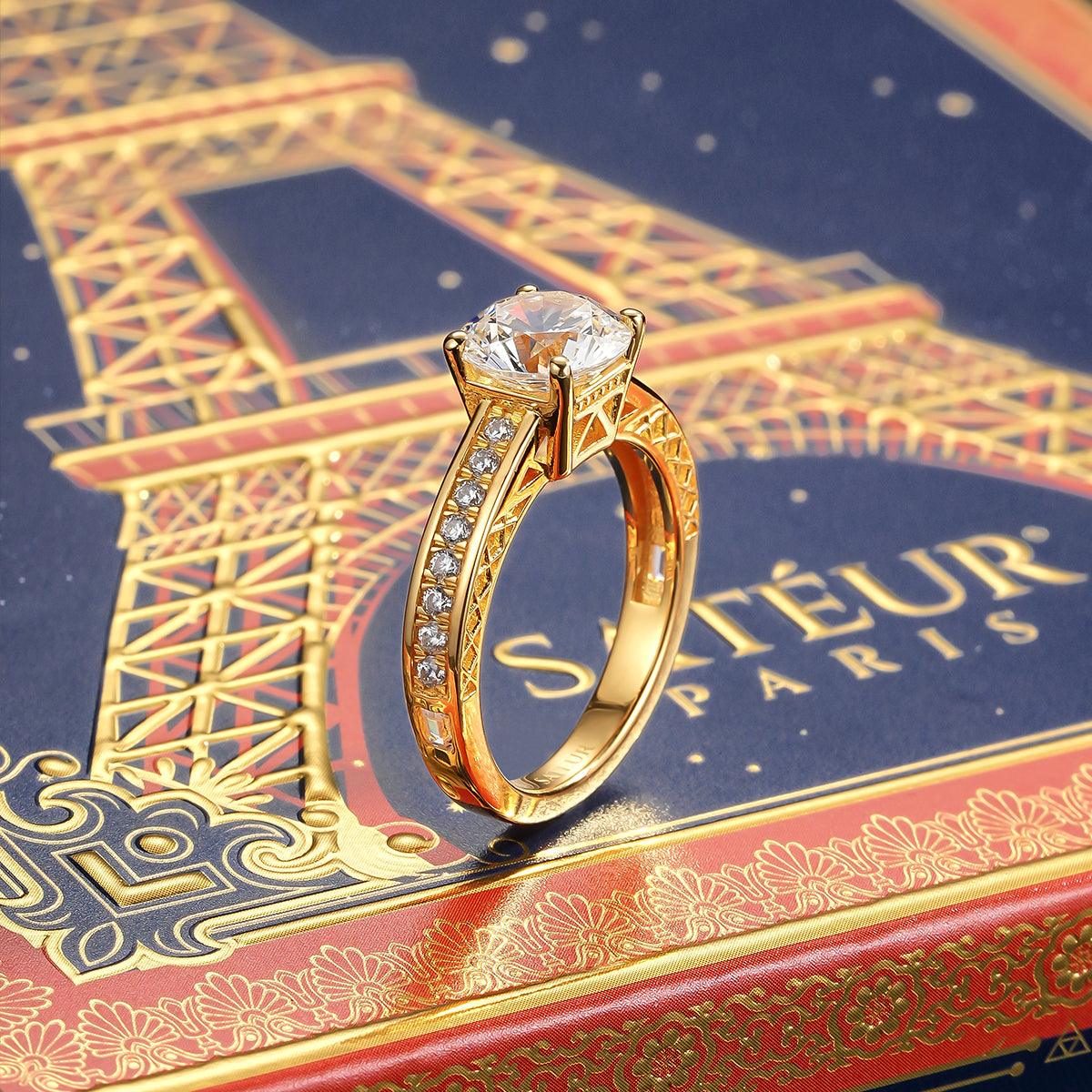
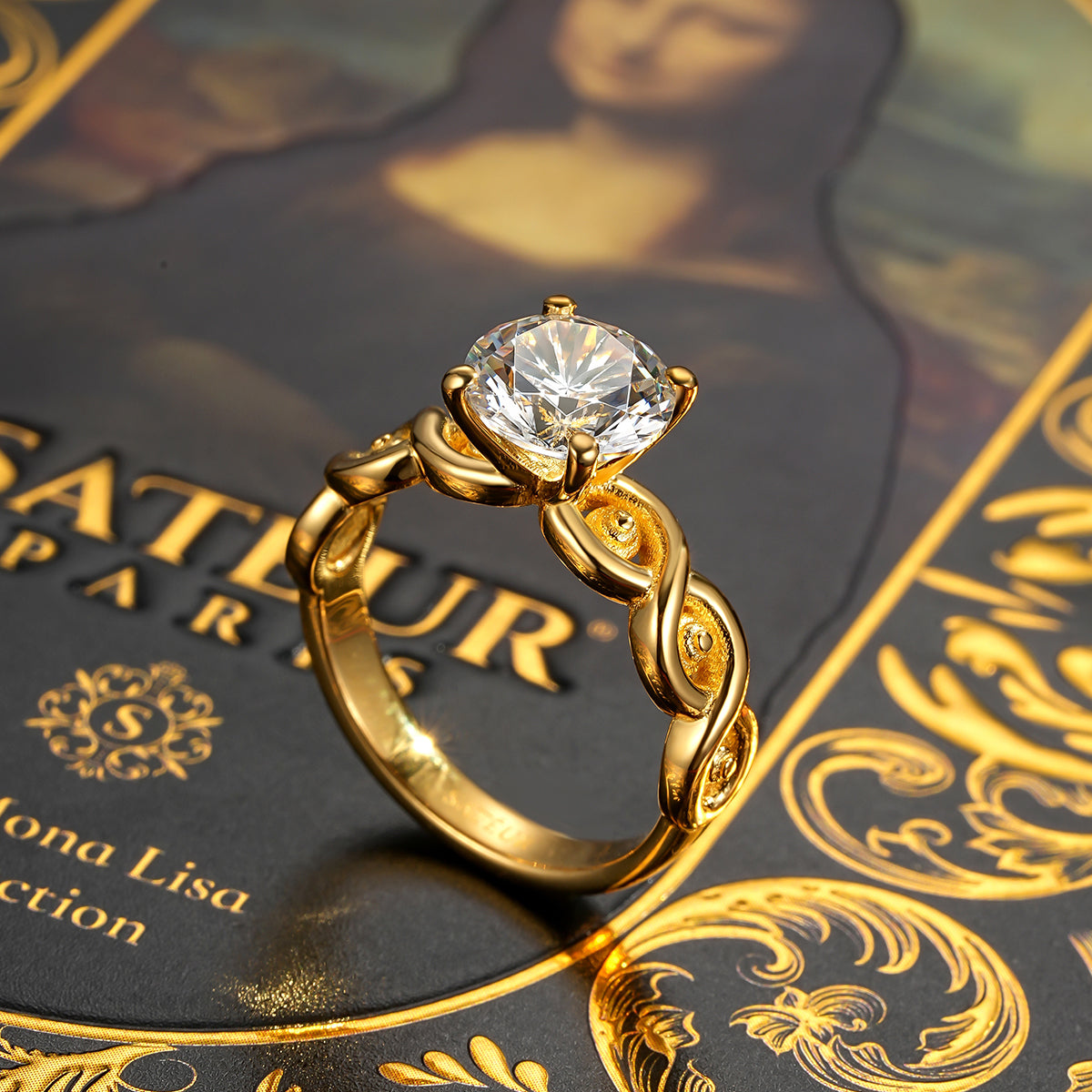
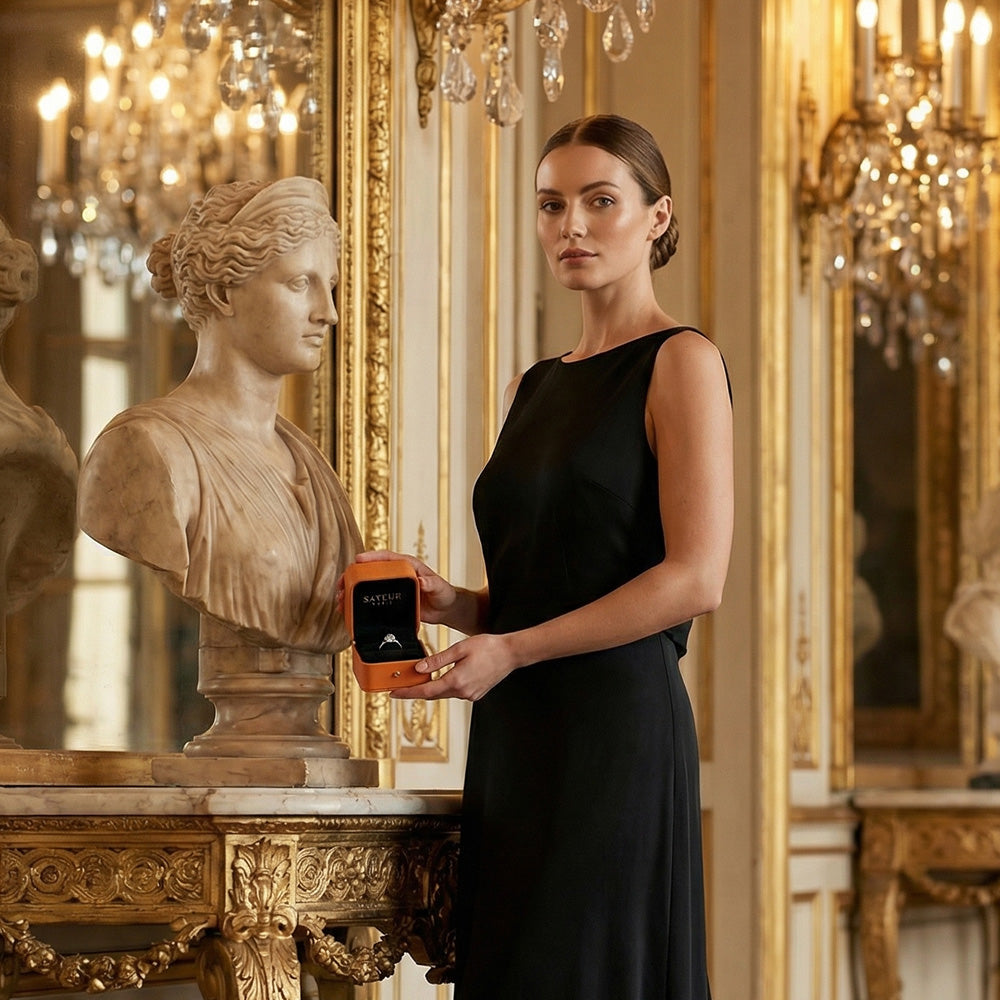
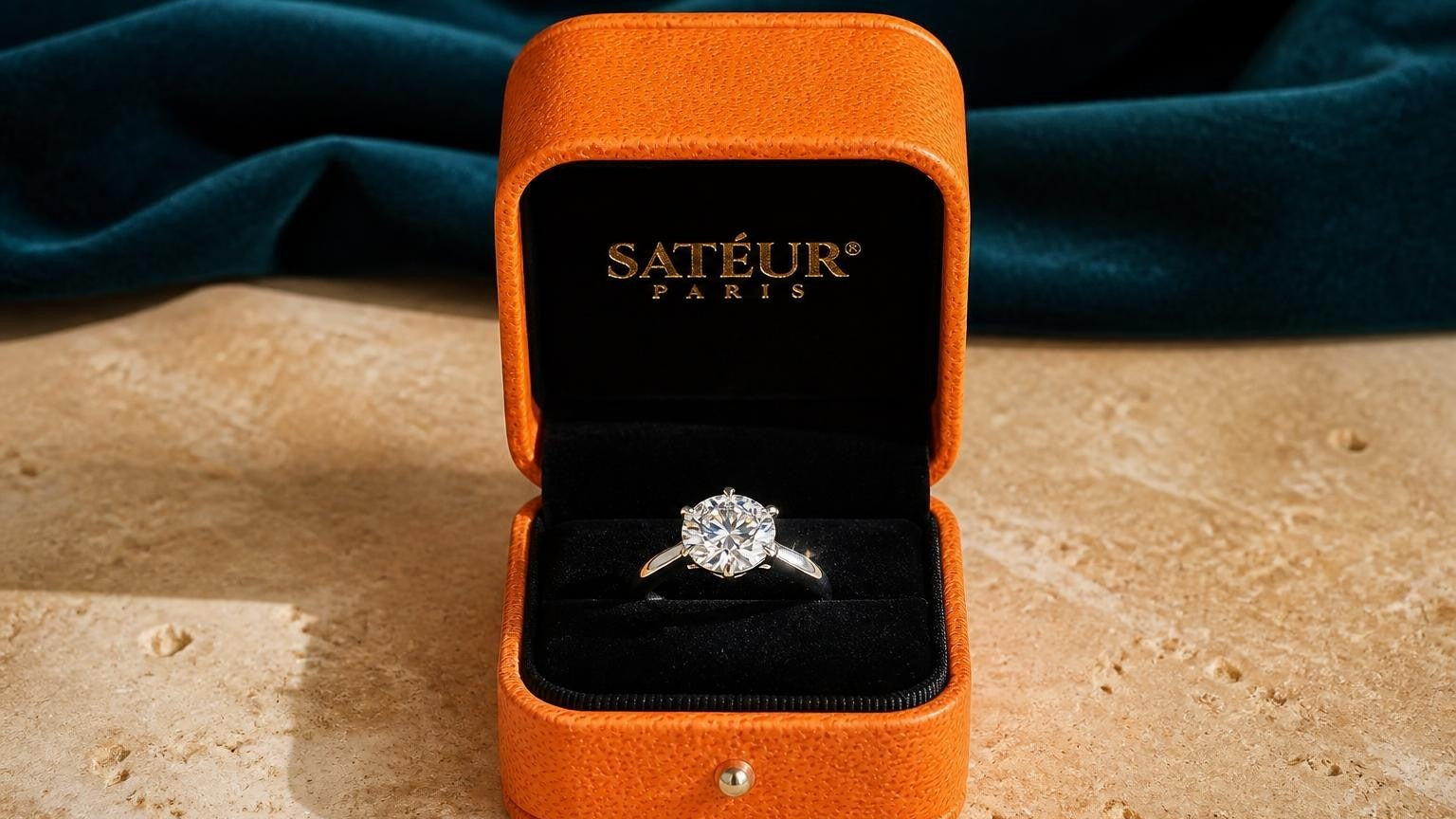
For solitaire and halo designs with longer-term durability, the Satéur engagement ring collection offers the same styles in Satéur Gems® with 18k gold finish from $68.
Cut, Colour, and Sparkle Specifications
Cut quality drives sparkle more than any other factor. For CZ rings, verify the stone appears white in natural light — not grey or yellow. CZ is denser than diamond: a 1.00-carat CZ measures approximately 6.1mm in diameter versus 6.5mm for a 1.00-carat diamond, so size up if matching a specific diamond look. A silver band of 1.5–2.0mm suits solitaires; 2.5mm+ suits eternity or three-stone designs.
Satéur Gems® rings carry confirmed D–E colour and Excellent cut across the collection, removing the selection uncertainty in commodity CZ purchasing. If you are weighing a step up to moissanite, the reasons to buy a CZ engagement ring provides useful context on where CZ remains the right choice.
FAQ: Sterling Silver Cubic Zirconia Ring Care and Sizing
What is the difference between a cubic zirconia ring and a diamond simulant?
Cubic zirconia is one type of diamond simulant — a synthetic crystalline material manufactured to look like a diamond. "Diamond simulant" is a broader category that includes CZ, moissanite, and proprietary stones such as Satéur Gems®. The distinctions lie in hardness, refractive index, and long-term optical stability. CZ (Mohs ~8.0–8.5) degrades with daily wear over one to three years; higher-grade simulants such as Satéur Gems® (Mohs ~8.8) hold their appearance longer at a modestly higher price point.
How durable are sterling silver cubic zirconia rings for daily wear?
Sterling silver is a durable metal for jewellery but does tarnish through oxidation when exposed to air, moisture, and skin chemistry. Storing your ring in a sealed pouch or box when not worn significantly slows tarnishing. Cubic zirconia is harder than most everyday materials, but its Mohs ~8.0–8.5 hardness means fine surface scratches accumulate over months of daily wear, gradually dulling sparkle. For active daily wear, an 18k gold-finish band and a harder simulant stone extend the ring's visual lifespan considerably.
How should I clean and maintain a cubic zirconia ring?
Clean your sterling silver cubic zirconia ring every two to three weeks with a few drops of mild dish soap in warm water, using a soft toothbrush to work around prongs and the underside of the stone. Rinse thoroughly and dry with a soft lint-free cloth. Avoid ultrasonic cleaners for CZ — the vibration can loosen prong-set stones over time. Never use bleach or chlorine-based solutions, which can pit silver and accelerate CZ clouding. Remove your ring before swimming, exercising, or applying hand lotion.
What ring sizes and widths are available for sterling silver cubic zirconia rings?
Most sterling silver cubic zirconia rings are available in US sizes 4 through 10, with some retailers offering half-sizes. Band widths typically range from 1.5mm for slim solitaires up to 4mm for eternity and cluster styles. If you are between sizes, size up for wider bands (2.5mm+) as they fit more snugly than narrow bands at the same nominal size. Satéur rings are available in US sizes 4 through 9 with half-size options across most styles.
What is included in the Satéur Gems® collection of sterling silver rings?
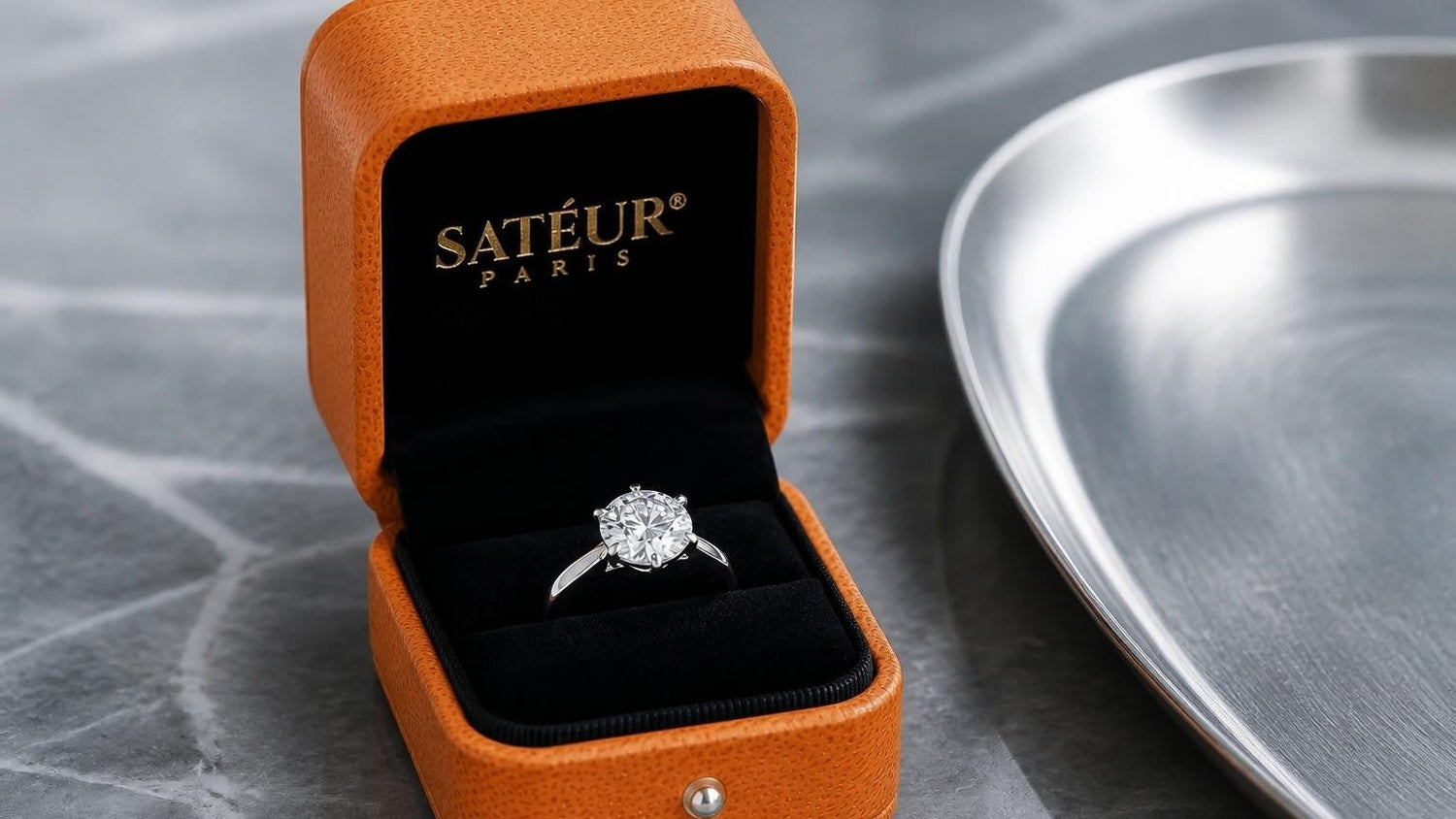
Satéur Gems® rings are set in an 18k gold finish over a 925 sterling silver base — the same metal alloy as standard sterling silver with an added finish layer that resists tarnishing and adds warmth. The collection includes solitaire, halo, three-stone, and cluster designs in round-brilliant cut across carat weights from 1.00 to 7.00 carats. Every stone is certified D–E colour, Excellent cut. Rings arrive in the Satéur presentation box. Prices begin from $68, compare-at values reflect equivalent mined-diamond market pricing.
Do cubic zirconia rings come with a warranty or guarantee?
Warranty terms vary widely by retailer for commodity CZ rings — many mass-market sellers offer no formal guarantee. Satéur rings include a 30-day money-back guarantee and free worldwide delivery. Because CZ is a lower-durability stone, any warranty should specify whether it covers stone loss from normal wear (most do not). For a ring intended as a lasting piece, choosing a harder simulant with an explicit return policy is a practical safeguard.

Satéur Destinée Ring™
The look of a flawless diamond — from $138.
D-E colour · Excellent cut · 18k gold finish
Free worldwide delivery. 30-day returns. Lifetime Satéur Care.
Shop the Destinée RingFree worldwide shipping · 30-day returns · Lifetime Satéur Care
















Leave a comment
This site is protected by hCaptcha and the hCaptcha Privacy Policy and Terms of Service apply.