



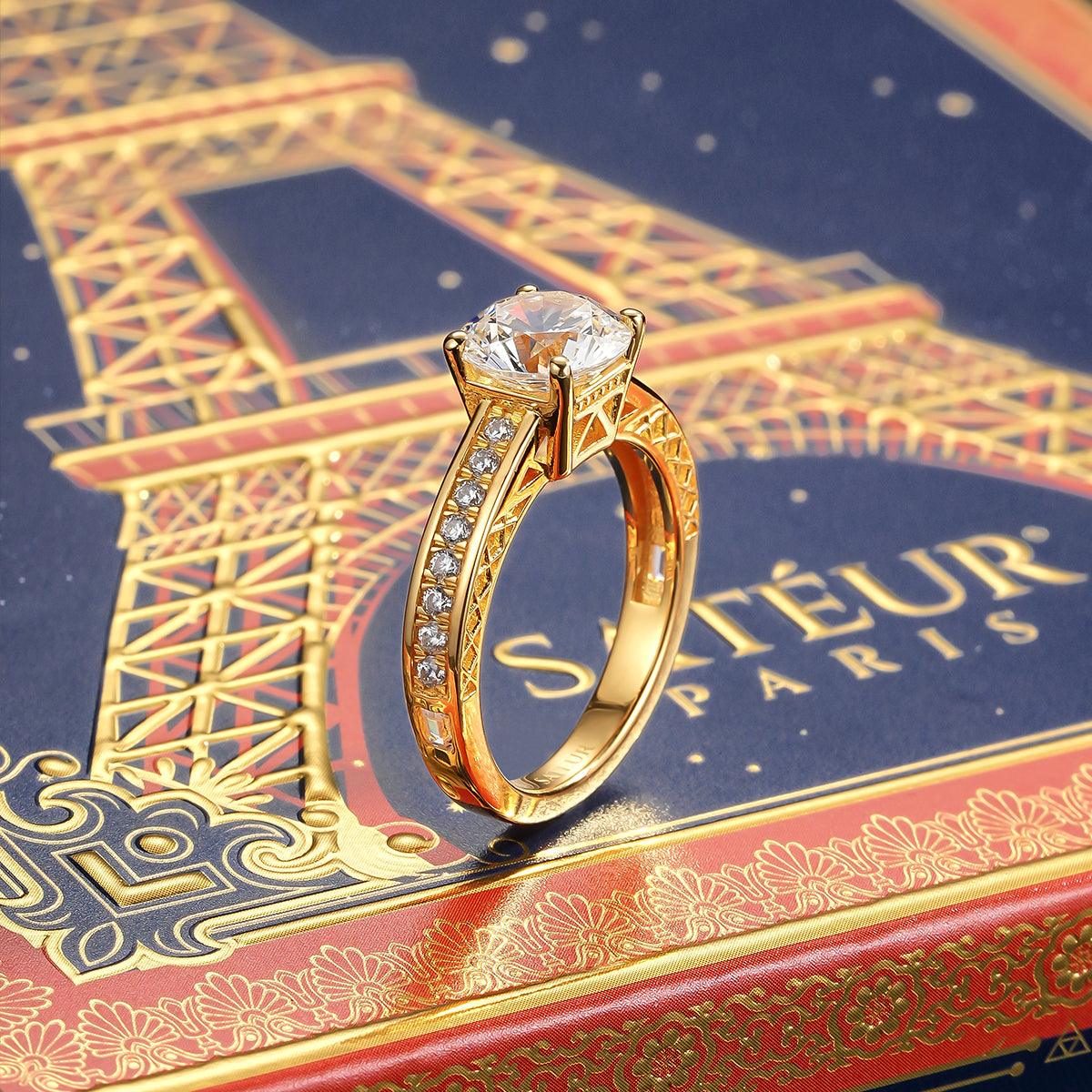
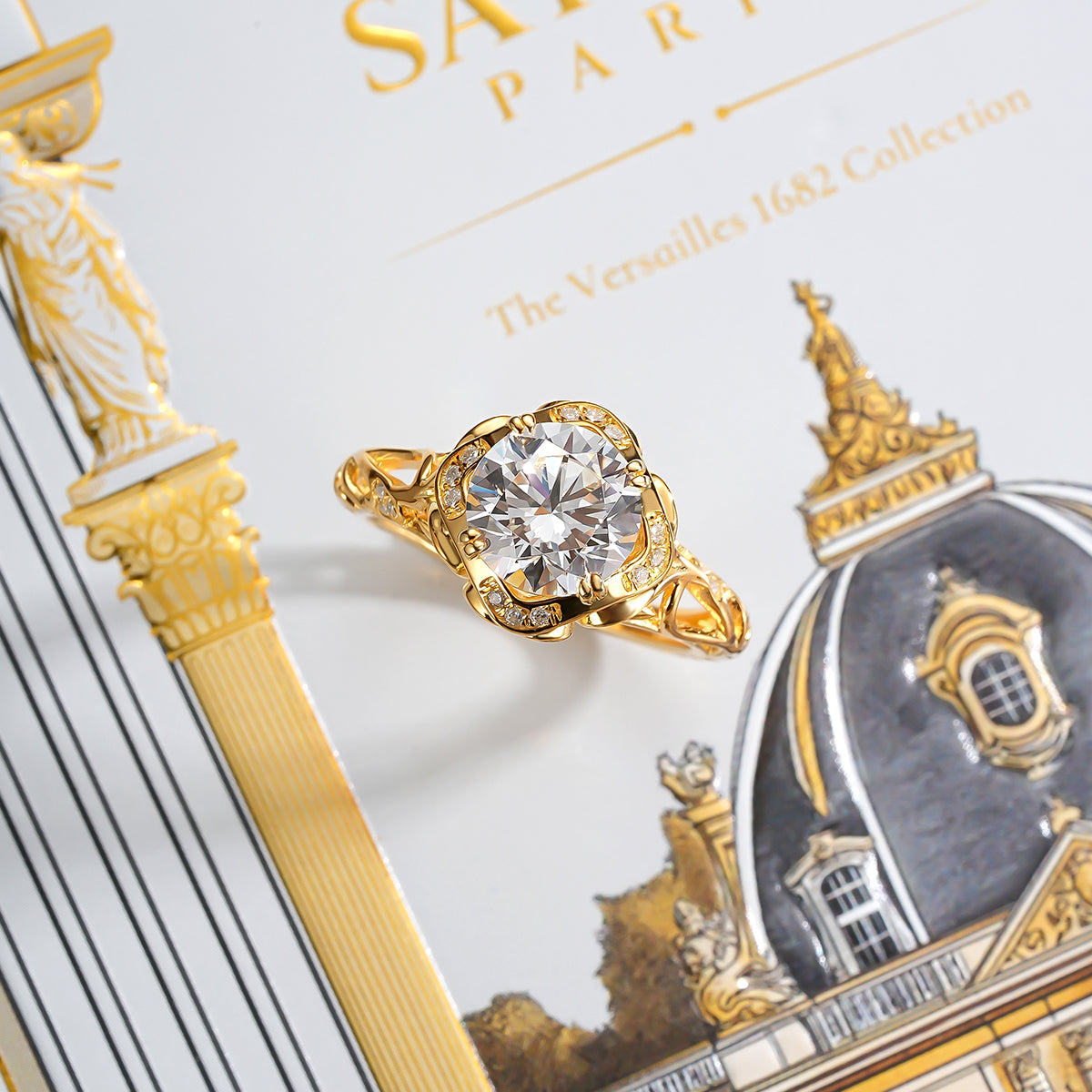
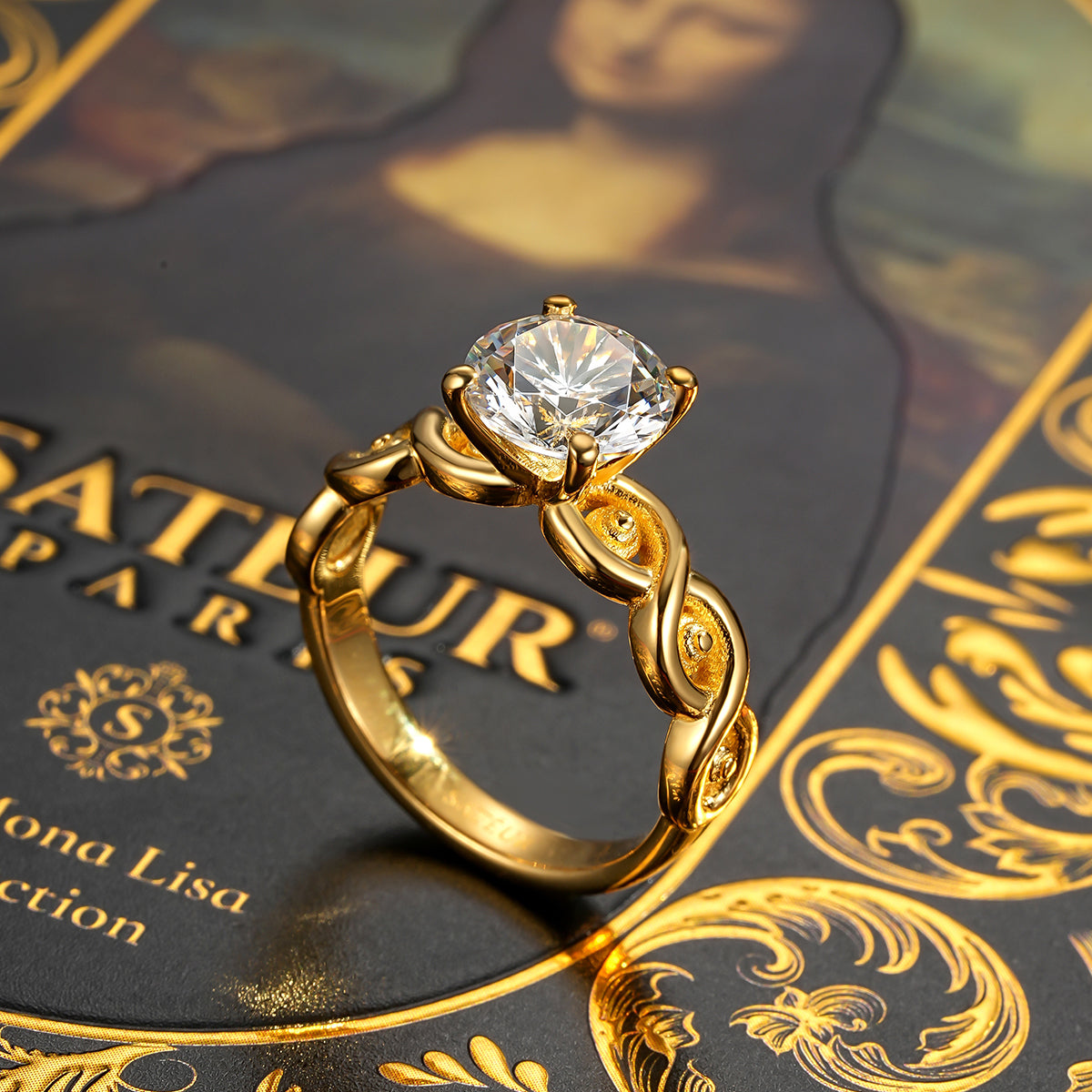
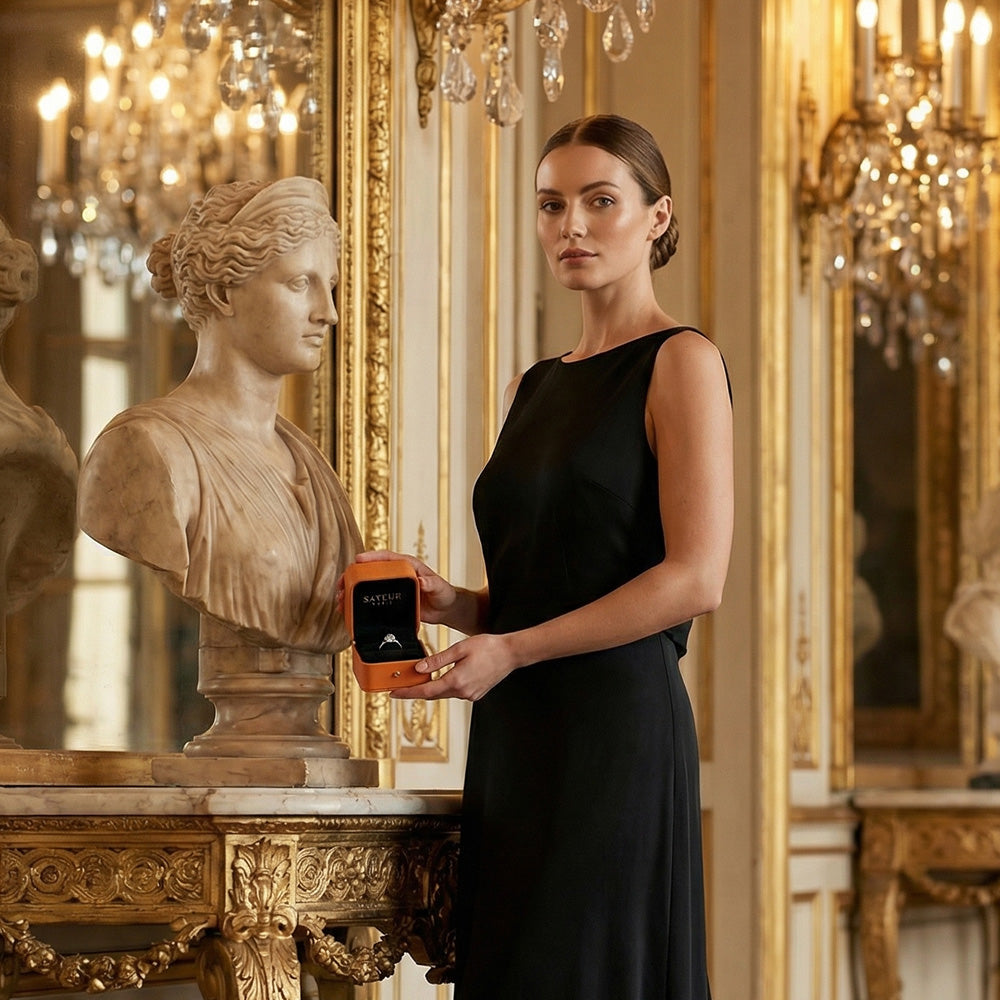

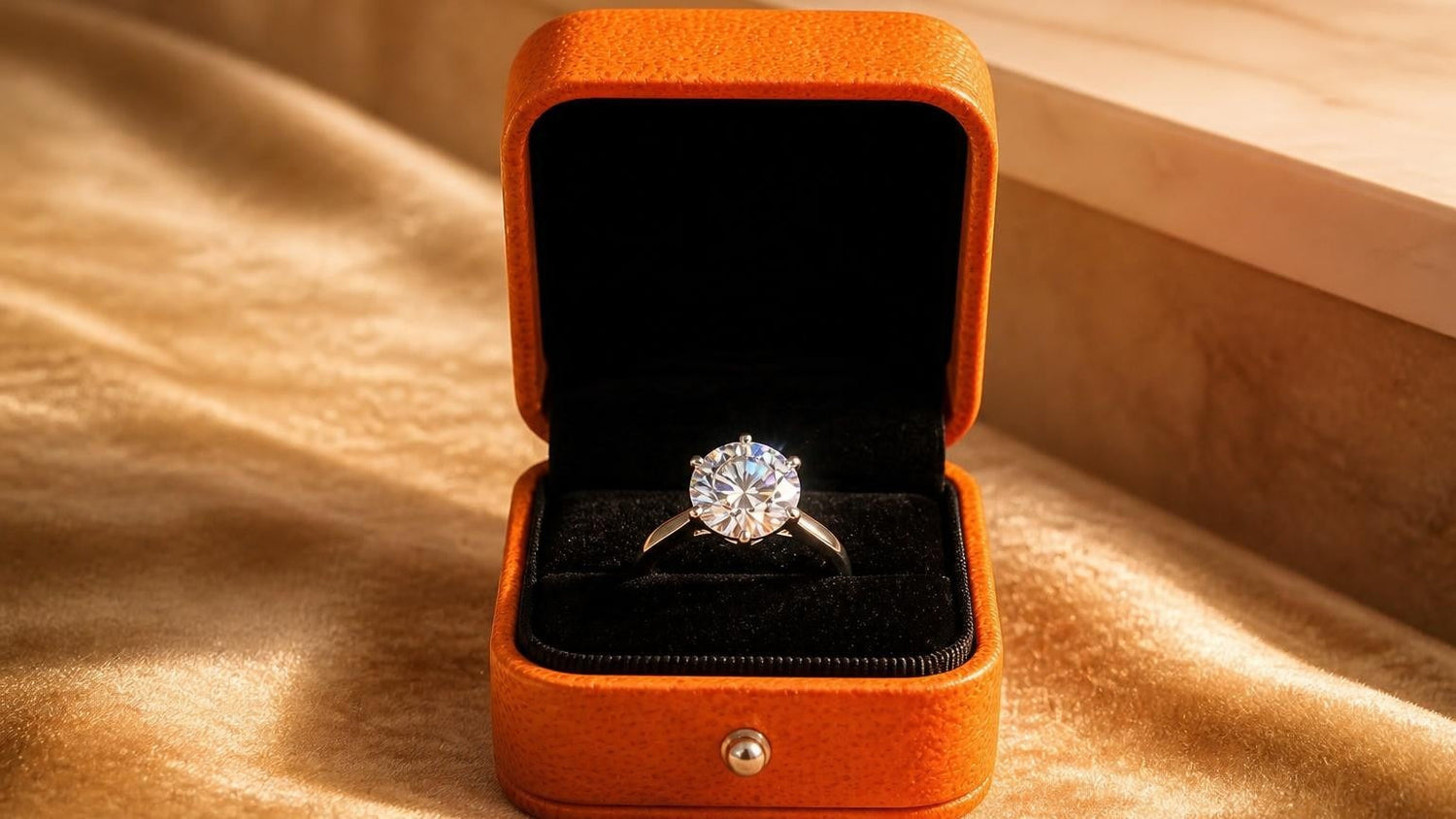
Moissanite earns strong reviews from buyers who want the visual impact of a diamond without the price — and the data bears this out. Lab-created moissanite rates 9.25 on the Mohs hardness scale, displays approximately 2.4× the light dispersion (fire) of diamond, and maintains its optical properties indefinitely with standard care. When customers report that their moissanite ring looks as brilliant after five years as the day it arrived, the gemology supports them.

Key Takeaways
- Satéur moissanite rings feature D-E colour and Excellent cut grades, matching fine-jewellery standards.
- Moissanite rates 9.25 on the Mohs hardness scale — suitable for everyday wear in engagement rings and fine jewellery.
- Satéur moissanite displays approximately 2.4× the light dispersion (fire) of diamond, creating distinct rainbow sparkle.
- Moissanite maintains its optical properties indefinitely; no yellowing or clouding occurs with standard care.
- Customers report moissanite durability comparable to diamond across decades of daily wear, supported by lifetime warranties.
Customer Reviews of Satéur Moissanite Rings
Across more than 10,000 reviews, Satéur holds a 4.9/5 rating. The most consistent theme in moissanite feedback is longevity: buyers who purchased rings two, three, even five years ago return to note that the stone remains as bright as it was on delivery. This is not anecdote — it reflects moissanite's material properties. The gem is lab-created silicon carbide, and silicon carbide does not cloud, yellow, or lose its facet integrity under the conditions of everyday wear.
A second recurring theme is the fire. Reviewers frequently comment that the ring draws attention in ways they did not anticipate — rainbow prismatic flash in sunlight, candlelight, office fluorescents. This is moissanite's refractive index at work: 2.65–2.69 compared with diamond's 2.42. More refraction, more dispersion, more visible colour in the sparkle.
What distinguishes high-quality moissanite reviews from average ones is specificity. Buyers who report satisfaction over years tend to cite colour grade (D or E, visually colourless), cut grade (Excellent, with ideal facet angles), and setting quality. These three factors — not marketing language — determine whether a moissanite ring holds up to scrutiny visually and physically.
What Makes Moissanite a Durable Choice
Moissanite's durability rests on two measurements: hardness and toughness. At 9.25 on the Mohs scale, moissanite is the second-hardest gemstone used in jewellery after diamond (10). For practical context: the minerals that scratch everyday surfaces — quartz in dust, sand, and most abrasive materials — rate 7 on the Mohs scale. A 9.25 stone resists those contacts routinely. The surface does not scratch from daily life.

Moissanite also has no cleavage planes, meaning it does not split along internal crystal lines when impacted. Diamond, by contrast, has perfect octahedral cleavage — it can chip along those planes under sharp, direct force. This makes moissanite practically more resilient in rings worn during physical activity.
- Mohs hardness: 9.25 — resists scratching from everyday contact
- No cleavage: will not chip or split under normal wear impact
- Chemical stability: unaffected by household cleaners, perfume, or moisture
- Thermal stability: maintains colour and clarity at ambient and body temperature indefinitely
The practical result: moissanite is an appropriate choice for engagement rings and daily-wear fine jewellery. Long-term reviews from buyers with five or more years of wear consistently confirm that the stone shows no degradation.
Satéur Moissanite Specifications: Colour, Cut and Clarity
Understanding what "flawless moissanite" means in practice requires knowing the grading criteria. Colour in moissanite is graded on the same D-to-Z scale used for diamonds, where D is completely colourless. Satéur moissanite rings use D-E colour stones — the top two grades, visually indistinguishable from colourless to the naked eye under any lighting condition.

Cut grade is the more significant factor for visual performance. An Excellent-cut moissanite has facet angles and proportions calibrated to maximise the entry and return of light. This is what produces the characteristic rainbow fire — not just the stone's refractive index, but the cut that exploits it. Satéur uses Excellent cut across the moissanite range.
| Property | Moissanite | Diamond | Cubic Zirconia |
|---|---|---|---|
| Mohs hardness | 9.25 | 10 | 8–8.5 |
| Refractive index | 2.65–2.69 | 2.42 | 2.15–2.18 |
| Fire (dispersion) | ~2.4× diamond | Reference | Lower than diamond |
| Longevity | Indefinite, no clouding | Indefinite | Clouds within 1–3 years |
| Lab-created | Yes | Natural or lab | Yes |
Clarity in moissanite is generally excellent by default — the lab creation process produces stones with minimal inclusions. This is one area where moissanite has a structural advantage over mined diamond, where clarity grading varies widely.
The Value Proposition: Why Choose Moissanite
A one-carat mined diamond of comparable quality (D colour, Excellent cut, VS1 clarity) carries a retail price of $4,000–$10,000. A moissanite ring with equivalent visual presence — identical colour grade, identical cut — represents roughly 1% of that cost. The gem looks the same visually because the specs that determine visual appearance (colour, cut, fire) are the same or better. What differs is the material's origin and composition, not what you see wearing it.
This is the argument that drives moissanite reviews toward satisfaction at high rates: buyers set expectations correctly, then find the stone exceeds them. The rainbow fire surprises people. The hardness reassures them over years of daily wear. The price allows them to direct resources elsewhere — the honeymoon, the deposit, the savings account.
Satéur's moissanite ring collection is built around this value logic. Every stone is D-E colour, Excellent cut, set in 18k gold finish settings. The entry price for a moissanite ring in this range reflects the gem's real material cost — produced in controlled lab conditions, graded to fine-jewellery standards — not a mined diamond's geological rarity premium.
For a parallel perspective on how moissanite compares across the diamond alternative category, see our moissanite ring vs diamond ring analysis and the broader moissanite vs diamond vs lab diamond guide.
How Moissanite Performs Over Years of Wear

The long-term performance question is the most searched aspect of moissanite reviews, and the answer is straightforward: moissanite does not degrade. The 9.25 Mohs rating means no surface scratching from normal contact. The chemical stability of silicon carbide means no reaction to soaps, lotions, or water. The optical properties — refractive index, dispersion, colour — are intrinsic to the crystal structure and do not change.
Where moissanite rings do show wear is in the metal setting, not the stone. Prongs wear with decades of daily contact; any fine jewellery ring requires periodic inspection of the setting, not the gem. Buyers who review their rings at two and five year marks are reporting on the stone's condition, which remains excellent, not the setting, which may need routine maintenance.
The contrast with cubic zirconia is significant here. CZ has a Mohs rating of 8–8.5, meaning quartz dust — present in most outdoor environments — will scratch the surface gradually. Those micro-scratches accumulate into the "cloudy" appearance CZ is known for after one to three years. Moissanite, at 9.25, sits above that threshold. No comparable clouding mechanism exists.
Moissanite vs Diamond: A Practical Comparison
Choosing between moissanite and diamond reduces to budget, visual preference, and intended use. The price gap is categorical: an equivalent-looking diamond costs 80–100× more. Diamond produces white brilliance — crisp, clean, colourless sparkle. Moissanite produces more rainbow fire — vivid prismatic colour that many buyers actively prefer. Neither is a compromise; they are different characters of brilliance. For everyday rings — engagement, wedding, daily wear — moissanite's 9.25 hardness makes it a practical match for diamond. See our moissanite vs diamond comparison for a fuller breakdown.
Satéur's Warranty and Satisfaction Guarantee
Satéur backs moissanite rings with a lifetime care warranty covering the stone and setting, alongside a 30-day no-condition return policy. These terms reflect confidence in the material — D-E colour, Excellent-cut moissanite at 9.25 Mohs does not degrade under normal wear, and the warranty is written accordingly.
Long-term satisfaction correlates directly with specification quality: colour grade, cut precision, and setting integrity. The specification level is the differentiating factor in whether a "flawless moissanite" review reflects genuinely flawless quality or disappointed expectations.

Satéur Destinée Ring™
The look of a flawless diamond — from $138.
D-E colour · Excellent cut · 18k gold finish
Free worldwide delivery. 30-day returns. Lifetime Satéur Care.
Shop the Destinée RingFree worldwide shipping · 30-day returns · Lifetime Satéur Care
Frequently Asked Questions
What is moissanite and how does it differ from diamond?
Moissanite is a lab-created gemstone (silicon carbide) known for its exceptional hardness at 9.25 Mohs and its distinctive rainbow fire — approximately 2.4× the light dispersion of diamond. Diamond is carbon-based and rates 10 on the Mohs scale. Both are durable enough for daily wear in fine jewellery rings. The primary visual difference is moissanite's more pronounced prismatic colour in the sparkle; diamond produces cleaner white brilliance.
Does moissanite remain clear and bright after years of wear?
Yes. Moissanite's optical properties are intrinsic to its crystal structure and do not change with time or wear. At 9.25 Mohs hardness, the surface resists the everyday abrasives that gradually cloud softer gems like cubic zirconia. Long-term customer reviews and gemological data consistently confirm that moissanite shows no yellowing, clouding, or optical degradation with standard care across decades of wear.
What colour and clarity grades does Satéur offer in moissanite rings?
Satéur moissanite rings use D-E colour grade stones — the top two grades on the diamond colour scale, classed as visually colourless. Cut grade is Excellent throughout the range, meaning facet angles are optimised for maximum light return and fire. Clarity is consistently excellent by default in lab-created moissanite, which is produced without the inclusions common in mined stones.
How much more durable is moissanite compared to other gemstones?
Moissanite at 9.25 Mohs sits meaningfully above the threshold that matters for ring wear. Common abrasive particles in dust and sand rate 7 on the Mohs scale — they will scratch a 7-rated stone but not a 9.25-rated one. Cubic zirconia at 8–8.5 Mohs is susceptible to that surface degradation. Moissanite is not. Diamond at 10 is marginally harder than moissanite, but both are effectively scratch-resistant in daily wear conditions.
What is included in Satéur's warranty on moissanite stones?
Satéur's lifetime care warranty covers the stone and setting. It is backed by a 30-day no-condition return policy. The warranty reflects the material's known durability characteristics — a D-E colour, Excellent-cut moissanite at 9.25 Mohs does not degrade under normal ring wear. Should any issue arise with the stone or setting, Satéur's care programme applies for the life of the piece.
Why do customers choose moissanite for engagement rings?
The primary reasons reported across customer reviews are: durability comparable to diamond at a fraction of the cost; the distinctive rainbow fire that many buyers prefer over diamond's white brilliance; and the ethical, lab-created provenance. The price difference versus mined diamond is categorical — moissanite at equivalent visual specifications (D-E colour, Excellent cut) represents approximately 1–2% of comparable diamond pricing, allowing buyers to direct resources toward the setting, ceremony, or other priorities.















Leave a comment
This site is protected by hCaptcha and the hCaptcha Privacy Policy and Terms of Service apply.