



Moissanite vs Diamond: The Visible Difference Explained
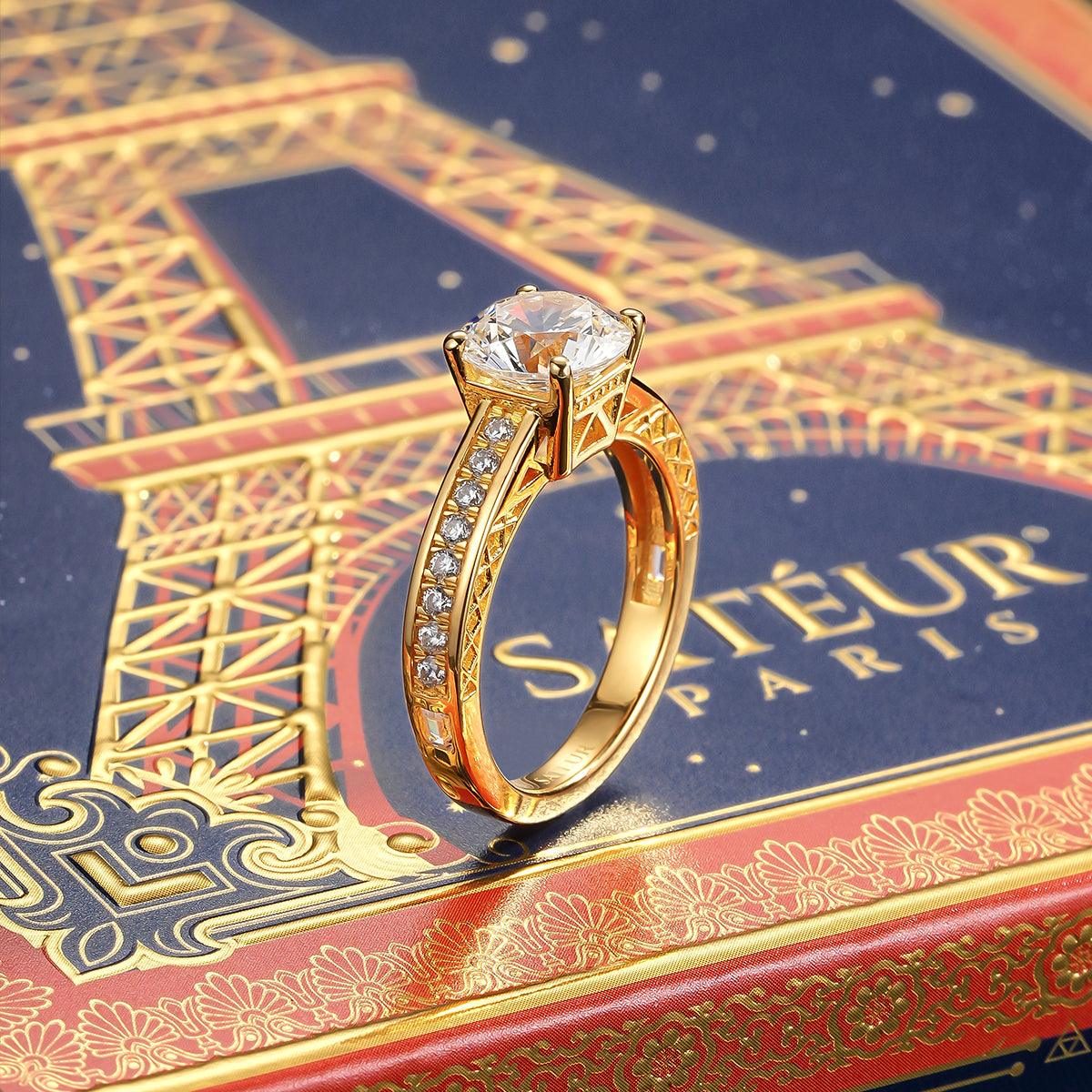
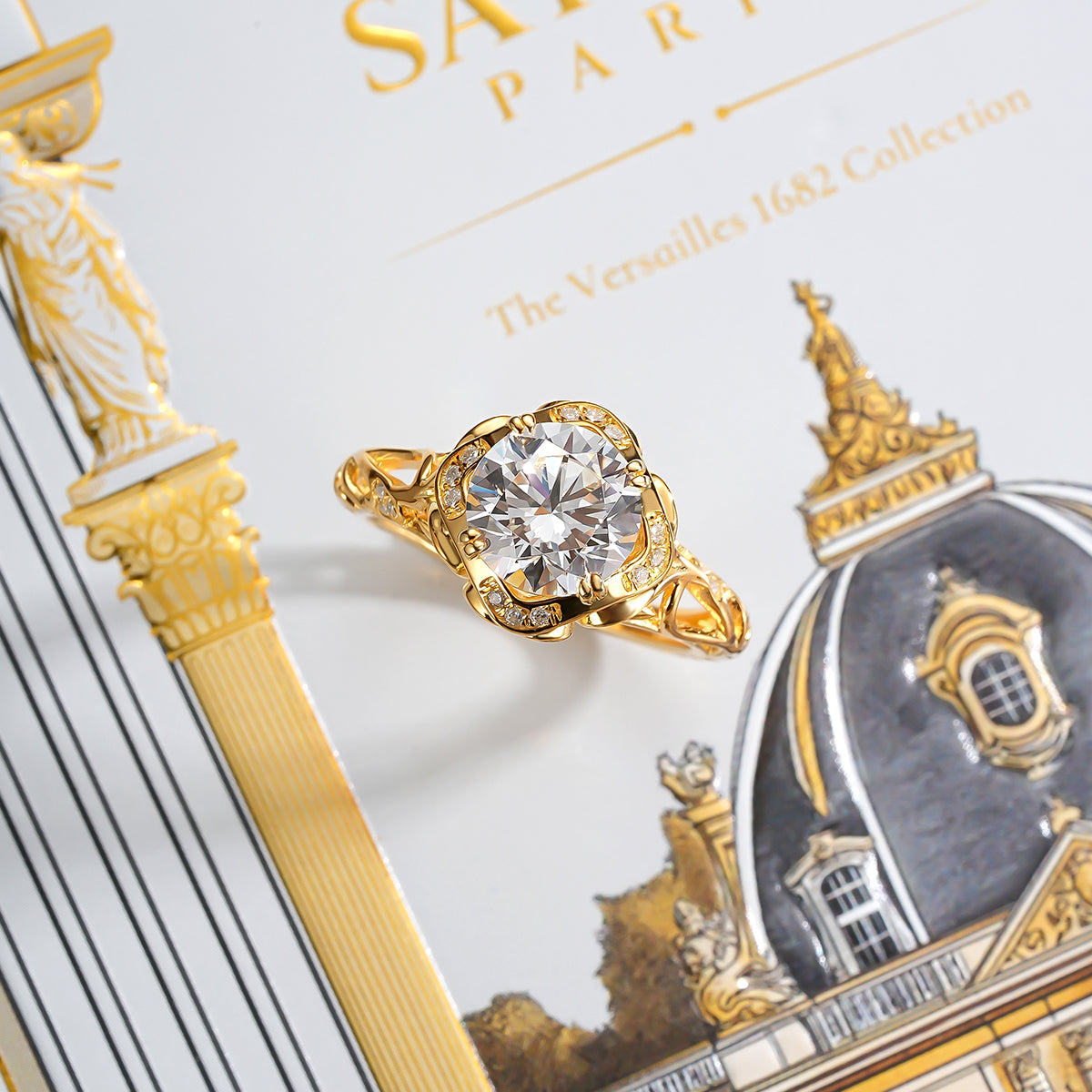
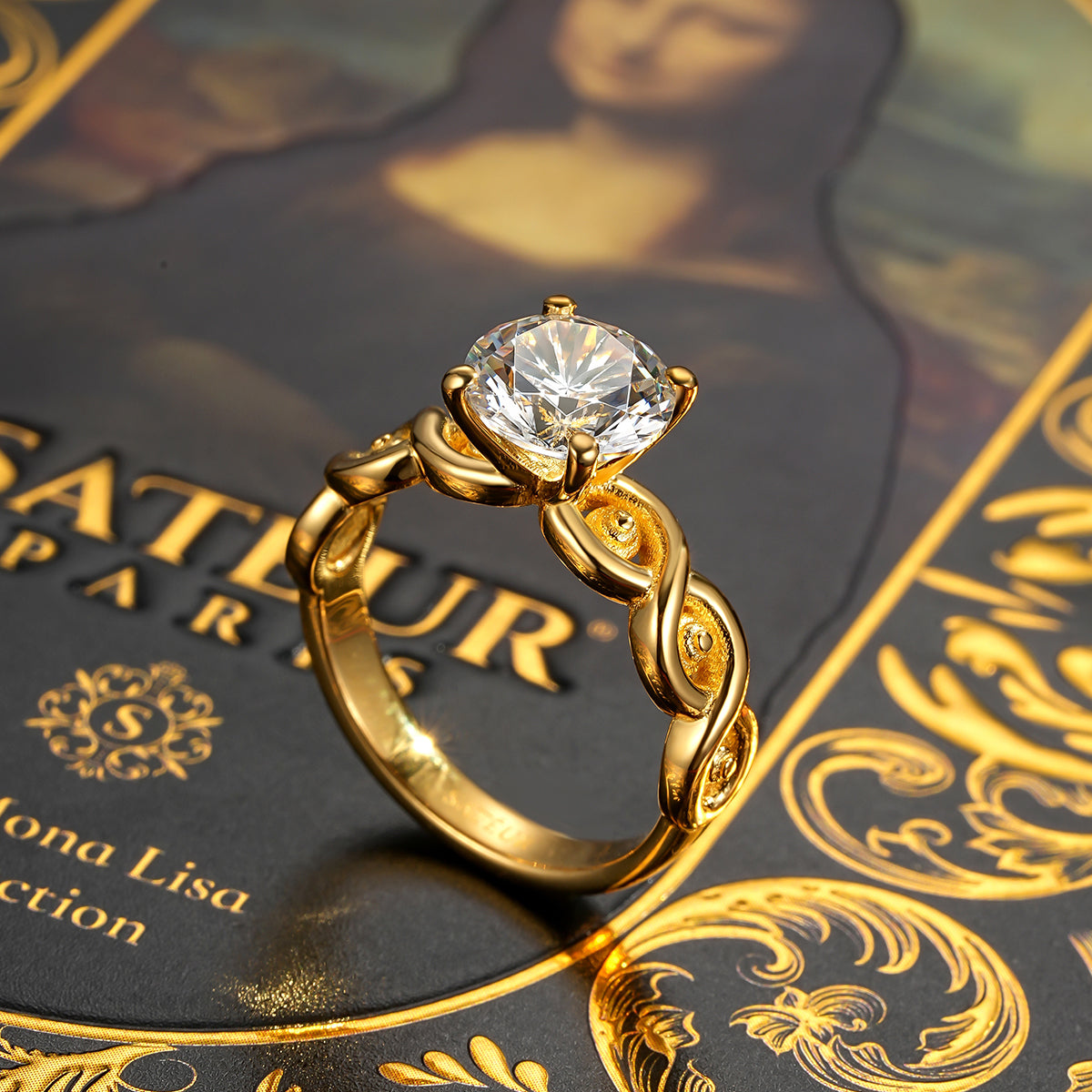
The question arises every time someone discovers moissanite for the first time: can you actually tell the difference? Placed side by side under a jeweller's display, two brilliant-cut gemstones — one moissanite, one diamond — look, to the naked eye, nearly the same. There is a difference. Not a flaw. Not a compromise. A genuine optical distinction rooted in how each stone interacts with light. Understanding it precisely is the first step to choosing with intelligence rather than assumption.
This article is part of our complete moissanite vs diamond guide for engagement rings. Here the focus is purely visual — what you actually see, at what distances, under what light, and how that maps to value.
Key Takeaways
- Moissanite exhibits approximately 2.4× the fire (rainbow dispersion) of a natural diamond — vivid under direct and sunlit conditions.
- Diamond delivers crisp white brilliance — a restrained, diamond-accurate sparkle that reads true at every distance.
- To the naked eye across a dinner table or in a room, the difference is subtle. Both appear brilliant and premium.
- The visible difference is most apparent at larger carat sizes under direct sunlight or spotlights.
- Moissanite is graded D-E colour equivalence, appearing colourless. Diamond ranges D through K depending on specimen.
- Satéur moissanite rings begin from $98 — the appearance of a premium stone at roughly 1% of the equivalent diamond cost.
What Is Moissanite
Moissanite is a lab-created gemstone composed of silicon carbide, first discovered in 1893 by French chemist Henri Moissan in a meteorite crater. Natural moissanite in gem-quality sizes is essentially non-existent. The moissanite in engagement rings today is grown in controlled laboratory environments — producing a gemstone of extraordinary optical purity.
Its refractive index sits at approximately 2.65, higher than diamond, which means it bends and disperses light at a steeper angle. This generates more fire — the rainbow flash component of sparkle — producing a vivid, colourful display especially visible under direct light. Moissanite rates 9.25 on the Mohs hardness scale, approaching diamond durability for daily wear. It does not cloud, chip, or lose brilliance over time.
The Satéur moissanite collection is selected from top-graded lab production, cut to precise angles to maximise this characteristic fire while maintaining a clean, bright face-up appearance. It is a real gemstone — not a diamond simulant — with its own distinct optical identity.
What Is Diamond
Diamond is carbon in its crystalline form — the hardest natural substance, rating 10 on the Mohs scale. Mined diamonds formed over billions of years under extreme geological pressure. Lab-created diamonds replicate those conditions and share identical chemical and optical properties with their mined counterparts.
Diamond's refractive index is approximately 2.42. This produces a brilliant white return of light — the crisp, restrained sparkle that the industry has built its iconography around for over a century. Less fire than moissanite, but more optically accurate to the way a flawless diamond reads. A D-colour excellent-cut diamond under natural light delivers a clean, white flash. Decisive. Present. Unmistakable as a diamond.
The challenge has always been cost. A 1-carat, D-colour, VS1 natural diamond retails between $7,000 and $12,000. The look it delivers — to anyone who sees it — is not $10,000 better than the alternatives. That gap is the founding argument for The New Diamond Standard.
Key Visual Differences Between Moissanite and Diamond
The most noticeable visible difference between moissanite and diamond comes down to fire: the coloured flashes produced when a stone moves under light. Moissanite disperses light at higher frequency, producing vivid rainbow flashes. Diamond disperses less, returning light primarily as white brilliance. The comparison table below maps the core properties.
| Property | MOISSANITE | DIAMOND |
|---|---|---|
| Refractive Index | ~2.65 | ~2.42 |
| Fire (Dispersion) | ~2.4× that of diamond — vivid rainbow flashes | Crisp white brilliance, subtler colour dispersion |
| Mohs Hardness | 9.25 | 10 |
| Colour Grade Equivalent | D-E (colourless) | D through K range |
| Face-Up Appearance | Brilliant; rainbow fire more visible at larger sizes and in direct light | Classic white sparkle; consistent at all sizes |
| Visible Difference (naked eye) | Subtle at 1ct, indoors; more distinct at 2ct+ outdoors | Reference point for diamond-accurate brilliance |
| Price (1ct equivalent) | From ~$300–$500 (Satéur from $98) | $7,000–$12,000 natural; $1,500–$3,500 lab |
| Origin | Lab-created silicon carbide gemstone | Mined or lab-grown carbon |

Colour and Clarity Comparison
Modern moissanite is produced at D-E colour equivalence — the highest tier in the diamond grading scale, meaning colourless face-up. Under standard lighting conditions, a well-graded moissanite and a D-colour diamond appear visually identical in colour. There is no warmth, no yellow cast, no perceptible difference when worn.
Earlier generations of moissanite (pre-2010) occasionally showed a faint green-grey tint under certain light sources. Contemporary lab production has eliminated this. A Satéur moissanite under halogen, LED, and natural daylight reads uniformly colourless across lighting conditions.
Clarity comparison is equally non-distinguishing to the naked eye. Moissanite is grown under controlled conditions that eliminate visible inclusions. The face-up appearance is clean. Natural diamonds require VS1 or better certification to achieve the same clean look, at considerably higher cost.
Brilliance, Fire, and Sparkle
Three optical terms define the sparkle difference precisely:
- Brilliance — the return of white light through the crown of the stone. Both moissanite and diamond score extremely high. Visible as the overall brightness of the stone.
- Fire — the dispersion of white light into spectrum colours as it passes through the stone. Moissanite has approximately 2.4× the fire of diamond. This is a measurable optical fact, produced by its higher dispersion coefficient.
- Scintillation — the play of light and shadow as the stone moves. Both produce strong scintillation. Moissanite's scintillation pattern tends to be denser at larger sizes, with smaller and more frequent flashes.
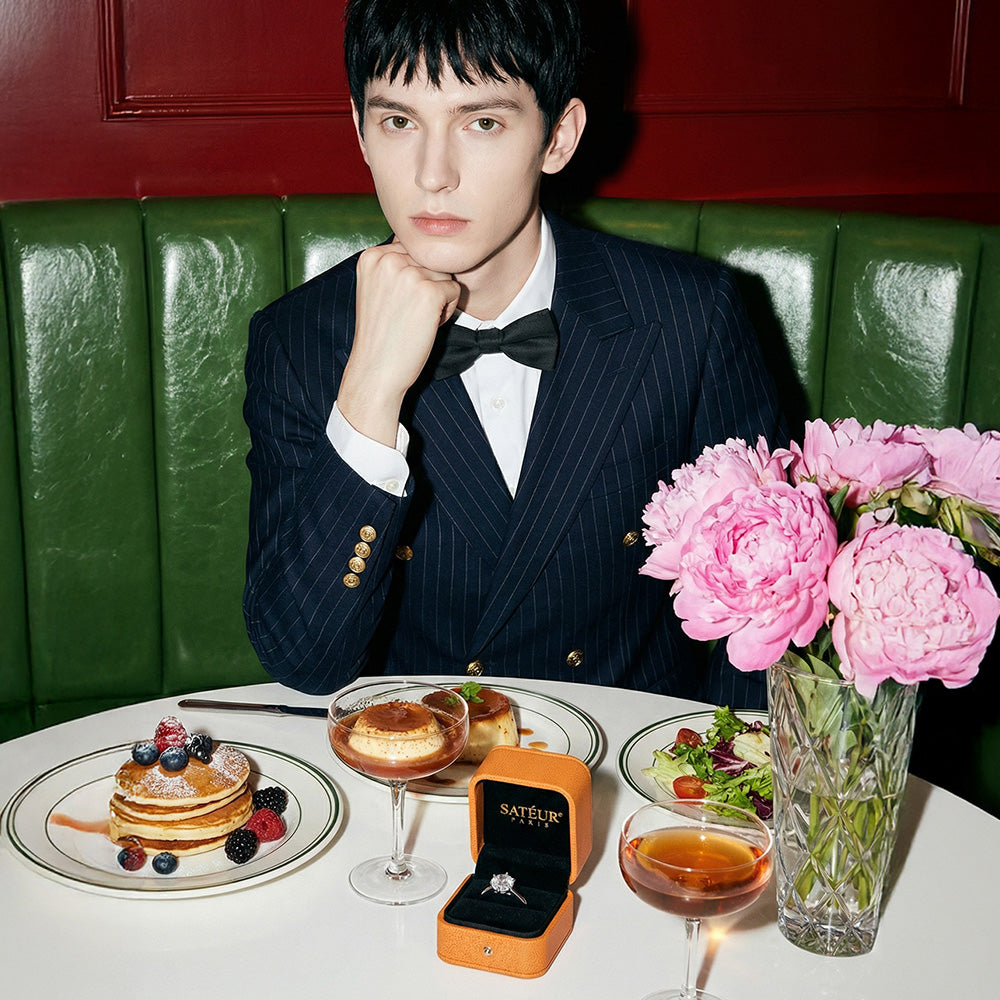
At 1 carat under indoor ambient light, these differences are subtle. To the naked eye across a restaurant table or in conversation, moissanite and diamond are not reliably distinguishable. Both read as brilliant, both read as premium.
The visible difference becomes apparent at larger sizes — above 2 carats — and under direct sunlight or a focused spotlight. A 4-carat moissanite in afternoon sun will display markedly more rainbow fire than a diamond of equivalent size. This is not a defect. It is a different aesthetic signature. For some buyers, that vivid fire is precisely what they want. For others, the diamond's cleaner white return is closer to the look they are seeking.
The difference between moissanite and diamond is not quality. It is optics.

Durability and Longevity
Moissanite at 9.25 Mohs is among the hardest substances in practical jewellery use — surpassed only by diamond at 10. In the context of daily wear, this difference is negligible. Both resist scratching from all materials encountered in ordinary life. Both hold their cut and brilliance over decades without degradation.
Neither stone clouds, hazes, or changes optically over time with standard care. A soft brush and mild soap twice a year is sufficient for either stone to maintain its original appearance. The visual difference you see on day one is the visual difference you will see in twenty years.
For the full comparison including Satéur Gems® alongside moissanite and diamond, durability is not the axis that separates them — all three are built for life.
Price Comparison: Moissanite and Diamond
Diamond prices range from $500 to $10,000 or more per carat depending on colour, clarity, cut, and origin. A 1-carat D-colour, VS1 natural diamond retails between $7,000 and $12,000. A lab-created diamond of equivalent specification sits between $1,500 and $3,500. Moissanite of comparable face-up size and grading retails from $300 to $500.
That is not a small difference. It is the difference between a ring and a car. And for a stone that appears, with the naked eye across the table, as brilliant and as present as either diamond variety — the case for moissanite is not complicated.
Satéur moissanite engagement rings begin from $98 — the look of a premium gemstone for roughly 1% of the equivalent diamond investment. The complete buying guide to moissanite vs diamond vs lab diamond covers the full value spectrum for buyers navigating the options.
Satéur's Moissanite: The Value Proposition
Satéur's moissanite is drawn from the top graded lab production — D-E colourless, excellent cut, selected for optical clarity and fire. Every piece is set in 18k gold finish, designed to the same standard as our full fine jewellery range.
The proposition is not that moissanite approximates a diamond. It is that moissanite is a genuine, durable, optically distinctive gemstone — one that happens to deliver visual presence at a fraction of the investment in a diamond. Over 100,000 customers across 150+ countries have reached the same conclusion.
The 1% Ring® began this movement. The insight that the look of a fine gemstone and the price of a fine gemstone are not the same thing, and never needed to be.

FAQ: Moissanite vs Diamond Visible Difference
What is the visible difference between moissanite and diamond to the naked eye?
To the naked eye in everyday settings — across a table, in conversation, under indoor light — the difference between moissanite and diamond is subtle. Both appear brilliant and colourless at D-E grades. The key distinction is fire: moissanite disperses approximately 2.4× more rainbow colour than diamond. This difference is most visible at larger carat sizes (above 2ct) and under direct sunlight. At 1 carat under ambient indoor light, the two stones are not reliably distinguishable with the naked eye.
Does moissanite sparkle differently than diamond?
Yes — and the difference is optical, not qualitative. Moissanite produces more vivid rainbow (coloured) flashes, due to its higher refractive index of ~2.65 versus diamond's ~2.42. Diamond returns more white light — crisper, more restrained. Neither sparkle is superior. They describe genuinely different optical characters: moissanite is fire-forward and vivid; diamond is white-dominant and precise. Which suits you depends on the look you prefer.
How durable is moissanite compared to diamond?
Moissanite rates 9.25 on the Mohs hardness scale; diamond rates 10. In everyday wear, the practical difference is negligible. Moissanite resists scratching from all ordinary materials, holds its cut, and retains its brilliance for decades. Both stones are appropriate for engagement rings and daily-wear jewellery without compromise on durability.
What is the price difference between moissanite and diamond engagement rings?
Significant. A 1-carat natural diamond at D-F colour, VS1 clarity retails between $7,000 and $12,000. An equivalent moissanite retails from approximately $300 to $500. Satéur moissanite engagement rings begin from $98. The visual presence — the sparkle, the presence, the brilliance — is not proportionally different to the price.
Is moissanite graded the same way as diamond?
Moissanite uses colour and clarity language derived from diamond grading, but is not certified by GIA or IGI (those bodies certify diamonds). Top-graded moissanite — including Satéur's — is produced at D-E colour equivalence. The grading language is comparable in meaning; the certifying institution differs.
Does moissanite discolour or lose its appearance over time?
No. Modern lab-created moissanite does not cloud, yellow, or lose brilliance. Earlier generation issues with faint undertones under specific light have been resolved in contemporary production. With standard care, a moissanite ring maintains its optical quality for life — no annual professional cleaning required.
Which Stone Is Right for You
If you prefer the classic white-dominant sparkle and the cultural weight a diamond carries, a diamond — lab or natural — is the correct choice. If you prefer vivid fire, the same durability, and a fraction of the investment, moissanite is not a compromise. It is a considered decision made by buyers who know the optical facts and choose accordingly.
The difference between moissanite and diamond is visible. It is not, however, the difference between excellent and acceptable. It is the difference between two genuinely distinct optical signatures — one that reads rainbow-vivid, one that reads classic-white — at a price ratio of roughly 1 to 25.
Satéur's moissanite engagement ring collection offers the full range. Every stone is selected to deliver that characteristic fire at its best. Begin here, know what you are choosing, and choose well.
Satéur Destinée Ring™
The look of a flawless diamond, for 1% of the price.
Compare to a $10,000 mined diamond
Joined by 100,000+ couples across 150+ countries.
Discover The 1% RingFree worldwide shipping · 30-day returns · Lifetime Satéur Care















Leave a comment
This site is protected by hCaptcha and the hCaptcha Privacy Policy and Terms of Service apply.